Kansas
Kansas House fails to override Gov.’s veto of anti-Trans youth sports bill
The bill- subject of significant debate over two sessions, had 81 votes in favor, falling short of 84 required 2/3 majority vote to override

By Noah Taborda | TOPEKA — An effort to ban transgender athletes from women’s sports failed Thursday after the House fell short on an attempt to override Gov. Laura Kelly’s veto of the bill.
The bill, a subject of significant debate the past two sessions, garnered 81 votes in favor, falling short of the 84 required a two-thirds majority vote to overturn the veto. On Tuesday, the Senate voted 28-10 to override Kelly’s veto of Senate Bill 160.
The House can reconsider the vote Thursday or the next day the body meets.
Republicans argue the bill is the best way to ensure fairness. They said transgender athletes in women’s sports have an unfair advantage compared with those assigned the female gender at birth. Opponents of the measure, predominantly Democrats, say the bill is hateful and political.
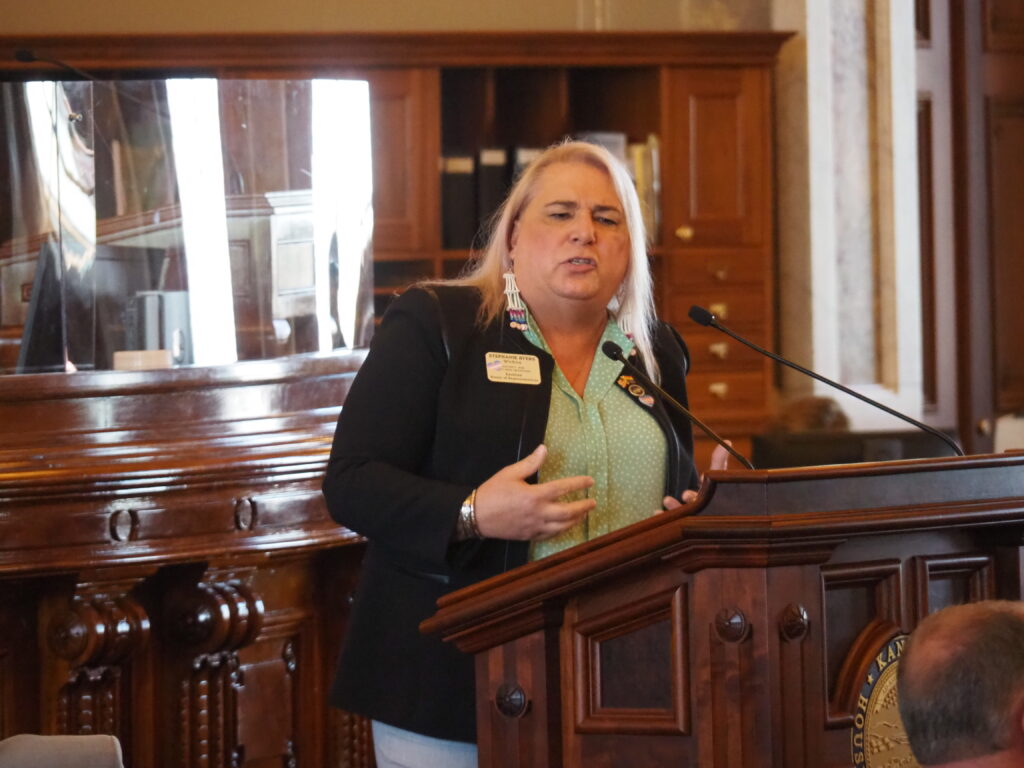
But as legislators returned for veto session, the debate about transgender identities shifted to new extremes. Rep. Stephanie Byers, a Wichita Democrat and the first transgender Kansas legislator, said the override vote was a decision between accepting and rejecting transgender Kansans’ identities.
“Wrestle with your consciences, decide how you want to vote with this. Decide how you want to commit to the fact that trans women are not really women, trans girls are not really girls, or you’re going to say that trans girls are girls, trans women are women,” Byers said. “This is not a lifestyle. This is my existence.”
Rep. Barbara Wasinger, a Hays Republican, said identifying as transgender is a mental health issue.
“I feel greatly and deeply for these young people and all people that are confused,” Wasinger said during Republican caucus before the debate.
Rep. Brandon Woodard, a Lenexa Democrat and one of four LGBTQ legislators, countered transgender children just want to be seen as human.
“If you disapprove of who I am or who a young trans person is, take that up with our creator,” he said.
At the high school level, there is just one transgender girl participating in any school activity in Kansas, according to LGBTQ advocates.
House Speaker Ron Ryckman said earlier this week he did not have the votes to overturn the measure this week, but he reversed course Thursday, attempting to override the veto. Eighty-five Republican House members were present, and 84 votes were needed for an override.
During the first debate on the bill earlier this month, several legislators were absent or chose not to vote. The measure originally passed 74 to 39.
Earlier this week, an email sent by Rep Chery Helmer, a Mulvane Republican, to a transgender college graduate student sparked controversy over comments that she did not feel comfortable sharing a bathroom with Byers, who she described as a “huge transgender female.” Helmer also spread false claims that many school-age girls have been sexually assaulted in bathrooms by transgender people.
Opponents of the bill have pointed to this email as an example of the underlying fear and hatred of LGBTQ Kansans driving this bill. Legislation in Kansas matches bills pushed by conservative lobbying groups across the country.
Rep. Owen Donohoe, a Shawnee Republican, said it was the duty of government to uphold the “rules of nature,” which he said led him to consider things like same-sex marriage and transgender athletes to be inherently wrong.
Rep. Chuck Schmidt, a Wichita Democrat, said he did not understand what it was like to be transgender, and after listening to the debate, it was clear most legislators do not either. He said high rates of suicide and suicide ideation among transgender people and how this bill could exacerbate those were of greater concern to him than anything else.
“I speak as a coach for many years, and I know the value of activities, and I know how important it is to allow kids to be counted as a part of something bigger than themselves,” Schmidt said.
“This is not just some boy deciding I can do better in girls’ sports. This is someone who decides this is who I am, and this decision doesn’t come easy.”
********************
Noah Taborda started his journalism career in public radio at KBIA in Columbia, Missouri, covering local government and producing an episode of the podcast Show Me The State while earning his bachelor’s degree in radio broadcasting at the University of Missouri School of Journalism. Noah then made a short move to Kansas City, Missouri, to work at KCUR as an intern on the talk show Central Standard and then in the newsroom, reporting on daily news and feature stories.
********************
The preceding article was previously published by the Kansas Reflector and is republished by permission.



Kansas
ACLU sues Kansas over law invalidating trans residents’ IDs
A new Kansas bill requires transgender residents to have their driver’s licenses reflect their sex assigned at birth, invalidating current licenses.
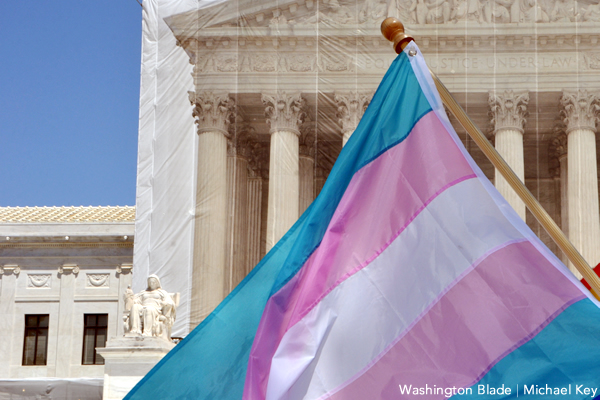
Transgender people across Kansas received letters in the mail on Wednesday demanding the immediate surrender of their driver’s licenses following passage of one of the harshest transgender bathroom bans in the nation. Now the American Civil Liberties Union is filing a lawsuit to block the ban and protect transgender residents from what advocates describe as “sweeping” and “punitive” consequences.
Independent journalist Erin Reed broke the story Wednesday after lawmakers approved House Substitute for Senate Bill 244. In her reporting, Reed included a photo of the letter sent to transgender Kansans, requiring them to obtain a driver’s license that reflects their sex assigned at birth rather than the gender with which they identify.
According to the reporting, transgender Kansans must surrender their driver’s licenses and that their current credentials — regardless of expiration date — will be considered invalid upon the law’s publication. The move effectively nullifies previously issued identification documents, creating immediate uncertainty for those impacted.
House Substitute for Senate Bill 244 also stipulates that any transgender person caught driving without a valid license could face a class B misdemeanor, punishable by up to six months in jail and a $1,000 fine. That potential penalty adds a criminal dimension to what began as an administrative action. It also compounds the legal risks for transgender Kansans, as the state already requires county jails to house inmates according to sex assigned at birth — a policy that advocates say can place transgender detainees at heightened risk.
Beyond identification issues, SB 244 not only bans transgender people from using restrooms that match their gender identity in government buildings — including libraries, courthouses, state parks, hospitals, and interstate rest stops — with the possibility for criminal penalties, but also allows for what critics have described as a “bathroom bounty hunter” provision. The measure permits anyone who encounters a transgender person in a restroom — including potentially in private businesses — to sue them for large sums of money, dramatically expanding the scope of enforcement beyond government authorities.
The lawsuit challenging SB 244 was filed today in the District Court of Douglas County on behalf of anonymous plaintiffs Daniel Doe and Matthew Moe by the American Civil Liberties Union, the ACLU of Kansas, and Ballard Spahr LLP. The complaint argues that SB 244 violates the Kansas Constitution’s protections for personal autonomy, privacy, equality under the law, due process, and freedom of speech.
Additionally, the American Civil Liberties Union filed a temporary restraining order on behalf of the anonymous plaintiffs, arguing that the order — followed by a temporary injunction — is necessary to prevent the “irreparable harm” that would result from SB 244.
State Rep. Abi Boatman, a Wichita Democrat and the only transgender member of the Kansas Legislature, told the Kansas City Star on Wednesday that “persecution is the point.”
“This legislation is a direct attack on the dignity and humanity of transgender Kansans,” said Monica Bennett, legal director of the ACLU of Kansas. “It undermines our state’s strong constitutional protections against government overreach and persecution.”
“SB 244 is a cruel and craven threat to public safety all in the name of fostering fear, division, and paranoia,” said Harper Seldin, senior staff attorney for the ACLU’s LGBTQ & HIV Rights Project. “The invalidation of state-issued IDs threatens to out transgender people against their will every time they apply for a job, rent an apartment, or interact with police. Taken as a whole, SB 244 is a transparent attempt to deny transgender people autonomy over their own identities and push them out of public life altogether.”
“SB 244 presents a state-sanctioned attack on transgender people aimed at silencing, dehumanizing, and alienating Kansans whose gender identity does not conform to the state legislature’s preferences,” said Heather St. Clair, a Ballard Spahr litigator working on the case. “Ballard Spahr is committed to standing with the ACLU and the plaintiffs in fighting on behalf of transgender Kansans for a remedy against the injustices presented by SB 244, and is dedicated to protecting the constitutional rights jeopardized by this new law.”
Kansas
Kansas governor vetoes ban on health care for transgender youth
Republican lawmakers have vowed to override veto
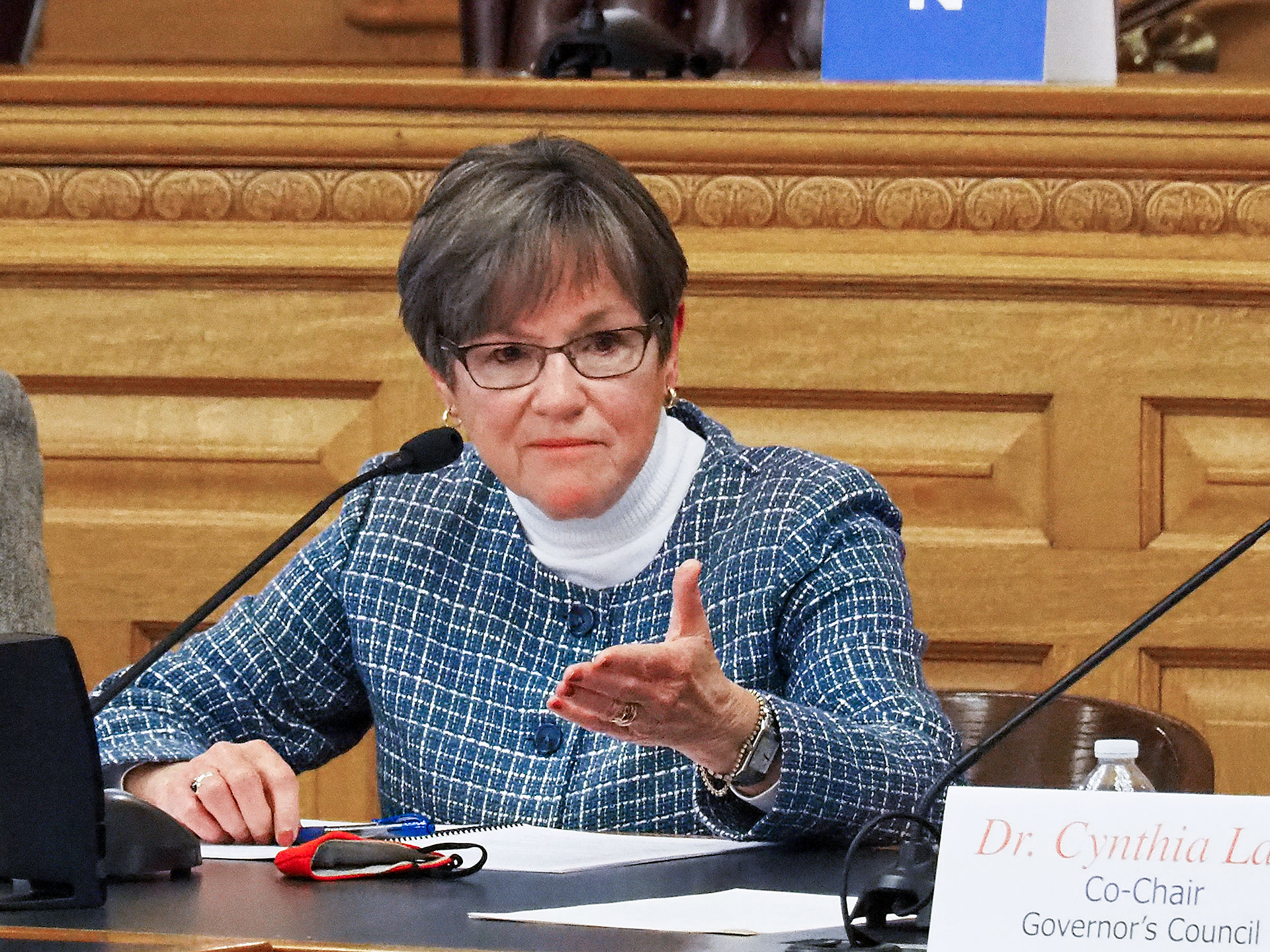

BY TIM CARPENTER | Gov. Laura Kelly flexed a veto pen to reject bills Friday prohibiting gender identity health care for transgender youth, introducing a vague crime of coercing someone to have an abortion and implementing a broader survey of women seeking abortion that was certain to trigger veto override attempts in the Republican-led House and Senate.
The decisions by the Democratic governor to use her authority to reject these health and abortion rights bills didn’t come as a surprise given her previous opposition to lawmakers intervening in personal decisions that she believed ought to remain the domain of families and physicians.
Kelly said Senate Bill 233, which would ban gender-affirming care for trans minors in Kansas, was an unwarranted attack on a small number of Kansans under 18. She said the bill was based on a politically distorted belief the Legislature knew better than parents how to raise their children.
She said it was neither a conservative nor Kansas value to block medical professionals from performing surgery or prescribing puberty blockers for their patients. She said stripping doctors of their licenses for serving health interests of patients was wrong. Under the bill, offending physicians could be face lawsuits and their professional liability insurance couldn’t be relied on to defend themselves in court.
“To be clear, this legislation tramples parental rights,” Kelly said. “The last place that I would want to be as a politician is between a parent and a child who needed medical care of any kind. And, yet, that is exactly what this legislation does.”
Senate President Ty Masterson (R-Andover) and House Speaker Dan Hawkins (R-Wichita) responded to the governor by denouncing the vetoes and pledging to seek overrides when legislators returned to the Capitol on April 26. The trans bill was passed 27-13 in the Senate and 82-39 in the House, suggesting both chambers were in striking distance of a two-thirds majority necessary to thwart the governor.
“The governor has made it clear yet again that the radical left controls her veto pen,” Masterson said. “This devotion to extremism will not stand, and we look forward to overriding her vetoes when we return in two weeks.”
Cathryn Oakley, senior director of the Human Rights Campaign, said the ban on crucial, medically necessary health care for trans youth was discriminatory, designed to spread dangerous misinformation and timed to rile up anti-LGBTQ activists.
“Every credible medical organization — representing over 1.3 million doctors in the United States — calls for age-appropriate, gender-affirming care for transgender and nonbinary people,” Oakley said. “This is why majorities of Americans oppose criminalizing or banning gender-affirming care.”
Abortion coercion
Kelly also vetoed House Bill 2436 that would create the felony crime of engaging in physical, financial or documentary coercion to compel a girl or woman to end a pregnancy despite an expressed desire to carry the fetus to term. It was approved 27-11 in the Senate and 82-37 in the House, again potentially on the cusp of achieving a veto override.
The legislation would establish sentences of one year in jail and $5,000 fine for those guilty of abortion coercion. The fine could be elevated to $10,000 if the adult applying the pressure was the fetuses’ father and the pregnant female was under 18. If the coercion was accompanied by crimes of stalking, domestic battery, kidnapping or about 20 other offenses the prison sentence could be elevated to 25 years behind bars.
Kelly said no one should be forced to undergo a medical procedure against their will. She said threatening violence against another individual was already a crime in Kansas.
“Additionally, I am concerned with the vague language in this bill and its potential to intrude upon private, often difficult, conversations between a person and their family, friends and health care providers,” the governor said. “This overly broad language risks criminalizing Kansans who are being confided in by their loved ones or simply sharing their expertise as a health care provider.”
Hawkins, the House Republican leader, said coercion was wrong regardless of the circumstances and Kelly’s veto of the bill was a step too far to the left.
“It’s a sad day for Kansas when the governor’s uncompromising support for abortion won’t even allow her to advocate for trafficking and abuse victims who are coerced into the procedure,” Hawkins said.
Emily Wales, president and CEO of Planned Parenthood Great Plains Votes, said HB 2436 sought to equate abortion with crime, perpetuate false narratives and erode a fundamental constitutional right to bodily autonomy. The bill did nothing to protect Kansas from reproductive coercion, including forced pregnancy or tampering with birth control.
“Planned Parenthood Great Plains Votes trusts patients and stands firmly against any legislation that seeks to undermine reproductive rights or limit access to essential health care services,” Wales said.
Danielle Underwood, spokeswoman for Kansas for Life, said “Coercion Kelly” demonstrated with this veto a lack of compassion for women pushed into an abortion.
The abortion survey
The House and Senate approved a bill requiring more than a dozen questions be added to surveys of women attempting to terminate a pregnancy in Kansas. Colorful debate in the House included consideration of public health benefits of requiring interviews of men about reasons they sought a vasectomy birth control procedure or why individuals turned to health professionals for treatment of erectile dysfunction.
House Bill 2749 adopted 81-39 in the House and 27-13 in the Senate would require the Kansas Department of Health and Environment to produce twice-a-year reports on responses to the expanded abortion survey. The state of Kansas cannot require women to answer questions on the survey.
Kelly said in her veto message the bill was “invasive and unnecessary” and legislators should have taken into account rejection in August 2022 of a proposed amendment to the Kansas Constitution that would have set the stage for legislation further limiting or ending access to abortion.
“There is no valid medical reason to force a woman to disclose to the Legislature if they have been a victim of abuse, rape or incest prior to obtaining an abortion,” Kelly said. “There is also no valid reason to force a woman to disclose to the Legislature why she is seeking an abortion. I refuse to sign legislation that goes against the will of the majority of Kansans who spoke loudly on Aug. 2, 2022. Kansans don’t want politicians involved in their private medical decisions.”
Wales, of Planned Parenthood Great Plains Votes, said the bill would have compelled health care providers to “interrogate patients seeking abortion care” and to engage in violations of patient privacy while inflicting undue emotional distress.
Hawkins, the Republican House speaker, said the record numbers of Kansas abortions — the increase has been driven by bans or restrictions imposed in other states — was sufficient to warrant scrutiny of KDHE reporting on abortion. He also said the governor had no business suppressing reporting on abortion and criticized her for tapping into “irrational fears of offending the for-profit pro-abortion lobby.”
******************************************************************************************

Tim Carpenter has reported on Kansas for 35 years. He covered the Capitol for 16 years at the Topeka Capital-Journal and previously worked for the Lawrence Journal-World and United Press International.
The preceding story was previously published by the Kansas Reflector and is republished with permission.
******************************************************************************************
The Kansas Reflector is a nonprofit news operation providing in-depth reporting, diverse opinions and daily coverage of state government and politics. This public service is free to readers and other news outlets. We are part of States Newsroom: the nation’s largest state-focused nonprofit news organization, with reporting from every capital.
Kansas
Kan. governor vetoes four anti-trans bills, GOP likely to override
‘Stripping away rights’ would hurt the state’s ability to attract businesses
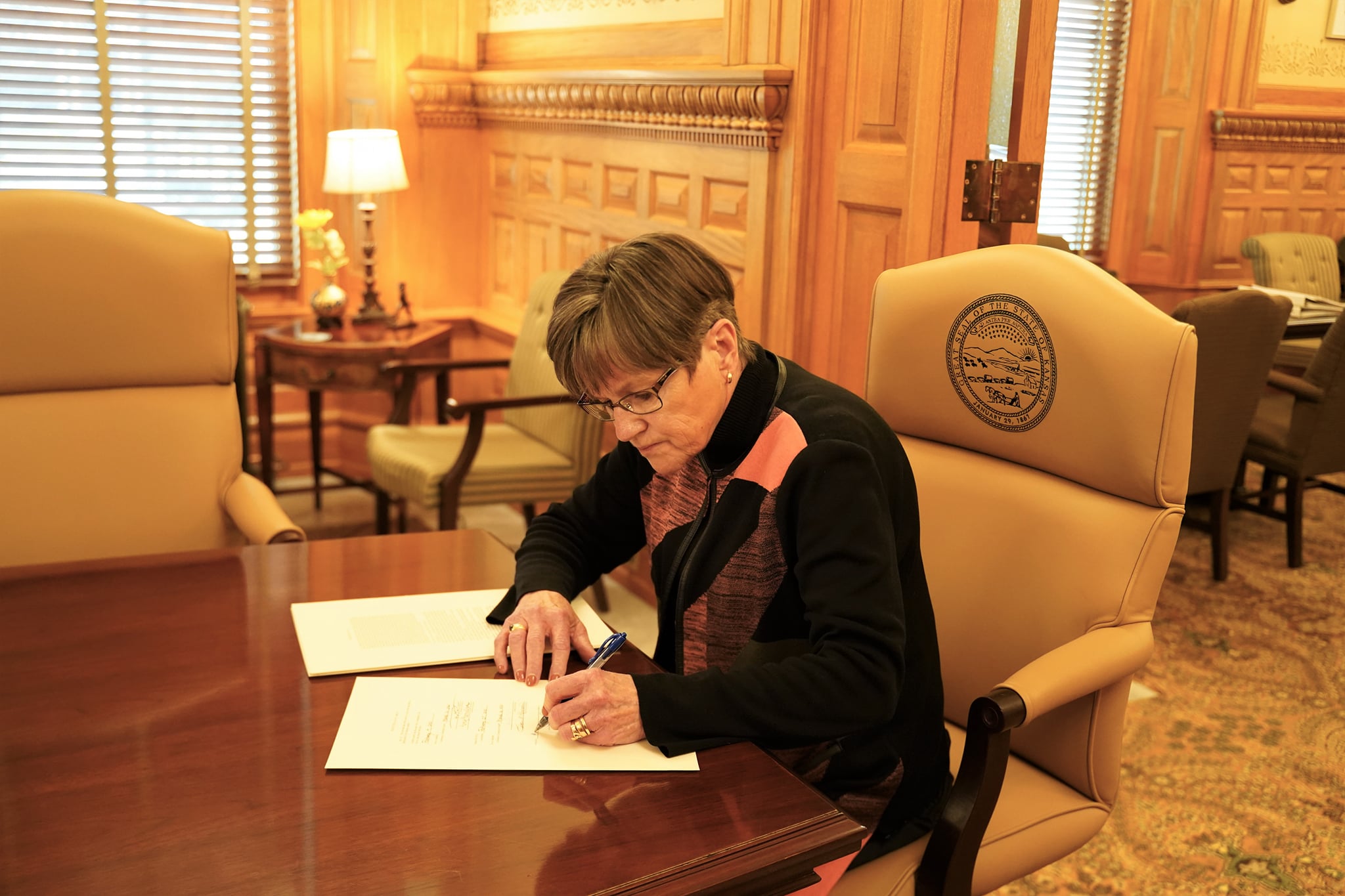
This past Thursday, Democratic Kansas Gov. Laura Kelly vetoed a sweeping set of anti-transgender bills, including a ban on gender-affirming health care for trans minors.
KMBC reported the governor said in statement on the four vetoes that measures “stripping away rights” would hurt the state’s ability to attract businesses. The vetoes also were in keeping with her promises to block any measure she views as discriminating against LGBTQ people.
“Companies have made it clear that they are not interested in doing business with states that discriminate against workers and their families,” Kelly said. “I’m focused on the economy. Anyone care to join me?”
In addition to the ban gender-affirming health care, bills were passed by state lawmakers that would have prevented trans Kansans from using restrooms and other public facilities that meshed with their gender identities; another measure would place limits on the Kansas Department of Corrections, restricting where trans offenders are housed in state prisons and county jails; then a measure placing restrictions on rooming arrangements for trans youth on overnight school trips.
The state legislature has Republican supermajorities in both chambers and conservative leadership has made it clear rolling back trans rights is a priority. Votes to override the governor are expected as soon as this week.
The bills on bathrooms, jails and overnight school trips passed earlier this month with the two-thirds majorities needed to override a veto, KMBC reported, but the measure on gender-affirming care did not, falling 12 House votes short of a supermajority.
“I am not going to go back to those days of hiding in the closet,” Justin Brace, executive director of Transgender Kansas, said during a recent trans rights rally outside the State House. “We are in a fight for our lives, literally.”
Taking aim at the governor’s veto of the measure to ban on gender-affirming health care for trans minors, Kansas Senate President Ty Masterson said in a statement:
“By any reasonable standard, governing from the middle of the road should include ensuring vulnerable children do not become victims of woke culture run amok.”
The progressive Movement Advancement Project think tank noted that as of April 21, 15 states have bans on at least some forms of medical care, and many more states are actively pursuing similar bans. As a result, nearly one in five (20 percent) trans youth currently live in states where they are banned from receiving best-practice medical care, in addition to trans adults living in Missouri.
“These bills are part of a much broader, coordinated effort to prevent transgender people from being our authentic selves,” said Logan Casey, senior policy researcher at MAP and an author of the report. “Across the country, anti-transgender extremists and politicians are putting the lives and well-being of transgender people at risk by attempting to outlaw access to best practice medical care not only for youth, but for all transgender people.”
Prior to 2021, no states banned medical care for trans youth. Treatments for children and teens have been available in the U.S. for more than a decade and are endorsed by major medical associations.
Medical experts along with LGBTQ advocacy and legal groups point out that the health care targeted by anti-trans extremists is medically necessary care that is prescribed by experienced doctors who utilize best practices that are endorsed by all major medical groups, including the American Academy of Pediatrics and the American Medical Association
The Kansas measure would have required the state’s medical board to revoke the license of any doctor discovered to have provided such care, and allowed people who received such care as children to sue health care providers later.
Republican state Rep. Susan Humphreys of Wichita said during a debate on the gender-affirming care bill: “They’re parents who are saying, ‘My child showed no signs of gender dysphoria until they got to be in middle school, and then they started using social media.’”
According to the Associated Press, Humphreys and her Republican counterparts across the U.S. argue many of their constituents reject the cultural shift toward accepting that people’s gender identities can differ from the sex assigned them a birth; don’t want cisgendered women sharing bathrooms and locker rooms with trans women; and question gender-affirming care such as puberty-blocking drugs, hormone therapies and surgeries.
Editor’s Note: The new MAP report, LGBTQ Policy Spotlight: Bans on Medical Care for Transgender People, provides the most comprehensive look to date at the sweeping attempts to ban and restrict medical care for not only transgender youth — but also trans adults.

Annie Andrews denounces trans athletes after Trump targets her

On Republican Long Island, gay Democrat Chris Gallant bets on public service over politics

Report: LGBTQ exclusion costs Japanese economy billions a year

Center for Black Equity honors leaders, activists at BE. Gala

In ‘The Lost Brontë,’ a complicated lie can lead to danger

U.S. int’l trade negotiator, consultant James Bedore dies at 82

Campaign urges Virginia High School League to reverse stance on trans athletes

Calif. GOP gubernatorial candidate ad ‘disgusting attempt to exploit lesbian intimacy’

Center Arts Gallery celebrates 10 years with reception, auction

Trump, Netanyahu, and Putin are all war criminals
-

 Obituary4 days ago
U.S. int’l trade negotiator, consultant James Bedore dies at 82
-
Virginia4 days ago
Campaign urges Virginia High School League to reverse stance on trans athletes
-
California5 days ago
Calif. GOP gubernatorial candidate ad ‘disgusting attempt to exploit lesbian intimacy’
-
Commentary4 days ago
Center Arts Gallery celebrates 10 years with reception, auction