News
New HHS reg seeks non-discrimination in health care as monkeypox spreads
Proposed rule bars strengthens protections for LGBTQ patients

A new regulation proposed by the Biden administration seeks to ensure non-discrimination in health care settings for women who have had abortions and LGBTQ people at a time when monkeypox cases continue to increase and fears persist after the U.S. Supreme Court overturned Roe v. Wade.
The new regulation, announced Monday by the Department of Health & Human Services, would interpret Section 1557 of the Affordable Care Act to apply more broadly to the definition of sex after the court’s earlier 2016 decision in Bostock v. Clayton County, which determined anti-LGBTQ discrimination was an illegal form of sex discrimination. The rule would enhance the prohibition discrimination on the basis of sex in health care settings and federally funded health care programs consistent with the law.
The regulation also institutes non-discrimination protections for intersex traits; and pregnancy or related conditions, including pregnancy termination; and people with limited English proficiency.
Xavier Becerra, secretary of health and human services, announced the proposed rule on Monday during a conference call with reporters and said it would ensure communities that have had barriers to accessing health care would be able to obtain it.
“Everyone in America should be able to get the care that they need from any health provider in the country, especially if they’re that provider is receiving funding from HHS,” Becerra said. “We want to make sure that Americans are free from discrimination when they try to access the care that they need. Pretty simple proposition.”
Becerra, asked by the Washington Blade how he sees the proposed rule playing out as part of the Biden administration’s approach to the monkeypox outbreak among gay and bisexual men, said the rule makes clear discrimination in health care is unacceptable and enables LGBTQ people to file a complaint with the Office of Civil Rights at the Department of Health & Human Services.
“The reality is that today, the issue of monkeypox, you should not face any discrimination when it comes to the issue of accessing the health care services you might need to address monkeypox,” Becerra said.
The new regulation doesn’t appear to be timed as a means to address monkeypox, but a follow-up to an earlier commitment from the Biden administration to make the change.
The proposed rule is similar to a regulation in the final years of the Obama administration, which interpreted the language of Section 1557 to bar discrimination based on sex stereotypes and gender identity. The rule, however, was rescinded during the Trump administration under HHS Director of the Office of Civil Rights Roger Severino, who bucked the decision in Bostock and reversed the rule pursuant to an earlier lower federal court ruling in Texas.
Melanie Fontes Rainer, now the director of the Office of Civil Rights under the Biden administration, said on the call that restoring non-discrimination protections after they were rescinded makes health care more accessible for everyone.
“The 2020 version of this rule narrowed its scope to cover fewer health programs and activities, limiting vital non-discrimination protections for so many across the country,” Rainer said. “The proposed rule proposes revisions to Section 1557 implementing regulation by restoring and strengthening provisions that protect individuals from discrimination and health programs and activities”
The Biden administration rule, however, is different from the Obama-era rule in key aspects. For starters, the Biden-era rule explicitly prohibits discrimination on the basis of sexual orientation in addition to other sex-based categories that were articulated before, using the Supreme Court’s decision in Bostock as justification.
The newer regulation also contains language that interprets Medicare Part B as federally funded assistance and includes an explicit exemption for health care providers who have objections to certain procedures, such as abortion and gender reassignment surgery. The exact breadth of the religious exemption wasn’t immediately clear.
Becerra said during the call the religious conscience provision was included as a result of stakeholder feedback and is consistent with the Biden administration’s goal to protect the rights of people in health care settings.
“That is also part of the work that we do, and we don’t believe that there’s any inconsistency in making sure that people are accessing care without discrimination,” Becerra said.
Becerra, asked during the call about the timeline for the rule, said he expects it will be made final before the end of this year and after the formal 90-day comment period.




Afghanistan
ICC unseals arrest warrants for Taliban officials accused of persecuting LGBTQ people, women
‘For LGBTIQ+ people, this matters enormously’
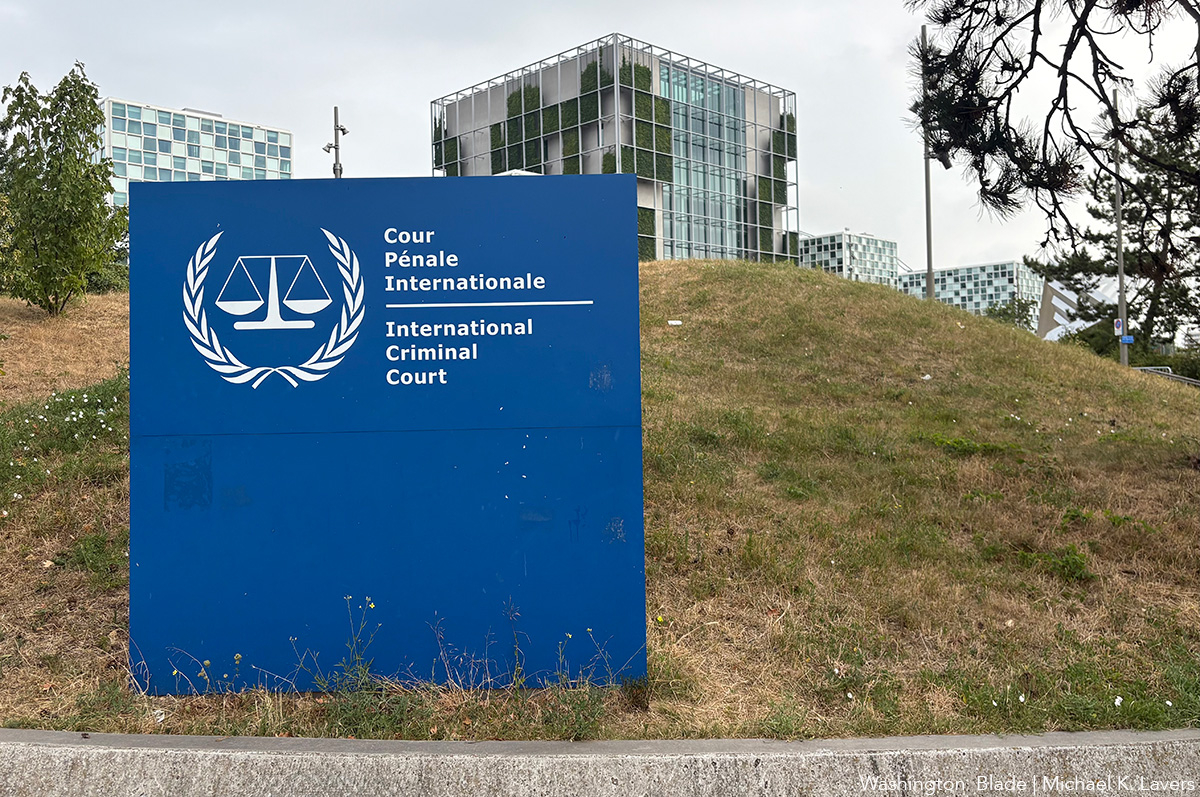
The International Criminal Court this week unsealed arrest warrants for four Taliban officials in Afghanistan accused of targeting LGBTQ people, women, and others who defy the group’s strict gender norms.
The warrants the ICC unsealed on Oct. 5 are for Hibatullah Akhundzada, the Taliban’s supreme leader, and Chief Justice Abdul Hakim Haqqani. The ICC also unsealed warrants for Education Minister Habibullah Agda and Higher Education Minister Neda Mohammad Nadim.
The ICC last year announced warrants for Akhundzada and Haqqani, as the Washington Blade previously reported.
“In the warrants of arrest, the (Pre-Trial) Chamber (II), in line with current developments in international law, found that the definition of ‘gender’ in the Rome Statute necessitates an interpretation that goes beyond a purely biological conception of sex,” reads the ICC’s Oct. 5 announcement. “It considered that it requires acknowledging the socially constructed roles, behaviors, expectations, and hierarchies traditionally associated with individuals on the basis of their sex. The Chamber considered that these societal constructs, commonly referred to as ‘gender norms,’ form part of the contextual lens through which acts amounting to gender-based persecution under article 7(1)(h) must be assessed.”
“It found that there are reasonable grounds to believe that the four suspects are criminally responsible for having ordered, induced or solicited the crime against humanity of persecution, under article 7(1)(h) of the Rome Statute, on gender grounds against girls, women, and other persons non-conforming with the Taliban’s policy on gender, gender identity or expression; and on political grounds against persons perceived as ‘allies of girls and women,’” it adds. “These crimes are believed to have been committed on the territory of Afghanistan since the Taliban seized power on Aug. 15, 2021, and have continued until at least Jan. 20, 2025.”
The Rome Statute established the ICC, which is in the Dutch city of The Hague, in 2002 after 60 countries ratified it.
The U.S. is among the countries that do not recognize the ICC. Secretary of State Marco Rubio on Friday announced U.S. sanctions against the ICC, which he described as a “rogue court.”
Then-ICC Chief Prosecutor Karim Khan in January 2025 announced a request for warrants against Taliban officials over their treatment of women and other groups since they regained control of Afghanistan in 2021. It marked the first time the ICC specifically named LGBTQ people as victims in a gender persecution case before it.
A report that Outright International released in 2023 notes Taliban officials have systematically targeted LGBTQ people — especially gay men and transgender women.
Taliban officials have subjected them to physical and sexual assault as well as arbitrary detention. The Outright International report also notes Taliban authorities have carried out public floggings for alleged same-sex sexual relations, and have collected intelligence on LGBTQ activists and community members.
Artemis Akbary, executive director of the Afghanistan LGBTIQ Organization, on Oct. 5 described the additional arrest warrants as “huge.”
“For LGBTIQ+ people, this matters enormously,” he said. “It strengthens the understanding that gender persecution can also capture persecution based on non-conformity with imposed gender roles, identities, and expressions.”
“This is an important development for accountability in Afghanistan, and potentially far beyond it,” added Akbary.
District of Columbia
Bet Mishpachah participates in D.C. Oct. 7 commemoration ceremony
Wednesday marked three years since Hamas attacked Israel
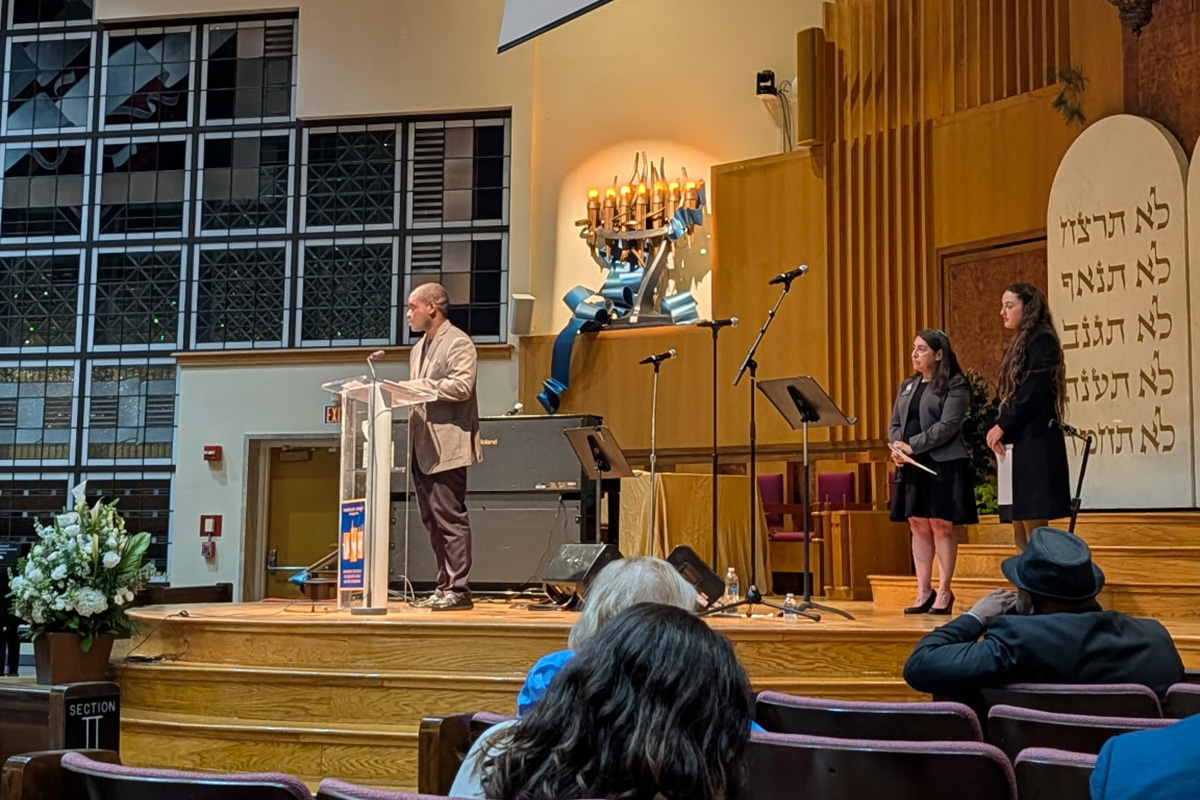
Bet Mishpachah Executive Director Joshua Maxey on Wednesday was among those who spoke at a ceremony in D.C. that marked the third anniversary of the Oct. 7 attack in Israel.
The Jewish Federation of Greater Washington hosted the ceremony that took place at the Washington Hebrew Congregation in Northwest D.C. Bet Mishpachah is the city’s LGBTQ synagogue.
“It was a deeply moving evening, especially hearing the stories of people who knew those who were murdered and those who survived and experiencing music that gave a voice to grief and hope,” Maxey told the Washington Blade.
Hamas militants on Oct. 7, 2023, killed roughly 1,200 people, including upwards of 360 partygoers at the Nova Music Festival near Re’im, a kibbutz that is a couple miles from the Gaza Strip, when it launched its surprise attack on Israel. The militants also kidnapped more than 200 people.
The Hamas-controlled Gaza Health Ministry says Israeli forces have killed more than 74,000 people in the enclave since Oct. 7.
The International Criminal Court in 2024 issued arrest warrants for Israeli Prime Minister Benjamin Netanyahu; former Israeli Defense Minister Yoav Gallant; former Hamas leader Yahya Sinwar; Mohamed Diab Ibrahim al-Masri, the head of Hamas’s military wing known as the Qassam Brigades; and Ismail Haniyeh, chair of the Hamas Political Bureau, after it accused them of committing war crimes and crimes against humanity in Gaza and Israel.
The Israeli government has strongly denied it has committed genocide in Gaza.
An Israeli airstrike on a compound in Khan Younis, a city in southern Gaza, on July 13, 2024, killed killed Deif, one of the alleged Oct. 7 masterminds. Israel less than three weeks later assassinated Haniyah in Tehran, the Iranian capital. Israel Defense Forces soldiers on Oct. 16, 2024, killed Sinwar in Rafah, a city in southern Gaza.
Hamas last October released the remaining hostages in Gaza as part of a ceasefire agreement that President Donald Trump helped broker. Israel has continued to conduct airstrikes and other military operations in Gaza since the official suspension of hostilities took effect.
“For Bet Mishpachah, it was especially meaningful to lift up the names of LGBTQ+ people, those whose identities we know and those whose stories may never be fully known, who were murdered, and to honor the LGBTQ+ survivors whose resilience continues to inspire us,” said Maxey, referring to his participation in Wednesday’s ceremony. “Emily Damari’s story is particularly poignant: while held hostage, she had to hide the fact that she was gay because she feared that revealing her identity to her captors could put her life at even more risk. Yet, she survived.”
“Her story, like so many others, reminds us of the extraordinary courage it takes simply to remain human in the face of hatred,” he added. “May we continue to remember and to mourn, to honor, and to work toward a future rooted in peace and hope.”
National
Man charged in Mall of America shooting plot inspired by Pulse massacre: report
Suspect exchanged hundreds of messages, pledged loyalty to ISIS
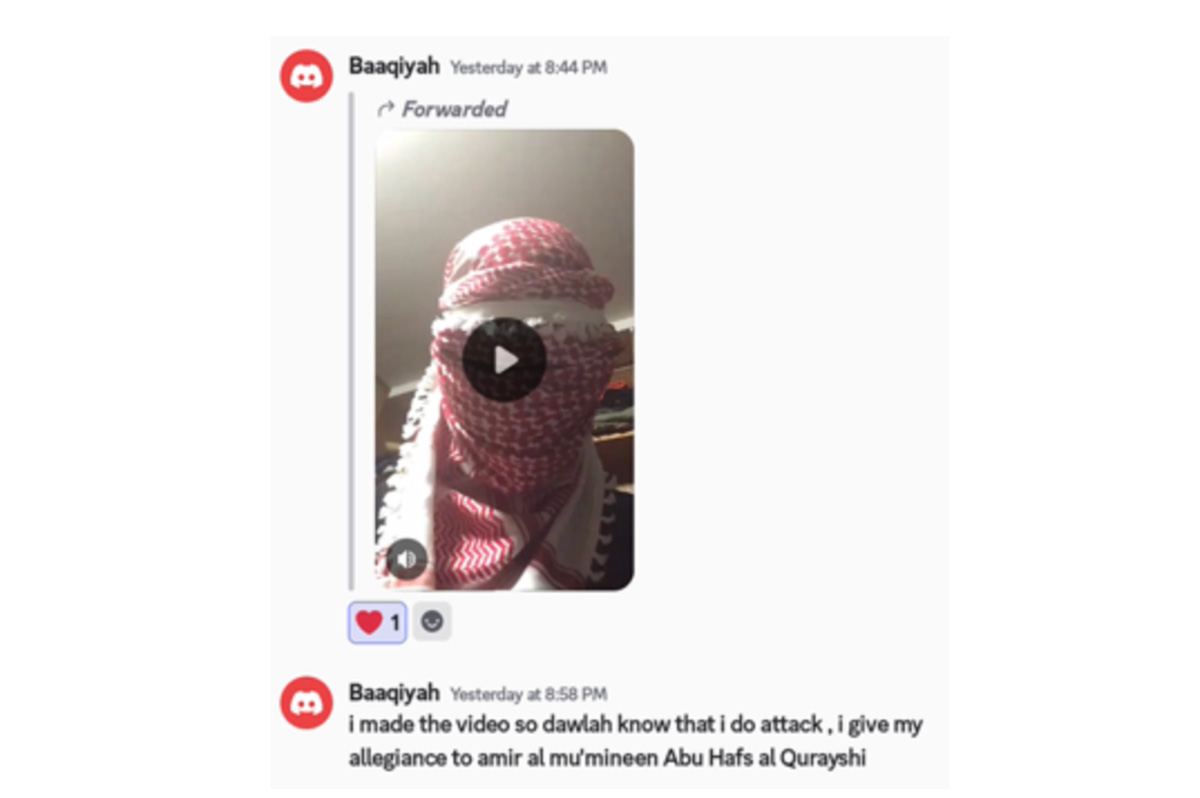
The U.S. Department of Justice charged Sheikhdoon Abdullahi Mohamud, 18, of Richfield, Minn., on Oct. 7 with one count of knowingly receiving a firearm and ammunition in order to commit a federal crime of terrorism. Mohamud allegedly planned to carry out a mass-casualty attack in support of ISIS, inspired in part by the Pulse nightclub massacre that took place on June 12, 2016 when then-29-year-old Omar Mateen murdered 49 people and wounded 58 – one of the deadliest mass shootings in U.S. history, and the deadliest targeting the LGBTQ+ community.
According to a DOJ statement release, Mohamud was arrested on Oct. 6 by the FBI, which had arranged to sell him an AK-47 assault rifle, magazines, and ammunition through an undercover FBI employee. Mohamud was arrested shortly after paying $600 in cash and taking possession of those items; he reaffirmed his intention to shoot people at the Mall of America during the transaction.
“Mohamud allegedly sought to carry out a mass-casualty shooting at the Mall of America, expressing a desire to emulate some of the most horrific ISIS-inspired attacks in the United States, including the atrocities at Pulse Nightclub and 2025 New Year’s Day attack in New Orleans,” said Assistant Attorney General for National Security John A. Eisenberg in the statement by the DOJ. “The National Security Division will continue to work closely with the FBI and Joint Terrorism Task Force to track down and prosecute ISIS-inspired terrorists in the United States.”
According to the complaint, beginning on or about December 2024, Mohamud had exchanged hundreds of messages through multiple social media and messaging apps with a confidential source, and expressed a desire to travel to Somalia to join a designated foreign terrorist organization to fight on their behalf.
The defendant stated many times that if he was unable to travel overseas because of a lack of funds, he planned to carry out a mass-casualty event in Minnesota in support of ISIS.
According to the DOJ, “In July 2026, Mohamud sent messages discussing his intent to carry out a mass-casualty shooting attack at the Mall of America because he claimed it was owned by Jews. He wrote that [he] wanted to kill 30 to 60 people so no one would go there.”
“During the course of his communications, Mohamud stated that he wanted to commit an attack similar to those of the Pulse Nightclub mass-shooting in Orlando, the Bondi Beach mass-shooting in Australia, and the New Year’s Day vehicle-ramming attack in New Orleans.”
This case is being prosecuted by Trial Attorney Ryan White of the National Security Division’s Counterterrorism Section and Assistant U.S. Attorney Benjamin Bejar for the District of Minnesota.

Calendar: October 9-15

ICC unseals arrest warrants for Taliban officials accused of persecuting LGBTQ people, women

Bet Mishpachah participates in D.C. Oct. 7 commemoration ceremony

Man charged in Mall of America shooting plot inspired by Pulse massacre: report

Bar Betsie, inviting and intimate, marks one-year anniversary

PHOTOS: Winchester Pride

Lula, Flávio Bolsonaro to face off in second round of Brazilian presidential election

Evan Low is not the leader the Victory Fund needs at this moment

Transgender woman elected to Brazilian Chamber of Deputies

Bowser, Office of LGBTQ Affairs announce LGBTQ+ History Month events
-

 Photos4 days ago
PHOTOS: Winchester Pride
-
Brazil5 days ago
Lula, Flávio Bolsonaro to face off in second round of Brazilian presidential election
-
Opinions4 days ago
Evan Low is not the leader the Victory Fund needs at this moment
-
Brazil4 days ago
Transgender woman elected to Brazilian Chamber of Deputies