National
Celebrating, honoring and remembering America’s LGBTQ veterans
Nov. 11 is Veterans Day
Nov. 11 is Veteran’s Day in the U.S. For much of the rest of the world and especially in Europe, it is Armistice Day, the day that marks the end of World War I, which was also referred to as ‘the Great War.’ On the 11th hour of the 11th day of the 11th month in 1918 when the armistice was signed, over 20 million people had lost their lives.
“On the 11th hour, of the 11th day, of the 11th month, we will remember them,” General of the Armies of the United States John Joseph ‘Black Jack,’ Pershing. (Sept. 13, 1860 – July 15, 1948)
There are an estimated 1 million currently living lesbian, gay, bisexual, transgender and queer veterans in the United States. They have served in the U.S. Army, Air Force, Navy, Marines, Coast Guard and now the U.S. Space Force.
They served their country in conflicts spanning from World War II up through “Operation Enduring Freedom” as well as in peacetime. But for many who served until the end of “Don’t Ask Don’t Tell” on Sept. 20, 2011, and later President Joe Biden’s order ending the ban on transgender service in 2021, they served in silence risking discharge and societal ostracization if their sexual orientation or gender identity was revealed.
Formerly San Francisco-based LGBTQ activist Michael Bedwell tells the story of Sarah Davis, who served during World War II in the U.S. Navy as a member of the WAVES (Women Accepted for Volunteer Emergency Service.) Davis, whose nickname was “Sammi,” was from a small town in Iowa in the heartland of America.
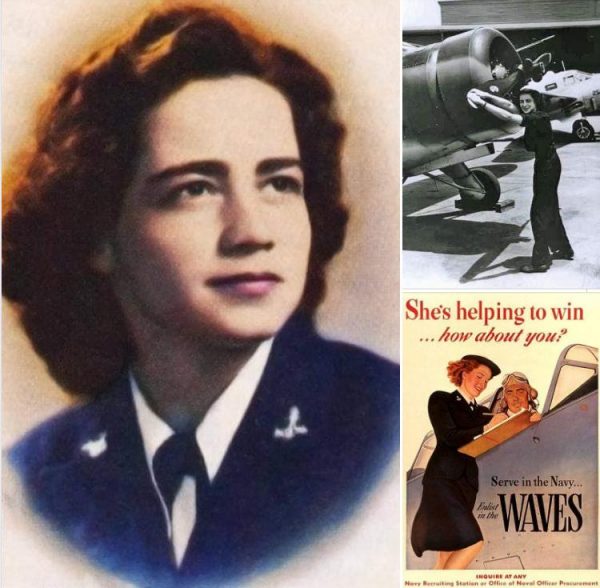
Davis later she said that she joined in 1943 for “the adventure, the excitement. I was going to save the world for democracy. I liked the military life. I liked the discipline. I liked the order. I liked the marching, and the tunes.” Though WAVES could not serve aboard combat ships or aircraft, they supported them; Davis was an Aviation Machinist Mate First Class at the Naval Air Station in Vero Beach, Fla., and wrote news stories for the Naval Flight Exhibition Team in Jacksonville, Fla.
Before volunteering, she remembered she hadn’t heard “anything about being queer. Didn’t even know that word existed when I went into the Navy. We used to go to the bars open to lesbians, and hug and kiss and so on, but we had to keep things under control. And we definitely couldn’t acknowledge commanding officers who might be lesbian, because you could get into big trouble. You had to form relationships very discreetly and privately.”
After the war, she was interrogated during a witch hunt, a part of the about-face the military did after mostly “looking the other way” during the war once they no longer needed so many troops, and began lecturing new women recruits about the horrors of aggressive lesbians. Davis survived by breaking up with her lover, and denying she knew other gay women, and was ultimately given an honorable discharge. But she told documentary filmmaker Arthur Dong that, “[I]t made me very, very guarded for years and years. It took away what power that I thought I had. It broke my spirit, really, a lot. And that’s been hard to recover, very hard.”
It took many years, but one of the ways she found healing, and came out publicly, was winning seven gold medals in the seniors category at 1990’s Gay Games. In the interim, she attended Stanford University and USC, and graduated in 1952 in occupational therapy and certified in physical therapy in 1956. In 1963, she received a master’s degree in photography from San Francisco State College. She also served in the Peace Corps in 1971, serving in Swaziland, worked for San Francisco’s Visiting Nurses Association, and became a deacon in San Francisco’s All Saints’ Episcopal Church. For years she lived with her dog, Rambo, in an 1896 three-story Victorian on Clayton Street in the Haight that she bought in 1960, and ran as a boardinghouse worthy of one of Armistead Maupin’s “Tales of the City” characters.
A 2008 New York Times article about it being remodeled by its new owners upon the move by Davis, then 81, to an assisted living facility noted that, “The mural of a naked goddess that once dominated the entrance parlor is gone, [and] the communal shower with its swinging saloon doors. But a few remnants survive, including a wrought-iron peace sign on the back porch and, in a bathroom, a stained-glass portrait of St. Peter that had been salvaged in the 1960s from a demolished church. Tenants and guests [had] painted walls and ceilings with mandalas, Rastafarian basketball players, and a tree root that morphed into a rabbit, horse and wolf.”
Upon her death the next year back in Iowa, Davis left a trust from her sale of her colorful house benefiting various groups including Marin County’s Canal Alliance that serves low-income immigrant populations with “crisis counseling, a food pantry, classes in English, computers and citizenship, and affordable legal help to keep families together.” A niece wrote: “Aunt Sarah was a positive influence in my live. She always encouraged me to reach for the stars. She lived her life to the fullest, and had many exciting experiences. She followed her mother’s example and continued fighting for women’s rights. She will be missed.”
“Gay and Lesbian soldiers faced extraordinary discrimination during World War II. Most found new communities of people and thrived despite the oppression. Discover the film Coming Out Under Fire that shares their story.” ~ the National World War II Museum, New Orleans.
One of the most significant figures in the American LGBTQ rights movement was himself also a veteran. Franklin Edward Kameny had been drafted and served in the Army during World War II and later upon discharge he matriculated first at Queens College, City University of New York then attending graduate school at Harvard University earned a doctorate in astronomy.
While working as astronomer in the Army Map Service in D.C., Kameny was outed and fired from his position in 1957 leading to his 54 years long career as a LGBTQ activist and spokesperson for equality, which only ended when Kameny died on National Coming Out Day on Oct.11, 2011.
Kameny had a lengthy list of accomplishments during his career as an activist including his being a co-founder of the D.C., Mattachine Society, and along side the Mattachine membership launched some of the earliest public protests by gays and lesbians with a picket line at the White House on April 17, 1965.
He also worked to remove the classification of homosexuality as a mental disorder from the American Psychiatric Association’s Diagnostic and Statistical Manual of Mental Disorders.
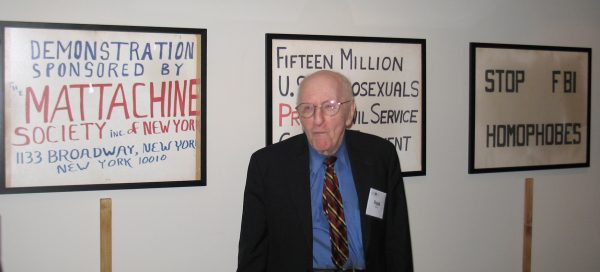
(Photo by DC Virago)
In the early 1970’s Kamney became friends and worked with an Air Force Vietnam veteran who soon became the public face of gays in the military.
“When I was in the military they gave me a medal for killing two men and a discharge for loving one.” ~ from the headstone on the grave of Technical Sergeant (TSgt) Leonard Matlovich, U.S. Air Force
U.S. Air Force Technical Sergeant (TSgt) Leonard Matlovich, U.S. Air Force had served three tours of duty, earning the Bronze Star for bravery, the Purple Heart and an Air Force commendation during his time in Vietnam.
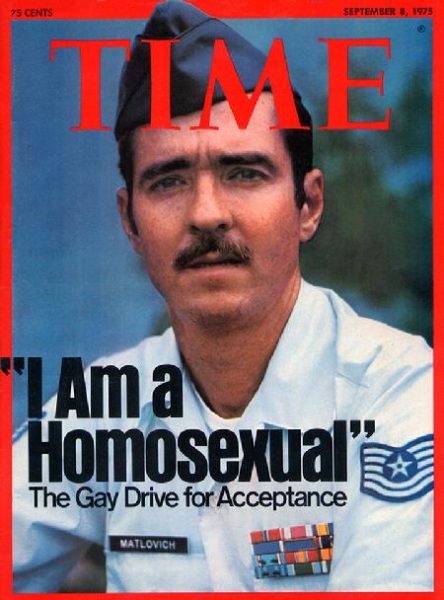
In March 1975 Matlovich became the first uniformed member of the armed forces on active duty to challenge and fight discrimination against gays and lesbians and he became the first openly gay person to be on the cover of “Time Magazine.”
Although he was ultimately discharged in 1980 a federal judge ordered the Air Force to reinstate him with back pay. The Air Force negotiated a settlement with Matlovich and the federal court’s ruling was vacated when he agreed to drop the case in exchange for a tax-free payment of $160,000.
Matlovich, like Frank Kamney became active in gay rights and AIDS organizations.
In 1986, he was diagnosed with AIDS and when he succumbed to the disease and died in West Hollywood, Calif., in June 1988, his body was returned to D.C. and buried at the Congressional Cemetery in Southeast Washington with full military honors.
The stories of LGBTQ veterans span beyond activism. In August 2021 during the fall of Kabul, Afghanistan, a trans government contractor for the State Department and former U.S. Air Force Sgt. Josie Thomas found herself trapped along with her colleagues at the diplomatic support facility known as Camp Alvarado located on the outskirts of Afghan capital city’s airport.
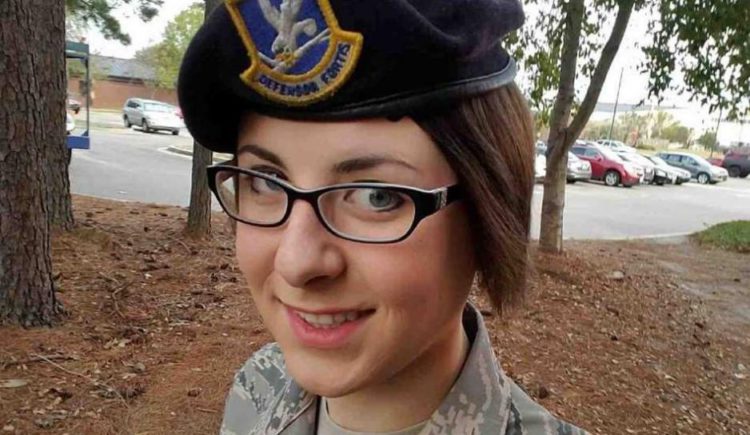
Thomas, in a series of text messages provided to the Washington Blade on background by a colleague of hers, relayed that she and others were aware of the immediate presence of the Taliban insurgents, which was communicated at the time Afghan security forces had abandoned their posts.
One of her colleagues communicating with Thomas received a text from her stating that elements of the U.S. Army’s 82nd Airborne Division had arrived at the Camp Alvarado diplomatic support facility;
“Just talked to her again for several minutes. The 82nd has taken control of her compound and there’s a clear route from there to the flight line now. That the place is looking like a refugee camp with the amount of displaced coalition personnel and there’s no aircraft coming in to evacuate people yet.”
On Aug. 17, she was evacuated and flown home.
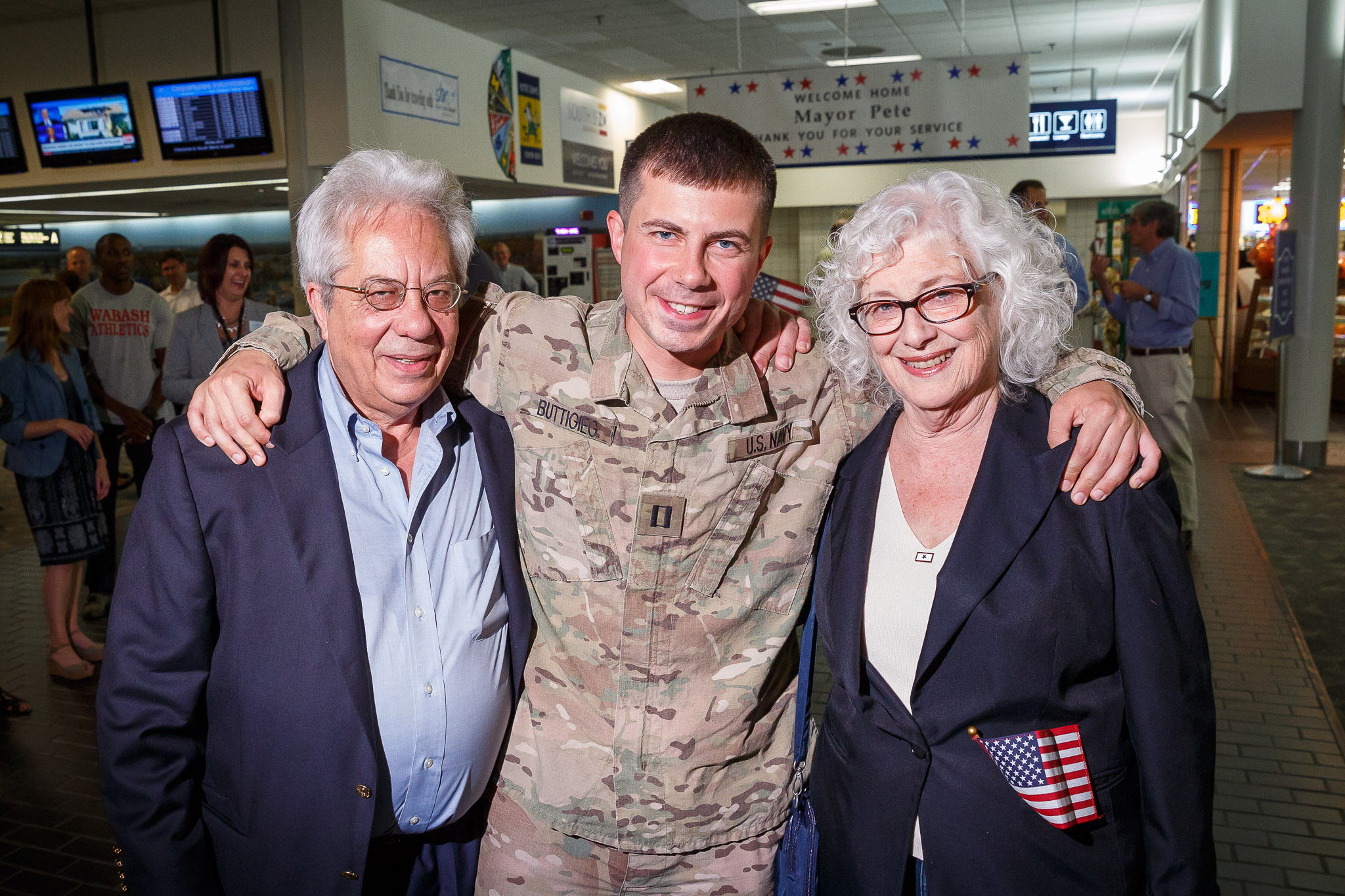
Likely one of the most high profile contemporary LGBTQ military veterans is the current Transportation Secretary Pete Buttigieg, shown in the featured photograph with his parents. Buttigieg, a graduate of Harvard College and the University of Oxford, served in the U.S. Naval Reserve from 2009 to 2017 and left with the rank of Lieutenant (O-3.)
Buttigieg, the first openly gay man to be confirmed by the U.S. Senate to a presidential cabinet post had previously been elected and served as the 32nd mayor of his hometown of South Bend, Ind.
These are but a very select few stories of the tens of thousands of LGBTQ Americans who have proudly worn the uniform of their country.
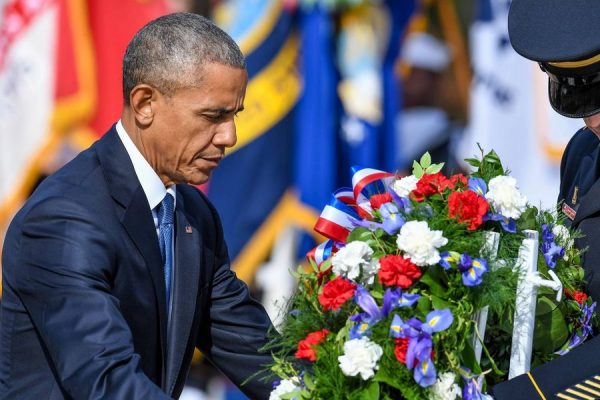
(Photo credit: U.S. Army Photography Unit, the Pentagon, Military District of Washington)
On Memorial Day 2013, this reporter, while working as the Washington Bureau Chief for another LGBTQ publication encountered the story of one of those veterans:
ARLINGTON, Va. — Every year that I have lived and worked in this city [Washington, D.C.] I have always gone to Arlington National Cemetery to observe the Memorial Day ceremonies.
Afterward, I wander through the grounds, just to watch, maybe to listen, but mostly to contemplate on the sacrifices made by those brave souls whose final resting place has become hallowed ground — a literal garden of stones.
Arlington’s rolling hills are a place of extraordinary beauty, a fitting repository for the memory of the living history of the United States. Names from the history books leap off the pages as one strolls through the grounds: “Byrd, Taft, Lincoln, Kennedy, Rickover, Marshall, Pershing,” followed by the names of the thousands of soldiers, sailors, airmen, and coast guardsman who gave their lives to secure the freedoms promised by the American Constitution.
In his remarks today, President Barack Obama reminded Americans they must honor the sacrifices of their military service members, particularly as U.S. combat roles change and the nation’s involvement in Afghanistan is winding down.
Adding that Arlington “has always been home to men and women who are willing to give their all … to preserve and protect the land that we love,” the President praised the selflessness that “beats in the hearts” of America’s military personnel.
Obama’s words stuck with me as I walked along through the ocean of gravestones, pausing occasionally to read the names, the inscriptions, and wonder what each person was like.
Scattered throughout the graves proudly marked with miniature American flags fluttering in the bright noontime sunlight, I observed families, loved ones, and friends who had come to honor their fallen.
Then I happened upon one grey haired older gentleman standing quietly in front of a headstone, obviously lost in his thoughts. As I tried to unobtrusively move around him, he look up at me and smiled.
I greeted him, and he greeted me back. He saw my press credentials hanging from my neck and asked whom I worked for.
I told him, momentarily wondering what type of reception I’d receive as, let’s face it, the LGBTQ community still has its detractors, and to my shock, he looked back at me, with tears forming in his eyes.
“You’re gay?”
“I am,” I answered.
“Lot of changes since I was a, a kid,” he trailed off. I pointed at headstone and quietly asked if the person was a friend or a family member.
“He’s my, well was my best bud, yeah, I dunno…”
The gentleman looked stricken and it was certainly not my intention to interview him, impromptu or not. But yet I sensed that something was left hanging so I took the plunge and asked him for a few details, if he didn’t mind sharing them. As it turns out, that’s exactly what he wanted… to share, to have a conversation about the person whose grave we were standing over.
The two men had grown up in eastern Ohio, in a small rural farming community. They played football, went fishing, did farm work, and discovered that after a few failed attempts at pursuing the fairer sex, their real romantic interests laid in each other.
By the time they had graduated from high school, the Vietnam conflict had escalated and, rather than wait to be drafted, they decided to join the U.S. Marines together. They went to boot camp, and not long after graduation, found themselves on troop planes headed for Vietnam.
“We were lucky,” he said, “We both got assigned to the 2nd Battalion, 26th regiment.”
But good luck turned sour as their battalion found itself in the middle of one of the nastiest battles of the 1968 Tet Offensive in the battle for Khe Sanh.
“I lost him that morning,” he told me, pointing at the inscribed date of death on the simple white marker — February 7, 1968. “He was just 19.”
The tears came freely and I waited. Then we talked some more.
He told me that after he lost his love, “I went straight and got married.” Just a fews years ago, he lost his wife to cancer.
He has grandkids that he says will never know the truth — he just can’t be open with them, but at the same time, never does a day go by that he doesn’t think about and mourn the loss of his friend, his partner — and the promise of what might have been.
“I was glad to see DADT end,” he told me. “At least some other couples won’t have to hide like we did.”
I thanked him for his service and his time talking with me and walked away reflecting on all of the unknown LGBT military folk buried around me who, like that lost soldier, suffered in silence and hid, yet still believed in a greater good of which they ultimately gave their lives for their country.
***************************************
Across Lafayette Park on Vermont Avenue, N.W., a block from the White House, stands a nondescript government office building that houses the headquarters of the Department of Veterans Affairs. On a pair of metal plaques at its entrance is inscribed the words of the 16th president of the United States, Abraham Lincoln, which define the motto of the agency: “To care for him who shall have borne the battle and for his widow, and his orphan.”
The Department of Veterans Affairs is a leading provider for healthcare for LGBTQ vets. While the VA is working to be a national leader in health care for LGBTQ veterans and wants to assure that high-quality care is provided in a sensitive, respectful environment at all VA health care sites nationwide, the fact remains that these LGBTQ veterans can face increased health risks and unique challenges in accessing quality health care.
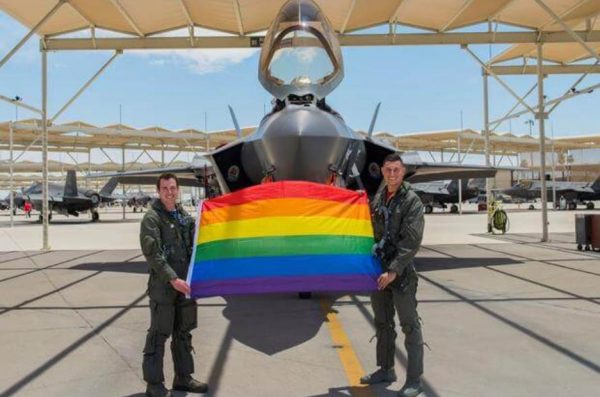
Many of LGBTQ veterans may receive care at the Department of Veterans Affairs, but others may be unaware of what services are available or have concerns about discrimination.
A question poised is simple; What is VA’s policy on LGBTQ veterans?
According to the VA, its policy is — all veterans deserve respect and dignity. VA has a nondiscrimination patient care policy that includes sexual orientation and gender identity and expression. Specifically, it is the policy of Veterans Health Administration “… that staff provide clinically appropriate, comprehensive, veteran-centered care with respect and dignity to enrolled or otherwise eligible transgender and intersex veterans, including but not limited to hormonal therapy, mental health care, preoperative evaluation and medically necessary post-operative and long-term care following gender confirming /affirming surgery. It is VHA policy that veterans must be addressed based upon their self-identified gender identity… ” (VHA Directive 1341, p. 3)
What services does VA provide for LGBTQ veterans?
Each VA facility is required to have an LGBTQ coordinator who can connect veterans with culturally competent providers, educate staff about where gaps in knowledge/training exist and to help create a more welcoming environment. (VHA Directive 1341, May 23, 2018)
The VA is authorized to provide:
- Hormone treatment
- Substance use/alcohol treatment
- Tobacco cessation treatment
- Treatment and information on prevention of sexually transmitted infections/PrEP
- Intimate partner violence reduction and treatment of after effects
- Heart health
- Appropriate cancer screening, prevention and treatment
What can LGBTQ veterans expect when accessing their earned benefits?
It is important for LGBTQ veterans to let providers know about sexual activity and identity so they can appropriately screen them for potential medical issues. Additionally, VA providers may ask about sexual orientation, gender identity, sexual health and social experiences which may involve exposure to violence in the home, or assess for homelessness. This information can help providers guide veterans to resources, services and programs that can address their unique needs.
LGBTQ veterans can be assured their providers will keep any information they reveal confidential. They can ask that their gender identify or sexual orientation not be revealed in their medical record although this may compromise their ability to receive appropriate care.
Where can a veteran learn more?
More information on the VA’s LGBTQ veterans policies and programs can be found here. The VA has also made available the following fact sheets to identify health care topics for sexual and gender minorities:



National
Man charged in Mall of America shooting plot inspired by Pulse massacre: report
Suspect exchanged hundreds of messages, pledged loyalty to ISIS
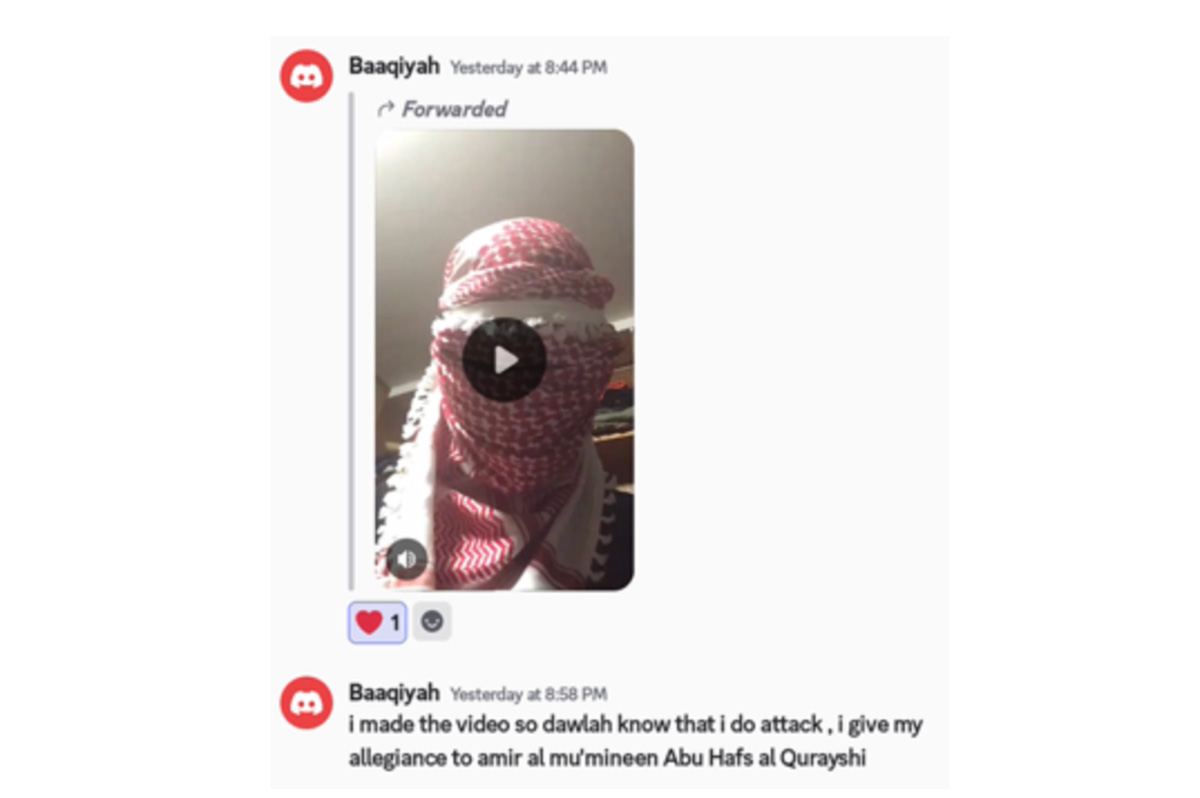
The U.S. Department of Justice charged Sheikhdoon Abdullahi Mohamud, 18, of Richfield, Minn., on Oct. 7 with one count of knowingly receiving a firearm and ammunition in order to commit a federal crime of terrorism. Mohamud allegedly planned to carry out a mass-casualty attack in support of ISIS, inspired in part by the Pulse nightclub massacre that took place on June 12, 2016 when then-29-year-old Omar Mateen murdered 49 people and wounded 58 – one of the deadliest mass shootings in U.S. history, and the deadliest targeting the LGBTQ+ community.
According to a DOJ statement release, Mohamud was arrested on Oct. 6 by the FBI, which had arranged to sell him an AK-47 assault rifle, magazines, and ammunition through an undercover FBI employee. Mohamud was arrested shortly after paying $600 in cash and taking possession of those items; he reaffirmed his intention to shoot people at the Mall of America during the transaction.
“Mohamud allegedly sought to carry out a mass-casualty shooting at the Mall of America, expressing a desire to emulate some of the most horrific ISIS-inspired attacks in the United States, including the atrocities at Pulse Nightclub and 2025 New Year’s Day attack in New Orleans,” said Assistant Attorney General for National Security John A. Eisenberg in the statement by the DOJ. “The National Security Division will continue to work closely with the FBI and Joint Terrorism Task Force to track down and prosecute ISIS-inspired terrorists in the United States.”
According to the complaint, beginning on or about December 2024, Mohamud had exchanged hundreds of messages through multiple social media and messaging apps with a confidential source, and expressed a desire to travel to Somalia to join a designated foreign terrorist organization to fight on their behalf.
The defendant stated many times that if he was unable to travel overseas because of a lack of funds, he planned to carry out a mass-casualty event in Minnesota in support of ISIS.
According to the DOJ, “In July 2026, Mohamud sent messages discussing his intent to carry out a mass-casualty shooting attack at the Mall of America because he claimed it was owned by Jews. He wrote that [he] wanted to kill 30 to 60 people so no one would go there.”
“During the course of his communications, Mohamud stated that he wanted to commit an attack similar to those of the Pulse Nightclub mass-shooting in Orlando, the Bondi Beach mass-shooting in Australia, and the New Year’s Day vehicle-ramming attack in New Orleans.”
This case is being prosecuted by Trial Attorney Ryan White of the National Security Division’s Counterterrorism Section and Assistant U.S. Attorney Benjamin Bejar for the District of Minnesota.
California
Calif. GOP gubernatorial candidate ad ‘disgusting attempt to exploit lesbian intimacy’
Activists, anti-LGBTQ religious leaders criticized Steve Hilton spot

Two women sit on a bed, a Pride flag hanging behind them. One is nervous; the other tells her to be calm and that she’ll do “all the work.” The music swells. The two hold hands and — fill out a ballot voting for Steve Hilton?
This is the new advertisement from the Hilton gubernatorial campaign that is drawing rebuke from both sides of the aisle, but for very different reasons.
Jorge Reyes Salinas, the communications director at Equality California, said the ad was an insult to the queer community.
“This ad is a disgusting attempt to exploit lesbian intimacy for political attention,” he said. The advertisement plays on media tropes that Salinas says “reduce lesbian and bisexual women … to sexual entertainment,” rather than showing them as well-rounded characters. “Any group of the LGBTQ+ community deserves the same dignity and respect as everyone else,” he said.
The ad is truly hyper-sexualized. It ends with one woman telling the other, “Now lick it.” The two pause and stare before she reveals an envelope to send the ballot, and large text pops up saying, “Just try it!”
Salinas characterized the ad as a desperate attempt to get attention from a candidate who is trailing far behind in the polls in heavily Democratic California. The Democratic candidate Xavier Becerra, who is endorsed by Equality California, holds a 25-point lead over Hilton according to recent polling by the UC Berkeley Institute of Governmental Studies.
Conservatives have also criticized the ad.
Influential evangelical Pastor Jack Hibbs thought the ad was distasteful and said, “lesbianism among college girls and some high school girls that right now is an actual pandemic of social ill.” Republican attorney general candidate Michael Gates said it undermines “the sanctity of the relationship between parents and their children.” This criticism is rather confusing because although the ad features two relatively young women, they both appear to be adults, not minors.
“The comments from Pastor Jack Hibbs should be criticized because there is nothing wrong with two women being attracted to each other,” Salinas said. “We’re calling out the ad’s stereotypes, while also rejecting the homophobia in the response to it … by other Republicans.”
The backlash from Hilton’s own party and supporters shows that an advertisement full of queer innuendo was ill-considered, considering the national GOP’s attacks on LGBTQ people in recent years. Hilton himself has been campaigning against transgender girls and women competing in school sports and using locker rooms that correspond with their gender identity. This context might be why Hilton’s political base responded to the ad just as poorly as the liberal voters he was attempting to court.
Hilton says the ad is part of a new series rolling out before Election Day, showing stereotypical California liberal archetypes voting for Hilton. He claims these ads are authentically filmed with real actors, as opposed to being A.I. generated, like many of his previous ads. One other advertisement has been released so far by the campaign showing a man at a spiritual retreat also being swayed to vote for Hilton, although it is notably absent of sexual innuendo.
Caleb Kaufman is a California Local News Fellow placed with the Los Angeles Blade. The California Local News Fellowship is a state-funded initiative to support and strengthen local news reporting. Learn more about it at fellowships.journalism.berkeley.edu/cafellows.
2026 Midterm Elections
Trump uses anti-trans slur against Democratic Senate candidate
President mocked Annie Andrews

President Donald Trump used an anti-trans slur against Democratic South Carolina Senate candidate Annie Andrews on Monday as he sought to rally support for Republicans in the state’s Senate race.
In a post on Truth Social, Trump attacked Andrews three times, referring to her as “trannie” while promoting U.S. Sen. Darline Graham (R-S.C.)’s campaign.
Andrews is running against Graham for a Senate seat in the solidly Republican state.
Earlier this year, Graham was specially appointed to the seat following the death of her brother, Lindsey Graham, who represented South Carolina in the Senate from 2003 to 2026.
Andrews, the Democratic nominee from the state, is a pediatrician that lives in Charleston with her three children. She told NBC News that she will “work with anyone to put South Carolina first.”
“As a mom and a pediatrician, I’m in this race to fight for my patients, my three kids, and South Carolina,” Andrews said, adding that “lowering costs and making life better for families across our state is going to take all of us working together.”
Andrews used the attention from the president’s attack to emphasize what she described as a focus on policy issues rather than the culture wars that have dominated much of the political debate.
“If you care more about your bills than the politics in Washington, this campaign is for you,” she added.
Trump’s remarks have drawn criticism from leaders on both sides of the aisle.
Senate Minority Leader Chuck Schumer (D-N.Y.) condemned Trump’s words Monday night on social media, calling his attacks on Andrews “despicable.”
“Annie Andrews is a mom and pediatrician who’s always put her community first — and she’s exactly who South Carolina needs representing them in the Senate,” Schumer said on X.
Former South Carolina Gov. David Beasley, a Republican, also criticized the president’s attack on Andrews, urging voters to “reject politics based on division and hate.”
“This is abhorrent. Elections don’t have to be about cruelty and lies. South Carolina deserves better,” Beasley wrote Monday night on X.
South Carolina has not elected a Democratic senator in nearly three decades.
Andrews’s campaign website does not mention her positions on LGBTQ issues.
The Washington Blade reached out to Andrews’s campaign for comment on Trump’s attack and her positions on transgender rights but did not hear back by time of publication.

Essential queer horror classics for Halloween

Solidarity beyond the parade: the actual cost of Pride

Physician: addiction doesn’t always look the way you think it does

Calendar: October 9-15

ICC unseals arrest warrants for Taliban officials accused of persecuting LGBTQ people, women

Alianza para la Inclusión fortalece la defensa de derechos LGBTQ en Centroamérica

The facts about Victory Fund’s investigation and the path forward

In Ga., 2 trans candidates believe voters are ready for them

Bessent says Trump chose him for his qualifications, not his sexuality

‘Some Like It Hot’ a wild ride at renovated Bernard Family Theatre
-

 Central America5 days ago
Alianza para la Inclusión fortalece la defensa de derechos LGBTQ en Centroamérica
-
Opinions5 days ago
The facts about Victory Fund’s investigation and the path forward
-
Georgia5 days ago
In Ga., 2 trans candidates believe voters are ready for them
-
Federal Government4 days ago
Bessent says Trump chose him for his qualifications, not his sexuality