Television
Golden Globe nods reflect more queer inclusion, but is it enough?
Awards season is in full swing
Ready or not, Hollywood’s annual awards season has arrived.
The Hollywood Foreign Press Association – better known as the institution behind the annual Golden Globe Awards and undoubtedly eager to kick off their comeback after scandal, censure, and boycott sidelined them from the limelight last year – started the week with a pre-dawn Monday announcement the nominees for the 80th annual awards presentation, honoring the best in film and television for 2022.
For those who weren’t paying attention or simply don’t recall, the HFPA fell into disfavor within the industry after a bombshell 2021 LA Times investigation revealed a lack of diversity within its voting body and strongly suggesting numerous improprieties around its nomination process and financial practices. A majority of Hollywood heavy-hitters opted to boycott the Golden Globes – three-time winner Tom Cruise, for instance, returned his trophies in protest – and NBC, the network that had long been home to the annual presentation, canceled the telecast. The 2022 awards (for content released in 2021) proceeded, but they were announced via a comparative non-ceremony on Twitter.
Now, however, after implementing a self-imposed list of guidelines (including restructuring its voting body with a 50% increase in membership and a deliberate focus on diversity and BIPOC inclusion, along with reforms to limit and restrict gifts and promotional materials to HFPA members from studios and publicists), the Golden Globes have been restored to favor, and are slated to return to NBC for the live broadcast of their awards ceremony on Jan. 10.
Whether or not the organization’s reforms will result in any meaningful change remains to be seen. Either way, the Globes — long seen as a precursor to the Oscars — are back in the awards game; and as always, the Blade is here to offer a queer perspective on the films and individuals in the running to take home a trophy.
At first glance, many observers accustomed to the traditional Hollywood erasure of any LGBTQ presence from its content might see the list of 2022 nominees as disappointing; yet while it’s true that there are few openly queer people or directly queer films among the honorees, the overall slate reflects a shift in industry inclusivity that makes that conclusion feel much less cut and dried.
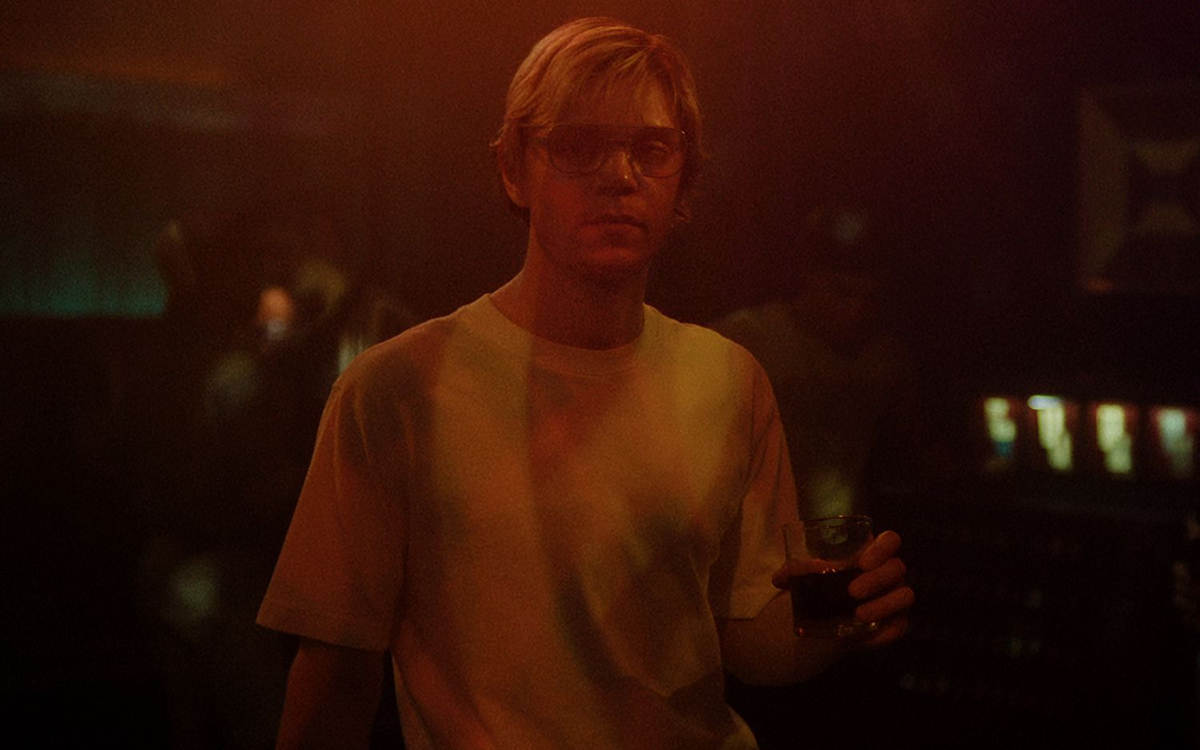
For instance, among the nominees for its major film categories are such titles as “Everything Everywhere All at Once,” “Tár,” “The Whale,” “Babylon,” and “The Inspection,” all of which feature queer characters or storylines, and queer filmmaker Baz Luhrmann earned a nod as Best Director for “Elvis.” Likewise, the TV nominations include queer inclusive shows like “Ozark,” “Hacks,” “Euphoria,” “Better Call Saul,” “The White Lotus,” “Andor,” “Severance,” and “Only Murders in the Building” – not to mention “Monster: The Jeffrey Dahmer Story,” the controversial but acclaimed Ryan Murphy limited series that is arguably the most overtly queer title in the crop.
As for the performers, several of them earned their nods for playing LGBTQ characters. Among those in the film acting categories are frontrunners Cate Blanchett (“Tár”) and Brendan Fraser (“The Whale”), both straight actors giving sensitive and widely praised performances, and out queer actor Jeremy Pope (“The Inspection”). “Everything Everywhere” actresses Michele Yeoh and Jamie Lee Curtis, nominated in the Lead and Supporting Actress Comedy categories, respectively, could arguably be added to the list, too, since the film features scenes of an alternative universe in which the two are in a lesbian relationship.
As a relevant side note, Fraser has already vowed to boycott the ceremony, citing his accusation that he was groped by former HFPA president Philip Berk in 2003.
On the TV side, nominees like Zendaya (“Euphoria”), Colin Firth (“The Staircase”), Evan Peters (“Monster: The Jeffrey Dahmer Story”) and out bisexual actress Hannah Einbender (“Hacks”) snagged nods for playing queer characters, while bi actresses Aubrey Plaza (“The White Lotus”) and Niecy Nash (“Monster: The Jeffrey Dahmer Story”), as well as nonbinary talent Emma D’Arcy (“House of the Dragons), scored for their work, as well.
What does all of this say about the state of LGBTQ representation in Hollywood? While it’s true that straight performers are still earning accolades for “playing gay” on film, a lingering tradition decried by many observers as being out of step with evolving ideology around queer representation, the fact that they are sharing the spotlight with authentic queer nominees represents an unmistakable step forward. Similarly, though few of the nominated films and shows are predominantly focused on queer subject matter, a significant percentage of them – including Best Picture nominees “Everything Everywhere” and “Tár” – include a strong LGBTQ presence, and many heavily feature LGBTQ characters and plot lines within their larger scope. On top of those points, it should not go unnoticed that queer comedian Jerrod Carmichael has been tapped to host the Golden Globes when they air in January.
In other words, it just might be that we are entering an age when we must adjust our assessment of queer representation in Hollywood to fit an evolving model in which LGBTQ people are so regularly woven into the tapestry of film and television content as to be ubiquitous. It will always matter for openly queer actors to be acknowledged for their work, it will always be important for some percentage of movies and shows to put queer stories front and center, and it will likely always be necessary for us to fight to ensure those requirements are met by an industry that has traditionally treated us as irrelevant – but maybe, just maybe, if the trend suggested by the HFPA’s picks continues to hold, it might also be a little less necessary to keep such a tightly watched score card when it comes to being included.
Of course, it’s worth noting that the brilliant but hopelessly straight Martin McDonough film “The Banshees of Inershin” leads the Golden Globes tally with seven total nominations, and that among the notable snubs were Netflix’s “Heartstopper” and any number of other strong, positive queer-centric titles. So perhaps, after all, it’s a little early to ease our pressure on the entertainment establishment; it might be doing better, but it still has a long way to go. Until it gets there, we’ll keep looking at awards season as a barometer for Hollywood’s evolution into a queer-friendlier place.
In that way, it seems the Golden Globes are still relevant, after all.

Television
All the queer things to watch this fall
Andrew Scott, a new ‘Traitors,’ and plenty of horror
The fall season is barely upon us, and already the “must-see” queer movies and shows are leaping out of the gate. The next two months offer a hearty lineup of big screen and streaming options, with something for every taste. Whether you’re a fan of prestige drama, campy horror, “reality” TV, or just a fan of culturally relevant entertainment in general, you’ll definitely find some titles to pick from in our annual rundown below; and if you don’t want to choose, don’t worry: We won’t judge you if you watch them all.
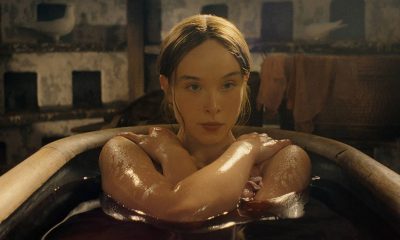
Monster: The Lizzie Borden Story (Netflix, 9/17) Ryan Murphy starts the countdown to Halloween a little early with a new installment of his always-disturbing (but oh-so-entertaining) anthology series about notorious real-life murderers, and this time he takes us back to one of the most notorious of all. Ella Beatty plays the legendary 19th-century woman who (allegedly) “took an axe” and whacked her mother and father to death with it. Lesbian rumors have long been part of the subtext around the case, so expect a focus there — especially given that it’s the series’ first time centered on a woman, and that show creator Ian Brennan includes side-trips into the stories of famous sapphic serial killers both before and after Lizzie’s day. Vicky Krieps, Charlie Hunnam, Jessica Barden, Billie Lourd, and Sarah Paulson also star.
The Traitors: New Blood (NBC/Peacock, 9/17) The popular reality competition show, in which actor (and queer icon) Alan Cumming presides over a cutthroat game of intrigue and elimination in a Scottish castle, makes its return – but this time, in a new iteration that features non-celebrity contestants, Otherwise, it promises to offer more of the same delicious deception and Machiavellian manipulation that fans have come to love.
Black Church Bay (Theaters, 9/25) “Heartstopper” star Joe Locke is set to make a splash on the big screen opposite Tom Cullen in this brooding mystery thriller as a gay student whose disappearance stirs up long-buried secrets in a small Welsh coastal village. First-time writer/director Rhys Marc Jones says it “explores the lengths some people will go to in order to hide their true self,” so be ready for a dark tale of secrets and lies.
American Horror Story: 13 (FX/Hulu, 9/25) Ryan Murphy is ready, as usual, to hit the fall season with a “one-two” punch, and the second punch is the 13th season of his venerable, campy, and extremely queer horror anthology, which brings back beloved alumni from seasons past (yes, even Jessica Lange) in the roles they originally played. Since a good number of those characters were dead the last we knew of them, seeing how the show manages to bring them all back is itself enough reason to make this landmark installment – which also features Sarah Paulson, Angela Bassett, Kathy Bates, Evan Peters, Emma Roberts, Billie Lourd, and even the Pope of Trash, John Waters himself – required viewing for a whole legion of queer pop culturistas with a taste for the macabre.
East of Eden (Netflix, 10/1) Fans of the late bisexual heartthrob James Dean clearly remember the 1955 film version of John Steinbeck’s classic novel, but that movie only told the second half of the story. This new limited series adaptation (from Zoe Kazan, granddaughter of Elia Kazan, director of the original film) takes advantage of a seven-episode running time to take on the entire novel from the beginning. The saga of a broken family in the Salinas Valley, it sprawls over the first two decades of the 20th century to document the struggles of a wealthy landowner whose wife abandons him to become a brothel madam after giving birth to his twin sons; following the boys as they grow up and apart, it mirrors the Biblical story of Cain and Abel, exploring the dynamics of a family haunted by the shadow of an “original sin” – and whether or not they are doomed to be defined by it. No directly queer content here, perhaps, but the direct family tie to a cinema classic (plus the presence of queer fan favorite Florence Pugh as Cathy, the story’s fabulously monstrous mother) gives it an appeal that feels like must-see TV, anyway.
Tip Toe (STARZ, 10/2) This taut UK miniseries from “Queer As Folk” creator Russell T. Davies has already been a critically lauded sensation in its home country, making its U.S. premiere an event worth putting on your calendar. Alan Cumming stars as a gay bar owner who is forced to face the shifting cultural tide when online homophobia begins to turn his once-friendly neighbor (David Morrissey) into a deadly enemy. A grim psychological thriller for an increasingly unsettling time, it’s bound to strike a chord with queer viewers who remember an era when “the closet” was the safest place to be – and with those who fear its return.
Street Fighter (Theaters, 10/6) It might seem as if a movie based on a 1980s video game would have limited appeal for anyone that isn’t a Gen-X “gaymer” who remembers when it cost 25 cents a pop to be one – but this reboot of the film franchise that sprung from it in 1994 is also the screen debut of gay country-western heartthrob Orville Peck, who appropriately takes on the role of Vega, a fighter who always wears his mask. It also stars Noah Centineo, David Dastmalchian, and Jason Momoa, among others.
Carrie (Prime Video, 10/7) Horror fans may have mixed feelings about this new eight-part miniseries based on Stephen King’s much-adored seminal novel, given that the popular 1976 film adaption has endured as the definitive version – something that proved a factor when filmmaker Kimberly Pierce’s 2013 remake failed to win over fans. Even so, this retelling (featuring Summer H. Howell as the troubled teen title character and Samantha Soyen as her overbearing and increasingly unhinged mom) comes from horror maestro Mike Flanagan (“Oculus,” “The Haunting of Hill House,” “Midnight Mass,” “Dr. Sleep”), who has already proven himself as a director of King’s work and comes to the project with a considerable fanbase of his own. Either way, given its release less than a month before Halloween, we know all you horror fans – queer and otherwise – will be binge-watching it honor of the holiday.
It Gets Worse (UK Channel 4, 10/14) American audiences might have to wait a few months – unless they have access to Britain’s “public access” network Channel 4 – but we’re putting it on our list anyway, mostly because of the presence of premier gay thespian Andrew Scott, whose role as a therapist has already sparked frenzy over a line in the trailer about his patient being “just a hole for daddy.” Consider all of us intrigued, to say the least.
Sense and Sensibility (Theaters, 10/16) The material itself may not be particularly queer, but this new screen adaptation of the classic Jane Austen novel – like anything related to Jane Austen – has queer appeal, anyway. That’s especially true when it comes from lesbian filmmaker Georgia Oakley (“Blue Jean”), who will surely highlight all the reasons why Austen (or any other source for this kind of lush period costume romance) has queer appeal, no matter what. Stars include Daisy Edgar-Jones, Catriona Balfe, George MacKay, and Fiona Shaw.
Klara and the Sun (Theaters, 10/23) Adapted from the 2021 novel by Kazuo Ishiguro, this dystopian fantasy from New Zealand filmmaker Taika Waititi (“What We Do in the Shadows,” “JoJo Rabbit”) may not be directly queer-centric, but its story of an “artificial friend” (Jenna Ortega of “Wednesday” fame) who strives to save the sickly child for whom she has been purchased will surely resonate with queer audiences, evoking themes of otherness, societal disconnection, and simple empathy that transcends the imposed boundaries of what it means to be a conscious being in a world to which you can never truly belong. Amy Adams, Steve Buscemi, and Natasha Lyonne also star.
Club Kid (Theaters, 11/6) A new big-screen offering from gay actor/creator/personality Jordan Firstman (“Rotting in the Sun,” “The English Teacher”), who makes his feature directing debut with this comedy-drama about a washed-up party promoter whose career woes suddenly take a back seat when he is charged with the care of a 10-year-old son (Reggie Absolom) he never knew he had. This one premiered in the “Un Certain Regard” session at this year’s Cannes Film Festival, where it received a glowing response, and has won praise for its candid and non-judgmental depiction of underground queer nightlife and the people who find community there. Also starring Cara Delevingne, Kirby Howell-Baptiste, Colleen Camp, Vicki Pepperdine, Nigil Whyte, Eldar Isgandarov, Saturn Risin9, Miss Benny, Alaska Riley, and Diego Calva.
Yellowjackets, Season 4 (Showtime, 11/22) The fourth (and final) season of this acclaimed Ashley Lyle/Bart Nickerson-created series (the second-most-streamed in Showtime’s history) is on its way into your living rooms, bringing to a close its tangled saga of a group of teen girls forced to survive in the wilderness after a plane crash, and their struggle to repair their damaged lives as adults 25 years later. It’s been a tale full of mysteries, secrets, shocks, and twists, so if you’re a fan, you’re probably eager to get some answers – but don’t be surprised if this devilish show throws a few more curves your way before it finally delivers them! Melanie Lynskey, Tawny Cypress, Christina Ricci, Sophie Nélisse, Jasmin Savoy Brown, Sophie Thatcher. Sammi Hanratty, and Warren Kole all return, with Hillary Swank, Elijah Wood, June Squibb, and Molly Ringwald along for the ride in recurring roles.
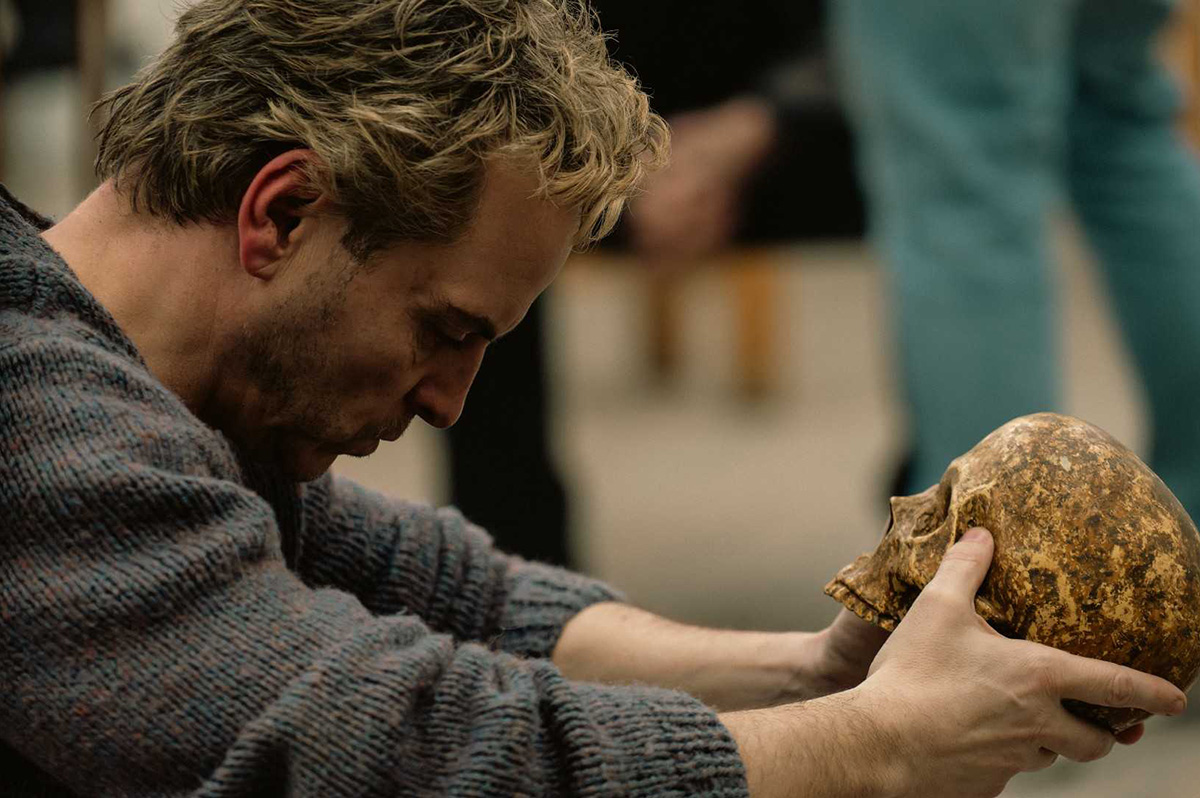
Elsinore (Theaters, 11/20) Andrew Scott reappears on our list as the star of what seems to be the most-anticipated movie of the season, a biographical drama about the last days of gay British actor Ian Charleson (“Chariots of Fire”), as he prepares for the lead role in a National Theatre production of “Hamlet” while secretly dying of AIDS. Scott’s performance as Charleson has been showered with raves, and so has that of Olivia Colman as the doctor who helps him get through the ordeal of rehearsing theater’s most demanding role while suffering from the symptoms of his disease. Director Simon Stone collaborated closely with both Scott and screenwriter Stephen Beresford in developing what was for them a deeply personal project, which explores the challenges of being queer but closeted in the public eye while emphasizing the ability of art and self-expression to empower us “against the slings and arrows of outrageous fortune” even unto the very end. Yes, it sounds like a downer, but the reports from those who saw its premiere at the Telluride Film Festival earlier this month assure us otherwise. The ensemble supporting cast includes Billie Piper, Johnny Flynn, Juliet Stevenson, Joe Locke, Peter Mullan, Georgie Glen, and David Dawson as pioneering queer filmmaker Derek Jarman, a friend of Charleson’s who was also lost to AIDS.
Television
‘Vampire Lestat’ heats up Pride month with queer action
Latest Anne Rice adaptation poised to be your next TV obsession
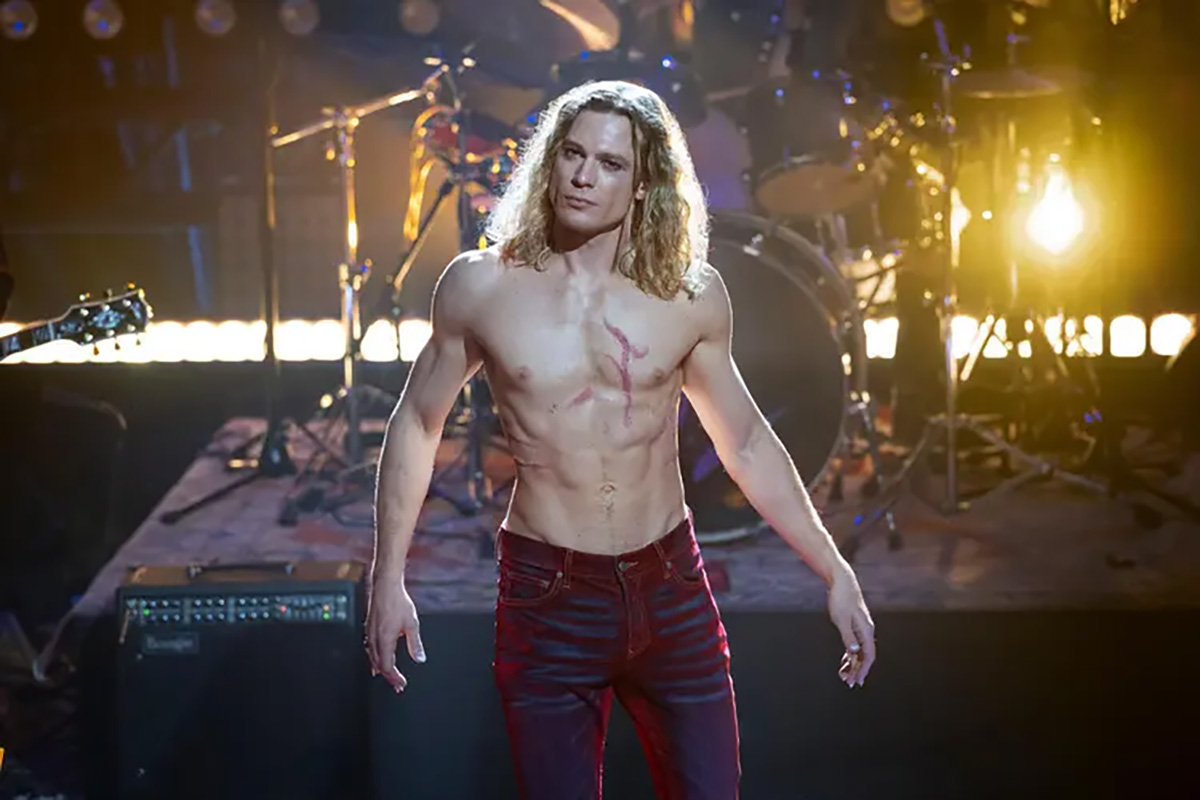
Whether you’re mourning the end of Euphoria, The Boys, or Hacks, you’re dying for another hit of Heated Rivalry or just need something new to watch, The Vampire Lestat has you covered. Whether it’s the cutting witty dialogue, supernatural action, or the maudlin adventures of problematic queer relationships, this is the show for you. This new season brings literal sex, drugs, and rock-n-roll as Lestat (Sam Reid), a multi-centennial vampire, decides to process his beef with his sexy ex Louis (Jacob Anderson) for giving the Interview With The Vampire by starting a rock band.
In 1976, Anne Rice wrote a book to process the death of her young daughter. It was the story of two vampire “roommates” and their centuries-long relationship drama. What followed was a series of 13 books and a whole world filled with vampires, witches, and more. This launched the 1994 film where Brad Pitt, Antonio Banderas, and Tom Cruise played “totally not gay” vampires who almost kissed a few times, despite having all of the hottest actors of the era, it was sanitized of all queer subplots. R&B diva Aaliyah’s last role was as Akasha, the eponymous Queen of the Damned (2002), the unoffical follow up to the first film covering Rice’s second and third book.
The AMC series version of Interview with the Vampire took all this source material and made it more gay, more current, and more PC. They shifted the story to the present day, having Louis live in a luxurious Dubai compound, and his interviewer, Daniel Molloy (Eric Bogosian), being a former addict hawking his masterclass, armed with a ton of evidence. The choice to race-swap Louis from a misanthropic emo plantation owner to a black brothel owner in New Orleans adds so much more nuance, history and richness to his character. Exploring the abusive nature of the relationship and casting the amazing Delainey Hayles as Claudia have all elevated the story to your next television obsession. The choice to turn the book into two seasons allowed the creators to take their time, play with storytelling and explore Louis as an unreliable narrator and tease at many of the storylines of later books. This was a smart choice considering these characters are all centuries old, and over the course of 13 books, all have complex backstories and inner worlds.
Sam Reid was always a standout and captured the egomania and charm of Lestat, the self-proclaimed Brat Prince. He gets to play an over-the-top bitch about everything we’ve seen and heard in Seasons 1 and 2, while even skewering the world of today, commenting on the state of fame, life, and politics.
Like in the book, he reclaims the narrative as he takes the helm of the story. Rather than write his own book, he’s nabbed the newly vamped-up Daniel Molloy as his documentarian. Also, without giving too much away, this series begins in an unnamed future. Armand (Assad Zaman) and Louis are still as hot as ever, and they’re at an auction for the complete works of the Vampire Lestat. It’s teased that some sort of world-altering event has transpired, and Lestat is missing in action. Could that be the events of The Queen of the Damned or even the sum of all of the books? Only time will tell.
The worldbuilding is really solid as we get to see the past, present and future of these characters. Prime example, Akasha, The Queen of the Damned, was name-checked in earlier seasons. Whether you’re a fan of the original source material or not, this series has something for everyone. It has action, including an epic vampire fight scene in the premiere. It has a complex world and mysteries that unfold over the course of each season. Plus, it has hotties of all genders with Reid, Anderson and Zaman holding it down from earlier seasons. Schitt’s Creek dreamboat Noah Reid joins the cast as Lestat’s band’s frontman.
The show has everything: sex, violence, drama, all with a queer and racially inclusive lens. It doesn’t pull punches in storytelling and examining history, all while maintaining a level of levity and fun. It unfolds with dramatic soap operatic reveals and confrontations while also grounding all of the fantasy in our world.
The series is poised to continue with the same characters from the first two seasons while shifting the focus to allow in a new cast of characters who will play out the events of multiple books and major arcs that are part of AMC’s new Anne Rice cinematic universe.
The series airs on AMC Plus, while the first two seasons are available on Netflix. A note to people streaming it may appear on Season 2, as the series name change might be confusing for those who haven’t seen the show.
Television
Repression, toxic masculinity fuel intense queer drama ‘Half Man’
A solidly crafted, well-acted, fascinating binge watch
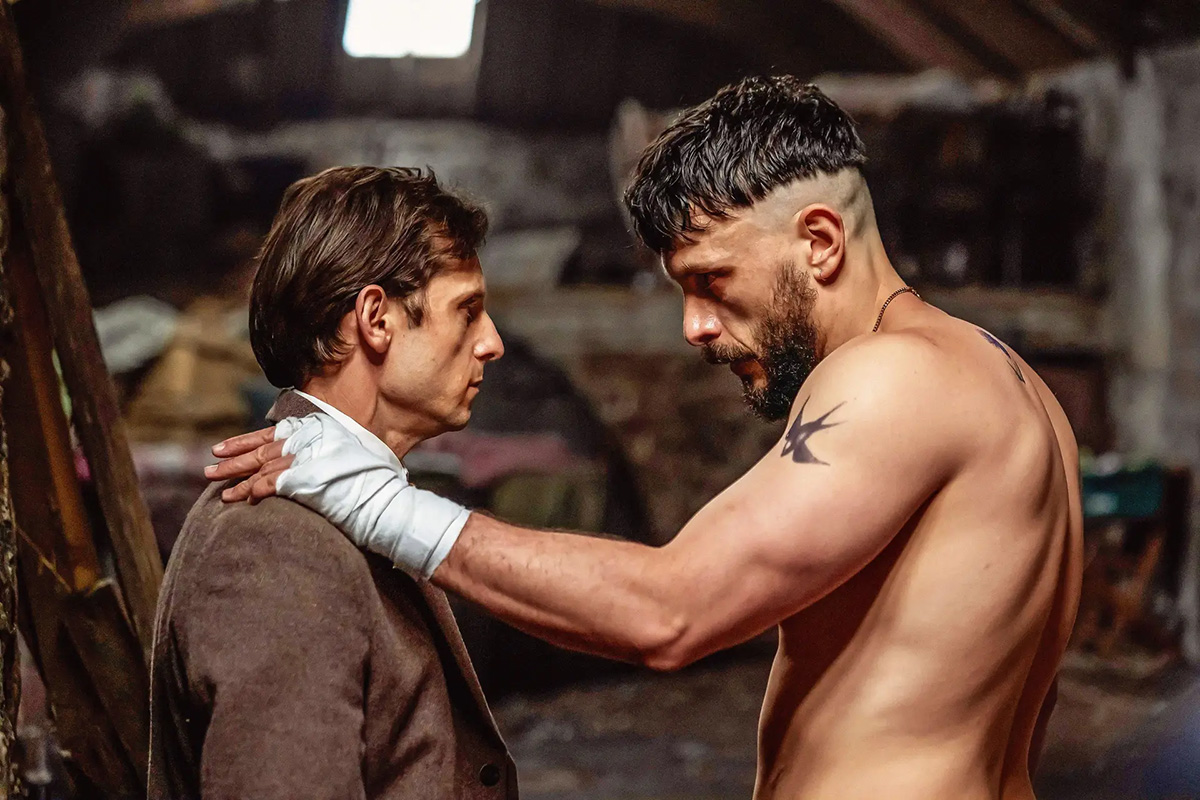
In 2024, when Richard Gadd’s “Baby Reindeer” became a stock-boosting hit for Netflix, there were few Americans who knew his name.
In the UK, however, the Scottish writer/comedian/actor had already emerged as a talent to be reckoned with, blending autobiographical stand-up comedy with theater to create a reputation as an edgy and provocative creator whose shows tended to be equal parts divisive and successful. One of these, his fictionalized true-life story of being stalked and sexually harassed by a female fan, became an Olivier Award-winning hit in the London theater; that was “Baby Reindeer,” and – in the form of a seven-episode miniseries adaptation – it became the vehicle that carried him to wider fame.
Two years later, Gadd has returned with another high-profile miniseries, this time for HBO Max, and like its predecessor, it’s a story that deals with queer sexual repression, unhealthy attachments, and a central relationship that can safely be described without exaggeration as “toxic” – and it’s an even darker (and more twisted) ride that stretches across decades.
“Half Man,” which debuted on April 23 and continues with one episode per week through May 14, is the story of two “brothers” – Niall (Jamie Bell) and Ruben (Gadd) – whose mothers (Neve McIntosh and Marianne McIvor) have become a lesbian couple after leaving their relationships with the boys’ respective fathers. They are seeming opposites in personality; Niall is quiet, sensitive, and secretly unsure about his sexuality, while Ruben is tough, rebellious, and prone to violence – and unsurprisingly, it’s a match made in hell.
We meet them at the top of the first episode as adults, on the day of Niall’s wedding, when Ruben shows up without warning; his appearance triggers what looks like fear in his “brother from another lover,” and a private meeting between them in a barn at the wedding site turns ugly, launching a flashback format that takes us back to their schooldays, when young Ruben (Stuart Campbell) – already in trouble with the law and trying for a new start – comes home from juvenile detention to become roommate, protector, and bully to young Niall (Mitchell Robertson), all in one.
It’s the dawn of a new and epic relationship, despite a history that has made Niall terrified of the older boy; their seemingly opposite qualities somehow mesh into a kind of symbiotic bubble, in which a tense equilibrium turns them into unlikely allies. Ruben makes sure Niall has nothing to fear from the sniggering schoolyard homophobes who target him, and Niall helps Ruben pass the tests he needs to pass in order to stay in school. Nevertheless, their dynamic is both surprisingly tender and alarmingly lopsided; though they form a bond, it’s a volatile one, and by the end of episode one – after an uncomfortable-to-watch late night incident that amounts to a sexual assault – there is little doubt that Ruben is a psychopath. By then, however, it’s too late; Niall has become hopelessly ensnared by his manipulations, and their dangerous attachment has taken permanent root.
In episode two, the timeline moves the past forward several years (while rolling the wedding-day story back a few hours as well), bringing Niall to his college years. Ruben is once again absent from his life, but the bond is still deep. He struggles to make connections in his new setting – including with another student, the openly gay Alby (Bilal Hasna), who recognizes a side of him that he has still yet to accept for himself. Though he gradually begins to adapt to his new social circle, his insecurities get the better of him – and despite warnings from his mother not to do so, he calls Ruben to come and visit. His arrival triggers another escalating series of incidents, this time entangling Niall’s new friends and culminating in a shocking, jealousy-fueled explosion of violence.
Without going on with the story – after all, the two remaining episodes have yet to be released, so we wouldn’t want to spoil anything – it’s safe to say there’s a pattern here, and it’s intentional.
Gadd has already been public about his own struggles with repression, which were directly explored (albeit fictionally) in “Baby Reindeer,” and it’s clear that he had more to say about the effects they had on his life and identity.
As he put it himself, in an interview with the Hollywood Reporter, “Themes of, I guess, masculinity, or what it means to be a man, or ‘I’ve gone through a masculinity crisis’ come into [the show] probably because I’ve been through that in my life, and I feel I can write to it and speak to it.
“I always think that the best kind of art is kept close to your chest, kept close to your heart, kept close to your experiences, and I guess with ‘Half Man,’ there’s a lot in it that I relate to. It’s not an autobiographical piece by any stretch, it’s purely fiction, but it certainly borrows from themes and struggles and issues that I understand.”
That understanding translates to the series through its focus on tracing the roots of Niall and Ruben’s relationship by methodically tracking the cause-and-effect chain that links the major events of their lives together. It explores the contradictory combination of worship and terror, the transgressive eroticism that intertwines danger and desire, the power of the forbidden to make us want it more, and the self-loathing that punishes itself through violence toward others. The inverted framework of the storytelling, which works both forward and back to meet at (we assume) some definitive point, makes following it a bit like putting together a puzzle, which also has the effect of building suspense as we wait to see the “moment of truth.”
Of course, those who prefer a more straightforward narrative might not appreciate the additional challenge, especially when the subject matter – which revolves around experiences, feelings, and behavior that might be entirely unfamiliar to many audiences – is challenging enough by itself, in its own way. Likewise, and for much the same reason, there will be viewers who are unable to relate to its characters, as some of the show’s less-favorable reviews have pointed out.
But it would be naive to assume that the themes in “Half Man” – of fragile masculinity, internalized homophobia, misdirected rage, nihilistic rebellion, conflicted desires, projected shame, and the other ingredients that infuse this shadow-boxing psychodrama with such a distinctive musky odor – do not apply to more men in today’s culture of incels, “looksmaxxers,” and “the Man-o-sphere” than any of them would like to admit. We’d wager that its portrait of a same-sex, sub/Dom, borderline incestuous relationship might resonate more urgently there than within a queer community that has been grappling with those issues for generations already and are just waiting for everybody else to catch up.
In any case, Gadd’s newest variation on a theme is a solidly crafted, well-acted, and hypnotically fascinating (if sometimes uncomfortable) exercise in the kind of “can’t look away” drama that makes for a perfect binge watch. Or, at least, it will once all the episodes drop.

Renee Good’s family files two federal lawsuits

House Democrats urge White House to confront Turkish government over anti-LGBTQ crackdown

988 restores crisis services for LGBTQ youth

To school to homeschool to school again

Ryan Murphy’s ‘Monster’ vilifies the lesbian

PHOTOS: HRC National Dinner

Factors to consider when hiring an interior designer

Dr. Fauci ‘honored to be part of’ LGBTQ history

Baltimore’s oldest gay bar to reopen this week