District of Columbia
Trial set for D.C. gay murder case four years after arrest of suspect
Police say victim stabbed 47 times by man he invited to his apartment
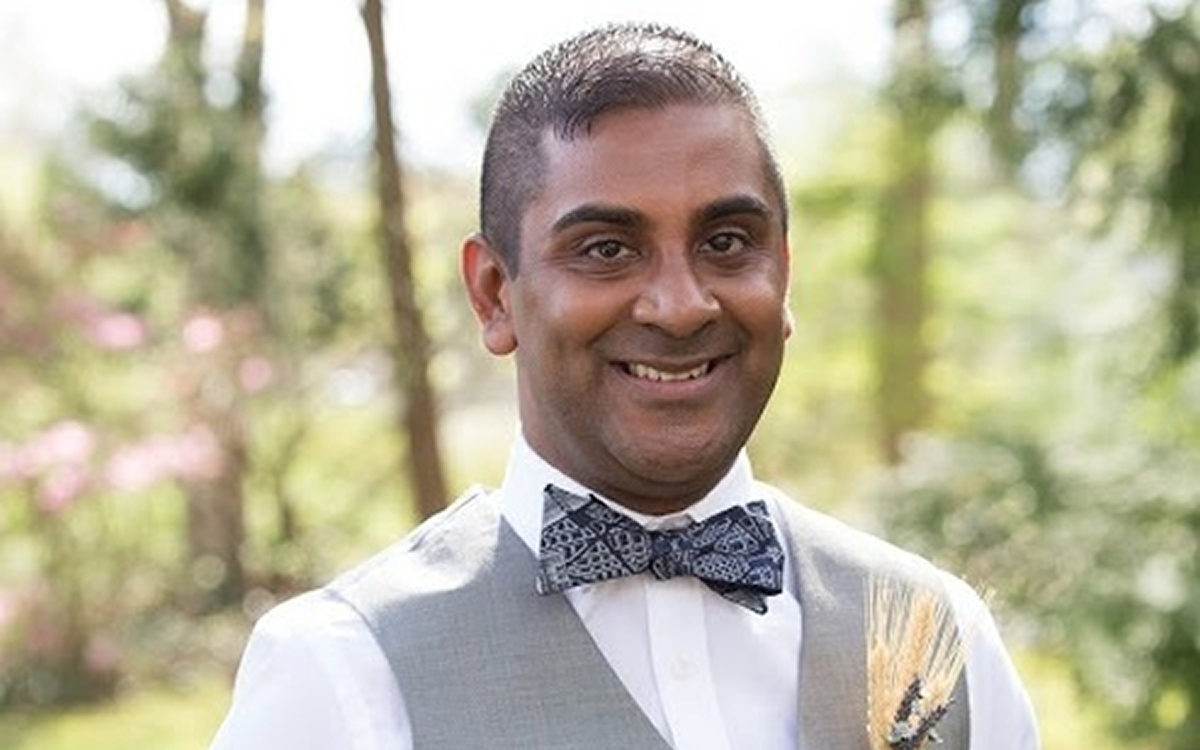
A then 26-year-old U.S. Navy Hospital Corpsman charged in the Jan. 6, 2019, murder of gay retail manager Vongell Lugo inside Lugo’s D.C. apartment is scheduled to go on trial for first-degree murder and other charges on April 18, 2023, according to D.C. Superior Court records.
A spokesperson for the Office of the U.S. Attorney for the District of Columbia, which is prosecuting the case, has confirmed the trial date but declined to say why or whether it is unusual that it has taken more than four years to schedule a trial for a suspect arrested at the scene of the murder and on the day it took place.
Court records and a D.C. police arrest affidavit filed in court state that then U.S. Navy Hospital Corpsman 3rd Class Collin J. Potter allegedly stabbed Lugo at least 47 times in the upper body and genital area shortly after Lugo, 36, invited him into his apartment at 2844 Wisconsin Ave., N.W. near the Washington National Cathedral.
The arrest affidavit says police arrived at the apartment building when a neighbor called 911 after hearing screams coming from Lugo’s apartment. Upon their arrival, the affidavit says, officers saw Potter fully nude standing over Lugo’s nude body, which was lying on the floor in the hall outside Lugo’s apartment door.
“Defendant Potter had blood visible on various areas of his body, to include his arms and feet, however he did not have any apparent injuries,” the arrest affidavit says.
During an April 26, 2019 preliminary hearing in D.C. Superior Court, D.C. Police Homicide Det. Tony Covington testified that police believe Potter dragged Lugo outside the apartment door after allegedly fatally stabbing him inside the apartment.
Covington in his testimony reiterated the arrest affidavit’s assertion that Potter referred to Lugo as his “girlfriend” and as “she” when officers first approached him outside the apartment. NBC News reported that police sources said Potter told police his “girlfriend” had died by suicide and he asked police to kill him.
The detective also testified that a police investigation found that Potter and Lugo met on the night of the murder at the Black Whisky bar at 1410 14th St., N.W. in D.C. Covington said the investigation at that time had not determined whether Potter and Lugo knew each other prior to the time they met up at the Black Whiskey on the night of the murder.
A friend of Lugo’s told the Washington Blade that Lugo, who was openly gay, liked to hang out at straight bars and the Black Whiskey was one of the bars he patronized.
In his court testimony, Det. Covington said police had no known motive for why Potter allegedly stabbed Lugo to death in the apartment.
Court records show police initially charged Potter with second-degree murder and prosecutors extended a plea bargain offer calling for him to plead guilty to second-degree murder in exchange for prosecutors not seeking a first-degree murder charge before a grand jury. The court records show Potter through a court-appointed attorney rejected the offer.
The records show a D.C. Superior Court Grand Jury on Aug. 20, 2019, handed down a five-count indictment against Potter, charging him with two counts of First-Degree Felony Murder While Armed, Felony Murder While Armed Aggravating Circumstances, First-Degree Sexual Abuse While Armed, and Kidnapping.
Potter has pleaded not guilty to the charges.
Under D.C.’s criminal code, First Degree Sexual Abuse replaced what used to be the charge of rape under D.C. law.
“On or about January 6, within the District of Columbia, Collin Potter, while armed with and having readily available a dangerous weapon, that is a knife or other sharp object, engaged in a sexual act with Vongell Lugo, that is, the penetration of Vongell Lugo’s anus by Collin Potter’s penis, by using force against Vongell Lugo (First Degree Sexual Abuse While Armed),” the indictment states.
The indictment states that on the same day and location, while armed with a knife, Potter “seized, confined, kidnapped, abducted, physically assaulted and carried away Vongell Lugo, with the intent to hold and detain Vongell Lugo, for the purpose of sexually assaulting him (Kidnapping While Armed).”
During the April 2019 preliminary hearing, in which Judge Juliet McKenna found probable cause that Potter committed the offense, defense attorney Matthew Davies argued that police and prosecutors provided insufficient evidence that Potter committed the murder. He said the evidence cannot rule out the assertion by the defense that the murder was committed by someone else who had access to Lugo’s apartment.
“We don’t know who else was in that apartment and who else was in there and left,” he said.
Assistant U.S. Attorney Nebiyu Feleke, one of the prosecutors in the case, argued that prosecutors presented “ample evidence” to show Potter and Lugo were the only two in the apartment at the time of the murder. He noted that Potter himself told police at the time they arrived on the scene that he and Lugo were the only two in the apartment that night.
Court observers have said the COVID-19 pandemic has caused delays in many cases, especially civil cases, pending before the D.C. Superior Court, and that could have played a role in the delay in scheduling the trial for Potter.
Court records show that Davies, Potter’s attorney, introduced an emergency motion in March 2020 requesting that Potter be released into a halfway house while awaiting trial because of the high risk of contracting and dying from COVID in the D.C. Jail. The records show that, at the request of prosecutors, the judge denied the motion on grounds that Potter would pose a risk to the community if released.
Potter has been held without bond since the time of his arrest. The next court hearing, prior to the start of the April 18 trial, is a trial readiness hearing scheduled for Feb. 18 before Judge Marisa J. Demeo.
More than 80 friends, co-workers, and family members turned out for a candlelight vigil to honor the life of Lugo, which was held Jan. 11, 2019 in a small park across the street from where Lugo lived. Among those participating were employees of TransPerfect, an international company that provides foreign language translation, interpretation and business services where Lugo worked as an associate manager.




District of Columbia
Man accused of threatening to shoot D.C. bar employee after making anti-gay slurs
May 24 incident took place near Black Pride events on U Street

D.C. police on Sunday, May 24, at around 4:20 p.m. arrested a Maryland man for allegedly threatening to shoot an employee while using anti-gay slurs at Ben’s Next Door restaurant and bar at 1211 U St., N.W.
According to a statement released by police and a police incident report, the arrested man, identified as Delonte Fraley, 32, of Accokeek, Md., made the threats after the employee told a bartender not to serve the man alcohol.
“The suspect overheard the employee and threatened to shoot the employee and used homophobic slurs against the employee,” the police statement says. “When the employee left the restaurant for the day, the suspect was standing near the employee’s vehicle,” it says.
“The employee returned to the restaurant and called the police,” the statement continues. “The suspect was apprehended by responding officers,” it says.
The police statement says the arresting officers charged Fraley with Felony Threats (Hate/Bias).
D.C. Superior Court records show prosecutors with the Office of the U.S. Attorney for D.C., which prosecutes D.C. criminal cases, escalated the charge to Threatening to Injure or Kidnap a Person (Bias-Related Hate Crime).
The incident occurred during Memorial Day weekend when thousands of visitors and D.C. area LGBTQ advocates and supporters were attending D.C. Black Pride events held in locations across the city, including Black Pride parties hosted by LGBTQ bars in the U Street entertainment area near Ben’s Next Door.
Among the nearby LGBTQ bars hosting D.C. Black Pride events were Nellie’s Sports Bar and Thurst Lounge. Ben’s Next Door is located next to the popular longtime U Street eatery Ben’s Chili Bowl.
Court records show that Judge Robert R. Rigsby at a May 25 presentment hearing released Fraley on personal recognizance with a stay-away order — the details of which were not publicly disclosed pending a June 4 preliminary hearing.
A more detailed arrest affidavit filed in court by D.C. police says Fraley allegedly confronted the employee at Ben’s Next Door with anti-gay slurs on the day prior to his arrest.
“The complainant told the defendant that because he used homophobic slurs towards himself previously on May 23, 2026, and his hostess, as well as making threats to the complainant and calling him a faggot, he was unable to stay in the establishment,” the affidavit states.
It adds, “The defendant became irate stating, ‘I know where your Tesla is at. See me outside faggot, I will slap your ass’ and ‘I will shoot your ass.’” The affidavit says the complainant confirmed to police the Tesla referred to by Fraley was his vehicle. It says as the victim walked toward his car after getting off work, he saw Fraley standing directly in front of the car.
“The complainant stated he felt unsafe while the defendant was standing in front of his vehicle because he felt the defendant was capable of carrying out those threats,” says the affidavit. It says the victim then decided to return to the restaurant and call police without the defendant having seen him.
“The defendant was placed under arrest for Felony Threats Hate/Bias and was transported to the Third District Station for processing,” the affidavit concludes.
It couldn’t immediately be determined whether the victim identifies as LGBTQ or whether any of the Ben’s Next Door patrons had been involved with D.C. Black Pride.
“Established in 2008, Ben’s Next Door is a family-owned and operated restaurant and bar on U Street, Northwest in Washington, D.C.,” a statement on its website says. “As a Black-owned establishment, it’s our goal to deliver a warm, welcoming, familiar, and communal vibe to all guests,” the statement says.
District of Columbia
Doc on Blade reporter Chibbaro scores Emmy nomination
‘Lou’s Legacy’ chronicles 50-year career

“Lou’s Legacy: A Reporter’s Life at the Washington Blade” has been nominated for a Capital Emmy in the “Documentary – Historical” category by the National Capital Chesapeake Bay Chapter of the National Academy of Television Arts & Sciences.
“Our members include all of the video content producers who serve our local audiences in Washington, DC, Maryland and Virginia—from the Atlantic to the Appalachians, from Bristol to Baltimore,” said Capitol Emmys President Adam Longo in a press release.
Broadcast last June by WETA PBS in Washington, D.C. and MPT in Maryland, the documentary was directed and produced by Emmy-nominated filmmaker Patrick Sammon in association with the Mattachine Society of Washington, D.C. Additional nominees who worked on the film include producer Julianne Donofrio and editor Amir Jaffer.
“Lou’s Legacy” tells the story of two D.C. icons — legendary Washington Blade reporter Lou Chibbaro Jr. and beloved drag performer Donnell Robinson, known to generations of Washington audiences as “Ella Fitzgerald.” Through Chibbaro’s nearly five-decade career at the Blade and Ella’s return to the stage after a three-year hiatus following COVID, the 29-minute documentary explores the history of Washington’s LGBTQ community and today’s rising backlash against LGBTQ rights, including laws targeting drag performers.
“We’re honored that Lou’s Legacy has been recognized alongside such an impressive group of historical documentaries,” said Sammon. “This nomination is especially meaningful because the film preserves and celebrates the stories of people who helped shape queer history in Washington, DC — often without recognition from mainstream institutions. We’re deeply grateful to the Mattachine Society, Lou Chibbaro Jr., Donnell Robinson, WETA PBS, and everyone who helped bring this project to life.”
“Lou’s Legacy” premiered on WETA PBS in June 2025 during Pride month. The documentary also broadcast on Maryland Public Television and is streaming nationally on PBS.org. WETA will rebroadcast “Lou’s Legacy” several times during Pride month, including June 15 th at 9 p.m. Winners of the Capital Emmy Awards will be announced at the Capital Emmy Gala on June 20 at the Bethesda Marriott Hotel.
District of Columbia
D.C. Black Pride set for Memorial Day Weekend
Dozens of events to reflect theme of ‘New Black Renaissance’
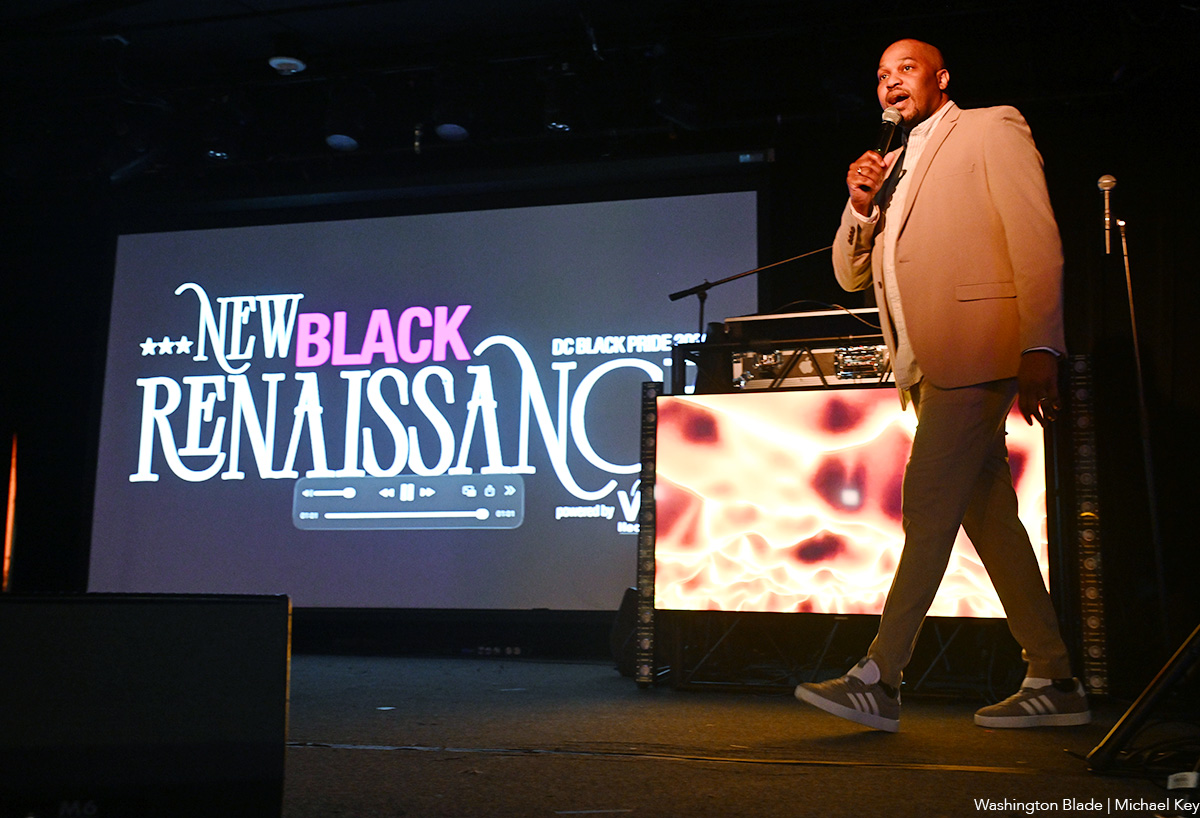
D.C.’s annual LGBTQ Black Pride celebration is scheduled to take place May 22-25 as it has since its founding 35 years ago on Memorial Day Weekend with several dozen events in locations across the city.
Like recent years, most of the official events are scheduled to take place at the Westin D.C. Downtown Hotel, including the Opening Reception on Friday, May 22, when Grammy Award-winning singer-songwriter Durand Bernarr was scheduled to be among the performers.
“This high-energy reception brings together community leaders, creatives, tastemakers, and visitors from across the globe for a night rooted in connection, joy, and celebration,” according to a statement on the Black Pride website.
Also, like past years, the second day of official Black Pride events set for Saturday, May 23, will include a dozen workshop sessions on a wide range of issues and topics. The workshop sessions will take place at the Westin Hotel.
On that same day, Black Trans Pride is scheduled to take place at the hotel from 1- 6 p.m., according to the official schedule of events.
“The goal is and always has been to make sure we have events for everybody, regardless of their financial situation, regardless of their agenda,” said Kenya Hutton, president and CEO of the Center For Black Equity, the D.C. LGBTQ group that organizes D.C. Black Pride.
Hutton said this year for the first time there will be a D.C. Black Pride Fun Run. The Black Pride website says the 5k run will take place Saturday, May 23, from 8 a.m.-12 p.m. starting at the Frederick Douglass Bride near the D.C. Navy Yard.
He said another first will be a film screening of the documentary film “Not Your Average Girl,” about the life of trans woman, author, and advocate Hope Giselle, scheduled for May 22 at the nearby Eaton Hotel.
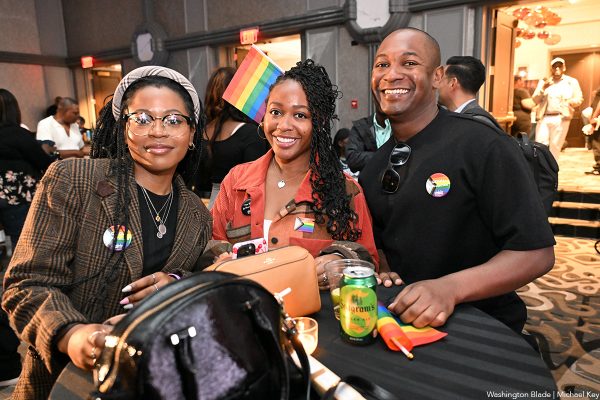
Also, like in past years, this year’s Black Pride will feature a Rainbow Row organization and vendor expo at the Westin from 5-9 p.m. Friday and 10 a.m. to 8 p.m. on Saturday that includes information tables set up by organizations and vendors.
The annual Pride In The Park event will take place Monday, May 25, from 12-7 p.m. at Fort Dupont Park located at 3600 F St., S.E. And the seventh annual “Brunch & Babes” drag event was scheduled for Sunday, May 24, at Hook Hall nightclub at 3400 Georgia Ave., N.W.
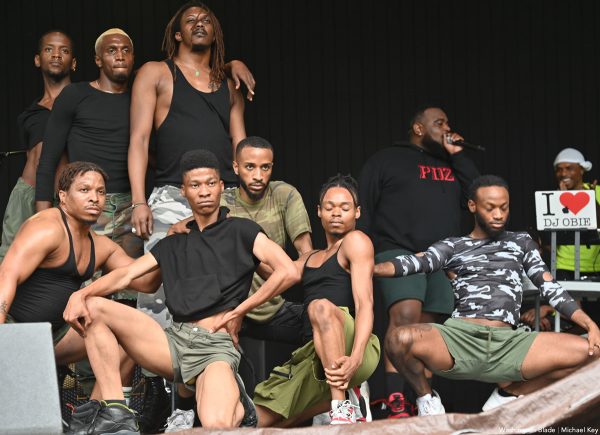
Among the other events taking place at other locations is a Sunday, May 24 “G-Spot Day Party” organized by local gay activist Geno Dunnington to be held at Bravo Bravo nightclub at 1001 Connecticut Ave., N.W. from 3-9 p.m. Dunnington told the Washington Blade the event will include the playing of house music, which he says played a role in local D.C. Black LGBTQ culture and in the first Black Pride celebration in 1991. The Black Pride website includes a write up of how that came about.
“From 1976 until1990, the ClubHouse in Washington, D.C. was a remarkable nightclub founded by Black members of D.C.’s LGBTQ community, widely known for its signature event – the Children’s Hour,” the write-up says. “This event was a true celebration and took place annually during Memorial Day weekend,” it says.
“When the ClubHouse closed in 1990, many feared the Memorial Day tradition would be lost,” the write-up continues. “However, three men – Welmore Cook, Theodore Kirkland, and Ernest Hopkins – envisioned creating an event that would continue the tradition of the Children’s Hour while also bringing awareness to the growing HIV/AIDS epidemic in their community.”
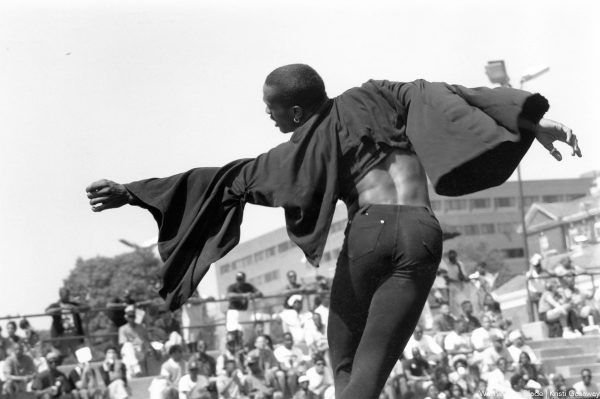
The write-up adds, “Their vision and hard work gave life to the first Black Gay and Lesbian Pride event on May 25, 1991, on the grounds of Banneker Field,” which is located near Howard University. “This first event drew 800 people, who were centered around the theme of ‘Let’s All Come Together.’”
It says organizers expanded the scope of the Black Pride events over the next several years as it evolved and prompted Black Pride events in other cities and the formation of the International Federation of Black Prides, which later became the Center for Black Equity.
“D.C. Black Pride was the catalyst for what is now regarded as the Black Pride Movement,” the writeup says. “Since its birth, more than 50 other Black Pride celebrations now take place throughout the world, many using D.C. Black Pride as its model.”
It adds, “Today, more than 500,000 members of the lesbian, gay, bisexual and transgender community of African descent and their allies come to Washington, D.C. on Memorial Day weekend to celebrate the beauty of a shared community and raise awareness and funding for HIV/AIDS in the name and spirit of Black Pride.”
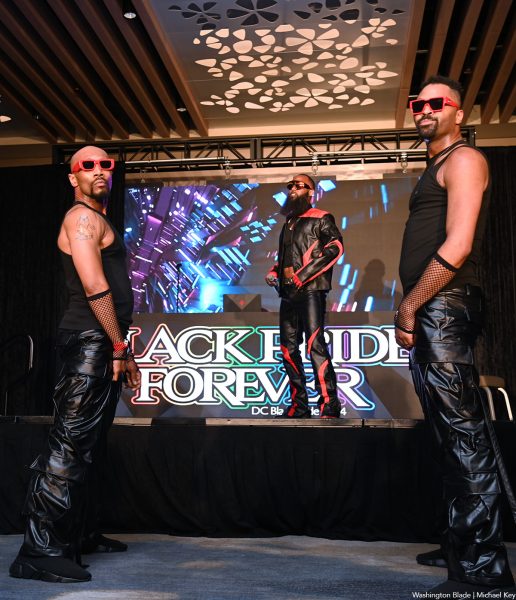
Hutton said D.C. Black Pride has grown to a point where organizers cannot keep track of all the unofficial events taking place.
“There are a number of events that are not even on our website,” he said. “They’re parties. People are having cookouts. There are all kinds of things that are happening over the weekend, that are official listed events, partner events, and non-partner events.”
Hutton said that while D.C. Black Pride’s support from corporate and business sponsors has remained stable, Black Pride organizations in other cities have been hit hard by the growing reluctance by businesses to sponsor LGBTQ related events and LGBTQ organizations brought about by the Trump administration’s opposition to so-called diversity, equity and inclusion or “DEI” programs.
He said several Black Pride groups have had to curtail their annual celebrations’ scope, with some facing the prospect of cancelling their celebrations due to a sharp decrease in funds from business donors. D.C. Black Pride has also faced the impact of anti-DEI pressure from the Trump administration, according to Hutton, from businesses that have asked not to be publicly identified as sponsors.
“The administration has put pressure on some of our traditional sponsors, and we have some sponsors this year who have told us don’t put our ad, don’t put our logo, don’t put anything out” to publicly identify them as sponsors, Hutton said. “They still want to support us but can’t announce they are financially supporting us in any kind of way,” he said.
As she has in recent past years, D.C. Mayor Muriel Bowser this year issued an official mayoral proclamation declaring May 22-25, 2026 as “DC BLACK PRIDE WEEKEND.”
A list of the official 2026 D.C. Black Pride and partner events and their locations can be accessed at dcblackpride.org.


China’s top court acknowledges anti-LGBTQ discrimination

Man accused of threatening to shoot D.C. bar employee after making anti-gay slurs

Bree Fram’s congressional campaign ends but her fight continues

Rev. Peter Leland DeGroote dies at 86