Television
‘The Real Friends of WeHo’ proves to be the epicenter of … something
Show is one ‘we didn’t need’
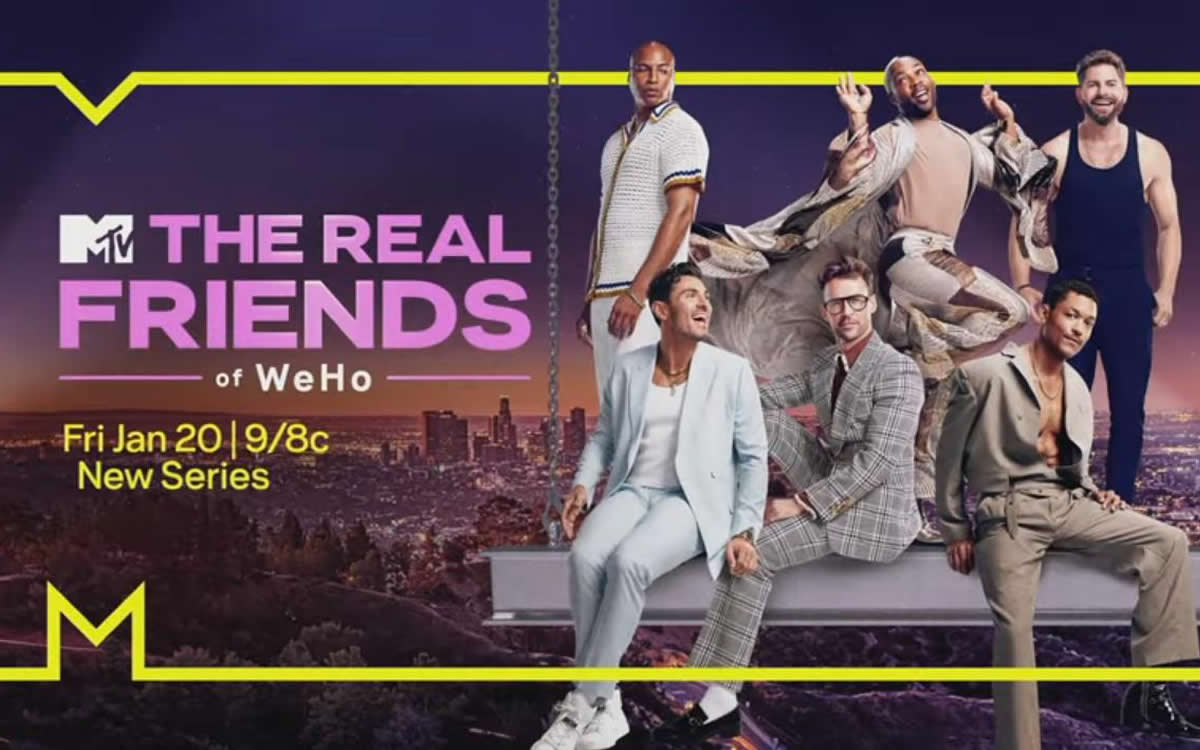
The “groundbreaking” new reality show launched this week, and man, was there drama. Too bad it wasn’t on the show itself.
Across the meta-sphere, pearls were clutched, and faces were hand-palmed, and the comments went from bitchy and nasty to bitchier and nastier. The WeHo Times “didn’t hate it,” and “kind of related” (but, hello, the show is set in … WeHo.)
The Wrap called it a show “we didn’t need.” The Decider (whose decision is that you “skip” the show) describes the program as “just watching six gays proclaim that they ‘aren’t here for drama’ and ‘don’t tolerate foolishness,’ even though they are now contractually obligated to be present for drama and endure an exhausting level of foolishness. It’s a given that none of this is real, but it should at least be entertaining.”
Those were the nice reviews.
The writer of the blogshere LGBTQ Nation claimed that the show turned his “brains into real skull goo” and wrote a meandering non-sensical massacre of a review to prove it. None were quite as vitriolic as the Daily Beast however, that called it a “colossal gay nightmare” and stated that it “stinks as badly as the alley dumpster behind The Abbey after jockstrap night.”
I will have to take his word for that. I saw the show but have no desire to check out said dumpster.
Whether the vitriol is deserved or not, the viewers seem to have stayed away. Or at least, their interest did. The social media accounts for the show have a paltry number of followers so far. Only 3 percent of Google reviewers liked the show. It currently has a .8 out of 5-star rating on IMDB.
The show is really not that bad. Each of the guys has a reason for being on the show, and if they owned their individual motives rather than trying to be generalist and “representative,” the show could be intriguing.
The biggest failure was in how the show rolled out in the first place. The show came on like a wrecking ball and landed right on itself. The opening claim that “West Hollywood is the epicenter of the gay world” was demonstrative of the arrogance that will likely kill it.
There are gay people in LA that would dispute that West Hollywood is the epicenter of the Los Angeles gay world, let alone the rest of the globe. San Francisco, New York and London may also have something to say about being gay centers. So, unless the intention was to piss off everyone not in West Hollywood, the opening line and its prominence in the promo for the show, was a big marketing mistake.
The next failure was rudeness and failure to “read the room” metaphorically. By forcing itself in between “RuPaul’s Drag Race” and “Untucked” programs, while stealing time from them, the show runners were completely clueless as to how eventful and anticipated those shows are to their viewers each week. Literally trying to force them to watch “Real Friends” was presumptive that the new show had earned the affection necessary to succeed in that program slot. It clearly had not.
Thus the show seems set up to fail. By promoting that it is thoroughly in love with itself, it has not given the audience a chance to know if we are really even interested in a second date.
I personally am going back for one. The guys on the show are specific to the here-and-now of gay, design, fashion and entertainment West Hollywood life. It would be nice if they seemed conscious at all of the horror of AIDS we lived through there back in the day, or gave a passing interest to the current right-wing attacks on trans kids, but then their prototypes, the “Real Housewives” franchises, don’t try to be “The View” either.
Brad Goreski is featured as the name-dropping designer whose first episode confession is that he has been secretly feeding his husband chicken disguised as turkey. It comes off cuter than it sounds. Goreski is the mouthpiece for most of the show’s self-aggrandizement and I thought he was more charming when he was on “What Happens Live,” and was more … real.
Todrick Hall is the cast member supposedly of great controversy, and takes his chance to explain and be humble around it. If he was selling, I bought it. I was also mystified — his supposed “scandals” are nowhere near Erika Jayne or Jen Shah levels, but with all the attacks, you would think they were.
Up and coming actor Curtis Hamilton is intriguing, as he is using his participation in the show to come out as gay publicly. We will see how the show handles that, and how his life plays out, but if things do not go well, it is the time in one’s life where one needs friends.
Dorión Renaud is also an intriguing cast member. He is the CEO/founder of Buttah Skin. As an accomplished black gay man fighting against others with more privilege, he could be absolutely fascinating. So far, he is not. He has an emotional armor and seems on guard with a tone of toxic masculinity. He does have a moment where he admits to being painfully socially awkward.
It is at this moment, that rather than showing some compassion, social media influencer Joey Zauzig throws him out of the party for being “negative.” Joey’s own story on the show needs some depth-infusion. He claims to have “a million followers” across various social media platforms while showing his Instagram page of 200-something thousand. For an “influencer,” that is not a lot.
The first episode features Joey’s engagement to his beautiful boyfriend. It is a story of how they fell in love looking at each other’s pictures and are now destined to be together for life. While that all could be true, the show did not take the audience along for the ride, so it all seems manufactured and artificial. There is no heartwarming emotional moment, at least, not for us.
Jaymes Vaughan, the final cast member, actually brings moments of romance tingles in scenes with his husband Jonathan Bennett. Their brief banter and impromptu kiss came off as authentic and real and charming. There is transparency that the producers actually wanted Jonathan for the show. He refused them, so they went with Jaymes. That disclosure was a bit embarrassing, and while getting more feelings for Jaymes because of it, it made you want to reject the show even more.
In the show “Sex and the City,” New York City felt like another character in the show. WeHo does not feel present in this show by contrast. Unlike other similarly structured reality shows, the show’s production itself DOES seem like another character presence and is discussed on camera regularly. At this point, it is unclear if that breakdown of reality TV protocol is refreshing or irritating.
Goreski laid claim to being the epicenter of the gay world. In an interview Zauzig predicted “some people are not going to like us and some people are going to love us.”
So far, the lovers have not shown up, and the only epicenter to be seen is one of, potentially unfair, unprecedented disdain.
****************************************************************************
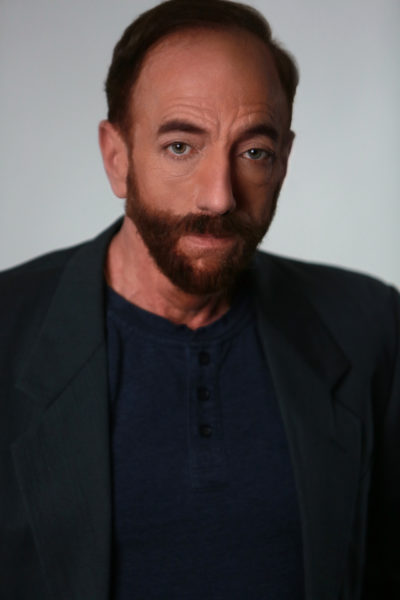
Rob Watson is the host of the popular Hollywood-based radio/podcast show RATED LGBT RADIO.
He is an established LGBTQ columnist and blogger having written for many top online publications including Parents Magazine, the Huffington Post, LGBTQ Nation, Gay Star News, the New Civil Rights Movement, and more.
He served as Executive Editor for The Good Man Project, has appeared on MSNBC and been quoted in Business Week and Forbes Magazine.
He is CEO of Watson Writes, a marketing communications agency, and can be reached at [email protected] .



Television
‘Vampire Lestat’ heats up Pride month with queer action
Latest Anne Rice adaptation poised to be your next TV obsession
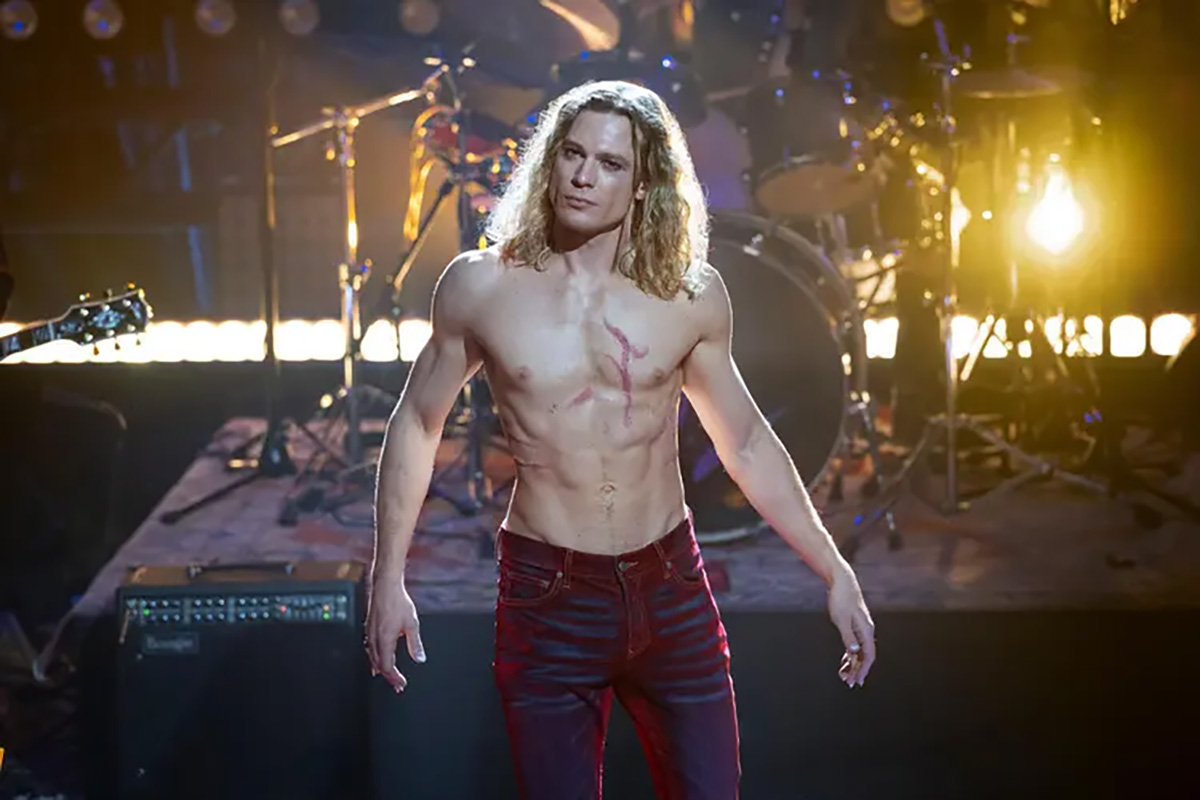
Whether you’re mourning the end of Euphoria, The Boys, or Hacks, you’re dying for another hit of Heated Rivalry or just need something new to watch, The Vampire Lestat has you covered. Whether it’s the cutting witty dialogue, supernatural action, or the maudlin adventures of problematic queer relationships, this is the show for you. This new season brings literal sex, drugs, and rock-n-roll as Lestat (Sam Reid), a multi-centennial vampire, decides to process his beef with his sexy ex Louis (Jacob Anderson) for giving the Interview With The Vampire by starting a rock band.
In 1976, Anne Rice wrote a book to process the death of her young daughter. It was the story of two vampire “roommates” and their centuries-long relationship drama. What followed was a series of 13 books and a whole world filled with vampires, witches, and more. This launched the 1994 film where Brad Pitt, Antonio Banderas, and Tom Cruise played “totally not gay” vampires who almost kissed a few times, despite having all of the hottest actors of the era, it was sanitized of all queer subplots. R&B diva Aaliyah’s last role was as Akasha, the eponymous Queen of the Damned (2002), the unoffical follow up to the first film covering Rice’s second and third book.
The AMC series version of Interview with the Vampire took all this source material and made it more gay, more current, and more PC. They shifted the story to the present day, having Louis live in a luxurious Dubai compound, and his interviewer, Daniel Molloy (Eric Bogosian), being a former addict hawking his masterclass, armed with a ton of evidence. The choice to race-swap Louis from a misanthropic emo plantation owner to a black brothel owner in New Orleans adds so much more nuance, history and richness to his character. Exploring the abusive nature of the relationship and casting the amazing Delainey Hayles as Claudia have all elevated the story to your next television obsession. The choice to turn the book into two seasons allowed the creators to take their time, play with storytelling and explore Louis as an unreliable narrator and tease at many of the storylines of later books. This was a smart choice considering these characters are all centuries old, and over the course of 13 books, all have complex backstories and inner worlds.
Sam Reid was always a standout and captured the egomania and charm of Lestat, the self-proclaimed Brat Prince. He gets to play an over-the-top bitch about everything we’ve seen and heard in Seasons 1 and 2, while even skewering the world of today, commenting on the state of fame, life, and politics.
Like in the book, he reclaims the narrative as he takes the helm of the story. Rather than write his own book, he’s nabbed the newly vamped-up Daniel Molloy as his documentarian. Also, without giving too much away, this series begins in an unnamed future. Armand (Assad Zaman) and Louis are still as hot as ever, and they’re at an auction for the complete works of the Vampire Lestat. It’s teased that some sort of world-altering event has transpired, and Lestat is missing in action. Could that be the events of The Queen of the Damned or even the sum of all of the books? Only time will tell.
The worldbuilding is really solid as we get to see the past, present and future of these characters. Prime example, Akasha, The Queen of the Damned, was name-checked in earlier seasons. Whether you’re a fan of the original source material or not, this series has something for everyone. It has action, including an epic vampire fight scene in the premiere. It has a complex world and mysteries that unfold over the course of each season. Plus, it has hotties of all genders with Reid, Anderson and Zaman holding it down from earlier seasons. Schitt’s Creek dreamboat Noah Reid joins the cast as Lestat’s band’s frontman.
The show has everything: sex, violence, drama, all with a queer and racially inclusive lens. It doesn’t pull punches in storytelling and examining history, all while maintaining a level of levity and fun. It unfolds with dramatic soap operatic reveals and confrontations while also grounding all of the fantasy in our world.
The series is poised to continue with the same characters from the first two seasons while shifting the focus to allow in a new cast of characters who will play out the events of multiple books and major arcs that are part of AMC’s new Anne Rice cinematic universe.
The series airs on AMC Plus, while the first two seasons are available on Netflix. A note to people streaming it may appear on Season 2, as the series name change might be confusing for those who haven’t seen the show.
Television
Repression, toxic masculinity fuel intense queer drama ‘Half Man’
A solidly crafted, well-acted, fascinating binge watch
In 2024, when Richard Gadd’s “Baby Reindeer” became a stock-boosting hit for Netflix, there were few Americans who knew his name.
In the UK, however, the Scottish writer/comedian/actor had already emerged as a talent to be reckoned with, blending autobiographical stand-up comedy with theater to create a reputation as an edgy and provocative creator whose shows tended to be equal parts divisive and successful. One of these, his fictionalized true-life story of being stalked and sexually harassed by a female fan, became an Olivier Award-winning hit in the London theater; that was “Baby Reindeer,” and – in the form of a seven-episode miniseries adaptation – it became the vehicle that carried him to wider fame.
Two years later, Gadd has returned with another high-profile miniseries, this time for HBO Max, and like its predecessor, it’s a story that deals with queer sexual repression, unhealthy attachments, and a central relationship that can safely be described without exaggeration as “toxic” – and it’s an even darker (and more twisted) ride that stretches across decades.
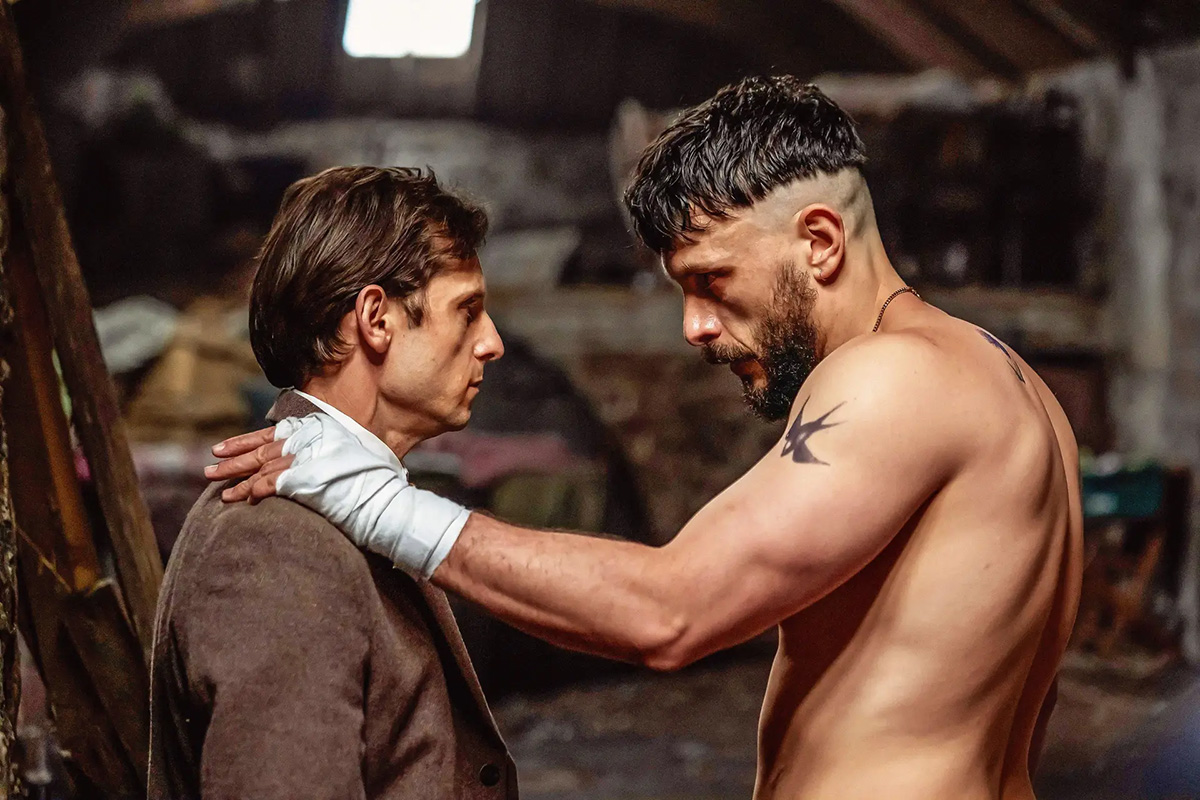
“Half Man,” which debuted on April 23 and continues with one episode per week through May 14, is the story of two “brothers” – Niall (Jamie Bell) and Ruben (Gadd) – whose mothers (Neve McIntosh and Marianne McIvor) have become a lesbian couple after leaving their relationships with the boys’ respective fathers. They are seeming opposites in personality; Niall is quiet, sensitive, and secretly unsure about his sexuality, while Ruben is tough, rebellious, and prone to violence – and unsurprisingly, it’s a match made in hell.
We meet them at the top of the first episode as adults, on the day of Niall’s wedding, when Ruben shows up without warning; his appearance triggers what looks like fear in his “brother from another lover,” and a private meeting between them in a barn at the wedding site turns ugly, launching a flashback format that takes us back to their schooldays, when young Ruben (Stuart Campbell) – already in trouble with the law and trying for a new start – comes home from juvenile detention to become roommate, protector, and bully to young Niall (Mitchell Robertson), all in one.
It’s the dawn of a new and epic relationship, despite a history that has made Niall terrified of the older boy; their seemingly opposite qualities somehow mesh into a kind of symbiotic bubble, in which a tense equilibrium turns them into unlikely allies. Ruben makes sure Niall has nothing to fear from the sniggering schoolyard homophobes who target him, and Niall helps Ruben pass the tests he needs to pass in order to stay in school. Nevertheless, their dynamic is both surprisingly tender and alarmingly lopsided; though they form a bond, it’s a volatile one, and by the end of episode one – after an uncomfortable-to-watch late night incident that amounts to a sexual assault – there is little doubt that Ruben is a psychopath. By then, however, it’s too late; Niall has become hopelessly ensnared by his manipulations, and their dangerous attachment has taken permanent root.
In episode two, the timeline moves the past forward several years (while rolling the wedding-day story back a few hours as well), bringing Niall to his college years. Ruben is once again absent from his life, but the bond is still deep. He struggles to make connections in his new setting – including with another student, the openly gay Alby (Bilal Hasna), who recognizes a side of him that he has still yet to accept for himself. Though he gradually begins to adapt to his new social circle, his insecurities get the better of him – and despite warnings from his mother not to do so, he calls Ruben to come and visit. His arrival triggers another escalating series of incidents, this time entangling Niall’s new friends and culminating in a shocking, jealousy-fueled explosion of violence.
Without going on with the story – after all, the two remaining episodes have yet to be released, so we wouldn’t want to spoil anything – it’s safe to say there’s a pattern here, and it’s intentional.
Gadd has already been public about his own struggles with repression, which were directly explored (albeit fictionally) in “Baby Reindeer,” and it’s clear that he had more to say about the effects they had on his life and identity.
As he put it himself, in an interview with the Hollywood Reporter, “Themes of, I guess, masculinity, or what it means to be a man, or ‘I’ve gone through a masculinity crisis’ come into [the show] probably because I’ve been through that in my life, and I feel I can write to it and speak to it.
“I always think that the best kind of art is kept close to your chest, kept close to your heart, kept close to your experiences, and I guess with ‘Half Man,’ there’s a lot in it that I relate to. It’s not an autobiographical piece by any stretch, it’s purely fiction, but it certainly borrows from themes and struggles and issues that I understand.”
That understanding translates to the series through its focus on tracing the roots of Niall and Ruben’s relationship by methodically tracking the cause-and-effect chain that links the major events of their lives together. It explores the contradictory combination of worship and terror, the transgressive eroticism that intertwines danger and desire, the power of the forbidden to make us want it more, and the self-loathing that punishes itself through violence toward others. The inverted framework of the storytelling, which works both forward and back to meet at (we assume) some definitive point, makes following it a bit like putting together a puzzle, which also has the effect of building suspense as we wait to see the “moment of truth.”
Of course, those who prefer a more straightforward narrative might not appreciate the additional challenge, especially when the subject matter – which revolves around experiences, feelings, and behavior that might be entirely unfamiliar to many audiences – is challenging enough by itself, in its own way. Likewise, and for much the same reason, there will be viewers who are unable to relate to its characters, as some of the show’s less-favorable reviews have pointed out.
But it would be naive to assume that the themes in “Half Man” – of fragile masculinity, internalized homophobia, misdirected rage, nihilistic rebellion, conflicted desires, projected shame, and the other ingredients that infuse this shadow-boxing psychodrama with such a distinctive musky odor – do not apply to more men in today’s culture of incels, “looksmaxxers,” and “the Man-o-sphere” than any of them would like to admit. We’d wager that its portrait of a same-sex, sub/Dom, borderline incestuous relationship might resonate more urgently there than within a queer community that has been grappling with those issues for generations already and are just waiting for everybody else to catch up.
In any case, Gadd’s newest variation on a theme is a solidly crafted, well-acted, and hypnotically fascinating (if sometimes uncomfortable) exercise in the kind of “can’t look away” drama that makes for a perfect binge watch. Or, at least, it will once all the episodes drop.

It’s surely a sign of the times that this year’s spring preview of upcoming screen entertainment doesn’t hold nearly as much boldly out-and-proud queer content as we would like – but then again, there are only a small handful of noteworthy titles overall – especially on the big screen, where, just like any year, the top-grade content is being saved for summer.
Even so, we’ve managed to put together a list of the movies and shows on the horizon that offer a much-needed taste of the rainbow; a mix that includes returning favorites, “don’t-miss” events, and a few promising big screen crowd-pleasers, it should keep you occupied until the summer season brings a fresh new crop of (hopeful) blockbusters with it.
Scarpetta (Prime Video, March 11). Proving once again that she’s on a quest to accumulate more screen appearances than any other actor in history, Nicole Kidman returns for another star turn by way of this true-crime-ish mystery series, adapted from the bestselling “Kay Scarpetta” novels by lesbian author Patrica Cornwell, as a “brilliant and beautiful” forensic pathologist who uses her knowledge to solve murders. If that’s not enough to draw you in, her co-stars include fellow Oscar-winners Jamie Lee Curtis (as her feisty older sister) and Ariana DuBose (as her nosy lesbian niece), as well as Bobby Cannavale and Simon Baker.
It’s Dorothy! (Peacock, March 13). Filmmaker Jeffrey McHale first won our attention with his fun and insightful “Showgirls” documentary, and now he’s back with a look at perhaps the ultimate queer icon in popular culture: none other than Dorothy Gale, that Kansas farm girl who taught us all that “there’s no place like home” in L. Frank Baum’s classic novel “The Wonderful Wizard of Oz” and its sequels – and of course, in a certain movie adaptation starring Judy Garland. Charting the journey of the fictional heroine across a century of cultural reiterations – on the page, the stage, the screen, and beyond – with a mix of archival material, artistic interpretations, and commentary from queer and queer-friendly voices such as John Waters, Rufus Wainwright, and Lena Waithe, it’s sure to be required viewing for every “Friend of Dorothy” – and all of their friends, too.
The 37th Annual GLAAD Media Awards (Hulu, March 21). Sure, it’s already happened and you already know (or can find out with a few quick taps of your phone screen) who and what the winners were – but, hey, we already know that the Oscars aren’t going to offer much in the way of queer victories (since there are only a small handful of queer nominees), so why not plan to watch the GLAAD ceremony (recorded live on March 5 for later streaming)?
The Comeback: Season 3 (HBO Max, March 22). Another returning gem is this inventive “mockumentary” style sitcom-about-a-sitcom, starring Lisa Kudrow as a “B-list” television star trying to revive her own faltering career. Slow to catch on in its first season (which originally aired in 2005), it won acclaim (and new fans) when it was rebooted in 2014 by Kudrow and collaborator/co-creator Michael Patrick King (former executive producer of “Sex in the City,” and now returns after a 12-year hiatus for another installment, which tracks “never-was” has-been Valerie Cherish through yet another attempt to make stardom happen. If you like cynical, sharp-edged satire, especially when it’s aimed at the behind-the-scenes world of show-biz, then you’ve probably already discovered this one – but if you haven’t, now’s your chance to jump on board.
Heartbreak High: Season 3 (Netflix, March 25). Fans of this imported Australian teen “dramedy” series – itself the “soft reboot” of another popular Australian series from the ‘90s – will be thrilled for the arrival of its third and final installment, which picks up where it left off in the lives (and sex lives) of the students and teachers of a suburban high school. As always, it can be expected to push the envelope (and some buttons) with its irreverent treatment of issues of class, race, and sexuality – and to deliver another season’s worth of the colorful and striking costume designs that have been acclaimed as a highlight of the show. And yes, it includes a refreshingly significant number of variously queer characters, so if you’re not already on board with his hidden gem of a streamer, we suggest you should give it a shot – you can probably even catch up on the first two seasons before this one drops.
Pretty Lethal (Prime Video, March 25). Fresh from a March 13 debut at the SXSW Film and TV Festival, this girl-power fueled action thriller from director Vicky Jewson and writer Kate Freund centers on a troupe of ballerinas who, while en route to a prestigious ballet competition, are stranded by a bus breakdown and must take shelter at a remote roadside inn run by Uma Thurman as a ruthless crime boss. Needless to say, the girls are forced to adapt their dance prowess into combat skills before the night is over. With a cast that includes Maddie Ziegler, Lana Condor, Avantika, Millicent Simonds, and Michael Culkin, our bet is that it’s sure to be campy fun with a feminist twist.
Forbidden Fruits (Theaters, March 27). Adapted from the play “Of the woman came the beginning of sin, and through her we all die” by Lily Houghton (who co-wrote the screenplay with director Meredith Alloway), this comedy/horror film about a group of young witches who operate a “femme cult” out of the basement of a mall store called “Free Eden” looks like another campy treat, full of witchy wiles and bitchy rivalries, but something about its theatrical pedigree tells us it will also be more than that. Even if we’re wrong, though, we’ll be perfectly happy; why would anyone say no to a delicious piece of camp, especially when it has a cast led by Lili Reinhart, Lola Tung, Victoria Pedretti, and Alexandra Shipp, with creator/influencer Emma Chamberlain in her film debut and heavyweight talent Gabrielle Union thrown in for good measure? We’re ready to join the coven.
Club Cumming (WOW Presents Plus, March 30). Queer icon Alan Cumming (currently riding high as host of “The Traitors”) takes us inside his NYC East Village gay bar, nightclub, and showplace for a behind-the-scenes reality series that spotlights the talent, fashion, and fabulously queer vibe that makes the establishment one of queer New York’s most iconic nightspots. Cabaret singer Daphne Always, go-go dancer and drag performer Michelle Wynters, Drag queen Brini Maxwell, Drag king Cunning Stunt, and Comedian Jake Cornell are among the many reasons why this little slice of the queer New York scene is reason enough alone to become a subscriber to World of Wonder’s streaming platform – though if you’re a “Drag Race” superfan, chances are good you already are.
The Boys: Season 5 (Prime Video, April 8). Amazon’s violent superhero satire, complete with its divisive and deliciously challenging emphasis on queer storylines and its in-your-face caricature of contemporary American “culture war” politics, returns for its fifth and final season, along with all the thorny issues of racism, nationalism, and xenophobia it has showcased all along, and an ensemble cast that includes Karl Urban, Jack Quaid, Antony Starr, Erin Moriarty, and the rest of the usual players. A decidedly queer-informed game-changer in the mainstream fan culture, it’s a show that will be sorely missed – but with several spin-offs already in existence (including the even-queerer “Gen V”) and another (“Vought Rising”) on the way, we can take comfort in knowing that its influence will live on.
Euphoria: Season 3 (HBO Max, April 12). The controversial Sam Levinson-created drama that is HBO’s fourth most-watched series of all time is back after a lengthy hiatus, rejoining the lives of its dysfunctional characters – queer struggling addict Rue (Zendaya), trans teen Jules (Hunter Schafer), abusive sexually insecure football star Nate (Jacob Elordi), and the rest – a full five years later, away from the social traumas of high school and settled into what we can only assume is an equally-dysfunctional life as young adults. Renowned for its cinematic visual styling and its no-holds-barred treatment of “triggering” subject matter, this long-awaited return is likely to be at or near the top of a lot of watchlists – and ours is no exception.
Mother Mary (Theaters, April 17). One of the most promising (and queerest) offerings of the season is this psychological thriller set in the world of pop music, helmed by acclaimed filmmaker David Lowery (“A Ghost Story,” “The Green Knight”) and starring Anne Hathaway (“The Devil Wears Prada,” “Les Misérables”) as a pop singer who becomes entwined in a twisted affair with fashion designer Michaela Cole (“I May Destroy You,” “Black Earth Rising”). Besides its two queer-fan-fave stars, it features trans actress Hunter Schafer (“Euphoria”), FKA Twigs, and Jessica Brown Findlay (“Downton Abbey”) in supporting roles, and to top it all off, it includes a soundtrack full of original songs. With a celebrated director behind it and an award-winning pair of leading ladies, this one has all the potential of a future classic.
The Devil Wears Prada 2 (Theaters, May 1). Meryl Streep is back as Miranda Priestley, need we say more? We know the answer to that is “no,” but we still need to remind you that Anne Hathaway, Emily Blunt, and Stanley Tucci are all part of the deal, too, as this hotly anticipated sequel hits the screen just ahead of the summer rush. Along for the ride are Kenneth Branagh, Justin Theroux, Lucy Liu, B.J. Novak, Conrad Ricamora, Sydney Sweeney, Rachel Bloom, Donatella Versace, and Lady Gaga herself. We trust that will be sufficient to ensure that you will show up on opening day – dressed accordingly, of course.
The Sheep Detectives (Theaters, May 8) Rounding out our roundup with a fun-for-the-family treat that blends live action with animation for an inter-species “whodunnit” with an all-star array of talent, this adaptation of Leonie Swann’s 2005 novel “Three Bags Full” centers on a flock of sheep as they attempt to solve the murder of their beloved shepherd. Boasting onscreen performances from Hugh Jackman, Emma Thompson, Nicholas Braun, Nicholas Galitzine, and Molly Gordon, along with character voices provided by Julia Louis-Dreyfus, Bryan Cranston, Chris O’Dowd, Regina Hall, Patrick Stewart, Bella Ramsey, Brett Goldstein, and Rhys Darby, this one might be just the kind of lightweight entertainment we all need as we move deeper into the confounding year of 2026.
And if not, stay hopeful – the films and shows of summer will be here soon enough.

ICE arrests Milo Yiannopoulos in New Orleans

San Francisco, long a queer safe haven, remains competitive for homebuyers

For LGBTQ youth starting with nothing, Pride House in Florida offers help

Archuleta to host book signing in Rehoboth Beach

Actor Tim Curry dies at 80

Proposed Indian foreign funding law overhaul could further pressure LGBTQ groups

Two awesome, affordable rides

Advocates honored at Engendered Spirit Awards

Gay-owned pizzeria in Dupont Circle burglarized