Australia
Sydney WorldPride comes to a buoyantly successful close
D.C. to host next biennial event in 2025
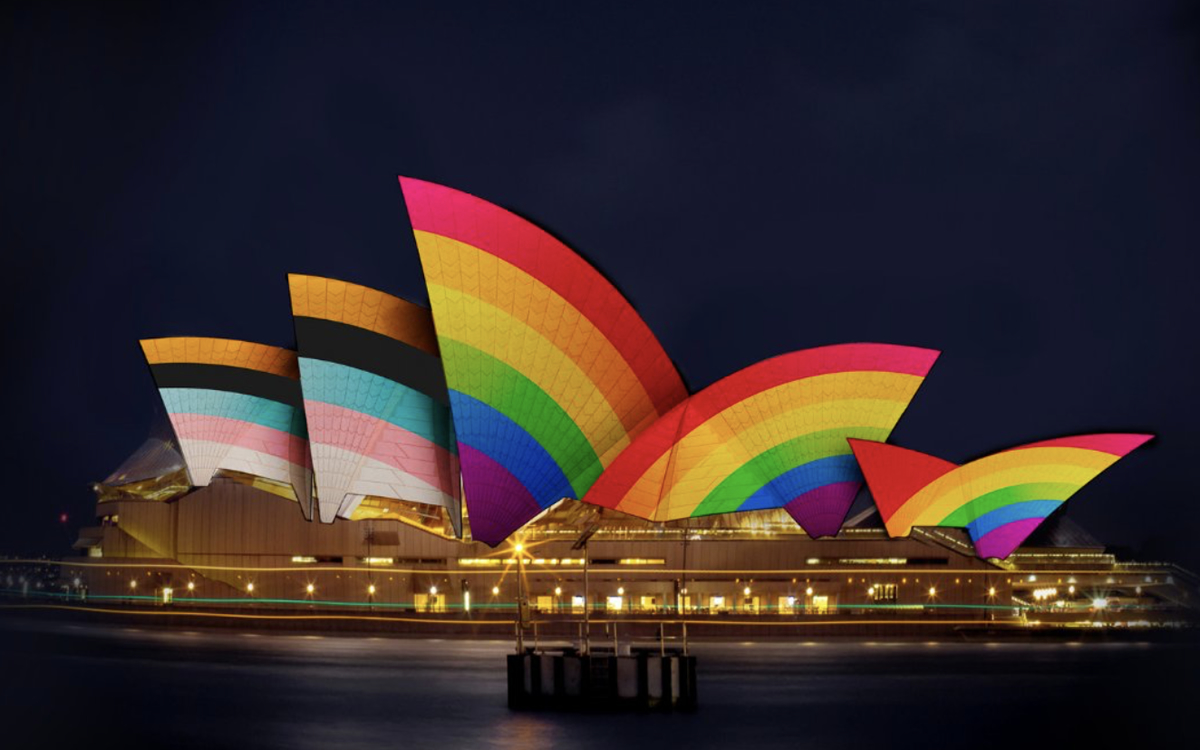
The first WorldPride in the Southern Hemisphere wrapped up in Sydney on Sunday evening with an open-air closing concert and dance party headlined by singers Kim Petras and Ava Max.
The packed extravaganza rounded out a 17-day celebration of more than 300 events — encompassing parties, parades, exhibitions, workshops, sports, a film festival, competitive voguing and much more — that in all were projected to be attended by some half a million people.
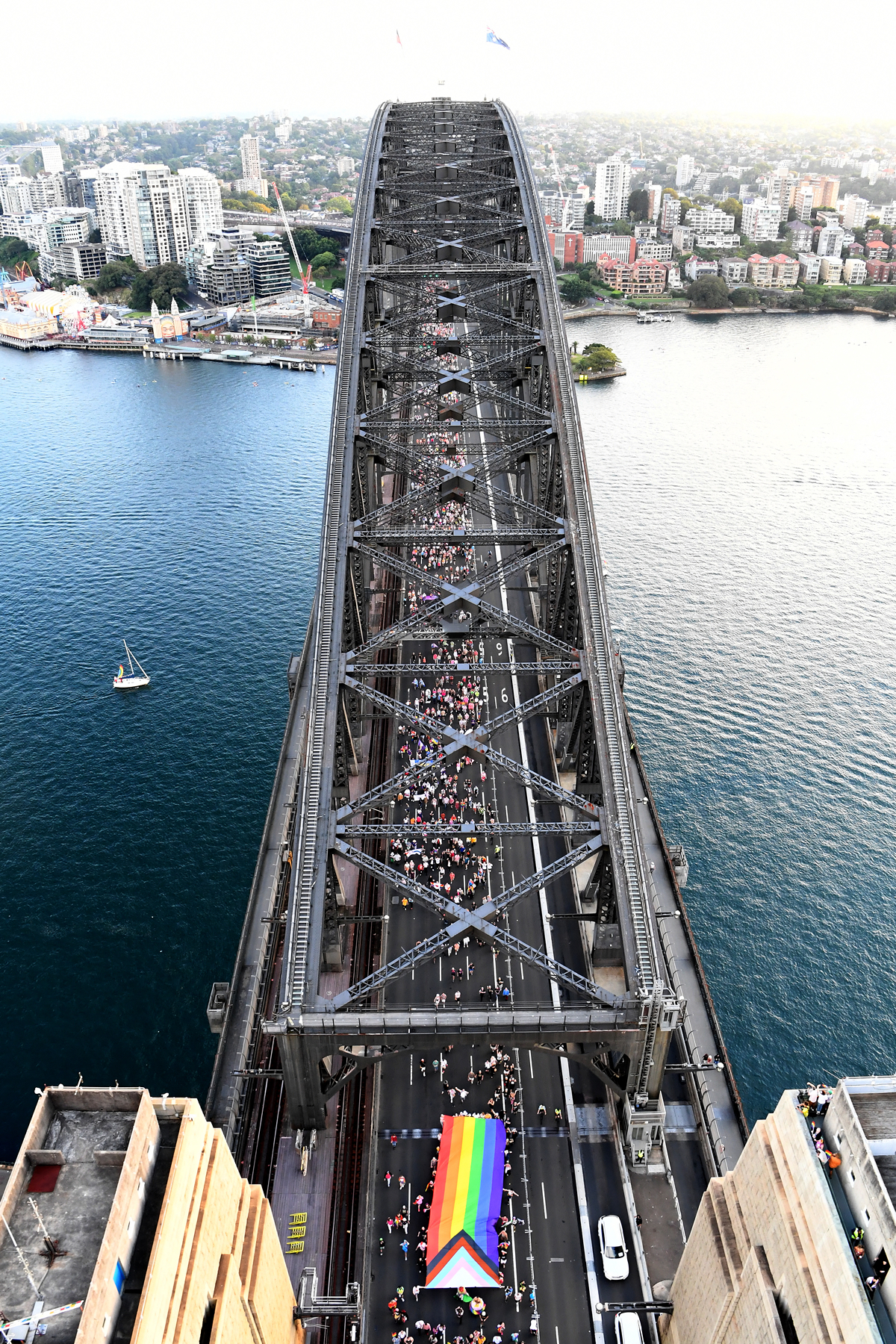
Earlier on Sunday, 50,000 marchers, including Australian Prime Minister Anthony Albanese, took part in an early morning march across the city’s cherished Sydney Harbor Bridge, which was closed to traffic for the first time since 2000 to make way for the walk.
“It was important for me to come to the march because I’m a Black trans woman, so I felt like I should march in solidarity with the community,” said Taj Tian, an American expat who recently relocated from Tokyo to Sydney.
“We came to WorldPride because it was important to deliver our message from Korea to the world,” said Seunguk So, who carried a banner with his husband, Yong Min Kim, in support of marriage equality in South Korea.
Timed to coincide with Australia’s summer and Sydney’s iconic Mardi Gras celebration, the WorldPride calendar began on Feb. 17 with a series of queer parties and performances, then kicked into overdrive with a Feb. 24 official opening concert headlined by Aussie pop darling Kylie Minogue. 2023 marks the 45th anniversary of the first Sydney Mardi Gras, as well as the 50th anniversary of Australia’s first Gay Pride Week.
The political highlight of Sydney WorldPride was the largest LGBTQ and intersex human rights conference ever held in the Asia-Pacific region.
About 1,800 people attended the three-day conference, which served as the WorldPride centerpiece and featured some more than 60 presenters and panelists, including Steve Roth, executive director of the Organization for Refuge, Asylum and Migration, an LGBTQ and intersex refugee organization. Jessica Stern, the special U.S. envoy for the promotion of LGBTQ and intersex rights abroad, Ambassador Chantale Wong, the U.S. director of the Asian Development Bank who is the first openly lesbian American ambassador, and Victor Madrigal-Borloz, the independent U.N. expert on LGBTQ and intersex issues, are among those who also participated.
“This human rights conference was one of the largest gatherings ever of global LGBTQ activists, so it was important to be a part of it both to represent ORAM and to bring attention to the challenges facing displaced LGBTQ people around the world,” said Roth. “I was inspired to hear more about all the great activism happening globally and to share about the important work that ORAM is doing, such as bringing economic empowerment programs to queer refugees in places like Kenya.”
In the handover of the conference reins to D.C. for WorldPride 2025, U.S. Amb. to Australia Caroline Kennedy congratulated Sydney organizers, especially for giving First Nations people a central role.
“We will all leave here with a deeper understanding of the work that needs to be done,” said Kennedy. “You’ve shown the world how an empowered diverse community is central to a more peaceful and prosperous world. I’m looking forward to the sharing that will happen with First Nations people in the United States.”
First Nations representation was a recurring theme throughout Sydney WorldPride’s main events, which were all opened with acknowledgments of the original Gadigal owners of the lands upon which Sydney now sits.
Popular Aboriginal Sydney drag queen Nana Miss Koori helped kick off several key happenings, including the opening concert, the Mardi Gras parade, and the glamorous Blak and Deadly First Nations gala concert, which took place on March 2 at the famed Sydney Opera House. Performers there included Aboriginal Australian electronic music duo Electric Fields and Canadian Indigenous musician Jeremy Dutcher.
Sydney’s top museums hopped also onto the WorldPride bandwagon, including the Art Gallery of New South Wales, which presented a new “Queering the collection” tour of its permanent holdings, and the Powerhouse Museum, which mounted its “Absolutely Queer” exhibition honoring Australia’s contemporary queer creativity.
On hand throughout the WorldPride festivities were a cavalcade of Australia’s top LGBTQ celebrities, including singer Troye Sivan, actor Magda Szubanski and multitalented drag entertainer Courtney Act. Many American queer celebs, including TV personalities Carson Kressley and Andy Cohen, were also spotted at WorldPride events.
The eighth-ever WorldPride, Sydney’s edition was projected by organizers to inject approximately $75 million into the Australian economy, a much-needed tourism boost following the country’s strict COVID-19 lockdowns of the previous few years.
The next WorldPride is slated to take place in D.C. from May 23 to June 8, 2025.




Australia
Australia lifts additional restrictions on LGBTQ blood donors
Gay, bisexual men, trans people in long-term monogamous relationships can now donate
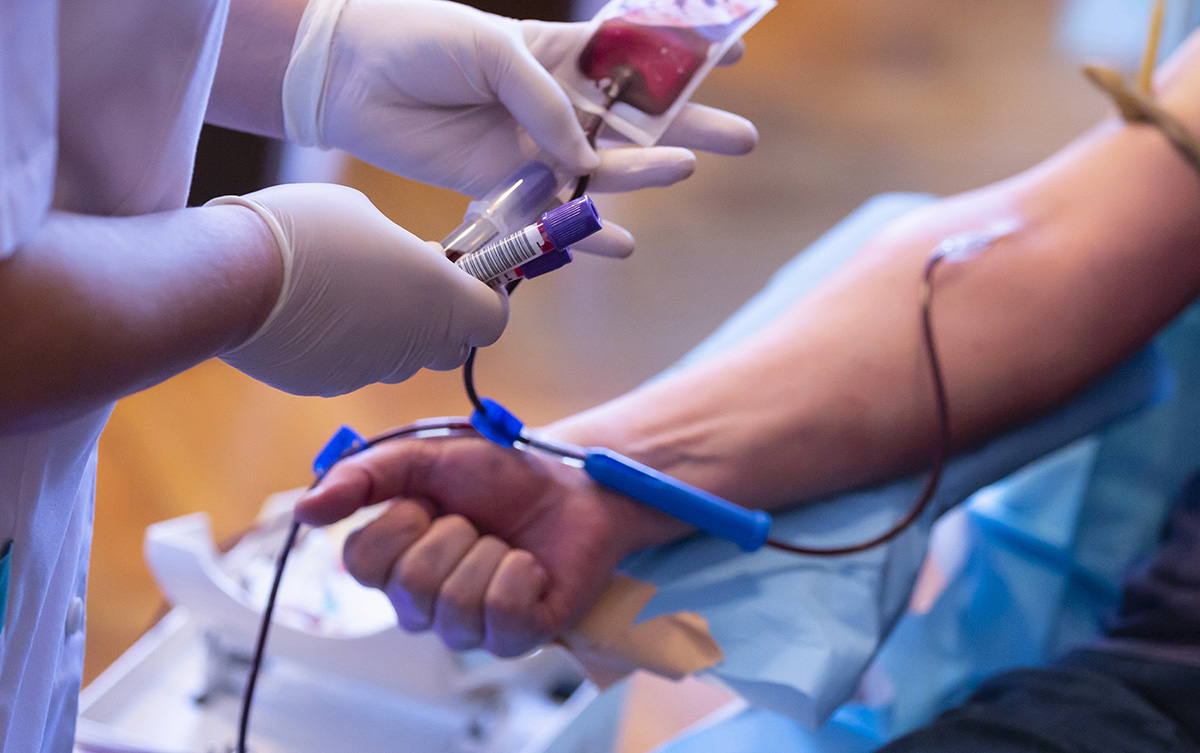
The Australian Red Cross Blood Service (Lifeblood) has lifted additional restrictions on LGBTQ people who want to donate blood.
The Star-Observer, an Australian LGBTQ newspaper, reported new Lifeblood rules that took effect on Monday will allow “gay and bisexual men and transgender people in long-term monogamous relationships to donate blood and platelets for the first time.”
The new policy defines “long-term monogamous relationships” as those that are at least six months.
All potential donors — regardless of their sexual orientation or gender identity — will answer the same questions about recent sexual activity.
“Previous donor rules prevented many people from the LGBTQIA+ community from donating blood or platelets if they’d had sex within the past three months,” said Lifeblood CEO Stephen Cornelissen in a press release that announced the new policy. “These latest changes mean many gay and bisexual men and transgender people in long-term, monogamous relationships will become eligible to donate blood or platelets for the first time.”
Lifeblood in 2025 ended its blanket ban on sexually active LGBTQ people from donating blood.
Rodney Croome, an Australian LGBTQ activist who is the spokesperson for Let Us Give, a campaign that has championed the changes, donated blood on Monday.
“After three decades of advocacy, and for the first time in my life, I was able to donate blood today,” said Croome in a Facebook post that showed him donating blood. “From today, gay men, and bisexual men and transgender women who have sex with men, are able to give blood without the traditional three month abstinence period. All donors are now asked the same questions about sex regardless of the gender of our sexual partners.”
Croome in the post said “there are still problems with the new donor regime,” but said Let Us Give will continue to work with Lifeblood.
“Those who may have not been monogamous in the recent past should not be subject to a six month wait time,” he wrote. “Three months is considered more than enough in the UK, US and Canada. It should be here too. People on PrEP and trans people also face continued barriers. Let Us Give will continue to work towards greater equity in donation.”
The Australian Red Cross Blood Service (Lifeblood) has announced it will lift its ban on sexually active LGBTQ people from donating blood.
The Star Observer, an Australian LGBTQ newspaper, on Wednesday reported “gay and bisexual men and transgender women” were previously not “able to donate plasma if they had been sexually active with men in the last three months.” The ban will end on July 14.
“Lifeblood has been working to make blood and plasma donation more inclusive and accessible to as many people as possible, whilst maintaining the safety of the blood supply,” said Lifeblood on Wednesday in a press release that announced the new policy.
“In the first of the rule changes, from Monday, July 14, 2025, Lifeblood will remove most sexual activity wait times for plasma donations,” it added. “Under this world-leading ‘plasma pathway,’ most people, including gay and bisexual men, and anyone who takes PrEP will be able to donate plasma without a wait period, providing they meet all other eligibility criteria. Extensive research and modeling show that there will be no impact to the safety of the plasma supply with this change.”
“Once implemented, all donors will be asked the same questions about their sexual activity, regardless of their gender or sexuality, and most people in a sexual relationship of six months or more with a single partner will be eligible to donate blood,” notes Lifeblood’s press release. “In addition, most people with new or multiple partners will also be able to donate blood if they have not had anal sex in the last three months. The change will bring an end to men being asked if they’ve had sex with another man.”
Lifeblood Chief Medical Officer Jo Pink said the new policy will allow 24,000 additional people to donate blood each year.
“We’re excited to be able to welcome more people from across the community into our donor centers from next month,” said Pink.
Let Us Give and other advocacy groups for years had urged Lifeblood to allow LGBTQ people to donate blood without restrictions.
“We thank the TGA (Therapeutic Goods Administration) and Lifeblood for removing a ban that limited the supply of safe whole blood and stigmatized gay men, and bisexual men and trans women who have sex with men, as a threat to public health,” said Let Us Give spokesperson Rodney Croome.
Australia
Australian prime minister re-elected
Anthony Albanese marched in 2023 Sydney Gay and Lesbian Mardi Gras parade

Australian Prime Minister Anthony Albanese on Saturday won re-election.
Albanese’s Labor Party defeated the Liberal Party that Peter Dutton led.
Dutton, who lost his seat in parliament, quickly conceded to Albanese, who is the first Australian prime minister to win re-election in 21 years. Foreign Minister Penny Wong, a lesbian who represents South Australia in the Australian Senate, on Saturday introduced Albanese at his victory party.
“Today the Australian people have voted for Australian values; for fairness, aspiration, and opportunity for all, for the strength to show courage in adversity, and kindness to those in need,” said Albanese. “Australians have voted for a future that holds true to these values.”
(9News Australia)
Albanese has been prime minister since 2022. In 2023 he became the first Australian prime minister to march in the Sydney Gay and Lesbian Mardi Gras parade.
Voters re-elected Albanese less than a week after Canadian Prime Minister Mark Carney and his Liberal Party won the country’s federal election. The Trump-Vance administration’s global tariffs are among the issues that factored into both country’s votes.
“Congratulations to Prime Minister Anthony Albanese on his victory in Australia’s federal election,” said Secretary of State Marco Rubio on X. “Australia is a valued U.S. friend and a close partner.”
“We look forward to continuing to promote freedom and security in the Indo-Pacific and around the world,” he added.

Trump asks Supreme Court to allow restrictions on gender-affirming care in prisons

Education Department rolls back protections for LGBTQ students under Title IX

Debbie Allen shares on loss, love, and the power of speaking out

Baltimore’s oldest gay bar to reopen this week

Dr. Fauci ‘honored to be part of’ LGBTQ history

Colombia withdraws from Equal Rights Coalition

Trump-appointed judge restores White House TV pool access

Writing a play about Lincoln leads down a rabbit hole to a closet

Philadelphia event to launch 2026 LGBT History Month

Being a female firefighter comes with unique risks, and rewards
-

 Colombia5 days ago
Colombia withdraws from Equal Rights Coalition
-
White House5 days ago
Trump-appointed judge restores White House TV pool access
-
a&e features5 days ago
Writing a play about Lincoln leads down a rabbit hole to a closet
-
National5 days ago
Philadelphia event to launch 2026 LGBT History Month