a&e features
As You Are — D.C.’s ‘Cheers’ for queers
One year after opening, bar is ‘creating the world in here that we would like to see out there’
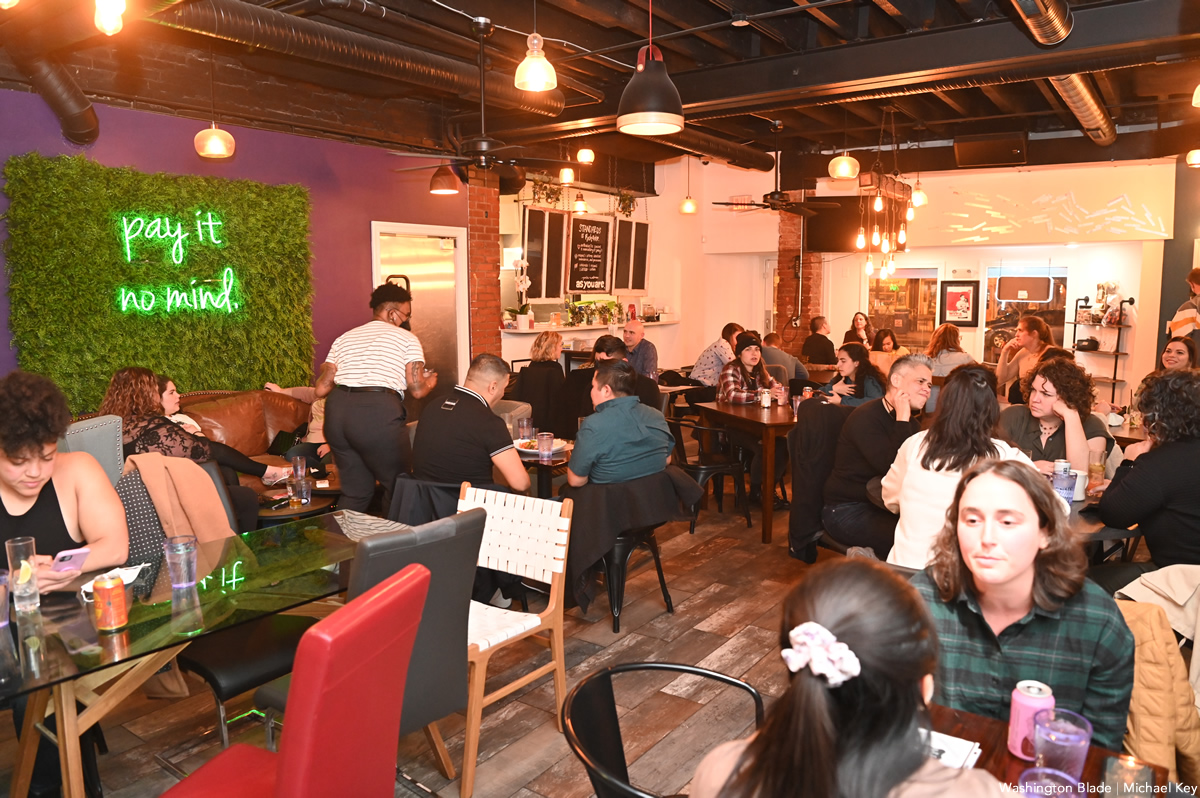
Growing up in Tennessee, Abby Clayton denied herself hobbies like crafting because she already felt like an outcast. Due to the lack of queer representation around her, she felt there were parts of herself she couldn’t express or didn’t know existed. When she stepped into As You Are. DC, a café and bar space on Barracks Row to watch a Mystics game, she found the unexpected: a place where she could be all parts of herself — crafter, athlete, and queer.
“Being in a place where people are so authentically themselves is so encouraging to me as I try to live that out more and more every day,” said Clayton, who now returns regularly for Wednesday Craft Nights. “It’s mind-blowing to me. We’re the cool people now!”
Stephanie Storlie, a 35-year-old teacher who lives in Anacostia agrees. Storlie also comes for Craft Nights where about 30 people of all ages knit, paint, crochet, and socialize. She immediately felt a deep sense of community with other queer people who shared her enjoyment of knitting, something unavailable to her in her younger years.
“There’s this concept in the queer community of re-parenting or reclaiming the parts of our lives that weren’t what we wanted them to be,” Storlie said. “I can do that here.”
When co-owners Jo McDaniel and Rachel Pike opened the space in March 2022, they dreamt of a queer space that was more family-friendly, multi-generational and comfortable for non-drinkers.
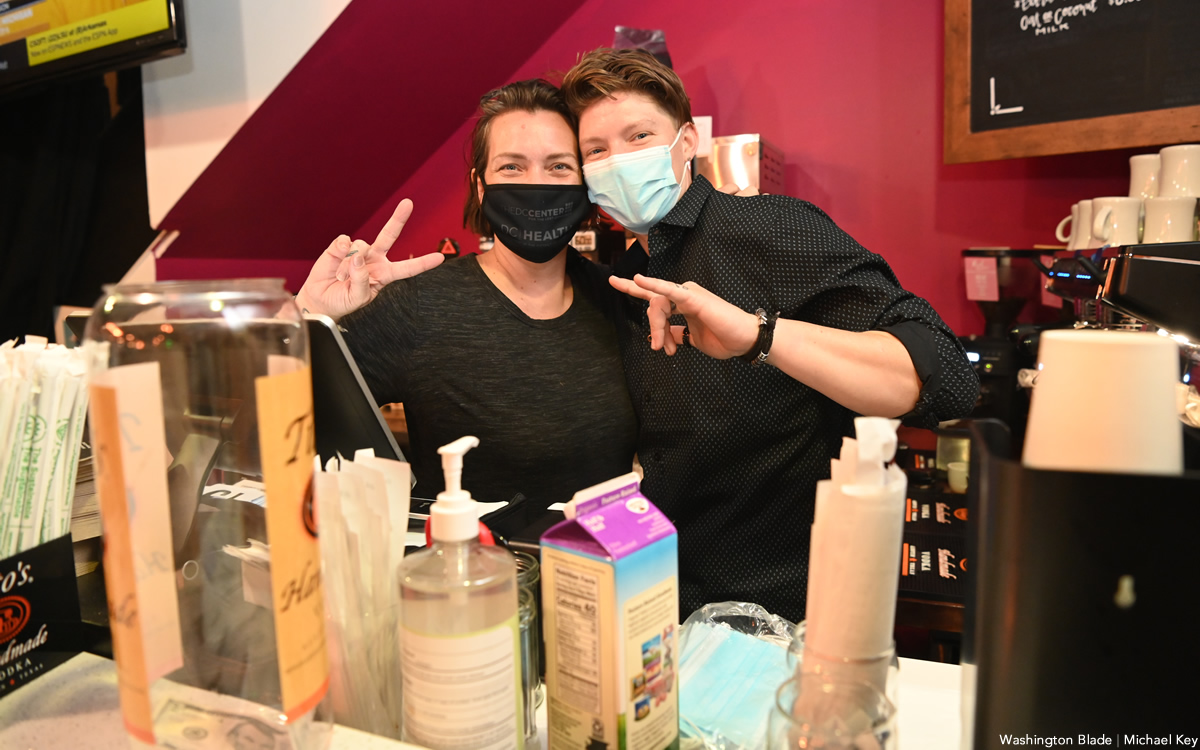
Based on the diverse programming, you could say that dream has been achived: how about not just a drag queen show, but one for performers of color with ASL interpretation? Check. What about a Trans Night with corn hole toss on the dance floor? Yep. For those more introverted? Try the More Than Strangers Happy Hour (think speed dating, but for friends), Craft Night or the Magic card game gathering just for queer gaymers.
After the Club Q shooting last fall in Colorado, AYA hosted a vigil and a grief workshop at no cost where a therapist from the gay community shared how to process such events in a healthy way. Film screenings, panel discussions, and a regular Go Gay DC Sunday meet up have brought together queers of all generations.
In addition to a coffee bar, sandwich and weekend brunch offerings, patrons will find vegan cheese, non-dairy milks, and house-made syrups like lavender and ginger. You can add a $25 donation to your tab for unhoused patrons who often stop in for a free hot meal and to help themselves to the clothing donation box by the door.
So how does one build a culture that welcomes so much diversity within the queer community? McDaniel and Pike started by training staff in an enthusiastic model of consent that they have developed over two decades of combined experience in the service industry and security as well as community activism.

“We’re looking to change bar culture — not just queer bars, but all social spaces,” said McDaniel. “We want to help people socialize safely, to empower those who have been taught to be pleasing.”
If a server sees someone hesitate to take a drink, they will ask: “Is it a ‘Hell yes!’ for you?” If not, they will speak up for the person, pour them ginger ale or serve no drink at all.
Rape culture starts small with observable behaviors in a public space, according to Pike, so staff also intervene if consent is unclear with behavior, touching or staring. Sometimes people want to belong so badly in queer spaces that they will say yes to things that they don’t want to do, so enthusiastic consent is paramount, Pike said.
When asked how they are able to balance free programming with keeping a business afloat, Pike said, “It’s probably a little bit harder on us because we’re not chasing dollars. But it’s also worth it every day because people have a place to be to be safe and included.”
A white neon sign glowing above the front door bids patrons farewell as they exit: “with love.”
“With love—period. As you are—period. No exceptions,” Pike said. “We’re going to create the world in here that we would like to see out there.”
As You Are. DC is located at 500 8th St., S.E. You can check out the event schedule and menu at asyouaredc.com.






a&e features
Writing a play about Lincoln leads down a rabbit hole to a closet
As LGBT History Month arrives, new hints that our greatest president was gay
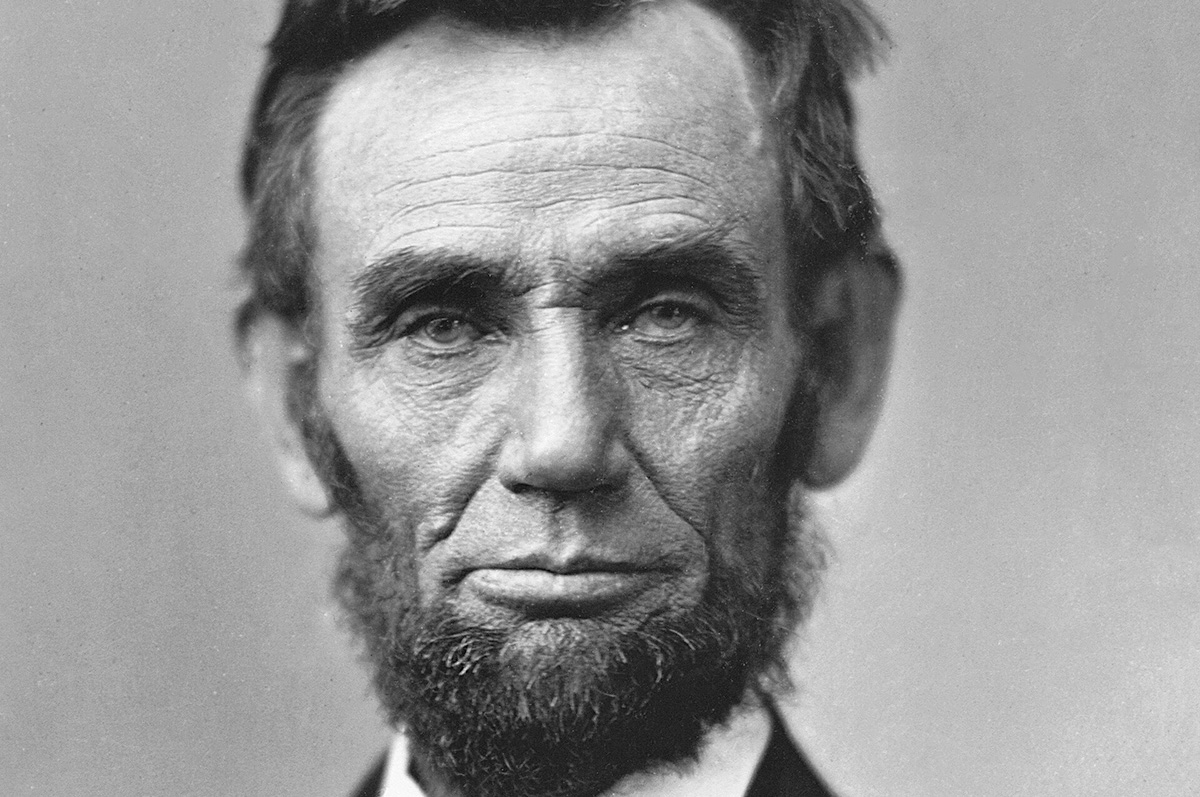
Abraham Lincoln treasured poetry and it turns out his particular favorites were pretty queer, but I never would have detected that if I hadn’t decided to write a stage comedy about his sex life. In my research for the play, I stumbled across what I believe is new evidence that Lincoln and Joshua Speed were lovers. The remarkable thing is that the evidence has been sitting in plain sight for more than 150 years.
The rabbit hole swallowed me in 2019, when C.A. Tripp’s revolutionary biography “The Intimate World of Abraham Lincoln” somehow fell into my hands. I was embarrassingly late to the Lincoln-was-gay party—Tripp’s book had come out 14 years earlier—and the wonderful-to-me news that Lincoln played for my team started me plotting out a play, because I was pretty sure if I didn’t know this, lots of people didn’t and inquiring minds want to know, and the young queers of America should be told that they have yet another genius over whom to kvell.
Historians and myth makers alike—often it’s hard to tell the difference—have always painted Abe straight, and now that it’s in question they’ve gotten peevish and insistent because, c’mon, bro, everybody knows that in the 19th century all the guys were writing each other gushingly romantic letters and sharing a bed every night for four years. Meanwhile, the Queer Studies crowd assures us that they, the inventors of homosexuality, had not yet invented it, so it couldn’t be that.
But what kind of play to write? I wanted to put at least two of his lovers into it, and no playwright with any sense of drama would omit Abe’s mad, physically abusive, spendthrift wife Mary. To get all of them in the same place at the same time meant bedroom farce. Keeping one’s lovers from knowing about each other is the keystone of bedroom farce and why the sets have so many doors. Speed, the great love of Lincoln’s life, who often visited the White House during the Civil War, would arrive while Lincoln’s wartime lover Army Captain David Derickson was there, too, and Abe would conceal them from each other and from Mary, who is suspicious and dangerous and prone to striking her husband. I also folded in Lincoln’s writing of the Emancipation Proclamation, which in the play is helped along by an invented Black housekeeper, who has suspiciously 20th-century opinions and a shiny new invention: the animatronic steampunk Lincoln robot. “The Loves of Lincoln” finally had its world premiere on June 19 of this year in Memphis, Tenn., where it was nominated for the best new original play of the 2025–26 season, and lost. Now we’re getting to the part about Lord Byron. Wait for it. It’s coming. We’re still setting the scene.
A cute, redheaded, gay Broadway producer told me the play would be stronger with a different kind of ending and for once a producer’s note was spot on—the play needed a final confrontation between Lincoln and Speed over love and slavery. The Speeds had dozens of slaves—lots more than Mary Todd Lincoln’s family, who had a few themselves. To write the scene I needed to know more than I did about the Speed-Lincoln relationship during the war. Speed was helping Lincoln keep the border state of Kentucky in line, but on the other hand his great wealth depended on slavery.
Time for some research. Enter “Your Friend Forever, A. Lincoln: The Enduring Friendship of Abraham Lincoln and Joshua Speed” (2016, Columbia University Press) by Charles B. Strozier, a “psychobiographer” who does the usual somersaults to explain away Lincoln’s behavior as straight because writing gushingly romantic letters to other guys and sleeping in the same bed for four years was absolutely not gay in the 19th century, which is proved by the fact that all the guys were doing it. Which kind of made me want to build a time machine and stop off in 19th-century Illinois on my way to ancient Greece. And then, suddenly, sitting there quietly on page 45, like a dangling thread on a cardigan begging to be pulled, was the interesting datum that Joshua lent his gangly, athletic bedmate books, among them Joshua’s “favorite”: Lord Byron.
The same Lord Byron who cut a swath a kilometer wide across the comely young men of Greece? The notorious libertine and sodomite—that Lord Byron? Well, yes, and it’s not hard to draw a line straight from there to Lincoln’s closet (coincidentally, one of the doors in The Loves of Lincoln leads into a closet—“Why is my husband always in the closet?”), but for some reason, up to now, no one I know of has drawn that line.
Understand, just reading Byron does not make Josh and Abe homosexuals. Byron was a big seller and lots of straight men read him, though perhaps not while gazing dreamily into each other’s eyes (Joshua’s wide and blue, Abe’s a melancholy gray), and OK we don’t know that’s exactly how it went down, but we do know other interesting things thanks to William Herndon.
Bill was a clerk in Speed’s general store, the store Speed and Lincoln slept above, and later the junior partner in Lincoln’s Springfield law practice. Herndon worshipped Lincoln. After the assassination he interviewed pretty much every significant person in Lincoln’s life, in what Strozier called one of the first oral history projects in America. Naturally, he interviewed Speed, who reported Lincoln’s passion for the poetry of Byron. The sexual significance of the connection between Speed, Byron, and Lincoln has up to now been ignored by all biographers—even the queer ones, like Tripp, who tried and did make the case for Lincoln’s homosexuality. Speed told Herndon he had introduced Lincoln to Byron: “I don’t think he had ever read much of Byron previous to my acquaintance with him.” Lord Byron’s poetry was a stew of intense male friendship, forbidden sexuality, secrecy, alienation, and erotic misbehavior, and in the wake of his scandalous divorce his name had for years been a transatlantic byword for transgressive sexuality. Byron also became, alongside Burns, Milton and Shakespeare, one of Lincoln’s four favorite writers.
Here’s where things get juicy. Speed said that, in particular, “Lincoln loved The Bride of Abydos.” Byron wrote the poem in the wake of his travels through the Ottoman Empire, which was partly what we today would call sex tourism. The poem’s beautiful young hero Selim is extremely feminized, conceals his true identity from his girlfriend (whom everyone thinks is his sister but they’re cousins), and only later reveals that he has a secret double life—in the case of the poem, as the leader of a band of pirates. Now there’s a secret life with an All-Male Cast. We’ll let you supply the pirate joke that goes right here.
It gets better. Herndon’s admittedly fragmentary notes from the Speed interview also specifically bring up Byron’s “To Inez,” the extraordinary lyric in “Childe Harold” in which a man tells a woman that her beauty gives him no pleasure, that her eyes scarcely charm him, and that she must not attempt to discover his “secret woe” or “unmask” his heart. The subtext that leaps off the page, given that Byron was, as the actor Michael Redgrave described himself to his son, “to say the least of it, bisexual,” is that the speaker is in the closet. In the last stanza, he begs her not to pry:
What is that worst? Nay, do not ask—
In pity from the search forbear:
Smile on—nor venture to unmask Man’s heart,
and view the Hell that’s there.
So, queer-coded Byronic poetry formed an important part of Lincoln’s imaginative world, and Speed remembered that fact nearly 30 years later, and told it to Herndon almost as if leaving literary breadcrumbs for posterity. As far as I have been able to determine, no previous Lincoln biographer or scholar of Lincoln’s sexuality has examined the queer implications of the Byron poems Speed specifically remembered Lincoln reading. Why has this been missed?
All of this would be meaningless if Speed and Lincoln didn’t understand that Byron was a lover of men, but I assert that they would have. Lincoln was a discerning reader with a famously penetrating, tenacious mind that wouldn’t let go of a thing until he understood it thoroughly—and a huge fund of worldly knowledge. He was by this time in the Illinois Legislature, had campaigned all over the state, and lawyers often encounter the seamy side of life, whether they seek it out or not. Furthermore, although Byron’s indisputable affairs with men weren’t explicitly documented in 19th century biographies and periodicals as they are today (the conventions and laws of the time all but guaranteed euphemism), rumors of Byron’s “unnatural” conduct crossed the Atlantic even during his lifetime. Articles repeatedly referred to an unnamed, horrifying, or “unnatural” offense, a “peculiar enormity,” and conduct violating the “ban of nature.” In 19th century usage, “unnatural crime” was a familiar euphemism for sodomy, while phrases like “peculiar enormity” and “ban of nature” invited readers to imagine sexual offenses too scandalous to name. Why use the words at all if readers weren’t going to get the point? American readers had easy access to Byron biographies and memoirs, including Thomas Medwin’s “Conversations of Lord Byron” and Thomas Moore’s enormously influential “Letters and Journals of Lord Byron,” while American periodicals discussed the Byron memoir burned by his friends and the salacious suspicions around its contents. Lincoln and Speed would certainly have understood that one of the unmentionable sexual accusations surrounding Byron was man-on-man action.
Lincoln’s love of Byron’s queer-coded writings, fostered by Speed, “proves” little on its own, but a lot when added to the rest of the evidence. And it’s part of an even bigger story: reversing the erasure of queerness from history and documenting that many of humankind’s greatest achievements are thanks to queer individuals. Both Lincoln and Speed had beards, literal and metaphorical—they didn’t want their secret spilled while they were alive. But then again, I like to think that when Joshua Speed told William Herndon of Lincoln’s love for those poems, he imagined a day when their love could be decoded and celebrated. Come to think of it, that day is today.
a&e features
Acclaimed Chef Patrick O’Connell’s memoir reveals the arc of a life well lived
Overcoming obstacles to serve everyone from Jerry Falwell to Queen Elizabeth
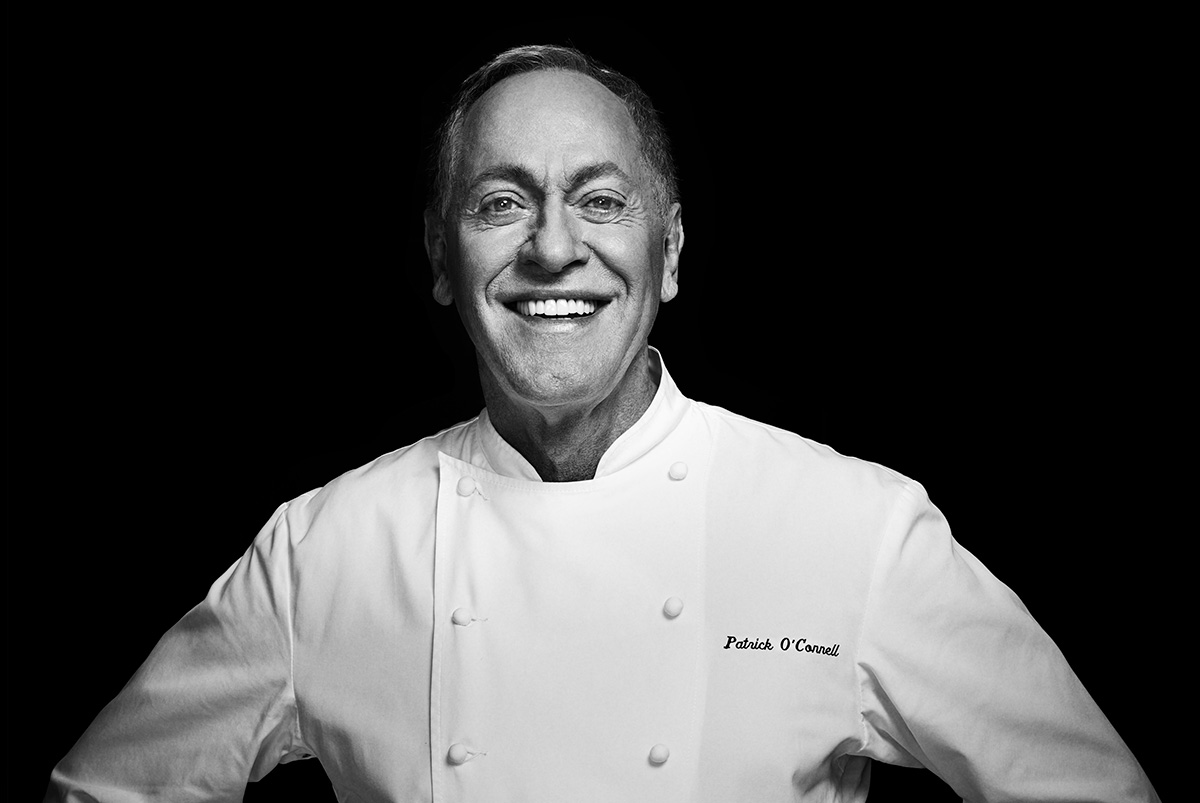
Renowned three-Michelin-star Chef Patrick O’Connell says food and wine hold a unique ability to bring people together. Indeed, he has served everyone from right-wing zealot Jerry Falwell to Britain’s Queen Elizabeth during his decades at the beloved Inn at Little Washington in rural Virginia.
O’Connell’s compelling new memoir, “Main, Middle & Gay” is out Sept. 15 from Celadon Books and offers a deeply personal account of how he transformed his love of food and affinity for the finer things into an iconic inn and restaurant that draws diners from around the world nearly 50 years after it opened in 1978.

O’Connell is launching the book with an event on Sept. 18 at Lisner Auditorium featuring Chef José Andrés and former Washington Post food critic Tom Sietsema. He met Andrés just after Andrés began to work in D.C. and was “on fire with ideas.”
“We sat next to each other at Charlie Trotter’s restaurant and the meal went on for hours and we had a natural rapport,” O’Connell told the Blade in a recent interview. “The chemistry will be fun and lively and unpredictable and exciting. I think we’re all different personalities and we’ll compliment each other.”
O’Connell said he’s excited to hold the event at Lisner.
“I studied theater at Catholic University and transferred to GWU so it’s a coming home party and Lisner has been there since I was a kid and it was always like D.C.’s Carnegie Hall. It feels like going home to my old stomping grounds.”
O’Connell hopes to bring the book to life visually at the event and he has produced a short film that will be screened.
The book traces the self-taught O’Connell’s remarkable journey from rural paperboy and short-order cook to proprietor of one of the world’s most celebrated restaurants and Relais & Châteaux hotels. Along the way we learn about the many challenges he faced — from distrustful and homophobic local residents in Washington, Va., to an expensive, public “divorce” from his longtime romantic and business partner, Reinhardt Lynch.
“It parallels the evolution of American cuisine over 50 years,” he said. “It’s a rare perspective to be in the trenches for that long.”
O’Connell writes candidly about his relationship with Lynch. The two opened the restaurant together — O’Connell running the kitchen and Lynch handling the business. But O’Connell’s accolades and growing notoriety led to jealousy that triggered a protracted falling out and dissolution of both their personal relationship and business partnership. Lynch, as recalled by O’Connell, attempted to secretly sell his 50 percent of the business but ultimately agreed to sell his stake back to O’Connell for a reported $17.5 million. “The Washington Post ran with it as a salacious celebrity divorce story and included all the financial details,” he writes.
After taking full control of the Inn just as the recession of 2008 hit, O’Connell writes of the scrutiny of guests who assumed Lynch’s absence would lead to a slip in quality. “The place couldn’t be just as good as ever. It would have to be better.”
What happened next proved a royal opportunity as Queen Elizabeth visited Virginia to commemorate the 400th anniversary of the founding of the state and O’Connell was asked to cater a reception. This chapter is filled with juicy details and behind-the-scenes anecdotes about the pressures of cooking for the Queen. The subsequent media attention proved lucrative for the Inn and photos of the Queen’s visit still hang in the Inn.
There are references to O’Connell’s sexual orientation throughout the book and he doesn’t shy from addressing his long relationship with Lynch or the resistance the couple encountered when they settled in sleepy Washington, Va.
“I didn’t realize that I was walking into a prejudiced hornet’s nest that I wasn’t fully prepared for and there was a great deal of hostility in part because they didn’t understand anything about what we were attempting to do here so everything about us and our desire to run a fine restaurant was foreign to them,” O’Connell told the Blade. “The irony of a place opening in the center of town of 150 people and at that time the word ‘gay’ wasn’t used here. It was as if they didn’t have space in their consciousness for such a thing. We were regarded as counter culture people.
“The restaurant became a success almost overnight and the locals couldn’t understand what the buzz was about,” O’Connell continued. “They thought food is food and why would anyone drive 60 miles out here for food. They became resentful of the ‘outsiders’ who came. Two outsiders were opening a restaurant and drawing other outsiders out here to a place where there weren’t many jobs. There was resentment on many levels by some — not all. They thought it would go away.”
But O’Connell said he never made his sexuality the focus of his work. Rather, he wanted to use food to bring people of all backgrounds together.
“I never made a point or attempted to make that a central focus on my work,” he said. “I felt that I had found my spot in the universe where I belonged, I loved living here, it was a sanctuary.”
O’Connell’s insistence that everyone is welcome has sometimes created tension and negative press, as when President Trump presented him with a National Humanities Medal that brought criticism from some progressives.
“We see a fascinating clientele here; we don’t judge and we’re not political,” he said. “When people come they are entitled to our hospitality.”
One of those people was televangelist and notorious homophobe Jerry Falwell, who made a reservation at the Inn years ago. O’Connell’s instruction to the staff was to treat Falwell like any other guest.
“We have an image of someone who maybe we would think would be hostile or judgmental and they often surprise us,” O’Connell said. “We held our breath and here’s Falwell working the tables and saying this is the best meal I’ve ever had, aren’t these two guys great and we thought he’s doing PR for us and he’s supposed to be the devil.”
O’Connell said he sees that dynamic play out night after night at the Inn. One of the most conservative national Republican figures, he said, is a regular and Vice President JD Vance dined at the Inn recently. Focusing on the food and hospitality for all constitutes O’Connell’s brand of activism.
“Food does bring people together,” he said. “And you’re doing your part in erasing preconceived judgements.”
He said he and his team did more to advance understanding and acceptance by focusing on hospitality than if “we were out marching.”
As evidence, he said, there are more and more gay couples moving to the area and the town’s mayor, Joe Whited, is gay.
“We’re the biggest employer in the county and largest taxpayer,” he added. “The Inn pays the town almost $1 million per year and property values are getting to be like Palm Beach. And that wasn’t a goal it was a byproduct of doing something as well as it could be done.”
But the book isn’t hagiography. O’Connell revisits traumatic events, like childhood bullies who attacked him for wearing a Little Red Riding Hood costume for Halloween and a sexual assault he endured as a young teenager aboard a bus.
“I don’t know why I couldn’t call out for help or try to make the man stop,” O’Connell writes of the incident. “I didn’t want to call attention to the situation and felt completely implicated. Once it began there was no stopping it.”
Interestingly, O’Connell told the Blade that one of the things he learned in writing the book is how little he’s changed since childhood.
“People tend to lock away a lot of childhood memories for good reason and in a book you’re reliving them and bringing them to life,” he said. “And my revelation is that I don’t think I’ve changed much since I was six and I think most people’s identity is pretty developed in their very early years and their personality is clear. What amused me most is I’m doing the same things now that I did in miniature as a five and six year old.”
As for popular TV shows about the restaurant business, O’Connell says he doesn’t watch them.
“It’s fake,” he said. “There are much more colorful characters and it’s much more exciting in real life. Nobody seems capable of capturing that. So maybe this [book] will have the effect of doing that and showing what it takes.”
O’Connell said the books and stories he most enjoys reading are those that start in childhood and carry through until late in life. He has certainly delivered that in “Main, Middle & Gay,” a moving, fearless memoir filled with the unexpected and natural drama that revisits a uniquely American life.
The Blade may receive commissions from qualifying purchases made via this post.
a&e features
The mastery of love
The world knows Eric Anderson as Billy Porter’s partner, but in Rehoboth Beach, he has a story entirely his own
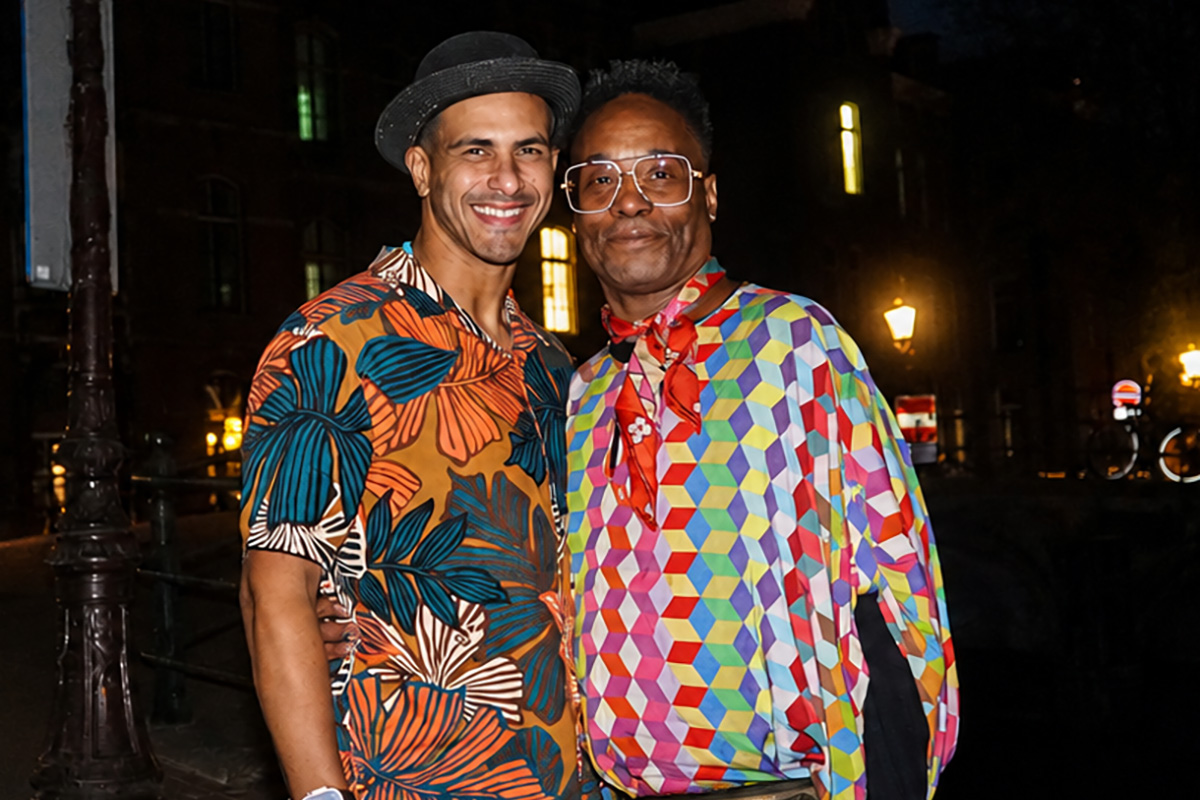
The world knows Eric Anderson as Billy Porter’s partner. In Rehoboth Beach, Del., he has a life — and a story — entirely his own.
My first time with Eric Anderson was hot — very hot. Before he arrived, I sat waiting, overthinking everything. When he finally appeared in a loose-fitting T-shirt and purple shorts, I understood why he attracts attention. Eric is the kind of man who changes the energy of a room simply by entering it.
After a quick hello, we got right to it. Techno pulsed through the room as Eric told me how to move, where to place my hands, when to breathe. My heart pounded. My muscles ached. I bent, twisted, and stretched while sweat ran down my back and burned my eyes. I didn’t bother wiping it away.
To be clear, Eric and I were not alone. Five other people were with us — and the yoga studio at SoulFire Collective in Rehoboth Beach was heated to 87 degrees.
“If you are always racing toward the next moment, what happens to the one you’re in?” Eric asked, opening his power yoga class and inviting us to leave whatever had followed us through the door and surrender to the present. Surrender did not come easily. At 58, I’ve done enough yoga to know the difference between discomfort and imminent death. Halfway through Eric’s relentless flow, the distinction began to blur.
A playlist of techno and remixed pop — including “Live Like You Were Dying” — carried us from one demanding pose to the next. Eric moved among the mats with the energy of a nightclub DJ and the calm of someone who trusted our bodies to go further than our minds believed possible. Nearly an hour later, when the music softened and I collapsed onto my back in savasana, he laid a cool cloth across my forehead. I exhaled — relieved, and maybe a little disappointed, that my first time with Eric was over.
At the end of my mat, a handwritten note congratulated me on my first class and invited me back — a small benediction after the storm. Then Eric closed the class by repeating the question with which he’d opened. For a man whose relationship with actor and singer Billy Porter has drawn him unexpectedly into the public eye, it sounded less like a yoga mantra than a personal creed.
The next time I meet Eric, there is air conditioning and caffeine. We are at Starbucks, where I deliberately order the largest drinks available, as though volume alone might buy me more time. He chooses a matcha, and I order herbal tea. My heart is pounding again, faster than the soft rock drifting from the speakers above us. Although I’ve already spent more than an hour with Eric, I know almost nothing about the man I’m about to interview.
Neither, it seems, does anyone else.
Celebrity outlets offer a handful of biographical details: a Rehoboth Beach teacher and yoga instructor with a master’s degree from Columbia University. Gay publications have been less restrained. One introduced him as Billy Porter’s “total hot stud,” called him “a snacc,” and praised his ability to “rock a Speedo.” Queerty distilled Eric’s identity to five words: “Porter is dating a teacher.”
All of it tells me how the world sees him. None of it tells me who he is.
I know from our text exchanges that Eric is slammed for time. He is scheduled to travel to New York later that day and fly to WorldPride Amsterdam the following afternoon. Billy is among the headliners for the opening-night Unity Concert and is also slated to perform at the Wedding Party XXL alongside KI/KI, Bimini, and the Vengaboys. Eric still has to pack. This, I’m beginning to understand, is part of loving someone famous: there is almost always an itinerary, another city, and a specific time and place Billy needs to be. Even here, with two untouched drinks between us, the clock is ticking.
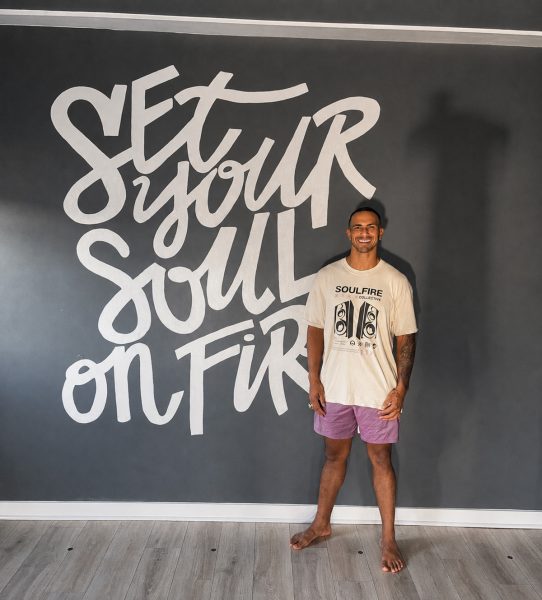
As soon as we sit down, I open my laptop, ready to get to work. My mind is focused on the list of questions I’ve prepared, and I’ve already anticipated the shape of most of his responses. Then I look up and see Eric sitting perfectly still, smiling, and taking in the moment. He hasn’t even taken a sip of his matcha yet.
I quietly close my laptop and breathe.
Within minutes, the interview softens into a conversation.
Eric earned a bachelor’s degree in history from the University of Delaware and a master’s in public school leadership from Teachers College, Columbia University. He began his career teaching mathematics before moving into school administration, eventually serving as vice president of the Charter School of Wilmington and head of school at Sussex Academy. Today, he teaches mathematics and social studies in the Cape Henlopen School District. He also coaches soccer and leads yoga classes at SoulFire Collective in Rehoboth Beach.
His return to the classroom was deliberate. Eric knows some people assumed there must be a story behind his leaving administration—that he had done something wrong or that teaching represented a demotion.
“I want to make it clear that I went back to teaching by choice,” he says.
As a child, Eric played school. Teaching has always felt natural to him, less like an occupation than an expression of who he is. Administration was different.
“It felt like work,” he says. “It wasn’t where my passion was, and it didn’t bring me joy. Going back into the classroom was simply me choosing joy.”
The more Eric talks, the clearer it becomes that teaching is not merely a job but a vocation. His mother is white and his father is Black, and growing up biracial was not always easy. “I saw the best and the worst of both,” he tells me. Those experiences helped shape his desire to become a teacher — to be the kind of person who could make a meaningful difference in a young person’s life.
Just then, Eric glances over his shoulder and locks eyes with someone across the room. He waves and flashes what is quickly becoming his signature smile. My first thought is that someone has recognized him as Billy Porter’s partner.
I’m wrong. It’s one of his former students.
Inevitably, our conversation turns to love — and to Billy. I’ve made it clear that I’m here to write about Eric, not Billy Porter. But separating the two entirely would be as artificial as defining Eric only by their relationship. Billy is now an essential part of his story.
Eric met Billy at a Christmas party hosted by mutual friends who had been trying to introduce them all night. It wasn’t easy — the party was crowded, and the two men never quite crossed paths. Eric stayed for the afterparty, where a friend nudged him and nodded toward the room: Billy was looking his way. Romance never crossed his mind.
Eventually, they started talking. Eric has never had much patience for small talk, and he wasn’t interested in cataloging which celebrities Billy knew. He skipped it entirely and went straight for the deeper questions — what Billy believed, how he saw the world, what mattered to him. They ended up at the kitchen table, trading life philosophies until 5 a.m.
What struck Eric most wasn’t the conversation’s length. It was its depth. Billy wasn’t who he expected. Neither was the conversation. By the time the sun was coming up, Eric was less surprised that they’d talked all night than by how much, it turned out, they had in common.
They had dinner the following evening, and Billy invited Eric to spend the weekend with him in New York. There, Billy took him to see Nicole Scherzinger in “Sunset Boulevard.” Right before the show started, he casually introduced Eric to a friend named Katy. Back in their seats, Eric asked how Billy knew her.
“BITCH,” Billy replied, “that is Miss K-A-T-Y P-E-R-R-Y!”
For all the glamour surrounding their courtship, Eric describes the foundation of their relationship in decidedly spiritual terms. His favorite book is don Miguel Ruiz’s The Mastery of Love, which explores how fear, expectation, and the need for approval can distort relationships. Its philosophy closely resembles Eric’s own.
On the surface, Eric and Billy inhabit different worlds. Eric is a deeply spiritual teacher rooted in a small coastal Delaware town. Billy is a celebrated actor and performer whose larger-than-life persona commands stages around the world. But when I ask Eric how the relationship works, he doesn’t hesitate.
“I know that I can be my authentic self with him, and he can be his with me,” he says. “We love each other unconditionally.”
The words could sound rehearsed. Coming from Eric, they don’t.
The red carpets, famous faces, and international travel are not what matter most.
“It’s all about the people,” he explains. “I love Billy’s family and friends, and he loves mine.”
Authenticity surfaces repeatedly in our conversation — not as an abstract ideal, but as Eric’s determination to trust what feels right for him, even when other people may not understand it. I tell him about growing up in Pittsburgh and spending much of my life trying to fit the person I was into the person the world expected me to be. Eric listens intently, then pauses before responding.
“Fuck the system.”
It is blunt, funny, and entirely consistent with the man sitting across from me. Dating Billy may have dramatically increased the number of strangers who have opinions about Eric, but it hasn’t increased the number whose opinions matter to him. He is remarkably unconcerned with what people he doesn’t know think — or say — about him. The attention is new. His response to it is not.
For Eric, authenticity isn’t about asking the world for permission to be yourself. It’s about deciding that permission was never the world’s to give.
That instinct—to look inward rather than outward for permission — predates Billy.
Eric initially turned to yoga for a practical reason: he wanted to improve his physical performance on the soccer field. It didn’t take long for him to realize that something else was happening. Yoga was strengthening his body, but it was also grounding him.
Over time, the physical practice became inseparable from the mental one. The poses, the heat, even the strength required to hold his body in place became less important than learning how to quiet the noise around him, stay present, and listen to himself. The man who had pushed me through an hour of sweat and discomfort wasn’t simply teaching people how to move their bodies. He was asking them to practice something he had learned to do himself.
That sense of being grounded has become particularly important in a relationship that often requires two people to live very different lives. Eric is quick to point out that he and Billy have separate careers, separate ambitions, and goals entirely their own. Neither expects the other to abandon an individual life simply because they have chosen to build a relationship together.
When Billy left for London to star in “Cabaret,” distance became part of their routine. They FaceTimed every day, a practice they continue whenever they are apart.
“I tell Billy everything,” Eric says.
Being authentic with Billy doesn’t require the two men to become more alike. If anything, the opposite seems true. They are comfortable following their own career paths, living separate lives when circumstances require it, and giving each other the freedom to pursue what matters individually. Then they come back together — not because either has put his own life on hold, but because they have chosen to share those lives with each other.
When we finally look at the time, nearly 90 minutes have passed. Eric still needs to pack. New York is waiting, Amsterdam after that, and somewhere there is undoubtedly an itinerary telling Billy exactly where he needs to be and when.
But for a while, neither of us was racing toward the next moment.
We were fully inside the one we were in.

Factors to consider when hiring an interior designer

PHOTOS: HRC National Dinner

The LGBTQ real estate map is being redrawn

I’m 66, he’s 27. Is it love or am I being played?

What’s frightening is also funny in ‘Venus’

Washington Blade responds to concerns over White House pool duties

Gov. Whitmer to serve as keynote speaker for Saturday’s HRC National Dinner

Spike in HIV cases prompts Fiji to declare national emergency

Caso Karlina: Una sentencia histórica contra las terapias de «conversión»

Capital Pride chair resigns from board after just 10 months
-

 Commentary4 days ago
Washington Blade responds to concerns over White House pool duties
-
LGBTQ Non-Profit Organizations4 days ago
Gov. Whitmer to serve as keynote speaker for Saturday’s HRC National Dinner
-
Fiji4 days ago
Spike in HIV cases prompts Fiji to declare national emergency
-
District of Columbia4 days ago
Capital Pride chair resigns from board after just 10 months