European Union
Student brutally beaten in Ireland because he is gay
Attack against 14-year-old streamed on social media
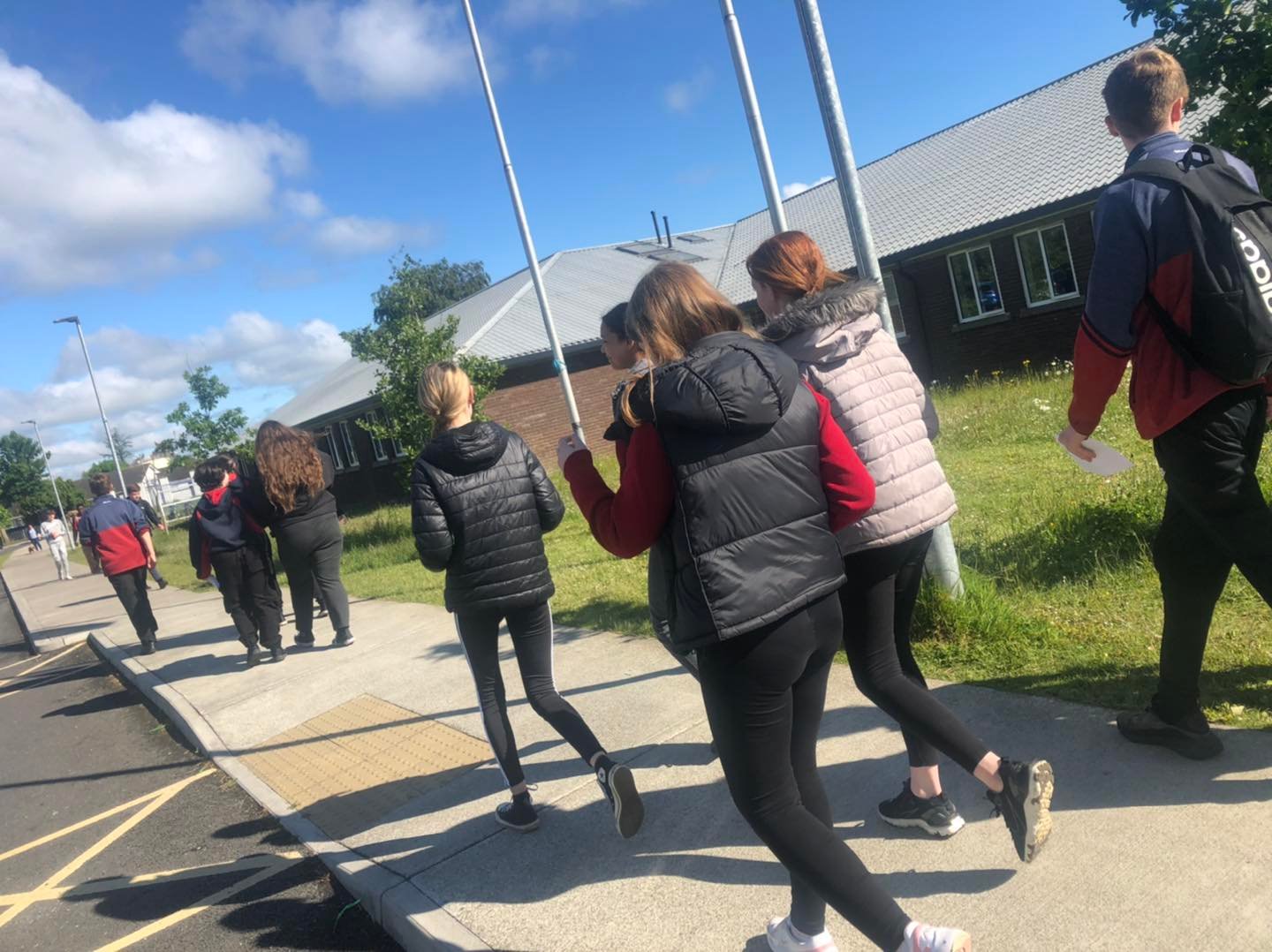
A 30 second video that circulated on TikTok, Twitter and Instagram this past week showed a 14-year-old boy being jumped by a group of other young men, one punching the victim in the face, knocking him to the ground at which point the others joined in kicking and pummeling him.
A spokesperson for An Garda Síochána, the national police service of Ireland, told the Washington Blade that the victim had been transported to Our Lady of Lourdes Hospital in Drogheda, where he was treated for serious facial injuries. The spokesperson also noted that the attack had taken place on May 15 at approximately 2.30 p.m.
Some of the teens in the video are wearing school uniform jackets from Beaufort College, a post-primary school in Navan, a medium-sized city located roughly 34 miles northwest of the Irish capital city of Dublin.
According to witnesses and in an interview with British LGBTQ media outlet PinkNewsUK, the teen was attacked over his sexual orientation. A family member, who wanted to remain anonymous, said the victim had been verbally harassed since the beginning of the last term.
“The whole family is aware of this, and that it’s been an ongoing issue,” the relative told PinkNewsUK.
The boy, who was hospitalized after the assault, suffered from a concussion, broken teeth and a shoe print on his forehead, the family member and the Garda confirmed.

“No 14-year-old should be beaten like that for anything at all, especially because of who he is. He is only a child and it happened across the road from a family member, where he was trying to get to,” the family member told Irish media adding: “We are shocked, horrified and upset at what can happen in this day and age. It was a number of people against one boy, while others filmed it and posted it online. That is horrific and wrong.”
The Garda spokesperson confirmed that investigators are aware of the video online.
“An Garda Síochána is aware of a video circulating on social media of this incident and out of respect for the victim in this case we would request that people refrain from sharing this video. An Garda Síochána is appealing to any person with information on the assault to contact Navan Garda Station at 046 9079930,” the spokesperson said.
Irish Prime Minister Leo Varadkar, who is openly gay himself, condemned the attack on the boy, telling Irish media outlet RTÉ Radio 1 that he hoped “everyone would condemn [the attack] utterly.” He added: “I want to send my solidarity to the person who was harmed and injured in this way. I would say to them that life does get better.
“It is very sad that people experience violence and bullying in school, but life does get better and I’d say not to give up. I would say how sad I am that in this day and age we still see this kind of bullying and violence in our schools.
“I understand there is a Garda investigation underway and that the victim has been treated for their injuries [and] I would ask anyone who has information to co-operate with the investigation.”
The prime minister also condemned the bystanders in the video who took no action to intervene and to stop the beating.
“I think for a lot of people that maybe had a hard time in school life does get a lot better.”
— RTÉ Radio 1 (@RTERadio1) May 18, 2023
Taoiseach, Leo Varadkar talks to @TodaywithClaire about the violent attack on a student in Co. Meath on Monday. pic.twitter.com/Epw7HPEgAL
PinkNewsUK reported that five male teenagers were taken into custody by the Gardaí in Navan on May 19 and have been released without charge.
A Gardaí spokesperson said: “Gardaí in Navan are continuing to investigate the assault of a teenage boy which occurred in Navan on Monday.
“Yesterday, Gardaí arrested five juvenile teenagers in the Navan area for alleged offenses under Section 3 of the Non-Fatal Offenses Against the Person Act, 1999. All five were detained under Section 4 of the Criminal Justice Act, 1984 at Garda stations in the Meath Region.
“The five juvenile teenagers were later released without charge and a file will be referred in the first instance for consideration for admission to the Juvenile Diversion Program in accordance with Part 4 of the Children Act, 2001.”
Ireland has a reputation for being LGBTQ-friendly according to Rainbow Europe — ILGA-Europe’s annual benchmarking tool. It shows Ireland as in the upper tier of European nations, being scored in seven thematic categories: Equality and non-discrimination; family; hate crime and hate speech; legal gender recognition; intersex bodily integrity; civil society space and asylum.
A recent article by Dylan O’Sullivan writing for Queer Majority noted that Ireland is considered the 9th most gay-friendly country in the world, the fourth country to elect an openly gay head of state, the first country to legalize same-sex marriage by popular vote, and the list goes on. And all this from a country that, as recently as 1993, considered homosexuality a criminal act.
Additional reporting by PinkNewsUK




Bulgaria
Top EU court issues landmark transgender rights ruling
Member states must allow name, gender changes on ID documents
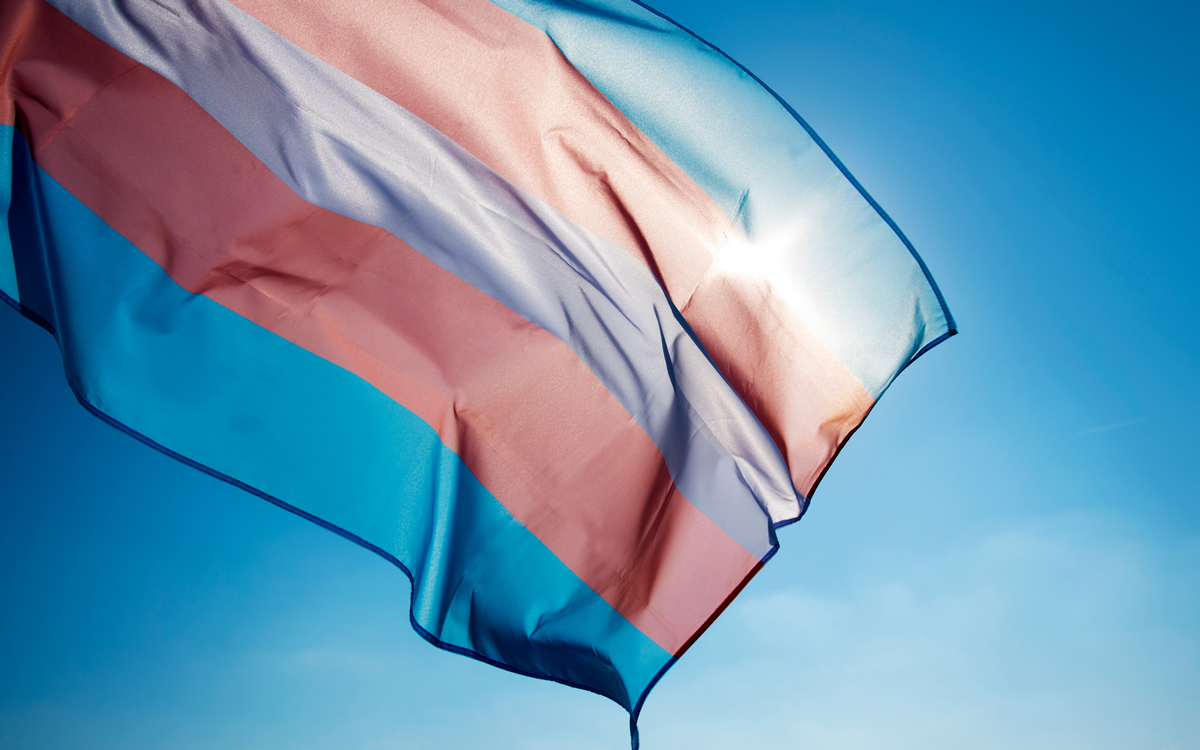
The European Union’s highest court on Thursday ruled member states must allow transgender people to legally change their name and gender on ID documents.
The EU Court of Justice in Luxembourg issued the ruling in the case of “Shipova,” a trans woman from Bulgaria who moved to Italy.
“Shipova” had tried to change her gender and name on her Bulgarian ID documents, but courts denied her requests for nearly a decade.
A ruling the Bulgarian Supreme Court of Cassation issued in 2023 essentially banned trans people from legally changing their name and gender on ID documents. Two Bulgarian LGBTQ and intersex rights groups — the Bilitis Foundation and Deystvie — and ILGA-Europe and TGEU – Trans Europe and Central Asia supported the plaintiff and her lawyers.
“Because her life in Italy also depended on her Bulgarian documents, the lack of documents reflecting her lived gender creates an obstacle to her right to move and reside within EU member states,” said the groups in a press release. “This mismatch between her gender identity and expression and her gender marker in her official documents leads to discrimination in all areas of life where official documents are required. This includes everyday activities such as going to the doctor and paying for groceries by card, finding employment, enrolling in education, or obtaining housing.”
Denitsa Lyubenova, a lawyer with Desytvie, in the press release said the case “concerns the dignity, equality, and legal certainty of trans people in Bulgaria.” TGEU Senior Policy Officer Richard Köhler also praised the ruling.
“Today, the EU Court of Justice has taken an important step towards a right to legal gender recognition in the EU,” said Köhler. “Member states must allow their nationals living in another member state to change their gender data in public registries and identity cards to ensure they can fully enjoy their freedom of movement. National laws or courts cannot stand in their way.”
“Thousands of trans people in the EU are breathing a sigh of relief today,” added Köhler.
European Union
European Parliament resolution backs ‘full recognition of trans women as women’
Non-binding document outlines UN Commission on the Status of Women priorities
The European Parliament on Feb. 11 adopted a transgender-inclusive resolution ahead of next month’s U.N. Commission on the Status of Women meeting.
The resolution, which details the European Union’s priorities ahead of the meeting, specifically calls for “the full recognition of trans women as women.”
“Their inclusion is essential for the effectiveness of any gender-equality and anti-violence policies; call for recognition of and equal access for trans women to protection and support services,” reads the resolution that Erin in the Morning details.
The resolution, which is non-binding, passed by a 340-141 vote margin. Sixty-eight MPs abstained.
The commission will meet in New York from March 10-21.
A sweeping executive order that President Donald Trump signed shortly after he took office for a second time on Jan. 20, 2025, said the federal government’s “official policy” is “there are only two genders, male and female.” The Trump-Vance administration has withdrawn the U.S. from the U.N. LGBTI Core Group, a group of U.N. member states that have pledged to support LGBTQ and intersex rights, and dozens of other U.N. entities.
European Union
Top EU court: Poland must recognize same-sex marriage from other European countries
Activists celebrate landmark decision
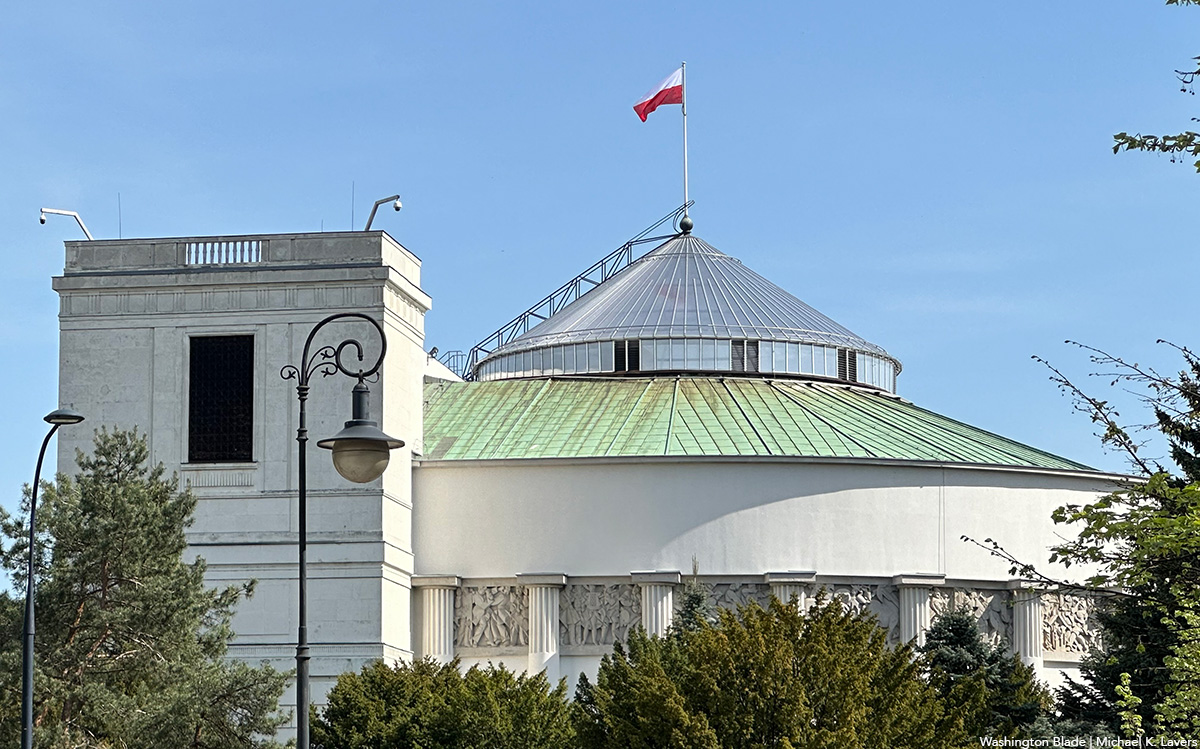
The European Union’s top court on Tuesday ruled member states must recognize same-sex marriages legally performed in other member states.
The EU Court of Justice in Luxembourg ruled in favor of a couple who challenged Poland’s refusal to recognize their German marriage.
ILGA-Europe notes Polish authorities refused “to transcribe into the civil register a certificate of same-sex marriage concluded” in Germany “between a Polish citizen and a Polish-German citizen … on the grounds that Polish law does not allow same-sex marriage.”
The couple who lives in Poland brought their case to Polish courts. The Polish Supreme Administrative Court referred it to the EU Court of Justice.
“Today’s ruling of the Court of Justice of the EU is of key importance not only for the couple involved in the case, but also for the entire LGBT+ community in Poland,” said the Campaign Against Homophobia, a Polish LGBTQ and intersex rights group, in response to the decision. “It clearly states that refusing to transcribe a marriage concluded abroad is incompatible with EU law. Therefore, regardless of the absence of registered partnerships and marriage equality, Poland must ensure the possibility of effective transcription.”
“With this judgment, the CJEU clearly states that the recognition of marriage status is key to enjoying EU citizens’ fundamental right to freedom of movement across the EU,” added ILGA-Europe Advocacy Director Katrin Hugendubel. “The EC now needs to ensure that this judgment is implemented quickly by the Polish state and across the EU.”
Sixteen EU countries — Ireland, Portugal, Spain, France, Luxembourg, Belgium, the Netherlands, Germany, Denmark, Austria, Slovenia, Malta, Greece, Sweden, Finland, and Estonia — have extended full marriage rights to same-sex couples. Poland, Romania, Bulgaria, and Slovakia are the EU countries with no legal recognition of same-sex couples.

LGBTQ groups condemn Trump’s threat to destroy Iranian civilization

Glisten’s 30th annual Day of Silence to take place April 10

D.C. Council member honored by LGBTQ homeless youth group

Vance speaks at Orbán rally in Hungary

White House ends protections for trans students in multiple school districts

Belarusian lawmakers approve bill to crackdown on LGBTQ rights

Calendar: April 3-9

Women’s FEST returns to Rehoboth Beach next week

How Pepper the courthouse dog helps victims of abuse