District of Columbia
LGBTQ-inclusive social studies standards approved for D.C. public schools
State Board of Education votes unanimously to adopt ‘culturally responsive’ revisions

The D.C. State Board of Education voted unanimously on June 21 to approve a sweeping revision in the standards for teaching social studies in the city’s public and public charter schools that include a dozen or more LGBTQ-inclusive provisions.
The approval of the LGBTQ-inclusive standards took place just under two years after the D.C. State Board of Education in October 2021 also voted unanimously to approve a resolution introduced by gay board member Allister Chang.
Chang’s resolution calls for inclusive education standards that “reflect on the political, economic, social, cultural, and scientific contributions and experiences of lesbian, gay, bisexual and transgender people.”
A statement released by the nine-member board last week says the changes in the social studies standards, which will apply to students from kindergarten through the 12th grade, will be put in place by the Office of the State Superintendent of Education. The action marks the first time the school system’s social studies standards have been updated since 2006, the statement says.
“The revision process presented an opportunity for the District’s social studies standards to be culturally responsive and anti-racist, impart important social studies content in the early grades, strengthen student knowledge of democratic principles and values, and promote civic engagement,” the statement says.
Chang, who played a role in drafting the social studies standards, called on members of the LGBTQ community to submit comments in support of the proposed standards at the time the education board invited the public to submit comments on the standards this past January.
“We got tremendously positive feedback on the inclusion of LGBTQ plus standards that we had in the draft, and that actually called for even more perspectives and experiences of LGBTQ+ people,” Chang told the Washington Blade on Monday. “Not only from parents and educators but particularly from current students,” Chang said in describing the public comments submitted.
“I think these are certainly the most progressive standards in the country right now at a time when many are actually pulling back and becoming more archaic,” he said, referring to the upsurge in anti-LGBTQ legislation and school policies adopted by many states across the country.
The statement released by the D.C. State Board of Education says the revised social studies standards were scheduled to be implemented in the city’s public schools and public charter schools starting in the 2024-2025 school year.
“In the District of Columbia, we are committed to social studies standards that reflect our student population and validate rather than deny their lived experiences and family histories,” said D.C. State Superintendent of Schools Dr. Christina Grant in the statement. “If we are going to remain the beacon and protector of democracy for the world, we must give our students the skills and knowledge they need to carry the torch,” she said.
Chang released to the Blade excerpts of some of the LGBTQ related provisions in the new standards as show here:
• Compare the efforts and impact of diverse groups and organizations inspired by the African American Civil Rights Movement to address inequalities in American society, including but not limited to the gay rights movement, the Stonewall Uprising, the American Indian Movement (AIM), the United Farm Workers, the Women’s Liberation Movement, the Asian American Movement, the Disability Rights Movement, the Chicano Movement and Latinx resistance.
• Analyze the daily lives of different individuals in ancient societies, including histories of same-sex relationships, and the evolution of gender roles and identities in civilizations.
• Describe the ways individuals with different backgrounds, including ethnicity, gender, religion, sexual orientation, ability, national origin, economic status and beliefs are all part of the same community.
• Identify different kinds of families and caregivers within a community (e.g., single-parent, blended, grandparent-headed, conditionally separated, foster, LGBTQ+, multiracial) and explain the importance of demonstrating respect for all people.
• Evaluate the impact of significant political movements, including labor movements, the Civil Rights Movement, the Disability Rights Movement, LGBTQ+ liberation and women’s suffrage on life for District of Columbia residents.
• Explain the causes of World War II and the rise of fascism in Italy and Germany and explain how bias and prejudice led to the scapegoating of marginalized groups in Europe, including Jewish, Romani, Slavic, disabled, Jehovah’s Witness and LGBTQ+ communities.
• Compare the different experiences of servicemembers when they returned to the United States after the war, including white, Black, Latinx, Indigenous, LGBTQ+ and Asian American servicemen.




District of Columbia
Trans activists gather on National Mall for Transgender Day of Visibility
Around 200 members, supporters of the trans community, gathered on the Mall amid the increasingly hostile political environment.
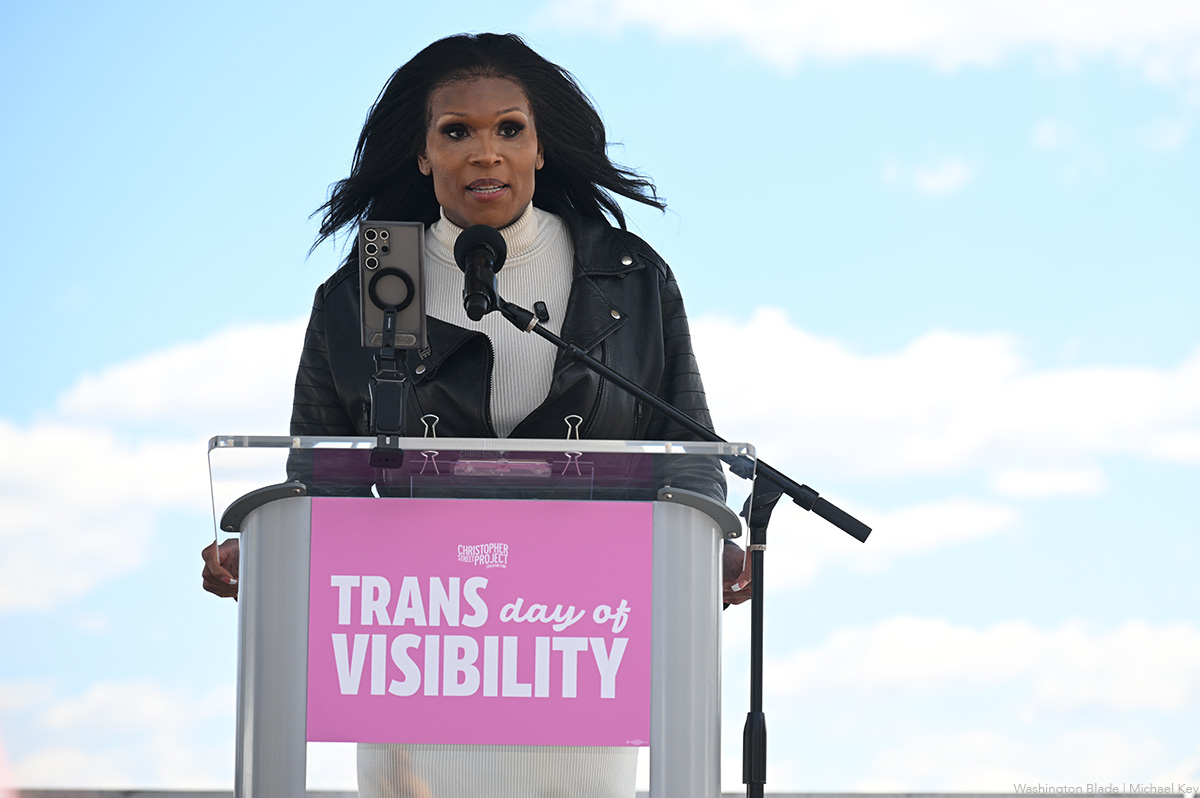
The National Mall was covered in kites on Saturday as transgender activists from around the country gathered to support the second annual Transgender Day of Visibility. The event, put on by the Christopher Street Project — whose mission to protect and support trans Americans on the ballot and in streets — brought together around 200 supporters and organizations to honor trans homicide victims and rally for the future of human rights.
Created 17 years ago by psychotherapist and trans activist Rachel Crandall-Crocker, the day was born out of a need to celebrate one of the most marginalized groups in American politics, she told The 19th in 2021.
Since then, the nation has slowly caught up. This year marked the second time the observance has expanded into a multi-day movement, with events ranging from panels and congressional lobbying to organizing efforts, culminating in a rally on the “nation’s front door” — the National Mall.
A recent survey conducted by SRSS, a national research and marketing firm, and commissioned by the Human Rights Campaign Foundation, found that 41 percent of American adults say they personally know someone who is trans. That figure is up from previous estimates of around 30 percent. The study also shows that 27 percent say they have had a regular conversation with a transgender person in the last year. For HRC, this data is confirmation that visibility efforts are working.
“Transgender people are not strangers. They are our neighbors, coworkers, family members, and friends. And this new data shows that as people get to know them, they are more likely to stand by them as allies,” said Kelley Robinson, president of HRC said in a statement. “Defending trans rights is part of defending democracy itself. The more we show up for each other, the stronger our communities and our democracy become.”
Despite this progress and growing positive sentiment, more than 80 anti-trans bills are currently pending in state legislatures across the country, according to HRC, while similar issues are being debated at the national level. Many of the bills seek to restrict trans youth from participating in sports aligned with their gender identity and limit access to gender-affirming medical care.
Tyler Hack, founder and executive director of the Christopher Street Project, who is trans and nonbinary, spoke with the Washington Blade on March 28 about the growing importance of the day.
“We saw that there was a lack of political power for the trans community. We saw that there was a lack of political power for the trans community,” Hack said. “We decided to step up and implement the demand leadership and have galvanized people all across this country for Trans Day of Visibility and our gatherings these last few days we’ve had people come from as far as Hawaii to come celebrate with us, advocate for our rights on the hill, and learn about what it means to fight for all of us.”
Fighting for “all of us,” Hack noted, means showing up where political power is concentrated — in the nation’s capital. The National Mall, a hub for both protest and tourism, draws a wide range of visitors, from political activists brandishing MAGA hats or “You did it, Joe” t-shirts to everyday sightseers.
“I literally just saw a guy in a Trump shirt [at the rally], but we’re not going anywhere,” they said. “Visablity is really important, alongside needing to be an active parts of society, being having public life, and we need to demonstrate that we’re not going anywhere. I mean, we had people from the hill, Congress members come who weren’t even planning to come and did … We are now learning about what it means to fight for and stand up for our rights.”
Hack then looked toward the Capitol after being asked why they believe there are so many negative — and false — statements coming from congressional legislators about trans people. After a pause, they emphasized that the fight for trans rights is often deliberately mischaracterized by Republican opponents try to turn Americans against the community. That, they pointed out, is not what is happening outside the halls of the Hill.
“We are fighting for an America that works for all of us, and we know that,” Hack said. “We know that fighting for all of us is not unpopular. What’s unpopular is genital inspections in schools for girls as young as four years old — who some of our leaders want to transvestigate for not looking feminine enough. What’s unpopular are subpoenas of hospitals so the government can go through your records and decide what they like and don’t like. It is about power.”
That framing — that trans people simply want to live freely and equally under the law — has become central to the movement’s messaging, even as conservative media organizations and political leaders continue to shape public perception in opposing ways.
“We can’t cede any ground because we don’t need to. We are not fighting for a cause that’s inherently unpopular. People know that we shouldn’t throw anyone under the bus, and that’s what we’re here to say to our leaders: we’re paying attention.”
This year’s TDoV was noticeably larger in production than last year’s event, with a bigger stage, more high-profile speakers, increased security, and expanded programming across multiple days.
“We also planned three days of programming. We had dozen panels and workshops on Thursday, and we had over 75 Hill meetings on Friday,” they said. “Now we have this rally, and our capacity hasn’t grown that much — a lot of this was done by two people, but I think it just has come to fruition in a way. I’m happy with it, but I would love to see people with crazy budgets and includes expanded capacity, also we can continue to step out and do the work.”
One moment that stood out to Hack was seeing a parent advocate for her trans child — highlighting what they described as the deeply human nature of these stories.
“The first person to come up to me today was a mom of a trans kid and a nonbinary kid who said she came to our whole convening, going to the Hill to advocate yesterday — for the first time, because we inspired her to act, and that she was too scared to be a part of something,” they said. “She knew that her kids’ lives had been criminalized and that she needed to act and –that really hit me. I also know most of the people who educated our lawmakers, were people who have never been to the Hill before. These people who were also telling their stories, were also fighting for reproductive freedom for all. I mean, we had people from Hawaii, Washington State, California, people who some of them hadn’t been to D.C. Those are the people that we are here to mobilize because they haven’t been galvanized by any project before. I’m just grateful we gave them something that they’re willing to get behind.”
Speakers throughout the rally echoed similar themes of urgency, visibility, and collective action.
Rayceen Pendarvis, a local D.C. trans activist, spoke at the event, emphasizing the history behind the current fight — especially the exclusion of trans people from broader LGBTQ movements — and the need to push back against current political attacks on the most marginalized.
“Trans people in D.C. had to fight for their seat at the table. Trans people were either an afterthought — or left out completely. Now, trans people have become the scapegoat. Ignorance about trans people has been weaponized.”
The lifelong Washingtonian, who had a popular show that ran for 10 seasons with a range of programming covering local and national LGBTQ topics from 2012–2021, continued on the need to stay aware and vocal during the increasingly difficult Trump-Vance administration.
“We have to push back — be as relentless as they are. If your vote was not important, they wouldn’t spend so much time trying to stop you from using it. Voting is not enough — we all must get involved. Let us make our ancestors proud by unifying, organizing, and fighting back.”
She ended her speech with advice to not only strategically spend time advocating, but also build relationships within and around the transgender community.
“Support each other, encourage each other, and help each other. Spend time with your trans elders while you can and learn from them. Give them their flowers, but also give the old dolls some money to pay their bills,” she said to cheers from the crowd. “Allies need to put their money where their mouth is!”
“RuPaul’s Drag Race” contestant, singer-songwriter, and trans activist Peppermint spoke about the mixed feelings the day brings, allowing her to recognize both pride and frustration with the slow-moving progress for the transgender community.
“I love being trans, and it’s inspiring to see more people feel comfortable expressing who they are,” Peppermint said to the crowd. “But I’m disappointed that we have to march for our rights. I’m disappointed that we have to convince people who we are, while we’ve been here supporting them all along. I’m disappointed that not enough people show up when the trans community is under attack.”
Last year, a record number of anti-trans policies passed through state and federal legislatures — many originating from Republican lawmakers who argue such measures are necessary for safety. Idaho voted to make it a criminal offense to use the bathroom aligned with one’s gender identity if it does not match sex assigned at birth, setting up a bounty-style enforcement system. Twenty-seven states have banned sports participation for transgender children, primarily targeting transgender girls, citing fairness and safety — claims that research has shown are not supported by evidence. Last month, Kansas’s state Senate voted to invalidate driver’s licenses and birth certificates of trans residents who had updated their gender markers, while also defining sex strictly as assigned at birth.
Peppermint highlighted the specific cruelty of these policies and echoed the rally’s broader message.
“People are being asked to make an agreement to throw us under the bus. You’re watching our civil rights be stripped away like it’s entertainment. When you empower a government to take rights from some, you empower it to take rights from everyone,” the Broadway performer added. “That’s the reality we’re facing.”
She finished by affirming those present and pointing toward the future of the fight for equal treatment under the law.
“Trans people are women, men, nonbinary, immigrants, disabled — every kind of person. We are here, and we are inevitable. I’m disappointed — but I’m hopeful. I’m grateful — and you should be too,” Peppermint said. “I love you, I’m in awe of you, and I am grateful for you. I’m proud to stand with this diverse trans community. We have always shown up for others, year after year. And we’re still here.”
Rabbi Abby Stein framed the moment through a spiritual and historical lens, offering an alternative to narratives often pushed by conservative lawmakers and commentators.
“They’ve moved past trying to erase us — they’re using us. We have become the rock they’re using to hit the people they want to oppress,” Stein said. “We are visible, but we’ve been forced into a narrow place. That’s the reality of this moment.”
She continued, explaining that, despite what some have said, her trans identity reaffirms her religion and strengthens her Jewish faith.
“For generations, we’ve told stories about leaving narrow places. Those narrow places exist today — in closets, in systems, in the ways people try to restrict us. But we have always found a way out. That is our history and our power.”
“Coming out and being who you are isn’t just okay — it’s a spiritual obligation. It is powerful, and it is necessary. If you try to take away our visibility, our rights, and our joy, you will fail. We are going to win because we will keep fighting together.”
Other activists that spoke included military members who had been forced out of their jobs and benefits following the Trump-Vance administration’s return to banning transgender military members, including SPARTA Pride Executive Director and US Army Major Kara Corcoran and Air Force Master Sgt. Logan Ireland, both focusing their time on stage on sharing how they gave their country their lives, yet the president couldn’t accept their gender identity.
Others who spoke/performed included the queer cheerleading group Cheer DC, local trans DJ and organizer Samson, and Chastity Bowick, Executive Director of Marsha P. Johnson Institute also spoke.
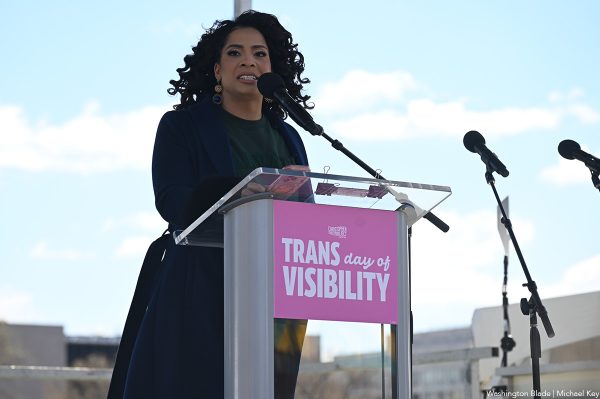
Hack closed with a message centered on their belief in collective action to create a better world for everyone and the resilience of the community.
“We’ve been fighting in the halls of power, and I’m proud of how far we’ve come. This week is about educating, advocating, and rallying. There isn’t one strategy to take back our country. It takes all of us … This is not just about trans people — this is about whether the government gets to decide who is acceptable. When one group is targeted, it never stops there. That’s what history shows us. That’s why this moment matters.”
“We’re being scapegoated and forced out of public life. There are efforts to legislate us out of existence. Our freedoms are intertwined — we can’t leave anyone out. They think we’re small, but they’re wrong.”
“The days of respectability politics are over,” Hack said, with rainbow kites lying overhead, signaling a welcome and powerful reflection of the day’s movement — one that echoed the sentiments of those gathered. “Our movement has never needed permission to exist — and we’re not asking for it now. There is something inevitable about a people who refuse to disappear. It is inevitable that we win.”
District of Columbia
Blade contributor, husband exchange vows in D.C.
Yariel Valdés and Kevin Vega held ceremony at Jefferson Memorial on March 23

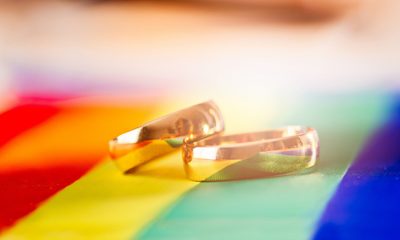
Washington Blade contributor Yariel Valdés and his husband, Kevin Vega, exchanged vows at the Jefferson Memorial on March 23.
The couple married in Fort Lauderdale, Fla., on Nov. 24, 2025. The Jefferson Memorial ceremony — which Blade International News Editor Michael K. Lavers and Samy Nemir Olivares officiated — coincided with the third anniversary of Yariel and Kevin’s first date.
Yariel in 2019 asked for asylum in the U.S. because of the persecution he suffered as a journalist in his native Cuba. He spent nearly a year in U.S. Immigration and Customs Enforcement custody before his release on March 4, 2020.
Yariel wrote a series of articles about his time in ICE custody that the Blade published. The series was nominated for a GLAAD Media Award in 2022.
Yariel and Kevin live in South Florida.
District of Columbia
‘Out for McDuffie’ event held at D.C. gay bar
Mayoral candidate cites record of longtime support for LGBTQ rights
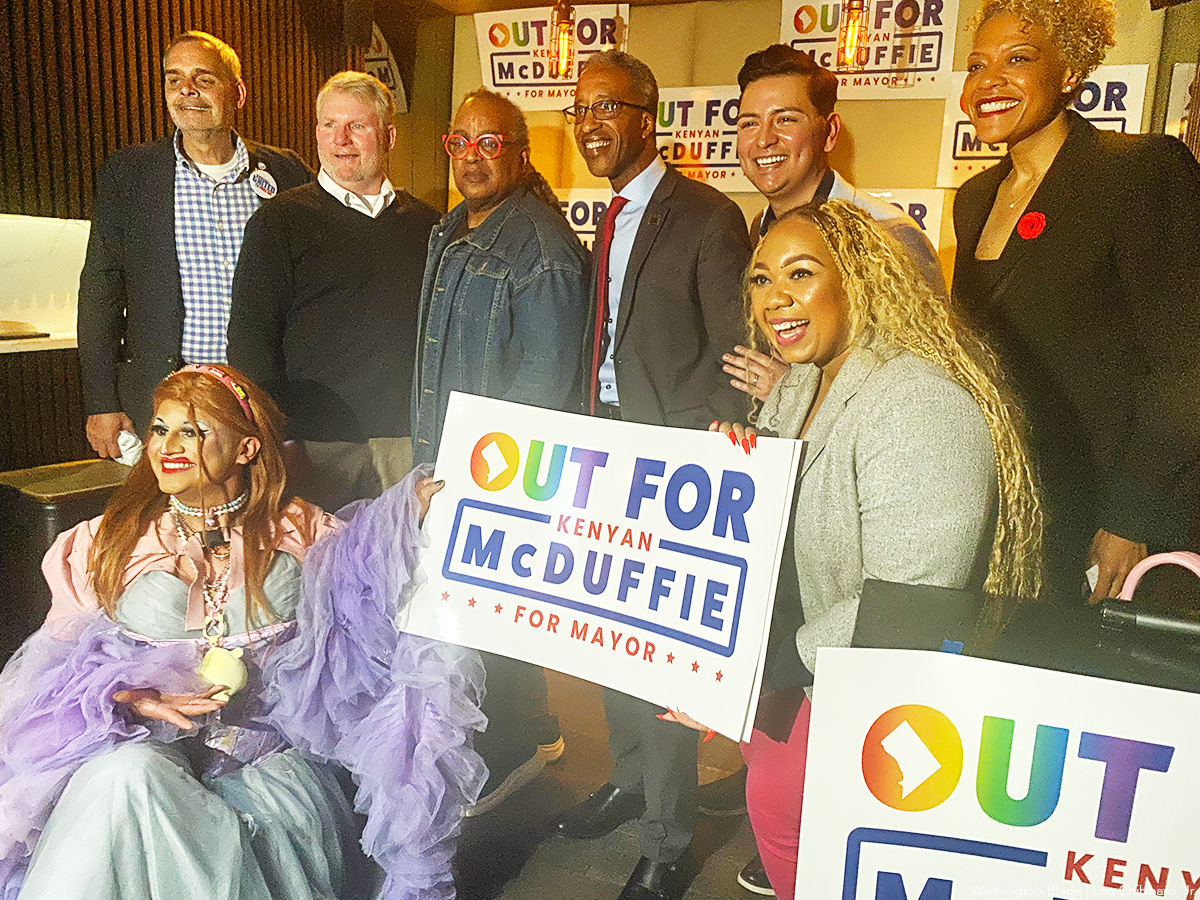
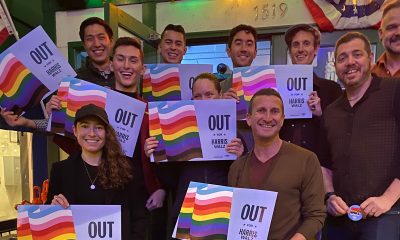
More than 100 people filled the upstairs room of the D.C. gay bar Number 9 on Thursday night, March 26, to listen to D.C. mayoral candidate Kenyan McDuffie at an event promoted as an “Out for McDuffie” meet and greet session.
Several local LGBTQ activists who attended the event said they support McDuffie, a former D.C. Council member, in his run for mayor while others said they had not yet decided whom to vote for in the June 16 D.C. Democratic primary election.
As of March 27, eight other Democrats were competing against McDuffy in the June 16 primary, including D.C. Council member Janeese Lewis George (D-Ward 4), considered McDuffie’s lead opponent. Lewis George also has a record of strong support on LGBTQ issues.
Most political observers consider McDuffie and Lewis George the two lead candidates in the race, with the others having far less name recognition.
The two lead organizers of the Out for McDuffie event were LGBTQ rights advocates Courtney Snowden, a former D.C. deputy mayor in the administration of Mayor Muriel Bowser, and Cesar Toledo, a local LGBTQ youth housing services advocate.
“I’m a candidate for mayor of Washington, D.C. and I’m running for mayor because I love this city,” McDuffie told the gathering after being introduced by Snowden. “And now more than ever we need leadership to take us to the future,” he said, adding that he and his administration would “stand up and fight” against President Donald Trump’s efforts to intervene in local D.C. affairs.
“Our strength is in the 700,000 beautifully diverse residents of Washington, D.C.” he told the gathering. “And as Courtney said, I didn’t just show up and run for mayor and then start saying that I’m going to be an ally for the queer community, for the LGBTQ+ community,” he said, “I’ve lived my entire professional life fighting for justice and fighting for fairness.”
Following his speech, McDuffie told the Washington Blade, “We’re going to fight to protect our LGBTQ+ community every single day. That’s what I’ve spent my career doing, making sure we have a beautifully diverse and inclusive city.”
He remained at Number 9, located at 1435 P St., N.W., for nearly an hour after he spoke, chatting with attendees.

D.C.’s affirming congregations to mark Holy Week, Easter

Trans activists gather on National Mall for Transgender Day of Visibility

The cost of speaking one’s mind

Senegalese president signs bill that further criminalizes homosexuality

Md. lawmakers reaffirm legislative priorities

Celebrate cherry blossoms the drag way

Lorato ke Lorato: marriage equality, democracy, and the unfinished work of justice in Botswana

Japanese Supreme Court to consider marriage equality

The outrage economy is not the LGBTQ community

Trump tells Fox News he won the ‘gay vote’ — but polls tell a different story
-

 Out & About5 days ago
Celebrate cherry blossoms the drag way
-
Botswana5 days ago
Lorato ke Lorato: marriage equality, democracy, and the unfinished work of justice in Botswana
-
Japan5 days ago
Japanese Supreme Court to consider marriage equality
-
Opinions5 days ago
The outrage economy is not the LGBTQ community