Arts & Entertainment
Fall means Artscape, John Waters, The Wiz, and more in Baltimore
Major concerts, opening of M&T Bank Exchange among highlights
Can Baltimore walk and chew gum at the same time?
The question came up this summer when leaders of several local arts organizations voiced concerns that the fall arts calendar is so full of events that they feared the city wouldn’t be able to handle them all.
The biggest change is that Baltimore’s popular three-day Artscape festival, one of the largest free arts gatherings in the country, is shifting from its usual mid-July date to mid-September for the first time. In the past, it has drawn upwards of 350,000 people over three days.
The dates selected for Artscape this year, Sept. 22-24, coincide with the Baltimore Symphony Orchestra’s Sept. 23 fall gala at the Meyerhoff Symphony Hall, where new music director Jonathon Heyward will begin his tenure, and four comedy shows by Nate Bargatze at Lyric Baltimore – all within the relatively compact Mount Royal Cultural District.
How will the city control all the traffic, the doubters asked. Where will everyone park? And what about the Ravens-Colts football game at Camden Yards the same weekend?
Baltimore Mayor Brandon Scott promised that the city can put on more than one big event at a time.
“We are a major city,” he said last month. “Major cities are going to have multiple events at the same time…Walk and chew gum, as my grandmother would say.”
The concerns about Artscape weekend are a sign of how much Baltimore has rebounded from the lockdowns of the COVID-19 pandemic, which caused festivals and other public gatherings to be cancelled for public health reasons. This month’s event will be the first time Artscape has been held since 2019.
But it’s not just one weekend that has so much going on. Artscape is one of many big festivals, shows, and exhibits that are coming to Baltimore this fall, including the launch of a new national touring production of “The Wiz,” Billy Joel and Stevie Nicks appearing at the M&T Bank Stadium; and another packed lineup at the recently refurbished CFG Bank Arena, including Queen + Adam Lambert; the Jonas Brothers; Kiss and Pentatonix. Just about every weekend this fall has multiple big events scheduled, even without factoring in how the Orioles do in the playoffs.
Here are some of the highlights:
Artscape 2023: Artscape celebrates the visual arts, dance, fashion, music, the culinary arts and other creative endeavors. This year’s musical headliners will be: DJ Pee.Wee (the persona of Anderson .Paak) on Friday night; composer, producer, arranger and guitarist Nile Rodgers & Chic on Saturday afternoon; Angelo Moore of Fishbone performing with his band Dr. Madd Vibe on Saturday night; and the Baltimore Symphony Orchestra on Sunday afternoon.
The festival’s footprint has expanded from the Mount Royal cultural district to include part of the Station North Arts and Entertainment District farther north. A complete list of events is available at Artscape.org.
Fell’s Point Fun Festival: Two weeks after Artscape, from Oct. 6-8, the Fell’s Point Fun Festival will draw crowds to Baltimore’s waterfront (fellspointfest.com) This annual showcase for Baltimore’s art, crafts, food and music typically draws 50,000 visitors, while helping raise funds to support the programs and activities of the Preservation Society of Federal Hill and Fell’s Point, a non-profit that works to protect two of the city’s most historic neighborhoods.
Baltimore native and country music star Brittney Spencer will be the headliner Friday night. The eclectic lineup for the three-day event includes: Better Off Dead, a band that celebrates The Grateful Dead; ilyAIMY (i love you And I Miss You); Shelby Blondell; the Baltimore Symphony Orchestra’s OrchKids; Orquestra Nfuzion from Washington, D. C.; The Cover Up; Old Eastern; DJ Allure; Annapolis’s 8 Ohms Band, Rufus Roundtree & Da B’more Brass Factory; The Trinidad & Tobago Steel Drum Band; Baltimore All-Stars; DJ G-Money, and, in honor of Indigenous People’s Day on October 9, Mark Tayac and the Piscataway Nation Singers and Dancers, a group that educates audiences about Native American history and culture as part of their performances.
Billy Joel and Stevie Nicks concert: On Saturday, Oct. 7, Billy Joel and Stevie Nicks will perform at M&T Bank Stadium, 1101 Russell St., starting at 7 p.m. It will be one of the only times that the Camden Yards sport complex is used for a major concert this year, after Bruce Springsteen and The E Street Band cancelled a Sept. 9 performance at Oriole Park.
More performing arts events:
CFG Bank Arena, 201 West Baltimore St. (cfgbankarena.com): Concerts include: 50 Cent: The Final Lap Tour, September 19; Jonas Brothers: Five Albums. One Night. September 22; SZA – SOS Tour with special guest D4VD, September 28; Queen + Adam Lambert – The Rhapsody Tour, October 4 and 5; Carin Leon – Colmillo De Leche Tour, October 7; Disney on Ice presents Magic in the Stars, October 12-15; John Mayer – Solo, October 20; Lauren Daigle – The Kaleidoscope Tour, Oct 21; Katt Williams, October 27; Baltimore R&B Music Experience: Xscape, Bell Biv DeVoe, 112, October London, Silk, Next, October 28, and Romeo Santos – Formula Vol. 3 Tour, November 2.
Also, The 1975 Still…at their very best, November 8; Bronco – En Vivo y A Todo Color!, November 17; Ringling Bros. and Barnum & Bailey presents The Greatest Show On Earth, November 24 to 26; Kiss – The End of the Road Tour, November 29; Old Dominion – No Bad Vibes Tour, December 2; Pentatonix The Most Wonderful Tour of the Year, December 3; Travis Scott Utopia Tour Presents Circus Maximus, December 6; Billy Strings, December 8 and 9, and Andrea Bocelli, December 10.
Baltimore Symphony Orchestra: The Baltimore Symphony marks the arrival of Jonathon Heyward as its new music director with a gala celebration at Strathmore in North Bethesda on September 22; a gala celebration at the Joseph Meyerhoff Symphony Hall in Baltimore on September 23 and a free public concert at the Meyerhoff during Artscape on September 24. More information about the symphony’s fall schedule at the Meyerhoff, including speakers such as Sonia Sotomayor (September 27); David Sedaris (October 5); Fran Lebowitz (October 6) and Jane Fonda (October 12) is on its website at bsomusic.org.
Hippodrome Theatre, 12 S. Eutaw St., Baltimore.Broadway.com: The fall season starts with an all-new revival of The Wiz, a musical that debuted in Baltimore in 1974, with shows from September 23 to 30. Other shows include: Heilung, October 19; The Rocky Horror Picture Show 48th Anniversary Spectacular Tour with Patricia Quinn, the original Magenta, on October 21; Chris Tucker: The Legend Tour 2023, October 22; Funny Girl, October 24 to 29; the State Ballet Theatre of Ukraine Presents Snow White, November 4; ‘Twas the night before…by Cirque du Soleil, November 24 to December 3; Moulin Rouge! The Musical, December 5 to 17, and Nutcracker! Magical Christmas Ballet, December 18 and 19. A new performing and events venue next to the Hippodrome, called the M&T Bank Exchange, will have its grand opening on October 11.
Lyric Baltimore, 140 West Mount Royal Avenue, lyricbaltimore.com: Justin Willman: Magic for Humans in Person Tour, September 16; Wild Kratt Live 2.0 Activate Creature Power! Starring the Kratt Brothers, September 22; Nate Bargatze — The Be Funny Tour, September 23 and 24; Raphael Saadiq Revisits Tony! Toni! Tone! Just Me and You Tour, September 26; Trey Kennedy Grow Up Comedy Tour, September 28; Buddy Guy — Damn Right Farewell, September 29; Ms. Pat: Ya Girl Done Made It Tour, September 30; Casting Crowns: 20th Anniversary Tour, October 1; Anthony Jeselnik: Bones and All, October 5; Charm City Blues Festival, October 6; Blippi: The Wonderful World tour, Oct 7, and Stavros Halkias: The Fat Rascal Tour, October 12-14;
Also, Nick Offerman: Live! October 26; Steve Martin & Martin Short, October 28; Encanto: the Sing-Along Film Concert, October 29; Maverick City Music, November 2; The Fab Four: The Ultimate Tribute, November 3; Nikki Glaser: The Good Girl Tour, November 4; One Night of Queen, November 9; Shane Gillis Live, November 10; The Princess Bride, November 17; Chris D’Elia: Don’t Push Me, November 18; Brian Culbertson: The Trilogy Tour: November 19; Joe Bonamassa, November 25; A Drag Queen Christmas, November 26; Peppa Pig’s Sing-Along Party1, November 30; David Spade: Catch Me Inside, December 1; The Nutcracker, December 14; A Charlie Brown Christmas: Live On Stage, December 15, and Mark Normand: Ya Don’t Say Tour!, December 16.
Creative Alliance, 3134 Eastern Ave., (creativealliance.org): In the main gallery through September 30 is “God Couldn’t be Everywhere…That’s Why He Made Momma,” an exhibit by Salome Sykes and Lendl Tellington. In the Amalie Rothschild Gallery through October 21 “Taking Space,” an exhibit featuring work by Baltimore based Latino artists, including Tito Rosa; Christina Delgado; Jessy DeSantis; Jaz Erenberg and Edgar Reyes. Other events: Tianquiztli, a Latin American Artisan Market and Festival on September 16; the Alejandro Brittes Quartet, September 23; Walters Art Museum he Charm City Burlesque & Variety Festival September 29 to October 1; and Kavita Shah & The Cape Verdean Blues Project, October 4.
Baltimore Center Stage, 700 North Calvert St. (centerstage.org): In partnership with the Baltimore American Indian Center, the theater recently opened an Indigenous Art Gallery that is free and open during box office hours. Shows include: Lady Day at Emerson’s Bar and Grill, September 14 to October 8; Imprint: Jazz’s Timeless Legacy, September 30; Locally Grown Festival, October 21 to 22; The Rocky Horror Picture Show Interactive Movie Night, featuring Chocolate-Covered Rocky Horror in Partnership with Creative Alliance; October 27-28; Baltimore Butterfly Sessions, part of a civic dialogue series, November 10, and Cinderella (Enchanted Edition, co-produced with Artscentric), November 25 to December 23.
Robert C. Marshall Recreation Center, 1201 Pennsylvania Ave.: Amal Walks Across America, September 16, 4:30 p.m. Little Amal, an internationally celebrated 12-foot-tall puppet of a 10-year-old Syrian refugee girl, will arrive in Baltimore as part of a 6,000-mile journey across the United States.
Everyman Theatre, 315 West Fayette Street (everymantheatre.org): The current production, running through September 29, is A Doll’s House. It will be followed by The Chinese Lady, a Baltimore premiere, October 22 to November 19; and Dial M for Murder, December 3 to 31.
Arena Players, 801 McCulloh Street (arenaplayersinc.com): Celebration A Musical Revue, with shows September 15, 16, 17, 22, 23, 24 and 29 and October 1.
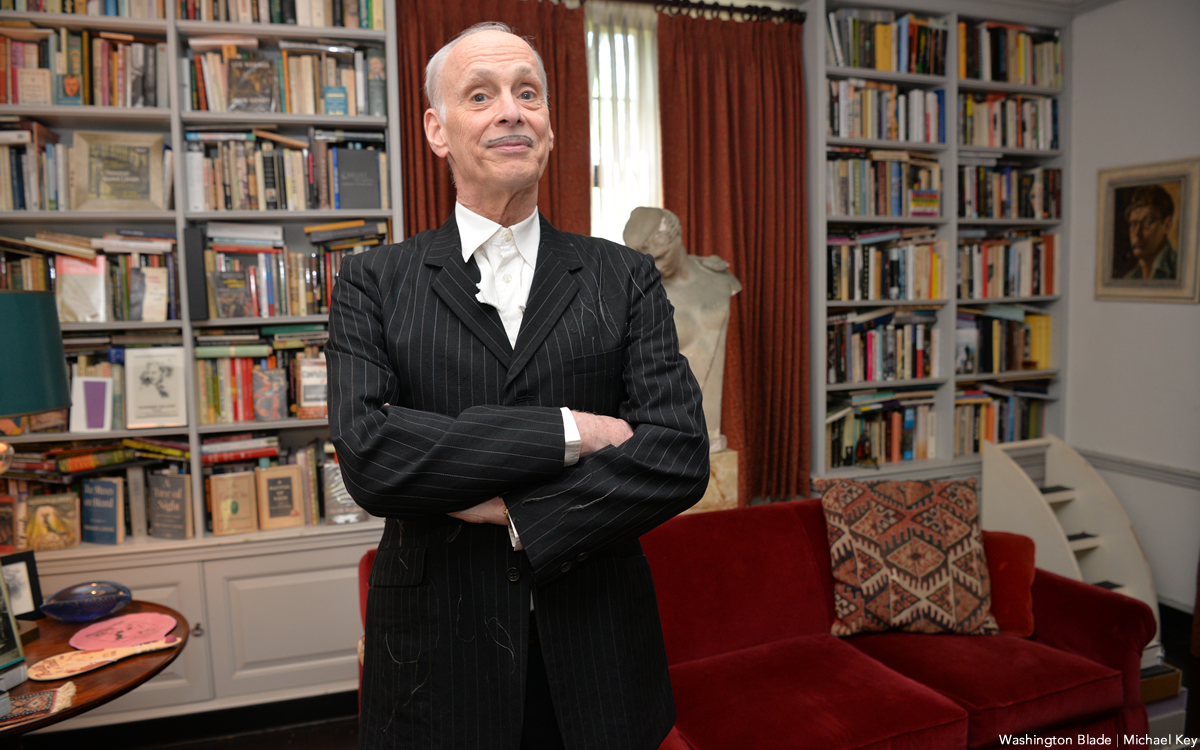
Baltimore Soundstage, 124 Market Place: Writer and filmmaker John Waters returns with: “A John Waters Christmas: Let’s Blow It Up,” on December 21. The complete fall lineup is at Baltimoresoundstage.com.
Visual arts events:
Baltimore Museum of Art, 10 Art Museum Drive, (artbma.org): “Making Her Mark: A History of Women Artists in Europe, 1400-1800,” opens October 1 and runs through January 7, 2024. This blockbuster exhibit will feature more than 200 paintings, sculptures, textiles, works on paper, pieces of furniture and decorative arts that show how women contributed to the visual arts of Europe from the 15th to 18th centuries. Other exhibits opening this fall include: “Tiona Nekkia McClodden: Play Me Home,” September 13, 2023, to May 12, 2024; “Art/Work: Women Printmakers of the WPA,” November 5, 2023, to June 30, 2024; “Eyewinkers, Tumbleturds and Candlebugs: The Art of Elizabeth Talford Scott,” November 12, 2023, to April 28, 2024, and “Raul Nieves: And imagine you are here,” November 19, 2023, to May 1, 2025. Current exhibits closing this fall include: “Recasting Colonialism: Michelle Erickson Ceramics,” and “The Matter of Bark Cloth,” which will end October 1, “Matsumi Kanemitsu: Figure and Fantasy,” which ends October 8, and “Wild Forms: Fauve Woodcuts,” which ends October 15.
American Visionary Art Museum, 800 Key Highway, (avam.org): The next “mega exhibit” at the American Visionary Art Museum is “If You Build It, They Will Come,” a look at visionary artists and their handcrafted environments, from October 7, 2023, to September 1, 2024. Featured artists include: Zebedee Armstrong; Gayleen Aiken; Ruby C. Williams; Leslie Payne; DeVon Smnitha nd Loring Cornish.
Walters Art Museum, 600 North Charles Street, (thewaltersorg.) Opening on December 3 and continuing until March 3, 2024, is “Ethiopia at the Crossroads,” celebrating the artistic traditions of Ethiopia from their origins to the present day. “New on the Bookshelf: Expanded Narratives,” a look at recent additions to the museum’s Rare Books and Manuscripts collection, runs through December 7, 2023.
The Peale, 225 Holliday Street, (thepealeorg.) Exhibits include “The Guardians of Baltimore,” a documentary and storytelling project that celebrates the unrecognized community work of Black female leaders from city neighborhoods, through October 1; “Dark Beauty,” featuring artist Daisy Brown’s portraits, stills and filmed interviews of Baltimore women with dark skin completions, through October 1, and “Soul of a Butterfly,” a look at Chicory, a poetry magazine published by the Enoch Pratt Free Library from 1966 to 1983, through October 8.
Maryland Center for History and Culture: 610 Park Avenue, (mdhistory.org.): “The Jim Henson Exhibition: Imagination Unlimited,” a multi-media tribute to the creator of the Muppets, continues through December 30.
Doors Open Baltimore, citywide, (doorsopenbaltimore.org): A popular annual program that allows participants to tour places that aren’t usually open to the public returns on October 7 and 8, with approximately 50 sites open this year.



a&e features
Ryan Murphy’s ‘Monster’ vilifies the lesbian
Netflix show promotes stereotype that queer women are dangerous
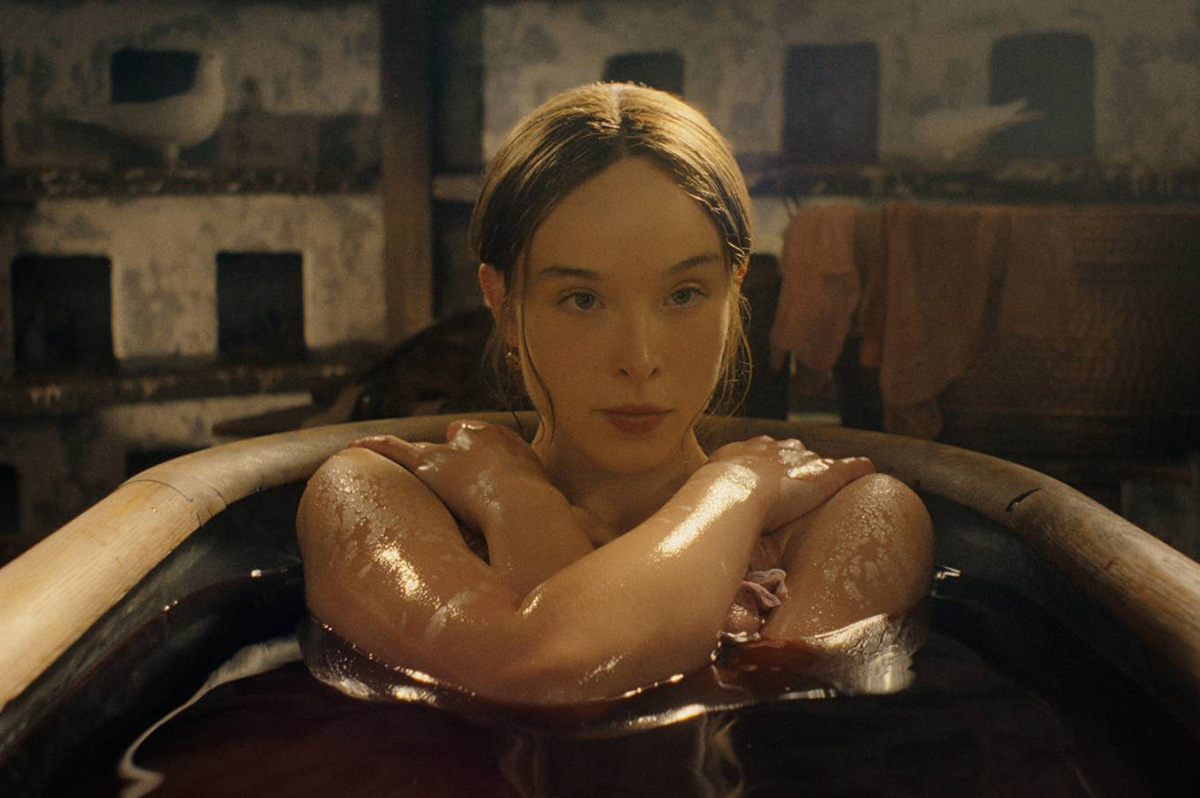
Ryan Murphy’s “Monster: The Lizzie Borden Story” just premiered on Netflix and became the most watched show on the platform. Murphy and his series are deeply controversial. The past three seasons have focused on convicted killers Jeffrey Dahmer, Lyle and Erik Menendez, and Ed Gein, and have garnered considerable criticism for sensationalizing real-life trauma, exploiting victims for entertainment, and glorifying the perpetrators.
But his newest season centers on Lizzie Borden, the white, affluent Massachusetts woman still referenced today in nursery rhymes who was never convicted of killing her parents Andrew and Abby Borden. As with Murphy’s other seasons, the show plays fast-and-loose with real-life history, instead turning a real-life crime into a psychosexual spectacle.
In real life, Lizzie was found not guilty by an all-male jury in the highly publicized 1892 trial, largely due to a lack of evidence including blood on her clothing and a murder weapon. Her initial statement contradicted her later testimony but her defense team argued that the morphine a doctor repeatedly gave her likely caused her confusion. But despite the fact that Lizzie was acquitted in court, she was ostracized by her community during her life and has been branded a murderer ever since.
Murphy’s highly fictionalized retelling of Lizzie’s story leans into this accusation not only that Lizzie murdered her father and stepmother with an axe but that she was successful in covering it up with the help of the maid Bridget Sullivan. Murphy not only concocts a sapphic relationship between Lizzie and Bridget, pinning the idea of killing Lizzie’s parents on the widely traveled woman who dyes her hair and is repeatedly called a lesbophobic slur by Lizzie’s stepmother, but also portrays Lizzie as an inspiration to Aileen Carol Wuornos, a woman who killed seven men who solicited sex and was also in a relationship with a woman.
Further, Murphy’s retelling creates a false ending to Lizzie’s story. While in real life, Lizzie and her sister Emma buy a house called “Maplecroft” and live there for the rest of their lives, Murphy instead imagines Bridget returning sporadically for romantic rendezvous with Lizzie and eventually moving back in with her and marching together for women’s right to vote. In real life, Bridget left town immediately after providing testimony and lived in Montana until she died.
Lesbophobia is at the heart of this retelling of Borden’s story. Despite the fact that Murphy depicts Lizzie and Bridget having sex and possibly getting married or at least promising themselves to one another wearing flower crowns, there is no evidence that Lizzie and Bridget had any romantic or sexual relationship. If they did have a relationship, it would likely have been hidden and any evidence destroyed, but records show that Lizzie herself refused to call Bridget by her real name, instead referring to her as “Maggie,” the name of their previous maid. It was only Lizzie’s stepmother Abby who called Bridget her real name. In Murphy’s retelling, it’s Lizzie’s stepmother Abby who refuses to learn or use Bridget’s actual name and treats her with disdain along with her stepdaughter.
Some people online argue that we are witnessing Lizzie’s story retold through Wuornos’s perspective, so adding in elements of child abuse and sapphic relationships would make sense, but there is no record that Wuornos ever visited Lizzie Borden’s home, or that she was inspired by Borden throughout her life. Instead, Murphy and his co-creator Ian Brennan use (or I would say exploit) Wuornos as a thematic device to make broad stereotypes about female rage across generations. In doing so, they conflate two real-life examples of violence to sapphic individuals.
Depicting a lesbian relationship in this way is not progress, nor is it fruitful representation today. As sapphic shows are increasingly cut and cancelled, Murphy’s inclusion just reinforces the lesbophobic and sexist stereotype that lesbians and queer women are “dangerous” to straight women and abet or incite violence against men and a family unit. At a time when anti-LGBTQ+ legislation and real-world violence and murder of LGBTQ+ people, especially queer and trans people of color, is exploding, stories that frame murder of a family unit as germinating from a sapphic relationship feed into far right narratives.
They further the myth popularized by far right leaders (including those in the highest echelons of government) that LGBTQ+ people are dangerous, a threat to heterosexual norms and family life, despite the data showing that children of same-sex parents have above average health and well-being according to research by the University of Melbourne.
Today, many LGBTQ+ people feel they have to be (or are forced to be) idealized versions of themselves in order to stave off anti-LGBTQ+ stigma, policing and violence. These “acceptable” behaviors and appearances are rooted not only in cisgender, heterosexual norms but also white supremacy, colonialism, xenophobia, and ableism. It is respectability politics that tell us how we can and should behave (including those perpetuating in the wider LGBTQ+ community) and push LGBTQ+ people to assimilate into a society governed by queerphobic normativity.
I hope it’s clear that I’m not trying to argue that we cannot and should not have shows that depict queer women who kill, or at the very least queer women who are unethical or morally complex. We need these depictions because they ask difficult questions and they reference how some LGBTQ+ people can be and are unethical. In fact, several public LGBTQ+ figures are associated with employee abuse and exploitation, ableism, and fat phobia.
But when Lizzie’s sapphic identity is invented to drive the story along, arguably to generate interest (especially straight men’s interest) in this spectacle of historical slop, it’s not a story that invites discourse and dimensionality, it’s one that collapses Lizzie, Wuornos, and queer women’s identities and relationships to plot devices. It objectifies and fetishizes queer women, arguably committing violence against not only Lizzie but also Wuornos.
And when there is so little representation of sapphic relationships on mainstream television or streaming platforms, it makes this the vast majority of representation that queer girls and women will see of themselves first, and that the straight public will see. Historians will know that Murphy’s depiction of Lizzie’s life is wrong, but many viewers will not and may not go digging for the truth.
Why not focus on the stories of bisexual, lesbian, and queer women who really existed, shared their identities (sometimes covertly, sometimes not), and had long-term partners? In fact, “Boston marriages” were common in this time period and referred to women living together when sexual and romantic relationships between women were illegal, partially because penal systems didn’t know how women could have sex with one another and didn’t want to put the idea in “impressionable” women’s minds. Why not focus on these stories instead of creating a fictionalized account? We have always existed; we do not need to invent relationships.
Murphy’s depiction of Lizzie Borden is deeply problematic. Lesbophobia is not the only issue at the heart of Murphy’s drama, but it merits a broader discussion about how mainstream media routinely hurt queer women and is part of perpetuating queerphobic violence, and what we all lose in the process.
Arts & Entertainment
Vote now! Best Of LGBTQ DC readers’ choice awards
Halloween party set for Oct. 22 to celebrate the winners
The Blade is excited to celebrate the 25th anniversary of our Best Of LGBTQ DC awards this year. We’re pulling out all the stops for our annual party with celebrity emcee Ashley Darby and acclaimed DJ Michael Navarro. The party is set for Oct. 22 at Longview Gallery with pop-up performances, cocktail and food tastings, open bar, and a Halloween costume contest with the theme, “Murder on the Dancefloor.”
But first, you have to vote. You nominated and now we have our finalists for the 2026 Best of LGBTQ DC Awards.
Vote for your favorites through Oct. 8.
We’ll honor the winners at the Best of LGBTQ DC Awards Party on Thursday, Oct. 22, and showcase them in our special issue released Friday, Oct. 23.
Bars & Parties
Lesbian Bar Project co-founder: purity politics could destroy our remaining spaces
Last Ditch’s decision to lift its mask requirement for one night a week has sparked intra-queer controversy
Uncloseted Media published this story on Sept. 29
By ERICA ROSE and THE LESBIAN BAR PROJECT | As a professional lesbian and Massachusetts native, I’ve recently been asked by a lot of folks what I think about the saga unfolding at Last Ditch. The now-viral story, first reported by the Boston Globe, centers on a Western Massachusetts lesbian bar that lifted its mask requirement for one night a week to help drum up business.
The decision ignited an intra-queer controversy that has been feasted on by media outlets across the political spectrum — from the New York Post to LGBTQ Nation — and is even reportedly being eyed for a Hollywood adaptation. Apparently nothing is more entertaining than a bunch of lesbians and queers fighting with each other over KN-95s.
What has been lost in all of the chatter and media coverage is the very real possibility that Last Ditch, which just opened in April 2025, will have to close its doors. The venue’s one remaining founder, Jackie Matellian, revealed in a community Zoom meeting that she’s working four jobs, is now solely responsible for the bar’s $50,000 business loan and is struggling to keep up with the bills. So as we laugh about the controversy’s similarity to a “Portlandia” skit and how one of the bar’s founders left to enroll in clown school, we forget that yet another lesbian bar is facing an existential crisis — and this time the call is coming from inside the house.
In 2020, my friend Elina Street and I created The Lesbian Bar Project, an Emmy-, Webby- and GLAAD Media Award-winning docuseries and initiative that tells the stories of lesbian queer bars around the world. We were moved to act because at the time there were only an estimated 16 lesbian bars in the United States, and the pandemic threatened to bring that number down even further.
There are now more sapphic bars than there were just before the pandemic — about 36 of them in total — but this is down from approximately 200 in 1980. Maybe that doesn’t mean much to you, but for the millions of sapphics living in the U.S., this number is calamitous.
As the world laughs at lesbians and sapphics, I want to take a second and tell you what I feel when I walk into one of these bars, which are all unique and irreplaceable in their own way: I feel seen.
Sometimes I think Cubbyhole in New York City’s West Village neighborhood knew I was gay before I did. When I walked in there for the first time, before I was even out, I was transfixed by the colorful array of tchotchkes hanging from the ceiling and how the women standing next to me were completely unafraid to express their desire for one another. I knew the minute I was ready to come out, I had a home. I also felt the joy of a new couple falling in love at Seattle’s Wildrose, the quiet confidence of a short king lining up her shot at the pool table at Ginger’s in Brooklyn and the kick of cayenne pepper in Julie Mabry’s crawfish at Houston’s Pearl Bar.
Lesbian bars don’t just serve lesbians; they serve queer folks across the spectrum, including bisexual, pansexual and trans people. As Elina and I traveled across the U.S. and Europe and to parts of Latin America to document the bar owners, staff and patrons that make up the ecosystems of these spaces, we also became uniquely acquainted with the factors that threaten their existence: gentrification, wage gaps, sexism, environmental disasters, gun violence, rising insurance premiums and political administrations working to annihilate queer people and their families.
Lesbian bar owners, like all leaders and entrepreneurs, are imperfect. There have been significant issues over the years at lesbian bars: employee harassment, racism, lack of accessibility, sexual assault and transphobia. All bar owners should be held accountable and should listen to their communities to evolve into safer and more equitable spaces. I also acknowledge my privilege: I am able-bodied, white, cis and from a family system that loves me for who I am. Not everyone has that.
Queer people, especially trans and bisexual people, are suffering from disproportionately high levels of depression, and our mental health system isn’t equipped to support them. Immunocompromised people and long COVID are real, and many of my friends are suffering to this day. The people with the least safety net are often the ones for whom a bar closing costs the most. And yet, as we’re seeing with Last Ditch, the queer community often lashes out at each other. It’s also the mainstream media taking the internal conflict and making a mockery out of it, distracting from the real possibility that this bar could close due to financial pressures. A bar that many people loved and needed is facing extinction. Perhaps it’s safer to dissent with one another than with the larger forces trying to eradicate us, but in doing so, we risk destroying the few spaces we have left.
Due to the constraints of purity politics — some in good faith, some not so much — lesbian bar owners, almost all of whom are queer women themselves, are forced to be everything for everyone, similarly to how women are forced to be everything for everyone. By asking these bars to uphold impossible standards — standards very few other third spaces are asked to consider — we all end up losing.
I want to move as a community toward dialogue, compassionate dissent and collaboration to make our spaces better with the goal of keeping them OPEN and thriving, rather than destroying them from the inside with expectations that are arguably unattainable.
While I have your attention — for this fleeting second of the news cycle — may I urge us to spearhead a way to keep these small businesses afloat without attacking our own community along the way? Bar owners are left with an impasse: They want to be community-centered, but they also have to make money to keep their doors open. Sometimes they might make business decisions that don’t work for everyone — and that’s partly because different patrons have different priorities and want different things — but these owners deserve the opportunity for productive dialogue. We have to work with them and with each other to keep our spaces open, to keep them growing.
Lesbian bars raised me into the queer woman I am today. One thing I think about as I reflect on the six years of work we’ve done to document these spaces is that shared, unspoken language I have with a stranger the moment we both walk into one of these bars: the nod, the ease, the not having to explain ourselves. I don’t want to lose that, and neither should you.

House Democrats urge White House to confront Turkish government over anti-LGBTQ crackdown

988 restores crisis services for LGBTQ youth

To school to homeschool to school again

Ryan Murphy’s ‘Monster’ vilifies the lesbian

The right to be an ordinary transgender man

PHOTOS: HRC National Dinner

What’s frightening is also funny in ‘Venus’

I’m 66, he’s 27. Is it love or am I being played?

The LGBTQ real estate map is being redrawn