Theater
Studio Theatre marks foray into foreign language with ‘Espejos: Clean’
Engaging play features ambitious hotel staffer and needy guest
‘Espejos: Clean’
Through Oct. 22
Studio Theatre
1501 14th St., N.W.
$35-$84
Studiotheatre.org
With its huge plastic pyramids and floating bars, Cancún is worlds away from the real Mexico.
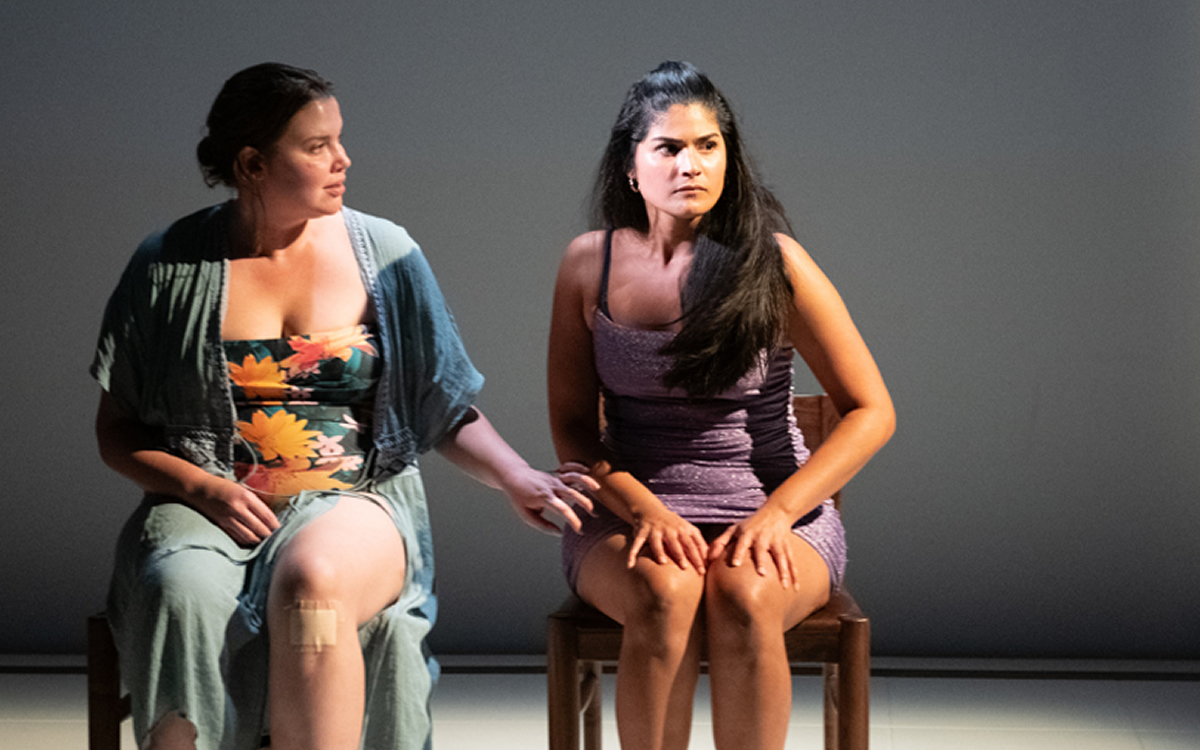
In Christine Quintana’s “Espejos: Clean,” currently at Studio Theatre, the lives of two very disparate but somehow similar women are thrown up for comparison in a compassionate and compelling way.
There’s Adriana (Legna Cedillo), a no-nonsense hotel martinet doing her thing. Eight years earlier she drove six hours from her hometown to work in the splashy coastal resort and never looked back. Over time, she’s risen through various positions, eventually climbing to supervisor of more than 30 cleaners and 400 rooms.
Part of Adriana’s secret to success is adhering to a strict set of rules that include keeping her distance from needy hotel guests and never letting her hair down, literally and figuratively. When Sarah, a messy Canadian, checks in for her younger sister’s destination wedding, she seeks connection with those around her. Consequently, Adriana – by no fault of her own – violates one of her own commands, prompting her neatly arranged life to go slightly awry.
In ways, Quintana’s plot reads like a possible arc of three or four episodes of TV’s “White Lotus.” A spoiled woman seeks platonic friendship from a hardworking employee with no time to cater to a lonely guest but must remain polite nonetheless. It gives the feeling of a familiar but not easy situation.
At first, the play unfolds rather straightforwardly, but increasingly the women’s rocky pasts are revealed. While cocktailing poolside, Sarah slowly divulges the details of her misery. She’s known to drink too much, occasionally black out, and at home she sometimes misses a week of work when she needs to disappear. There are times when the food delivery guy is the only person she sees.
Quintana delves deeply below the narrative’s seemingly simple surface. There’s a back story that explains how Sarah’s boozy behavior belies a sadness that pervades her entire family. Adriana’s story involving a dark relationship with her father is similarly complex. A sudden storm and impromptu staff party causing Sarah to insert herself into Adriana’s private life complicates matters further. Scenes follow, real and imagined, gracefully directed by Elena Araoz.
There are some illusory quick fixes. But it’s not that easy. Both are damaged. The realities of their situations aren’t so tidily resolved.
A persuasive two-hander, each actor plays one character yet the work leaves you with the feeling that you’ve met an entire cast of characters. It’s some feat; a real tribute to writing and performance.
The design team is subtly stellar. Designer Luis Garcia projects words and images, a mixture of tropical and plain, onto Raul Abrego’s stylishly spare set. Christopher Vergara costumes the women in a convincing selection of contemporary beach cover ups, uniforms, maid of honor gowns, and mourning attire.
With “Espejos: Clean” Studio Theatre successfully makes its first foray into foreign language with simultaneous translations (English to Spanish and Spanish to English) projected on a large center panel and two smaller screens on either side of the stage. The characters’ different cultures are central to the piece, so each sharing a story in her own language is essential. (As part of her job, Adriana is conversant in English so occasionally they’re linguistically on the same page.)
Both talented actors who work skillfully alone and together are making their Studio Theatre debuts. Their bios boast mostly New York experience. Karaman who’s wonderful as Sarah, was one of the first series regular curvy models on TV’s “Project Runway.”
“Espejos” from the title translates as “mirrors.” Each woman is taking a look. Where that takes them remains to be seen.





Theater
D.C.’s fall theater season is already well underway
‘Ma Rainey,’ ‘Mama Mia,’ ‘Rocky Horror,’ and much more on tap
Leaves have scarcely turned, but throughout the DMV, the fall theater season is well underway.
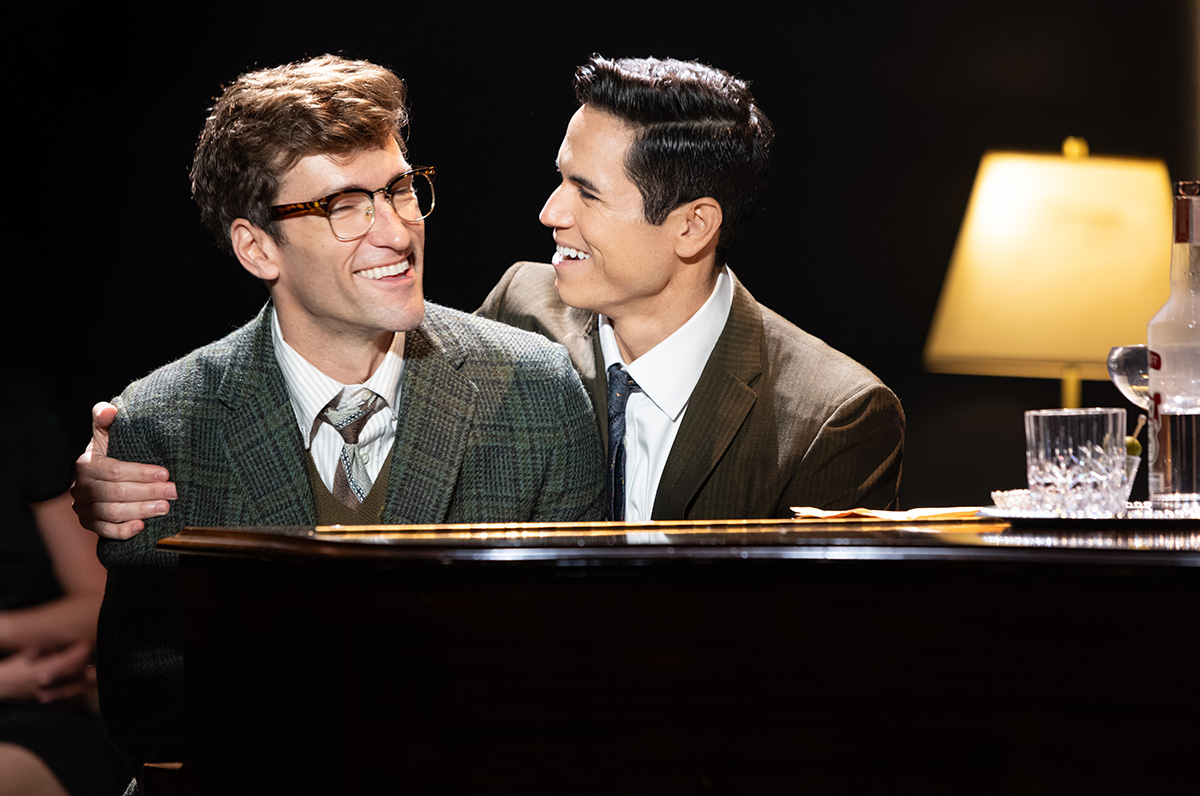
In Arlington, Signature Theatre got a jump on the season with Stephen Sondheim’s musical “Merrily We Roll Along” (through Nov. 1). Told entirely in reverse chronological order, this story of three longtime friends spans the years 1957 to 1976 moving from the trio’s cynical middle-aged present back to their happy and hopeful salad days.
Filled with great promise when it opened in 1981, the original production closed after just 16 official performances despite a terrific score glutted with great tunes like “Our Time,” “Good Thing Going,” and “Not a Day Goes By.” Over the years, the show was tweaked and reimagined, ultimately redeeming itself as a massive Broadway hit revival in 2023.
Signature’s production, directed and choreographed by Matthew Gardiner, features out actors Jason Gotay (Rafa from the “Gossip Girl” reboot) and Signature vet Jake Loewenthal playing, respectively, sellout composer Franklin Shepard and loyal lyricist Charley Kringas. Melanie Field plays witty and increasingly alcoholic Mary Flynn, the third prong of the complex little friend group. Sigtheatre.org
Woolly Mammoth Company has opened with playwright Steve Yockey’s “Venus” (through Oct. 4), a tragicomedy about two women whose first date goes terribly wrong. The lesbian daters are played by Kimberly Gilbert and queer-identified actor Regina Aquino. Woolly’s new artistic director Reggie D. White directs. Woollymammoth.net
At Round House Theatre in Bethesda, August Wilson’s “Ma Rainey’s Black Bottom” continues its compelling exploration of racism, exploitation, and artistic integrity. Helmed by director Lili-Anne Brown, the production runs through Oct. 18. The 10-actor cast includes Yao Dogbe as Levee, a young firebrand trumpeter, and out actor Nicole Michelle Haskins as the queer titular blues legend. Roundhousetheatre.org
Broadway at the National (National Theatre) is ushering in a spate of hit Broadway shows this fall. The musicals include “Dirty Dancing” (Sept. 29–Oct. 4), “Maybe Happy Ending” (Oct. 6–11), and ABBA’s “Mama Mia!” (Oct. 27–Nov. 15) featuring charming out actor Victor Wallace as successful architect and divorced father of two Sam Carmichael. Broadwayatthenational.com
First introduced to theatergoers by MetroStage at the Kennedy Center’s Page to Stage Festival in 2019, Sherman Yellen’s “Cousin Bella–The Whore of Minsk” is the riveting story of Bella, who as a young Jewish woman living in Czarist Russia was sold into prostitution by her stepmother. Later rescued, she immigrated to America, where she lived out the rest of her life in New York.
Now with a shortened title, “Cousin Bella” is going to MetroStage at The Lyceum (Alexandria’s History Museum) as a staged reading for one night only on Sept. 22. Again, Adrienne Nelson plays Bella, but this time, she’s joined by out DMV favorite Michael Russotto as Sherman. MetroStage.org
Hard to believe, but this year marks four decades since the film release of “Little Shop of Horrors.”
To celebrate the anniversary, Ellen Greene (the actor who created Audrey, the show’s sweet and sexy florist, both on stage and screen) is doing a nationwide tour that includes a night at D.C.’s historic Lincoln Theatre (Friday, Sept. 25).
Greene’s appearance offers fans the opportunity to experience the 1986 cult horror/comedy/musical classic alongside its iconic star. Before the screening, Greene will take part in a live Q&A and perform Audrey’s signature song – what else — “Somewhere That’s Green.” Thelincolndc.com
At Olney Theatre Center, the season opens with the regional premiere staging of “Some Like It Hot” (Sept. 18–Nov. 8) directed by Jason Loewith with choreography by Karla Puno Garcia.
Adapted from the classic 1959 Billy Wilder film starring Marilyn Monroe, Tony Curtis, and Jack Lemmon, the Tony Award-winning musical by Marc Shaiman and Scott Wittman (the guys who gave us “Hairspray”) brings the jokes, music, more dance and adds gender identity, self-discovery, and racial representation.
Like the film, the action kicks off in Prohibition-era Chicago when Joe (Jacob Tischler) and Jerry (Tavis Corderll), two straight musicians, witness a mob hit. Averse to being bumped off, they leave town as the newly hired members of an “all-girl band” fronted by the irresistible Sugar Kane (Mot Walker). Laughs and drag ensue. Olneytheatre.org
Spooky Action Theater in association Solas Nua present “Hakawatis: Women of the Arabian Nights” (Sept. 24 – Oct. 18). In this re-imagining, Irish Palestinian playwright Hannah Khalil reclaims the classic “Arabian Nights” through a new feminist lens replete with compelling storytelling by its all women cast of five. Spookyaction.org
The Shakespeare Theatre Company presents “Frida…A Self Portrait” (Oct. 8 – Nov. 8), a stage portrait of Mexican painter and queer icon Frida Kahlo. Written and performed by Brazilian actor Vanessa Severo, the play is set on the eve of Kahlo’s death, exploring her pain, passion, and extraordinary life through a powerful, intimate lens. Shakespearetheatre.org
At 1st Stage in Tysons, the season opens with British playwright Harold Pinter’s “Betrayal” (Oct. 8-25), a play sophisticated in subject and structure. Pinter uses a non-linear timeline spanning the years 1968 to 1977, moving mostly backward from the end of a seven-year affair to its beginning. The adulterous love triangle involves Emma (Katrina Clark), Robert (Shawn Sebastian Naar), and Jerry (played by excellent out actor Jaysen Wright). Alex Levy directs. 1ststage.org
In time for Halloween, Creative Caudron Stage in Falls Church presents “Monsters of the Villa Diodati” (Oct. 8 – Nov. 1), a Gothic-style musical created by local married collaborators Matt Conner (composer) and Stephen Gregory Smith (playwright/lyricist).
The applauded work dramatizes the stormy Geneva summer of 1816 when poet Lord Byron challenged his guests to come up with their best scary tales. Mary Shelley’s “Frankenstein” and John Polidori’s “The Vampyre” were among the better results. Creativecauldron.org
In Rehoboth Beach, Del., Clear Space Theatre Company’s anticipated annual production of “The Rocky Horror Show” (directed by Wes Drummond and choreographed by Shondelle Graulich) is returning to the stage for the Halloween season. (Oct. 9–31). Clear Space invites theatergoers to “revel in a deliciously decadent rock ‘n’ roll party where nothing is sacred, everything is extra, and liberation is the main event.” (Late night audience participation performances every Saturday night.) Clearspacetheatre.org
The first of Arena Stage’s autumn offerings is the Step Afrika! premiere of “The Fruits of Our Labor” (though Nov. 1), a powerful, celebratory production focused on resilience and the unfinished American experience expertly performed by the company’s tremendous step dancers.
Later at Arena, it’s playwright Eric Bentley’s extremely time “Are You Now or Have You Ever Been” (Oct. 17– Dec. 6), directed by Tony Award-winner Anna D. Shapiro. “This docudrama drops you into the tense world of the 1940s House Committee on Un-American Activities hearings, where fame offered no protection and political pressure could end a career.” Arenastage.org
For a bit of Strathmore family fun, AMP presents Disney Pixar’s “Coco Live-to-Film Concert” (matinees on Oct. 31, Nov. 1), a special event for Día de los Muertos where the full animated film Coco is screened on the big screen while its culturally rich score by Michael Giacchino is performed live by the 20-member Orquesta Folclórica Nacional de México. Strathmore.org
In an amusing essay about microaggressions, David Sedaris shares that whenever he and his partner Hugh browse antique stores in England, the shop owners invariably look them over and ask, “Are you dealers?” His usual retort: “No, just homosexuals.”
Playwright JB Miller treads similar terrain with “The Last Victorian,” his new play that kicks off the fall season at Washington Stage Guild with a world premiere production (Nov. 19- Dec. 13) directed by Laura Giannarelli.
In this dark comedy, two failed British antique dealers, same-sex partners in both business and in life, unbelievably inherit the world’s oldest person. When issues of price and provenance come to the fore, the pair turn on each other, and soon it seems the old lady might take charge. Stageguild.org
And to help make the much of the above markedly more affordable, there’s Theater Week. Organized by Theatre Washington, the more than seven days of deals and entertainment is a multi-week regional celebration launching the local fall theater season that runs from Sept. 24 to Oct. 11, featuring discounted tickets priced at $25, $45, and $65 for more than 25 productions alongside a lineup of free community events. For details and participating companies go to Theatrewashington.org.
Theater
Actress takes on bisexual ‘Ma’ Rainey in new Round House production
Haskins relishes playing ‘impassioned Black woman who sticks to her guns’
‘Ma Rainey’s Black Bottom’
Sept. 9-Oct. 18
Round House Theatre
4545 East-West Highway
Bethesda, MD 20814
$50 and up
Roundhousetheatre.org
Among the Black blues women of the 1920s and 1930s, being “in the life” wasn’t uncommon. Self-supporting and often on the road, they followed the Great Northern Migration to places like Chicago and Harlem, where they lived independent lives, made music, enjoyed same-sex relationships, and partied with like-minded ladies.
Gertrude “Ma” Rainey, best known as the “mother of the blues,” fit the bill. A big star, Ma toured the country and sold hit records nationwide. She lived an openly bisexual life.
In 1925, hosting an “indecent” all-female party at a Chicago apartment, landed Ma in jail, but blues singer Bessie Smith, Ma’s protégée and erstwhile girlfriend, promptly bailed her out. Three years later, Ma released a popular track whose lyrics included “Went out last night with a crowd of my friends / They must’ve been women, ’cause I don’t like no men.”
She was also a woman who knew her value. Ma’s voice was a powerful passport.
Ma Rainey is the ultimate force of strength and resistance in August Wilson’s 1982 play, “Ma Rainey’s Black Bottom,” the first of the late playwright’s brilliant Century Cyle, a collection of mostly Pittsburgh-set plays that chronicle the 20th century African-American experience.
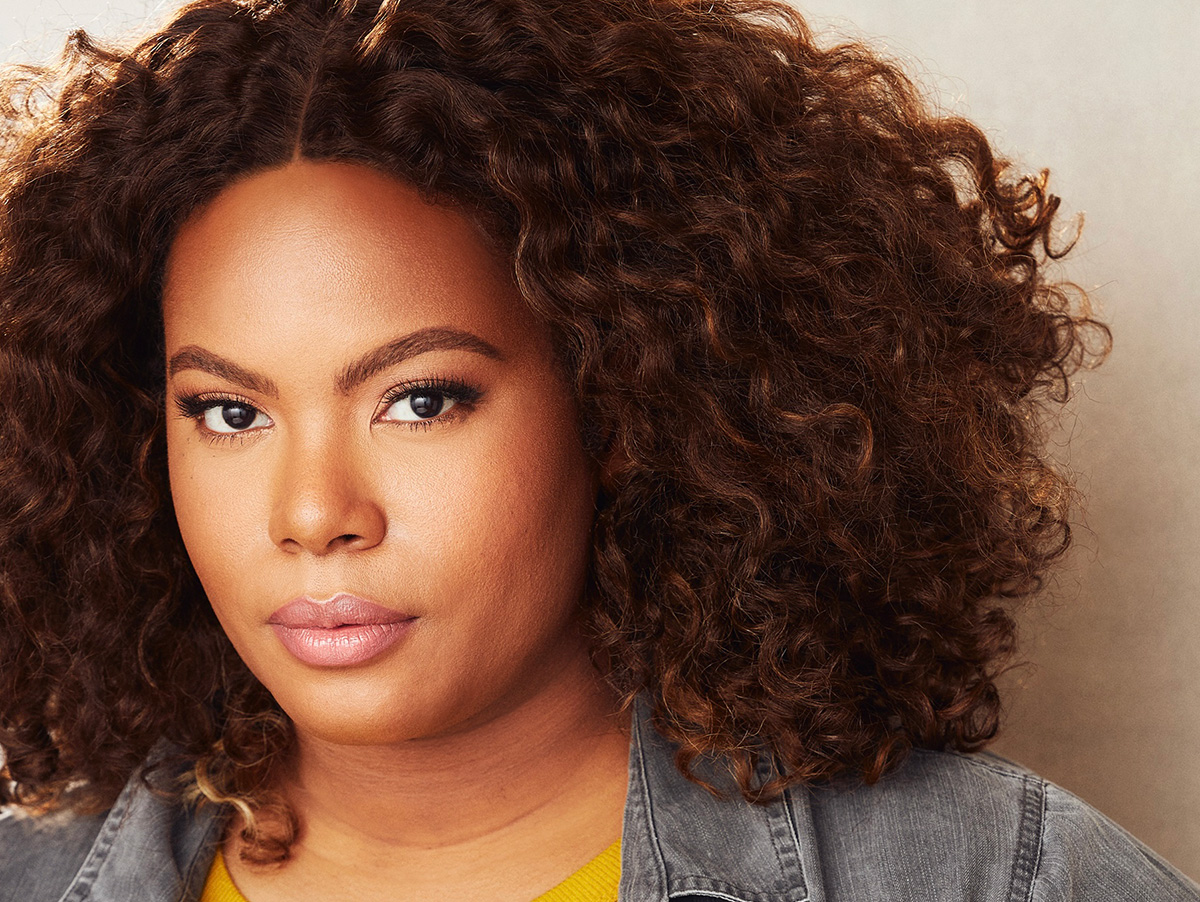
Poised to kick off a month-long run at Round House (Sept. 9-Oct. 11), the production (co-produced with Olney Theatre Center) is directed by Lili-Anne Brown and features out actor and powerhouse vocalist Nicole Michelle Haskins making her Round House debut as Ma Rainey.
Set in a Chicago recording studio in 1927, the drama follows Ma, her Black band members and white producers as they try to record a new album of her sons. Tensions over artistic control, racial exploitation, and personal ambitions come to the fore. Amid the difficulties and a fair bit of humor, arises a serious clash involving hotheaded young trumpet player Levee (Yao Dogbe) who wants to alter musical arrangements on the titular song.
Playing blues icon Ma Rainey wasn’t on Haskins’s radar. Because the bulk of her work is in musical theater, Haskins never foresaw being tapped to do a Wilson play.
“It’s kind of like Shakespeare. Not restrictive but respected; not everyone gets a ticket to the party. So, I figured that I just wouldn’t pursue that,” she says matter-of-factly.
However, fate would dictate differently. Haskins and director Brown are longtime friends and collaborators. They recently worked together on “The Color Purple” at Chicago’s prestigious Goodman Theatre where Haskins played Sofia, another powerful Black woman who, not unlike Ma, is navigating life in a patriarchal white world.
When the opportunity came up to play Ma at Round House, Brown encouraged Haskins to audition. She did and got the part. “I’m so grateful to be working with a wonderful director like Lili-Anne, especially during my introduction to Wilson’s work. He is a theater god, and I’m swept every day.”
And is it special to be queer and playing queer? “For me, it’s special to play any role where there is an impassioned Black woman who sticks to her guns and fights for the things she deserves. Her sexuality is the icing on the cake.”
The production adheres to Wilson’s text and the text describes a woman who is in a relationship with another woman. Though her sexuality is provocative, it’s not the only thing about her that’s compelling. She’s also portrayed as an artist, businesswoman, and a loving aunt.
Haskins, a New York-based actor who made her name on the Chicago theater scene, grew up in Detroit. At 12, she became involved with the Mosaic Youth Theatre of Detroit; after high school she went on to earn a BFA at Detroit’s Wayne State University. Detroit is also where Haskins learned storytelling: “It’s very natural for a Detroit native to greet people on the street. There’s an expectation to be open to someone else’s story and to share your own. I’ve done this many times.”
Queer characters are famously underrepresented in Wilson’s work. “I see that, but do we really know for sure? After the first day’s read through of the play, some of the actors, for different reasons, wondered if in addition to Ma, perhaps one or two of the other characters might be queer too. Now wouldn’t that be interesting? That’s something I’d like to see.”
Theater
Immersive ‘Nation-State’ imagines a society free of authoritarianism
Queer duo brings unique theater experience to Dupont Underground
‘Nation-State: A Live Experiment’
Sept. 2-13
La Pluma Theatre
Dupont Underground
19 Dupont Circle, N.W.
$25-40
Dupontunderground.org
Industry Night: September 7. Free for all theater makers
A relevant piece replete with borders and passports, La Pluma Theatre’s “Nation-State: A Live Experiment”is immersive, site-specific, and testimonial.
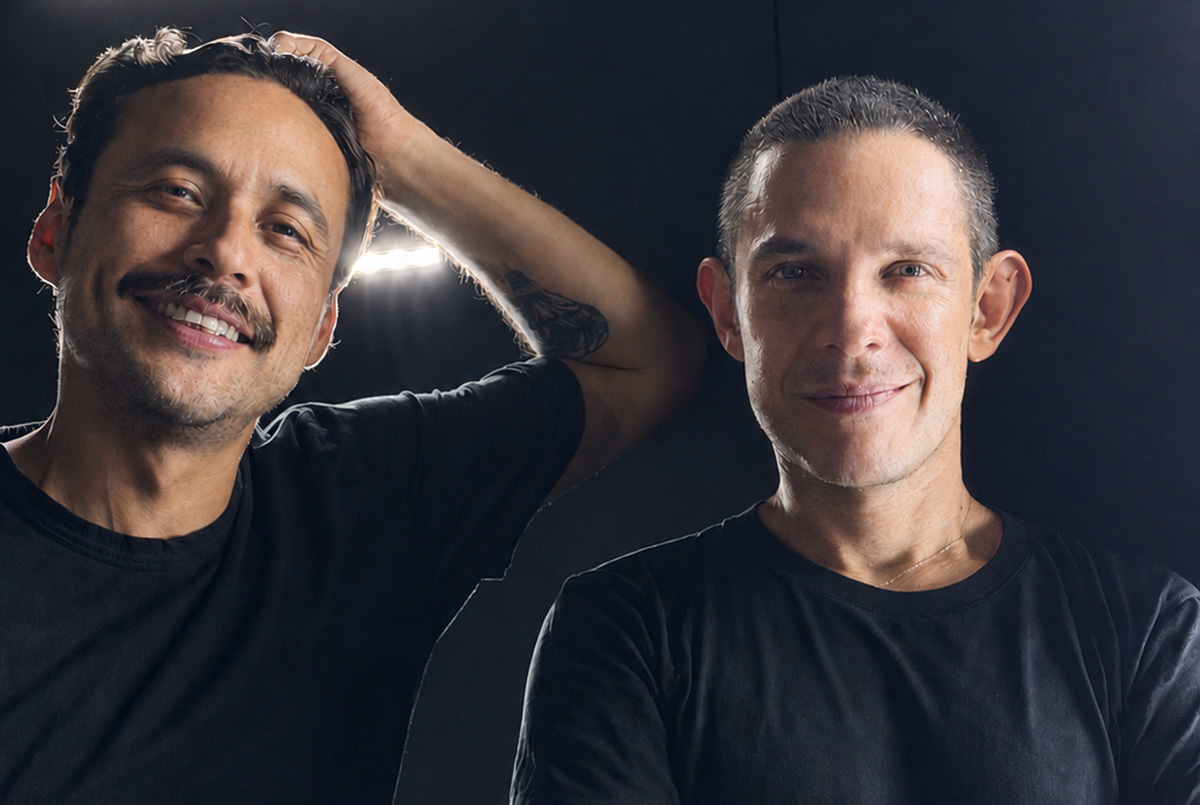
With the production, the company’s queer co-founders Victor Salinas and Gabriel de la Cruz pose unique situations and experiences. In lieu of tickets, audience members get passports. What follows are questions and tests, and whether they gain entrance into a nation built to protect its citizens from authoritarianism, resource theft, and colonization remains to be seen.
Originally from Mexico and Peru, respectively, Salinas and de la Cruz met at a birthday party in D.C. and instantly clicked as theater makers, sharing outlook and ambition. Reluctant to go it alone, both had been searching for artistic and producing collaboration. That all changed.
And while their enterprise is primarily Latino and queer, these professional partners refused to be confined to a box, choosing rather to amplify the voices of all of D.C.’s diverse communities. In line with their plans, “Nation-State” is open to serving many points of view.
As director of “Nation-State,” de la Cruz mostly guides the questioning. He’s the right man for the job. Since arriving in the U.S. six years ago, he has been consistently curious about certain things. Who belongs here? How do you make this your home? And who is creating the rules?
“But the writing process is shared,” de la Cruz corrects. “I come up with questions. I provide Victor the topic and he goes from there. We’re both writing what happens next.”
He adds, “the most exciting moment for people is when they share something unique. As a questioner, you need to find the confidence and the right moment to ask the question. If you provide the space for that, the actor or audience member will give you something singular.”
Since before La Pluma opened in November 2025, its creators have agreed that “the most beautiful thing is when you use theater to fashion something innovative. Theater is the place where you can create new frameworks and rehearse new ways to live.”
At just an hour, “Nation-State” is performed in English at Dupont Underground – the company’s historic residence, a once subterranean street car barn located beneath Dupont Circle. For the production, the tunnels serve as boundaries, and its different curved spaces make up a micro nation and welcome different guest actors who will come to share their stories.
At certain times, Salinas plays Officer Salinas, Director of N.I.C.E. (Non-Discriminatory, Inclusive Customs Enforcement), a humorous social critic of the system and border patrol. Other times, it’s Salinas as himself telling his real-life stories. He says, “it’s a level of vulnerability that I’ve never experienced. The script is my personal life with zero censorship. But I think, if not now in a play that we are pouring our souls into, then when?
“As a kid I dreamed of being TV show host and now I am. I will sing and tell my stories. I feel comfortable and ready to do it.”
In Spanish, “pluma” means both pen and feather. For the company, it’s the latter, and comes with lively associations. Salinas explains. In mysticism, feathers serve as a portal between the real and spiritual worlds, like that between fact and fiction. And in Spanish and Latin American slang “showing feathers” (in other words, showing queerness). La Pluma encourages a good display of authenticity.
And specifically for Salinas, there’s a personal story involving his beloved grandmother with whom he was extremely close. After she died, he has regularly found feathers as if she’s making contact. “A bit romantic, I know. But I think if you’re open you can see these things,” he says.
“Nation-State” is challenging but fun. It’s unmistakably La Pluma. In the end, the company wants to build a world where everyone feels safe to tell their own stories, as individuals and performers.

Trump-appointed judge restores White House TV pool access

Philadelphia event to launch 2026 LGBT History Month

Colombia withdraws from Equal Rights Coalition

Caso Karlina: Una sentencia histórica contra las terapias de «conversión»

Washington Blade responds to concerns over White House pool duties

Over 2,000 turn out for Hands Around the Kennedy Center protest

PHOTOS: Wanda Alston Foundation Fall Reception

PHOTOS: Walk and 5K to End HIV

What LGBTQ veterans are building after ‘Don’t Ask, Don’t Tell’