Opinions
Celebrity BEYOND transatlantic cruise: Setting sail
Rome to Ft. Lauderdale crossing features parties, shows, and some rough seas
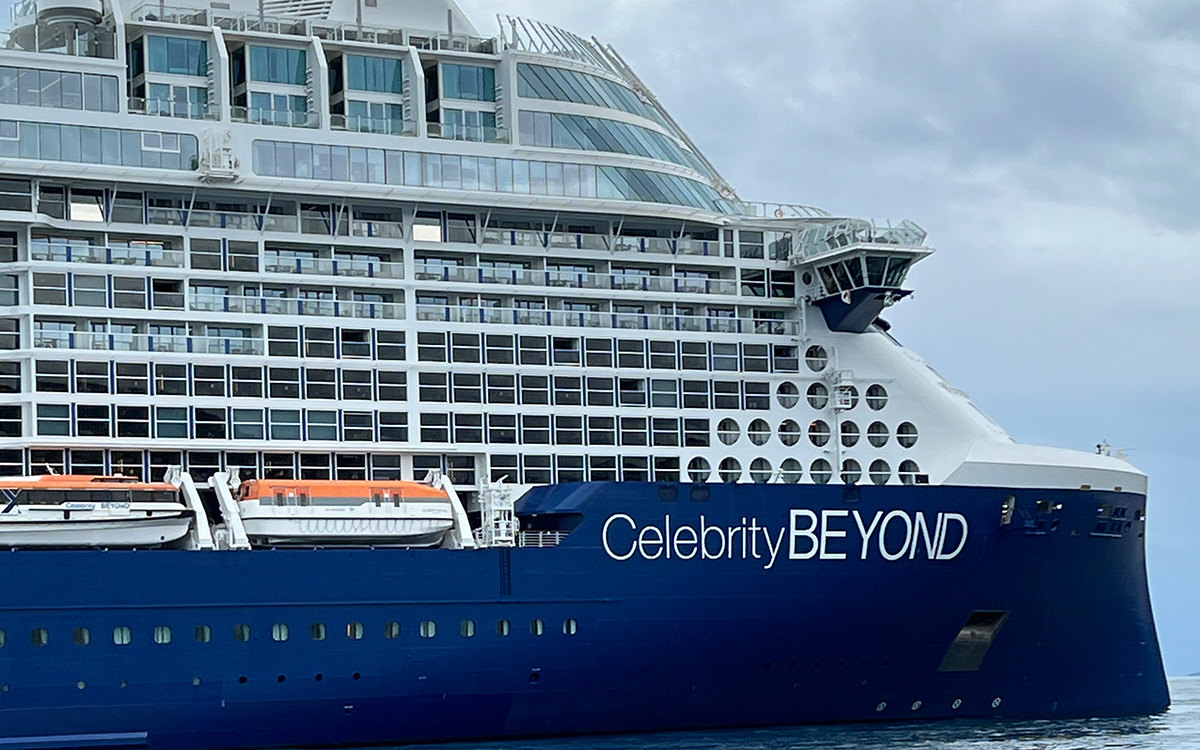
My 2023 trip to Europe to join the Celebrity BEYOND on a transatlantic voyage back to Ft. Lauderdale has begun. I flew United Airlines to Rome from D.C. The flight was on time and great, except for the food, which as usual on United, was awful. The flight attendant asked what I wanted for lunch, but since it was already 7 p.m., I suggested it may be dinner. She laughed and said yes, dinner. Then I chose the short ribs from the menu and she said, “pick a second choice we only have 14 servings of that.” I laughed, and said then it doesn’t matter. I wasn’t one of the 14 to get the short ribs.
Other than dinner all went well. We landed in Rome about 10 minutes early. That was made up for when it took over 40 minutes to get our luggage, and it came down on a luggage station already packed with bags from another flight which made it difficult for anyone without extra-long arms to get their bags off the conveyer belt.
After finally having my bag, I walked out of the baggage claim area, and met my pre-arranged taxi, through Booking.com, and he escorted me to his car. He was a very nice gentleman and his car was a beautiful new Jaguar. It was a nice ride into Rome. I arrived at the UNA Deco hotel, where I have stayed several times before, and got a nice welcome and was told my room was ready early. Wow, a great welcome. Headed upstairs to wash up, and began two wonderful days in Rome.
I left messages for friends, also staying at the hotel, and arranged to meet them the next morning for breakfast at the great buffet the hotel provides. Then headed out to walk around Rome. For me there is always with a sense of wonder when seeing sights like the Colosseum, Trevi Fountain, Spanish Steps, and the Pantheon. Rome is packed with tourists, lined up seven deep at the Trevi Fountain. Even so I bumped into friends there who were also going to be on the cruise. I wandered for hours, stopping for a cappuccino, and a light lunch, and eventually was tired enough to head back to the hotel early for a good night’s sleep. Since I never can sleep on a plane, was exhausted and skipped dinner. Woke refreshed the next morning and met friends for breakfast, and then headed out again. Had a great day and had arranged to meet my friends from Rehoboth Beach, Mary, and Nancy, who were also joining my group on the cruise. Lawrence, from Columbia, who I had met on a previous cruise was staying at my hotel, and he joined us for dinner that evening at a nice restaurant near the Spanish Steps. The ladies were staying near the Spanish Steps and we parted ways with them after dinner and Lawrence and I decided to take a long walk back to our hotel to walk off dinner.
Day three dawned bright and sunny. After breakfast Lawrence and I headed to the designated meeting place, which was only two blocks from the hotel, to board the bus our hosts (travel agents extraordinaire, Scott and Dustin, of My Lux Cruise) had arranged to take us to Civitavecchia, the port where we were to board out ship. We met some old, and some new, friends on the bus. As we arrived at the port, we saw the BEYOND was docked close to the Celebrity EDGE and together they made an impressive picture. We arrived at the port about 10:30 and began our check-in to board the ship.
Courtesy of Scott, I had arranged for an upgrade to use the retreat amenities, the retreat is the fancier part of the ship. I really enjoy the retreat lounge. My cabin was concierge class. I was able to check in at the retreat section and when I handed my passport to the nice lady at the gate, after having dropped off my luggage, there seemed to be a problem. She said I would have to wait and I called Scott from My Lux Cruise over to see if he knew what the problem could be. Turns out she was just waiting for her manager to come over to welcome me on board. They apparently knew I was going to blog and write about the cruise and I thought that was very nice. We then got online with everyone else to walk up the gangplank to enter the ship. So, the cruise began.
Celebrity BEYOND Transatlantic Cruise: Blog #2
Day 1 on the ship begins and we are welcomed by a great crew as we walk up the gangway. The BEYOND has a very similar feel to the EDGE and the APEX, both on which I had cruised before. Clearly Celebrity BEYOND is a beautiful ship. I went directly to my cabin, set up my computer, and unpacked the one small bag I carried with me. The larger luggage was to be delivered to the cabin. Then I set out to tour the ship.
Again, it has a very familiar feel but there were some clear differences. The first thing I did was head to my muster station to check in, which every guest must do. It’s so you know where to go in case of any emergency during the cruise. There, one of the crew checking us in, was a very attractive and charming young man, who it turned out was one of the entertainers, an aerialist. He and his partner would perform during the cruise. I chatted with him and found he was from Ukraine, and of course knew the talented Bilak Brothers, who I have written about. Guess there is something in the water in Ukraine that breeds aerialists. I suggested I wanted to interview him later in the cruise, and he said that would be great.
Next, I headed to the Sunset Bar, larger than on the other EDGE ships and beautiful. I knew it had been designed by the talented Nate Burkus. I was going to be spending time there. The plentiful artwork around the ship was intriguing. Not sure I appreciated all of it, but then art is always in the eye of the beholder. The elephant at the pool is great. But another piece I stopped to look at thinking ‘why?’ Then near me I overheard a couple say, “wow, isn’t that beautiful.” Yes, we all appreciate art differently. I continued my tour looking at the various lounges, and then headed to EDEN, a lounge where the LGBTQ happy hour would be held each evening, and shows would be performed. Walking toward the Eden lounge on APEX you walk through a silver tunnel. On the Beyond, you walk into a black space, with silver freeform sculptures on the wall, floor, and some hanging from the ceiling. In some ways beautiful, but dangerous. There is one silver ball hanging from the ceiling directly in the walkway, which anyone over 5’9 must duck, not to smash into. I am surprised Celebrity hasn’t been sued yet. The black mirrors are such one woman walked into one while I was there, thankfully she wasn’t hurt. Again, art is in the eye of the beholder, but this installation actually seems dangerous. Once I navigated through the tunnel, the EDEN lounge is as great as on other EDGE series ships.
Scott and Dustin, of My Lux Cruise, had invited our group of nearly 100 to a 4:30 sail-away party in their suite, one of two amazing Iconic suites, on the ship. The other was occupied by Mark and Juan, an incredible couple, I first met on a Panama Canal cruise. So, I headed back to my cabin to wash up and change, expecting to see my luggage. No such luck. I was surprised since it was now five hours since we checked our luggage on the pier. I was to find out even those in the Iconic suites were missing some of theirs. Seems there was a small issue, and what was to be priority luggage, for the retreat passengers, never really got labeled as such, and the luggage sat for hours on the pier. So, I headed to the sail-away party and it was great. Dustin and Scott, working with Christophe, the Hotel Director, set up a fun party. There were old friends to greet, and new ones to meet, a perfect start to the cruise. Just a side note, Christophe had been Hotel Director on the APEX until recently, and we met him last year. He is a great guy. I hope to work with him during the cruise to set up some interviews with the Captain and other crew, if Celebrity corporate gets out of the way. After the party a few of us headed to the Tuscan restaurant, one of the four main dining rooms, for a relaxed dinner. Then it was an early night for me, looking forward to day 2 and my first excursion.
Celebrity BEYOND Transatlantic Cruise: Blog #3
Day 2 on BEYOND dawned bright, and I had arranged to have coffee, juice, and a bagel delivered to the room. It was delivered late, but the room service manager called, apologized, and promised it would be on time for the rest of the cruise. I always do a continental breakfast in the room. I then headed to the theater, to check in for my first excursion.
The theater is beautiful, and was crowded with those checking in for various excursions. Mine was a bus trip to Papallo, and Santa Margherita, and then a small boat ride to Portofino. I was going with my friends Mary and Nancy from Rehoboth, Beach. They are all small, beautiful, tourist towns, on the coast. We were treated to breakfast in Rapallo, some pastries and cappuccino, and took a walk around town with our guide. Then it was back on the bus, and off to Santa Margherita, another pretty town. As we were heading there our guide confirmed the sea was quite rough, something we could see, and the planned boat trip to Portofino was cancelled. She then told us we could take a taxi, or small bus, from Santa Margherita, along a narrow road to Portofino. Many of us did take the bus. It was worth it as Portofino really is a beautiful place, with a great little harbor. But you understood again why the boat trip was cancelled as the water was lapping over the harbor wall, onto some of the streets. But that didn’t stop any of us from enjoying our time there. After returning to Santa Margharita, and all-in-all a very nice day, the bus brought us back to the ship around 4pm.
I then headed to the retreat lounge for another cappuccino, and met some of the group there. Then it was time to change and the LGBTQ+ happy hour in the Eden lounge. This was a precursor to dinner, again in one of the main dining rooms, and then a Halloween costume Party back in the Eden lounge. This party was arranged by Scott and Dustin. They had a roped off area in the lounge for our group, and there were some great costumes. In fact, a couple of the guys went on to win prizes in the ship-wide Halloween Party and contest, held a little later in the Martini Bar. Everyone was in great spirits all evening. The great thing about these cruises is you can stay and party till the wee hours, even head to the casino to try your luck, or if you are like me, you can head back to the cabin around eleven, for a good night’s sleep. Yes, I am getting old, LOL.
Day 3 on BEYOND dawned partly cloudy, and I had planned to do an eight-hour excursion to Nice and Monaco. Instead, went with my friend Ken, on our own excursion. We took the ship’s tender into VilleFranche -sur-mer. A charming town. Also taking the tender was my aerialist friend, and we walked around with him for a while. He had to be back at the ship early to prepare for a show that evening. Ken and I took the train to Nice. It was only a short trip and we walked around Nice, and took the tram to the beach. It wasn’t the main port, and was a little disappointing, but we had nice lunch and enjoyed walking around. Ken was looking for a pharmacy but they were all closed. We had forgotten it was All Souls Day. Then it was time to take the train back to VilleFranche, and board the tender back to the ship. Just as we got on the tender, it began to rain. We felt our timing was perfect. It was another nice day off the ship.
Now it was time to relax, wash up, and then head to the LGBTQ+ happy hour, which I do each evening. Then it was dinner again, this time in Cyprus, another of the four main dining rooms. Now this was going to be a little later evening for me, as the first show I wanted to see was being performed in the EDEN lounge at 10:45. It was one where my friend the aerialist, and his partner, were performing. They were great, as was the entire cast. Talented singers and dancers. So, it was worth staying up past my bedtime. In any event, day 4 was going to be our first sea day.
Celebrity BEYOND Transatlantic Cruise: Blog #4
Day 4 dawned bright and windy, with the ship’s motion a little strong from side to side. It was not a day to be outside so the inside lounges and solarium pool were going to be crowded. I had my usual breakfast delivered to the room, exactly on time with a charming waiter, and then did some writing. Then I headed to the gym. I had made a commitment to myself to go to the gym every sea day, and I intend to keep that commitment. The gym was busy but my timing was great. I headed to the lifecycle area and just as I got there one of the bikes opened. I spent about an hour in the gym and felt proud of myself. Then I treated myself, and headed to the retreat lounge for a cappuccino. I met some of the guys from our big LGBTQ group, Mike and Jason, and others who were also sitting there chatting and relaxing. We then all headed to the retreat restaurant, Laminae, for lunch. It was my first meal there this cruise. I had a simple, but great, burger and fries. Then I just wandered around the ship and found a nice place to sit and read till it was time to head back to the cabin and change for happy hour. I did contact the guest relations desk, asking to set up a meeting with Christophe, the Hotel Director. He very able assistant contacted me and suggested we could meet at the retreat lounge the next evening at 6:30 which sounded great to me.
The evening was nice. We went to the early show in the theater. The show, Stage Door, with the production cast was great. They sang and danced to a wide variety of musical numbers from Broadway shows. Then Paul, John, Ken, and I headed to Fine Cut, the steak house for dinner. While we weren’t all that thrilled with the meal, I must admit some others who have eaten there, raved about it. After dinner we headed to the Martini Bar and it was crowded. By eleven I headed back to the cabin.
Day 5 dawned sunny and windy. We docked early in Malaga, Spain. I have been to Malaga often, and had signed up for an excursion to Mijas, a small mountain town above Fuengirola, on the Costa Del Sol. I went because I wanted to see what the town looked like today, nearly fifty years after I was first there. While it is a beautiful, and a busy tourist town today, for me it was disappointing as I remembered it as a small cute town with a few main streets. Now you can buy a condo there for a mere $500,000 as advertised in one of the real estate shops. But it was a nice drive down the coast. We got back to the ship by 1:00pm and I headed back to the retreat lounge to relax. That evening I met some of the group and we headed to the show in the theater, Legacy, three very talented singers. From there we went to one of the main dining rooms, Tuscan, for dinner, and had a relaxed evening at the Martini bar. The next day, Saturday, would begin six days at sea as we crossed the Atlantic to Bermuda.
At the show we were warned there was a big storm in the North Atlantic, and the Captain determined he would change the route of the ship to a more southern route and try to avoid the worst of the storm. We were told there would be some higher waves and we would feel the rocking of the ship. We sure did feel it beginning that night.
I woke up on Day 6 to the room rocking. I was OK with that, and felt no sea-sickness. That was not the same for all in our group. I was impressed with my room service waiter who still delivered my breakfast on time, and carried the tray without a problem. The crew has great sea legs. The first of our six sea days had begun.



Commentary
Washington Blade responds to concerns over White House pool duties
Inaccurate media reports create confusion but we stand with our colleagues
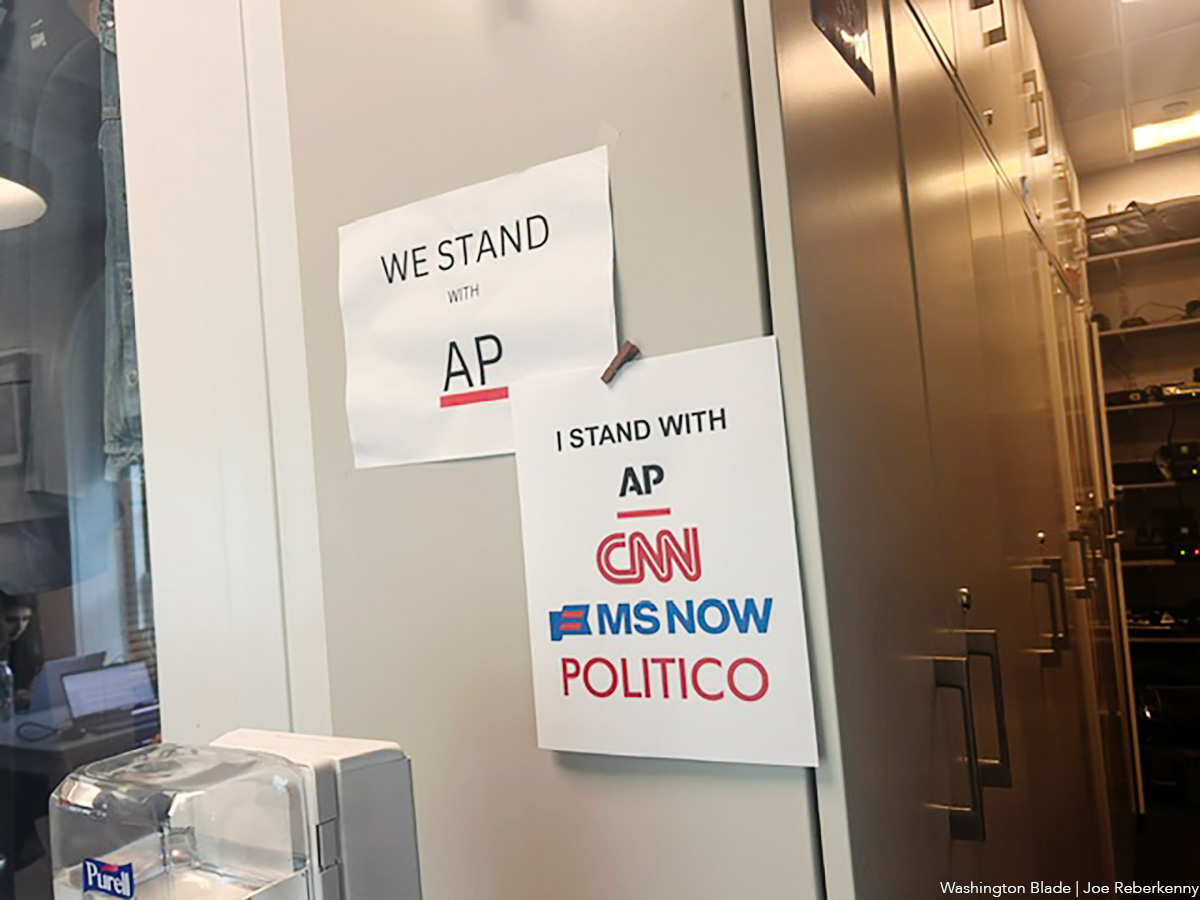
Last week, President Trump announced his unconstitutional ban of CNN, MSNow, and Politico from the White House. Coincidentally, on Monday, it was the Washington Blade’s turn to serve as the print pool reporter on duty covering the president’s actions that day. This important responsibility is shared and rotated among the print members with each serving roughly once per month. The Blade is the only LGBTQ outlet with a seat in the briefing room, a slot in the pool rotation, and membership in the White House Correspondents’ Association, something we fought for decades to secure after enduring years of discrimination, ridicule, and resistance to openly queer journalists working inside the White House. We take our responsibilities there seriously.
There are two pools that cover the president: broadcast and print. The other four members of the broadcast pool — ABC, CBS, NBC, and Fox News — agreed to boycott their pool duties. There has been no boycott among the print pool, which is a separate entity. I called the president of the White House Correspondents’ Association on Monday to confirm that no outlets in the print pool were boycotting.
A boycott by the Blade would set us back and lead to our expulsion from the pool and briefing room and our replacement by a right-wing outlet sympathetic to President Trump’s approach to attacking the media. The LGBTQ community is far better served with the Blade in the room than a far-right blogger taking our seat.
Let’s be clear: the Blade stands for diversity, equity, and inclusion and we stand for the First Amendment and freedom of the press. In solidarity with the broadcast pool, we made two important decisions on Monday — the first day anyone had to think about any of this. First, we refused to take or share any videos or still photos of the president, which would have undermined the broadcast boycott. Second, when Politico’s turn comes up for pool duty in mid-October, the Blade will not fill in and cover for them while they are banned. Politico must be readmitted and allowed to do their job.
After a rough day navigating and reporting on all of this, the Advocate published a reckless and inaccurate story suggesting that the Blade had crossed a picket line. Not true, as there is no print pool boycott. They claimed that I wouldn’t talk to their reporter. Also not true. I called their reporter within 90 minutes of receiving his message and he didn’t take the call or call me back. Their story named me and our White House reporter, immediately exposing us to public criticism and worse. The environment in D.C. is so toxic and even violent these days that subjecting our staff to unfair and false accusations like this invites harassment, doxxing, and worse. To do that without even talking to us is next level irresponsible and the antithesis of journalism.
On Tuesday, I talked to two reporters and an editor at the Advocate but they refused to retract anything in their inaccurate story. If the reporter had returned my call, I could have explained all of this but they are more concerned with clickbait and sensational headlines, a dangerous practice in these troubled times.
Back to the pool. The Blade was in the briefing room in the Reagan era, when Press Secretary Larry Speakes made jokes about AIDS and the reporters in the room laughed out loud. We endured all of that abuse and worse for decades, always standing in the back of the room and never being called on. The Blade’s journalists persevered. When President George W. Bush was re-elected in 2004, the Blade’s White House credentials were revoked amid an earlier press crackdown. Notably, no one boycotted or stood up for us. When Barack Obama won election in 2008, I received an email from his communications director informing me that effective midnight on Jan. 20, 2009, the Blade’s credentials would be restored.
So we have had quite a ride navigating administrations and their changing requirements for gaining access but always playing the long game. As Barney Frank used to say, “If you’re not at the table, then you’re probably on the menu.” The Blade is at the table and we do our best to ensure the LGBTQ community’s issues are addressed by both parties.
Thanks for reading and supporting the Blade’s work. If you have questions about our approach, you can reach me at [email protected].
Kevin Naff is editor of the Washington Blade. Reach him at [email protected].
Opinions
Young people should know history of the fight for human rights
Trump is working to erase contributions of marginalized people
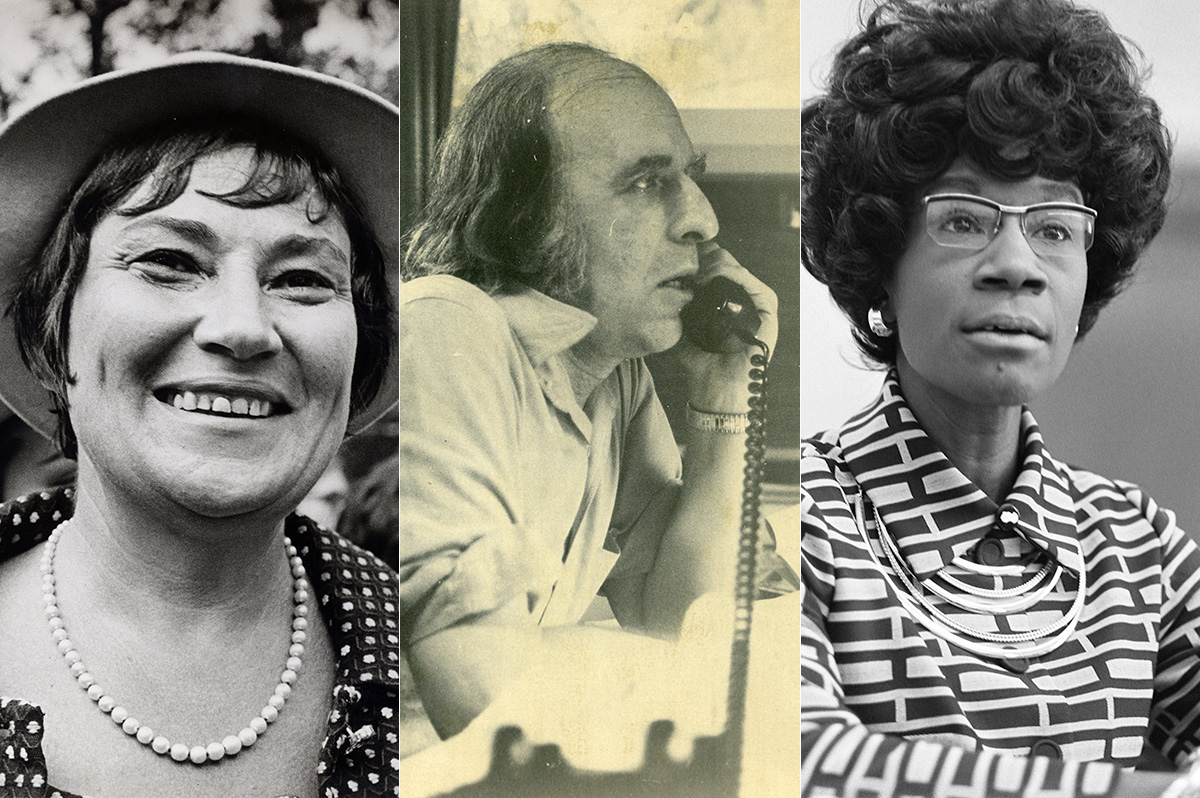
When talking with otherwise really smart young people, I am amazed how little knowledge many of them have about the fight for human rights in the United States. Our country was founded by white men, who didn’t think about giving full rights to Black Americans, women, the LGBTQ community (what they knew of it, or called it). They wrote in the Declaration of Independence, “We hold these truths to be self-evident, that all men are created equal, that they are endowed by their Creator with certain unalienable Rights, that among these are Life, Liberty and the pursuit of Happiness.” But that referred to all white men, and intentionally didn’t mention women. For 250 years, the country has been trying to make up for that, and making progress in fits and starts. We have yet to fully succeed. Today the felon, and his fascist aides, in the White House, are working daily to take us backwards.
For that reason alone, it is important for younger generations to understand the fight for human rights, know who was fighting for those rights, and understand it is an ongoing fight. Often, when listening to some millennials speak, one would think the world began with them. They either forgot, or never learned, about all those who fought for the rights they now have. I realize this was true for previous generations as well. In 2016 I co-hosted a fundraiser for Pete Buttigieg during his run for president. He is an undeniably brilliant guy. Yet when he spoke of marriage equality, he just thanked Justice Kennedy for it. I reminded him after he spoke, while it’s nice to thank Kennedy for his vote, it shouldn’t be done without acknowledging the many activists who worked for decades, to get to the point that allowed Kennedy to cast that vote. In the same way it was clear to me during the Hillary Clinton campaign for president, many young women didn’t understand the work many of their own mothers had done, to fight for their right to control their own healthcare, and women’s rights in general. They took for granted the rights they had. Now, after losing some of them, many will realize the fight for their rights is never-ending.
When I speak to younger members of the LGBTQ community, I am amazed how many don’t know the history of the AIDS epidemic, many thinking it was always a disease you could deal with by taking medication. They don’t understand the work so many activists did to bring attention to this devastating disease, and get the healthcare so many needed. Those like Cleve Jones, Larry Kramer, Dr. Anthony Fauci, and so many others. Recently, I realized how many young women don’t know the names of Gloria Steinem, Betty Friedan, Shirley Chisholm, Bella Abzug — women who fought for their rights. And this is just recent history, no less knowing about the Suffragettes, the strong women who fought for their right to vote. I’ve met young women who don’t know what the ERA is, and others who think it passed. Many don’t know the nation couldn’t get 38 states to approve an amendment to include them in the Constitution. The same for young members of the LGBTQ community who don’t know what the Equality Act is. Others think it passed, and are shocked when told it didn’t and in 27 states, they can be married on Sunday, and kicked out of their home, and fired from their job, on Monday. They don’t know names like Frank Kameny, Harvey Milk, Barney Frank, or the history of the Mattachine Society, or the Stonewall Riots.
Our current president is trying to wipe out all this history, and reverse any progress that has been made. Knowing this, it makes it even more important for school systems across the nation to fight to educate our children. We should ensure no child can graduate high school, without taking a course called “The 250-year fight for human rights in the United States.” They need to understand the history, and learn about the people who fought for their rights. They need to know how far we have come in 250 years, and understand, as we begin the next 250, how far we still have to go, to ensure real, full equality, for all.
Peter Rosenstein is a longtime LGBTQ rights and Democratic Party activist.
Opinions
How emerging drone tech can support LGBTQ workplace inclusion
Employers should establish clear policies governing data access

Workplace inclusion is increasingly becoming part of a broader conversation about employee safety, dignity, and equal access to secure working environments. For LGBTQ employees, an inclusive workplace is not simply one that communicates supportive values it is one where policies, infrastructure, and technology work together to help people feel protected and respected.
As organizations explore emerging technologies to strengthen workplace operations, drones are becoming a valuable tool for improving physical safety, situational awareness, and emergency preparedness. When deployed responsibly and with appropriate privacy safeguards, drone technology can contribute to safer workplaces without singling out employees based on identity.
Key Benefits of Drone Technology for Safety
- Reduced Employee Exposure to Hazards: Drones can inspect difficult or potentially dangerous areas without unnecessarily placing employees at risk.
- Faster Emergency Awareness: Aerial visibility can help safety teams assess incidents and make informed decisions more quickly.
- More Consistent Safety Coverage: Drones can support inspections across large workplaces, campuses, warehouses, and remote facilities.
- Safer, More Inclusive Environments: Technology can help organizations improve physical safety measures that protect employees equally, including LGBTQ team members.
- Privacy-Conscious Safety Practices: With responsible policies, drones can support workplace security without profiling individuals based on gender identity, sexual orientation, or other personal characteristics.
Improving Physical Workplace Safety
A clear application of drone technology lies in the inspection of facilities and infrastructure. Inspection of rooftops, industrial machines, construction zones, warehouses, remote locations, and other risky areas can be achieved using drones fitted with cameras and other sensors.
Such use of drone technology may help in reducing the risk of forcing employees to access such risky areas unnecessarily. Moreover, any technological advances in terms of improving workplace safety are equally beneficial to all workers irrespective of their sexual orientation, gender identity, and gender expression.
Supporting Emergency Preparedness and Response
An emergency can reveal flaws in your workplace safety program. In big settings like industrial campuses, warehouses, or outdoor workplaces, it might take security personnel longer to respond. Drones might supply better aerial visibility in several types of incidents. They make it possible to see circumstances rapidly, locate blocked paths, examine out- of-the-way or damaged areas and direct needed aid.
Enhanced situational awareness provides better answers while limiting exposure to risks. In a perfect safety world, all employees are served with dignity and attention while emergency actions are created with diversity in mind.
Creating Safer Shared Environments
Workplace safety also involves creating physical environments where employees can move through facilities confidently. Drone-based inspections can help organizations identify infrastructure concerns such as damaged lighting, inaccessible areas, perimeter issues, or other physical conditions that could create safety risks.
The technology does not need to identify who an employee is to provide value. Instead, organizations can use drones to evaluate spaces and infrastructure while maintaining clear boundaries around personal privacy.
This distinction is particularly important when discussing LGBTQ workplace inclusion. Technology designed for safety should protect employees rather than create an environment in which individuals feel watched, profiled, or treated differently.
Privacy Must Remain a Priority
The potential benefits of drones also come with important responsibilities. Cameras, sensors, and data collection capabilities can raise legitimate privacy concerns if organizations deploy them without transparent rules.
Employers considering workplace drone programs should establish clear policies governing where drones may operate, what information may be collected, who can access that information, and how long data is retained. Employees should also understand the purpose and boundaries of workplace drone operations.
Drone technology should never be used to infer, monitor, or profile an employee’s sexual orientation, gender identity, personal relationships, or other sensitive characteristics. Inclusion depends on trust, and responsible technology policies are essential to preserving that trust.
Technology Is Only Part of an Inclusive Workplace
No drone platform can create an inclusive workplace on its own. Meaningful LGBTQ inclusion still depends on organizational culture, anti-discrimination policies, fair employment practices, accessible reporting channels, employee education, and leadership accountability.
Technology can support these efforts by improving the physical conditions in which employees work. For example, drones may help reduce exposure to hazardous tasks or improve visibility during emergencies, while organizational policies ensure that these benefits are available fairly and respectfully.
Building Safety and Inclusion Together
As drone technologies continue to develop, there is a chance for businesses to expand their minds on what innovation should seek to achieve. Efficiency and increased operational intelligence are vital, but technology can equally play a part in creating safe and inclusive environments that show dignity to employees.
When it comes to LGBTQ employees, along with the workforce in general, the most effective approach to technology is one that enhances safety without threatening privacy and equality. Consequently, the future of workplace innovation should take into account not only what technology is capable of but also how wisely it is applied. By combining cutting-edge technologies like drones with responsible business practices, businesses can make strides in both areas at once.
Andrew Mabry is a technology researcher and analyst specializing in UAV and drone technology, AI, and emerging digital technologies.

529 openly LGBTQ candidates running in Brazilian election

Lesbian Bar Project co-founder: purity politics could destroy our remaining spaces

HRC report: LGBTQ students face ‘far greater challenges’ in non-supportive states

HRC National Dinner 2026: A night of music, activism, LGBTQ history

Trump asks Supreme Court to allow restrictions on gender-affirming care in prisons

‘Star Trek: Strange New Worlds’ star Celia Rose Gooding breaks down that finale time travel twist

Center for Black Equity’s annual gala to take place Oct. 3

Grace Meng sharply criticizes DOJ over hospital settlements

Former Capital Pride board member reiterates sexual harassment allegation

Calendar: September 25-October 1
-

 Television5 days ago
‘Star Trek: Strange New Worlds’ star Celia Rose Gooding breaks down that finale time travel twist
-
 District of Columbia5 days ago
Center for Black Equity’s annual gala to take place Oct. 3
-
New York4 days ago
Grace Meng sharply criticizes DOJ over hospital settlements
-
District of Columbia4 days ago
Former Capital Pride board member reiterates sexual harassment allegation