District of Columbia
Rainbow History Project WorldPride exhibition hit by vandalism
Organizers scramble to repair damaged exhibits in D.C.’s Freedom Plaza
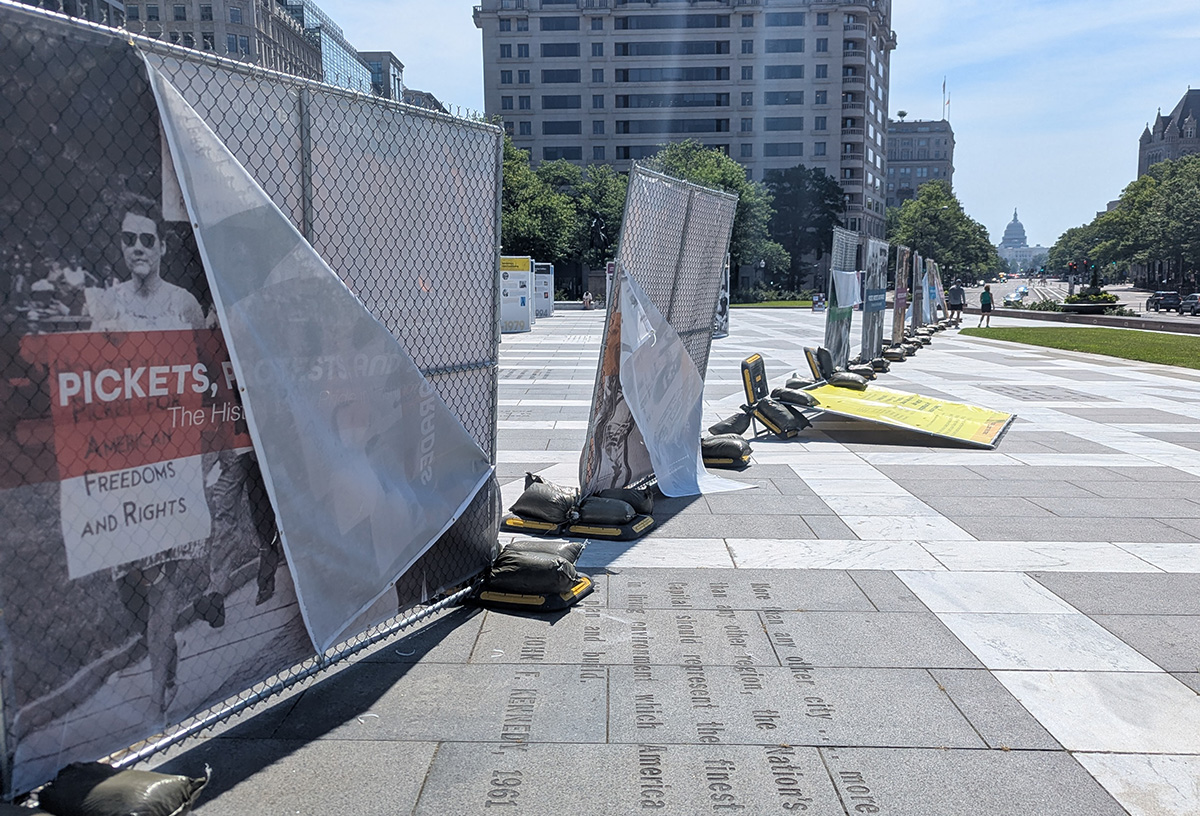
At least five of the multiple exhibits displayed in D.C.’s Freedom Plaza as part of the local Rainbow History Project’s WorldPride exhibition have been damaged by one or more vandals since the exhibition opened on May 18, according to Vincent Slatt, one of the exhibition’s lead organizers.
The most recent incident took place during the early morning hours of Sunday, June 22, when someone pulled down two of the exhibits displayed on decorated chain link fences, Slatt told the Washington Blade.
The Rainbow History Project exhibition, called “Pickets, Protests, and Parades: The History of Gay Pride in Washington,” has been available for public viewing 24 hours each day since it opened in Freedom Plaza, which is located near the White House on Pennsylvania Avenue, N.W. between 13th and 14th streets.
Slatt says it will remain open until its scheduled closing on July 6, regardless of efforts by vandals to strike at its individual LGBTQ exhibits.
“Covering 1965 to the present, the exhibition explores the history of Pride in D.C. in 10 distinct thematic eras,” a statement released by Rainbow History Project says. “Each of the 10 areas are detailed in thematic cubes rich with history and visuals,” it says.
Slatt said at least two instances of vandalism, including the June 22 incident, occurred between 11 p.m. and 6 a.m. during the time when a security guard working for a security company retained by Rainbow History Project was scheduled to be on duty at the Freedom Plaza site. But Slatt said the guard appears to have left before his shift was supposed to end, leaving the exhibition unsupervised.
“And so sometime during that security guard’s shift last night it happened,” said Slatt, referring to the two exhibits that were pulled down Sunday morning, June 22.
He said a decision was made later that day to fire the security company and retain another company to provide security for the 11 p.m. to 6 a.m. shift. Slatt said volunteers recruited by Rainbow History Project have been acting as “monitors” to secure the site during daytime and the evening up to 11 p.m. He said the group was unable to recruit volunteers to staff the shift from 11 p.m. to 6 a.m.
Rainbow History Project, according to Slatt, received a $1,000 payment invoice from the company that has been providing the metal fencing for the exhibits under a rental agreement after one of the vandals damaged two ten-foot-by-ten-foot fencing strips beyond repair last week.
Slatt said a possible suspect for acts of vandalism appeared in Freedom Plaza the day before the exhibition opened on May 17, as volunteers were setting up the exhibits.
“The first night we were out there we had a homophobe yelling at us when he saw the word gay,” said Slatt, who described the person as a white male with red hair and a red beard appearing in his 30s or 40s in age. “He’s been out here a couple of times preaching the Bible and yelling slurs,” Slatt said.
At least one witness, a homeless man who sometimes sleeps in Freedom Plaza at night, has reported seeing a man fitting that same description vandalizing an exhibit, Slatt told the Blade.
He said Rainbow History Project has reported the vandalism incidents to the U.S. Park Police, which has jurisdiction over Freedom Plaza. A Park Police officer who came to the site on June 22 to prepare a report on the latest incident advised exhibition volunteers to call police immediately if they see the male suspect return to the site.
As if all this were not enough, Slatt said a few of the exhibits that had been damaged by a vandal and were structurally weakened were blown down by high winds during the storm that hit the D.C. area on June 19. He said volunteer workers put everything back together over the next few days only to have the yet unidentified vandal or vandals pull down two other exhibits on June 22.



District of Columbia
Former Capital Pride board member reiterates sexual harassment allegation
Trans activist says resignation of board chair won’t change org’s culture
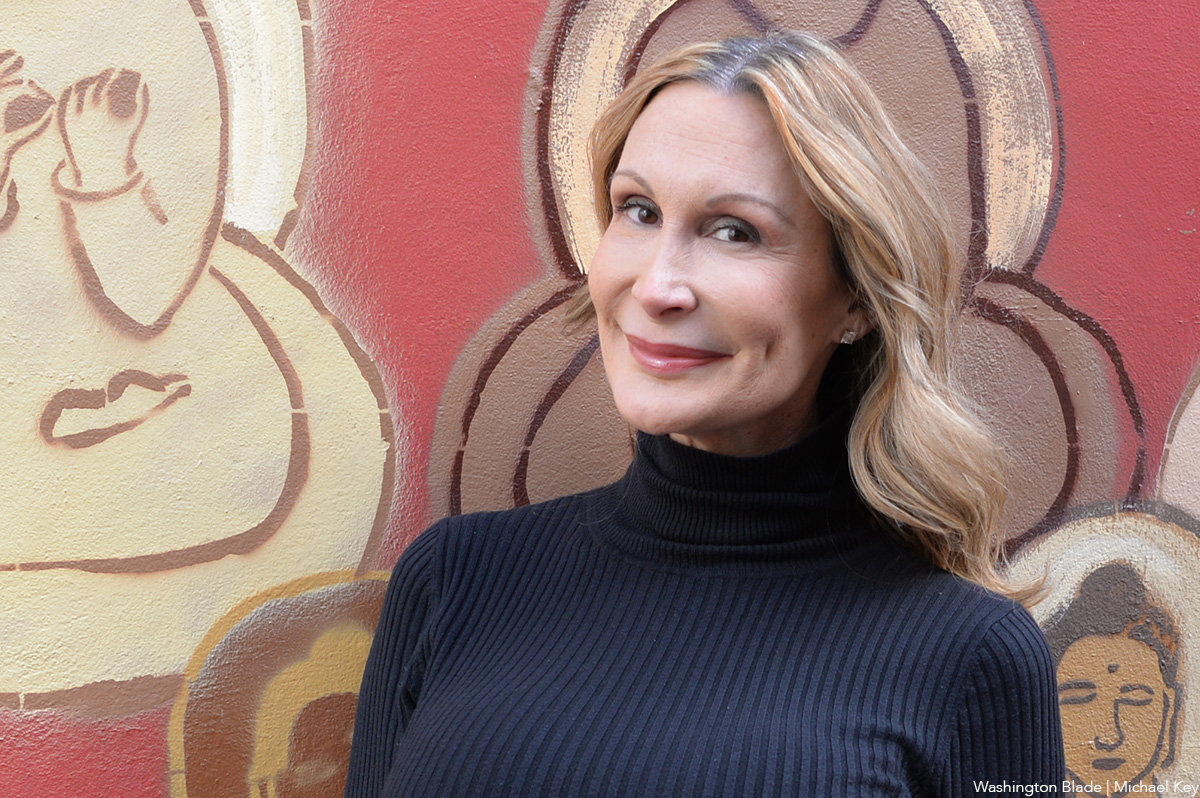
Taylor Lianne Chandler, who earlier this year resigned from the Capital Pride Alliance Board of Directors after expressing concern that the board failed to address instances of “sexual misconduct” within the Capital Pride organization, said this week she doesn’t believe her concerns will be addressed following the resignation of the board’s current chairperson.
Capital Pride Alliance serves as the lead organizer of D.C.’s annual LGBTQ Pride events.
Anna Jinkerson, who has served as chair of the Capital Pride board for only 10 months and has served on the board for the past four years, confirmed she is resigning from the board effective Sept. 30.
In a statement to the Washington Blade commenting on the possible impact of Jinkerson’s resignation, Chandler said Capital Pride board member Natalie Thompson would be replacing Jinkerson as board chair, and she didn’t expect that change to impact what she called Capital Pride’s problematic “culture.”
But Ryan Bos, the Capital Pride president and CEO, told the Blade that Thompson had not been selected as the new board chair and that a new chair would not be selected until the board holds an election scheduled for October.
Chandler, who identifies as transgender, said it was a Capital Pride board member who told her that Natalie Thompson had been or would be selected as the new Capital Pride board chair. She didn’t identify the board member.
“My concerns about how Capital Pride has handled serious allegations of sexual misconduct have not disappeared with a change in leadership,” she told the Blade in her statement. “When leadership continues to socialize, smile for photographs, and share spaces with someone facing serious allegations, what message does that send to the people who say they were harmed,” she said.
Chandler has told the Blade a Capital Pride investigation identified an individual implicated in a “pattern” of sexual harassment-related behavior but said she was bound by a Non-Disclosure Agreement that applied to all board members and she could not provide further details.
When asked by the Blade to comment on Chandler’s allegations at the time she resigned from the board in February of this year, board chair Jinkerson said Capital Pride acts “quickly and appropriately” to address concerns such as those raised by Chandler. But she and other Capital Pride officials did not at that time or since then specifically acknowledge whether someone associated with the organization engaged in sexual harassment.
“The community deserves transparency, accountability, and leadership willing to make difficult decisions,” Chandler said in her statement to the Blade this week. “Changing the chair doesn’t change the culture,” she added. “Actions do.”
In response to a request from the Blade for an update on its response to Chandler’s allegations about alleged sexual misconduct within the Capital Pride organization, Bos sent the Blade a statement on behalf of Capital Pride.
“The Capital Pride Alliance takes allegations of harassment, misconduct, and unsafe behavior seriously,” the statement says. “The organization follows standard procedures and engages appropriate resources to support a thorough, confidential, and impartial review, when information is reported.”
The statement adds, ”Because these matters require maintaining confidentiality and protecting the privacy of personnel, volunteers, and governance processes, we will not comment on specific individuals, allegations, investigative findings or communications involving law enforcement.”
It concludes by stating, “We remain committed to fostering a safe, respectful, and inclusive environment, appropriately addressing concerns raised, and continuing to strengthen our policies, governance practices, and organizational culture.”
Although the statement refers to “communications involving law enforcement,” Capital Pride has not disclosed whether instances of alleged sexual harassment or, as stated by Chandler, a possible instance of sexual assault, have been reported to D.C. police.
A D.C. police spokesperson, in response to a Blade inquiry, said they have no record of a sexual harassment or sexual assault complaint surfacing from the Capital Pride office, which is located in the D.C. LGBTQ+ Community Center building at 1827 Wiltberger Street, N.W.
But the Blade has obtained a D.C. police incident report that appears to confirm Capital Pride COO June Crenshaw’s claim in a recent Facebook post that she reported at least one incident of sexual harassment related to Capital Pride to D.C. police.
The report, which was filed on Oct. 11, 2025, states that Crenshaw told a police officer who prepared the report that another person told her “that a board member of Capital Pride Alliance groped his genitals at a Capital Pride event.” The report says Crenshaw told the officer the person who reported being groped “did not want to speak to the police at this time.”
The incident report, which is a public document, says the person who reported the groping told Crenshaw about it on Oct. 8, 2025. It concludes by saying Crenshaw was given “resource information” to provide to the person who said he was groped. It does not identify that person or the board member who allegedly committed the groping.
Officials at Capital Pride recently exchanged testy public Facebook posts with Chandler. Crenshaw criticized Chandler for her social media posts on the matter.
“It is remarkable to watch people publicly accuse others of failing to create safe spaces when, during the time they themselves held positions of leadership and significant volunteer responsibility, they claim to have witnessed deeply troubling behavior, yet never reported what they allegedly witnessed to fellow leaders, law enforcement, the Office of the Attorney General, legal counsel, or staff responsible for addressing such concerns,” Crenshaw wrote. “When I became aware of allegations or personally witnessed conduct that required intervention, I reported what I knew through the appropriate channels, including to law enforcement and other relevant authorities. Investigations were conducted. Those processes created records, documentation, correspondence, timelines, and conclusions.”
Chandler responded, “I was NOT in organizational leadership or fully informed about the scope of these allegations when much of what you reference occurred. I was read into the situation after becoming an executive officer. By that point, the investigation had already concluded, and we were awaiting the final report. … Once that report became available to me, and once I understood the seriousness and scope of what was being alleged, my position was anything but ambiguous: I did not believe this individual should be welcomed at, participate in, or have access to official Pride events.”
Capital Pride’s attorney Nick Harrison then joined the exchange, accusing Chandler of violating confidentiality rules.
“You served on the Board for years. You cannot now present yourself as an outsider with no responsibility for what occurred during your tenure,” Harrison wrote. “When the situation became difficult, you resigned, provided your resignation letter to the media, disclosed confidential organizational matters, and recast yourself as the victim.”
Again, no one has publicly identified the person Chandler references as being welcome at Pride events and photographed with Capital Pride leadership.
District of Columbia
Center for Black Equity’s annual gala to take place Oct. 3
Advocacy group to honor Black LGBTQ community champions
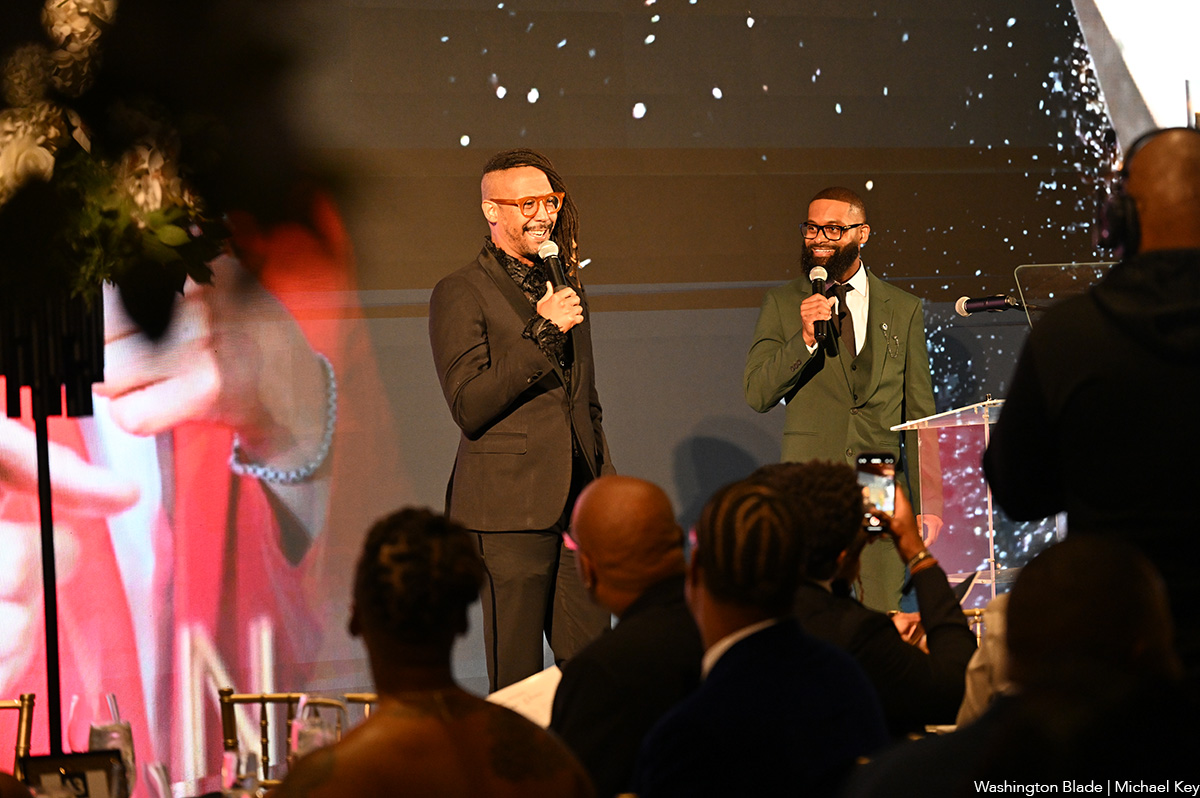
The Center for Black Equity, the D.C.-based international network of LGBTQ activists and organizations that advocate for Black LGBTQ communities and organize Black Pride events worldwide, will hold its annual 2026 BE Gala in D.C. on Oct. 3.
The event, to be held at the Conrad Washington Hotel at 950 New York Ave., N.W., among other things, will honor at least a dozen “distinguished Black individuals” and organizations that champion Black LGBTQ communities, according to a statement released by the Center for Black Equity.
“The honorees will receive awards recognizing extraordinary leadership, advocacy, and service across civil rights, public health, the arts, media, entrepreneurship, and community life,” the statement says.
“With an elegant atmosphere and a bold mission, this unforgettable evening brings together advocates, allies, and change makers committed to equity and joy,” the statement says in referring to the Oct. 3 BE Gala.
The statement notes that tickets for the event, which serves as a fundraiser for the Center of Black Equity, begin at $250 for individuals and include dinner and two drinks. It says reserved tables for eight were being offered for $2,000, and “Premier” tables for eight were selling for $2,500 and include seating near the stage.
“The BE Gala is more than an evening of celebration,” according to the statement. “It is an opportunity to honor Black LGBTQ+ leadership while investing in the work of the Center for Black Equity.”
Kenya Hutton, the Center for Black Equity’s CEO, told the Washington Blade the name “BE” for the gala is not an acronym. “The name is rooted in the idea of being: being seen, being celebrated and being fully and authentically yourself,” he said.
“BE Gala creates a space to celebrate Black LGGTQ+ people for who they are, the lives they lead and the impact they make,” he added.
The Center for Black Equity until 2012 was called the International Federation of Black Prides and was founded by organizers of D.C.’s Black Pride celebration.
Its current website includes a statement saying it’s mission is to “promote a multinational LGBTQ+ network dedicated to improving health and wellness opportunities, economic empowerment, and equal rights while promoting individua and collective work, responsibilities, and self-empowerment.”
The 2026 Center for Black Equity award honorees as announced in its statement released this week are:
Courtney Snowden: Welmore Cook Advocacy & Service Award
Clover Barnes: Ernest Hopkins Public Health Leadership Award
Nikki Alexander: Unsung Hero Award
Darryl G. Moore: Center for Black Equity Leadership Award
The Freelux Project: Center for Black Equity Small Business Award
Tori Cooper: Earline Budd Transgender Leadership Award
Bishop Steven R. Sawyer: Bishop Kwabena Rainey Cheeks Spiritual & Community Leadership Award
Rev. Carmarion D. Anderson-Harvey: Bishop Kwabena Rainey Cheeks Spiritual & Community Leadership Award
Monroe Alise: Trans Power in Media Award
Justin N. Stewart: National Black Pride Image Award
Marlene McNeese: Curtis L. Etherly Jr. Ally Award
Venton Jones: Eleanor Holmes Norton Civil Rights & Justice Award
In Our Own Voices, Inc.: Ruth Ellis Community Impact Award
District of Columbia
Being a female firefighter comes with unique risks, and rewards
Well-fitting gear can be a safety issue
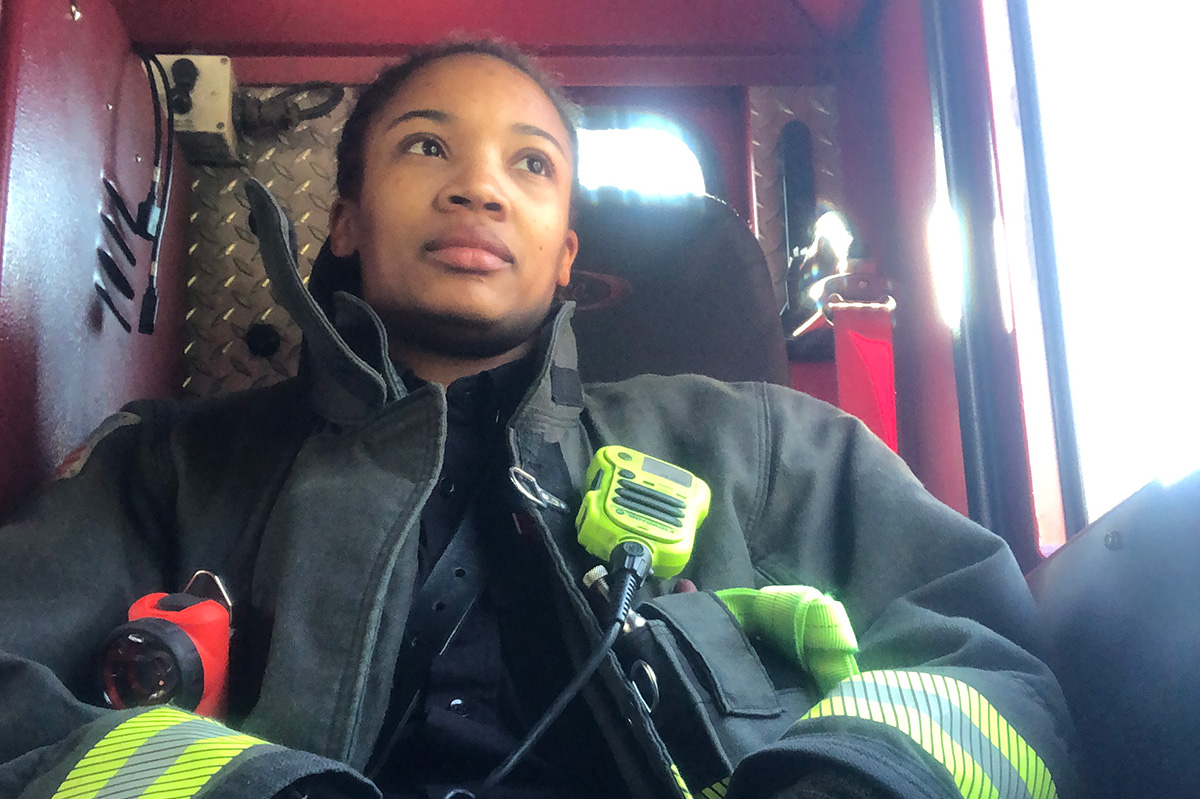
Firefighters are known for running into danger to save lives, but they may face another danger after the fire is out. Studies on firefighter health point to rising concerns about cancer risk, mental health struggles, and exposure to toxic “forever chemicals” found in firefighting foam and protective gear.
Nearly 40 percent of firefighters report “clinically significant levels” of anxiety or depression and 10 percent report this level of posttraumatic stress disorder, according to a national survey of public safety workers published last year in the journal Psychological Services. Lawmakers from several states are also pushing for stronger federal protections and compensation for firefighters exposed to hazardous chemicals on the job.
Female firefighters can also face a higher risk of injury, heat-related illness, and even greater carcinogen exposure due to ill-fitting equipment that wasn’t designed for their bodies. Their risk of psychological and workplace stress is higher, as well, due in part to the isolation of being in a slim minority in fire departments across the country. Only 5 to 9 percent of firefighters are women.
To understand the risks and rewards of being a female firefighter, Youthcast Media Group interviewed Connie Reid, a firefighter with the DC Fire and EMS Department. Meredith McQuerry, an associate professor of textile science at Florida State University who studies how to improve firefighting gear and other personal protective equipment to better protect women in the fire service, also responded to student questions via email. Reid’s and McQuerry’s responses have been edited for clarity and length.
HOW LONG HAVE YOU BEEN IN YOUR CAREER, AND WHAT DREW YOU TO IT?
REID: I’ve been a firefighter for seven years. I wasn’t sure if I wanted to be a firefighter or police officer, but I do have uncles that were firefighters, so I leaned towards the firefighter side. So I’m happy I made that decision.
McQUEERY: During my PhD, a colleague and I realized we never saw any female firefighters come through our research center. We began looking in the literature and found very few studies focused on PPE for women in the fire service.
DOES FIREFIGHTING GEAR ACTUALLY FIT WOMEN, AND DOES IT MATTER?
REID: In D.C., if you have an issue, you just send an email, and we have people who will properly size us. I don’t think any female that I know has complained about gear not fitting.
McQUERRY: Wearing protective clothing designed for the opposite sex can lead to restricted mobility, greater opportunity for thermal and particulate exposure, and a lack of functionality that can mean life or death, such as accessing a tool in a pocket that is completely closed off due to anthropometric differences.
There is a culture in the fire service, and especially for women in a male-dominated field, that suppresses the likelihood of advocating for better-fitting gear. While not within our area of expertise, we have done our best to raise awareness for the need for properly fitting gear for women in the fire service and to champion their self-advocacy.
Female firefighters report the inability to throw a ladder, step onto the truck, or cinch their pants down adequately due to ill-fitting protective clothing and equipment. One example is the interference between the helmet and the self-contained breathing apparatus which prevents many female firefighters from looking upward to throw a ladder without first twisting their neck sideways to avoid the lid of the helmet knocking into the respirator bottle. This type of modification can lead to acute and long term injury.
ARE THESE PROBLEMS MOSTLY ABOUT COMFORT? WHAT ARE SOME EXAMPLES OF SAFETY RISKS OR DANGERS THAT CAN HAPPEN WHEN GEAR DOES NOT FIT PROPERLY?
McQUERRY: All firefighters need properly fitting PPE as the primary threats center around carcinogen exposure, musculoskeletal injuries, and heat-related illnesses. For example, you have to work harder to do the same task in ill-fitting, mobility restrictive gear, which leads to faster metabolic heat production and build-up in the suit, quickening the onset of fatigue and other HRI.
Our previous work led us to hypothesize that oversized gear for women allowed for more particulate ingress in the interface areas including the collar/hood, sleeve/glove, boot/pant, and coat/pant areas. A recently funded study is allowing us to quantify this by correlating the gear fit of women’s structural turnout gear with their cancer biomarkers collected via urinalysis pre- and post-live fire burns.
HOW DO FIREFIGHTERS TRAIN TO STAY SAFE DURING DANGEROUS SITUATIONS?
REID: So we have trainings all the time. Safety is the number one priority of the job. They make sure they let us know all the time. We have annual trainings. We have quarterly trainings. We have online training if you need refreshers.
We are both on a medical side and a fire side so as a D.C. firefighter, you come in, and they teach you. You bring a positive attitude and just determination, because some people really don’t understand it’s not just physical, it’s mental. You have to be mentally prepared.
WERE THERE ANY FINDINGS IN YOUR RESEARCH THAT SURPRISED YOU?
McQUEERY: Yes, we were surprised to find in our nationwide survey [of 2,000 people] a few years ago that 15 percent of U.S. structural and 21 percent of wildland female firefighters sometimes or always leave off an essential item of their PPE due to limited mobility. Specifically, the turnout coat and pants or wildland shirt and pants were the most noted for being intentionally not worn, which is very surprising and concerning.
HAVE FIRE DEPARTMENTS OR EQUIPMENT COMPANIES STARTED MAKING IMPROVEMENTS SINCE YOUR STUDY, AND IF SO, WHY DO YOU THINK FIREFIGHTING EQUIPMENT HAS TAKEN SO LONG TO ADAPT TO WOMEN FIREFIGHTERS?
McQUEERY: It wasn’t until the post-Me Too movement that our research in this area was able to gain traction and support. It is a decades (or centuries) old problem of there not being enough “market share” for the 5-11 percent of the fire service. However, we have seen tremendous growth and innovation in this area since we began our funded research in 2019. Now, nearly every single structural firefighting manufacturer offers women’s protective clothing.
When we began this research, only two manufacturers offered women’s turnout gear. Now, to our knowledge, all but one [seven out of eight] does, which is a significant advancement across the industry. There is still much work to do in fine tuning these designs to fit the specific anthropometrics of female firefighters.
DO YOU WORRY ABOUT THE LONG TERM EFFECTS OF BEING A FIREFIGHTER?
REID: Do I worry? I wouldn’t say worry. I’m more mindful of it, because the material of today is different from years ago. It burns faster, and then there’s more chemically made things than like natural resources. So I’m aware of that. They also have training teaching us about things like that. And there’s smoke exposures, there’s a health risk like sleep deprivation or sleep disruption.
WHAT KIND OF EDUCATION OR TRAINING DO YOU NEED TO BECOME A FIREFIGHTER?
REID: So there’s a few routes to get onto the job. The cadet route would be … you have to be 18 to 21 years old, you have to be a D.C. resident, have a high school diploma from a D.C. school (public or private), or have a GED, and you have to have at least a learner’s permit at the time that you are applying for the job. To be a recruit, you have to be at least 18 years old, have a full driver’s license, (not just a permit), and you also have to have a high school diploma or GED. The third way [is as] a paramedic, and you have to come on the job with your paramedic license.
WHAT’S YOUR ADVICE FOR YOUNG WOMEN CONSIDERING THIS PATH?
REID: I would say, welcome. Come on the job. We need females. I always think it’s awesome when we get young ladies that are interested in the fire side. A lot of females just only want to do EMS. There’s nothing against EMS, but the fire side is pretty cool, too. Don’t sell yourself short, just try to do both of them. It’s a very rewarding job. You have to also mentally prepare yourself and physically prepare yourself. But I think the job is a great experience. I wish I would have started younger myself.
Mariyah Matthews is in the class of 2027 at Bard High School Early College DC, one of Youthcast Media Group’s journalism class partners. Sarah Gandluri is a YMG intern who is studying political science and global studies at the University of North Carolina at Chapel Hill.

Vote now! Best Of LGBTQ DC readers’ choice awards

Meet the LGBTQ candidates running for U.S. House, Senate

Ana Brnabić becomes world’s first openly lesbian head of state

529 openly LGBTQ candidates running in Brazilian election