Books
Our favorite books for holiday gifts
Hitchcock, Britney, Barbra, and more!
When it gets dark early, it’s cold outside and you want to spice up your life, what’s more intriguing than a book? Here are some holiday gift ideas for book lovers of all ages.
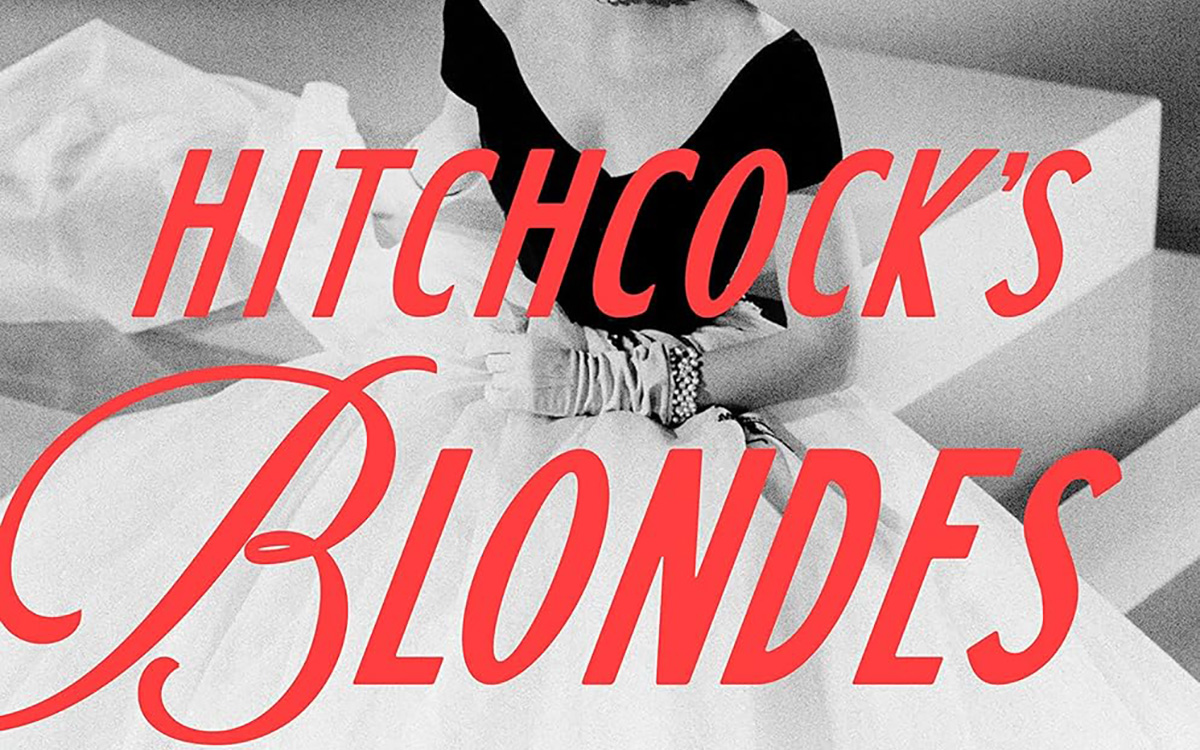
Who isn’t fascinated by the dark, twisty, sometimes, mordantly witty, movies of Alfred Hitchcock, or by Grace Kelly, Tippi Hedren, Ingrid Bergman and the other actresses in his films? “Hitchcock’s Blondes: The Unforgettable Women Behind the Legendary Director’s Dark Obsession” by Laurence Leamer, author of “Capote’s Women,” is an engrossing story not only of Hitchcock, but of the iconic “blondes” he cast in some of his most beloved movies from “39 Steps” to “Rear Window” to “Vertigo” to “Psycho.” $29. G.P. Putnam’s Sons.
Reading about Hitchcock, no matter how intriguing the book, is never as good as watching his films. “Alfred Hitchcock: The Essentials Collection” (Blu-ray $39.96. DVD: $32.40) features “Rear Window,” “North by Northwest,” “Psycho” and “The Birds.”
“Corona/Crown,” by D.C.-based queer poet Kim Roberts in collaboration with photographer Robert Revere, is a fab present for lovers of photography, museums, and poetry. Revere and Roberts were deeply affected by the closure of museums during the COVID pandemic. In this lovely chapbook, they create a new “museum” of their own. “This is what I learned when the pandemic struck,” Roberts writes, “when I couldn’t stop thinking about the artwork in all the museums, bereft of human eyes.” $21.25 WordTech Editions
Few things are as scary and/or captivating as a good ghost story. “The Night Side of the River,” by acclaimed lesbian writer Jeanette Winterson, author of “Why Be Happy When You Could Be Normal?” and “Oranges Are Not the Only Fruit,” is a provocative and engrossing collection of ghost stories. These deliciously chilling stories feature spirits, avatars, a haunted estate, AI and, pun intended, lively meetings between the living and the dead. $27. Grove.
“Blackouts,” a novel by queer writer Justin Torres that received this year’s National Book Award for fiction, is a breathtaking book about storytelling, queer history, love, art, and erasure. A perfect gift for aficionados of characters that become etched into your DNA. $30. Farrar, Straus & Giroux.
“The Woman in Me,” the memoir by Britney Spears will be devoured by queers of all ages – from tweens to elders. Much of Spears’s story is known – from her youth in Louisiana to her rapid rise to fame to her conservatorship (when her father controlled her life). Yet the devil, as the saying goes, is in the details. In this riveting memoir, Spears reveals the horrifying and exhilarating aspects of her life: from how her father controlled what she ate and when she took a bath to the restrictions put on her ability to see her sons to her love of singing, dancing, and creating music. Spears writes of the queer community’s “unconditional” love and support for her. $32.99. Gallery.
Few memoirs have been more eagerly anticipated than Barbra Streisand’s “My Name Is Barbra.” In its nearly 1,000 pages, EGOT-winning (Emmy, Grammy, Oscar and Tony), divine, queer icon Streisand, 81, tells seemingly everything about her life. She quarreled with Larry Kramer over filming “The Normal Heart.” It didn’t work out: Streisand thought mainstream audiences would be turned off by explicit sex scenes. Marlon Brando and Streisand were good friends, she loves Brazilian coffee ice cream and her mother was a horror show. Contrary to how some lesser mortals see her, she doesn’t see herself as a diva. The print version of “My Name is Barbra” is fab. The audio version, a 48-hour listen, which Streisand narrates, is even better. $47. Viking. $45 on Audible.
“Chasing Rembrandt,” by Richard Stevenson is a terrific gift for mystery lovers. Richard Stevenson was the pseudonym for Richard Lipez, the out queer author, who wrote witty, engaging mysteries featuring the openly gay detective Donald Strachey. Sadly, Stevenson died in 2022. But, “Chasing Rembrandt,” a novel featuring Strachey and his romantic partner Timmy, was published this year. The idea for the story was sparked by a real-life incident when paintings were stolen from the Isabella Stewart Gardner Museum. “Robbers wreak havoc, smashing the glass covers protecting masterpieces and slicing paintings out of their frames,” Stevenson writes at the beginning of this entertaining story, “They make off with thirteen works, including three Rembrandts and a Vermeer, worth more than half a billion dollars and beloved in the world of art. It is arguably the greatest property theft in human history.”
With the repartee of Nick and Nora and the grit of Philip Marlowe, Strachey works to solve this mystery. $16.95. ReQueered Tales.
Some books never get old. “The Wild Things,” the beloved children’s picture book written and illustrated by acclaimed gay writer and illustrator Maurice Sendak, was published in 1963. Sixty years later, the Caldecott Medal-winning classic is still loved by three to five-year-olds, their parents, siblings, aunts, and uncles. A new digital audio version of “Where the Wild Things Are,” narrated by Michelle Obama, was released this fall. Who can resist the Wild Things, when they plead: “Oh, please don’t go–we’ll eat you up–We love you so!”? Widely available in hard cover, paperback and e-book format. Audio: $5.50.
What’s more fun than playing a festive album while you’re reading during the holidays? Deck the halls! This year, queer icon Cher has released “Christmas,” her first holiday album. Highlights of the album include: Cher singing with Cyndi Lauper on “Put A Little Holiday In Your Heart,” Stevie Wonder on “What Christmas Means to Me” and Darlene Love on “Christmas (Baby, Please Come Home)” and the rapper Tyga on “Drop Top Sleigh Ride.” The perfect gift for Cher aficionados.
The Blade may receive commissions from qualifying purchases made via this post.




Books
Risking it all for love during World War II
New book follows story of Black, gay expat in Paris
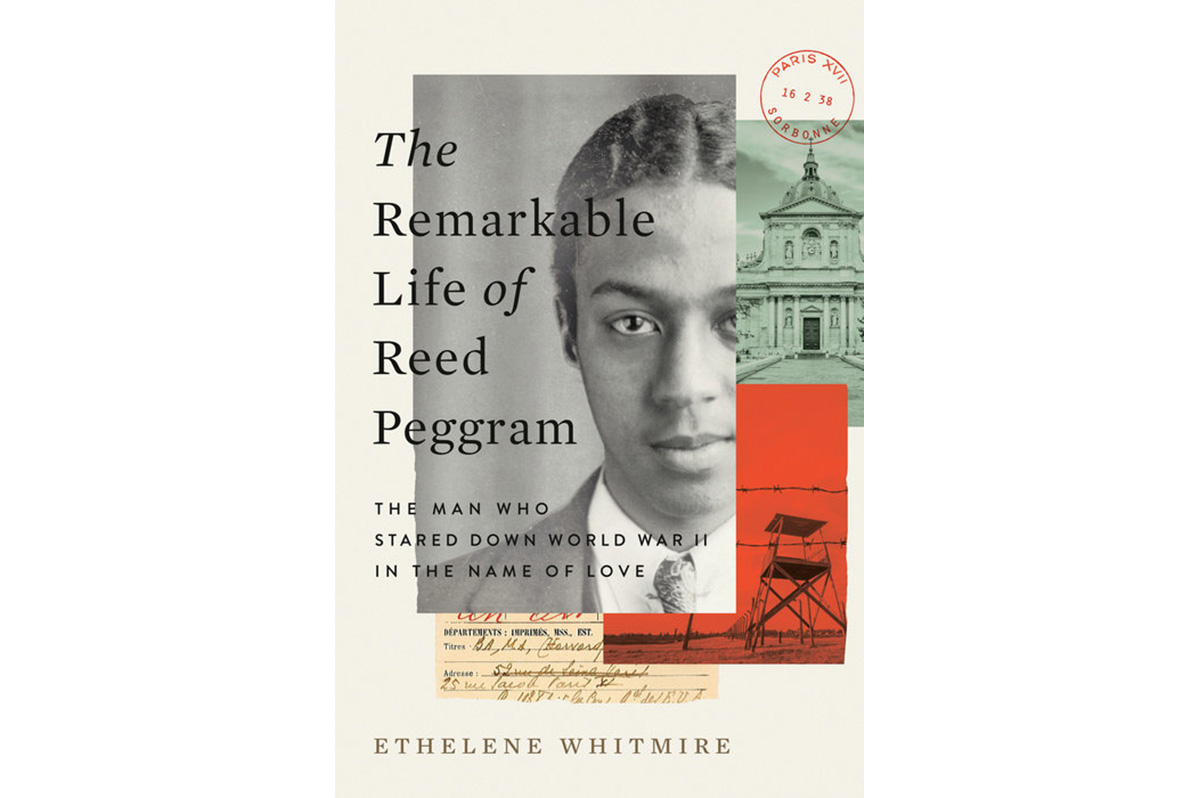
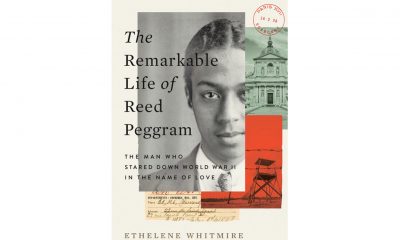
‘The Remarkable Life of Reed Peggram’
By Ethelene Whitmire
c.2026, Viking
$30/308 pages
You couldn’t escape it.
When you fell in love, that was it: you were there for good. Leaving your amour’s side was unthinkable, turning away was impossible. You’d do anything for that person you loved – even, as in the new biography, “The Remarkable Life of Reed Peggram” by Ethelene Whitmire, you’d escape toward danger.

On Aug. 28, 1938, Reed Peggram boarded a ship from Hoboken, N.J., hoping to “become a proper gentleman” and fulfill his dreams. A prolific writer and Harvard scholar of comparative literature, he’d recently been awarded the Rosenwald Fellowship, which put him in the company of literary stars like Du Bois, Hurston, and Hughes.
Both Peggram’s mother and grandmother were then domestic workers, and they had big expectations for him. Reed himself was eager to study abroad, for professional and personal reasons; he was “determined to become a French professor and an accomplished linguist” and “He also hoped to find love.”
What better place to do it than in Paris?
Outgoing and confident, Peggram made friends easily and had no trouble moving “through the world of his white male peers.” Where he faltered was in his lack of funds. He relied on the kindness of his many friends – one of whom introduced Peggram to a “man who would become so pivotal in his life,” a Danish man named Arne.
Peggram and Arne had a lot in common, and they began to enmesh their lives and dreams of living in the United States. But there were complications: homosexuality was largely forbidden, World War II was in its early stages, and it quickly became apparent that it was dangerous to stay in Europe.
And yet, Peggram loved Arne. He refused to leave without him and so, while most visiting Black Americans fled the war in Europe, “Reed was trying to stay.”
There’s so much more to the story inside “The Remarkable Life of Reed Peggram,” so much to know about Reed himself. Problem is, it’s a long haul to get to the good stuff.
In her introduction, author Ethelene Whitmire explains how she came to this tale and yes, it needs telling but probably not with the staggering number of inconsequential details here. Peggram moved homes a lot, and many people were involved in keeping him in Europe. That alone can be overwhelming; add the fact that costs and other monetary issues are mentioned in what seems like nearly every page, and you may wonder if you’ll ever find the reason for the book’s subtitle.
It’s there, nearly halfway through the book, which is when the tale takes a tender, urgent turn — albeit one with determination, rashness, and a dash of faux nonchalance. Also, if you’re expecting an unhappily-ever-after because, after all, it’s a World War II tale, don’t assume anything.
Reading this book will take a certain amount of patience, so skip it if you don’t have that fortitude. If you’re OK with minuscule details and want a heart-pounder, though, “The Remarkable Life of Reed Peggram” might be a good escape.
The Blade may receive commissions from qualifying purchases made via this post.
Books
Laverne Cox, Liza Minnelli among authors with new books
A tome for every taste this reading season
Spring is a great time to think about vacations, spring break, lunch on the patio, or an afternoon in the park. You’ll want to bring one (or all!) of these great new books.
So let’s start here: What are you up for? How about a great new novel?
If you’re a mystery fan, you’ll want to make reservations to visit “Disaster Gay Detective Agency” by Lev AC Rosen (Poisoned Pen Press, June 2). It’s a whodunit featuring a group of gay roommates, one of whom is a swoony romantic. Add a mysterious man who disappears and a murder, of course, and you’ve got the novel you need for the beach.
Don’t discount young adult books, if you want something light to read this spring. “What Happened to Those Girls” by Carlyn Greenwald (Sourcebooks Fire, June 30) is a thriller about mean girls and a camping trip that goes terribly, bloodily wrong. Meant for teens ages 14 and up, young adult books are breezier and lighter fare for the busy grown-up reader.
If you loved “Boyfriend Material” and “Husband Material,” you’ll be eager for the next installment from author Alexis Hall. “Father Material” (Sourcebooks Casablanca, June 2) takes Luc and Oliver to the next step. First was dating. Then was marriage. Is it time for the sound of pitter-patter on the kitchen floor?
Maybe something even lighter? Then how about a book of essays – like “The Terrible, Horrible, No Good, Very Bad Gay” bycomedian and writer Eliot Glazer (Gallery Books, Aug. 11). It’s a book of essays on being gay today, the irritations, the joys, and fitting in. Be aware that these essays may contain a bit of spice – but isn’t that what you want for your reading pleasure anyhow, hmmm?
But okay, let’s say you want something with a little more heft to it. How about a biography?
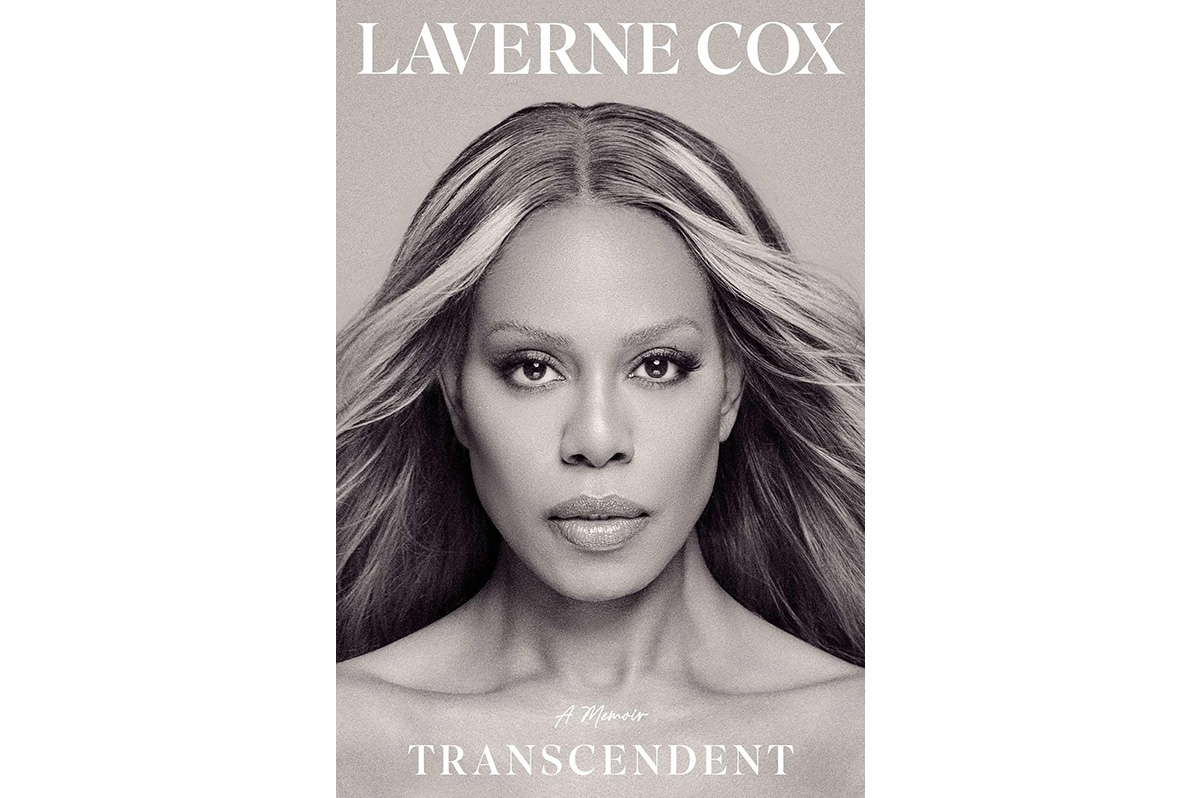
Look for “Transcendant” by Laverne Cox (Gallery Books, June 9), or “Kids, Wait Till You Hear This” by Liza Minnelli (Grand Central Publishing, March 10), and “Every Inch a Lady” by Audrey Smaltz with Alina Mitchell (Amistad, July 14). Keep your eyes open for “Without Prejudice: My Life as a Gay Judge” by Harvey Brownstone (ECW Press, May 26) or “The Double Dutch Fuss” by Phill Branch (Amistad, June 2).
Then again, maybe you want some history, or something different.
So here: look for “Queer Saints: A Radical Guide to Magic, Miracles, and Modern Intercession” by Antonio Pagliarulo (Weiser, June 1) for a little bit of faith-based gay. Music lovers will want “Mighty Real: A History of LGBTQ Music, 1969-2000” by Barry Walters (Viking, May 12). Activists will want “In the Arms of Mountains: A Memoir of Land, Love, and Queer Resistance in Red America” byformer Idaho state Sen. Cole Nicole LeFavour (Beacon Press, May 26).
And if these books aren’t enough, then be sure to check with your favorite bookseller or librarian. They’ll have exactly what you’re in the mood to read. They’ll find what you need for that patio, beach towel, or easy chair.
Books
Love or fear flying you’ll devour ‘Why Fly’
New book chronicles a lifetime obsession with aircraft
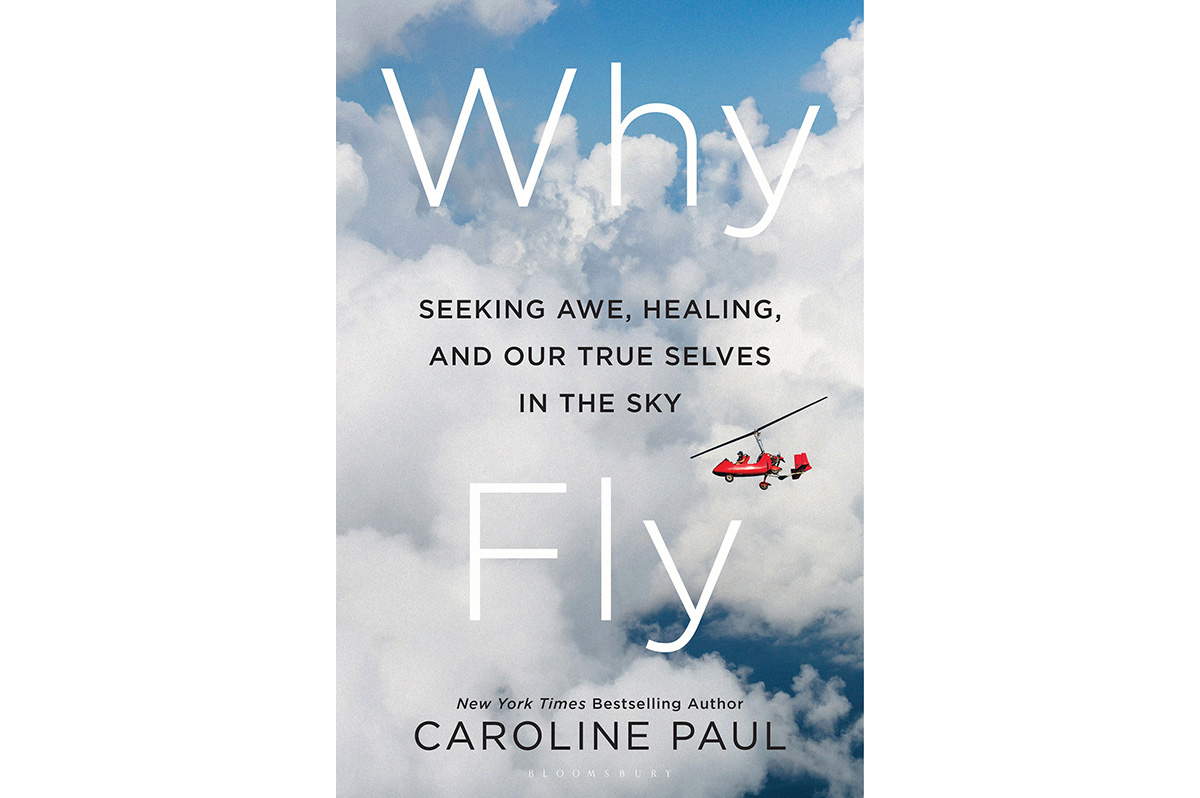
‘Why Fly’
By Caroline Paul
c. 2026, Bloomsbury
$27.99/256 pages
Tray table folded up.
Check. Your seat is in the upright position, the airflow above your head is just the way you like it, and you’re ready to go. The flight crew is making final preparations. The lights are off and the plane is backing up. All you need now is “Why Fly” by Caroline Paul, and buckle up.
When she was very young, Paul was “obsessed” with tales of adventure, devouring accounts written by men of their derring-do. The only female adventure-seeker she knew about then was Amelia Earhart; later, she learned of other adventuresome women, including aviatrix Bessie Coleman, and Paul was transfixed.
Time passed; Paul grew up to create a life of adventure all her own.
Then, the year her marriage started to fracture, she switched her obsession from general exploits to flight.
Specifically, Paul loves experimental aircraft, some of which, like her “trike,” can be made from a kit at home. Others, like Woodstock, her beloved yellow gyrocopter, are major purchases that operate under different FAA rules. All flying has rules, she says, even if it seems like it should be as freewheeling as the birds it mimics.
She loves the pre-flight checklist, which is pure anticipation as well as a series of safety measures; if only a relationship had the same ritual. Paul loves her hangar, as a place of comfort and for flight in all senses of the word. She enjoys thinking about historic tales of flying, going back before the Wright Brothers, and including a man who went aloft on a lawn chair via helium-filled weather balloons.
The mere idea that she can fly any time is like a gift to Paul.
She knows a lot of people are terrified of flying, but it’s near totally safe: generally, there’s a one in almost 14 million chance of perishing in a commercial airline disaster – although, to Paul’s embarrassment and her dismay, it’s possible that both the smallest planes and the grandest loves might crash.
If you’re a fan of flying, you know what to do here. If you fear it, pry your fingernails off the armrests, take a deep breath, and head to the shelves. “Why Fly” might help you change your mind.
It’s not just that author Caroline Paul enjoys being airborne, and she tells you. It’s not that she’s honest in her explanations of being in love and being aloft. It’s the meditative aura you’ll get as you’re reading this book that makes it so appealing, despite the sometimes technical information that may flummox you between the Zen-ness. It’s not overwhelming; it mixes well with the history Paul includes, biographies, the science, heartbreak, and exciting tales of adventure and risk, but it’s there. Readers and romantics who love the outdoors, can’t resist a good mountain, and crave activity won’t mind it, though, not at all.
If you own a plane – or want to – you’ll want this book, too. It’s a great waiting-at-the-airport tale, or a tuck-in-your-suitcase-for-later read. Find “Why Fly” and you’ll see that it’s an upright kind of book.
The Blade may receive commissions from qualifying purchases made via this post.

Trump’s war threats trigger rare 25th Amendment discussion

A Sondheim masterpiece ‘Merrily’ rolls onto Netflix

ROSENSTEIN: Vote McDuffie for mayor of D.C.

New book celebrates 1970s dance music icons

Report: Grenell wants Russian ambassadorship

Risking it all for love during World War II

D.C. is the place for the Democratic Socialists of America

PHOTOS: The Bonnet Ball

Key lifestyle changes can help patients cope with diabetes