State Department
Blinken visits Nigeria
State Department has not said whether LGBTQ rights specifically raised
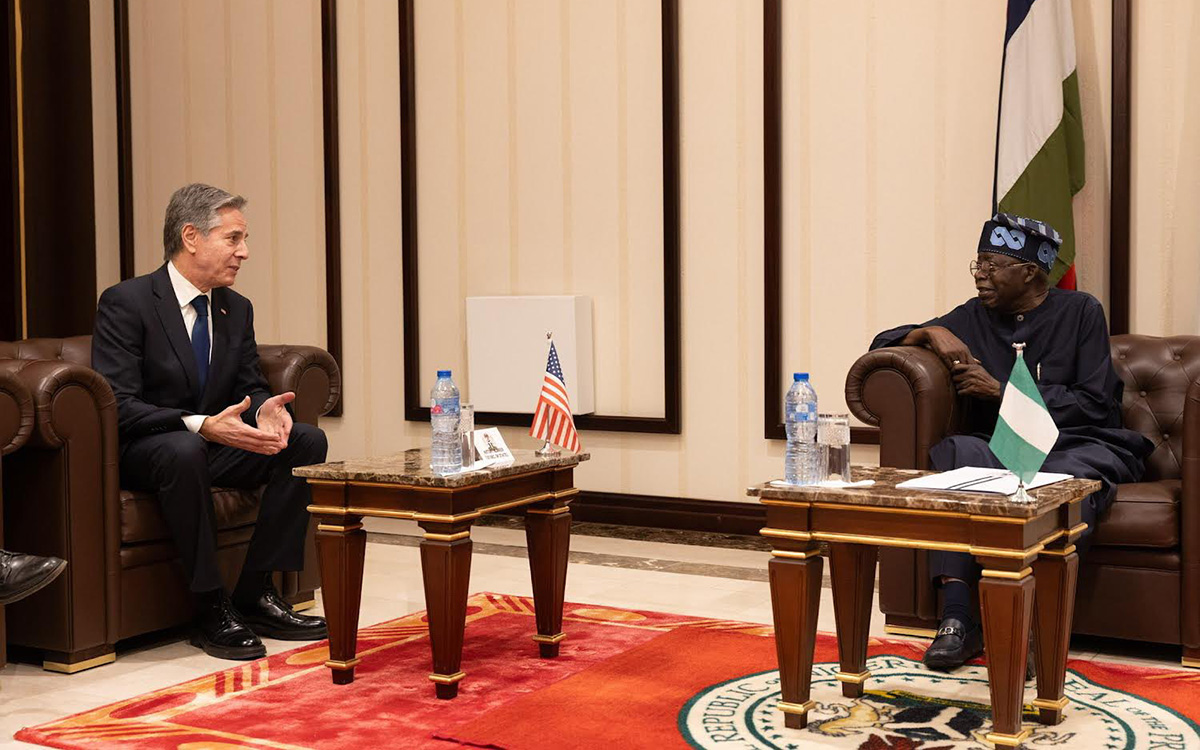
The State Department has not said whether Secretary of State Antony Blinken specifically raised LGBTQ rights during his trip to Nigeria last week.
Blinken was in the country between Jan. 23-24. He also visited Cabo Verde, Cote d’Ivoire and Angola while in Africa.
A State Department spokesperson on Jan. 26 told the Washington Blade that Blinken while in Africa “had private conversations with public sector representatives engaged in the health field and with civil society representatives involved in human rights, democracy, education and food security work.”
A Jan. 24 post on Blinken’s X account includes a picture of him meeting with representatives of Nigerian civil society organizations. The post does not indicate whether any of those with whom Blinken met represent LGBTQ advocacy groups and/or identify as LGBTQ.
“Nigerian civil society organizations are critical to strengthening institutions and protecting human rights,” said Blinken. “I sat down with a few leaders to discuss the U.S.-Nigeria partnership to work on shared challenges and deliver on the fundamental aspirations of our peoples.”
Blinken also visited the Nigerian Institute of Medical Research in Lagos, the country’s largest city.
“The work that the U.S. and Nigeria are doing together goes back to the start of the HIV/AIDS epidemic and the extraordinary PEPFAR (President’s Emergency Plan for AIDS Relief) program,” said Blinken on a Jan. 24 X post. “I had the opportunity to tour the Nigerian Institute of Medical Research and see firsthand the work they are doing to improve public health.”
Blinken on Jan. 23 met with President Bola Tinubu in Abuja, the Nigerian capital, and later held a joint press conference with Foreign Affairs Minister Yusuf Tuggar.
“As I told the president and the foreign minister, the United States will support Nigeria as it works to bring about a more secure, a more peaceful and a more prosperous future for its people,” said Blinken.
“Fundamentally, this outcome is an investment in the foundations of an inclusive, democratic society — a focus on equal opportunity for all regardless of ethnicity, religion or any other group distinction,” he added. “That helps build the social cohesion. That also deters banditry, deters terrorism, deters violent extremism.”
Blinken during the press conference also highlighted PEPFAR and its work in Nigeria.
“Over the last 20 years, we’ve invested $8.3 billion in HIV and tuberculosis prevention, care, and treatment and in strengthening the public health system, reaching millions of Nigerians,” he said. “That effort will continue.”
President Joe Biden in 2021 signed a memo that commits the U.S. to the promotion of LGBTQ and intersex rights abroad as part of his administration’s overall foreign policy.
Vice President Kamala Harris last March spoke about LGBTQ rights during a press conference with Ghanaian President Nana Akufo-Addo in Accra, the country’s capital.
Ghana and Nigeria are among the countries in which consensual same-sex sexual relations remain criminalized. Homosexuality remains punishable by death in areas of Nigeria that are under Sharia law.
Then-Nigerian President Goodluck Jonathan in 2014 signed the Same-Sex Marriage Prohibition Act that, among other things, punishes those who enter into a same-sex marriage in his country with up to 14 years in prison and bans membership in an LGBTQ advocacy group.
Authorities in Gombe state last October arrested 76 people who were “celebrating homosexual birthdays” and planning to “hold a same-sex marriage.”
Police in Delta state last August took into custody more than 200 people who were attending a same-sex wedding at a hotel. Authorities later paraded some of those who were arrested in front of journalists.
“In our own programming and diplomatic engagements, we work with international partners in bilateral and multilateral forums to encourage strong and sustained support for democratic governance, respect for the human rights of all, labor rights, media freedom, a strong civil society and government transparency and accountability,” said the State Department spokesperson with whom the Blade spoke on Jan 26.
The spokesperson earlier in the week noted the promotion of “democracy, good governance and respect for human rights of all persons is at the center of our foreign policy, including in our relationships with our African partners.”


State Department
Democracy Forward files FOIA request for State Department bathroom policy records
April 20 memo outlined anti-transgender rule
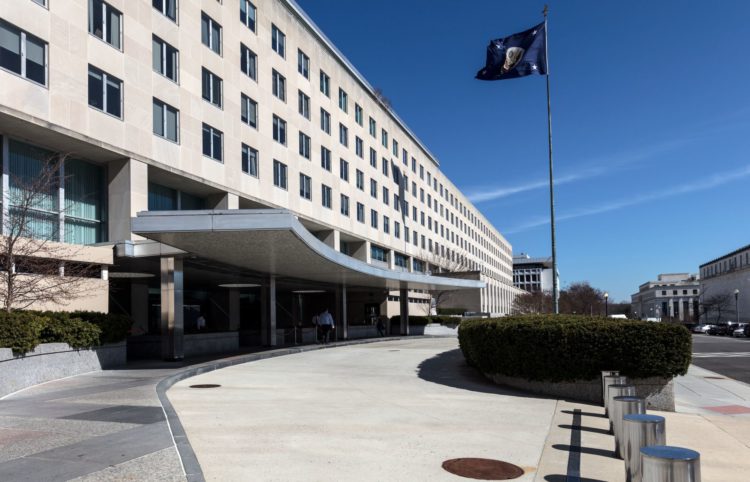
Democracy Forward on Tuesday filed a Freedom of Information Act request for records on the State Department’s new bathroom policy.
A memo titled “Updates Regarding Biological Sex and Intimate Spaces, Including Restrooms” that the State Department issued on April 20 notes employees can no longer use bathrooms that correspond with their gender identity.
“The administration affirms that there are two sexes — male and female — and that federal facilities should operate on this objective and longstanding basis to ensure consistency, privacy, and safety in shared spaces,” State Department spokesperson Tommy Piggot told the Daily Signal, a conservative news website that first reported on the memo. “In line with President Trump’s executive order this provides clear, uniform guidance to the department by grounding policy in biological sex as determined at birth.”
President Donald Trump shortly after he took office in January 2025 issued an executive order that directed the federal government to only recognize two genders: male and female. The sweeping directive also ordered federal government agencies to “effectuate this policy by taking appropriate action to ensure that intimate spaces designated for women, girls, or females (or for men, boys, or males) are designated by sex and not identity.”
Democracy Forward’s FOIA request that the Washington Blade exclusively obtained on Tuesday is specifically seeking a copy of the memo that details the State Department’s new bathroom policy. Democracy Forward has also requested “all” memo-specific communications between the State Department’s Bureau of Global Public Affairs and the Daily Signal from April 1-21.
State Department
State Department implements anti-trans bathroom policy
Memo notes directive corresponds with White House executive order
The State Department on April 20 announced employees cannot use bathrooms that correspond with their gender identity.
The Daily Signal, a conservative news website, reported the State Department announced the new policy in a memo titled “Updates Regarding Biological Sex and Intimate Spaces, Including Restrooms.”
The State Department has not responded to the Washington Blade’s request for comment on the directive.
“The administration affirms that there are two sexes — male and female — and that federal facilities should operate on this objective and longstanding basis to ensure consistency, privacy, and safety in shared spaces,” State Department spokesperson Tommy Piggot told the Daily Signal. “In line with President Trump’s executive order this provides clear, uniform guidance to the department by grounding policy in biological sex as determined at birth.”
President Donald Trump shortly after he took office in January 2025 issued an executive order that directed the federal government to only recognize two genders: male and female. The sweeping directive also ordered federal government agencies to “effectuate this policy by taking appropriate action to ensure that intimate spaces designated for women, girls, or females (or for men, boys, or males) are designated by sex and not identity.”
The Daily Signal notes the new State Department policy “does not prohibit single-occupancy restrooms.”
State Department
Report: US to withhold HIV aid to Zambia unless mineral access expanded
New York Times obtained Secretary of State Marco Rubio memo
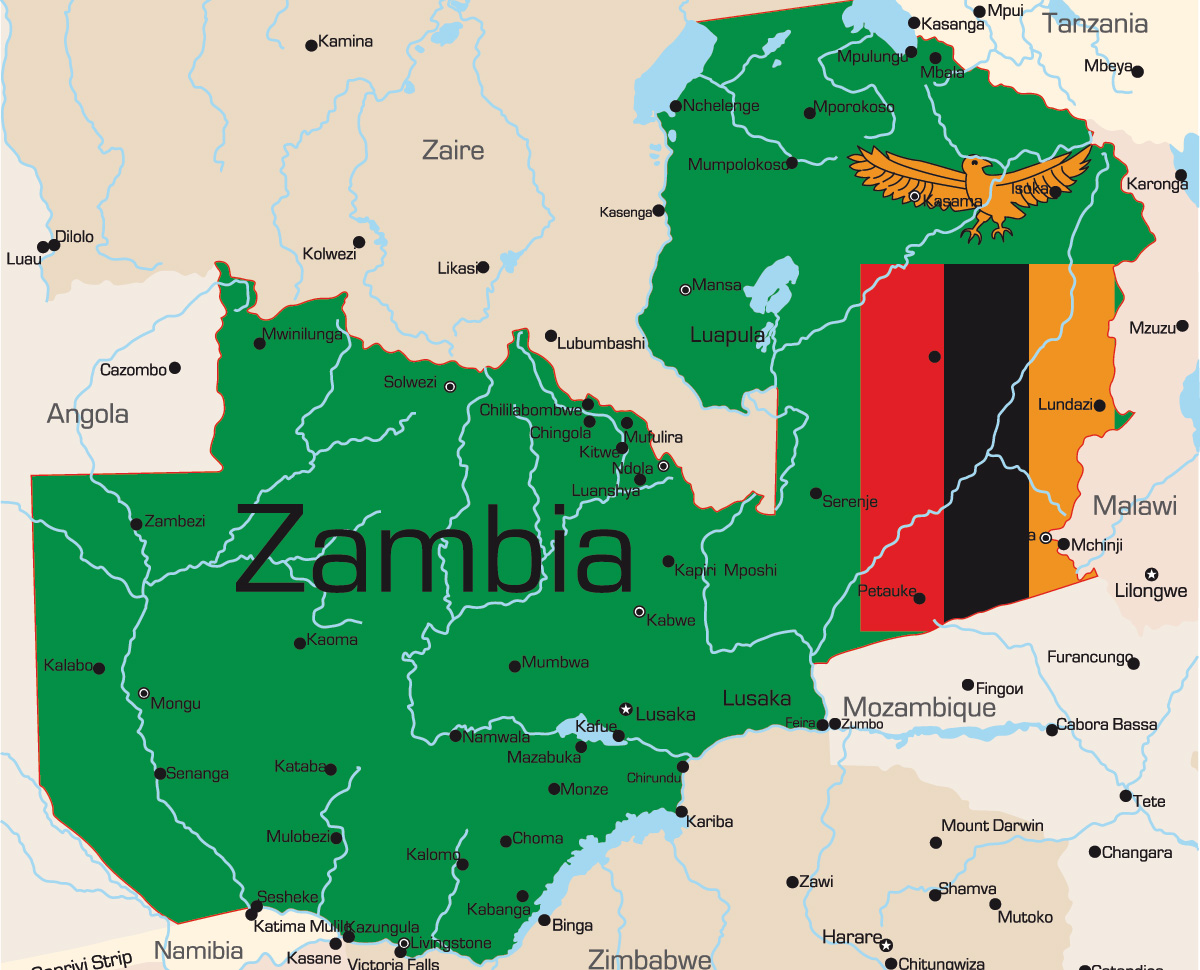
The State Department is reportedly considering withholding assistance for Zambians with HIV unless the country’s government allows the U.S. to access more of its minerals.
The New York Times on Monday reported Secretary of State Marco Rubio in a memo to State Department’s Bureau of African Affairs staffers wrote the U.S. “will only secure our priorities by demonstrating willingness to publicly take support away from Zambia on a massive scale.” The newspaper said it obtained a copy of the letter.
Zambia is a country in southern Africa that borders Tanzania, Malawi, Mozambique, Zimbabwe, Botswana, Namibia, Angola, and the Democratic Republic of Congo.
The Times notes upwards of 1.3 million Zambians receive daily HIV medications through PEPFAR. The newspaper reported Rubio in his memo said the Trump-Vance administration could “significantly cut assistance” as soon as May.
“Reports of (the) State Department withholding lifesaving HIV treatment in return for mining concessions in Zambia does not make us safer, stronger, or more prosperous,” said U.S. Sen. Jeanne Shaheen (D-N.H.), the ranking member of the Senate Foreign Relations Committee, on Tuesday. “Monetizing innocent people’s lives further undermines U.S. global leadership and is just plain wrong.”
The Washington Blade has reached out to the State Department for comment.
Zambia received breakthrough HIV prevention drug through PEPFAR
Rubio on Jan. 28, 2025, issued a waiver that allowed PEPFAR and other “life-saving humanitarian assistance” programs to continue to operate during a freeze on nearly all U.S. foreign aid spending. HIV/AIDS service providers around the world with whom the Blade has spoken say PEPFAR cuts and the loss of funding from the U.S. Agency for International Development, which officially closed on July 1, 2025, has severely impacted their work.
The State Department last September announced PEPFAR will distribute lenacapavir in countries with high prevalence rates. Zambia two months later received the first doses of the breakthrough HIV prevention drug.
Kenya and Uganda are among the African countries have signed health agreements with the U.S. since the Trump-Vance administration took office.
The Times notes the countries that signed these agreements pledged to increase health spending. The Blade last month reported LGBTQ rights groups have questioned whether these agreements will lead to further exclusion and government-sanctioned discrimination based on sexual orientation and gender identity.

529 openly LGBTQ candidates running in Brazilian election

Lesbian Bar Project co-founder: purity politics could destroy our remaining spaces

HRC report: LGBTQ students face ‘far greater challenges’ in non-supportive states

HRC National Dinner 2026: A night of music, activism, LGBTQ history

Trump asks Supreme Court to allow restrictions on gender-affirming care in prisons

‘Star Trek: Strange New Worlds’ star Celia Rose Gooding breaks down that finale time travel twist

Center for Black Equity’s annual gala to take place Oct. 3

Grace Meng sharply criticizes DOJ over hospital settlements

Calendar: September 25-October 1

Tyler Clementi Foundation to host fundraiser in Rehoboth
-

 Television5 days ago
‘Star Trek: Strange New Worlds’ star Celia Rose Gooding breaks down that finale time travel twist
-
 District of Columbia5 days ago
Center for Black Equity’s annual gala to take place Oct. 3
-
New York4 days ago
Grace Meng sharply criticizes DOJ over hospital settlements
-
Calendar4 days ago
Calendar: September 25-October 1