Caribbean
St. Vincent and the Grenadines judge dismisses challenges to country’s sodomy laws
‘Freedom and equality are worth fighting for’
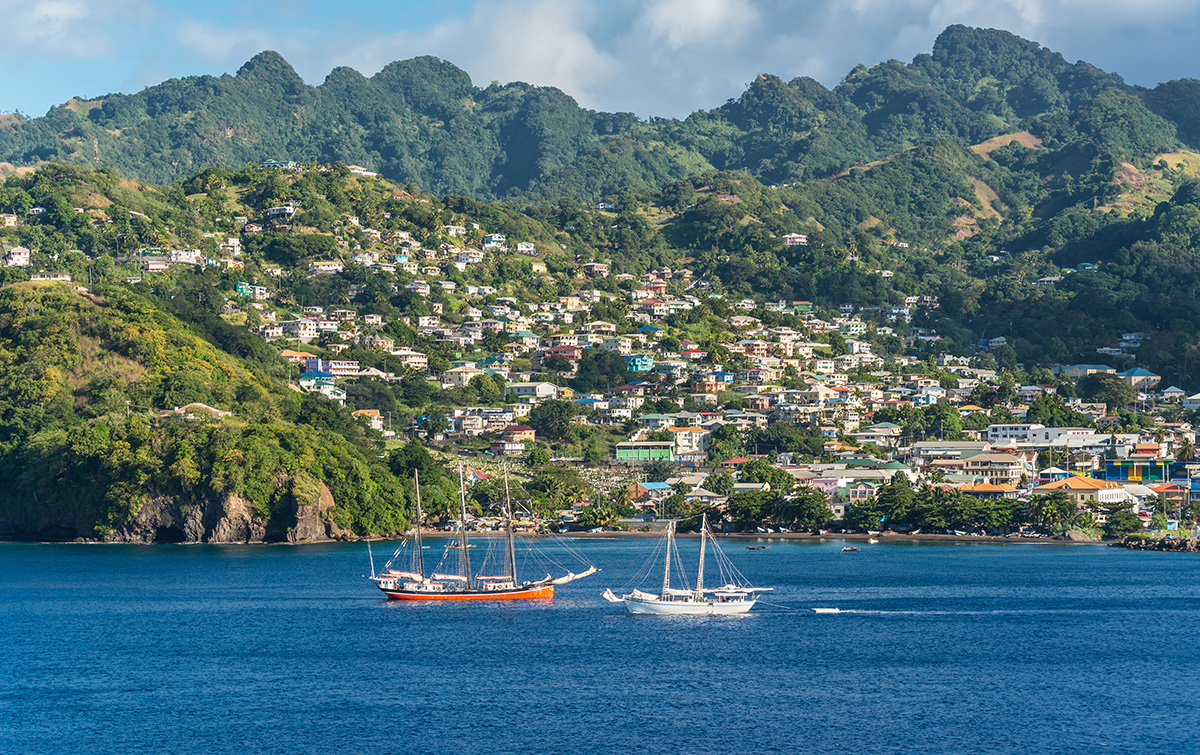
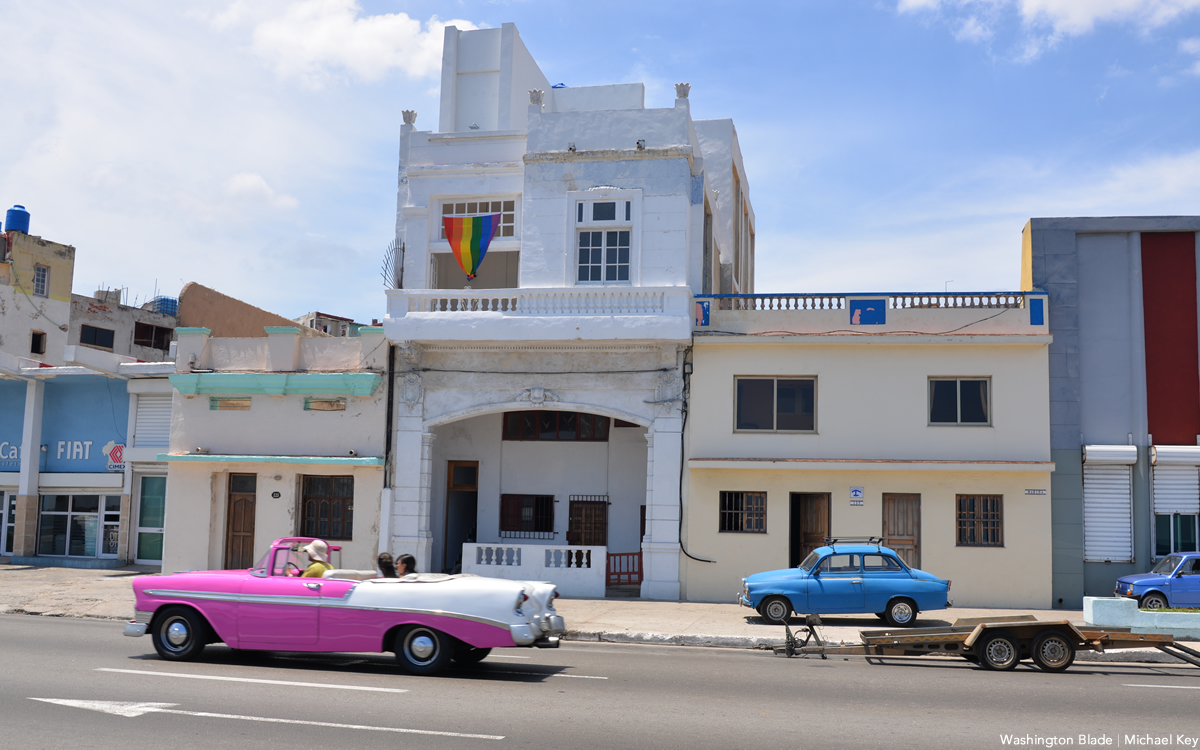
A judge on St. Vincent and the Grenadines’ top court on Friday dismissed two cases that challenged the country’s sodomy laws.
Two gay men from St. Vincent, the country’s main island, in 2019 challenged laws that criminalize consensual same-sex sexual relations. High Court Justice Esco Lorene Henry on Friday dismissed the two cases.
Sean Macleish, one of the two plaintiffs who lives in the U.S., expressed disappointment in the decision.
“I am disappointed with the judge’s ruling and will be discussing our options with my legal team because freedom and equality are worth fighting for,” Macleish told the Washington Blade on Friday in an email.
Jeshua Bardoo, a lawyer who founded Equal Rights, Access and Opportunities SVG, a Vincentian advocacy group, said Friday is a “sad day for LGBTQ+ rights in Saint Vincent and the Grenadines.”
“Internationally and regionally, laws similar to those challenged in these cases have been declared unconstitutional and in violation of the rights of LGBTQ+ persons,” said Bardoo in a press release the Eastern Caribbean Alliance, a regional LGBTQ rights group, issued. “These archaic and draconian colonial laws, though not strictly enforced, symbolically denigrate LGBTQ+ persons as second-class citizens in their own country and perpetuate prejudice and stigma against them.”
Outright International Executive Director Maria Sjödin also criticized the ruling.
“The rejection of the bid to decriminalize same-sex conduct in Saint Vincent and the Grenadines is a huge disappointment and significant setback for LGBTQ rights in the country,” said Sjödin. “We urge the government to reconsider its position and take meaningful steps towards ensuring the full protection and dignity of all citizens, regardless of their sexual orientation or gender identity.”
Antigua and Barbuda, St. Kitts and Nevis, Barbados and Trinidad and Tobago in recent years have decriminalized consensual same-sex sexual relations.
The Inter-American Commission on Human Rights in 2021 ruled Jamaica must repeal its colonial-era sodomy law. The country’s Supreme Court last year ruled against a gay man who challenged it.



Cuba
Cuba bajo presión y sin respuestas
Cubanos no hablan en términos geopolíticos. Hablan de sobrevivir

Las tensiones entre Estados Unidos y Cuba han vuelto a subir de tono. No es algo nuevo, pero este momento se siente distinto. Las medidas más recientes desde Washington buscan cerrar aún más los espacios financieros del gobierno cubano, limitar sus fuentes de ingreso y presionar sectores clave de la economía. No es simbólico. Es una política directa.
Desde Estados Unidos, el mensaje es claro. Se busca provocar cambios que no han ocurrido en más de seis décadas. También hay un componente interno, una presión política que responde a sectores del exilio que llevan años exigiendo una postura más dura. Todo eso forma parte del escenario.
Pero esa es solo una parte.
Del lado cubano, la respuesta sigue un patrón conocido. El gobierno habla de agresión externa, de guerra económica, de un embargo que se endurece. Cada medida se convierte en argumento para reforzar su narrativa y cerrar filas. No hay espacio para reconocer errores propios. Todo apunta hacia afuera.
Mientras tanto, la vida en la isla va por otro camino.
La crisis energética que hoy vive Cuba no empezó con estas medidas. Lleva años acumulándose. El sistema eléctrico está deteriorado, sin mantenimiento suficiente, con fallas constantes. Los apagones no son nuevos. Lo que ha cambiado es la frecuencia y la duración.
Durante años entró petróleo a Cuba, especialmente desde Venezuela. Hubo acuerdos. Hubo suministro. Y aun así, la vida del cubano no mejoró. La electricidad seguía fallando, el combustible seguía racionado, el transporte seguía siendo un problema diario.
Entonces la pregunta sigue siendo la misma.
Si el petróleo estaba entrando, ¿por qué nada cambiaba?
¿Dónde fue a parar ese recurso?
¿Dónde está el dinero que generó?
Hoy se habla de restricciones al petróleo como si fueran la causa principal de la crisis. No lo son. Empeoran una situación ya frágil, pero no la explican completamente.
Hay una historia más larga que no se puede ignorar.
Lo mismo ocurre con las brigadas médicas.
Durante años se presentaron como un gesto de solidaridad internacional. Y en muchos casos lo fueron. Médicos cubanos trabajaron en condiciones difíciles, salvaron vidas, sostuvieron sistemas de salud en otros países. Eso es real.
Pero también funcionaron como una de las principales fuentes de ingreso del Estado cubano.
Muchos de esos profesionales no recibían el salario completo por su trabajo. Una parte significativa quedaba en manos del gobierno. En algunos casos, ni siquiera tenían control sobre el dinero que generaban.
Y hay algo más duro.
Si uno de esos médicos decidía no regresar a Cuba, ese dinero no llegaba a su familia. Se quedaba retenido.
Hoy varios países están revisando o cancelando esos acuerdos. Y otra vez, la respuesta oficial es señalar hacia afuera. Pero la pregunta sigue siendo inevitable.
¿Se está perdiendo un modelo de cooperación o un sistema que dependía del control sobre sus propios profesionales?
Dentro de Cuba, la conversación suena diferente.
La gente no habla en términos geopolíticos. Habla de sobrevivir. De cómo llegar al final del día. De los apagones, de la comida que no alcanza, del transporte que no aparece, de una vida que cada vez se hace más difícil.
Hay quienes miran las medidas de Estados Unidos con cierta expectativa. No porque quieran más escasez, sino porque sienten que el sistema no cambia por sí solo. Hay una sensación de estancamiento que pesa.
Pero esa expectativa convive con una realidad concreta.
Las sanciones no golpean primero a quienes toman decisiones. Golpean al ciudadano común. Al que hace la fila. Al que pierde la comida por falta de electricidad. Al que no tiene cómo moverse.
Esa es la contradicción.
El gobierno cubano pide solidaridad internacional. Y la recibe. Países que envían ayuda, organizaciones que se movilizan, voces que defienden a la isla.
Pero hay otra pregunta que también está ahí.
¿Esa ayuda llega realmente al pueblo?
La falta de transparencia en la distribución de recursos es parte del problema. Porque no se trata solo de lo que entra, sino de lo que realmente llega a quienes lo necesitan.
Reducir lo que pasa en Cuba a un conflicto entre dos gobiernos es no querer ver el cuadro completo.
Aquí hay responsabilidades compartidas, pero no iguales.
Estados Unidos ejerce presión con efectos reales sobre la economía cubana. Eso no se puede negar. Pero dentro de la isla hay un sistema que ha tenido décadas para corregir, para abrir, para responder a su gente, y no lo ha hecho.
Esa parte no se puede seguir esquivando.
Yo escribo esto como cubano. Desde lo que vi, desde lo que viví y desde la gente que sigue allá tratando de resolver el día.
Porque al final, más allá de lo que se diga entre gobiernos, la realidad es otra.
Cuba hoy está más apretada, sí. Pero también lleva años arrastrando problemas que nadie ha querido enfrentar de verdad.
Y mientras eso siga así, da igual lo que venga de afuera. El problema sigue estando adentro.
Tensions between the U.S. and Cuba are rising again. This is not new, but the current moment feels different. Recent measures from Washington aim to further restrict the Cuban government’s financial channels, limit its sources of revenue, and apply pressure to key sectors of the economy. This is not symbolic. It is a deliberate policy.
From the U.S. perspective, the message is clear. The goal is to force change that has not happened in more than six decades. There is also a domestic political dimension, shaped by sectors of the Cuban exile community that have long demanded a tougher stance. All of this is part of the landscape.
But that is only one side.
On the Cuban side, the response follows a familiar script. The government speaks of external aggression, economic warfare, and a tightening embargo. Each new measure becomes an opportunity to reinforce that narrative and close ranks. There is no room for public self-criticism. The blame always points outward.
Meanwhile, life on the island follows a different logic.
The energy crisis Cuba is facing today did not begin with these recent measures. It has been building for years. The electrical system is deteriorated, poorly maintained, and increasingly unreliable. Blackouts are not new. What has changed is how severe and how constant they have become.
For years, oil entered Cuba, especially from Venezuela. There were supply agreements. There were resources. And yet, the daily life of ordinary Cubans did not improve. Electricity remained unstable. Fuel was rationed. Transportation was still a daily struggle.
So the question is not new.
If the oil was there, why didn’t anything change?
Where did those resources go?
Where is the money that was generated?
Today, restrictions on oil are often presented as the main cause of the current crisis. They are not. They make an already fragile situation worse, but they do not fully explain it.
There is a deeper, longer story that cannot be ignored.
The same applies to Cuba’s international medical missions.
For years, they were presented as acts of solidarity. And in many cases, they were. Cuban doctors worked in difficult conditions, saving lives and supporting health systems abroad. That is real.
But they also functioned as one of the Cuban state’s main sources of income.
Many of these professionals did not receive the full salary for their work. A significant portion was retained by the government. In some cases, they had little or no control over the money they generated.
And there is a harsher reality.
If a doctor chose not to return to Cuba, that income often did not reach their family. It was withheld.
Today, several countries are reevaluating or canceling these agreements. Once again, the official response is to point outward. But the same question remains.
Is this the loss of international cooperation, or the collapse of a system built on control over its own professionals?
Inside Cuba, the conversation sounds very different.
People are not speaking in geopolitical terms. They are talking about survival. About getting through the day. About blackouts, food shortages, transportation problems, and a life that keeps getting harder.
Some see the new U.S. measures as a form of pressure that could lead to change. Not because they want more hardship, but because they feel the system does not change on its own. There is a deep sense of stagnation.
But that sense of expectation exists alongside a harsh reality.
Sanctions do not hit decision-makers first. They hit ordinary people. The ones standing in line. The ones losing food during power outages. The ones who cannot move because there is no fuel.
That is the contradiction.
The Cuban government calls for international solidarity. And it receives it. Countries send aid. Organizations mobilize. Public voices defend the island.
But another question is also present.
Does that aid actually reach the people?
The lack of transparency in how resources are distributed is part of the problem. Because this is not only about what enters the country, but about what actually reaches those who need it.
Reducing Cuba’s reality to a dispute between two governments avoids the core issue.
There are shared responsibilities, but they are not equal.
The U.S. exerts external pressure with real economic consequences. That cannot be denied. But inside Cuba, there is a system that has had decades to reform, to respond, to open, and it has not done so.
That part cannot continue to be ignored.
I write this as a Cuban. From what I lived. From what I know. From the people who are still there trying to make it through each day.
Because at the end of the day, beyond what governments say or decide, the reality is something else.
Cuba today is under more pressure, yes. But it has also spent years carrying problems that no one has seriously confronted.
And as long as that remains the case, it does not matter what comes from outside. The problem is still inside.
Dominican Republic
Dominican court strikes down police, military sodomy ban
Nov. 18 ruling ‘a decisive step’ against discrimination
The Dominican Republic’s Constitutional Court on Nov. 18 ruled the country’s National Police and Armed Forces cannot criminalize consensual same-sex sexual relations among its members.
Human Rights Watch in a press release notes the landmark decision struck down Article 210 of the National Police’s Code of Justice and Article 260 of the Armed Forces’ Code of Justice.
Police officers and servicemembers who engaged in same sex “sodomy” faced up to two years or one year in prison respectively. Human Rights Watch in its press release said the provisions violated “constitutional guarantees to nondiscrimination, privacy, free development of personality, and the right to work” in the Dominican Republic.
“For decades, these provisions forced LGBT officers to live in fear of punishment simply for who they are,” said Cristian González Cabrera, a senior Human Rights Watch researcher. “This ruling is a resounding affirmation that a more inclusive future is both possible and required under Dominican law.”
Consensual same-sex sexual relations have been legal in the Dominican Republic since 1822, more than two decades before it declared independence from neighboring Haiti.
The Armed Forces Code of Justice had been in place since 1953. The National Police Code of Justice took effect in 1966.
Anderson Javiel Dirocie de León and Patricia M. Santana Nina challenged the policies in court.
“This decision marks a decisive step toward ensuring that these institutions, as well as any public or private body, adapt their rules and practices to guarantee that no person is discriminated against or sanctioned for their sexual orientation,” said Santana in the press release.
Dominican law does not ban discrimination based on sexual orientation or gender identity in employment, education, housing, and other areas. The country’s constitution defines marriage as between a man and a woman.
James “Wally” Brewster, who was the U.S. ambassador to the Dominican Republic from 2013-2017, is openly gay. Religious leaders frequently criticized him and his husband, Bob Satawake.
Brewster in a text message to the Washington Blade said the Constitutional Court ruling is “important.”

Trump’s war threats trigger rare 25th Amendment discussion

A Sondheim masterpiece ‘Merrily’ rolls onto Netflix

ROSENSTEIN: Vote McDuffie for mayor of D.C.

New book celebrates 1970s dance music icons