Sports
Brittney Griner considered suicide in Russian prison
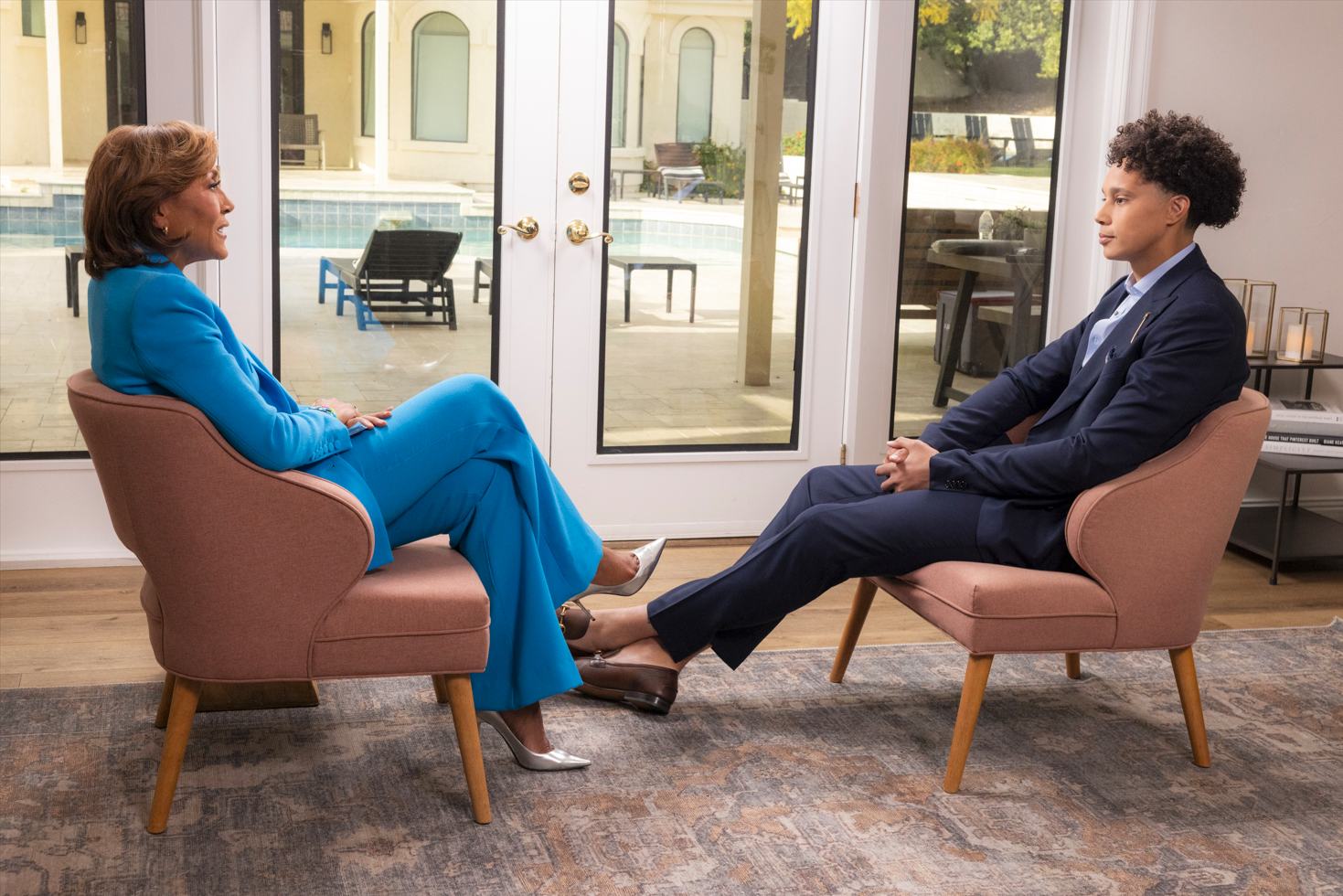
WNBA star sat down with Robin Roberts
CONTENT WARNING: The following story discusses suicide ideation.
Her first few weeks behind bars in a Russian prison took a terrible toll on Brittney Griner, the lesbian WNBA star who is breaking her silence on the 10 months she was held on drug-related charges.
“I wanted to take my life more than once in the first weeks,” Griner told ABC’s Robin Roberts in a primetime interview Wednesday. “I felt like leaving here so badly.”
The two-time Olympic gold medalist and nine-time WNBA All-Star, who plays for the Phoenix Mercury, said she ultimately decided against suicide, partly because she feared Russian authorities would not release her body to her wife, Cherelle Griner.
Griner, 33, was arrested on Feb. 17, 2022, at Sheremetyevo International Airport in Khimki, a suburb of Moscow. Authorities said they found vape cartridges in her luggage containing cannabis oil, which is illegal in the country.
Griner told Roberts that was the result of a “mental lapse” on her part — packing the cannabis oil cartridges in her luggage, Griner said that she had overslept on the morning she was leaving for Russia to play during the WNBA’s off-season, which is how many of the league’s vastly underpaid players earn a living, compared to NBA players.
So, she packed while she was “in panic mode,” Griner said.
“My packing at that moment was just throwing all my stuff in there and zipping it up and saying, ‘OK, I’m ready,’” she told Roberts.
After landing in Russia, Griner realized that she had those two cannabis oil cartridges in her luggage as Russian security officers inspected her bag at the airport. She recalled the moment as a sinking feeling.
“I’m just like, ‘Oh, my God.’ Like, ‘How did I — how did I make this mistake?’” Griner said. “I could just visualize everything I worked so hard for just crumbling and going away.”
Russian authorities immediately arrested Griner, but her trial would not take place for five months. She described the horrible conditions of her imprisonment during that delay, saying that she didn’t always have toilet paper and that the toothpaste they gave her had expired about 15 years ago.
“That toothpaste was expired,” she said. “We used to put it on the black mold to kill the mold on the walls.”
“The mattress had a huge blood stain on it, and they give you these thin two sheets,” she added. “So you’re basically laying on bars.”
On July 7, 2022, Griner pleaded guilty at her trial to drug charges, admitting that she had the vape cartridges containing cannabis oil but stating she put them in her luggage unintentionally. She testified that she had packed the cartridges by accident, and had “no intention” to break Russian law.
Roberts pressed Griner on this point: “You know there are those who say, ‘Come on. How did you not know that you had cartridges in your luggage?’”
“It’s just so easy to have a mental lapse,” Griner replied. “Granted, my mental lapse was on a more grand scale. But it doesn’t take away from how that can happen,” she explained.
Griner was sentenced to nine years in prison on Aug. 4, 2022, and in October 2022, a judge denied the appeal filed by Griner’s attorneys.
The sentence landed Griner in a penal colony in the Russian region of Mordovia.
“It’s a work camp. You go there to work,” said Griner. “There’s no rest.” Her job was cutting fabric for Russian military uniforms.
“What were the conditions like there?” Roberts asked.
“Really cold,” Griner said. So cold that her health was impacted and she decided to chop off her long dreadlocks.
“What was that like losing that part of you, too?” Roberts asked Griner.
“Honestly, it just had to happen. We had spiders above my bed — making nests,” she said. “My dreads started to freeze,” she added. “They would just stay wet and cold and I was getting sick. You’ve gotta do what you’ve gotta do to survive.”
Her arrest came around the same time as Russia’s invasion of Ukraine, further increasing tensions between Russia and the U.S. But as the Los Angeles Blade reported on Dec, 8, 2022, Russia agreed to release Griner in exchange for Russian arms dealer Viktor Bout.
However, before winning her freedom, Griner revealed authorities forced her to write a letter to Russian President Vladimir Putin.
“They made me write this letter. It was in Russian,” she said. “I had to ask for forgiveness and thanks from their so-called great leader. I didn’t want to do it, but at the same time I wanted to come home.”
Griner said her heart sank upon boarding the plane to freedom and finding that Paul Whelan, another American the White House said was “wrongfully detained,” wasn’t leaving Russia with her.
“I walked on and didn’t see him, maybe he’s next. Maybe they will bring him next,” she said. “They closed the door, and I was like, are you serious? You’re not going to let this man come home now.”
Griner recounts on the experience in “Coming Home,” a memoir set to be released on May 7.
988 is the National Suicide and Crisis Lifeline and is available 24/7 via phone, text or chat to everyone of all ages, orientations and identities. If you are a transgender, nonbinary, or gender-nonconforming person considering suicide, Trans Lifeline can be reached at 877-565-8860. LGBTQ+ youth (ages 24 and younger) can reach the Trevor Project Lifeline at 1-866-488-7386. You can still also contact the National Suicide Prevention Lifeline at 1-800-273-8255 24 hours a day, and it’s available to people of all ages and identities.

Additional resources:
If you are in a life-threatening situation, please dial 911.
If you are in crisis, please dial 988 or contact Rainbow Youth Project directly at +1 (317) 643-4888






Sports
New IOC policy bans trans women from Olympics
New regulation to be in effect at 2028 summer games in Los Angeles
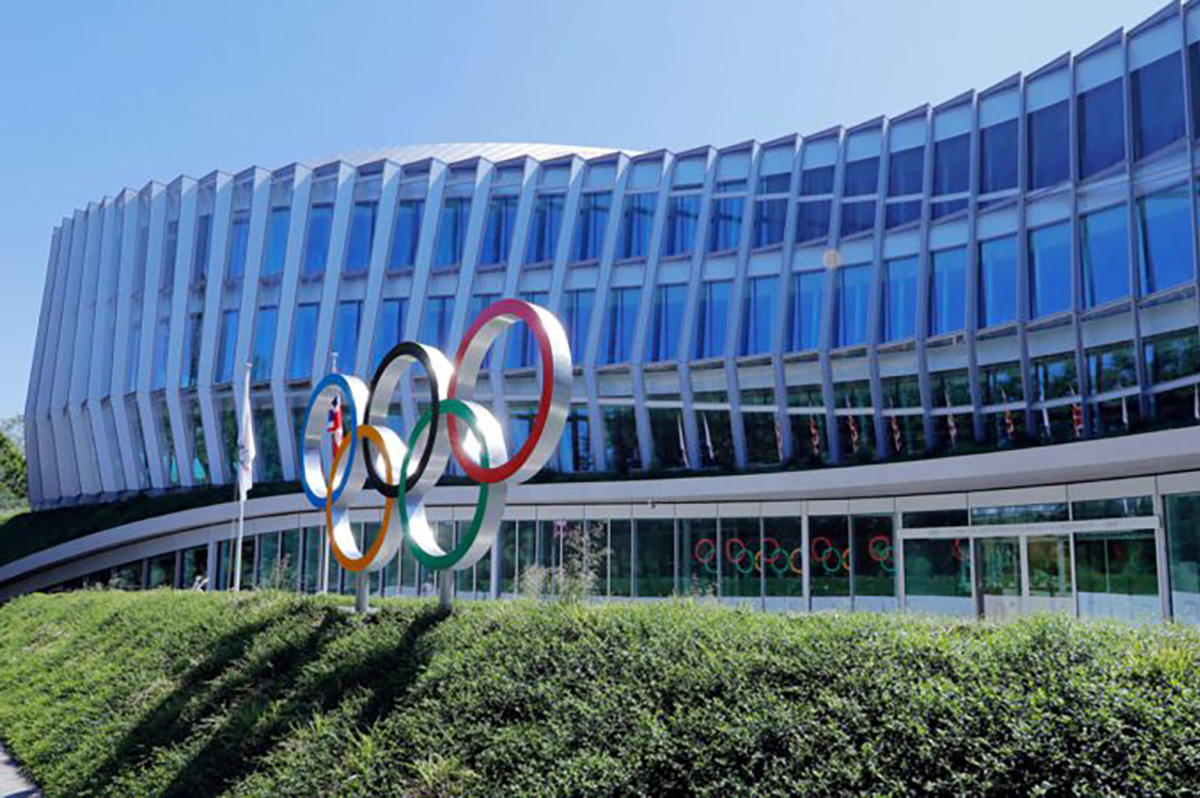
The International Olympic Committee on Thursday announced it will not allow transgender women from competing in female events at the Olympics.
“For all disciplines on the Sports Program of an IOC event, including individual and team sports, eligibility for any Female Category is limited to biological females,” reads the new policy.
The policy states “eligibility for the Female Category is to be determined in the first instance by SRY Gene screening to detect the absence or presence of the SRY Gene.”
“On the basis of the scientific evidence, the IOC considers that the SRY (sex-determining Region Y) Gene is fixed throughout life and represents highly accurate evidence that an athlete has experienced or will experience male sex development,” it reads. “Furthermore, the IOC considers that SRY Gene screening via saliva, cheek swab or blood sample is unintrusive compared to other possible methods. Athletes who screen negative for the SRY gene permanently satisfy this policy’s eligibility criteria for competition in the Female Category.”
The policy states the test “will be a once-in-a-lifetime test” unless “there is reason to believe a negative reading is in error.”
The new regulation will be in place for the 2028 Summer Olympics in Los Angeles.
“I understand that this a very sensitive topic,” said IOC President Kirsty Coventry on Thursday in a video. “As a former athlete, I passionately believe in the rights of all Olympians to take part in fair competition.”
“The policy that we have announced is based on science and it has been led by medical experts with the best interests of athletes at its heart. The scientific evidence is very clear: male chromosomes give performance advances in sport that rely on strength, power, or endurance,” she added. “At the Olympic Games, even the smallest margins can be the difference between victory and defeat. So, it is absolutely clear that it would not be fair for biological males to compete in the female category. In addition, in some sports it would simply not be safe.”
(Video courtesy of the IOC)
Laurel Hubbard, a weightlifter from New Zealand, in 2021 became the first trans woman to compete at the Olympics.
Imane Khelif, an Algerian boxer, won a gold medal at the 2024 Summer Olympics in Paris. Khelif later sued JK Rowling and Elon Musk for cyberstalking after they questioned her gender identity.
Ellis Lundholm, a mogul skier from Sweden, this year became the first openly trans athlete to compete in any Winter Olympics when he participated in Milan Cortina Winter Olympics in Italy.
President Donald Trump in February 2025 issued an executive order that bans trans women and girls from female sports teams in the U.S.
The U.S. Olympic and Paralympic Committee last July banned trans women from competing in female sporting events. Republican lawmakers have demanded the IOC ban trans athletes from women’s athletic competitions.
“I’m grateful the Olympics finally embraced the common sense policy that women’s sports are for women, not for men,” said U.S. Sen. Tom Cotton (R-Ark.) on X.
An IOC spokesperson on Thursday referred the Washington Blade to the press release that announced the new policy.

More than a dozen LGBTQ athletes won medals at the Milan Cortina Winter Olympics that ended on Sunday.
Cayla Barnes, Hilary Knight, and Alex Carpenter are LGBTQ members of the U.S. women’s hockey team that won a gold medal after they defeated Canada in overtime. Knight the day before the Feb. 19 match proposed to her girlfriend, Brittany Bowe, an Olympic speed skater.
French ice dancer Guillaume Cizeron, who is gay, and his partner Laurence Fournier Beaudry won gold. American alpine skier Breezy Johnson, who is bisexual, won gold in the women’s downhill. Amber Glenn, who identifies as bisexual and pansexual, was part of the American figure skating team that won gold in the team event.
Swiss freestyle skier Mathilde Gremaud, who is in a relationship with Vali Höll, an Austrian mountain biker, won gold in women’s freeski slopestyle.
Bruce Mouat, who is the captain of the British curling team that won a silver medal, is gay. Six members of the Canadian women’s hockey team — Emily Clark, Erin Ambrose, Emerance Maschmeyer, Brianne Jenner, Laura Stacey, and Marie-Philip Poulin — that won silver are LGBTQ.
Swedish freestyle skier Sandra Naeslund, who is a lesbian, won a bronze medal in ski cross.
Belgian speed skater Tineke den Dulk, who is bisexual, was part of her country’s mixed 2000-meter relay that won bronze. Canadian ice dancer Paul Poirier, who is gay, and his partner, Piper Gilles, won bronze.
Laura Zimmermann, who is queer, is a member of the Swiss women’s hockey team that won bronze when they defeated Sweden.
Outsports.com notes all of the LGBTQ Olympians who competed at the games and who medaled.
Sports
US wins Olympic gold medal in women’s hockey
Team captain Hilary Knight proposed to girlfriend on Wednesday

The U.S. women’s hockey team on Thursday won a gold medal at the Milan Cortina Winter Olympics.
Team USA defeated Canada 2-1 in overtime. The game took place a day after Team USA captain Hilary Knight proposed to her girlfriend, Brittany Bowe, an Olympic speed skater.
Cayla Barnes and Alex Carpenter — Knight’s teammates — are also LGBTQ. They are among the more than 40 openly LGBTQ athletes who are competing in the games.
The Olympics will end on Sunday.

Vance speaks at Orbán rally in Hungary

White House ends protections for trans students in multiple school districts

Amendments to India’s transgender rights law criticized

Cuba under pressure and without answers

Police mental health struggles gain growing attention

Belarusian lawmakers approve bill to crackdown on LGBTQ rights

How new barriers to health care coverage are hitting D.C.

Kenyan advocacy groups launch LGBTQ voter mobilization campaign

Women’s FEST returns to Rehoboth Beach next week