Kenya
Queer Kenyans decry homophobia in churches
Community urged to be proactive in countering violence

Kenya’s LGBTQ community has decried homophobia in the country’s places of worship leaving some of them with the option of embracing a new queer-friendly church in the capital Nairobi.
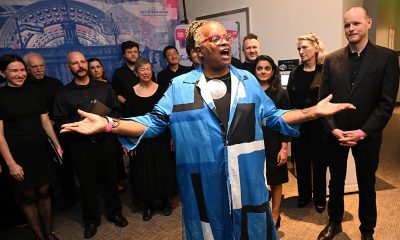
The queer people, while sharing homophobic experiences they encountered in Kenyan churches, stated that clerics and other believers have weaponized religious faith as a tool of violence against them.
This hate and discrimination, according to the LGBTQ community, has driven most of them into religious trauma and they are seeking spiritual refuge in the Cosmopolitan Affirming Church (CAC), which is open to queer individuals.
“As a pastor, I have worked in a [religious] space that as someone who I identify myself as a queer priest, I have been excluded from that very space out of lies that lack the truth to justify my exclusion,” said Godfrey Adera, an associate pastor at CAC.
Adera spoke during the International Day commemorating victims of violence based on faith and belief marked last Thursday where more than 1,700 queer Kenyans engaged in an X forum.
The forum organized by the National Gay and Lesbian Human Rights Commission (NGLHRC) noted that Uganda’s enactment of the draconian anti-homosexuality law last year has contributed to an increase in homophobic hatred and discrimination in Kenyan churches.
“I have seen a queer person talk about how he was in a church just last week and there were overtly no queer undertones going on in the church and the pastor unprovoked spoke about how he supports President Yoweri Museveni’s decision to deal with gays in Uganda, which is basically calling for a lot of homophobic violence,” said Elle Khaoma, the forum’s moderator from NGLHRC.
The queer community also noted that the plan by Kenya’s opposition MP Peter Kaluma to introduce a punitive anti-homosexuality draft law in parliament and supported by religious leaders and others has increased homophobic hate and stigma in places of worship.
Such actions have seriously impacted the LGBTQ community in terms of religious trauma, mental health, falling away from faith, feeling discriminated against and being perceived as outcasts, and battling stigma to the point of dying by suicide, according to experiences shared by several queer persons.
Some disclosed they decided to flee their homes after being disowned by their parents and siblings for identifying as LGBTQ contrary to religious faith and belief their families and churches subscribe to.
“After the hate and discrimination, I started to recognize my religious trauma. My motivation to overcome it has been that I’m not alone as a queer person to be impacted by religious trauma,” said Wanjiku, a journalist and lawyer.
She reiterated that sharing experiences with other queer persons about religious trauma from various churches, how they have dealt with it, and deconstructing hateful religious ideologies have helped her overcome the stigma.
Pastor Adera affirmed that queer persons should first acknowledge that religion and belief are used as a tool of violence in diversity to target them.
“After acknowledging, it is important to ask critical questions by interrogating the scriptures and finding alternative messages of love, justice, fairness, and God the creator of all humanity then making these messages more heard than the messages of hurt and hate that come with religious narratives,” he said.
He stated that alternative and balanced scriptures that promote inclusivity, diversity, and love that every church should stand for are what the Cosmopolitan Affirming Church teaches to demystify religious narratives of hate against queer individuals in mainstream churches.
“Religion comes with social control in terms of shaping what morality and norms look like and how we relate to each other, which is not a positive thing as it forms the basis of excluding other people like the queer,” Adera said. “It needs to be talked about and challenged in queer forums and advocacy by calling out people using religion to fuel bigotry, hate, and hurt in the nation.”
The CAC cleric asked the queer persons to take religion seriously since it has a huge influence on society and also urged them to examine it critically to push for inclusive conversations and accommodative norms to enhance social cohesion.
Adera assured the queer Christians that CAC is one of their alternative religions with resourceful materials like theological books, articles, and scriptures that are interpreted to suit their faith and belief.
“Mainstream churches have been more of gatekeepers by barring us, the queer persons, from experiencing our religious beliefs like other believers,” he opined.
During the forum, the queer persons were advised to have trusted and supportive allies who readily come to their protection and deconstruct religious narratives of hate and homophobia passed from generation to generation.
The LGBTQ community was further urged to be alert and proactive in countering legal, social, and cultural norms or violence that come with religious stigma both at small and large scale.





Kenya
Kenyan High Court issues landmark transgender rights ruling
Government ordered to allow trans people to amend ID documents
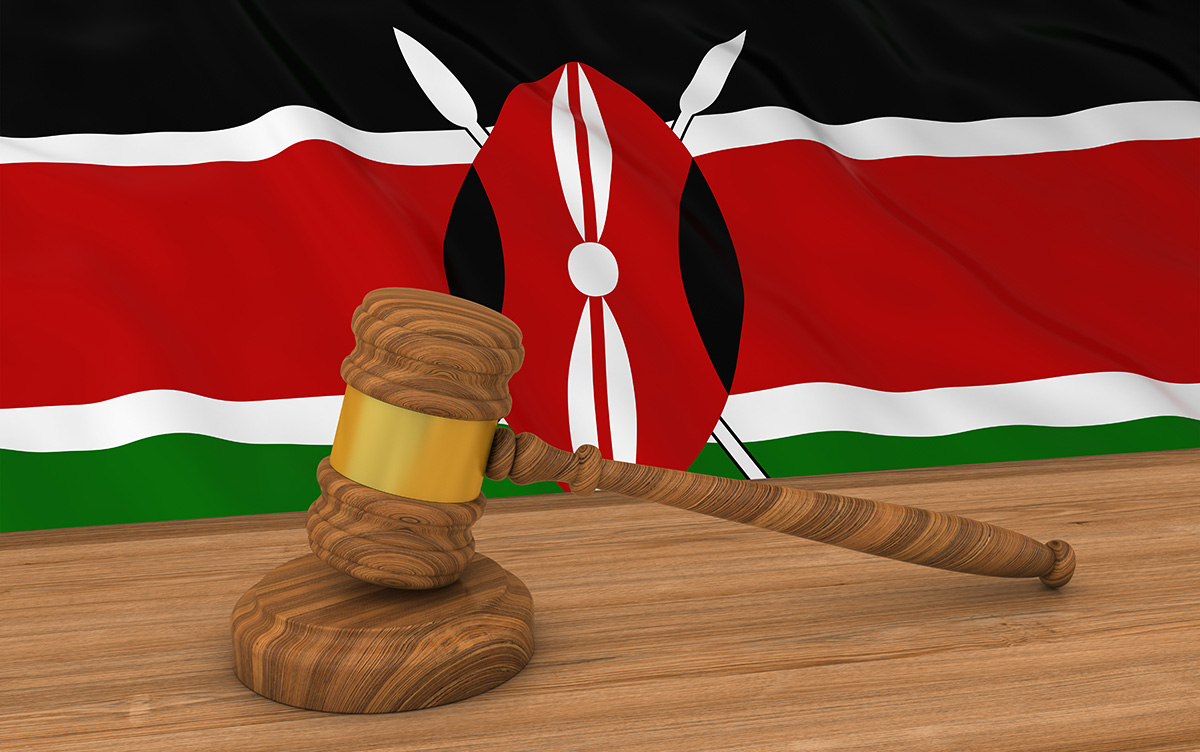
Kenya’s High Court has ruled the country’s government cannot refuse requests to amend gender markers on birth certificates and other ID documents.
Audrey Mbugua, a prominent transgender activist, and two other people in 2020 sued Attorney General Dorcas Oduor, the Registrar of Births and Deaths, the National Registration Bureau, and Immigration Services Director General Evelyn Cheluget after they did not receive amended birth certificates.
The Washington Blade previously reported the three plaintiffs argued documents that do not correspond with their gender identity “has denied them opportunities and rights.” Oduor, for her part, in response to the plaintiffs’ claims argued “a person’s gender is based on fact — not feelings — and the plaintiffs at birth were registered and named based on their gender status.”
High Court Justice Bahati Mwamuye ruled on May 20.
“The silence and delay cannot defeat rights,” ruled the court, according to the Daily Nation, a Kenyan newspaper. “Constitutional rights cannot be delayed over administrative convenience.”
The court in 2014 ordered the Kenya National Examinations Council to change Mbugua’s name on her academic diplomas and to remove the male gender marker from them.
Kenya’s intersex rights law took effect in 2022. The government in February 2025 announced intersex people can receive birth certificates with an “I” gender marker.
The Daily Nation notes Mwamuye ordered the Registrar of Deaths and Births and other government agencies to “begin receiving and considering applications for gender-marker changes within” 60 days.
“Access to legal identity documentation is not just a human rights issue; it is a foundational pillar of socio-economic inclusion,” said the Initiative for Equality and Non-Discrimination, a Kenyan advocacy group, in response to the ruling. Without accurate IDs or passports, individuals face severe barriers to employment, financial systems, global business travel, and participation in governance and democratic processes.”
“This ruling marks a critical step forward in reducing administrative discrimination and fostering an inclusive environment where every Kenyan citizen’s legal identity aligns with their dignity,” added INEND.
Outright International, a New York-based global LGBTQ and intersex advocacy group, in a statement described Mwamuye’s ruling as “a meaningful shift towards aligning Kenya’s legal framework with constitutional guarantees of equality, privacy, and human dignity. Outright International also applauded Mbugua and other activists who fought for this change.
“Today, we celebrate a milestone — one achieved through resilience, solidarity, and an unwavering belief in justice,” said the group. “Outright International stands with transgender and intersex Kenyans in honoring this victory and reaffirming our commitment to advancing rights, recognition, and equality for all.”
Kenya
Kenyan advocacy groups launch LGBTQ voter mobilization campaign
As Kenya prepares for next year’s August general election, local queer rights groups have joined Gen Zers in also mobilizing their members to register as voters.
The groups’ drive began ahead of the electoral commission’s official launch of a one-month nationwide mass voter registration on March 30, targeting 6.5 million new voters to bring the total to more than 28 million.
The groups — led by the Initiative for Equality and Non-Discrimination (INEND) and Galck+ — note that politics is not optional, but rather it is “our responsibility” to use the ballot to put an end to bad leadership and discriminatory laws against them.
“Voting is one of the most powerful ways we exercise our autonomy and remind the State that our human rights are not ‘Western imports’; our struggles for housing, employment, safety, and dignity are fundamentally Kenyan issues,” INEND states.
It reminds queer individuals that the nation entrusts them with an identity card at age 18 as a recognition of their ability to make decisions, follow laws, and take responsibility for the country’s future.
INEND also notes that despite this honor, LGBTQ people get kicked out of their homes due to homophobia, are discriminated against at work, and face violence in public places due to the punitive laws that the same State legislates.
“As queer Kenyans, our vote matters,” INEND states. “Our voice belongs in the democratic and governance conversations, and true democracy includes everyone.”
Some voter mobilization initiatives the queer lobby groups have been using include ‘Queering the Ballot’ Podcasts on civic participation, dubbed ‘Your Vote is Your Future’. The topics explored include how laws shape their lives, the relationship between lived experiences of common citizens, discrimination fatigue, distrust in government systems, and voter apathy.
The groups through the mobilization drive hope to create a queer voting bloc to actively participate in restructuring and reconstructing the existing governance system they argue has been a problem for them. They maintain the queer community navigates a system that was not built for them from its questioning of their right to exist, yet the Kenyan Constitution clearly states that no citizen should be discriminated against based on sexual orientation or gender identity.
The Court of Appeal next month will hear a case challenging the constitutionality of provisions in Kenya’s Penal Code that criminalize consensual same-sex relationships among adults. The appeals court postponed the case after adjourning on Feb. 4, its first substantive hearing since the High Court judgement in 2019.
“Change requires more than pointing fingers. It requires reflection, action, and showing up, especially at the ballot box as LGBTQ Kenyan citizens and declaring that this is our country, our business, and we can no longer watch from the sidelines,” INEND states.
The group notes that they want a governance system that embraces queer people as they go about their daily lives without any form of homophobic discrimination, harassment, or arrests. Queer people are therefore urged to pick the right leaders who listen to them in Kenya’s six elective positions, from the president down to the local government representatives, as their decisions while in power affect them.
“It is very irresponsible for any human being, even around the world, to assume that they don’t have political responsibility. It is easy and sounds fancy to say ‘I don’t like politics,’ but it does not make one good as it makes one abandon their political responsibility as a citizen,” INEND states.
The groups are also concerned with the existing homophobia among Kenyans, especially whenever they join them in street protests against the government’s punitive measures or advocating for change. However, they maintain that the LGBTQ community won’t be left behind despite being marginalized in society, yet they are the most affected group when the government raids people’s pockets for taxes.
“Now we are moving from the margins to the centre of this political conversation early enough to ensure that our community sees the sense because if we live in a country that doesn’t work, we will be the most affected,” INEND states.
INEND, with the National Gay and Lesbian Human Rights Commission and Galck+, last November launched the second Queering the Ballot Campaign and the 2024 Situation Report on queer participation in Kenya’s democracy.
The report surveyed 14 of the country’s 47 local governments, whose key findings affirm that queer Kenyans are not outsiders to democracy but its heartbeat.
“The title ‘Our Vote, Our Future: LGBTQ+ Inclusion in Democratic and Governance Processes’ in Kenya is an ode to the spirit of the queer movement in Kenya; unshaken in the face of adversity, determined in its pursuit of justice, and unrelenting in demand to be seen, heard and counted in democratic and political processes,” reads the report forwarded by former Chief Justice Willy Mutunga.
The report calls on Parliament, the Independent Electoral and Boundaries Commission, the County Assemblies, and every Kenyan to make inclusion not symbolic but systemic.
Kenya
Kenyan judge rules government must legally recognize transgender people
Trans athlete challenged arrest, detention, forced medical examination
A Kenyan judge has directed the government to legally recognize transgender people and to guarantee their constitutional rights are protected.
Justice Reuben Nyakundi of the Eldoret High Court in western Kenya in his Aug. 20 judgment holds trans people have the right to determine their “self-identified gender” and the government’s legal system should recognize it.
Nyakundi made the directive after a years-long case of a trans athlete and government agencies over an unwarranted arrest, detention, and forced medical examination to determine her gender in 2019.
Government officials sued the director of Public Prosecutions, attorney general, commissioner general of prisons, and the Moi Teaching and Referral Hospital, which conducted the medical examination following her arrest in Eldoret. The petitioner, only identified as S.C. in the case, was arrested at the same health facility for allegedly impersonating a woman.
“That it is proposed the State consider undertaking appropriate legislative measures to address the rights and protections of individuals within its borders, in line with Article 27(4) of the constitution, which prohibits discrimination on any grounds, including race, sex, social origin, gender, birth, or other status,”Nyakundi ruled. “In this regard, the enactment of a Transgender Protection Rights Act is recommended as a potential mechanism to ensure equal protection and recognition for transgender persons.”
The 34-year-old plaintiff, who is also a board member of Jinsiangu, a local trans rights organization, (“My gender” in Swahili), told the court about the mistreatment to which she was subjected while in custody and demanded compensation for the violation of her rights.
For instance, S.C., who said she realized she was a woman when she was 5-years-old, told the court that police officers forced her to remove her clothes when she was in their custody and ridiculed her for “pretending” to be a woman after they saw male genitals.
She was transferred to a men’s ward before being escorted to her home.
S.C. said officers ransacked it in search of doping drugs they said she used while mocking her female clothes. The plaintiff also stated officers repeatedly slapped her to coerce her to produce her birth certificates and national identity cards. She described the experience as “humiliating and traumatizing.”
The plaintiff also noted that while in the men’s ward, inmates abused and slapped her while some attempted to remove her clothes. They backed off when she screamed to attract officers’ attention before they transferred her to an isolated hallway for her safety.
Nyakundi in his ruling awarded her $10,000 in damages over violation of her privacy and dignity. The court also directed the government to undertake policy reforms to protect the rights of detained trans people in prisons.
“That a declaration be and is hereby made that there is a compelling sense of urgency for the state in the interim to make provision of the physical and structural facilities at the police stations and the prison facilities for these ‘third gender’ who may be in conflict with the law because of their gender identity with a view to guarantee their constitutional rights as envisioned in this judgment,” Nyakundi stated.
He further directed parliament to enact the law that protects and recognizes trans people while also directing the proposed Intersex Persons Bill 2024 be another alternative to identify the rights of the trans community in the country. Intersex people in Kenya are legally recognized as a third gender with an “I” marker, and the community has an intersex representative in the country’s human rights body to champion their interests.
Transgender Education and Advocacy, Jinsiangu, Amka Africa Justice Initiative, and the Kenya Human Rights Commission are among the human rights NGOs that represented S.C. in the case.
Jinsiangu, which works closely with the intersex group, welcomed the decision as one of the “landmark” rulings marking a growing judicial recognition of trans rights in Kenya’s constitutional framework.
“This is the first time a Kenyan court has explicitly ordered the state to create legislation on transgender rights, and a first in the African continent,” Jinsiangu said in a statement. “If implemented, it could address decades of legal invisibility and discrimination faced by transgender persons by establishing clear legal recognition of gender identity, protection against discrimination in employment, housing, healthcare, and education, and access to public services without bias or harassment.”
The trans rights group has committed to monitoring the state’s compliance with the ruling to ensure the legal framework to protect the group is put in place.
“We commit to working hand-in-hand with lawmakers, civil society, and the public to ensure the legislation is inclusive, evidence-based, and enforceable,” Jinsiangu affirmed.

Charles Bowers, former owner of Baltimore gay bar the Hippo, dies

Being a female firefighter comes with unique risks, and rewards

Writing a play about Lincoln leads down a rabbit hole to a closet

Trump-appointed judge restores White House TV pool access