India
Anti-transgender discrimination, violence in India persists
2019 trans rights law has done little to curb problem
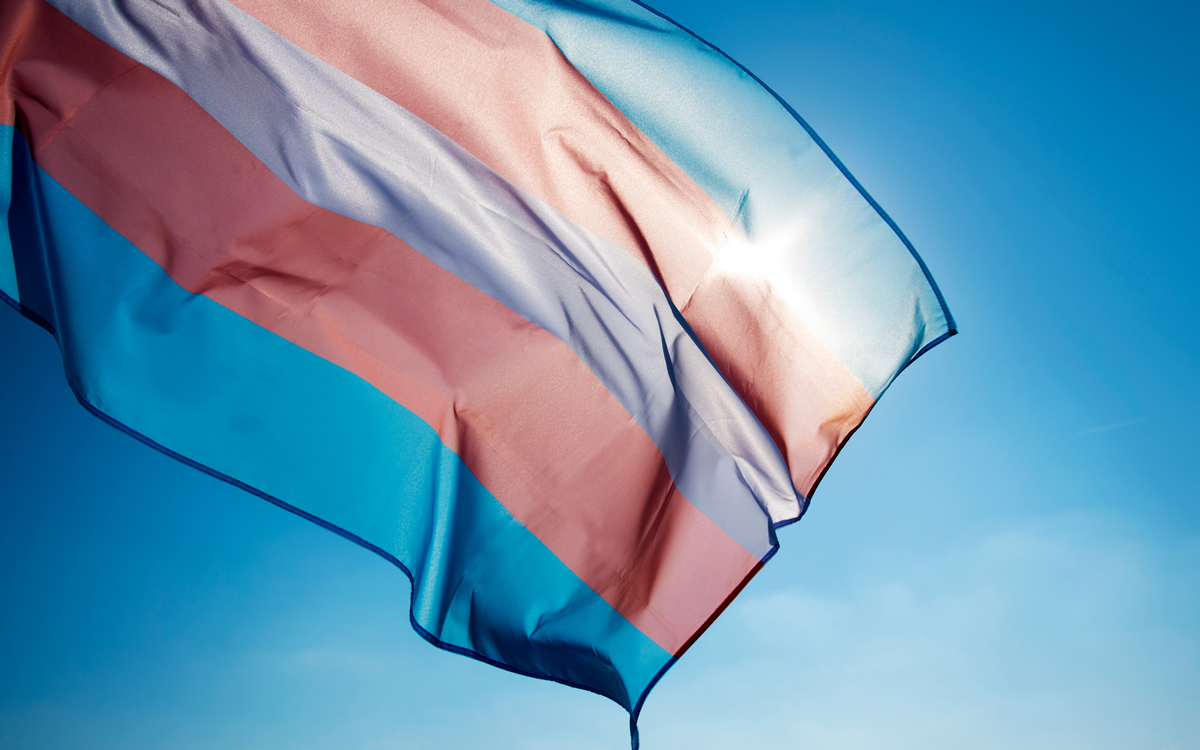
In the vast expanse of India, a land steeped in ancient wisdom and culture, where the echoes of tradition sing of respect for all beings, there exists a paradox. Transgender people, known as hijras, for millennia have been woven into the fabric of society, acknowledged, even revered. Yet today, this same community stands on the precipice of suffering, their dignity bruised, their existence imperiled.
Despite the Supreme Court rulings and the Transgender Persons (Protection of Rights) Act of 2019, discrimination festers and crimes against trans people continue to rise unchecked.
The 2019 law, once a beacon of hope, now seems a faint whisper amid societal prejudice. India, for all its storied past, must reckon with the reality that its ancient recognition means little if the present offers only misery.
The figures, as the National Crime Record Bureau presents, suggest a seemingly low rate of crime against trans people. At a glance, one might draw comfort from these numbers, imagining progress in a society long burdened by prejudice. But beneath this veneer lies a graver truth: Activists, ever watchful and weary, suspect gross underreporting. The numbers, it seems, tell only half the story.
In the sprawling ledger of tragedy that is the Crimes in India: 2022 report, the NCRB lists 29,356 souls lost to murder, and only nine of these were trans people. A mere number on a page, some might say. But this figure, far from reassuring, is chilling in its implication.
Among the grim tally of 110,140 cases of adult kidnapping and abduction, only one trans victim emerges from the records — a stark and haunting singularity. The NCRB reports no instances of rape, sexual assault, or mob lynching involving trans people. This absence is, however, not a triumph, but a troubling silence. It raises the question: Do these crimes not occur, or do they vanish from the pages of the records? The silence of statistics can be as deafening as the violence they fail to capture.
Another NCRB report lists only 236 trans people as victims of rape — an astonishingly low figure in a landscape where so much remains hidden. The report does not include any cases of rape, nor the heinous crimes of buying or selling minors for prostitution, in which trans people were victims. The true scale of suffering, it seems, remains buried beneath a system that fails to recognize or record their plight fully.
Parliament passed trans rights law in 2019
Parliament on Nov. 26, 2019, took what seemed a bold step towards justice when it passed the Transgender Persons (Protection of Rights) Bill.
The law, as written, promised protection and welfare for India’s trans community, declaring that crimes against them that range from forced labor, to denial of access to public spaces, and even removal from households and villages, would not be tolerated. The law also acknowledged physical, sexual, verbal, emotional, or economic abuse as offenses.
Penalties for these offenses — forced labor, denial of rights, or various forms of abuse — under the law are modest at best, ranging from six months to two years’ imprisonment, along with a fine.
India in recent years has seen a disturbing rise in cases of mob lynching against trans persons. One such tragic incident occurred on Feb. 13, 2024. Raju, a 50-year-old trans person from Telangana state’s Nizamabad district, fell victim to brutal mob violence after a false rumor of child kidnapping swept through their village — a village they had called home.
Raju, a cattle herder and beggar, was simply trying to make ends meet when the mob, blinded by fear and ignorance, turned on them.
Authorities would later clear Raju’s name, confirming they had no involvement in any such crimes. But the truth came too late. Raju had succumbed to their injuries by the time they reached the local hospital, a life senselessly lost to hysteria and hatred.
A similar tragedy unfolded in Hyderabad in 2018.
Rumors of child kidnapping and burglary sparked fear and suspicion, culminating in a brutal attack on a group of trans people. One was killed, and another severely injured as the mob, driven by unfounded accusations, unleashed their violence.
A group of Kanwariyas, devotees of Lord Shiva on a sacred pilgrimage, on July 29 brutally beat a trans woman in Uttar Pradesh state and ripped her clothes off after they wrongly suspected her of theft. The woman’s fate seemed sealed as the mob grew angrier, but authorities intervened in time. They rescued her and brought her to a police station. Authorities confirmed what the frenzy of the mob had failed to see: She was not a thief, merely another victim of suspicion and violence.
A group of trans women on Aug. 16 set out for RG Kar Medical College to join a protest against the West Bengal government, outraged by the gang rape of a trainee doctor at the hospital. Their journey, however, took a dark turn at the Rabindra Sadan metro station.
One of the trans women alleged a Railway Protection Force officer, under the pretense of “checking” her gender, groped her. The group later filed a case against him, exposing yet another instance of indignity faced by trans people in public spaces where even their very identity is subject to humiliating scrutiny.
Report: 92 percent of trans people have faced physical or verbal abuse
Souvik Saha, founder of Jamshedpur Queer Circle, an LGBTQ organization working on a grassroots level to bridge the gap by conducting sensitization workshops with law enforcement agencies and local communities to foster greater understanding and inclusivity, highlighted to the Washington Blade the severe challenges that trans people in Jharkhand state and across India face.
He noted trans people often encounter hostility, harassment, and dismissive attitudes from the police when they try to file First Information Reports. Shah said the crux of the problem lays in the lack of sensitization and awareness within the police force regarding trans identities. This systemic issue not only discourages the community from seeking justice but also perpetuates the cycle of abuse and marginalization they endure.
“As the founder of Jamshedpur Queer Circle, we have witnessed firsthand the systemic discrimination faced by transgender individuals, particularly when they attempt to interact with law enforcement,” said Saha.
“A report by the National Human Rights Commission (NHRC) in 2018 highlights that 92 percent of transgender individuals have faced physical or verbal abuse, often by law enforcement officials themselves,” he added. “Many police stations lack gender sensitization programs that could foster respect and professionalism when interacting with LGBTQ individuals. As a result, transgender individuals are deterred from seeking justice, and crimes against them often go unreported or uninvestigated.”
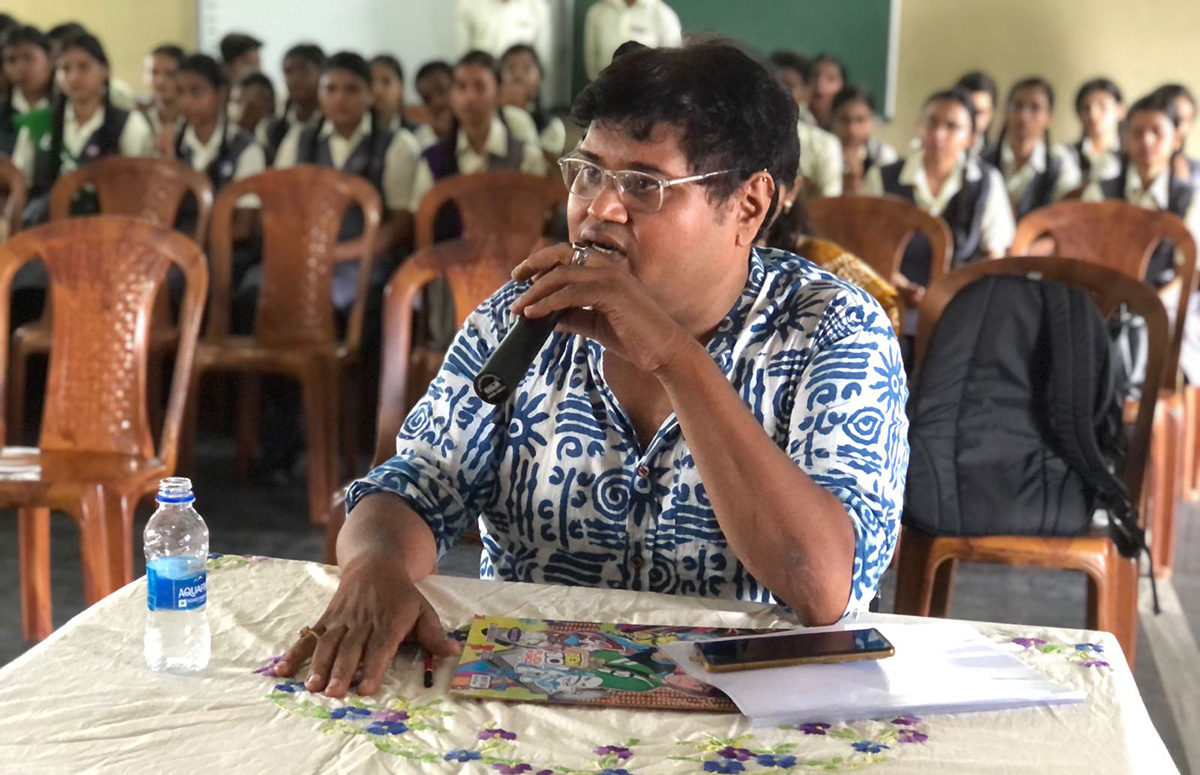
Saha highlighted a particularly troubling case involving a trans woman in Jharkhand who officers relentlessly mocked when she attempted to file a domestic violence complaint at a local police station. Saha said her ordeal is a glaring example of how law enforcement practices not only fail to protect trans people but actively alienate and further victimize them.
Saha remarked that NCRB data showing 236 trans victims without any registered cases is both alarming and unsurprising. He emphasized this statistic starkly reflects the deep-seated systemic issues that prevent trans individuals from accessing justice.
Saha added the barriers to reporting crimes, combined with a lack of trust in law enforcement, create an environment where many victims remain unheard of and their cases unrecorded.
“While the Supreme Court’s NALSA judgment in 2014 and the subsequent Transgender Persons (Protection of Rights) Act, 2019, were landmark decisions for the transgender community, the reality on the ground tells a different story,” he said. “Despite these legal protections, violence against transgender individuals persists due to deeply ingrained social prejudices, lack of awareness, and failure in the implementation of these laws.”
Saha added one “of the biggest issues is the gap between policy and practice. Although the law mandates the protection of transgender individuals, societal attitudes are slow to change.”
He pointed to a 2018 International Commission of Jurists study that notes 73 percent of trans people said they have experienced violence from family members, while 47 percent faced physical assault from members of the public.
“Even though the legal framework exists, enforcement agencies and local administrations often lack the willingness or training to implement it effectively,” said Saha.
He told the Blade that his organization has encountered numerous cases where authorities did not respond to trans people who faced mob violence or domestic abuse. Saha emphasized societal stigma and deep-rooted biases, reinforced by inadequate law enforcement, contribute to ongoing violence and discrimination against the transgender community.
“As a society, we need more awareness campaigns, stricter enforcement mechanisms, and a cultural shift to create an environment where transgender individuals feel safe and respected,” he said.
Without these changes, he warned, the cycle of marginalization will persist.
Kalki Subramaniam, a trans activist, queer artist and actor who is a member of the National Transgender Council, during an interview with the Blade discussed the mistreatment of trans people in police stations across India.
She said law enforcement often do not treat trans people with dignity.
“When a trans woman is raped, her FIR is almost never registered,” added Subramaniam. “That could be because the police are not sensitized enough about transgender people around the country.”
“Across the country, the situation is the same,” she told the Blade. “Even though there are lots of changes legally, police personnel need to be sensitized on a wider network. A few states have done some work, but the majority of Indian states have not.”
Subramaniam in response to the reported number of trans rape victims expressed deep shock, emphasizing violence against the trans community is widespread across India. She pointed out the figures only represent documented cases, while hundreds of crimes — particularly violence and rape — remain unreported and undocumented.
Subramaniam highlighted the persistent stereotyping of trans individuals, adding only extensive government-led sensitization programs can undo it.
“As a member of the National Transgender Council under the Ministry of Social Justice, I have already emphasized in meetings that all ministries and departments must be sensitized on transgender rights and issues,” said Subramaniam. “Once again, I will talk about the rape issue in the meeting in the ministry.”
Ankush Kumar is a reporter who has covered many stories for Washington and Los Angeles Blades from Iran, India, and Singapore. He recently reported for the Daily Beast. He can be reached at [email protected]. He is on Twitter at @mohitkopinion.





India
Proposed Indian foreign funding law overhaul could further pressure LGBTQ groups
Measure introduced in Parliament earlier this year
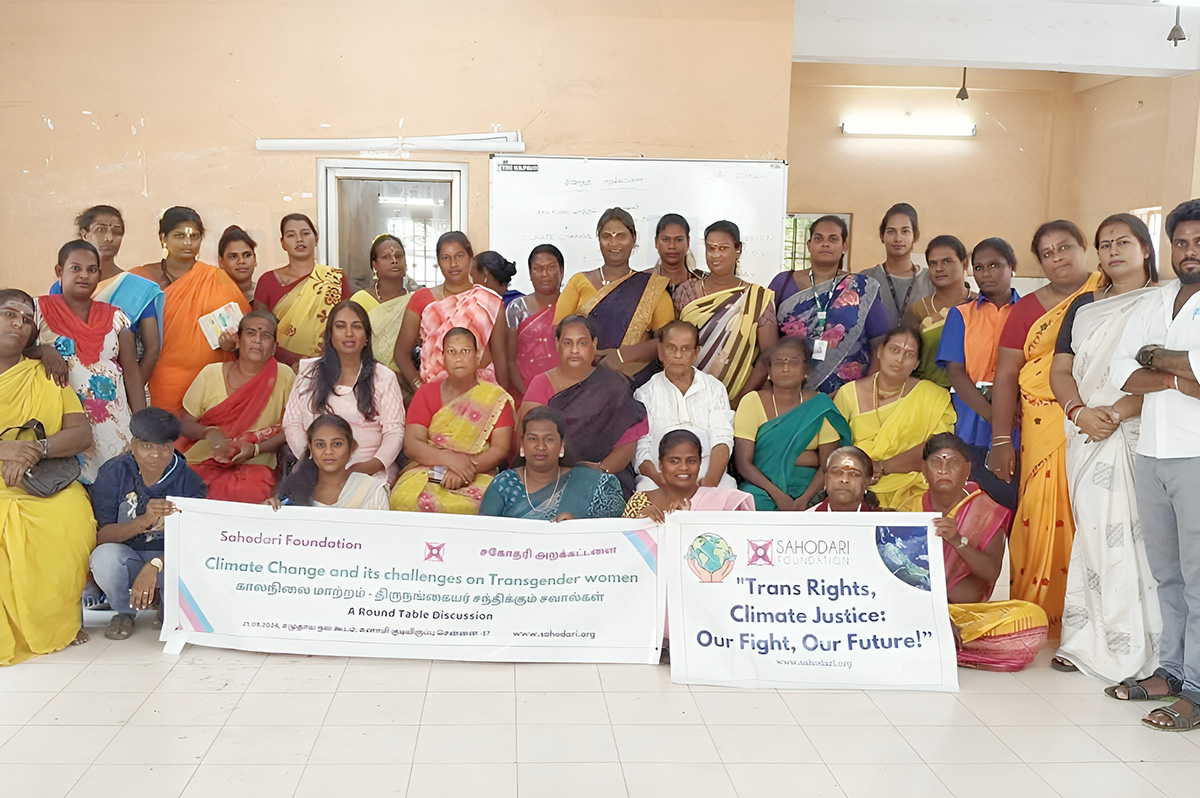
India’s proposed overhaul of its foreign funding law could put LGBTQ organizations that depend on overseas donations under new pressure.
Introduced in the Lok Sabha, the lower house of Parliament, on March 25, the Foreign Contribution (Regulation) Amendment Bill, 2026, or FCRA, would give a government-designated authority control over foreign funds, and assets when an organization loses or surrenders its registration.
The Foreign Contribution (Regulation) Amendment Bill returned to the spotlight this month as the Indian government prepared to seek its passage during Parliament’s Monsoon Session; drawing fierce opposition from political parties, civil society groups and religious organizations.
The government says the bill is intended to address gaps in the management of foreign funds and assets when an organization’s FCRA registration is cancelled, surrendered, or expires. The Foreign Contribution (Regulation) Amendment Bill, 2026, would create a Designated Authority to oversee the vesting, supervision, management, and disposal of foreign contributions and assets when an organization’s FCRA registration is cancelled, surrendered , or ceases. If a vested asset is a place of worship, the authority would be required to preserve its religious character. The FCRA would also reduce the maximum prison term for violating the law from five years to one year.
The changes could also make it difficult for organizations to leave the FCRA regime without surrendering assets created with foreign funds. Under the bill, an organization would have to keep renewing its FCRA certificate to retain those assets. FCRA rules also impose spending requirements on organizations seeking to maintain their certificates.
The bill may also create a distinction between assets created by organizations with FCRA registration and those created through the separate prior-permission route.
More significantly, neither the existing law nor the bill provides an appeal mechanism when the central government refuses to renew an FCRA certificate. They also do not expressly require the organization to be given an opportunity to be heard before renewal is denied. Under the proposed framework, such a denial could trigger the vesting of the organization’s foreign-funded assets in the Designated Authority.
The bill would also widen the circle of people who could face consequences for an organization’s FCRA violations.
Its definition of “key functionary” extends beyond directors and office bearers to trustees, governing-body members, managing-committee members and others responsible for an organization’s affairs. Those functionaries could be held liable for offenses committed by the organization, unless they can show that they were unaware of the violation or had exercised due diligence to prevent it. The FCRA bill would also impose restrictions on dealing with foreign-funded assets during a suspension and leave several important operational details — including timelines and procedures for managing and returning assets — to rules that have yet to be prescribed.
Parliament on Aug 12 moved to refer the FCRA bill to a parliamentary committee for further scrutiny and wider consultations.
Minister of State for Home Nityanand Rai moved the motion in the Lok Sabha, to refer the bill to a committee comprising 21 members of the lower house and 10 members of the Rajya Sabha, Parliament’s upper house.
The Rajya Sabha subsequently approved the nomination of its 10 members to the committee. The panel is expected to submit its report by the last day of the first week of Parliament’s Winter Session.
The proposed changes could have significant implications for LGBTQ organizations that rely on the FCRA framework to receive foreign contributions. (The global LGBTQ and intersex rights movement since the Trump-Vance administration took office in 2025 has lost nearly $50 million in U.S. funding because of foreign aid cuts. One source with whom the Washington Blade spoke described the funding loss as a “catastrophe” for the global movement.)
While the government does not appear to have published an easily accessible, consolidated list of LGBTQ organizations receiving such funding, FCRA registration records and organizations’ financial disclosures indicate that foreign contributions have supported LGBTQ rights, healthcare, and community services in India.
K.C. Venugopal, general secretary of the opposition Indian National Congress, told reporters his party and other opposition parties would strongly protest the legislation if it were introduced in Parliament. He said the bill was aimed at targeting minorities and NGOs and vowed that the opposition would oppose its passage.
Venugopal called the proposed legislation “unconstitutional and anti-people.”
“If the Central Government thinks they can cook up and introduce the Foreign Contribution (Regulation) Amendment Bill within these two or three days, they should keep that wish to themselves,” he told reporters in Alappuzha, Kerala, on Aug. 9.
“Three provisions worry LGBTQ+ organizations like ours most directly,” said Souvik Saha, founder of People for Change and Jamshedpur Queer Circle. “First, the 2026 bill would let a government-appointed ‘Designated Authority’ take control of an organization’s foreign-funded assets— bank balances, equipments, sometimes even property— the moment its FCRA registration is cancelled, surrendered, or simply not renewed, and this happens through an administrative process, without prior judicial adjudication. For a small community organization, that means losing everything we have built — case files, shelter infrastructure, helpline equipment — almost overnight, with no court hearing first.”
Saha told the Blade the revised FCRA Rules announced in June introduced a minimum spending threshold: organizations must spend at least $10,449 in foreign contributions over two financial years or risk cancellation and non-renewal of their registration.
“This specifically penalizes small and grassroots groups that deliberately keep their foreign funding modest — which describes most LGBTQ organizations in India, including ours,” said Saha. “We are not running core-scale budgets; we are running helplines, safe spaces, and district-level outreach on modest grants.”
Saha told the Blade that the ban on sub-granting, carried over from the 2020 amendment, means larger, well-established rights organizations cannot pass foreign funds to smaller, unregistered LGBTQ collectives that could not obtain FCRA registration themselves. He said rights groups have long described the restriction as a near “death knell” for hundreds of small nongovernmental organizations that work collaboratively with larger organizations, adding that LGBTQ groups outside major metropolitan areas depend heavily on such funding arrangements.
“Domestic funding for LGBTQ work in India is still thin, CSR (Corporate Social Responsibility) money avoids us because we are seen as ‘controversial,’ and most Indian foundations would not touch gender-identity programming,” Saha said. “So foreign funding is not a convenience for organizations working with the transgender and LGBTQ community, it is often always funding.”
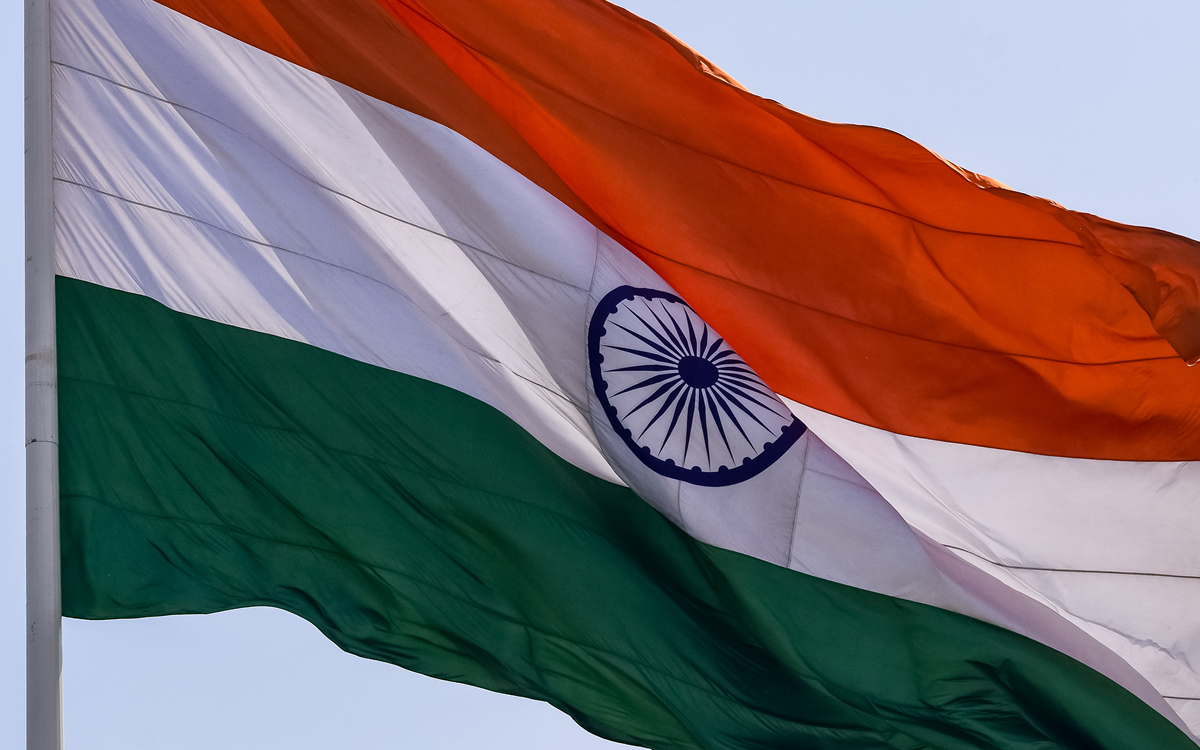
India’s Income Tax Department has opposed a same-sex couple’s petition that challenges Section 56(2)(x) of the Income Tax Act.
The provision exempts gifts between spouses from tax. The couple seeks the same benefit for their relationship.
At the center of the challenge is the explanation to the fifth provision of Section 56(2)(x). According to the petition, the provision excludes same-sex partners from the definition of “spouse.” The petition describes that exclusion as unconstitutional.
The provision defines “relative” to include an individual’s spouse, siblings, the spouse’s siblings, parents’ siblings, and other blood relatives.
Paiyo Ashiho and another petitioner, Vivek Divan, asked the Bombay High Court to recognize same-sex couples presumed to be in a marriage as “spouses” under the fifth provision to Section 56(2)(x).
A similar challenge is pending before the Karnataka High Court.
Bengaluru-based engineers Anurag Kalia and Akhilesh Godi have sought similar relief. Kalia said he wanted to give Godi a gold bracelet worth more than ₹115,500 ($1213.44.). The case remains pending.
The Prime Minister Narendra Modi-led government rejected the petition in an affidavit filed last year. It argued the plea was not legally tenable because it challenged no action or order of the Income Tax Department. Calling the petition an “abuse of process of law,” the government said the relief sought fell outside the scope of the Income Tax Act, 1961.
The government also argued the petitioners sought the benefits available to a “spouse” without legal recognition of their relationship. According to the affidavit, they had not placed on record any law recognizing their relationship as a marriage. It urged the court to dismiss the petition with costs.
The case returned to the spotlight on July 6, when the Bombay High Court heard the petition.
Justices B.P. Colabawalla and Firdosh P. Pooniwalla adjourned the matter after Solicitor General Tushar Mehta said he would appear on behalf of Modi’s government.
The petition comes nearly two years after the Indian Supreme Court’s marriage equality ruling.
In 2023, a five-judge Constitution Bench, in a 3-2 verdict, declined to recognize the constitutional validity of same-sex marriage in India. The country’s top court said MPs must decide whether to extend marriage rights to same-sex couples.
During the 2023 marriage equality hearings, lawyer Abhishek Manu Singhvi told the Supreme Court that marriage is a source of social validation, dignity, self-respect, fulfillment, and security. He argued that it also carries legal and civil benefits, including those related to taxation, inheritance, and adoption. Lawyer Anand Grover, who also appeared for the petitioners, told the court that marriage remains fundamental to the functioning of society and is necessary to access several state benefits, including joint tax benefits and surrogacy rights.
Chief Justice Dhananjaya Y. Chandrachud, in his minority opinion, said the Income Tax Act provides numerous tax benefits for payments made on behalf of a spouse, including deductions for life and health insurance premiums. He also noted that marriage confers several financial benefits on a spouse, including eligibility for gratuity, funeral expenses, medical benefits, and provident fund claims as the dependent of a deceased spouse.
In the marriage equality ruling, the Supreme Court recognized queer people cannot be discriminated against. The court said denying queer couples the material benefits and services available to heterosexual couples violates their fundamental rights.
While issuing directions to the federal, state, and territory governments; Chandrachud said the government should ensure there was no discrimination in access to goods and services. He also directed governments to sensitize the public about queer rights, establish a hotline for the queer community, create safe houses for queer couples, and ensure intersex children were not forced to undergo medical operations.
The petition is awaiting its next hearing before the Bombay High Court.
India’s tax system relies on both direct and indirect taxes, although its direct tax base remains relatively narrow. Individuals pay income tax at progressive rates of up to 30 percent, while consumers pay taxes on most goods and services through the Goods and Services Tax. The Income Tax Act also provides exemptions, deductions, and other tax benefits for eligible taxpayers, including those linked to family relationships and legal marital status.
India’s LGBTQ community is estimated to comprise between 135 million and 140 million people, or nearly 10 percent of the country’s population. Collectively, it is estimated to have a purchasing power exceeding $168 billion. The World Bank estimated that exclusion based on sexual orientation and gender identity cost India between $1.9 billion and $30.8 billion in lost economic output annually, or up to 1.7 percent of its gross domestic product.
India imposed a separate Gift Tax Act in 1958 to tax certain transfers of property made without consideration. Parliament repealed the law in 1998 to simplify the tax system and encourage genuine gifting. However, concerns over tax avoidance later prompted the government to bring gifts back within the Income Tax Act. Today, specified gifts exceeding prescribed limits may be taxed under Section 56(2)(x), subject to exemptions that include gifts received from relatives.
Under the Income Tax Act, gifts received from non-relatives exceeding ₹50,000 ($525.30) in a financial year are generally treated as taxable income, unless they qualify for a statutory exemption. Gifts received from specified relatives, including a spouse, are exempt from tax regardless of their value.
Tarun Khaitan — a research director and professor of public law at the London School of Economics Law School, honorary professorial fellow at Melbourne Law School, and associate fellow of the Bonavero Institute of Human Rights at the University of Oxford — told the Washington Blade the guarantee of equality and non-discrimination under India’s constitution was deliberately framed in broad terms because its framers envisaged that the understanding of those principles would evolve over time. They did not intend to freeze their meaning in 1950, he said. Instead, older and newer statutes alike must be interpreted in light of the constitution’s contemporary understanding.
“Constitutional values must inform the interpretation of all laws in India. It is well established in Indian jurisprudence that if a term can carry two meanings, the court will give it the meaning that complies with constitutional demands,” Khaitan said. “The term ‘spouse’ is not defined in the Income Tax Act, and unlike ‘husband’ or ‘wife’ is not a legal term of art in Indian family law. Its use by the Income Tax Act therefore is apt for judicial interpretation, which must be guided by the constitutional guarantees of equality and liberty.”
Asked how courts should balance respect for legislative choices with their constitutional responsibility to safeguard equality and dignity, Khaitan said he was not convinced that the legislature had made a clear choice in this case. He noted that the Income Tax Act uses the term “spouse” without defining it, adding that no other Indian law, to his knowledge, defines the term either. Its meaning has evolved over time, he said, pointing to the Oxford English Dictionary, which now defines a spouse as “a husband or wife, or a person joined to another in a comparable legally recognized union.”
Khaitan said the decision to restrict the meaning of “spouse” to different-sex married couples appeared to be the government’s interpretation rather than one expressly adopted by MPs. Even so, he said, courts have a duty to safeguard constitutional rights, although those rights are not absolute. The state, he said, must justify any restriction by demonstrating that it serves a sufficiently important public interest and that the limitation is proportionate to that objective.
“The extension of marriage would be a symbolic expression of equal acceptance of same-sex relations by law as well as a the extension of the bundle of material incidents that typically attach to it. Whether or not such extension happens, concerns such as inheritance, hospital visitation rights, decisions regarding end of life care, pensions etc affect the lives of same-sex couples as well as unmarried different-sex couples in a real, material sense,” Khaitan said. “There is no conceptual reason why the expressive salience of ‘marriage’ and the material incidents of a domestic partnership cannot be unbundled.”
Khaitan has had his scholarship cited by the Supreme Court in several constitutional cases, including Navtej Singh Johar v. Union of India, which decriminalized consensual same-sex relations, and Lt. Col. Nitisha v. Union of India, a landmark judgment on indirect discrimination.
India
Expected India Supreme Court ruling could shape future LGBTQ rights cases
Decision to determine whether courts can use constitutional morality doctrine
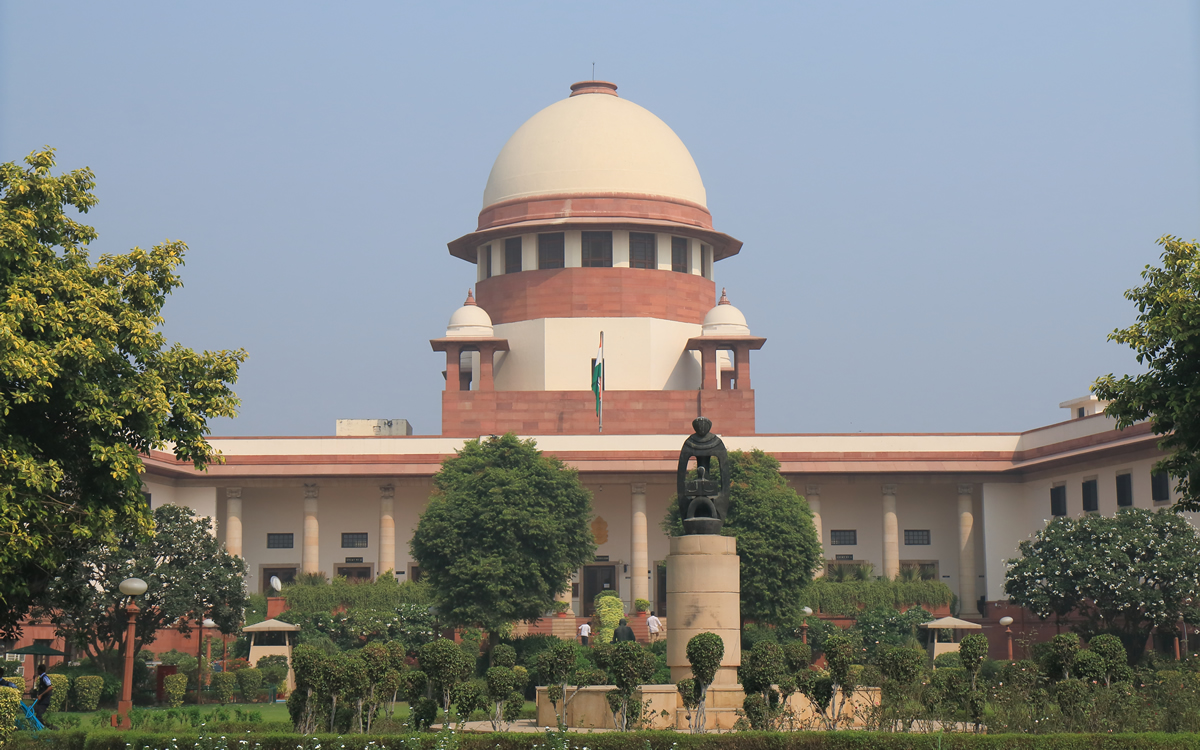
India’s Supreme Court is expected to issue a closely watched constitutional ruling that could shape the future of LGBTQ rights litigation.
The decision will determine whether courts can continue to rely on the doctrine of constitutional morality, a principle that has underpinned several landmark rights decisions. During hearings in April, the Indian government urged the Supreme Court to reject the doctrine, arguing that it has no basis in the Constitution and should not guide judicial decision-making.
For years, the Supreme Court has relied on the constitutional morality doctrine to treat the Constitution as a living document: one whose enduring promises of justice, liberty, equality, and fraternity must be applied to the realities of a changing society rather than remain frozen in the era in which it was written.
The Indian government in April asked the Supreme Court to revisit the constitutional reasoning behind two landmark judgments: one that struck down the country’s adultery law and another that decriminalized consensual same-sex relations, arguing that both relied on a subjective invocation of constitutional morality and should no longer be treated as good law.
Arguing before a 9-judge bench considering constitutional questions referred from the Supreme Court’s 2018 Sabarimala temple case, which allowed women of menstruating age to enter one of Hinduism’s holiest shrines after a centuries-old ban, Solicitor General Tushar Mehta, India’s second-highest law officer, argued that “constitutional morality” has no textual basis in the Constitution and is instead a judicially evolved concept that is vague and indeterminate.
Mehta said the government did not oppose the Supreme Court’s decision to strike down Section 497 of the Indian penal code, which criminalized adultery, if it was based on Article 14 of the Constitution, which guarantees equality before the law and equal protection of the laws. Instead, he argued that the court should not have relied on what he described as the “vague and subjective” doctrine of constitutional morality to reach its conclusion.
Mehta told the Supreme Court that its 2018 Navtej Singh Johar v. Union of India ruling that decriminalized consensual same-sex relations wrongly equated “morality” with majoritarian or mob morality while relying on constitutional morality as the basis for its reasoning.
To support his argument against relying on constitutional morality, Mehta quoted extensively from then-Justice Antonin Scalia’s dissent in the U.S. Supreme Court’s 2003 decision in Lawrence v. Texas.
Scalia argued that courts should not import foreign legal trends or allow evolving social values to drive constitutional interpretation, contending that judges must remain neutral arbiters rather than participants in broader cultural debates.
Referring to the Supreme Court’s landmark decisions in Navtej Singh Johar and Joseph Shine, Mehta questioned whether the judgments reflected the constitutional vision of India’s founding generation.
“If these judgments, Navtej Johar, Joseph Shine, etc., were to be read by Dr. Ambedkar or Kanhaiyalal Munshi or Alladi Krishnaswamy Iyer, I do not know whether they would be surprised, shocked or they would say that this is what we wanted. I believe, they did not want this to happen,” he told the bench.
“A new trend starts, which is Naz Foundation v. Government of NCT of Delhi,” Mehta said. “This is the judgment of Delhi High Court which was ultimately affirmed in Navtej Johar, sodomy … ‘In our scheme of things, constitutional morality must outweigh the argument of public morality, even if it be the majoritarian view.’ In case of a country governed by democratic principles, the view which is always majoritarian will prevail. When it is question of testing a law, it is always the majority which passes the law. How can you define morality based on this?”
The Naz Foundation case marked the beginning of a landmark constitutional challenge to Section 377 of the Indian penal code, a colonial-era provision that criminalized consensual same-sex relations between adults as “against the order of nature.” The public interest litigation, filed in 2001 by the Naz Foundation, an NGO working on HIV/AIDS and sexual health, argued that the law violated fundamental rights guaranteed under the Constitution.
In 2009, the Delhi High Court ruled in the organization’s favor, holding that Section 377 violated the rights to equality under Article 14, protection against discrimination under Article 15, and life and personal liberty under Article 21 of the Constitution.
The Delhi High Court’s ruling was short-lived.
In 2013, the Supreme Court, in Suresh Kumar Koushal v. Naz Foundation overturned the decision, recriminalizing homosexuality under Section 377.
The court held that the law affected only a “minuscule fraction” of the population and said it was for Parliament — not the judiciary — to decide whether the provision should remain on the statute books. Five years later, the Supreme Court’s Constitutional Bench in Navtej Singh Johar, unanimously overruled its 2013 judgment, holding that Section 377 was unconstitutional. The decision marked the culmination of the Naz Foundation’s long legal challenge to the colonial-era provision.
Anish Gawande, the first openly gay person to serve as a national spokesperson for a major political party in India, the Nationalist Congress Party (Sharadchandra Pawar), told the Washington Blade that the doctrine of constitutional morality, which he said underpinned not only Navtej Singh Johar but also forms one of the foundational principles of India’s constitutional jurisprudence, is “an incredibly important concept.”
“It provides a moral backbone to the document in a way that prevents any amendments to the Constitution from being out into place that would violate the very ethos upon which the Constitution was framed,” Gawande said. “Constitutional morality is an incredibly important antidote to societal morality. It’s been what has allowed us to clamp down on things like dowry. It’s been something that has allowed us to bar even regressive religious practices that might go against human dignity. It’s also been an incredibly important framework that has allowed for the advancement of LGBTQ rights in opposition to arguments made by practitioners and leaders of various religious denominations about the societal immorality of queerness.”
“The most critical part of constitutional morality, which is a doctrine that has been put in place by the courts, is that it is a very effective bulwark against majoritarianism and the unilateral diktat of the executive over the judiciary and, in some ways, also the legislature,” he added.
Gawande said those factors make constitutional morality “an incredibly important concept” in Indian constitutional jurisprudence.
If the Supreme Court were ultimately to narrow or reject the doctrine, he said, judgments that have relied on constitutional morality, including the landmark Navtej Singh Johar ruling could come under renewed scrutiny. He added, however, that he did not believe the Supreme Court would take that step because it would run contrary to its own institutional interests.
Gawande said the government has advanced several reasons for challenging the doctrine of constitutional morality. One of them, he said, is that the solicitor general has opposed the doctrine in cases involving religious issues, arguing that courts should not rely on it in constitutional adjudication.
“The downward repercussions of this, however, could extend to LGBTQ rights and to the rights of all sorts of persecuted minorities in the future,” he said.
“The second thing is that, in principle, the section 377 judgment, of course, rests upon constitutional morality, but it is also resting upon so many other fundamental rights, including the right to privacy that Puttuswamy upheld before the Navtej Singh Johar verdict,” Gawande added. “In Navtej, the right to privacy was also cited as an incredibly important condition upon which the decriminalization of ‘carnal intercourse against the order of nature’ could be permitted. In many ways, the fact that Section 377 does not exist on the statute books at all in the present updated penal codes, Bharatiya Nyaya Sanhita and Bharatiya Nagarik Suraksha Sanhita, provides some respite. The entry of Section 377, at least immediately after a reading down of constitutional morality, is not imminent yet. However, it opens the door for a new Section 377 to be introduced and the judicial mechanism available to counter that new section 377, if it were to be introduced, to be reduced significantly.”
Ankit Bhupatani, an LGBTQ activist, said he does not believe the Supreme Court’s reconsideration of constitutional morality would lead to the recriminalization of consensual same-sex sexual relations.
He argued the 2018 Navtej Singh Johar decision rests on multiple constitutional principles beyond constitutional morality, but warned that weakening the doctrine could make it more difficult to secure future LGBTQ rights through the courts.
“If we have to take an informed guess on why the government does not like the concept of constitutional morality, it is because it wants a narrower field of judicial review and an elected legislature restored as the primary author of social policy,” Bhupatani said. “But we have already seen parliament’s ability to make laws related to LGBT rights, and it does not give optimism.”
“The only practical way forward for LGBT rights in India is the judiciary,” he added. “But if the government’s argument is accepted by the Supreme Court, it means the next gay Indian who walks into a court for marriage, for adoption, for inheritance, or for a job they were fired from, finds it more difficult to secure these rights from the only institution from which we could hope for a positive outcome.”
Bhupatani said the decriminalization of consensual same-sex sexual relations would probably survive because the Navtej Singh Johar judgment also rests on the constitutional principles of privacy and equality. However, he warned that weakening the doctrine of constitutional morality could stall broader progress for LGBTQ rights.
“The community keeps the floor and loses the staircase,” he said. “Nobody is criminalized, but nobody moves up.”
“The clever thing about this is that it lets the government have it both ways. To its so-called base, who think that making the law, especially on social issues, is the work of elected parliamentarians and not judges,” said Bhupatani. “It signals that the 2018 verdict was a judicial overreach that ought never to have happened. To everyone else, truthfully, that it never asked to recriminalize anyone. Both messages, one filing.”
Bhupatani said the implications of the government’s position extend beyond LGBTQ rights, arguing that asking the Supreme Court to treat the reasoning in Navtej Singh Johar as “not good law” raises broader questions about India’s commitment to constitutional rights. He said such a move could also affect how India’s constitutional democracy is perceived internationally.

Annapolis Pride arrives this weekend

Calendar: October 2-8

Renee Good’s family files two federal lawsuits

House Democrats urge White House to confront Turkish government over anti-LGBTQ crackdown

988 restores crisis services for LGBTQ youth

Dr. Fauci ‘honored to be part of’ LGBTQ history

HRC National Dinner 2026: A night of music, activism, LGBTQ history

Baltimore’s oldest gay bar to reopen this week

Education Department rolls back protections for LGBTQ students under Title IX

Debbie Allen shares on loss, love, and the power of speaking out
-

 National4 days ago
Dr. Fauci ‘honored to be part of’ LGBTQ history
-
LGBTQ Non-Profit Organizations4 days ago
HRC National Dinner 2026: A night of music, activism, LGBTQ history
-
Baltimore4 days ago
Baltimore’s oldest gay bar to reopen this week
-
Federal Government4 days ago
Education Department rolls back protections for LGBTQ students under Title IX