Dining
Mulan Dumplings: the tastiest things come in small packages
Health scare inspires couple to create nutritious food while supporting community

The tastiest things can come in the smallest of packages – even those that were borne out of tragedy.
Kristy Lam founded and owns Mulan Dumplings, based in D.C., with her wife Roya Shadravan. In 2016, Shadravan faced a health scare with a brain tumor, which changed the couple’s perspective on food and lifestyle.
“We realized how important it is to consume nourishing meals without additives or artificial ingredients, yet we struggled to find convenient Asian cuisine that met these standards,” Lam says. They “felt moved to create Asian dumplings that reflected the positive impact their new diet had on them, and could have on others,” and Mulan Dumplings was born.
Lam soon started a food truck, serving a handful of varieties of natural dumplings using meat free of antibiotics or hormones. Quickly gaining popularity, Lam was soon invited by the National Zoo to park it next to the pandas, which gave her a lot of exposure and helped her meet new fans (pandas not included).
When the COVID pandemic hit, she transitioned to packaging and delivering the dumplings; scaling up, she is now distributing Mulan Dumplings to regional grocery stores as well as continuing direct to consumer sales, cooking in a commercial kitchen in Hyattsville.
Lam’s dumplings venture proved successful: she, and 19 other woman-woman-owned restaurants and other food-related entrepreneurs in the D.C. and Los Angeles areas, just completed a scholarship and training program through Regarding Her. The organization, also known as (RE:Her) is a national nonprofit of women entrepreneurs in the food and beverage industries that began during the COVID-19 pandemic to support women negatively affected by the consequences of the pandemic. This is the first year the Academy will be open to businesses in the Washington, D.C. area.
Local LGBTQ chefs and owners like Jamie Leeds of Hank’s and Ruth Gresser of Pizzeria Paradiso, have played leading roles in the organization.
The academy provides these entrepreneurs with a highly supportive network in the competitive food and beverage space. But beyond inspiration, the academy and the network are practical: financial management, operations, efficiency, and mentorship.
Lam says that her “LGBTQ identity is central to everything we do at Mulan Dumplings, shaping our approach to both our products and our business values.” It was the health journey that set them on the path to found Mulan Dumplings, “but our LGBTQ identity drives us to prioritize inclusivity and empowerment.” For example, they ensure that they hire women and minorities, prioritize fair wages and support, and create an open and welcoming workspace.
Through their food, the couple has been able share their journey – partnering with regional LGBTQ organizations, supporting LGBTQ businesses, and creating products that are diverse in origin and inspiration. Like many culinary industry founders, they see food as a way to gather people together and celebrate resilience and diversity. And like many in the LGBTQ food industry, they maintain and deepen roots and connections with other queer-owned businesses, both in business and community solidarity.
Moving forward, Lam plans to use the scholarship funds to collaborate with Brand Capture, a local, women-owned startup marketing firm. This partnership allows Lam to lean in to their online and social presence, an investment that Lam says will increase their business possibilities by driving brand awareness and sales, to “continue our mission of providing delicious, nutritious dumplings while supporting our community.”
“Our dumplings are a reflection of our belief that you don’t have to compromise between convenience and quality, just like we believe businesses shouldn’t compromise when it comes to equity and representation. By living authentically, we aim to make Mulan Dumpling a brand that uplifts our community and inspires positive change.”




Dining
Chefs for Equality fundraiser celebrates 15 years
Oct. 19 event benefitted Human Rights Campaign

Chefs for Equality celebrated its 15th anniversary on Oct. 19, an event that makes it clear that the fight for full LGBTQ equality is not yet fully won, through the lens of delicious dishes along with fine wines.
Launched in 2012, Chefs for Equality is a proud, fierce, sumptuous annual culinary fundraiser in Washington, D.C., uniting local chefs, bakers, and mixologists to support of LGBTQ+ rights for the Human Rights Campaign.
This year’s event, titled United Plates of America, took place across D.C. While previous iterations were held in singular locations (Dock 5, National Cathedral), last year, after the 2024 election, the event pivoted to disparate locations across the city, hosted instead at supporting bars and restaurants. In 2026, there were six activations to choose from: four multi-course collab dinners at restaurants CUT by Wolfgang Puck, Marcus DC, Moon Rabbit and Centrolina; a fierce “Drag Brunch for Dinner” at Perry’s; and a lavish cocktail party at subterranean cocktail lounge Silver Lyan.
Hosting chefs and dinner locations were intentional. The Centrolina option brought together an inspiring collective of all women chefs, mixologists, and pastry chefs, highlighting the power of women in the culinary world. At Perry’s Restaurant, drag performers slayed: they pulled out all the stops, making an entire meal out of a cultural touchstone for the LGBTQ (and ally) community. And new this year was the swanky Silver Lyan event, featuring curated cocktails from the best mixologists across the city, as well as a raw bar, fine cheeses, savory tasting stations, and a towering drag DJ.
For Anthony Jones, participating as a chef was highly personal. A member of the LGBTQ community and executive chef at Marcus DC, which played host to one of the dinners, Jones says that “this is obviously a very important cause to all of us, and to me personally. It’s kinda crazy that we still have to do this after all these years. But, I feel blessed and lucky to have cooked with this amazing chef team we assembled, both with new and old friends, and most importantly, for a room full of people, all for the cause of love.”
Masako Morishita, executive chef at Perry’s, added that, “It was such an honor to create the menu for Chefs for Equality and host this special event at Perry’s for the second year. Seeing everyone come together over food, drinks, and entertainment to support a cause that means so much to me and our entire team made the evening truly special.” Perry’s has a deep history of celebrating and supporting the LGBTQ+ community through its longstanding drag brunch, she noted, meaning that “as chefs, we have the power to bring people together through food, and I believe we also have a responsibility to stand up for the communities that have supported us.”
Amy Brandwein, chef and owner of Centrolina, added that, “Chefs for Equality is one of my favorite nights of the year, and this year felt especially meaningful. Standing alongside so many talented chefs and sharing food with a room full of people who show up for the LGBTQ community reminded me why I love what we do.”
Food writer, former restaurant owner, and culinary leader David Hagedorn continued to head the extensive Host Committee this year along with co-chair Nycci Nellis. Kelley Robinson, president of the Human Rights Campaign, visited all six locations along with Hagedorn during the evening.
“It was amazing to see the DMV’s most celebrated chefs, restaurateurs, and patrons coming together,” said Robinson. “Chefs for Equality is a unique showcase for both the joy of dining out and the joy of embracing the LGBTQ+ community, and in the process it supports the work of the HRC Foundation toward full equality without exception.”
Dining
Spark Social House to start serving alcohol
D.C.’s only ‘LGBTQ alcohol-free bar’ changes course

Washington, D.C.’s only LGBTQ alcohol-free bar will lose that distinction in December: Spark Social House, located at the corner of 14th and U streets, N.W., will no longer serve only booze-free drinks.
Spark Social, as it is commonly known, received significant media attention and accolades when it debuted in March. Opening in the beating heart of the LGBTQ community’s social scene, its doors stand next to other popular nightlife establishments, including Crush, Bunker, District Eagle, and Revolt (which opened after Spark Social). All of those other bars serve alcohol.
Spark maintained a separate identity, creating a “third space” for sober guests or those who did not wish to spend their evening in an alcohol-forward space. Owner Nick Tsusaki, a former bartender, opened Spark Social to fill a gap he saw in queer nightlife establishments that centered drinking. Instead, Spark was intended to be a convening bar. By day, it has served coffee and tea as a café for remote workers, meetings, and catch-ups. In the evening, the bar hosts a wide array of events, with DJs, dancing, drag queens, speakers, open mic nights, and stand-up comedy, movie showings, among other events.
At the bar, it served cans, bottles, and craft cocktails, as well as “wellness drinks” or functional beverages like mushroom elixirs, Kava, and kombucha. All of these are currently non-alcoholic. Currently, in November, the bar is serving seasonal morning drinks like toasted almond and French Toast lattes, plus non-alcoholic cocktails like a “Hottie Hottie” with non-alcoholic spiced rum, lemon, and maple butter; plus a maple espresso “martini” without liquor, which includes mushroom tinctures.
Spark Social, even in its short time in existence, won “Best DC Coffee Shop” in the 2025 Washington Blade annual poll.
Nevertheless, in early November, the Spark owners and leadership team hosted a town hall to share updates and hear directly from the community about the next chapter for Spark.
According to the bar’s Instagram posts, the town hall reviewed the intent and purpose behind the bar: to create a queer third space where people can connect, create, and feel at home.”
“After eight months as a fully non-alcoholic bar, we’ve learned that sobriety exists on a spectrum and inclusion means offering choice.”
To that end, in December, Spark’s offerings will evolve. Instead of serving only drinks without alcohol, there will be a new “1 for 1” menu in which every cocktail comes in two versions: booze and boozeless. While alcohol will be served, the bar owners insist that they remain committed to maintaining its welcoming and relaxed vibe.
In a separate post, Spark wrote that “Although this was not our intent when we started the business, after 6 months of operations we’ve made the difficult decision to change our business model so that we can keep providing this space to the community.”
They acknowledged that this pivot might have “come as a surprise,” and offered to received feedback to ensure that the bar’s initial objective of being a unique space could continue.
Alcohol will only be served at the bar in the evenings during the week, and all day during the weekend.
Tsusaki spoke to the Blade about the changes and offered these statements:
“When we opened, the goal was to create a queer third space where people could spark a connection, spark creativity, spark an idea — especially for folks looking for an alternative to the typical drinking environment,” Tsusaki said. “From day one, Spark has been about the vibe — a place where you can just exist, feel at home, and be surrounded by community without pressure or pretense. After eight months as a fully non-alcoholic space, we learned a lot about what people actually want from spaces like this. Most folks exist somewhere on a spectrum of sobriety — some are fully sober, some are sober-curious, some drink occasionally. We realized that if our mission is to bring people together, inclusion has to mean options for everyone.
“We had to face the financial reality of running a small independent space in D.C. The city has been hit hard — especially with reduced spending and recent federal layoffs — and it’s made things tough for hospitality businesses like ours. Adding alcohol helps make Spark sustainable so we can keep doing what we do: building community, creating jobs, and keeping this space alive for the long haul.
“We’re using this moment to make the space even better — enclosing the back patio so it’s usable year-round, upgrading our DJ booth and sound system, and making a few design tweaks that better reflect the energy and creativity Spark has always had.”
Dining
Trio, Fox and Hounds to close with Nov. 2 goodbye party
Owner unable to extend lease after 75 years on 17th Street
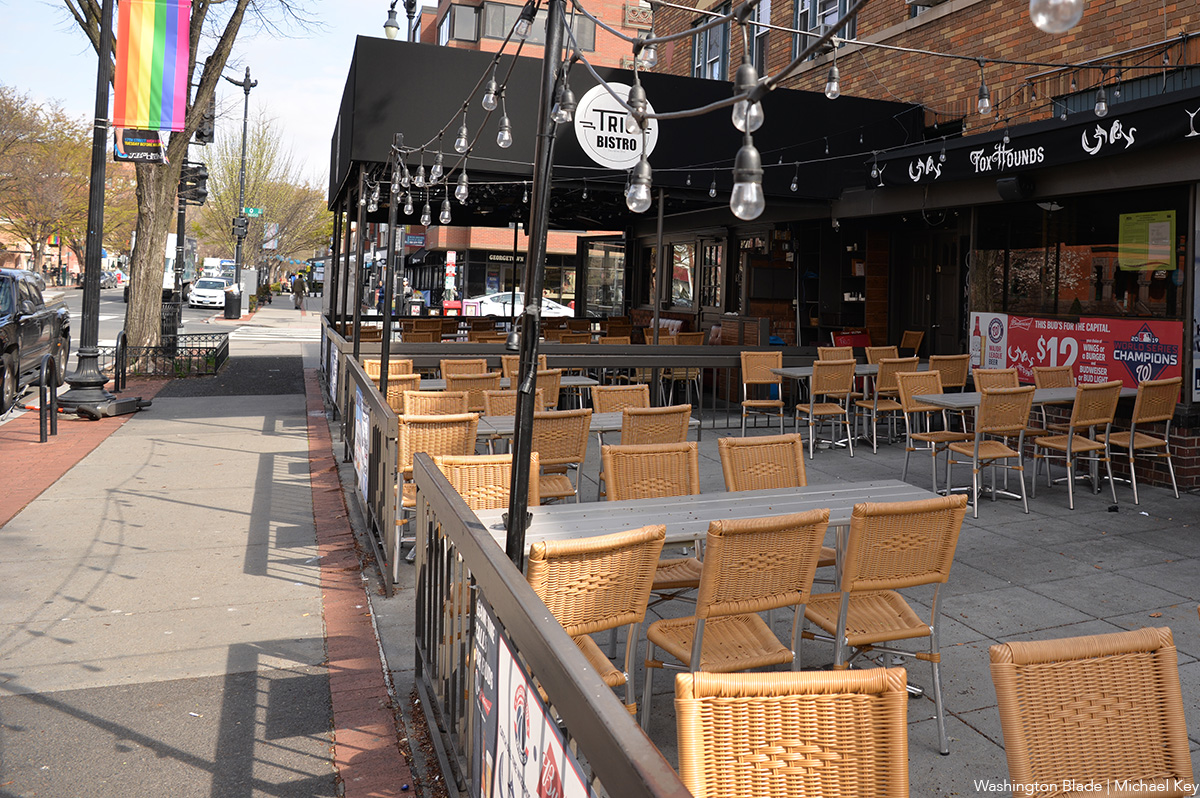
For 75 years, along the 17th Street corridor that has long been a bastion of LGBTQ social and cultural life, Trio Bistro and Fox and Hounds Lounge have served customers. On Nov. 2, these two mainstays will close their doors.
Owner Mourad Menjelloun wrote that, “For decades, Trio has been more than just a restaurant; it has been a second home for so many of us, both for our guests and our dedicated staff. Our team is a family, and many have spent decades building the connections and community that made Trio so special.”
Although the owner was not gay, both businesses became a safe space for many LGBTQ locals, similar to Annie’s Paramount Steak House, also located on 17th Street. Many LGBTQ social and professional groups used Trio as a meeting place to plan activities and hold events.
Trio Bistro and Fox and Hounds share a kitchen, though they have two separate dining areas. Trio, located on the corner of 17th and Q streets, N.W., is known for its diner-style fare and huge red-and-green neon sign advertising “good food” above the door. With two covered patios wrapping around on both streets, Trio was known for its burgers, steaks, pasta, and other all-American entrees. It was also well-known for brunch, bringing in social sports teams, longtime friends, and groups discussing the previous night’s activities.
Fox and Hounds, right next door, was a more relaxed, bar-focused space. Its large, social patio attracted those who live in the neighborhood and people from outside, for the long happy hour, the people watching, and the casual atmosphere. Customers especially were drawn to the digital jukebox and 80-inch TVs.
The local blog Prince of Petworth posted a short history of Trio, which opened in 1950 by a couple, Pete and Helen Doukas.
In an email, Menjelloun stated that “After three decades of my own life poured into this place, and having shared the news with our loyal customers and neighbors, I can tell you that this decision was not made lightly. Unfortunately, we were unable to extend our lease.” He also noted that a significant number of employees had been with the restaurants for more than a decade, including one waitress who was part of the team for more than 30 years. He set up a GoFundMe to support the staff once the restaurant closes.
In the face of the sudden closure, there will be a goodbye party on Nov. 2, 5 p.m.-12 a.m. for one final gathering.
“As we prepare to close, we are filled with gratitude for the memories, celebrations, and everyday moments you have shared with us. Thank you for making Trio a part of your lives. We will cherish the relationships we have built forever,” Menjelloun stated.

Stephen Miller, key architect of anti-LGBTQ policies, named White House chief of staff

Escritora trans venezolana reivindica una fe sin exclusiones ante la visita del papa a Sudamérica

Baltimore lawmaker’s ex-treasurer charged with theft of $87K in campaign cash

LGBTQ elected officials, activists around the world welcome U.S. election results

PHOTOS: Halloween at Crush

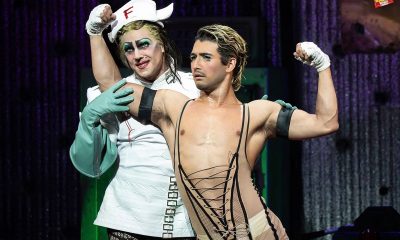
Meet the talented makeup artist behind Broadway’s ‘Rocky Horror’

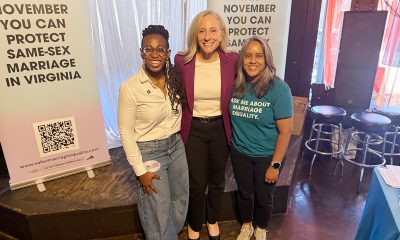
Spanberger campaigns in support of Question 2

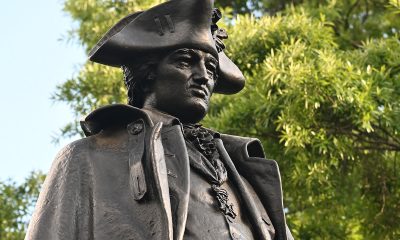
Remembering a gay Revolutionary War hero amid today’s political battles

Australia’s first gay state governor takes office

LGBTQ+ History Month reminds us: the future we imagine can become reality
-

 a&e features3 days ago
Meet the talented makeup artist behind Broadway’s ‘Rocky Horror’
-
Virginia5 days ago
Spanberger campaigns in support of Question 2
-
History4 days ago
Remembering a gay Revolutionary War hero amid today’s political battles
-
Australia4 days ago
Australia’s first gay state governor takes office