Books
Cher’s memoir a funny, profane take on celebrity
‘Part One’ focuses on childhood, abandonment

‘Cher: The Memoir Part One’
By Cher
c.2024, Dey St.
$36/413 pages
Mother knows best.
At least that’s what she’d like you to think because she said it a hundred times while you were growing up, until you actually believed. One day, though, if you were lucky, you learned that Mother didn’t always know best, but she did her best – like in the new book “Cher: The Memoir Part One” by Cher, when Mom helped make a star.

Though she doesn’t remember it, little Cheryl Sarkisian spent a few weeks in a Catholic Charities orphanage when she was tiny, because her father had disappeared and her mother couldn’t afford to take care of her. “Cheryl,” by the way, was the name on her birth certificate, although her mother meant to name her “Cherilyn.”
That first time wasn’t the last time little Cher was left with someone other than her mother, Jackie Jean, a beautiful, talented struggling singer-actress who’d been born into poverty and stayed there much of her life. When money was tight, she temporarily dropped her daughter off with friends or family, or the little family moved from house to house and state to state. Along the way, relocating in and out of California gave Cher opportunities to act, sing, and to learn the art of performance, which is what she loved best.
In the meantime, Jackie Jean married and married again, five or six husbands in all; she changed her name to Georgia, worked in the movies and on TV, and she gave Cher a little sister, moved the family again, landed odd jobs, and did what it took to keep the lights on.
As Cher grew up in the shadow of her glamorous mother, she gained a bit of glam herself, becoming sassy and independent, and prone to separation anxiety, which she blamed on her abandonment as a small child. In her mother’s shadow, she’d always been surrounded by movie and TV stars and, taking acting classes, she met even more.
And then she met Salvatore “Sonny” Bono, who was a friend before he was a lover. So, here’s the very, very happy surprise: “Cher: The Memoir Part One” is a downright fun book to read.
If you’ve ever seen author Cher in interviews or on late night TV, what you saw is what you get here: bald-faced truth, sarcastic humor, sass, and no pity-partying. She tells a good story, ending this book with her nascent movie career, and she leaves readers hanging in anticipation of the stories she’ll tell in her next book.
The other happy surprise is that this memoir isn’t just about her. Cher spends a good amount of the first half writing about her mother and her grandmother, both complicated women who fought to keep their heads and those of their offspring above water. Readers looking between the lines will be enthralled.
Surely, “Cher: The Memoir Part One” is a fan’s delight, but it’s also a great memoir for anyone who particularly loves the genre and doesn’t mind a bit of profanity. If that’s you, then you got this, babe.
The Blade may receive commissions from qualifying purchases made via this post.






Books
Kim Kardashian gets the bio treatment in new book
Reality TV star knew at a young age how to use Internet for fame

‘Citizen Kim: The Woman Who Created the Future’
By Jonathan Van Meter
c.2026, Viking
$32/352 pages
It’s an untouchable time of your week.
No matter what, watching your favorite show is solidly on your schedule. Your computer’s off. Your phone’s on silent and the TV’s warm. Even if it means hours of bingeing, you can’t resist being in the know – but what don’t you know? “Citizen Kim” by Jonathan Van Meter lets you peek behind the scenes.
For most of her life, Kim Kardashian has been in the limelight.
When she was just an infant, her parents’ second daughter, strangers would exclaim what a remarkably beautiful child she was. Others said she was “stunning.” At age 13, she had the curves of someone years older, and she wasn’t afraid to show them off.
By spring of 1994, she already had her iconic look set.
Even then, says Van Meter, Kardashian seemed intuitively knowledgeable about what it would take to achieve stardom. She recognized that sharing everything she did was key to becoming famous, but that being savvy about doing so online was also important. She understood what was then a quickly evolving, generationally steered pop culture – an awareness driven, he believes, by financial problems, trauma, and emotions that trailed her parents’ divorce.
That, says Van Meter, truly was what primarily made Kim Kardashian. Her mother’s friendship with Nicole Brown Simpson, Brown Simpson’s murder, and the “Trial of the Century” likely contributed to who Kardsahian became. Her mother’s marriage to Bruce Jenner (now Caitlyn Jenner) also affected who she is now.
Today, thrice divorced, Kardashian is a wealthy woman, owner of two hugely successful businesses and the creator of several more. She has overcome the scandal of a sex tape, the hurt of family drama, and the turmoil of life with Ye. Says Van Meter, she most definitely is not just “famous for being famous.”
Quick: move your eyes left. Look right. Up, down. If you’re not a fan, those exercises will keep your eyeballs limber, and in rolling shape.
If you’re not a Kardashian fan, in other words, you can stop reading now.
But will this book satisfy a fan?
Hard to say, because more than half of “Citizen Kim” is about everybody else in Kardashian’s sphere: her mother, father, grandmother, siblings, husbands, her mother’s friends, Kardashian’s friends, and Caitlyn Jenner (whom author Jonathan Van Meter refers to as “Bruce” when chronologically appropriate, as Jenner prefers). Van Meter also goes into detail about a three-decade-old murder that’s suddenly back in the news; fashion, and other odds and ends that are good to know and that may’ve affected his title subject, but that are points belabored.
And yet, avid and deeply interested readers will appreciate the dish about Kim Kardsahian, her life, and her life strategy, things they’ll be eager for. There’s plenty here to satisfy, in the kind of tell-much that makes fans drool.
If that’s you, and you just can’t get enough Kardsahian, “Citizen Kim” absolutely belongs on your sofa, right next to your remote and your bingeing schedule. If you’re absolutely not a fan, though, you might find this book all but untouchable.
The Blade may receive commissions from qualifying purchases made via this post.
Books
In ‘The Lost Brontë,’ a complicated lie can lead to danger
New book features sweetly romantic girl-meets-girl twist
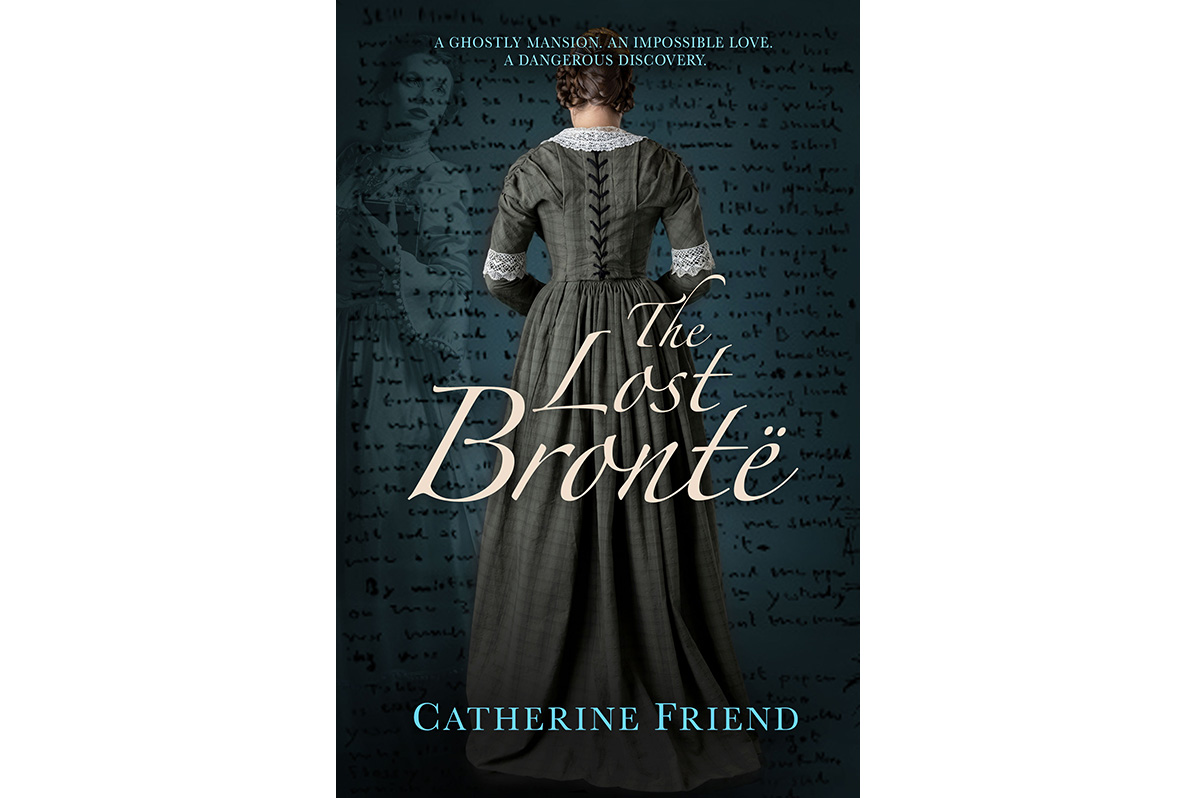
‘The Lost Brontë’
By Catherine Friend
c.2026, Bywater Books
$22.95/335 pages
Mom always said to tell the truth.
One lie leads to another and another and you have to remember them all until pretty soon, you’re caught. Fibs are hard, mistruths are messy, even little white social lies can destroy trust. Worst of all, as in the new novel, “The Lost Brontë” by Catherine Friend, a complicated lie can lead to danger.
Though Lilianne Loxley was very young when she lost her parents, she understood that her uncle didn’t really want her. As time passed, though, Lily made herself useful to Uncle, writing and signing letters for him and she became a good companion, helping him with his collection of Brontë memorabilia. Uncle was a keen enthusiast.
She had no idea that his obsession was out of control and he was deeply in arrears. The day Lily learned of his debt was the day she learned that he’d agreed to send her to his debtor’s home to work off the money owed.
It was so sudden. One minute, Lily was at Loxley House, happy and loved by Uncle’s staff … and five hours later, she was at Crag Thorn Manor, home of Lord Bexton, who informed her that she’d be working on his ledgers – work that seemed routine, but Lily tackled it.
Uncle always did say she was headstrong.
But would headstrong be enough to survive, when she was restricted from most of the Manor, when she was forced to dine with Brexton and his slimy friend, or – the worst! – when Brexton told Lily that her next task was to forge a letter from Emily Brontë? And then an entire manuscript?
Lily struggled to do what was right. She had to get Uncle out of debt but this last order horrified her. Did she dare refuse Brexton’s orders and commit a crime? It was unthinkable!
The only brightness in the whole situation was Wren, the ladies’ maid assigned to Lily’s room. Wren was adorable with freckles and the sweetest smile. But with everything else happening at Crag Thorn Manner, could Lily act upon her feelings?
This time of year, you may come to crave dark, spooky stories, and “The Last Brontë” fits those needs perfectly with its Gothic deliciousness. Think: Daphne du Maurier-type, stormy-night squirms with a dangerously chaste, sweetly romantic girl-meets-girl twist for fun.
If it’s been awhile since you’ve read a Gothic novel, you’re in for a nice reminder of why you love them here. You can almost tick off the must-haves: a novel like this is nothing without a foreboding stone manor with damp walls; stone steps to a dank basement; a mysterious portrait; and a nearby bog, and author Catherine Friend gives readers every one of them. You’d be disappointed if there was no ghost, wouldn’t you? Ha. You can practically feel the cold blow through the attic, right? Yeah, it’s that kind of book.
If you’re a fan of the Brontës, you’ll like this novel. If you love Gothic mysteries or Victorian romances, ditto. “The Lost Brontë” is good, no lie.
The Blade may receive commissions from qualifying purchases made via this post.
Books
Eliot Glazer’s new book an engaging collection of essays
From growing up gay to turning down ‘Queer Eye’
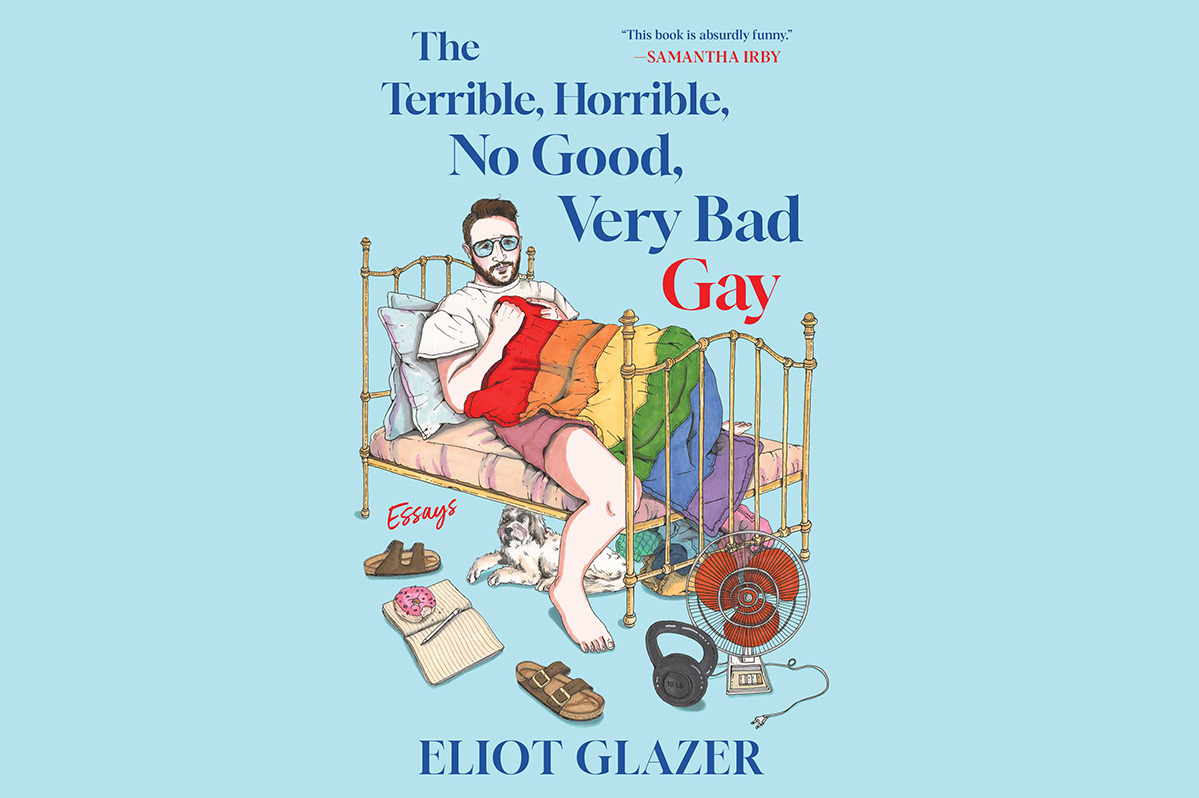
“The Terrible, Horrible, No Good, Very Bad Gay: Essays”
By Eliot Glazer
c.2026, Gallery Books
$28.99/240 pages
You try and you try.
Once, twice, you go back at that thorny issue, the dream you have, the punchline that’s not hitting quite right. Sometimes, time is all you need to make it better, or a new approach, or a second look. And then there are days when you actually get things right, as in “The Terrible, Horrible, No Good, Very Bad Gay” by Eliot Glazer, and it’s all good.
Throughout his life, Eliot Glazer has made mistakes. And it’s OK, everybody trips and falls now and then. In his case, though, he’s perfectly willing to document his failures, foibles, and whoopsies in this book.
He writes of his mother, Sandi, “a Queens-born balabosta” who wouldn’t tolerate laziness in herself or Glazer. He found work as soon as he was legally able to do so, and he had many jobs throughout high school. He was a gardener, ice cream scooper, camp counselor, golf caddy, chocolatier, telemarketer, and video store clerk. The one that fit him best, however, was working at Talbots, a department store for older women, where he found his people.
Even with all those jobs, he was a theater kid in his time off, little though it was. Back then, he was just a boy growing up on Long Island but swagger was important, so swagger he did. He still appreciates a good Broadway show, even the silliest ones.
Glazer says that he had just recently come out when gayness exploded on TV with “Will & Grace” and “Queer Eye for the Straight Guy,” with which he was obsessed. It helped him feel not othered, he says. Producers of the reboot asked him to be a second-generation Eye, but Glazer turned them down, though he thinks he’d have been good at it.
The show helped him with love of décor. His unexpected advisory skills came naturally, through age and wisdom and learning that wild partying isn’t really so much fun.
As for finding love, well, that’s a long, boy-meets-boy-meets-boy story…
So you’re looking for something to easily pick up and put down, something that speaks to your inner impatience? You’ll find that in “The Terrible, Horrible, No Good, Very Bad Gay,” a book that’s practically meant for you to skip around and you don’t have to read everything.
Essays can be like that, which is nice, even refreshing. Author Eliot Glazer is entertaining enough to make things work, engaging enough to keep it moving, and funny enough to make you want more of what he has to say. He’s open with his life and, despite his fame, his writing isn’t lofty; you can expect stories that’ll make you snort and ones with spice, but also some surprisingly tender moments that soften this book in a way that’s just right.
Readers who want a quick, mostly light book to finish will find something appealing in this collection of essays. If you don’t mind a bit of non-linearity and you need a laugh, “The Terrible, Horrible, No Good, Very Bad Gay.” is worth a try.
The Blade may receive commissions from qualifying purchases made via this post.

Top Lebanese newspaper calls for decriminalization of homosexuality

Turkey’s anti-LGBTQ crackdown overshadows UN climate conference

Ruby Corado files motion for early release from prison

Gay VIDA Fitness shooting victim remembered

Gay man named Venezuelan foreign minister

Free HIV/STI testing on Nov. 18

Calendar: November 13-19

LGBTQ community responds with support after shooting at gay-owned VIDA Fitness

Barcelona to host WorldPride in 2030