District of Columbia
Death of D.C. gay robbery victim ruled a homicide
Police pursuing additional charges against two juveniles
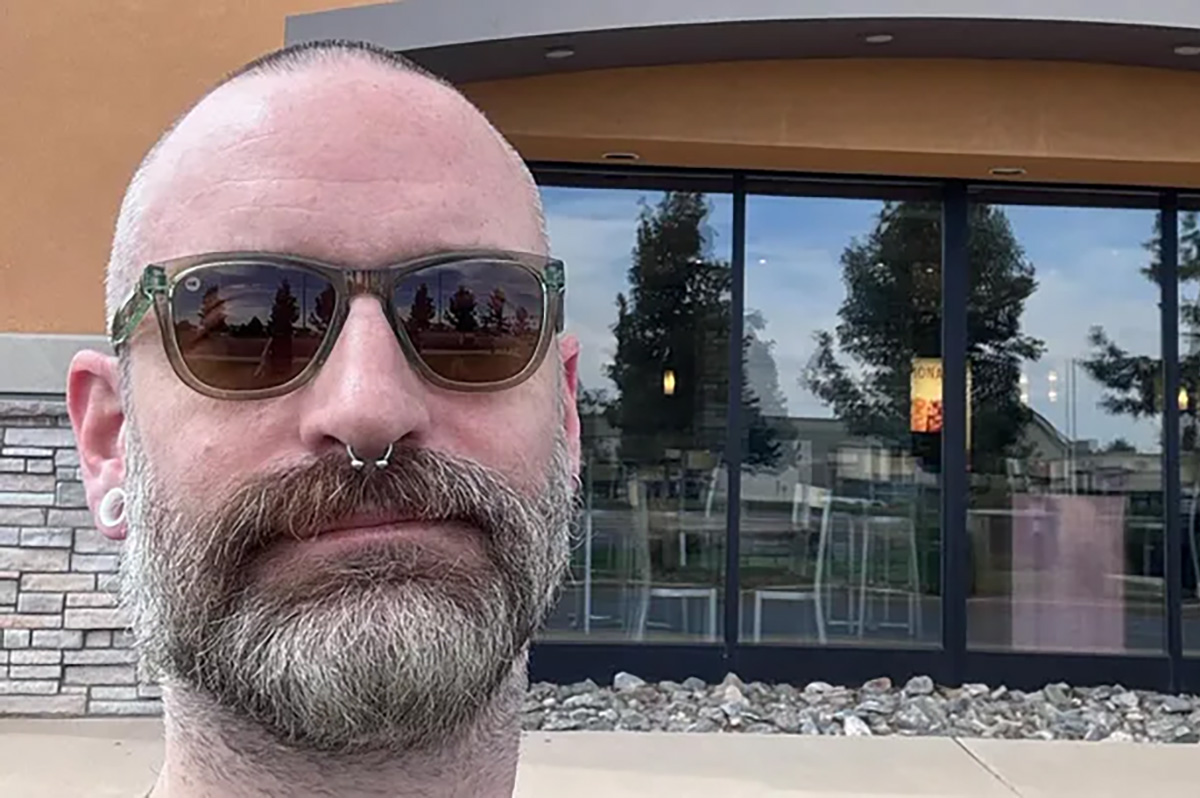
D.C. police announced on Feb. 15 that the death of gay DJ and hairstylist Bryan Smith, 39, who police say was assaulted and robbed Oct. 27, 2024, in the 500 block of T Street, N.W., has been ruled a homicide.
Police said Smith was found unconscious at about 5 a.m. on the street where they believed he was assaulted and robbed and taken to a D.C. hospital. A short time later he was transferred at the request of family members while in a coma to a Northern Virginia hospital, where he died on Nov. 7.
“On Thursday, February 13, 2025, the Northern Virginia Medical Examiner’s Office advised that the cause of death for the victim was blunt force trauma and the manner of death a homicide,” the D.C. police statement says.
The statement notes, as the Washington Blade and other media outlets have reported, that D.C. police on Nov. 14, 2024, arrested two juvenile males, 14 and 16 years of age, on robbery and assault charges in connection with the assault and robbery of Smith.
At the time of the arrest, police said they had evidence showing the two juveniles were implicated in three other assault and robbery incidents that occurred on the same night as the assault and robbery of Smith in nearby locations.
According to the statement, D.C. police detectives are working with the Office of the D.C. Attorney General, which prosecutes crimes committed by juveniles, to determine whether “additional charges” should be brought against the two juveniles following the determination that Smith’s death was a homicide.
The arrest of the two juveniles was announced by D.C. Police Chief Pamela Smith at a Nov. 15 press conference near the site where Smith was attacked.
“We are here today to announce the arrest of two suspects responsible for a series of robberies in this community on Sunday, Oct. 27, including the robbery of 39-year-old Bryan Smith, who was walking home in the 500 block of T Street, N.W.,” Chief Smith told reporters attending the press conference.
“On behalf of the Metropolitan Police Department as well as myself, I send my deepest condolences to Mr. Smith’s family as well as his friends,” Chief Smith said. “While nothing can undo this senseless loss, we hope today’s arrests are of some measure of justice and a step toward healing,” she said.
Chief Smith also said that police investigators had no evidence to indicate the assault and robbery of Bryan Smith was “motivated by hate or bias.”




District of Columbia
Bowser, Office of LGBTQ Affairs announce LGBTQ+ History Month events
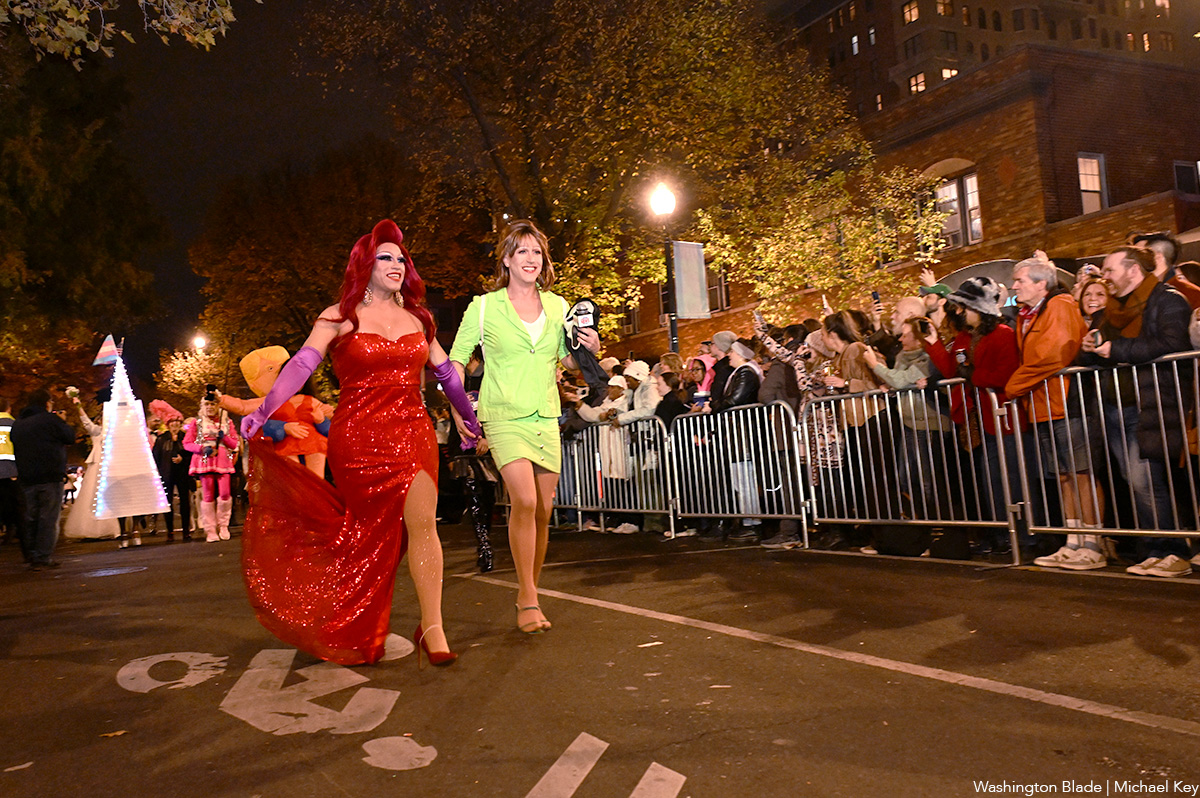
High Heel Race to take place Oct. 27
D.C. Mayor Muriel Bowser and the D.C. Mayor’s Office of LGBTQ Affairs have announced they will join the local LGBTQ community in celebrating LGBTQ+ History Month throughout October.
An Oct. 2 joint statement from Bowser and the Office of LGBTQ Affairs says the celebration will include several events in partnership with D.C. LGBTQ organizations and LGBTQ businesses. It says among the events will be a “Birthday Bash” celebrating the 20th anniversary of the Office of LGBTQ Affairs.
“Throughout October, Washingtonians are invited to honor the people, places, movements, and milestones that have shaped the District’s LGBTQIA+ community and the community’s ongoing contributions to Washington, D.C.,” the statement says.
“LGBTQIA+ History Month is a reminder that our history is not simply something we look back on — it is something we continue to make,” Japer Bowles, director of the Office of LGBTQ Affairs said in the statement.
Bowles added that in celebrating the 20th anniversary of the Office of LGBTQ Affairs “we honor the generations of advocates, artists, organizers, businesses, and residents who built our community and continue to shape its future. This milestone is an opportunity to celebrate how far we have come while continuing to build a more welcoming, inclusive and connected Washington, D.C.”
Equality Forum, the Philadelphia-based group that initiated the nationwide annual LGBTQ+ History Month in October, has said it recognizes the history, achievements, and contributions of LGBTQ people and the organizations they have led to advance the rights of LGBTQ people.
The statement released by Bowser and the D.C. Mayor’s Office of LGBTQ Affairs says these are among the upcoming events planned for October:
The Relationship Lab: A Healthy Relationships Series
Join us for an engaging series exploring what makes relationships healthy and how to recognize the signs when they’re not. Facilitated by DC SAFE in partnership with MOLGBTQA (The Mayor’s Office of LGBTQ Affairs.)
- When: Tuesday, Oct. 6, 13, and 20, 6-7:30 p.m.
- Where: 899 North Capitol St. N.E.
- RSVP: The Relationship Lab
MOLGBTQA Birthday Bash
Join us for the 20th Anniversary Celebration! We will be hosting an upbeat gathering, highlighting community leaders, advocates, artists, and institutions who have advanced LGBTQIA+ progress in Washington, D.C. over the last two decades. This event will highlight key milestones and the contributions of LGBTQIA local community partners with live entertainment and free refreshments.
- When: Thursday, Oct. 15, 6-9 p.m.
- Where: Penn Social (801 E St. N.W.)
- RSVP: s.dc.gov/MOLGBTQABday
Mayor’s LGBTQ+ Advisory Committee
Come get to know the newest members of the Mayor’s LGBTQ+ Advisory Committee. This diverse group of leaders, business owners, and advocates advise the mayor and Director Bowles on issues relating to DC’s LGBTQIA+ community and the Office of LGBTQ Affairs.
- When: Monday, Oct. 19, 6-7 p.m.
- Where: DC LGBTQ+ Community Center (1827 Wiltberger St., N.W.)
- RSVP: s.dc.gov/LGBTQMACoct
39th Annual 17th Street High Heel Race
Join us for the High Heel Race, cheering the queens, kings, and our community members as they sprint down 17th Street in heels, creativity, and pure D.C. spirit. From lively drag performances to thousands of neighbors filling the street, don’t miss this D.C. night!
- When: Tuesday, Oct. 27, 6-10 p.m.
- Where: 17th Street between R and P Streets, N.W.
- RSVP: s.dc.gov/2026HHR
What appeared to be the first LGBTQ+ History Month-related event to take place in D.C., called PRIDEtoberfest, was held Saturday, Oct. 3 from noon to 11:30 p.m. at the city’s Wunder Garten outdoor beer garden and event facility at 1101 First St., N.E. A flyer announcing the event says the Capital Pride Alliance and the Mayor’s Office of LGBTQ Affairs were among the event’s participants.
“We proudly attended, tabled, and I gave remarks at the Pridetoberfest this weekend,” Japer Bowles, director of the LGBTQ Affairs Office told the Blade.”
District of Columbia
To school to homeschool to school again
‘Pandemic took more than 2 years of school. It took 2 years of my childhood’
It wasn’t until I no longer had those 30 minutes of lunch and recess, when all the boys and girls would come together to trade bracelets, make up games, gossip about who we liked, play tag and sports, that I realized how much of my childhood happened during the parts of school that had nothing to do with schoolwork.
I was in the third grade when the COVID-19 pandemic began. I remember my parents explaining that I couldn’t go back to school and wondering when I would see my friends again — or whether I wanted to go back at all. But after spending two years learning from home, cut off from the friends, teachers and routines I had known, I began to understand what I had lost.
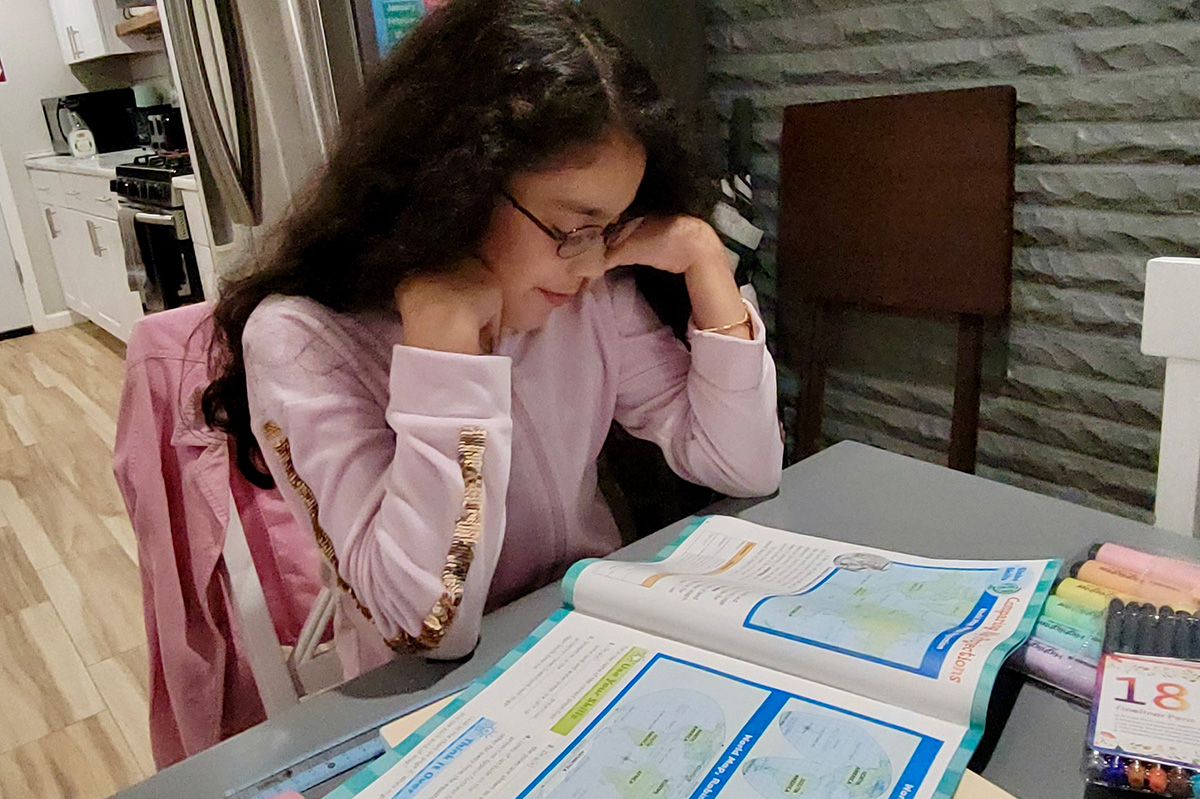
For many of my friends and classmates, going to school changed from a bus ride every morning to clicking a link and seeing their teachers and classmates through a screen. My experience was a little different. Instead of going to virtual school, I was homeschooled. My new routine was sitting at my kitchen table, with my mom teaching me how to write a paragraph or solve a math problem, surrounded by the same walls I saw every day.
My family was not alone. Many families across the country turned to homeschooling after schools shut down. Homeschooling increased sharply during the pandemic, especially among Black families, rising from 3.3 percent in the spring of 2020 to 16.1 percent that fall, according to the U.S. Census Bureau’s Household Pulse Survey.
It would be two years before I entered a classroom again.
At first, I loved homeschooling.
I didn’t have to wake up early or put on a uniform. I liked the comfort of my own room, surrounded by my stuffed animals and toys. I didn’t have to push my way through that horrible lunch line because my food was now waiting for me at the kitchen table.
It felt like a fever dream where school was canceled and all day was fun. That was my view as a 9-year-old.
But as days turned into weeks and weeks into months, that initial excitement wore off.
Every day became the same routine. There was no recess when I could play princess with all the other girls. There were no conversations in the lunch line and none of the small things that had broken up the school day before. I didn’t realize how much those moments mattered until I could no longer experience them.
With less to look forward to, I started spending more time on the internet.
I turned to platforms such as YouTube and TikTok to distract myself. Instead of seeing what the kids around me were doing every day, I could watch people online show off their clothes, makeup, dances, art and lives.
Over time, I started comparing myself with what I saw. I thought the way I dressed was childish and wanted to be like the superstars I saw online. I followed what was trendy and admired the girls and boys who looked so confident on screen.
Before the pandemic, my friends and I didn’t need the internet to tell us what was popular. But during those years at home, I became much more aware of what other people thought was cool and what someone my age was supposedly supposed to like. I felt as though I was growing up without getting to experience all the steps in between.
When I finally returned to school, I thought my classmates would be excited to see each other again after spending so much time apart.
Instead, I realized how much we all changed.
When I walked through those doors, I remembered vague memories of running down those halls and always seeing my peers with smiles on their faces. Now those same faces were tired, with eye bags. The lunchroom, which used to be full of life with happy kids eating to their hearts’ content, turned into a lunch where all the girls controlled what they ate and talked about the latest trend on TikTok.
Maybe some of that change would have happened anyway. Kids grow up. Interests change. Middle school has always been awkward.
But I didn’t get to watch my classmates gradually change or change alongside them. I left one social world and came back to another.
When I returned, I was expected to understand a social world that had changed while I was gone. I felt I missed so much that I would never get back, and without that day-to-day learning to help me adapt to these new norms, I struggled.
Those everyday interactions are an important part of how children learn to get along with others: A 2026 meta-analysis of 157 studies from 33 countries published in the academic journal Child Development found that children’s social and emotional skills declined during the pandemic, along with their overall well-being. The researchers noted that schools are not just places where children learn math and reading. They are also places where children learn how to make friends, work through disagreements, understand other people’s feelings and manage their own emotions.
Years later, many parents say some of those effects are still being felt. In a 2025 Gallup survey, 45 percent of parents with school-age children said the pandemic hurt their child’s social skills, and 22 percent said those problems were still ongoing. Forty-two percent said the pandemic negatively affected their child’s mental health. Parents were more likely to report problems with their children’s social skills and mental health than with their academics or physical health.
I saw some of those changes around me, too. Classmates who once seemed outgoing became quieter or more withdrawn. Starting conversations felt harder. Making new friends felt harder. Sometimes retreating into myself felt easier than trying to figure out where I belonged.
Now, the kids who were in elementary school when the pandemic began are moving through high school. We are older, but some of us are still figuring out what those missing years meant.
Before the pandemic, I thought lunch and recess were simply breaks from learning. Now I understand that we were learning during those 30 minutes, too. We were learning how to make friends, how to disagree and make up, how to be embarrassed and recover from it, what we liked and what we didn’t, and slowly who we wanted to become.
I can’t know exactly who I would be if I had spent those years inside a classroom instead of at home. Maybe middle school still would have been awkward. Maybe I still would have worried about fitting in.
But I know I missed something I didn’t understand was important until it was gone: the ordinary, sometimes boring, sometimes ridiculous parts of growing up alongside other kids.
You can make up schoolwork. You can return to the classroom. But there are some parts of childhood you don’t get to repeat.
Gloria Collazo Huamani is a sophomore at Benjamin Banneker Academic High School in D.C., one of Youthcast Media Group’s journalism class partners. Gloria worked with James Jarvis, a YMG mentor-editor and reporter for Inside Health Policy, on this story.
District of Columbia
Former Capital Pride board member reiterates sexual harassment allegation
Trans activist says resignation of board chair won’t change org’s culture
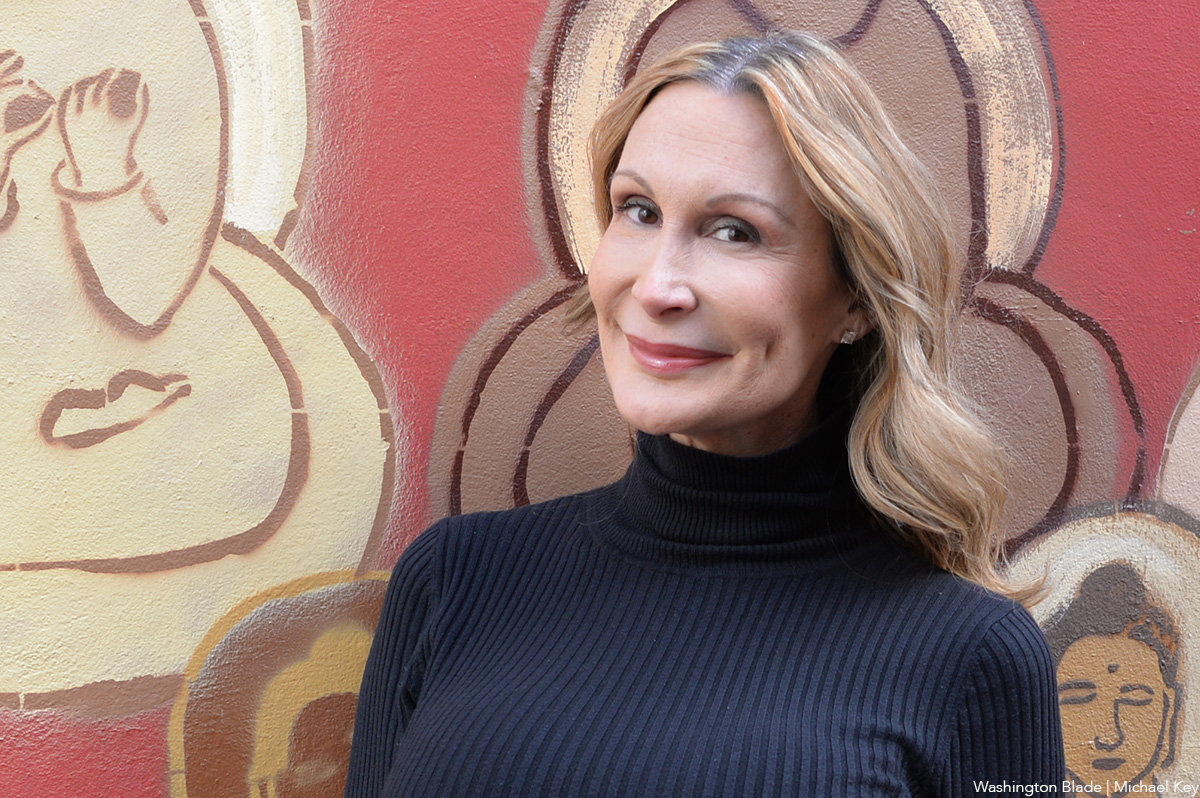
Taylor Lianne Chandler, who earlier this year resigned from the Capital Pride Alliance Board of Directors after expressing concern that the board failed to address instances of “sexual misconduct” within the Capital Pride organization, said this week she doesn’t believe her concerns will be addressed following the resignation of the board’s current chairperson.
Capital Pride Alliance serves as the lead organizer of D.C.’s annual LGBTQ Pride events.
Anna Jinkerson, who has served as chair of the Capital Pride board for only 10 months and has served on the board for the past four years, confirmed she is resigning from the board effective Sept. 30.
In a statement to the Washington Blade commenting on the possible impact of Jinkerson’s resignation, Chandler said Capital Pride board member Natalie Thompson would be replacing Jinkerson as board chair, and she didn’t expect that change to impact what she called Capital Pride’s problematic “culture.”
But Ryan Bos, the Capital Pride president and CEO, told the Blade that Thompson had not been selected as the new board chair and that a new chair would not be selected until the board holds an election scheduled for October.
Chandler, who identifies as transgender, said it was a Capital Pride board member who told her that Natalie Thompson had been or would be selected as the new Capital Pride board chair. She didn’t identify the board member.
“My concerns about how Capital Pride has handled serious allegations of sexual misconduct have not disappeared with a change in leadership,” she told the Blade in her statement. “When leadership continues to socialize, smile for photographs, and share spaces with someone facing serious allegations, what message does that send to the people who say they were harmed,” she said.
Chandler has told the Blade a Capital Pride investigation identified an individual implicated in a “pattern” of sexual harassment-related behavior but said she was bound by a Non-Disclosure Agreement that applied to all board members and she could not provide further details.
When asked by the Blade to comment on Chandler’s allegations at the time she resigned from the board in February of this year, board chair Jinkerson said Capital Pride acts “quickly and appropriately” to address concerns such as those raised by Chandler. But she and other Capital Pride officials did not at that time or since then specifically acknowledge whether someone associated with the organization engaged in sexual harassment.
“The community deserves transparency, accountability, and leadership willing to make difficult decisions,” Chandler said in her statement to the Blade this week. “Changing the chair doesn’t change the culture,” she added. “Actions do.”
In response to a request from the Blade for an update on its response to Chandler’s allegations about alleged sexual misconduct within the Capital Pride organization, Bos sent the Blade a statement on behalf of Capital Pride.
“The Capital Pride Alliance takes allegations of harassment, misconduct, and unsafe behavior seriously,” the statement says. “The organization follows standard procedures and engages appropriate resources to support a thorough, confidential, and impartial review, when information is reported.”
The statement adds, ”Because these matters require maintaining confidentiality and protecting the privacy of personnel, volunteers, and governance processes, we will not comment on specific individuals, allegations, investigative findings or communications involving law enforcement.”
It concludes by stating, “We remain committed to fostering a safe, respectful, and inclusive environment, appropriately addressing concerns raised, and continuing to strengthen our policies, governance practices, and organizational culture.”
Although the statement refers to “communications involving law enforcement,” Capital Pride has not disclosed whether instances of alleged sexual harassment or, as stated by Chandler, a possible instance of sexual assault, have been reported to D.C. police.
A D.C. police spokesperson, in response to a Blade inquiry, said they have no record of a sexual harassment or sexual assault complaint surfacing from the Capital Pride office, which is located in the D.C. LGBTQ+ Community Center building at 1827 Wiltberger Street, N.W.
But the Blade has obtained a D.C. police incident report that appears to confirm Capital Pride COO June Crenshaw’s claim in a recent Facebook post that she reported at least one incident of sexual harassment related to Capital Pride to D.C. police.
The report, which was filed on Oct. 11, 2025, states that Crenshaw told a police officer who prepared the report that another person told her “that a board member of Capital Pride Alliance groped his genitals at a Capital Pride event.” The report says Crenshaw told the officer the person who reported being groped “did not want to speak to the police at this time.”
The incident report, which is a public document, says the person who reported the groping told Crenshaw about it on Oct. 8, 2025. It concludes by saying Crenshaw was given “resource information” to provide to the person who said he was groped. It does not identify that person or the board member who allegedly committed the groping.
Officials at Capital Pride recently exchanged testy public Facebook posts with Chandler. Crenshaw criticized Chandler for her social media posts on the matter.
“It is remarkable to watch people publicly accuse others of failing to create safe spaces when, during the time they themselves held positions of leadership and significant volunteer responsibility, they claim to have witnessed deeply troubling behavior, yet never reported what they allegedly witnessed to fellow leaders, law enforcement, the Office of the Attorney General, legal counsel, or staff responsible for addressing such concerns,” Crenshaw wrote. “When I became aware of allegations or personally witnessed conduct that required intervention, I reported what I knew through the appropriate channels, including to law enforcement and other relevant authorities. Investigations were conducted. Those processes created records, documentation, correspondence, timelines, and conclusions.”
Chandler responded, “I was NOT in organizational leadership or fully informed about the scope of these allegations when much of what you reference occurred. I was read into the situation after becoming an executive officer. By that point, the investigation had already concluded, and we were awaiting the final report. … Once that report became available to me, and once I understood the seriousness and scope of what was being alleged, my position was anything but ambiguous: I did not believe this individual should be welcomed at, participate in, or have access to official Pride events.”
Capital Pride’s attorney Nick Harrison then joined the exchange, accusing Chandler of violating confidentiality rules.
“You served on the Board for years. You cannot now present yourself as an outsider with no responsibility for what occurred during your tenure,” Harrison wrote. “When the situation became difficult, you resigned, provided your resignation letter to the media, disclosed confidential organizational matters, and recast yourself as the victim.”
Again, no one has publicly identified the person Chandler references as being welcome at Pride events and photographed with Capital Pride leadership.

Bowser, Office of LGBTQ Affairs announce LGBTQ+ History Month events

PHOTOS: Winchester Pride

Evan Low is not the leader the Victory Fund needs at this moment

Transgender woman elected to Brazilian Chamber of Deputies

Lula, Flávio Bolsonaro to face off in second round of Brazilian presidential election

Gay Va. couple hopeful voters will enshrine marriage equality in state constitution

Victory Fund board investigates former staffers’ allegations against CEO Evan Low

LGBTQ community must vote in big numbers

The right to be an ordinary transgender man

Calif. governor signs 6 pro-LGBTQ bills, vetoes 1
-

 Virginia4 days ago
Gay Va. couple hopeful voters will enshrine marriage equality in state constitution
-
LGBTQ Non-Profit Organizations4 days ago
Victory Fund board investigates former staffers’ allegations against CEO Evan Low
-
Opinions4 days ago
LGBTQ community must vote in big numbers
-
Opinions4 days ago
The right to be an ordinary transgender man