India
India’s first transgender healthcare clinic reopens
Mitr Clinic closed after losing USAID funding
A U.S. Agency for International Development funding freeze in January forced the closure of India’s Mitr Clinic, the country’s first transgender healthcare facility, disrupting critical services for a vulnerable population.
Six months later, the clinic has reopened as Sabrang Clinic, reviving access to essential care for the transgender community.
Major Indian corporations, including some of the nation’s largest multinationals, stepped up with substantial financial support. Their backing has enabled Sabrang Clinic to resume its mission of delivering specialized, stigma-free medical services.
The former Mitr Clinic on May 2 reopened as the Sabrang Clinic. YR Gaitonde Center for AIDS Research and Education, an HIV/AIDS service organization, manages the facility.
The Sabrang Clinic sparked controversy in the U.S. when U.S. Sen. John Kennedy (R-La.) in February denounced its USAID funding, arguing that American taxpayer dollars should not support trans healthcare initiatives abroad. President Donald Trump amplified the criticism, labeling the agency’s spending on such programs as “wasteful” and aligning with his administration’s broader push to curb federal support for gender-affirming care. White House press secretary Karoline Leavitt further fueled the debate, citing the clinic’s funding as part of a pattern of USAID’s “radical” expenditures, while House Speaker Mike Johnson (R-La.) echoed the sentiment, decrying similar international projects as misaligned with American priorities.
Elon Musk, who until May led the Department of Government Efficiency, added to the controversy surrounding the clinic.
“That’s what American tax dollars were funding,” he said in a Feb. 28 X post.
His remark, made before his departure from the Trump-Vance administration, spotlighted the clinic’s USAID support, intensifying debates over its role in delivering trans healthcare in India.
The Washington Blade on Feb. 27 detailed how the USAID funding freeze crippled Mitr Clinic’s operations, spotlighting the broader fallout for South Asian LGBTQ organizations.
The Blade noted the clinic, a vital resource for trans healthcare in India, faced abrupt closure alongside groups in Nepal, Bangladesh, and Pakistan, as the freeze slashed support for programs addressing HIV/AIDS, mental health, and gender-based violence, leaving thousands without access to essential services.
The U.S. President’s Emergency Plan for AIDS Relief (PEPFAR) and USAID in 2021 launched Program ACCELERATE, spearheaded by the Johns Hopkins University School of Medicine, to establish Mitr Clinic in Hyderabad in Telangana State. As India’s first comprehensive healthcare center for the trans community, the facility offered tailored medical services, including HIV/AIDS treatment and mental health support, filling a critical gap in the region’s healthcare landscape.
Sabrang Clinic serves a critical role for India’s estimated one million trans people, a population facing a disproportionate HIV/AIDS burden.
A 2019 Reuters report noted a 3.1 percent HIV prevalence among trans people, translating to roughly 31,000 individuals living with the virus, compared to the national adult rate of 0.26 percent. Similarly, a 2021 UNAIDS report cited a 3.8 percent prevalence, suggesting approximately 38,000 trans people with HIV/AIDS.
Internal reports indicate the clinic since it opened in 2021 has served more than 3,000 patients. It has become a model of community-led care that fosters trust and addresses the unique health needs of trans people in Hyderabad.
When USAID funding cuts forced Sabrang Clinic’s closure, scores of people and LGBTQ community members in Hyderabad were left without access to reliable, stigma-free healthcare. Undaunted, the clinic’s trans-led team pivoted to virtual consultations and medication delivery, sustaining critical support for patients until corporate funding revived operations.
Tata Trusts, a philanthropic arm of India’s Tata conglomerate, in April pledged to fund the clinic for three years.
The Hindu, a leading Indian English-language newspaper, reported the trust committed approximately $18 per person a year to sustain the clinic’s operations. This contrasts with the earlier USAID program, which had provided about $23 per person each year.
Tata Trusts covers the salaries of Sabrang Clinic’s core medical staff, while its leadership positions are jointly funded by Tata and the clinic’s parent organization. The clinic is now pursuing partnerships with additional donors to expand its trans-focused healthcare services.
“We are elated to continue this service, as we have always believed that sexual minorities deserve respect and their right to self-expression,” said YRGCARE Chief Operating Officer A.K. Srikrishnan. “That’s why we launched Mitr Clinic under Project ACCELERATE in 2021, and it operated until January 2025. The Trump administration’s USAID funding withdrawal forced a shutdown, but we have no comment on that. Fortunately, with great vigor, we secured support from Tata Trusts to sustain Sabrang Clinic. The name change to Sabrang, also called ‘Help for All,’ was simply to reposition the brand, with no deeper logic attached.”
Srikrishnan told the Blade that YRGCARE will aim to raise additional crowdfunding and support if the current funding proves insufficient to maintain the same level of services at the clinic. Srikrishnan also thanked Tata Trusts for its support.
“We want to expand it throughout the country given the choice,” said Srikrishnan. “If someone were to tell us, ‘Can you run it across the country?’ we would certainly love to do it.”
“Sexual minorities are a reality, and however much someone wishes them away, they exist and need to exist with the respect and rights they deserve,” added Srikrishnan. “We do not differentiate between local and foreign contributions; when we needed it most, Tata Trusts stepped in and helped. So we are certainly grateful to them.”




India
Activists fear India voter roll purge disproportionately targets trans, LGBTQ people
More than 130 million names have been removed under Special Intensive Revision
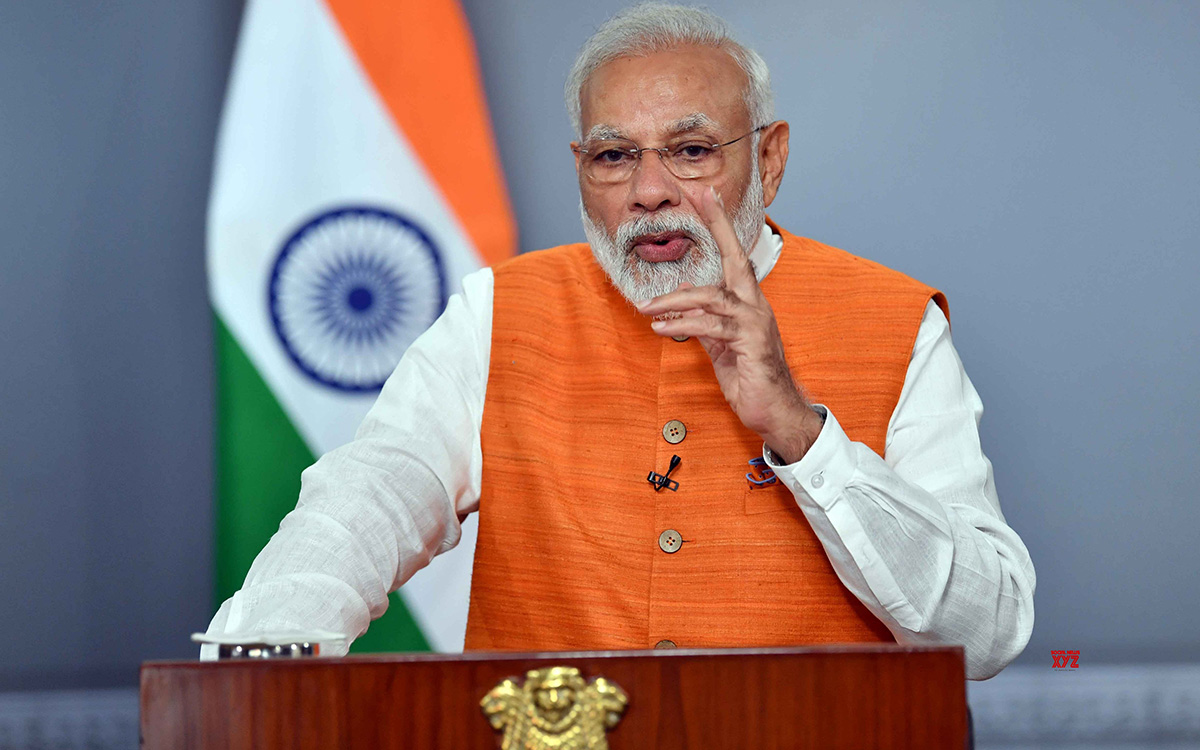
More than 130 million names have been struck from India’s electoral rolls during a sweeping voter-list revision under Prime Minister Narendra Modi. For transgender people and other LGBTQ Indians, the process has raised fears of exclusion from the ballot, particularly among those who have been rejected by their families or struggle to establish their identities through official documents.
The All-India Feminist Alliance has urged the Election Commission of India to address what it describes as the erosion of women’s voting rights during the Special Intensive Revision of electoral rolls, which began in 2025.
In a July submission, the alliance said women, trans people and members of minority communities, particularly Muslims, had been removed from voter lists at disproportionately high rates relative to their share of the population.
India’s Election Commission is an independent constitutional authority responsible for overseeing elections to Parliament, state legislatures, and the offices of the president and vice president. Established in 1950, it also supervises the preparation and revision of electoral rolls, determining who is registered to vote. Its decisions carry particular weight in a country of more than a billion people, where inclusion on the electoral rolls is a prerequisite for participating in elections.
In February, The Times of India reported that 250 people registered under the “other gender” category had been removed from West Bengal state’s’s draft electoral rolls during the Special Intensive Revision, primarily because they were classified as “untraceable” or “absent.” Before the revision, the state’s 2025 electoral rolls listed 1,811 voters in that category.
In a landmark 2014 ruling, the Supreme Court recognized trans people as a “third gender” and upheld their right to self-identify their gender. In National Legal Services Authority v. Union of India, the court directed the central and state governments to legally recognize gender identities beyond the male-female binary and affirmed trans people’s entitlement to constitutional protections.
In June, the Bangalore Mirror reported that a survey by the My Vote, My Right coalition had found significant barriers to voter verification among trans and intersex people in Karnataka state. Of the 74 people surveyed, none could identify the polling booth where they had voted in 2002. Many said they could not access family records because they had been disowned, forced to leave home or had their documents destroyed after disclosing their gender identity. The coalition warned that the Special Intensive Revision’s verification and voter-mapping requirements failed to account for these circumstances, potentially putting eligible voters at risk of exclusion.
Under the Special Intensive Revision, voters may be asked to show that they or their parents were listed on an earlier electoral roll, often from 2002 or another year when the state last conducted an intensive revision. If officials cannot find that link, voters may have to submit additional documents to establish their eligibility. The requirements depend on when a person was born: some must provide records for themselves and a parent, while younger voters may need records for both parents. For trans people who have been rejected by their families or cannot access old family documents, finding these records can be particularly difficult.
A separate investigation by the Indian Express uncovered a legal dispute within the Election Commission over the Special Intensive Revision process.
In July, the newspaper reported that the commission had added a new question to Form 6, which people use to register as voters. The question asked whether the applicant, their parents or their grandparents appeared on an earlier electoral roll. Although the question was labelled optional, applicants could not submit the online form without answering it.
The newspaper later reported that two of the three election commissioners had objected to the change, arguing that the commission could not alter a form prescribed by law without following the required legal procedure. Under the Representation of the People Act, 1950, changes to the rules governing voter registration must be made by the central government through the prescribed process. The controversy therefore went beyond whether the question was difficult to answer: it concerned whether the commission had the legal authority to introduce it in this way.
On Oct. 5, the chief justice said the Supreme Court had not approved the changes and that the court would examine the issue after receiving a report from the commission. The court had not yet ruled that the change was unconstitutional.
By October, the controversy had spilled onto the streets.
The Cockroach Janata Party, a youth-led movement, joined opposition parties in demanding the resignation of Chief Election Commissioner Gyanesh Kumar over the Special Intensive Revision. The protests intensified after the Indian Express reported that two of the three election commissioners had repeatedly objected to decisions related to the exercise, including the change to Form 6.
On Oct. 6, opposition lawmakers from 19 parties marched towards the Election Commission’s office in New Delhi but were stopped by police. Thousands of demonstrators also took to the streets in Delhi and Mumbai, calling for action over the removal of more than 130 million names from electoral rolls during the revision. The Election Commission has denied wrongdoing, saying the exercise is intended to remove ineligible entries and update voter lists.
On Oct. 10, the authorities mounted an extraordinary security operation to prevent a protest against the Election Commission from taking place in New Delhi.
According to the Indian Express, at least 30,000 police and paramilitary personnel were deployed, entry and exit gates at 45 metro stations were closed, and at least 245 trains scheduled to arrive at or depart from New Delhi and Hazrat Nizamuddin railway stations were cancelled. Mobile internet services were suspended across parts of central Delhi, barricades were erected on roads and at the capital’s borders, and police checked vehicles for people suspected of travelling to join the demonstration. Authorities also restricted access to the protest site at Jantar Mantar and detained protesters across the city.
The crackdown reached the movement’s leadership before they could leave the airport. Police boarded an Air India flight shortly after it landed at Indira Gandhi International Airport and detained Cockroach Janta Party founder Abhijeet Dipke and co-convenors Saurav Das and Ashutosh Ranka. They were taken to separate locations. Other people detained included opposition figures, the party’s legal team head, and journalist Dhruv Rathee. The scale of the restrictions drew scrutiny from the Supreme Court, which directed authorities not to completely halt metro and rail services. The Delhi Metro later told the court that trains had continued running, although entry and exit were restricted at 45 stations.
The difficulties extend beyond West Bengal and Karnataka states.
In Jharkhand state, a community registration drive enrolled around 60 to 70 trans people, but approximately 50 had voter records listing a trans community leader as their guardian rather than their biological parents. Scroll reported that community members feared their registrations could be jeopardised by Special Intensive Revision’s reliance on older electoral and family records. In Maharashtra, trans voters have also reported being marked absent during verification and facing demands for documents linking them to their birth families.
Tamil Nadu state presents a measurable decline: Election Commission data cited by the New Indian Express showed third-gender registrations falling from 9,464 before Special Intensive Revision to 7,617 afterward — a reduction of 1,847. The All-India Feminist Alliance has separately warned that trans people and other marginalized groups were being removed at disproportionately high rates during earlier phases of the revision, and urged the commission to provide alternative ways to establish eligibility for those unable to access family records.
Ankit Bhuptani, an LGBTQ activist, noted to the Washington Blade that the Supreme Court’s 2014 NALSA judgment helped trans people secure legal recognition of their gender identity, including in electoral records. The Transgender Persons (Protection of Rights) Act, 2019, subsequently established a process for obtaining a certificate of identity. But Bhuptani said the certificate is not explicitly listed among the 12 documents accepted under the Special Intensive Revision process, while a 2026 amendment has made obtaining it more difficult.
Each requirement is administered through a different government office, he said, leaving trans voters caught between systems that do not necessarily recognize the same documents.
“My suggestion is that let the documents the State itself issued to transgender persons count before the Election Commission,” said Bhuptani. “Picture a trans woman who was kicked out of her biological family home in a small town at 16 because of her trans identity and has lived and worked in Mumbai for 20 years. She has a voter card, pays her bills and voted in 2024. Now she is asked to link herself to her father’s entry in an old roll, the same father who was not spoken to her since. A process meant to clean the rolls should not punish people for the family they lost.”
Bhuptani said the absence of disaggregated data made it difficult to identify errors before election day, when restoring a voter’s registration could be too late. He called on the Election Commission to include a third-gender category in deletion reports and break the figures down by reason, including deaths, relocation, duplicate entries, absence and document-related problems. He also urged the commission to establish a toll-free helpline staffed by people trained in gender identity, waive fees for appeals and set a deadline for restoring wrongly deleted registrations well before the next election.
Publishing the total number of deletions would not be enough, Bhuptani said; the commission needed to disclose the reasons behind them. If many trans voters were classified as having moved or being absent, that could indicate problems with address verification or the delivery of notices. If deletions were attributed to document mismatches, it could point to problems with the way identity records were matched. Publishing these figures state by state, he argued, would help identify where the process was failing without requiring an independent inquiry.
India
Proposed Indian foreign funding law overhaul could further pressure LGBTQ groups
Measure introduced in Parliament earlier this year
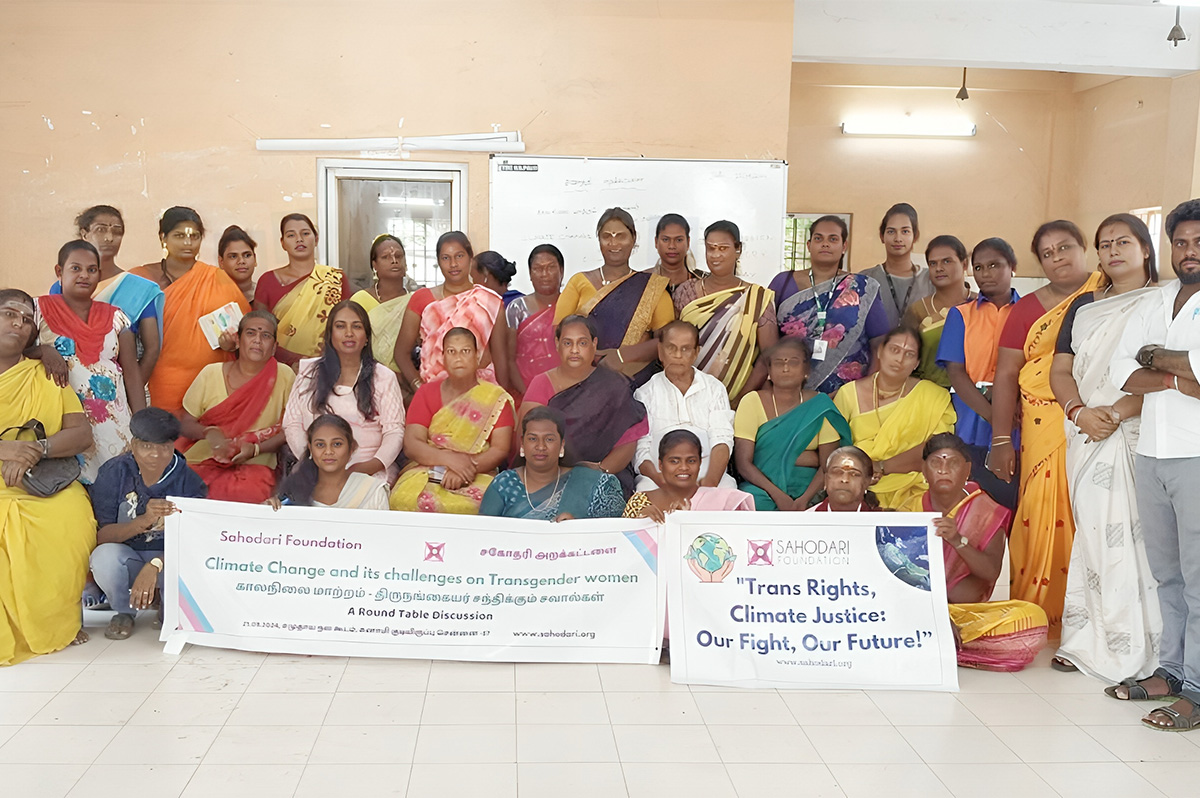
India’s proposed overhaul of its foreign funding law could put LGBTQ organizations that depend on overseas donations under new pressure.
Introduced in the Lok Sabha, the lower house of Parliament, on March 25, the Foreign Contribution (Regulation) Amendment Bill, 2026, or FCRA, would give a government-designated authority control over foreign funds, and assets when an organization loses or surrenders its registration.
The Foreign Contribution (Regulation) Amendment Bill returned to the spotlight this month as the Indian government prepared to seek its passage during Parliament’s Monsoon Session; drawing fierce opposition from political parties, civil society groups and religious organizations.
The government says the bill is intended to address gaps in the management of foreign funds and assets when an organization’s FCRA registration is cancelled, surrendered, or expires. The Foreign Contribution (Regulation) Amendment Bill, 2026, would create a Designated Authority to oversee the vesting, supervision, management, and disposal of foreign contributions and assets when an organization’s FCRA registration is cancelled, surrendered , or ceases. If a vested asset is a place of worship, the authority would be required to preserve its religious character. The FCRA would also reduce the maximum prison term for violating the law from five years to one year.
The changes could also make it difficult for organizations to leave the FCRA regime without surrendering assets created with foreign funds. Under the bill, an organization would have to keep renewing its FCRA certificate to retain those assets. FCRA rules also impose spending requirements on organizations seeking to maintain their certificates.
The bill may also create a distinction between assets created by organizations with FCRA registration and those created through the separate prior-permission route.
More significantly, neither the existing law nor the bill provides an appeal mechanism when the central government refuses to renew an FCRA certificate. They also do not expressly require the organization to be given an opportunity to be heard before renewal is denied. Under the proposed framework, such a denial could trigger the vesting of the organization’s foreign-funded assets in the Designated Authority.
The bill would also widen the circle of people who could face consequences for an organization’s FCRA violations.
Its definition of “key functionary” extends beyond directors and office bearers to trustees, governing-body members, managing-committee members and others responsible for an organization’s affairs. Those functionaries could be held liable for offenses committed by the organization, unless they can show that they were unaware of the violation or had exercised due diligence to prevent it. The FCRA bill would also impose restrictions on dealing with foreign-funded assets during a suspension and leave several important operational details — including timelines and procedures for managing and returning assets — to rules that have yet to be prescribed.
Parliament on Aug 12 moved to refer the FCRA bill to a parliamentary committee for further scrutiny and wider consultations.
Minister of State for Home Nityanand Rai moved the motion in the Lok Sabha, to refer the bill to a committee comprising 21 members of the lower house and 10 members of the Rajya Sabha, Parliament’s upper house.
The Rajya Sabha subsequently approved the nomination of its 10 members to the committee. The panel is expected to submit its report by the last day of the first week of Parliament’s Winter Session.
The proposed changes could have significant implications for LGBTQ organizations that rely on the FCRA framework to receive foreign contributions. (The global LGBTQ and intersex rights movement since the Trump-Vance administration took office in 2025 has lost nearly $50 million in U.S. funding because of foreign aid cuts. One source with whom the Washington Blade spoke described the funding loss as a “catastrophe” for the global movement.)
While the government does not appear to have published an easily accessible, consolidated list of LGBTQ organizations receiving such funding, FCRA registration records and organizations’ financial disclosures indicate that foreign contributions have supported LGBTQ rights, healthcare, and community services in India.
K.C. Venugopal, general secretary of the opposition Indian National Congress, told reporters his party and other opposition parties would strongly protest the legislation if it were introduced in Parliament. He said the bill was aimed at targeting minorities and NGOs and vowed that the opposition would oppose its passage.
Venugopal called the proposed legislation “unconstitutional and anti-people.”
“If the Central Government thinks they can cook up and introduce the Foreign Contribution (Regulation) Amendment Bill within these two or three days, they should keep that wish to themselves,” he told reporters in Alappuzha, Kerala, on Aug. 9.
“Three provisions worry LGBTQ+ organizations like ours most directly,” said Souvik Saha, founder of People for Change and Jamshedpur Queer Circle. “First, the 2026 bill would let a government-appointed ‘Designated Authority’ take control of an organization’s foreign-funded assets— bank balances, equipments, sometimes even property— the moment its FCRA registration is cancelled, surrendered, or simply not renewed, and this happens through an administrative process, without prior judicial adjudication. For a small community organization, that means losing everything we have built — case files, shelter infrastructure, helpline equipment — almost overnight, with no court hearing first.”
Saha told the Blade the revised FCRA Rules announced in June introduced a minimum spending threshold: organizations must spend at least $10,449 in foreign contributions over two financial years or risk cancellation and non-renewal of their registration.
“This specifically penalizes small and grassroots groups that deliberately keep their foreign funding modest — which describes most LGBTQ organizations in India, including ours,” said Saha. “We are not running core-scale budgets; we are running helplines, safe spaces, and district-level outreach on modest grants.”
Saha told the Blade that the ban on sub-granting, carried over from the 2020 amendment, means larger, well-established rights organizations cannot pass foreign funds to smaller, unregistered LGBTQ collectives that could not obtain FCRA registration themselves. He said rights groups have long described the restriction as a near “death knell” for hundreds of small nongovernmental organizations that work collaboratively with larger organizations, adding that LGBTQ groups outside major metropolitan areas depend heavily on such funding arrangements.
“Domestic funding for LGBTQ work in India is still thin, CSR (Corporate Social Responsibility) money avoids us because we are seen as ‘controversial,’ and most Indian foundations would not touch gender-identity programming,” Saha said. “So foreign funding is not a convenience for organizations working with the transgender and LGBTQ community, it is often always funding.”
India’s Income Tax Department has opposed a same-sex couple’s petition that challenges Section 56(2)(x) of the Income Tax Act.
The provision exempts gifts between spouses from tax. The couple seeks the same benefit for their relationship.
At the center of the challenge is the explanation to the fifth provision of Section 56(2)(x). According to the petition, the provision excludes same-sex partners from the definition of “spouse.” The petition describes that exclusion as unconstitutional.
The provision defines “relative” to include an individual’s spouse, siblings, the spouse’s siblings, parents’ siblings, and other blood relatives.
Paiyo Ashiho and another petitioner, Vivek Divan, asked the Bombay High Court to recognize same-sex couples presumed to be in a marriage as “spouses” under the fifth provision to Section 56(2)(x).
A similar challenge is pending before the Karnataka High Court.
Bengaluru-based engineers Anurag Kalia and Akhilesh Godi have sought similar relief. Kalia said he wanted to give Godi a gold bracelet worth more than ₹115,500 ($1213.44.). The case remains pending.
The Prime Minister Narendra Modi-led government rejected the petition in an affidavit filed last year. It argued the plea was not legally tenable because it challenged no action or order of the Income Tax Department. Calling the petition an “abuse of process of law,” the government said the relief sought fell outside the scope of the Income Tax Act, 1961.
The government also argued the petitioners sought the benefits available to a “spouse” without legal recognition of their relationship. According to the affidavit, they had not placed on record any law recognizing their relationship as a marriage. It urged the court to dismiss the petition with costs.
The case returned to the spotlight on July 6, when the Bombay High Court heard the petition.
Justices B.P. Colabawalla and Firdosh P. Pooniwalla adjourned the matter after Solicitor General Tushar Mehta said he would appear on behalf of Modi’s government.
The petition comes nearly two years after the Indian Supreme Court’s marriage equality ruling.
In 2023, a five-judge Constitution Bench, in a 3-2 verdict, declined to recognize the constitutional validity of same-sex marriage in India. The country’s top court said MPs must decide whether to extend marriage rights to same-sex couples.
During the 2023 marriage equality hearings, lawyer Abhishek Manu Singhvi told the Supreme Court that marriage is a source of social validation, dignity, self-respect, fulfillment, and security. He argued that it also carries legal and civil benefits, including those related to taxation, inheritance, and adoption. Lawyer Anand Grover, who also appeared for the petitioners, told the court that marriage remains fundamental to the functioning of society and is necessary to access several state benefits, including joint tax benefits and surrogacy rights.
Chief Justice Dhananjaya Y. Chandrachud, in his minority opinion, said the Income Tax Act provides numerous tax benefits for payments made on behalf of a spouse, including deductions for life and health insurance premiums. He also noted that marriage confers several financial benefits on a spouse, including eligibility for gratuity, funeral expenses, medical benefits, and provident fund claims as the dependent of a deceased spouse.
In the marriage equality ruling, the Supreme Court recognized queer people cannot be discriminated against. The court said denying queer couples the material benefits and services available to heterosexual couples violates their fundamental rights.
While issuing directions to the federal, state, and territory governments; Chandrachud said the government should ensure there was no discrimination in access to goods and services. He also directed governments to sensitize the public about queer rights, establish a hotline for the queer community, create safe houses for queer couples, and ensure intersex children were not forced to undergo medical operations.
The petition is awaiting its next hearing before the Bombay High Court.
India’s tax system relies on both direct and indirect taxes, although its direct tax base remains relatively narrow. Individuals pay income tax at progressive rates of up to 30 percent, while consumers pay taxes on most goods and services through the Goods and Services Tax. The Income Tax Act also provides exemptions, deductions, and other tax benefits for eligible taxpayers, including those linked to family relationships and legal marital status.
India’s LGBTQ community is estimated to comprise between 135 million and 140 million people, or nearly 10 percent of the country’s population. Collectively, it is estimated to have a purchasing power exceeding $168 billion. The World Bank estimated that exclusion based on sexual orientation and gender identity cost India between $1.9 billion and $30.8 billion in lost economic output annually, or up to 1.7 percent of its gross domestic product.
India imposed a separate Gift Tax Act in 1958 to tax certain transfers of property made without consideration. Parliament repealed the law in 1998 to simplify the tax system and encourage genuine gifting. However, concerns over tax avoidance later prompted the government to bring gifts back within the Income Tax Act. Today, specified gifts exceeding prescribed limits may be taxed under Section 56(2)(x), subject to exemptions that include gifts received from relatives.
Under the Income Tax Act, gifts received from non-relatives exceeding ₹50,000 ($525.30) in a financial year are generally treated as taxable income, unless they qualify for a statutory exemption. Gifts received from specified relatives, including a spouse, are exempt from tax regardless of their value.
Tarun Khaitan — a research director and professor of public law at the London School of Economics Law School, honorary professorial fellow at Melbourne Law School, and associate fellow of the Bonavero Institute of Human Rights at the University of Oxford — told the Washington Blade the guarantee of equality and non-discrimination under India’s constitution was deliberately framed in broad terms because its framers envisaged that the understanding of those principles would evolve over time. They did not intend to freeze their meaning in 1950, he said. Instead, older and newer statutes alike must be interpreted in light of the constitution’s contemporary understanding.
“Constitutional values must inform the interpretation of all laws in India. It is well established in Indian jurisprudence that if a term can carry two meanings, the court will give it the meaning that complies with constitutional demands,” Khaitan said. “The term ‘spouse’ is not defined in the Income Tax Act, and unlike ‘husband’ or ‘wife’ is not a legal term of art in Indian family law. Its use by the Income Tax Act therefore is apt for judicial interpretation, which must be guided by the constitutional guarantees of equality and liberty.”
Asked how courts should balance respect for legislative choices with their constitutional responsibility to safeguard equality and dignity, Khaitan said he was not convinced that the legislature had made a clear choice in this case. He noted that the Income Tax Act uses the term “spouse” without defining it, adding that no other Indian law, to his knowledge, defines the term either. Its meaning has evolved over time, he said, pointing to the Oxford English Dictionary, which now defines a spouse as “a husband or wife, or a person joined to another in a comparable legally recognized union.”
Khaitan said the decision to restrict the meaning of “spouse” to different-sex married couples appeared to be the government’s interpretation rather than one expressly adopted by MPs. Even so, he said, courts have a duty to safeguard constitutional rights, although those rights are not absolute. The state, he said, must justify any restriction by demonstrating that it serves a sufficiently important public interest and that the limitation is proportionate to that objective.
“The extension of marriage would be a symbolic expression of equal acceptance of same-sex relations by law as well as a the extension of the bundle of material incidents that typically attach to it. Whether or not such extension happens, concerns such as inheritance, hospital visitation rights, decisions regarding end of life care, pensions etc affect the lives of same-sex couples as well as unmarried different-sex couples in a real, material sense,” Khaitan said. “There is no conceptual reason why the expressive salience of ‘marriage’ and the material incidents of a domestic partnership cannot be unbundled.”
Khaitan has had his scholarship cited by the Supreme Court in several constitutional cases, including Navtej Singh Johar v. Union of India, which decriminalized consensual same-sex relations, and Lt. Col. Nitisha v. Union of India, a landmark judgment on indirect discrimination.

Witness describes scene inside Logan Circle gym during fatal shooting

Andrew Scott talks ‘Elsinore,’ Hamlet, and AIDS

D.C. lesbian activist champions cause of common law marriage

BREAKING NEWS: One dead, four injured in shooting at VIDA Fitness in Logan Circle

US funding cuts leave LGBTQ Indonesians with HIV more vulnerable

Epic ‘La bola negra’ delivers powerful romance for the ages

Kim Kardashian gets the bio treatment in new book

Honoring LGBTQ+ veterans and advancing housing equality

Botswana’s marriage equality case and the politics of family values

New Orchestra of Washington to perform ‘Requiem for a People’
-

 Movies4 days ago
Epic ‘La bola negra’ delivers powerful romance for the ages
-
Books4 days ago
Kim Kardashian gets the bio treatment in new book
-
Real Estate4 days ago
Honoring LGBTQ+ veterans and advancing housing equality
-
Botswana3 days ago
Botswana’s marriage equality case and the politics of family values