Politics
Inside trainings for trans candidates running for public office
LGBTQ Victory Institute debuts program for trans and gender diverse candidates
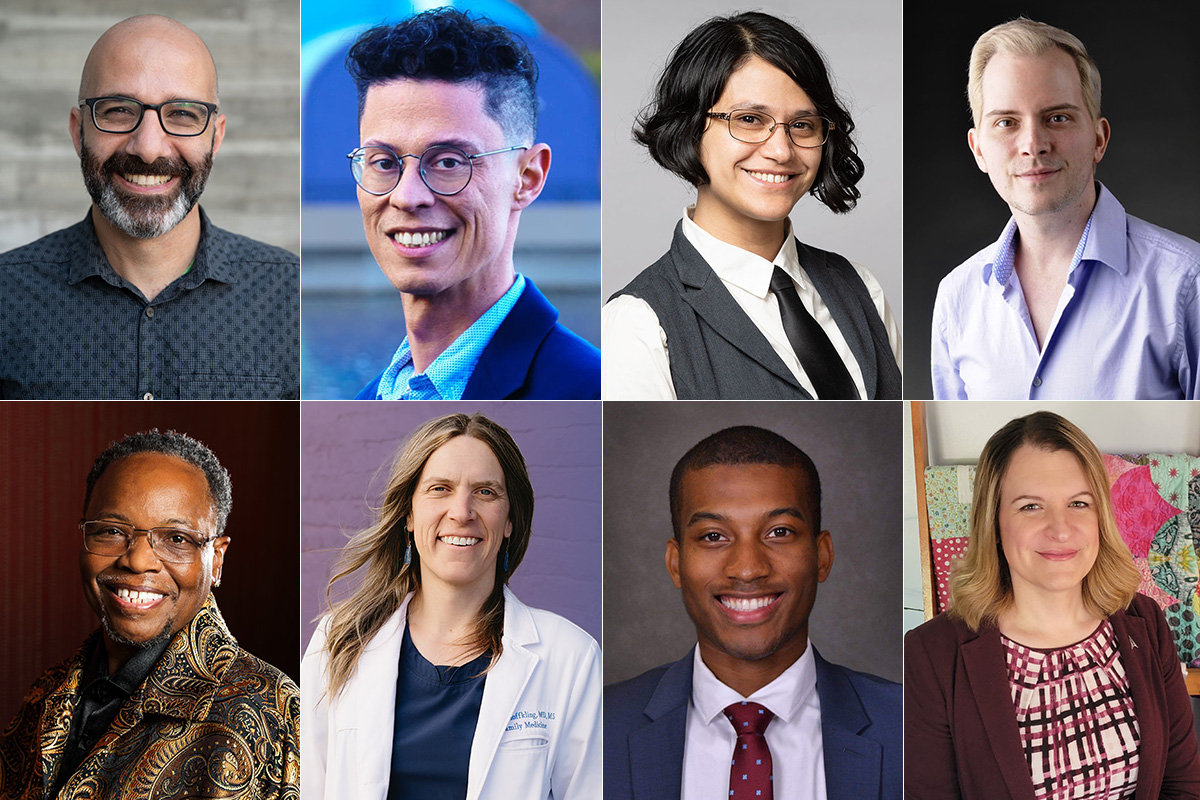
When the LGBTQ+ Victory Institute convenes its flagship Candidate and Campaign Training in Los Angeles next month, the agenda will be familiar: four days of workshops, mock campaign plans, and late-night study sessions as aspiring politicians learn the ins and outs of running for office.
For the first time, however, this year transgender, nonbinary, and gender-nonconforming candidates will stay in town after the larger group disperses for a two-day extension designed specifically for them.
A collaboration between Victory and Advocates for Trans Equality, the program comes at a pivotal time of ascendant transphobia at the White House, in the Trump-Vance administration more broadly, and across the country as state legislatures have advanced anti-trans bills at a breakneck pace in 2025.
Organizers say the training is meant to build a pipeline — not just of candidates, but of resilient leaders who are prepared for campaigns fought in an era of anti-LGBTQ politics, and polarization fueled or accelerated by online platforms.
A physician steps in
Among those voices is Alexis Hoffkling, a family physician in Colorado who decided last year that her lane of impact needed to expand.
“I’ve cared about politics my whole life, in a not particularly involved kind of way that, in retrospect, is sort of like sitting in the stadium of a sporting event and not being on the field,” she told the Washington Blade during an interview last week.
“For a really long time, I’ve been operating in the mode that the best way to make a positive change in the world is to pick something and do it really well. And for me, that was providing medical care and teaching the next generation of doctors to be good doctors without losing their humanity.”
That work, she added, comes with a political education of its own. “You can’t provide safety net primary care with an open mind and an open heart without being a little radicalized by it.”
What pushed her to run, she said, was not any single policy change but a deeper recognition of the stakes.
“It became really clear that this is not a business-as-usual kind of moment in history,” Hoffkling said. “I just woke up one morning and said, ‘OK, I have to be able to say, in 20 years, if I haven’t been disappeared, that I did everything I could when history called for it.’ And I’m convinced that this is the way to do that. Never mind work-life balance.”
Hoffkling brings the daily realities of her patients with her into the political arena.
“Every day is full of stories,” she said. “My patients are wonderful and resilient and thoughtful people whose life stories really clearly demonstrate the consequences of policy decisions.”
The most immediate threat, she argued, is the federal government’s push to cut Medicaid.
“People are going to die. Many, many people are going to die,” she said. “And many more people are going to have their lives devastated by the costs of care, directly and indirectly. Communities are going to suffer. Rural hospitals are going to close, and they’re not going to reopen after they close.”
She worries, too, about the erosion of scientific authority and the exodus of biomedical research talent abroad. “Conceivably, we could restore Medicaid funding. We could even do something more than restore it. But it’s going to take a lot of work to rebuild trust in public institutions when they are being used in a corrupt, anti-scientific and persecutory fashion.”
On gender-affirming care, she is unequivocal: “This is healthcare. This is medical care. In the same way that the government shouldn’t be determining whether or not you take antibiotics or have surgery for your appendicitis, it should be a conversation between you and your doctors,” she said. “Government should stay out of it, and where the federal government is trying to muck around in it, then it is our job as states that care about human rights to do everything we can to protect the sanctity of the doctor-patient decision making space.”
Trainings will be led by trans lawmaker with a proven record
When Virginia State Sen. Danica Roem unseated a 26-year Republican incumbent in Virginia in 2017, she became the first out transgender state legislator in the country. Since then, she has turned her experience into a roadmap for others — including through her book “Burn the Page” and now through the trans and gender diverse training extension she will help lead in Los Angeles.
“What is life like as a trans person on the campaign trail? What is your day to day?” Roem said of the sessions she plans to run. “Because you know that your gender will be the headline of the story. No matter whether you’re running for soil and water conservation district or you’re running for Congress, your gender is going to be the first thing that’s going to be mentioned about you.”
The key, she tells trainees, is not to deny the reality but to control how much it defines the narrative.
“You never say, ‘I’m trans, but.’ I say, ‘I’m trans, and.’ I’m not apologizing for who I am,” Roem said. “I’m trans, and I care a lot about fixing Route 28. About universal free school breakfast and lunch. About making Virginia a more inclusive commonwealth.”
That approach, she noted, has already helped other trans candidates win. “Emma Curtis followed my playbook pretty much verbatim, and now she’s a member of the Lexington City Council,” Roem said.
Trainings prepare candidates for campaigns
For Hoffkling, the appeal of the training is partly practical — fundraising, budgeting, social media — and partly about the blind spots she may not yet know she has.
“The unknown unknowns, those are your blind spots,” she said. “Those are the danger points, and it’s worth spending time and energy to try to map those out so that they’re no longer blind spots.”
But just as important is the chance to learn from others who have been targeted because of their gender identity.
“Most of the challenges of campaigning are universal to any candidate, but some of them will be specific to the experience of navigating a campaign in a transphobic world while trans,” she said. “I want to learn more from the experience and insights of other folks who walk this path.”
Roem, who has trained dozens of candidates through Victory and Emerge Virginia, which works to elect women to public office, said those moments of connection are often the most powerful.
“The most important thing that I did in the Chicago training last year was spend one-on-one time with dozens of them,” she said. “Because then if I can connect with someone as a person, I can usually fish out something beyond the slogan of why you’re running for office. The slogan is nice, the policy position is important. [But] why are you really running? Tell me who you really are.”
Those conversations, she said, often bring candidates to tears. But they also bring breakthroughs that can prepare candidates to “really become unstoppable on the campaign trail.”
Hoffkling frames representation itself as a form of medicine.
“When I have a patient who has a trans kid who comes to her appointments, who is so excited to come to her mom’s doctor’s appointments because there’s a trans doctor — that’s one little snapshot of a moment in an exam room that’s private,” she said. “But that same phenomenon happens at scale, and in a public role in public office, it helps people to see the expanse of possibilities for their future.”
She credits trailblazers like Roem, U.S. Rep. Sarah McBride (D-Del.), and Colorado State Rep. Brianna Titone with clearing the way. “If there weren’t the wave of Sarah McBride, Brianna Titone, Danica Roem, Zooey Zephyr…then in my race, I would be facing a lot of questions about, ‘is it possible? Is it winnable, as a trans person?’ And the fact that other people have proved that it’s possible makes it more possible for me.”
Roem sees that ripple effect too. In her own district, polling after her 2021 reelection campaign found that 12 percent of voters reported a more favorable view of transgender people because of her service.
“By a 12-to-one margin, we were actually having a positive effect on how people thought about my own community, which is pretty good,” she said.
The trainings, both women emphasized, are about more than political survival. They are about equipping candidates to become the leaders they wished they’d had — inclusive, effective, and grounded in the lives of their constituents.
“Because we know what it’s like to be singled out and stigmatized by the very people who are elected to serve us in the first place,” Roem said, “which makes us far less likely to do it to our constituents when we’re elected.”





2026 Midterm Elections
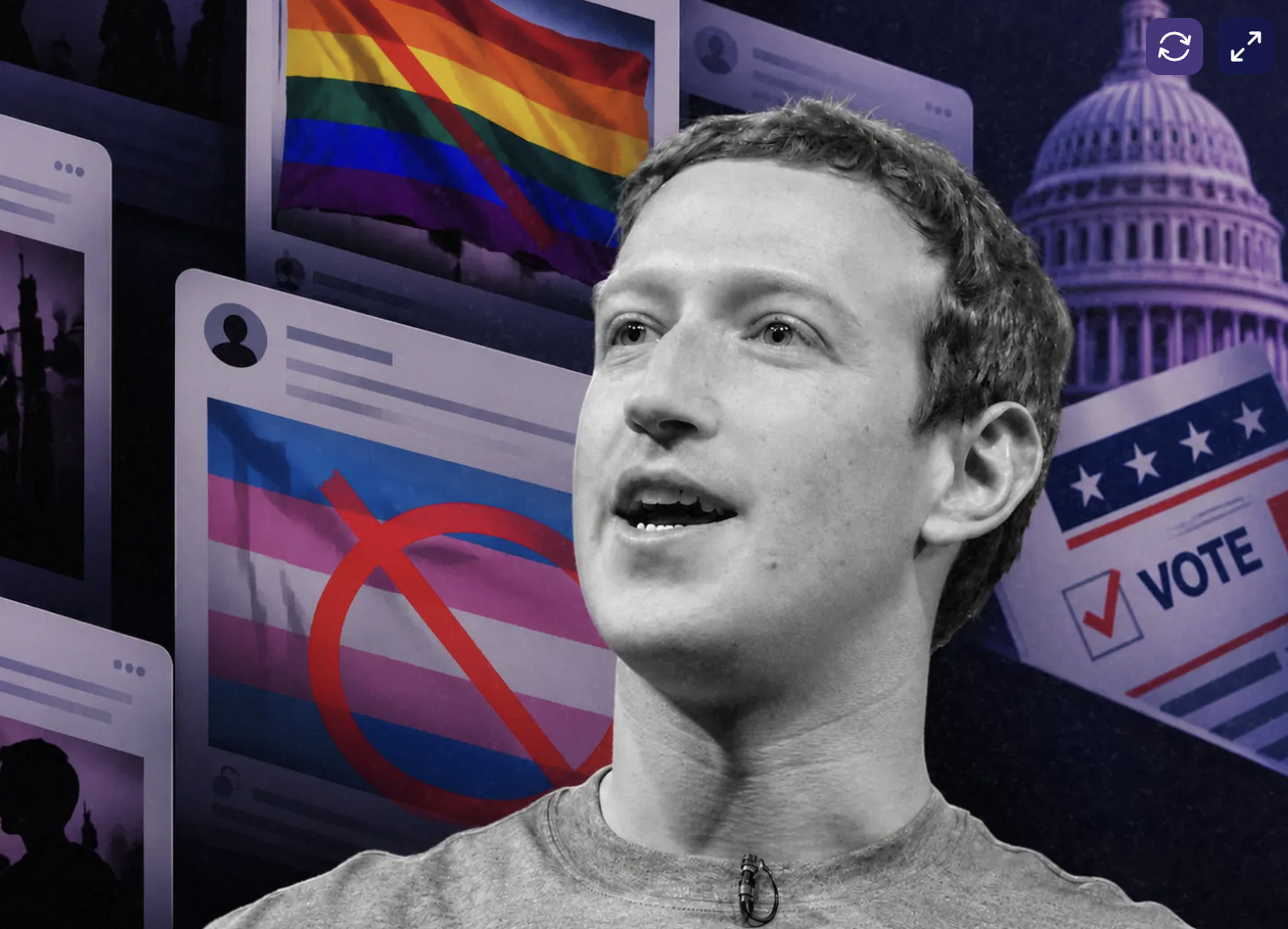
Ahead of the midterms, Meta has paid at least 29 anti-LGBTQ accounts for their posts
Invite-only Facebook Content Monetization program unveiled in 2024
Uncloseted Media published this article on Oct. 14.
This story was reported in partnership with The 19th, a nonprofit newsroom reporting on gender, politics, and policy.
By HOPE PISONI | On Sept. 14, far-right influencer Chaya Raichik, known online as Libs of TikTok, attacked a Washington state high school on Facebook for displaying a Pride flag. “Hey Mercer Island High School, why does your profile photo display a mutilation flag??” she wrote, tagging the school’s account in the post and attaching a photo of the entrance.
A few weeks before, on Aug. 27, neo-Nazi webcomic artist StoneToss posted a strip that used Tim Curry’s death to mock transgender suicide rates. And earlier this month, right-wing political commentator Benny Johnson shared claims that Democrats will “transition your kids while you’re at work” and “hand out gas cards to illegal aliens.”
Meta pays these creators for making posts like these. In 2024, the tech giant unveiled a new invite-only program called Facebook Content Monetization, designed to streamline earnings for creators. Many creators celebrated the move, with some reporting a major increase in their earnings through the program.
However, that program has recently come under scrutiny. In August, the Australian Broadcasting Corporation reported that Meta invited accounts promoting white supremacist and neo-Nazi ideologies.
And after reviewing Meta’s monetization data, Uncloseted Media identified 29 accounts with histories of anti-LGBTQ rhetoric that have been invited to the program. These include the three aforementioned accounts as well as podcaster Candace Owens, who has blamed gay men for child abuse in the Catholic church, and Turning Point USA, which has been connected to an assault on a queer Arizona State University professor. Meta did not respond to Uncloseted Media and The 19th’s requests for an interview or for comment.
With the midterm elections looming, some of the accounts Meta pays through the program have been spreading political misinformation. In the first week of October, for example, Benny Johnson made 14 separate Facebook posts connecting the Democratic Party to election fraud.
Courtney Radsch, director of the Center for Media and Digital Governance at Open Markets Institute, says that promoting hateful rhetoric and misinformation like this is especially dangerous during an election season where the increasingly authoritarian Trump-Vance administration, which Meta has courted since its inauguration, has openly discussed attempts to interfere.
“Amplifying and enabling harassment campaigns and centering fringe conspiracy theories through algorithmic curation and monetization opportunities has led to a dissolution of democracy in America,” Radsch told Uncloseted Media and The 19th. “This administration is dismantling democratic oversight and increasing authoritarian control. … You can’t look at your platform policies on monetization without looking at the context in which this is occurring in the U.S. with rising technofascism.”
What is the program?
Meta launched their Facebook Content Monetization program to incentivize more creators to post on Facebook, which has faced an aging user base and competition from newer apps. Those incentives can be substantial — within the program’s first year, content creators who accepted Meta’s invitation to join reported huge increases in their payouts, with some calling it their most lucrative platform. One creator told The Hollywood Reporter that she consistently earned $20,000 to $30,000 per month, while another said his monthly earnings often hit six figures.
While most accounts aren’t big enough to rake in that amount of money, Meta also motivates smaller accounts to join. Starting in 2025, they launched a side program called “breakthrough bonus” that advertises up to $5,000 and an automatic onboarding into Content Monetization for creators from other platforms if they start posting regularly on Facebook.
SK Smigiel, a content creator who posts about LGBTQ education and activism under the username justsaysk, joined the program through the breakthrough bonus initiative in April. They say Meta would offer them payouts for completing certain “missions.” For example, Smigiel says they earned $500 a month for posting 10 reels. They say other missions included using trending hashtags and audio or cross-posting to relevant groups. These incentives initially convinced them to post on Facebook due to their poor earnings on Instagram, but they didn’t stick around.
“When I post on Facebook, I don’t even open the post that I’ve made because I already know that … probably 99 percent of the engagement is negative towards me,” Smigiel told Uncloseted Media and The 19th.
Uncloseted Media identified accounts enrolled in the program via data compiled by What To Fix (WTF), a Dutch nonprofit focused on tech accountability. The Meta Monetization Archive is a searchable database of information collected from disclosures released by Meta.
Belén Luna Sanz, policy manager at WTF, says the program represents a broader shift in industry practices. While advertisers once paid content creators directly with companies like Meta taking a cut, platforms now collect all ad revenue and pay creators themselves.
“They’re only paying you royalties depending on how much engagement you are creating on your content,” Sanz told Uncloseted Media and The 19th.
Jason Hong, a professor of computer science at Carnegie Mellon University, says that while inflammatory and misleading content may go against Meta’s policies, both the company and the people posting it are financially incentivized to promote it.
“We know that things that get people really angry get a lot of engagement, we know that disinformation and misinformation … also gets lots of engagement,” Hong told Uncloseted Media and The 19th. “[Meta is] at a fork in the road, and one path is about the morals and ethics and well-being of society and democracy, and on the other path is a really big pile of money.”
‘A reckless rollout’
Since Meta launched the program two years ago, WTF has identified over 18 million accounts in the program. But Sanz says the selection process has been opaque and describes the program’s rollout as “reckless.”
“[The program requires] little to no verification of their identity, there are not enough safeguards and their monetization policies are enforced in a very non-transparent way, so it’s hard to tell whether they are enforcing it properly or not,” Sanz says.
Uncloseted Media found numerous posts that seemingly violate Facebook’s content monetization policies, which state that “content may be subject to reduced or disabled monetization if it depicts or discusses [debated social issues] in a polarizing or inflammatory manner.” Those issues include race, religion, sexual orientation, political affiliation and more.
Libs of TikTok, for example, has called the organizers of an LGBTQ pride event “sick sick freaks,” accused pro-LGBTQ teachers of wanting to “indoctrinate your children” and decried the “lgbtq groomer cult.” Other posts may violate content monetization policies forbidding “derogatory words” and “hateful conduct,” including Raichik calling “sex assigned at birth” a “retarded term.”
Meta also states that misinformation, which they define as “content that has been rated false by a third-party fact checker,” is “ineligible to monetize,” even though the company ended their third-party fact-checking last year, leaving no clear mechanism to enforce the prohibition.
Meta states that “repeated violations of [content monetization policies] could lead to a temporary or permanent ban on your Page or profile’s ability to use our monetization tools.” However, as of the Monetization Archive’s most recent update on Sept. 15, all of the accounts discussed above are actively enrolled in the program.
The Southern Poverty Law Center has designated several individuals in Meta’s program as extremists. These include Tucker Carlson, who has agreed with claims that gender-affirming care allows adults to “basically molest and abuse children”; James Lindsay and Jack Posobiec, who helped popularize “groomer” rhetoric against LGBTQ people; and Alex Jones, whose infamous conspiracy show InfoWars received an invitation prior to its acquisition by The Onion. It also includes Libs of TikTok, which is known for stoking anti-LGBTQ harassment — 2024 reports by NBC News and The Washington Post cumulatively found over 80 instances of violent threats against institutions like schools and businesses connected to its posts.
“There does need to be discussion and diversity of opinion allowed in the public sphere,” Radsch says. “However, there is a difference between rational debate and harassment.”
Reports from WTF suggest that Meta doesn’t consistently uphold the program’s other rules either. Despite Meta’s policies stating that “political and government entities are ineligible for monetization,” including “current elected and appointed government officials” and “political parties,” WTF found hundreds enrolled. In addition, Uncloseted Media confirmed membership of at least eight official Republican Party pages, including the Republican Party of Georgia.
A danger to democracy
In recent years, Meta has courted the Trump-Vance administration and its far-right allies, including influencers. Last August, the company hired Robby Starbuck, an anti-DEI campaigner who has promoted conspiracy theories claiming that pesticides turn children gay, as an adviser on preventing “political bias” in their AI systems. And in April, Meta sponsored a party celebrating Isabel Brown, a Daily Wire host who has advocated for people to leave their LGBTQ “lifestyles.” Brown and Starbuck are both enrolled in the content monetization program.
Radsch says that being able to control who gets monetized grants Meta significant power over political narratives.
“That can be problematic because it means that they can pick winners and losers, they can pick ideologies, they can discriminate at will, and we have very little way to know whether that’s happening,” Radsch says.
The stakes are high given the upcoming midterms. Misinformation that the 2020 presidential election was rigged inspired the Jan. 6 insurrection. Still, Meta monetizes accounts which spread similar claims. Libs of TikTok has said, “Democrats want to cheat in the elections,” and Johnson responded to reports of new plague cases in Russia by implying that Democrats would use them to rig the election.
“There’s a level of commitment with trying to preserve electoral integrity that needs to be present, especially when there are very delicate elections coming up,” Sanz says. “Disinformation should not be rewarded financially — this is something that even they have in their own policies for monetization.”
What can be done?
Sanz has a “wish list” of new accountability policies that could push back against the anti-LGBTQ rhetoric and political disinformation being disseminated through this program. These include labeling monetized accounts and adding mechanisms for users to report monetization policy violations.
Hong adds that platforms should restructure their algorithms and monetization systems to consider factors other than engagement.
“I wish that Facebook would have more kinds of metrics, like societal or individual well-being,” Hong says. “These are kinds of things that would be far better for society, but it is a corporation and this is what they’re trying to do because this is the mandate from the top.”
While Meta is protected from many forms of legal action in the U.S., there may be a path to legal accountability in other jurisdictions. In 2022, the European Union passed the Digital Services Act (DSA), which, among other provisions, requires large online platforms like Facebook to mitigate the potential harms of content disseminated on their platforms. WTF filed a complaint against Meta in European courts last month arguing that by monetizing 11 accounts sanctioned by the E.U. for alleged involvement in pro-Russia propaganda campaigns, the company failed to meet the DSA’s risk mitigation obligations.
Perhaps most importantly, Sanz emphasizes that social media monetization needs more public attention.
“Creator monetization is a very ill-explored area,” she says. “Although there is a good amount of legislation here in the E.U. that gives us a playground to try to incorporate much more responsibility when it comes to monetization, I do think that globally this needs to be the case.”
Jones and Raichik did not respond to requests for comment.
2026 Midterm Elections
JD Vance suggests James Talarico is gay during Texas rally
Homophobic joke made during Ken Paxton event
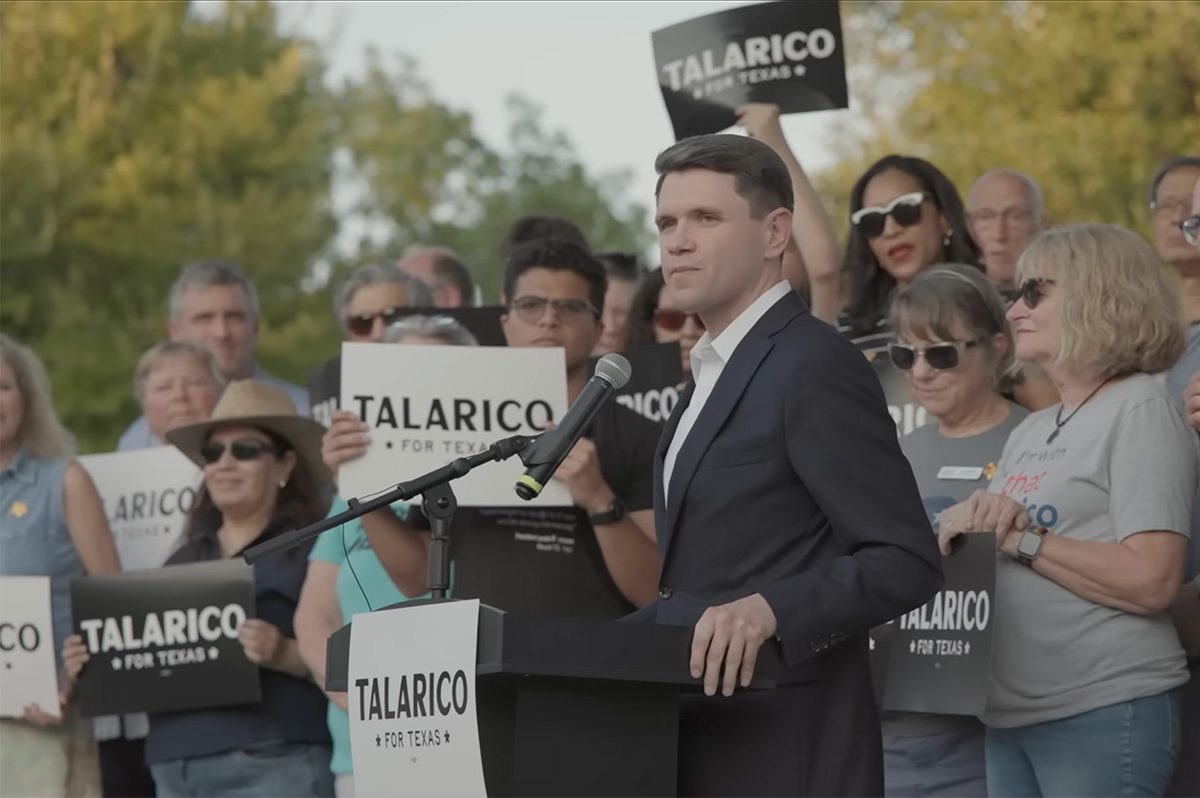
Vice President JD Vance joked that Texas Democratic Senate candidate James Talarico is gay on Tuesday.
While campaigning for Ken Paxton, the Republican Senate candidate and current Texas attorney general, Vance made a joke that seemed to call into question Talarico’s sexuality during a stop in Tyler, Texas.
According to a video uploaded by C-SPAN, Vance responded to a man in the crowd who shouted, “I love you,” at the vice president.
“I love you, too, sir. In a totally platonic way, to be clear. I’m the vice president, not James Talarico,” Vance joked while standing in front of Air Force Two during the rally.
The joke has received negative press coverage and sparked backlash online against the second-in-command at a time when Republicans are struggling to win seats that, months earlier, were widely imagined to be all but entirely theirs.
Talarico, who confirmed he is in a long-term relationship of four years with Brianna Menard, a woman who served as his chief of staff during his time as a Texas state representative, has been an outspoken supporter of LGBTQ rights in the Lone Star State, often drawing criticism from right-wing personalities.
Billy Binion, a reporter for Reason, called out the homophobic joke made by the vice president on X, saying, “I remain amazed and mystified that some of the most powerful people in the world think ‘James Talarico seems gay!!’ is a compelling critique. It’s so desperate and small.”
Directly under a repost of the video, another person posted an old, widely circulated image of Vance in drag wearing a long blond wig, with the caption, “For the record James Talarico has never done this.” The post now has more than 62,000 views and more than 3,000 likes.
The comment is also drawing criticism of Vance over his past anti-LGBTQ actions while in the U.S. Senate. During his two years as a senator prior to Trump’s selection of him as vice president, Vance opposed the Respect for Marriage Act, which codified marriage rights for same-sex couples in federal law. He also co-authored the Protect Children’s Innocence Act, which would have made providing gender-affirming care to minors a felony punishable by up to 15 years in prison.
Vance has also advocated for banning transgender troops from the military, which has become a defining characteristic of the current administration’s efforts to curb diversity and inclusion in the U.S. armed forces.
Additionally, Vance repeatedly referred to opponents of those actions as “groomers,” including in an April 2022 post on X.
“I’ll stop calling people ‘groomers’ when they stop freaking out about bills that prevent the sexualization of my children,” he wrote at the time.
These actions and the vice president’s homophobic rhetoric contrast with Talarico’s official stance on LGBTQ issues. Talarico has been a vocal supporter of LGBTQ rights but is facing recent criticism for backtracking on his support for trans girls and women participating in sports.
Under the “Freedom, Family, and Faith” section of his campaign website, Talarico states that one of his goals is to “protect the legality of gay marriage and defend our LGBTQ+ neighbors from government overreach.”
Paxton’s website, on the other hand, directly calls for Texans to vote for him so he can “defeat the radical transgender movement that’s desperate to put men in girls’ sports and woke indoctrination in our classrooms.”
The Washington Blade reached out to the White House, Talarico’s press office, and Paxton’s office for comment on the story but had not heard back by publication time.
2026 Midterm Elections
Annie Andrews denounces trans athletes after Trump targets her
President used anti-trans slur to describe SC Senate candidate

Days after President Donald Trump called Annie Andrews, the cisgender Democratic nominee for South Carolina’s U.S. Senate seat, an anti-transgender slur on social media, Andrews came out against transgender girls and women participating in sports.
Trump called Andrews a “trannie” on Truth Social while attempting to garner support for her opponent, U.S. Sen. Darline Graham (R-S.C.), the incumbent seeking reelection in South Carolina.
After the president’s use of the slur was widely reported, the incident provided an opportunity for Andrews to explain her position on the ongoing trans debate that has shaped political discourse in the 2020s, despite trans people making up only 1 percent of the U.S. population, according to the Williams Institute.
She used the opportunity to denounce trans rights and pointed out that, as a physician, she had never performed gender-affirming surgery on minors.
“I want you to hear me loud and clear: I don’t support biological men playing women’s sports, and I don’t support and haven’t ever performed gender surgery for minors,” Andrews said in a political ad.
Despite these recent developments, Andrews has previously voiced support for trans South Carolinians. In 2022, she posted on her X account, criticizing the Save Women’s Sports Act, which was signed into law by Republican Gov. Henry McMaster and restricts trans girls from participating on girls’ sports teams.
“This is shameful legislation that does nothing to protect or support women or children in SC. In fact, it is actively harmful. I will always support trans youth,” Andrews wrote in after the legislation passed.
The Washington Blade reached out to Andrew’s campaign about the comments, and asked if she supports trans rights but did not receive a response.

PHOTOS: Miss Gay Maryland America

Ahead of the midterms, Meta has paid at least 29 anti-LGBTQ accounts for their posts

Acclaimed U.S. Justice Dept. attorney William Corcoran dies at 83

JD Vance suggests James Talarico is gay during Texas rally

Hungarian lawmakers approve bill to remove anti-LGBTQ provisions from ‘child protection’ law

Physician: addiction doesn’t always look the way you think it does

Solidarity beyond the parade: the actual cost of Pride

Essential queer horror classics for Halloween

Center for Black Equity honors leaders, activists at BE. Gala

In ‘The Lost Brontë,’ a complicated lie can lead to danger
-

 District of Columbia5 days ago
Physician: addiction doesn’t always look the way you think it does
-
Opinions4 days ago
Solidarity beyond the parade: the actual cost of Pride
-
Movies4 days ago
Essential queer horror classics for Halloween
-
Photos3 days ago
Center for Black Equity honors leaders, activists at BE. Gala