News
LGBTQ people are leaving Orthodox Judaism behind
‘I started to, slowly but surely, take back my own narrative’
Uncloseted Media published this story on April 28.
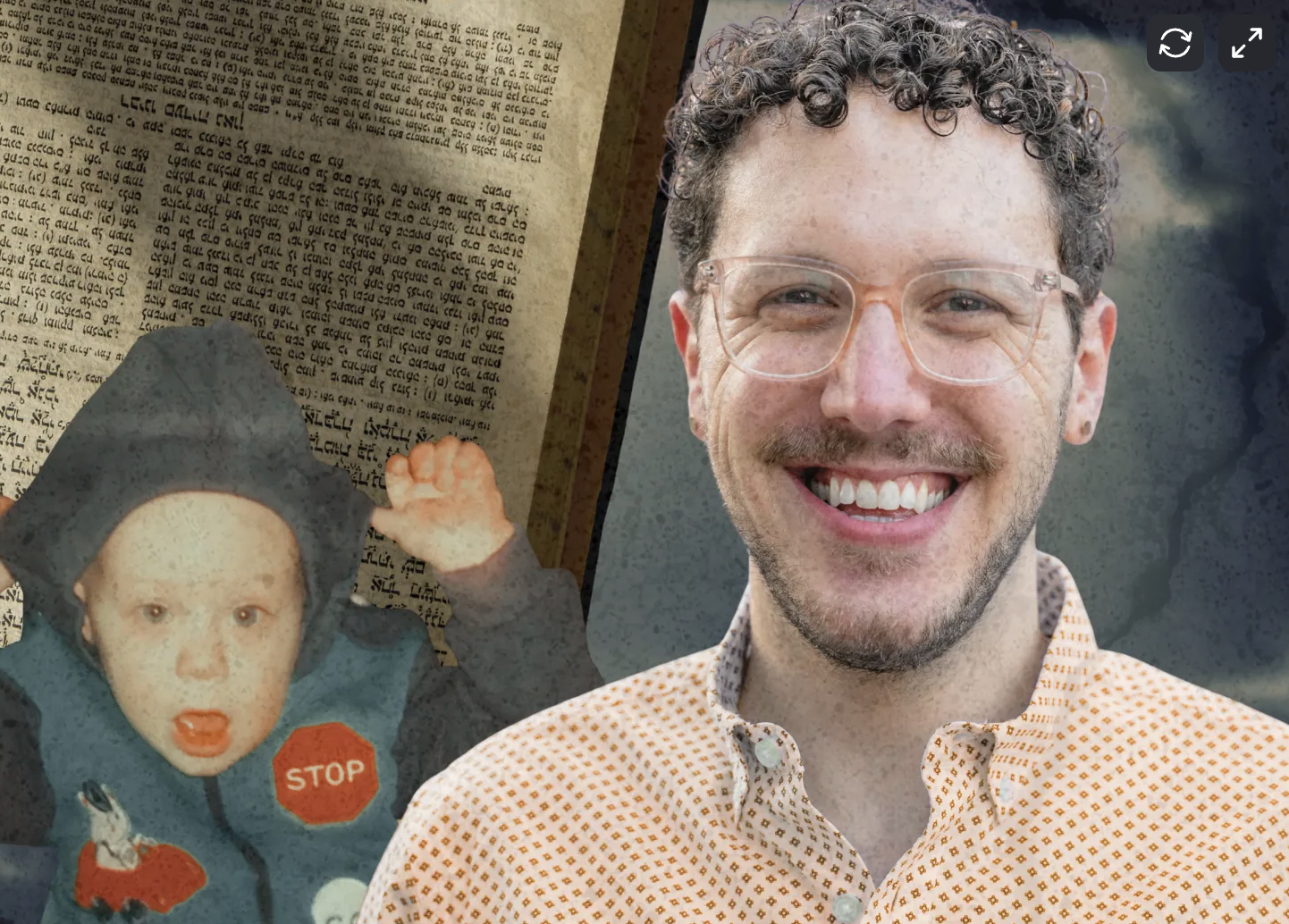
By EMMA PAIDRA | Shlomo Satt remembers first thinking he might be gay at 13 years old after seeing an article about gay marriage in the newspaper. Growing up in an Orthodox Jewish community on Long Island, New York, Satt immediately felt anxious about what this could mean for his future.
“I think that’s when I started thinking, ‘Oh, am I that? Am I gay?’” Satt, now 30, told Uncloseted Media and GAY TIMES.
As Satt came to realize he was gay, his anxiety skyrocketed. He was aware that only half of Orthodox Jews — and 20 percent of ultra-Orthodox Jews — are accepting of homosexuality.
“In my community, it’s very shunned to be gay,” says Satt. “So it was really, really, hard for me to accept that I was attracted to other men, because I was like, ‘It’s not what the Torah says you’re allowed to be.’”
Unlike more progressive denominations, Orthodox Judaism advocates for a more literal understanding of the Hebrew Bible, known as the Torah. For example, verses such as Leviticus 18:22, which states that “You shall not lie with a male as with a woman; it is an abomination,” are more likely to be interpreted verbatim by Orthodox rabbis.
“One of the hallmarks of growing up Orthodox and queer is feeling really alone,” says Satt. “It’s not something we talked about.”
Stories like Satt’s represent what’s motivating LGBTQ people to leave Orthodox Judaism. While little research has been done, one 2023 study from Brooklyn College CUNY found that only about 15 percent of LGBTQ people left Orthodox Judaism directly because of their sexual orientation or their religious views on homosexuality. Other reasons for leaving the denomination included religious views on homosexuality, being judged, bullied or alienated, emotional abuse, trauma, wanting more freedom, and mental health issues.
“It was really hard for me to engage in [Orthodox Judaism] and not feel deep shame or trauma,” says Satt. “That’s why I left.”
Growing up Orthodox
Unlike many Orthodox Jewish families, Satt’s parents allowed him some access to technology and even played secular music like The Beatles. Still, he had no television in the house growing up and zero education about LGBTQ people.
“I didn’t even know that someone could be gay until a friend told me in sixth grade,” he says. “For most of my upbringing, it wasn’t like homophobia was espoused. It just was literally not talked about.”
After the newspaper article triggered Satt’s “gay awakening,” he struggled to keep his feelings inside. “It was really hard for me to accept that I was attracted to other men,” he says. “All I wanted was just to be straight.”
Staying silent about his emotions took a toll. He worried that his dreams of having a big Jewish family would be unattainable. “I wanted to have a wife and kids and be normal within my community, and it felt like I couldn’t have any of that if I was gay,” he says.
By around age 15, Satt’s stress levels reached a breaking point. “I had a night where I was just really, really depressed and crying to God about my sexuality. It was really hard for me to cry at that point, because I was so not tuned in with myself.” He decided to meet with a school psychologist who was part of the Orthodox community. After telling the psychologist he might be gay, the response he received was, “We can fix that.”
Satt remembers initially feeling immense relief at the thought that his sexuality could be cured. “I was so joyful,” says Satt. For the next three and a half years, he worked with members of the Orthodox community who practiced conversion therapy.
The turning point
This therapy, which has been widely discredited for decades, culminated with Satt doing a retreat through an organization called Brothers Road, where participants were encouraged to reenact their trauma in front of each other. He was forced to beat up a punching bag with a metal baseball bat, pretending it was his mother. “I don’t know what the purpose of this was, but it was horrible. And doing this for 35 adult people, it’s totally insane and super humiliating.”
After the therapy failed, Satt began to question the negative messaging he had been taught about being gay. “The things that are more innate to me, I believe, are from God. I didn’t choose to be gay, I just was gay,” he remembers thinking.
With the help of a licensed trauma specialist, Satt reconstructed his relationship to Judaism. He is still Jewish today, and has plans to pursue rabbinical school, but he left Orthodoxy behind. “I actually started really heavily diving into spirituality as a means of meaning in my life, as a means of connecting with my Jewish roots and my tradition, but in entirely different ways. One hundred percent progressive, 100 percent equitable, only learning with people who conferred my identities,” says Satt, who now identifies as a “post-denominational Jew.”
This transition hasn’t been easy. Satt has lost all contact with his family and describes losing the relationship with them as “the hardest thing” in his life.
Unfortunately, Satt’s experience isn’t unusual. An article written by the founder of Jewish Queer Youth (JQY), a nonprofit mental health organization, found that from 2016 to 2023, over 2000 queer youth from Orthodox families accessed support services provided by JQY. And amongst closeted Jewish Orthodox gay men, concerns about the impact of their sexuality on family relationships are a common theme.
Despite this, Satt says he’s experienced immense joy since accepting his sexuality, healing through therapy with an affirming Orthodox rabbi, and having a Jewish wedding where he married his long-term partner. “I started to, slowly but surely, take back my own narrative and live the life that I wanted.”
The rabbinical perspective
While one 2025 study published in the Archives of Sexual Behavior found that some ultra-Orthodox communities are moving away from uniform rejection of homosexuality, gay rights remain controversial in many Orthodox communities. For example, Chabad, a major movement within Orthodox Judaism, states on its website that when it comes to queer desires, “even if it burns inside for a lifetime, the best thing for you, for your health, and for your ultimate satisfaction in life is to subdue and re-channel that desire.”
Mark Dratch, an Orthodox rabbi in Jerusalem, says that there is a limit to the accommodations an Orthodox synagogue can make.
“The sense of alienation, the sense of depression and the person’s emotional and sometimes physical well-being, that’s part of a rabbi’s responsibility,” Dratch told Uncloseted Media and GAY TIMES. “So I think there’s room to be welcoming and embracing, while at the same time living with this kind of dissonance of what tradition requires.”
Though Dratch ultimately views queerness as being in opposition to Orthodox Judaism, he still believes it is his duty to try and support LGBTQ congregants. “I may not like this part of you, but if I don’t embrace you, then we’re going to lose the other 95 percent of your Jewish commitment,” he says.
Dratch says LGBTQ Jews would be welcome to attend services in his synagogue, but he wouldn’t marry a gay couple. “It may not be good enough for some LGBT people in these communities,” he says. “They want to be more than tolerated.”
Marceline’s story
It’s not just gay people who struggle. As early as 9 years old, Marceline Franco locked herself in her bathroom and wrapped a towel around her head, trying to picture herself as a woman. Assigned male at birth and raised in a Syrian Orthodox Jewish community in Brooklyn, N.Y. Franco felt intense guilt for wishing she was a girl.
“I desperately, more than anything, wanted to be a woman,” says Franco, now 30 years old. “I would sit in the bathroom as my only safe space to cry and pray and beg.”
Staying quiet about wanting to dress as a woman and go by a girl’s name put an immense amount of stress on Franco. “One of my fantasies as a kid was that I could wake up in a woman’s body. But in the bed next to me was a clone of me that could live out the rest of my life as my family and community would have wanted,” she says. “I felt horrible that I would rob them of me.”
A shared experience with conversion therapy
By the time Franco entered college, she decided to see an ultra-Orthodox therapist. “Over the next four and a half years, I participated in some version of conversion therapy,” she says. “[My therapist’s] view of it was more of a fetish/escape, and that it was something that I could learn to control and basically bury.”
Franco’s therapist taught her to think of herself in four parts. When Franco suggested that there was a fifth part — a girl — her therapist shut the idea down. Franco found the elimination of this part of her troubling. “It was the erasure of my transness with this person in a professional setting, which is deeply, deeply problematic,” says Franco.
Similar to Satt, conversion therapy didn’t work. And after watching queer comedian Hannah Gadsby’s comedy special “Nanette” for a college class, Franco began to question her therapist even more and started reconsidering her religious upbringing.
“I no longer was able to hold the belief that the Torah was true,” she says. “I realized that I may be holding onto religion to protect myself from coming to terms with the grief of being alone in the world … and justifying staying closeted.”
Franco ultimately left organized Judaism behind.
Six months later, she came out as trans. In order to explore her gender, she cut contact with her family. However, upon trying to reestablish a relationship with them as a woman, things did not go well. “I was nearly barred from my own grandfather’s funeral and I was barred from a family Shabbat meal mourning him. Two weeks later I was kicked out of my cousin’s wedding for showing up dressed as myself,” she says.
“The grief is immeasurable. It is nearly impossible to mourn people and relationships that are actively still living in this world. … And to move through all these major life moments alone has been really difficult.”
Despite this loss, Franco still practices elements of Judaism that resonate with her and has found joy and meaning in her transition. “Once I just started speaking my mind, saying how I felt, it stopped being confusing. I stopped hating myself for having these feelings. I just started loving myself.”
How Satt and Franco learned to move forward from religious trauma
Both Satt and Franco left the Orthodox communities they grew up in.
Still, Satt says Judaism has been the healing force for him. “It brought me back into a relationship with God, The Infinite, The Sum of All Good,” he says. “It ultimately made me feel very connected to myself, to humanity and to my heritage.”
Satt is thrilled that some rabbis are fighting for more inclusivity in the Orthodox Jewish space, but unless more begin to follow in their footsteps, he believes LGBTQ Jews will continue to disaffiliate from the denomination.
Though Franco no longer practices Judaism, she still finds meaning in some of the lessons she learned when she was.
“When my therapist was my mentor, she had me start to look at the world as having divine providence. And I did see a lot of that in my life. To this day, I still do,” she says. “And I just have reinterpreted that God doesn’t care that I’m Jewish or not. God loves me as I am.”
District of Columbia
Bet Mishpachah participates in D.C. Oct. 7 commemoration ceremony
Wednesday marked three years since Hamas attacked Israel
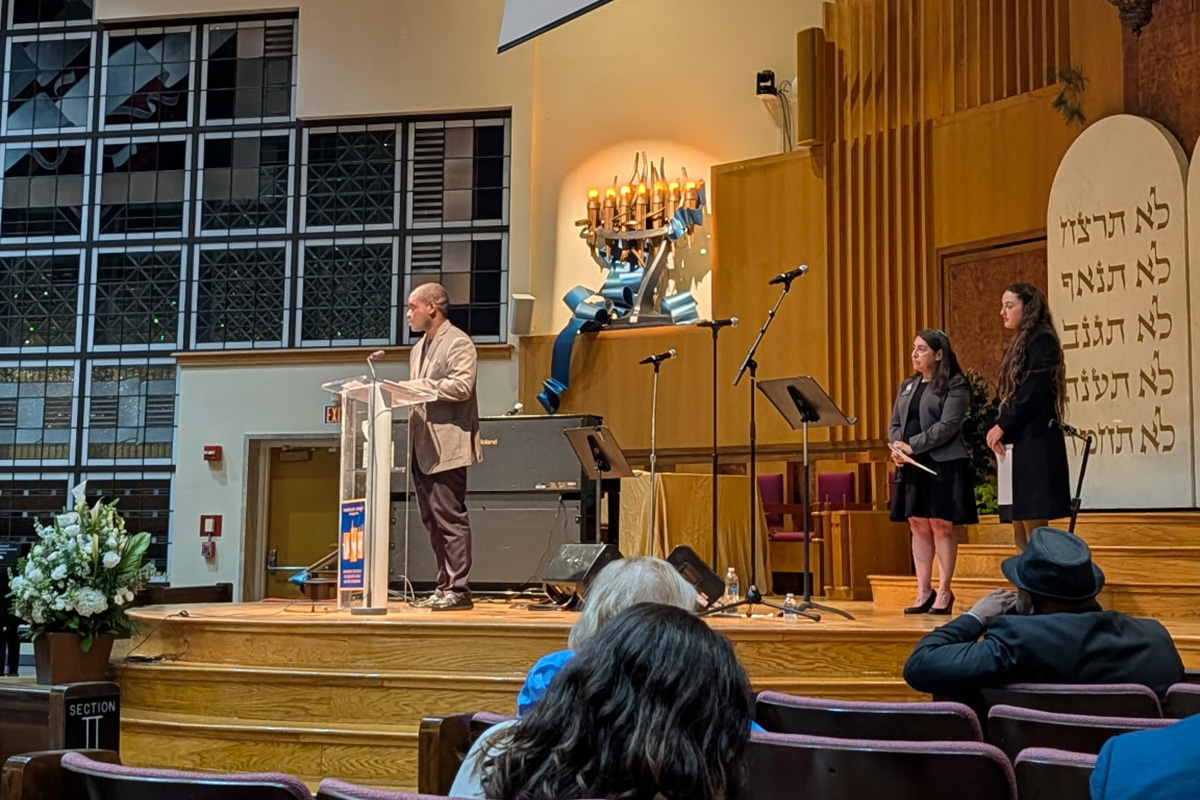
Bet Mishpachah Executive Director Joshua Maxey on Wednesday was among those who spoke at a ceremony in D.C. that marked the third anniversary of the Oct. 7 attack in Israel.
The Jewish Federation of Greater Washington hosted the ceremony that took place at the Washington Hebrew Congregation in Northwest D.C. Bet Mishpachah is the city’s LGBTQ synagogue.
“It was a deeply moving evening, especially hearing the stories of people who knew those who were murdered and those who survived and experiencing music that gave a voice to grief and hope,” Maxey told the Washington Blade.
Hamas militants on Oct. 7, 2023, killed roughly 1,200 people, including upwards of 360 partygoers at the Nova Music Festival near Re’im, a kibbutz that is a couple miles from the Gaza Strip, when it launched its surprise attack on Israel. The militants also kidnapped more than 200 people.
The Hamas-controlled Gaza Health Ministry says Israeli forces have killed more than 74,000 people in the enclave since Oct. 7.
The International Criminal Court in 2024 issued arrest warrants for Israeli Prime Minister Benjamin Netanyahu; former Israeli Defense Minister Yoav Gallant; former Hamas leader Yahya Sinwar; Mohamed Diab Ibrahim al-Masri, the head of Hamas’s military wing known as the Qassam Brigades; and Ismail Haniyeh, chair of the Hamas Political Bureau, after it accused them of committing war crimes and crimes against humanity in Gaza and Israel.
The Israeli government has strongly denied it has committed genocide in Gaza.
An Israeli airstrike on a compound in Khan Younis, a city in southern Gaza, on July 13, 2024, killed killed Deif, one of the alleged Oct. 7 masterminds. Israel less than three weeks later assassinated Haniyah in Tehran, the Iranian capital. Israel Defense Forces soldiers on Oct. 16, 2024, killed Sinwar in Rafah, a city in southern Gaza.
Hamas last October released the remaining hostages in Gaza as part of a ceasefire agreement that President Donald Trump helped broker. Israel has continued to conduct airstrikes and other military operations in Gaza since the official suspension of hostilities took effect.
“For Bet Mishpachah, it was especially meaningful to lift up the names of LGBTQ+ people, those whose identities we know and those whose stories may never be fully known, who were murdered, and to honor the LGBTQ+ survivors whose resilience continues to inspire us,” said Maxey, referring to his participation in Wednesday’s ceremony. “Emily Damari’s story is particularly poignant: while held hostage, she had to hide the fact that she was gay because she feared that revealing her identity to her captors could put her life at even more risk. Yet, she survived.”
“Her story, like so many others, reminds us of the extraordinary courage it takes simply to remain human in the face of hatred,” he added. “May we continue to remember and to mourn, to honor, and to work toward a future rooted in peace and hope.”
National
Man charged in Mall of America shooting plot inspired by Pulse massacre: report
Suspect exchanged hundreds of messages, pledged loyalty to ISIS
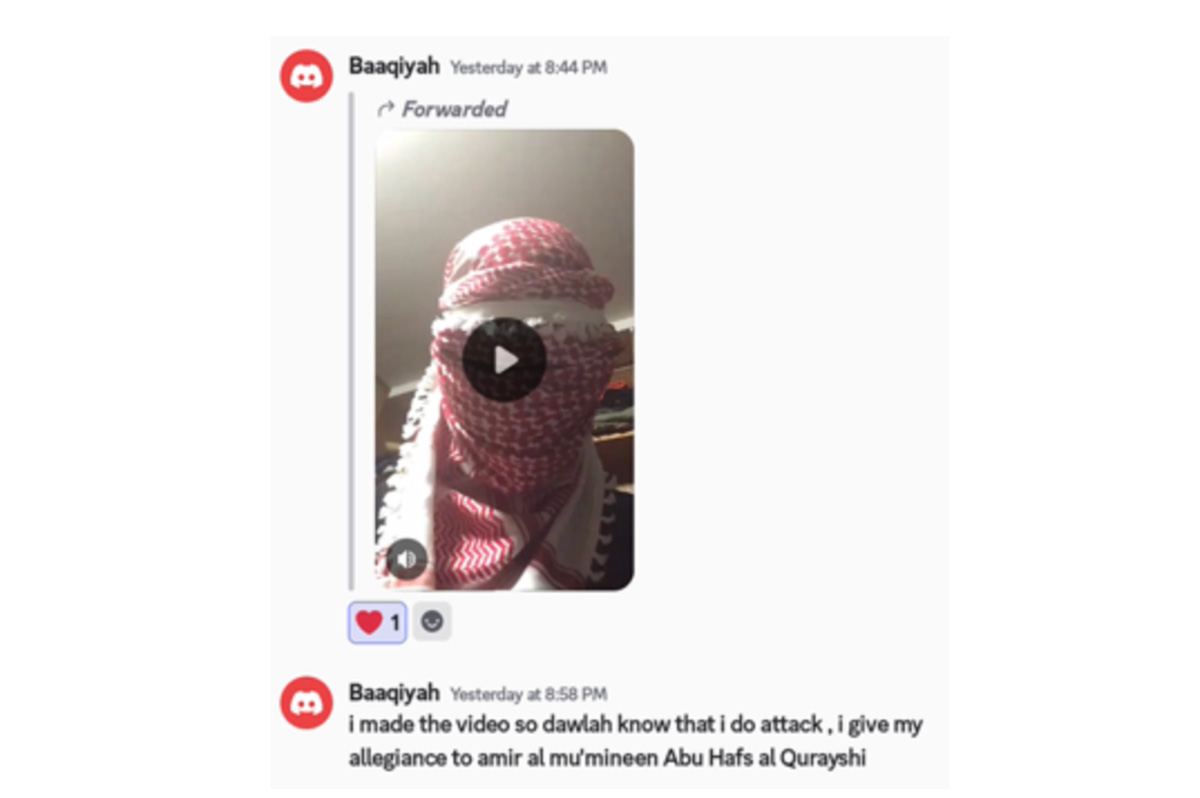
The U.S. Department of Justice charged Sheikhdoon Abdullahi Mohamud, 18, of Richfield, Minn., on Oct. 7 with one count of knowingly receiving a firearm and ammunition in order to commit a federal crime of terrorism. Mohamud allegedly planned to carry out a mass-casualty attack in support of ISIS, inspired in part by the Pulse nightclub massacre that took place on June 12, 2016 when then-29-year-old Omar Mateen murdered 49 people and wounded 58 – one of the deadliest mass shootings in U.S. history, and the deadliest targeting the LGBTQ+ community.
According to a DOJ statement release, Mohamud was arrested on Oct. 6 by the FBI, which had arranged to sell him an AK-47 assault rifle, magazines, and ammunition through an undercover FBI employee. Mohamud was arrested shortly after paying $600 in cash and taking possession of those items; he reaffirmed his intention to shoot people at the Mall of America during the transaction.
“Mohamud allegedly sought to carry out a mass-casualty shooting at the Mall of America, expressing a desire to emulate some of the most horrific ISIS-inspired attacks in the United States, including the atrocities at Pulse Nightclub and 2025 New Year’s Day attack in New Orleans,” said Assistant Attorney General for National Security John A. Eisenberg in the statement by the DOJ. “The National Security Division will continue to work closely with the FBI and Joint Terrorism Task Force to track down and prosecute ISIS-inspired terrorists in the United States.”
According to the complaint, beginning on or about December 2024, Mohamud had exchanged hundreds of messages through multiple social media and messaging apps with a confidential source, and expressed a desire to travel to Somalia to join a designated foreign terrorist organization to fight on their behalf.
The defendant stated many times that if he was unable to travel overseas because of a lack of funds, he planned to carry out a mass-casualty event in Minnesota in support of ISIS.
According to the DOJ, “In July 2026, Mohamud sent messages discussing his intent to carry out a mass-casualty shooting attack at the Mall of America because he claimed it was owned by Jews. He wrote that [he] wanted to kill 30 to 60 people so no one would go there.”
“During the course of his communications, Mohamud stated that he wanted to commit an attack similar to those of the Pulse Nightclub mass-shooting in Orlando, the Bondi Beach mass-shooting in Australia, and the New Year’s Day vehicle-ramming attack in New Orleans.”
This case is being prosecuted by Trial Attorney Ryan White of the National Security Division’s Counterterrorism Section and Assistant U.S. Attorney Benjamin Bejar for the District of Minnesota.
Obituary
U.S. int’l trade negotiator, consultant James Bedore dies at 82
Longtime D.C. resident was prominent supporter of Dignity Washington
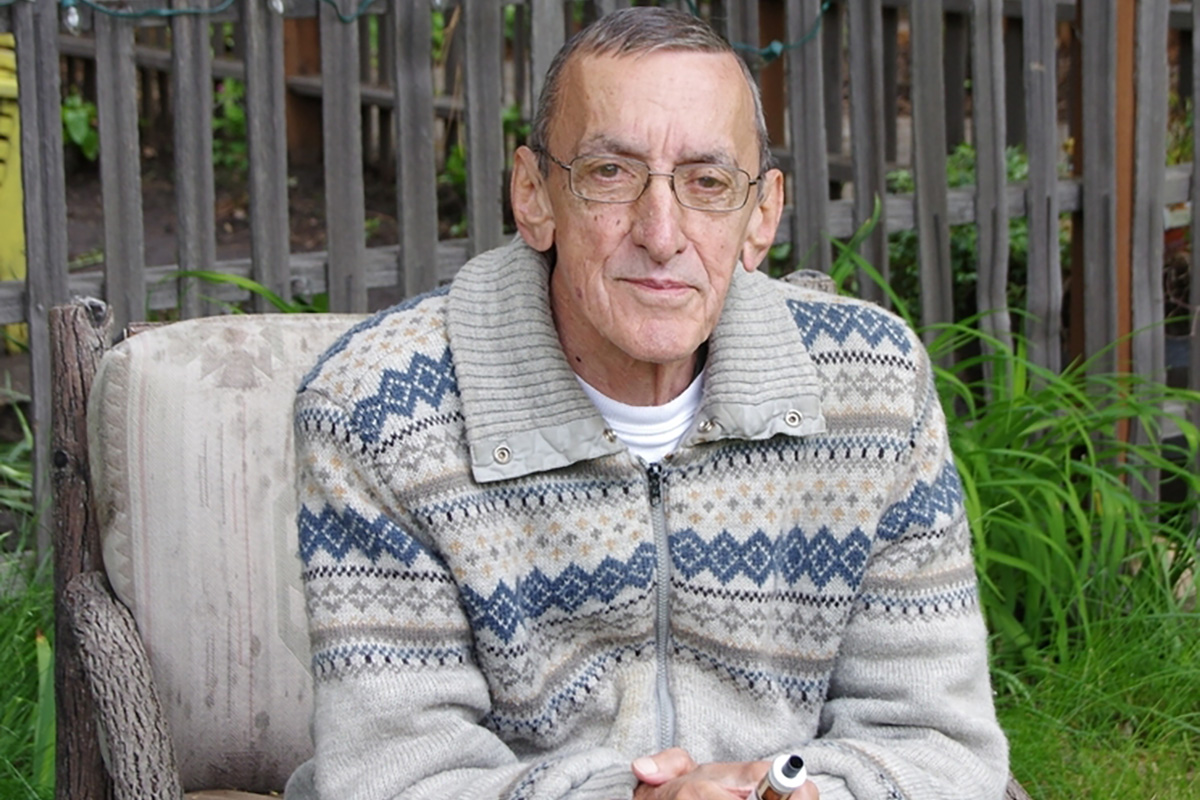
James “Jim” Bedore, an international affairs specialist whose career included work for the U.S. Department of State and as a private sector consultant in Europe with a focus on Middle Eastern and African development before his retirement in 2000, died on Sept. 2 at his home in D.C. He was 82.
His sister, Carol Bedore, said the cause of death was lung cancer.
Dignity Washington, the D.C.-based LGBTQ Catholic organization, released a detailed statement on Bedore’s life and career that, among other things, says Dignity Washington “became a huge part of Jim’s social life after his retirement in 2000.”
Carol Bedore said her brother was born and raised in Unionville, Mich., as the sixth of eight kids and the oldest boy in their family. She said he graduated from high school there before going on to “amazing” things in a distinguished career.
The Dignity Washington statement says upon the completion of his “B.A. in History and Economics,” Bedore served in the U.S. Peace Corps in West Africa in the mid-1960s. The statement says after completing his Peace Corps service Bedore taught briefly at Voorhees College, a historically Black college in South Carolina. He next earned a master’s degree from the East-West Center in Honolulu before undertaking advanced graduate work at the London School of Economics, according to the statement.
“During the Vietnam War, he served a two-year assignment in the Mekong Delta with the U.S. Department of State,” the statement continues. “He later worked in the private sector in Hong Kong, Saudi Arabia, and London, residing in London for fifteen years,” it says, adding, “He served as a Research Fellow at Chatham House (the Royal Institute of International Affairs in London) and co-authored a volume on Middle East Industrialization, (Macmillan in 1979).”
The statement says other articles and commentaries that Bedore wrote appeared in several prominent publications, including the journals Foreign Affairs, International Affairs, the Financial Times of London, and the International Herald Tribune. It says he remained active in international affairs after his retirement in 2000, including involvements with ‘think tank” organizations in D.C.
The Dignity Washington statement says Bedore, who lived for many years until the time of his passing in a condominium in D.C.’s Dupont Circle neighborhood, was a dedicated volunteer and organizer of Dignity related events.
“He did what he could to organize practical and social events, including some 14 years cooking and feeding approximately 100 homeless individuals monthly at Christ House,” the statement says, referring to the D.C. Adams Morgan neighborhood organization that provides medical care and other services for homeless people.
“Additionally, he initiated the ‘Moon Over Washington’ pot-luck event on the incredible roof on his condominium building,” it says. “The event continues to be one of Dignity Washington’s signature events to this day.” Among other things, it says Bedore was part of Dignity Washington’s annual LGBTQ Pride parade contingent, and he helped to sew 60 AIDS Memorial Quilts.
The statement says Bedore also “built a good relationship with St. Matthews’s Cathedral and created a gay chapter there, where he collaborated with parents with gay children.”
Dignity Washington President Peter Edwards called Bedore a beloved, dedicated Dignity Washington member. Edwards said the group recently issued its Willick Award to Bedore, which he said, “is a special award that we give to people who have done wonderful things for our community.”
“We will remember Jim for his sharp mind, his humor, his generosity, and his unwavering belief in the power of human connection,” the statement adds. “He lived a life shaped by service, curiosity, and love – and he leaves behind a community forever enriched by his presence,” it concludes.
Edwards said Dignity Washington will hold a Catholic Mass in Bedore’s honor in the coming weeks.
The statement says Bedore was pre-deceased by two life partners, Geoffrey Lawrence of 19 years, and Al Lunde, who the statement says passed away in 1999.
Bedore’s sister, Carol, said Bedore was cremated and his ashes have been returned to the family’s hometown in Michigan where an interment is being planned at the family’s cemetery plot.

Bet Mishpachah participates in D.C. Oct. 7 commemoration ceremony

Man charged in Mall of America shooting plot inspired by Pulse massacre: report

Bar Betsie, inviting and intimate, marks one-year anniversary

Trump, Netanyahu, and Putin are all war criminals

Center Arts Gallery celebrates 10 years with reception, auction

Eliot Glazer’s new book an engaging collection of essays

Equality Chamber hosts Pride in Business Expo and Profits & Pours

Learn more about Virginia’s queer history

PHOTOS: Winchester Pride