Books
New book celebrates gay rights pioneer you’ve never heard of
Craig Rodwell was at Stonewall riots, helped start first Pride, and more
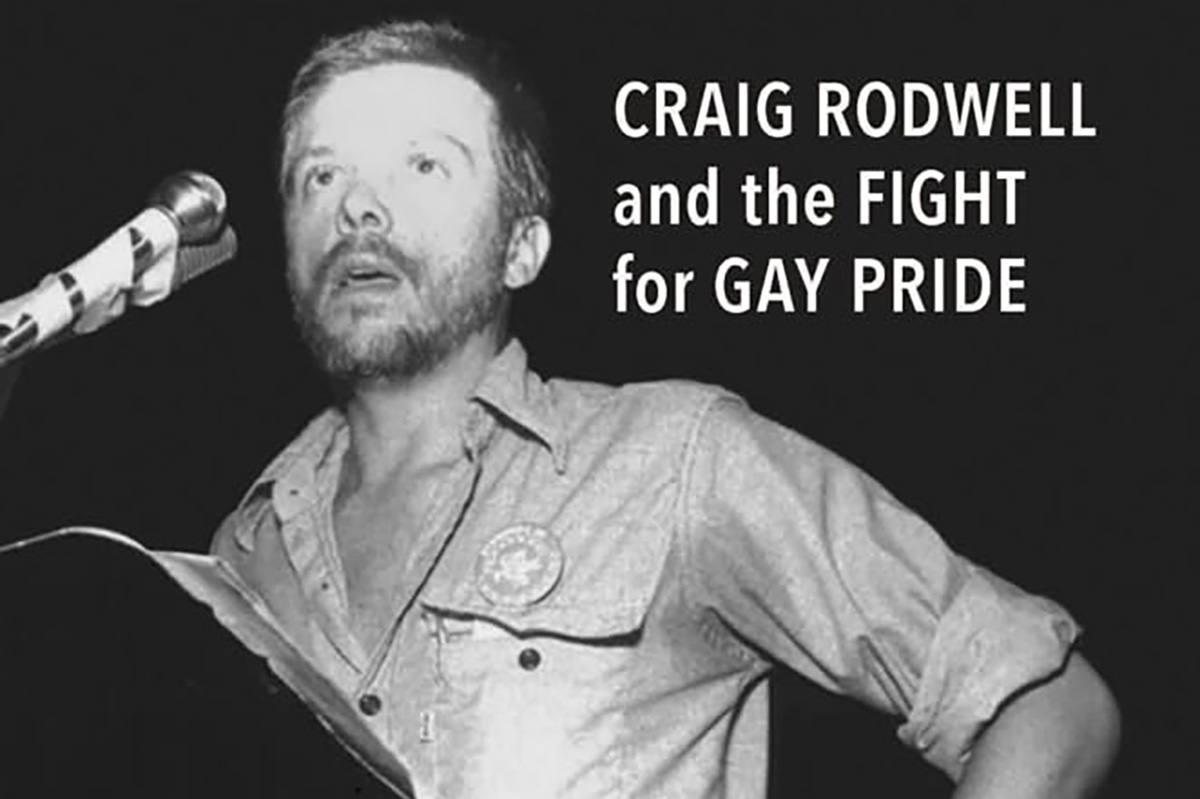
‘Insist That They Love You: Craig Rodwell and the Fight for Gay Pride’
By John Van Hoesen
c.2025, University of Toronto Press
$36.95/432 pages
Craig Rodwell is, sadly, not nearly as well known as he should be, given his accomplishments. He opened the first bookstore devoted to gay and lesbian literature. He led a chant of “Gay power!” at the Stonewall riots and contributed many articles about the struggle for equality and fair treatment. He helped organize the first Pride march. Thankfully, journalist John Van Hoesen’s new book, “Insist that They Love You,” tells Rodwell’s story.

Rodwell was born in Chicago in 1940 and spent his early years at a Christian Science-run children’s home. As a teenager, he roamed the streets, connecting with older men. One of those lovers was arrested and later died by suicide. He moved to New York to study dancing and joined the Mattachine Society, one of the first groups involved in “gay liberation.” He dated Harvey Milk, a challenging relationship, as the older Milk was still closeted while Rodwell was out and deeply involved in the cause. This was when being gay was a crime and public exposure risked getting fired and evicted.
In 1967, he opened the Oscar Wilde Memorial Bookshop (correcting anyone calling it a bookstore), which openly displayed gay and lesbian books and materials. It had large, inviting windows, different from the typical places gay people congregated. Many walked past it, working up the courage to go in. Once they did, they found a welcoming place where they could learn and connect with others. Van Hoesen writes about the diversity of the Bookshop’s employees, gay, lesbian, Black, and white, who all loved the sense of community and purpose Rodwell created.
That same year he helped form the group Homophile Youth Movement in Neighborhood and created their periodical HYMNAL. He wrote many articles for them and later, for QQ Magazine, describing the forces in straight “heterosexist” society, as he termed it, against gay people. He wrote about mafia-controlled gay bars, including the Stonewall Inn, seedy places that overcharged for watered-down drinks. He decried how the law was used to persecute gay people, describing his arrest for wearing “too-short” swim trunks. He explained what to do if arrested: never speak without a lawyer present and never provide names of other gay people. Van Hoesen helpfully includes these articles in an appendix.
Rodwell’s history of activism is impressive. In 1966, he participated in a “sip-in” protesting a law forbidding bars serving alcohol to homosexuals; it took three attempts before one refused to serve him. He and his partner happened by the Stonewall Inn when the riots began, offering the protesters support. He helped lead a group that picketed Independence Hall in Philadelphia every year as an “Annual Reminder,” arguing with organizer Frank Kameny over the required conservative dress code.
He organized the first Pride march in 1969. One of the biggest challenges was getting all the different gay rights groups, with different objectives, to work together. The police only issued the permit the morning of the march. Among the book’s photos is one of Rodwell and his partner afterwards, looking exhausted but happy.
Rodwell never sought the spotlight for his work, always working with others. Yet he often chaffed against many of the organizations’ philosophies, one of the few Mattachine Society members to use his real name. He refused to sell pornography in the Bookshop, or work with gay business owners funded by the mob. He even threw some customers out. Let’s hope this biography shines more attention on this lesser-known leader of the gay rights movement.
The Blade may receive commissions from qualifying purchases made via this post.





Books
New book explores homosexuality in ancient cultures
‘Queer Thing About Sin’ explains impact of religious credo in Greece, Rome
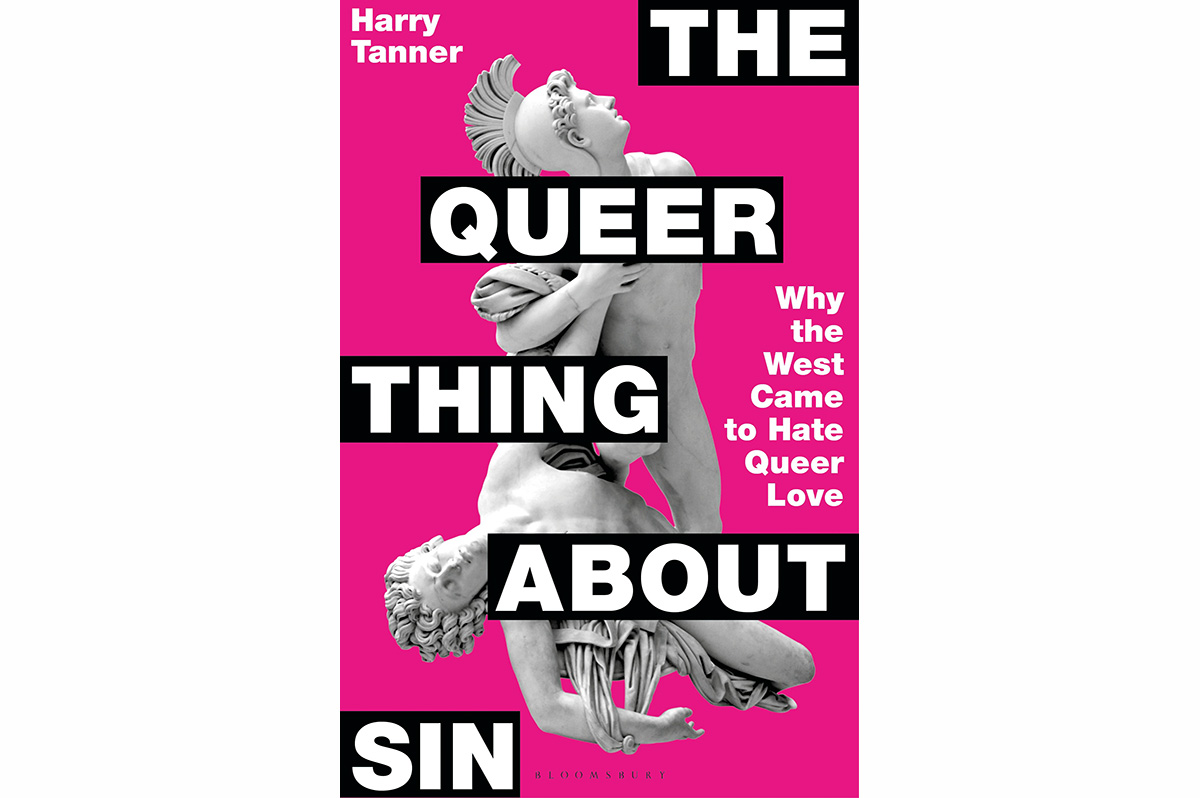
‘The Queer Thing About Sin’
By Harry Tanner
c.2025, Bloomsbury
$28/259 pages
Nobody likes you very much.
That’s how it seems sometimes, doesn’t it? Nobody wants to see you around, they don’t want to hear your voice, they can’t stand the thought of your existence and they’d really rather you just go away. It’s infuriating, and in the new book “The Queer Thing About Sin” by Harry Tanner, you’ll see how we got to this point.
When he was a teenager, Harry Tanner says that he thought he “was going to hell.”
For years, he’d been attracted to men and he prayed that it would stop. He asked for help from a lay minister who offered Tanner websites meant to repress his urges, but they weren’t the panacea Tanner hoped for. It wasn’t until he went to college that he found the answers he needed and “stopped fearing God’s retribution.”
Being gay wasn’t a sin. Not ever, but he “still wanted to know why Western culture believed it was for so long.”
Historically, many believe that older men were sexual “mentors” for teenage boys, but Tanner says that in ancient Greece and Rome, same-sex relationships were common between male partners of equal age and between differently-aged pairs, alike. Clarity comes by understanding relationships between husbands and wives then, and careful translation of the word “boy,” to show that age wasn’t a factor, but superiority and inferiority were.
In ancient Athens, queer love was considered to be “noble” but after the Persians sacked Athens, sex between men instead became an acceptable act of aggression aimed at conquered enemies. Raping a male prisoner was encouraged but, “Gay men became symbols of a depraved lack of self-control and abstinence.”
Later Greeks believed that men could turn into women “if they weren’t sufficiently virile.” Biblical interpretations point to more conflict; Leviticus specifically bans queer sex but “the Sumerians actively encouraged it.” The Egyptians hated it, but “there are sporadic clues that same-sex partners lived together in ancient Egypt.”
Says Tanner, “all is not what it seems.”
So you say you’re not really into ancient history. If it’s not your thing, then “The Queer Thing About Sin” won’t be, either.
Just know that if you skip this book, you’re missing out on the kind of excitement you get from reading mythology, but what’s here is true, and a much wider view than mere folklore. Author Harry Tanner invites readers to go deep inside philosophy, religion, and ancient culture, but the information he brings is not dry. No, there are major battles brought to life here, vanquished enemies and death – but also love, acceptance, even encouragement that the citizens of yore in many societies embraced and enjoyed. Tanner explains carefully how religious credo tied in with homosexuality (or didn’t) and he brings readers up to speed through recent times.
While this is not a breezy vacation read or a curl-up-with-a-blanket kind of book, “The Queer Thing About Sin” is absolutely worth spending time with. If you’re a thinking person and can give yourself a chance to ponder, you’ll like it very much.
Books
‘The Director’ highlights film director who collaborated with Hitler
But new book omits gay characters, themes from Weimar era
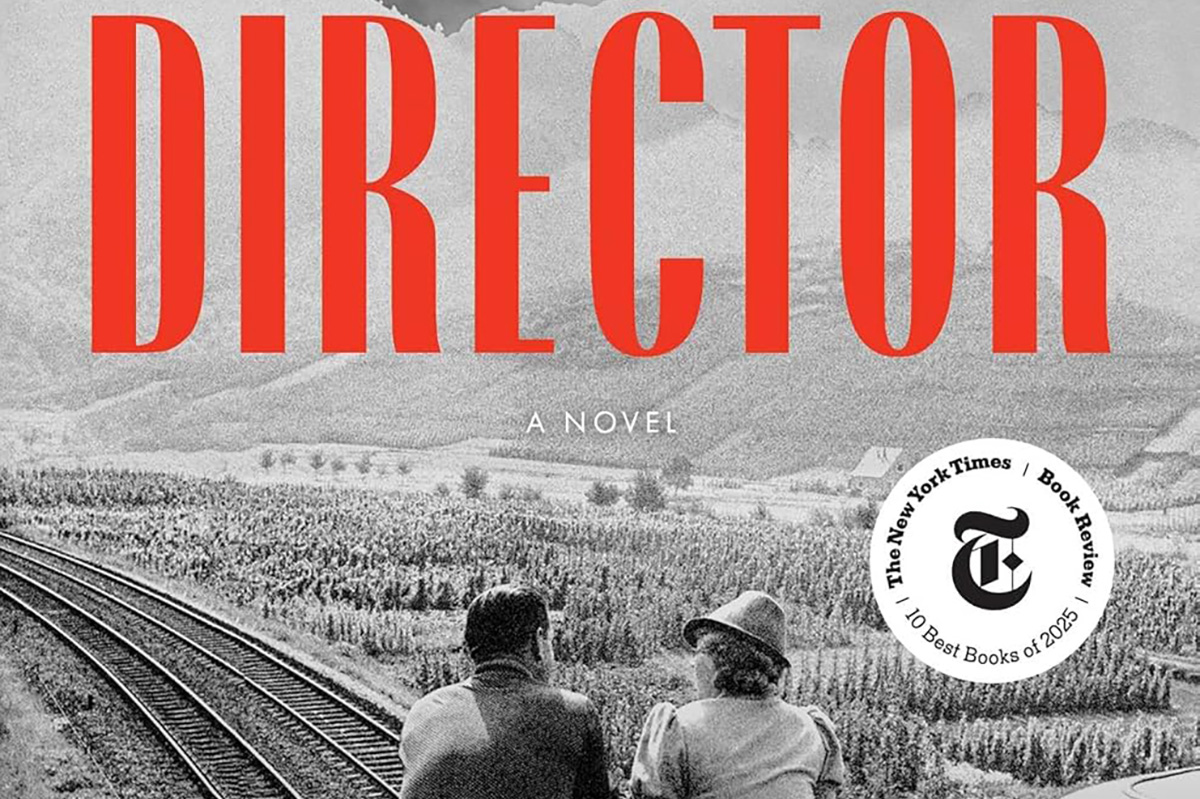
‘The Director’
By Daniel Kehlmann
Summit Books, 2025
Garbo to Goebbels, Daniel Kehlmann’s historical novel “The Director” is the story of Austrian film director G.W. Pabst (1885-1967) and his descent down a crooked staircase of ambition into collaboration with Adolph Hitler’s film industry and its Minister of Propaganda Joseph Goebbels. Kehlmann’s historical fiction is rooted in the world of Weimar German filmmaking and Nazi “Aryan” cinema, but it is a searing story for our challenging time as well.
Pabst was a legendary silent film director from the Weimar Republic’s Golden Era of filmmaking. He “discovered” Greta Garbo; directed silent screen star Louise Brooks; worked with Hitler’s favored director Leni Riefenstahl (“Triumph of the Will”); was a close friend of Fritz Lang (“Metropolis”); and lived in Hollywood among the refugee German film community, poolside with Billy Wilder (“Some Like it Hot”) and Fred Zinnemann (“High Noon”) — both of whose families perished in the Holocaust.
Yet, Pabst left the safety of a life and career in Los Angeles and returned to Nazi Germany in pursuit of his former glory. He felt the studios were giving him terrible scripts and not permitting him to cast his films as he wished. Then he received a signal that he would be welcome in Nazi Germany. He was not Jewish.
Kehlmann, whose father at age 17 was sent to a concentration camp and survived, takes the reader inside each station of Pabst’s passage from Hollywood frustration to moral ruin, making the incremental compromises that collectively land him in the hellish Berlin office of Joseph Goebbels. In an unforgettably phantasmagoric scene, Goebbels triples the stakes with the aging filmmaker, “Consider what I can offer you….a concentration camp. At any time. No problem,” he says. “Or what else…anything you want. Any budget, any actor. Any film you want to make.” Startled, paralyzed and seduced by the horror of such an offer, Pabst accepts not with a signature but a salute: “Heil Hitler,” rises Pabst. He’s in.
The novel develops the disgusting world of compromise and collaboration when Pabst is called in to co-direct a schlock feature with Hitler’s cinematic soulmate Riefenstahl. Riefenstahl, the “Directress” is making a film based on the Fuhrer’s favorite opera. She is beautiful, electric and beyond weird playing a Spanish dancer who mesmerizes the rustic Austrian locals with her exotic moves. The problem is scores of extras will be needed to surround and desire Fraulein Riefenstahl. Mysteriously, the “extras” arrive surprising Pabst who wonders where she had gotten so many young men when almost everyone was on the front fighting the war. The extras were trucked in from Salzburg, he is told, “Maxglan to be precise.” He pretends not to hear. Maxglan was a forced labor camp for “racially inferior” Sinti and Roma gypsies, who will later be deported from Austria and exterminated. Pabst does not ask questions. All he wants is their faces, tight black and white shots of their manly, authentic, and hungry features. “You see everything you don’t have,” he exhorts the doomed prisoners to emote for his camera. Great art, he believes, is worth the temporal compromises and enticements that Kehlmann artfully dangles in the director’s face. And it gets worse.
One collaborates in this world with cynicism born of helpless futility. In Hollywood, Pabst was desperate to develop his own pictures and lure the star who could bless his script, one of the thousands that come their way. Such was Greta Garbo, “the most beautiful woman in the world” she was called after being filmed by Pabst in the 1920s. He shot her close-ups in slow motion to make her look even more gorgeous and ethereal. Garbo loved Pabst and owed him much, but Kehlmann writes, “Excessive beauty was hard to bear, it burned something in the people around it, it was like a curse.”
Garbo imagined what it would be like to be “a God or archangel and constantly feel the prayers rising from the depths. There were so many, there was nothing to do but ignore them all.” Fred Zinnemann, later to direct “High Noon”, explains to his poolside guest, “Life here (in Hollywood) is very good if you learn the game. We escaped hell, we ought to be rejoicing all day long, but instead we feel sorry for ourselves because we have to make westerns even though we are allergic to horses.”
The texture of history in the novel is rich. So, it was disappointing and puzzling there was not an original gay character, a “degenerate” according to Nazi propaganda, portrayed in Pabst’s theater or filmmaking circles. From Hollywood to Berlin to Vienna, it would have been easy to bring a sexual minority to life on the set. Sexual minorities and gender ambiguity were widely presented in Weimar films. Indeed, in one of Pabst’s films “Pandora’s Box” starring Louise Brooks there was a lesbian subplot. In 1933, when thousands of books written by, and about homosexuals, were looted and thrown onto a Berlin bonfire, Goebbels proclaimed, “No to decadence and moral corruption!” The Pabst era has been de-gayed in “The Director.”
“He had to make films,” Kehlmann cuts to the chase with G.W. Pabst. “There was nothing else he wanted, nothing more important.” Pabst’s long road of compromise, collaboration and moral ruin was traveled in small steps. In a recent interview Kehlmann says the lesson is to “not compromise early when you still have the opportunity to say ‘no.’” Pabst, the director, believed his art would save him. This novel does that in a dark way.
(Charles Francis is President of the Mattachine Society of Washington, D.C., and author of “Archive Activism: Memoir of a ‘Uniquely Nasty’ Journey.”)
The Blade may receive commissions from qualifying purchases made via this post.
Books
‘The Vampire Chronicles’ inspire LGBTQ people around the world
AMC’s ‘Interview with the Vampire’ has brought feelings back to live

Four kids pedaled furiously, their bicycles wobbling over cracked pavement and uneven curbs. Laughter and shouted arguments about which mystical creature could beat which echoed down the quiet street. They carried backpacks stuffed with well-worn paperbacks — comic books and fantasy novels — each child lost in a private world of monsters, magic, and secret codes. The air hummed with the kind of adventure that exists only at the edge of imagination, shaped by an imaginary world created in another part of the planet.
This is not a description of “Stranger Things,” nor of an American suburb in the 1980s. This is a small Russian village in the early 2000s — a place without paved roads, where most houses had no running water or central heating — where I spent every summer of my childhood. Those kids were my friends, and the world we were obsessed with was “The Vampire Chronicles” by Anne Rice.
We didn’t yet know that one of us would soon come out as openly bi, or that another — me — would become an LGBTQ activist. We were reading our first queer story in Anne Rice’s books. My first queer story. It felt wrong. And it felt extremely right. I haven’t accepted that I’m queer yet, but the easiness queerness was discussed in books helped.
Now, with AMC’s “Interview with the Vampire,” starring Jacob Anderson as Louis de Pointe du Lac — a visibly human, openly queer, aching vampire — and Sam Reid as Lestat de Lioncourt, something old has stirred back to life. Louis remains haunted by what he is and what he has done. Lestat, meanwhile, is neither hero nor villain. He desires without apology, and survives without shame.
I remember my bi friend — who was struggling with a difficult family — identifying with Lestat. Long before she came out, I already saw her queerness reflected there. “The Vampire Chronicles” allowed both of us to come out, at least to each other, with surprising ease despite the queerphobic environment.
While watching — and rewatching — the series over this winter holiday, I kept thinking about what this story has meant, and still means, for queer youth and queer people worldwide. Once again, this is not just about “the West.” I read comments from queer Ukrainian teenagers living under bombardment, finding joy in the show. I saw Russian fans furious at the absurdly censored translation by Amediateca, which rendered “boyfriend” as “friend” or even “pal,” turning the central relationship between two queer vampires into near-comic nonsense. Mentions of Putin were also erased from the modern adaptation — part of a broader Russian effort to eliminate queer visibility and political critique altogether.
And yet, fans persist to know the real story. Even those outside the LGBTQ community search for uncensored translations or watch with subtitles. A new generation of Eastern European queers is finding itself through this series.
It made me reflect on the role of mass culture — especially American mass culture — globally. I use Ukraine and Russia as examples because I’m from Ukraine, spent much of my childhood and adolescence in Russia, and speak both languages. But the impact is clearly broader. The evolution of mass culture changes the world, and in the context of queer history, “Interview with the Vampire” is one of the brightest examples — precisely because of its international reach and because it was never marketed as “gay literature,” but as gothic horror for a general audience.
With AMC now producing a third season, “The Vampire Lestat,” I’ve seen renewed speculation about Lestat’s queerness and debates about how explicitly the show portrays same-sex relationships. In the books, vampires cannot have sex in a “traditional” way, but that never stopped Anne Rice from depicting deeply homoromantic relationships, charged with unmistakable homoerotic tension. This is, after all, a story about two men who “adopt” a child and form a de facto queer family. And this is just the first book — in later novels we see a lot of openly queer couples and relationships.
The first novel, “Interview with the Vampire” was published in 1976, so the absence of explicit gay sex scenes is unsurprising. Later, Anne Rice — who identified as queer — described herself as lacking a sense of gender, seeing herself as a gay man and viewing the world in a “bisexual way.” She openly confirmed that all her vampires are bisexual: a benefit of the Dark Gift, where gender becomes irrelevant.
This is why her work resonates so powerfully with queer readers worldwide, and why so many recognize themselves in her vampires. For many young people I know from Eastern Europe, “Interview with the Vampire” was the first book in which they ever encountered a same-sex relationship.
But the true power of this universe lies in the fact that it was not created only for queer audiences. I know conservative Muslims with deeply traditional views who loved “The Vampire Chronicles” as teenagers. I know straight Western couples who did too. Even people who initially found same-sex relationships unsettling often became more tolerant after reading the books, watching the movie or the show. It is harder to hate someone who reminds you of a beloved character.
That is the strength of the story: it was never framed as explicitly queer or purely romantic, gothic and geeky audiences love it. “The Vampire Chronicles” are not a cure for queerphobia, but they are a powerful tool for making queerness more accessible. Popular culture offers a window into queer lives — and the broader that window, the more powerful it becomes.
Other examples include Will from “Stranger Things,” Ellie and Dina from “The Last of Us” (both the game and the series), or even the less mainstream but influential sci-fi show “Severance.” These stories allow audiences around the world to see queer people beyond stereotypes. That is the power of representation — not just for queer people themselves, but for society as a whole. It makes queer people look like real people, even when they are controversial blood-drinkers with fangs, or two girls surviving a fungal apocalypse.
Mass culture is a universal language, spoken worldwide. And that is precisely why censorship so often tries — and fails — to silence it.

EXCLUSIVE: Markey says transgender rights fight is ‘next frontier’

LGBTQ activists mourn the Rev. Jesse Jackson

Trump falsely links trans people to terrorism

Fellow lawmakers praise Adam Ebbin after Va. Senate farewell address

LGBTQ groups question US health agreements with African countries

Unconventional love: Or, fuck it, let’s choose each other again

Four bisexual women on stereotypes, erasure, representation, and joy

Magic is happening for Round House’s out stage manager

‘Heated Rivalry’ fandom exposes LGBTQ divide in Baltimore

Home is where the heart is
-

 Opinions5 days ago
Unconventional love: Or, fuck it, let’s choose each other again
-
National4 days ago
Four bisexual women on stereotypes, erasure, representation, and joy
-
Theater4 days ago
Magic is happening for Round House’s out stage manager
-
Baltimore2 days ago
‘Heated Rivalry’ fandom exposes LGBTQ divide in Baltimore