2026 Midterm Elections
LGBTQ Victory Fund looks beyond Washington for change in 2026
Vice President of Political Programs Daniel Hernández spoke with Blade
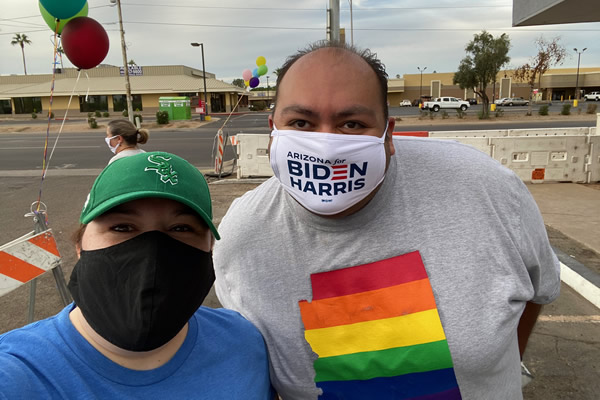
As the Trump-Vance administration enters its second year, LGBTQ people from around the country are running for public office amid fears of the removal of federal civil rights laws that could lead to rollbacks in protections.
The Washington Blade sat down with Daniel Hernández Jr., the newly made vice president of political programs for the LGBTQ Victory Fund, a nonpartisan political action committee dedicated to electing openly LGBTQ individuals to all levels of government, to discuss why now is more important than ever to actualize LGBTQ political power.
Hernández is often credited with saving the life of then-U.S. Rep. Gabrielle Giffords (D-Ariz.) while working as her 20-year-old intern in Tucson, Ariz., in 2011. He served on the Pima County School Board and in the Arizona House of Representatives from 2017-2023, advocating for LGBTQ rights, healthcare access, and education.
Founded in 1991, the Victory Fund was created by a group of prominent LGBTQ political voices, including Dallas gay rights activist William Waybourn and former Human Rights Campaign Fund Executive Director Vic Basile, who were inspired by the success of EMILY’s List, a PAC that works to elect Democratic women to office.
Since its founding, the Victory Fund has worked with LGBTQ advocates and LGBTQ-supportive donors who recognized the need to prepare LGBTQ people to run for office nationwide.
When asked where LGBTQ people and allies need to focus looking ahead, Hernández emphasized that 2026 will be won or lost at the state and local level.
“One of the bigger things that people may not be paying as close attention to as we really should is the impact of state and local races. Federal races are crucial, obviously, but the folks who are actually able to have an impact in a meaningful way right now are not the people in the U.S. House or Senate,” Hernández said. “It can take years before a bill even moves through Congress. Meanwhile, state and local leaders are the ones standing up and fighting for our rights today. Especially during this Trump administration, that’s where the real action is happening.”
He expanded on that point, saying that at this moment in the U.S. political landscape, statewide races matter far more than they are often given credit for — particularly as 2026 is a midterm year under President Donald Trump. People who win elected office in midterm years, Hernández explained, are many times viewed as legislators pushing back against the administration at the top.
“Looking at 2026 in particular, because it’s a midterm year, people sometimes forget just how many critical statewide races are on the ballot. We have people like Chris Mayes in Arizona, who won by less than 300 votes in a battleground state and is now running for reelection,” he said. “These are the races that protect democracy and protect people’s rights in real time. If we ignore them, we’re doing so at our own peril. Statewide offices are where so much power actually lives.”
Hernández also urged LGBTQ voters and donors to think critically about where their time, money, and energy are going — particularly as resources remain limited heading into 2026 and not every race is winnable.
“I think one thing we don’t do enough as a community is pause and ask whether our resources are actually going where they can have an impact. If someone is running against a Republican in a plus-20 Republican state that hasn’t elected a Democrat in decades, do I really need to give my limited resources there? Or does it make more sense to support candidates in competitive states like Arizona or Wisconsin? In 2026, we have to be more strategic, because our resources are not unlimited. Winning matters.”
That calculation, Hernández said, also means moving away from what he described as emotionally driven donations and toward a more deliberate strategy.
“Our community is incredible at rallying when we’re angry, and I call that ‘rage giving.’ Someone awful is in office, a challenger pops up, and we all open our wallets. But what we really need to be doing is asking where that money will actually move the needle. In 2026, it’s not enough to feel good about donating — we have to make sure those donations help candidates who can realistically win. That’s how we protect LGBTQ rights long term.”
Asked how the Victory Fund determines which candidates receive endorsements — especially amid a growing field of openly LGBTQ contenders — Hernández emphasized that viability is central to the organization’s approach in 2026.
“One of the things we’re really focused on in 2026 is viability. We’re not endorsing people who have a zero-percent chance of winning. We’re looking at candidates who are running strong campaigns, who have plans, who are fundraising, and who are doing the work. That’s important because our community deserves guidance it can trust. When you see a Victory endorsement, it means we believe that candidate can actually win.”
Hernández also pushed back on the long-standing notion that being openly LGBTQ is a political liability — an argument that has resurfaced amid right-wing attacks on LGBTQ candidates.
“There’s been this long-standing perception that being LGBTQ is a liability and that it can cost Democrats elections. But when you actually look at the data, that just isn’t true. The reality is that being LGBTQ is not a risk — it’s often a strength. Voters care about roads, health care, affordability, and jobs, not fear-based caricatures. In 2026, we’re seeing more LGBTQ candidates than ever because people understand that now.”
That shift, he added, has helped reframe what LGBTQ candidates are actually campaigning on — despite efforts by conservatives to reduce them to culture-war issues.
“The so-called ‘gay agenda’ is not bathrooms. It’s making sure people have access to health care, that roads are safe, and that families can afford to live. LGBTQ candidates are talking about the same bread-and-butter issues as everyone else. That’s why the idea that LGBTQ candidates cost elections just doesn’t hold up. In fact, we’re seeing them lead on some of the most important issues facing voters right now.”
As misinformation and fear-based narratives continue to dominate right-wing messaging, Hernández said openly LGBTQ elected officials play a crucial role in countering those attacks — both through policy and presence.
“First and foremost, any elected official’s responsibility is to their constituents. That’s what we’re seeing from LGBTQ officials who are focused on affordability, health care access, and consumer protections while Republicans obsess over culture-war nonsense,” Hernández said. “But there’s also a responsibility to be authentic. Being honest about who you are and why you fight matters. That authenticity cuts through fear-based disinformation.”
Looking ahead to 2026, Hernández pointed to transgender elected officials as a particular source of momentum and optimism, even amid intensified political attacks.
“Our trans elected officials are honestly at the forefront of some of the biggest battles we’re facing right now. Despite relentless attacks and vilification, they are still delivering results for their communities. That tells me something incredibly powerful about where the country is headed. Even in this political climate, trans leaders are winning and governing. That gives me a lot of hope for 2026.”
Ultimately, Hernández said the stakes of the upcoming cycle extend far beyond a single election, shaping the future of LGBTQ political leadership nationwide.
“The leaders we elect at the state and local level today are the members of Congress and senators of tomorrow. People don’t just wake up one day and run for Congress — they come from city councils, state legislatures, and school boards. That’s why 2026 is so important. If we invest now, we’re not just defending our rights in the moment, we’re building the next generation of LGBTQ leadership.”
Victory Fund’s endorsed candidates
Incumbents Endorsed: January 2026
- Helen Grant (they/them) – Norman City Council, Ward 4, Okla.
- Louie Minor (he/him) – Bell County Commission, Precinct 4, Texas
- Jonathan West (he/him) – Manchester Selectboard, Vt.
- George Leach (he/him) – Court of Common Pleas, Franklin County Judge, Ohio
- John Fredrickson (he/him) – Nebraska State Senate, District 20
- Ben Bowman (he/him) – Oregon House of Representatives, District 25
- Jeffrey Prang (he/him) – Los Angeles County Assessor, Calif.
- Amie Carter (she/her) – Sonoma County Superintendent of Schools, Calif.
- Elinor Levin (she/her) – Iowa House of Representatives, District 89
- Ken Carlson (he/him) – Contra Costa County Supervisor, District 4, Calif.
- Emma Pinter (she/her) – Adams County Commission, District 3, at-large, Colo.
- Justin Chenette (he/him) – York County Commission, District 3, Maine
- Kris Fair (he/him) – Maryland House of Delegates, District 3
- Jennifer Cornell (she/her) – Ann Arbor City Council, Ward 5, Mich.
- Darlene Martinez (she/her) – Constable, El Centro – Downtown Phoenix, Ariz.
- Brian Garcia (he/him) – Arizona House of Representatives, District 8
- Christian Phelps (he/him) – Wisconsin State Assembly, District 93
- Jack Patrick Lewis (he/him) – Massachusetts House of Representatives, 7th Middlesex
- Will Brownsberger (he/him) – Massachusetts State Senate, Suffolk and Middlesex Counties
- Julian Cyr (he/him) – Massachusetts State Senate, Cape & Islands District
- CM Hall (she/they) – Newport City Council, Ore.
- Jimmy Mack (he/him) – Southampton Town Trustee, N.Y.
- Michael Vargas (he/him) – Elk Grove USD Board of Education, Area 2, Calif.
- Lisa Grafstein (she/her) – North Carolina State Senate
- Hector Bustos (he/him) – Trustee, Santa Ana Unified School District, Calif.
Newly Endorsed Candidates – January 2026
- Kirk McPike (he/him) – Virginia House of Delegates, District 5
- Winn Decker (he/him) – North Carolina House of Representatives, District 37
- Jonathan Lambert-Melton (he/him) – Wake Co. Board of Commissioners, At-Large, N.C.
- Karen Stegman (she/her) – Orange County Board of Commissioners, At-Large, N.C.
- Landon Campbell (he/him) – Hays County Criminal District Attorney, Texas
- Christine Castillo (she/her) – Bexar County District Clerk, Texas
- Nicholas “Nico” Costilla (he/him) – Hays County Clerk, Texas
- Davis Mendoza Darusman (he/him) – Harris Co. Justice of the Peace, Pct. 5, Pl. 2, Texas
- Nicholas Palmer (he/him) – Justice, Fifth Court of Appeals, Texas
- José “Che-Che” Wilson (he/him) – Cook County Board of Commissioners, District 12, Ill.
- Sarah Bury (she/her) – Metropolitan Water Reclamation District Board of Commissioners, Ill.
For more information of the LGBTQ Victory Fund’s endorsments, qualifications, or on how to register to receive an endorsement, visit the organization’s website at victoryfund.org




2026 Midterm Elections
As Washington shifts right, Democratic Socialists gain ground
Next major test for movement comes in Midwest

As President Donald Trump’s second administration has pushed the federal government further to the right on issues ranging from immigration to LGBTQ rights, a different political movement has been gaining momentum inside the Democratic Party.
From industrial communities in upstate New York to Colorado’s Front Range, candidates aligned with the Democratic Socialists of America (DSA) have won a series of victories in Democratic primaries this year, in several cases defeating longtime incumbents who had represented Democratic strongholds for years. Their success has reignited debate over the Democratic Party’s future, as a growing faction of progressive voters calls for a more confrontational approach to economic inequality, healthcare, housing, labor rights, climate policy, and LGBTQ protections rather than what they view as the party’s increasingly cautious establishment.
These victories also reflect a broader ideological divergence in American politics. While Republicans under Trump have embraced a more conservative governing agenda, many Democratic primary voters in safely blue districts appear to be rewarding candidates running on unapologetically progressive platforms that reject incremental change in favor of more sweeping reforms.
The Democratic Socialists of America (DSA), the nation’s largest socialist organization, says it has more than 100,000 members and chapters in all 50 states. The organization advocates what it describes as democratic socialism — promoting social and economic equality through democratic government while supporting a larger public role in healthcare, housing, labor protections, education, and other social programs alongside a regulated market economy.
On its website, the DSA explains its goals are to utilize “progressive movements for social change while establishing an openly democratic socialist presence in American communities and politics.”
For LGBTQ Americans, the organization has long supported expansive nondiscrimination protections, marriage equality, transgender rights, and broader legal protections through a platform first adopted in 2017. Its LGBTQ policy calls for federal legislation prohibiting discrimination, expanded access to gender-affirming healthcare, reproductive freedom, and opposition to laws targeting LGBTQ people.
The movement’s biggest victories came in New York.
Just months after the election of New York City Mayor Zohran Mamdani, a democratic socialist, candidates backed by the DSA and allied progressive organizations swept Democratic primary elections that many political observers viewed as a referendum on the party’s ideological direction.
Among the most notable victories were Brad Lander’s defeat of incumbent Rep. Dan Goldman in New York’s 10th Congressional District, Claire Valdez’s victory over Brooklyn Borough President Antonio Reynoso in the 7th District, and Darializa Avila Chevalier’s upset of five-term incumbent Rep. Adriano Espaillat in New York’s 13th Congressional District.
Overall, nine of the 10 New York City candidates backed by the DSA won their Democratic primaries, further cementing the organization’s growing influence in the nation’s largest city and demonstrating that democratic socialist candidates can compete beyond isolated local races.
Outside New York, the trend continued.
In Colorado, Melat Kiros defeated 15-term incumbent Rep. Diana DeGette in one of the cycle’s biggest primary upsets. Kiros campaigned without accepting corporate PAC contributions and criticized DeGette’s fundraising practices and foreign policy positions, presenting herself as an alternative to the Democratic establishment.
While socialist movements have existed in the United States for more than a century, democratic socialism remained largely on the political margins for decades. That began to change following Sen. Bernie Sanders’ presidential campaigns in 2016 and 2020, which introduced millions of Americans to democratic socialist ideas and energized a younger generation of progressive activists.
Although Sanders never won the Democratic nomination, his campaigns helped reshape the party’s left flank by elevating issues such as universal healthcare, tuition-free public college, stronger labor protections, and economic inequality into the mainstream Democratic conversation.
Today, the movement’s most recognizable elected officials include Rep. Alexandria Ocasio-Cortez and several members of the congressional “Squad,” who have helped normalize the democratic socialist label among younger Democratic voters and increasingly challenged party leadership from the left.
For LGBTQ voters, democratic socialist candidates have frequently positioned themselves among the Democratic Party’s strongest advocates for transgender rights, particularly as the Trump administration has sought to restrict access to gender-affirming healthcare, military service, and other legal protections for transgender Americans.
The next major test for the movement may come in the Midwest.
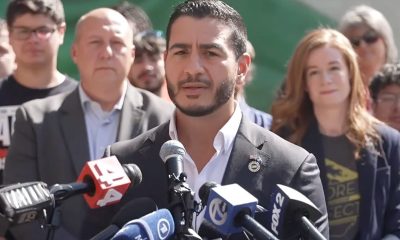
In Michigan, progressive candidate Abdul El-Sayed is locked in a closely watched Democratic Senate primary, while in Wisconsin, DSA-backed Francesca Hong is seeking her party’s nomination for governor. The outcomes of those races could offer another measure of whether democratic socialism’s recent gains represent a lasting realignment within the Democratic Party or are concentrated primarily in deep-blue urban districts.
2026 Midterm Elections
LGBTQ political candidates see surge in threats, harassment: report
Majority fear physical attack, discouraging them from running
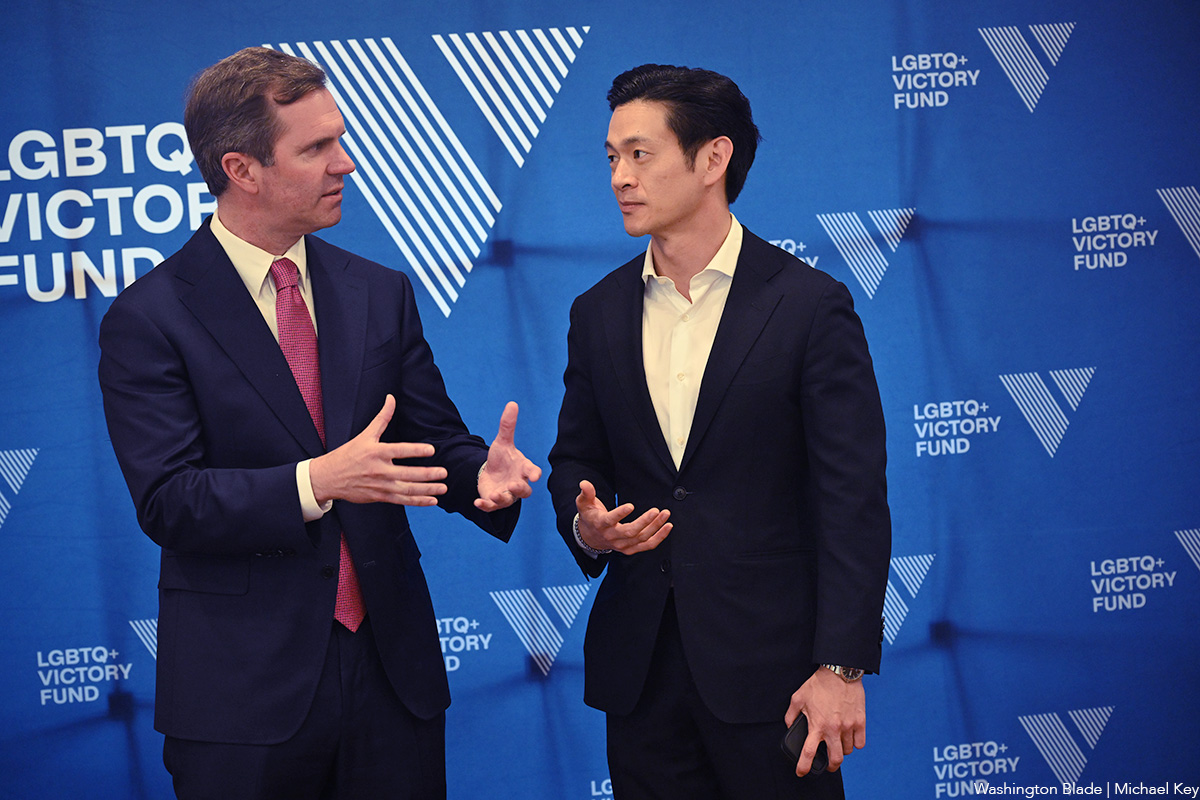
A new study reveals that LGBTQ candidates running for public office are seeing an unprecedented amount of harassment and threats as President Trump and his far-right MAGA supporters continue to strip protections for minority groups at all levels of government.
The LGBTQ+ Victory Institute, the nation’s largest LGBTQ candidate training and leadership organization, recently partnered with Loyola Marymount University to collect data on the rising political violence experienced by LGBTQ candidates. The organization is closely affiliated with the LGBTQ+ Victory Fund, its sister political action arm dedicated to helping LGBTQ candidates get elected.
The Washington Blade sat down with Evan Low, president and CEO of the LGBTQ+ Victory Institute and LGBTQ+ Victory Fund, to discuss what the data reveals about the climate LGBTQ candidates have found themselves in.
Low argued that the findings cannot be separated from the broader political environment facing LGBTQ Americans in 2026. Anti-transgender legislation continues to surge across the country while federal recognition of LGBTQ communities has diminished. This is the second consecutive year Trump has declined to recognize June as Pride month. He also made no public statement commemorating Juneteenth, the anniversary marking the emancipation of enslaved people in the United States.
The survey included 215 LGBTQ+ candidates who ran for office between 2023 and 2025 from 42 states, Puerto Rico, and Washington, D.C., and asked about their experiences while running for office.
The data, while not particularly surprising given the highly divisive political era we have been living through under Trump 2.0, contains stark findings showing that LGBTQ candidates are not only finding it more difficult to run for office — something protected under the First and Fourteenth Amendments — but that it has also become increasingly dangerous for openly LGBTQ candidates to do so.
One of the report’s most significant findings focuses on what happens before an LGBTQ person’s name ever appears on a ballot or yard sign: widespread fear among prospective candidates. Nearly 9 in 10 candidates worried that running as an openly LGBTQ+ person would increase their risk of harassment or attack, while 4 in 5 feared physical violence.
Key Takeaways From the Data
Harassment Is the Norm — Not the Exception: Nearly two-thirds of LGBTQ candidates experienced in-person harassment, while nearly 8 in 10 faced online abuse, with many encountering it regularly.
The escalation from rhetoric to serious threats mirrors the current political climate. One in three candidates received death threats online, and one in seven experienced them in person, highlighting the severity of the current threat environment.
Campaigns Altered by Safety Concerns: More than half of candidates changed how or where they campaigned due to safety fears, and nearly 1 in 5 described the impact as significant — limiting public engagement and visibility.
Security Out of Reach: Fewer than 1 in 10 candidates could afford private security, even as threats escalated, underscoring a growing inequity in who can safely run for office.
Severe Mental Health Impact: Nearly two-thirds of candidates said attacks negatively impacted their mental health, with some reporting long-term trauma and lasting psychological effects.
“What we’re seeing is not just harassment, it’s a systemic challenge to participation,” said Elliot Imse, the now former executive director of LGBTQ+ Victory Institute. “When candidates are forced to change their behavior, limit public engagement, or reconsider running altogether because of safety concerns, that’s not just a personal issue — it’s a breakdown in the conditions required for a healthy democracy.”
“This isn’t theoretical — I, like so many LGBTQ+ candidates and elected leaders, have lived it,” said Daniel Hernandez, vice president of political programs at LGBTQ+ Victory Fund. “From surviving gun violence to having my own campaign office targeted, I know how real these threats are and how deeply they affect candidates, their teams, and their families. The LGBTQ+ Victory Institute has been doing this work for years — preparing candidates, supporting them through these challenges, and making sure they’re not facing it alone. This report makes clear the stakes are higher than ever. If we want people to step up and serve, we have to meet this moment with the resources, support, and commitment to their safety demands.”
Low, who before leading the Victory organizations was an openly gay elected official representing California’s 26th Assembly District, which includes portions of Silicon Valley and San Jose, views the findings as both a political violence issue and a threat to democracy itself.
“We’re living in a moment in a time in which the pendulum is swinging backwards,” Low told the Blade. “We’ve seen a historic amount of anti-LGBTQ+ legislative proposals across this country. So naturally, when members of our community are targeted, it gives that license then to be harassed and discriminated against accordingly. It absolutely is a challenge to democracy.”
The data also shows that LGBTQ candidates face unique barriers to entry — many of them financial. Low argued that reducing those barriers would help diversify candidate pools and create a more representative democracy.
“Does [the current system] disproportionately then impact and limit the segment within our populations to serve? The answer is absolutely yes. When you think about the increased challenges of a barrier to entry– that’s why we’re focused on doing the report in the first place. It also then goes to show the importance of how we utilize taxpayer dollars and budgets accordingly to help encourage and support members of the community to run for office.”
He used that point to emphasize the importance of the LGBTQ+ Victory Institute, not only in collecting data on these trends but also in helping LGBTQ candidates navigate them.
“That’s the fundamental reason why there’s the need for the Victory Fund of the Victory Institute,” he said. “It’s to say that the members of our community will not face this or run alone. They should know that there is a national network, a national organization that will be the wind in their sails to help guide them.”
So far in 2026, the Victory Fund has endorsed at least 249 candidates.
In addition to providing financial support, the Victory Institute helps LGBTQ candidates prepare for the realities of the campaign trail, including coping with harassment, threats, and personal security concerns.
Low expanded on what that reality looks like in 2026 as anti-transgender legislation continues to surge and federal recognition of LGBTQ communities has diminished.
“Part of that discussion is we don’t try to sugarcoat it,” he said when emphasizing the realities facing LGBTQ candidates. “We will speak truth about ‘Here’s how to put a campaign budget together’ and ‘Here’s best practices on public speaking.’ But also we have to deal with showing the unfortunate reality on ‘Here’s how to keep your family safe.’ ‘Here’s how to retain and keep in mind your mental health’…especially when you see members of our community being doxxed constantly by bots and such hate speech.”
He also highlighted the unique challenges facing transgender candidates running for office, particularly as hundreds of bills across the country continue to target transgender people.
“We hear that many times there may be individuals from the community, specifically the trans community, who may want to run for office, but their existence is criminalized, which is to say that they may live in a state or jurisdiction in which it’s criminal to exist; laws prohibiting them from being who they are,” Low said.
“When many of our candidates run for office, they are not running because they are trans, they’re not running because they’re gay or a member of their community, they’re running to advance the quality of life on the key issues on housing affordability, health care, education, you name it, and so these are the campaign issues, but the challenge exists as well.”
Those pressures often lead candidates to question whether running for office is worth the personal toll.
“Many times the candidate and/or elected official will speak candidly with members of our organization to say, ‘Is it worth it anymore? What should I do? Is this something that I should continue? This is taking a personal toll on my family, but I care about the call to service and making a difference in my community.'”
Low also spoke about what he sees as more than simple anti-LGBTQ bias in politics, pointing instead to the growing number of laws targeting LGBTQ people.
“I don’t think it’s simply bias — it’s fact. Again, we can cite laws on the books and proposals across the country, so no wonder why the conversation is so toxic and hostile to members of our community.”
Despite those threats, Low said LGBTQ candidates continue to run for office in record numbers.
“While this political violence report does reflect the hard truth about the challenges to our community, we have seen more candidates apply for an endorsement and sign up for our programs than we’ve ever seen before. We have seen more candidates run for federal office than we ever have had in the history of our 35 years as an organization. What does that tell us? It tells us that yes, it is a challenging and harmful time, yet members of our community are willing to run toward the front lines and answer the call for service.”
The data shows that queer women and transgender candidates are among those most heavily impacted by political violence and heightened political polarization.
“We’ve seen specifically LGBTQ+ women and members of our trans community being disproportionately impacted by [political violence]. When you disaggregate the data, it is also really important to address within our community. We do know anecdotally, as well as from the report, that it may be more challenging for LGBTQ+ women and our trans individuals given some of the other cited conclusions.”
Two of the issues that disproportionately affect transgender candidates and LGBTQ women are mental health challenges and increased security needs.
“What we’ve seen is some of the top demands for services. In many jurisdictions, governmental entities do not have budgets for it– either access to mental health services, as well as public safety services,” he explained. “Security — whether it be surveillance cameras around their homes — those are the key areas. Oftentimes candidates are left to their own devices and may not have access to those key areas to support them.”
Low noted that when LGBTQ candidates are elected, they can advance policies aimed at reducing discrimination, pointing to legislation he championed while serving in California.
“I passed a bill to require Peace Officers Standards and Training curriculum on diversity training for members of the LGBT community. Police officers would have to go through diversity and sensitivity training with respect to members of the LGBT community. That’s something that I very much would like to see amplified, not just state by state, but at the federal level — federal funding to support standards and trainings in dealing with members of the LGBT community.”
“The key data points reflect an increase in not only violence but also intimidation and increased barriers to entry over the years. You can make the direct nexus between that of the increase in anti-LGBTQ legislation and the current rhetoric that exists in this political environment. It’s not just here in the United States — you see it globally as well. So it is something that most certainly we’re seeing increase.”
When asked about the long-term consequences, Low warned that political violence could make American democracy less representative and discourage future generations of LGBTQ leaders from seeking office.
“I think we will likely see a decrease in the diversification of candidates and their lived experiences. It can be insurmountable for those from a younger generation who have to put food on the table and support their families. When it takes political violence to a different level and doxxing and being harassed online, it’s taken on a whole new meaning. We may see that deterioration of the quality and caliber of candidates, or not as much participation from the wide segment of our LGBTQ+ community.”
The Blade also asked how he feels about the future given the current political climate.
“One can always be optimistic and hopeful for the future, but I won’t hold my breath.”
When asked what success would look like for the LGBTQ+ Victory Fund and LGBTQ+ Victory Institute, Low said he hopes to see a decrease in threats against candidates, more LGBTQ people elected to office, and fewer legislative efforts targeting the community.
“I think certainly a decrease when we do this report again and have seen a decrease [in threats] is oftentimes telling. But similarly, seeing less of the legislative proposals in various state houses that are hostile, that criminalize our existence, is another key factor. Those are the two data points that we would cite and highlight as it relates to the political climate with respect to LGBTQ+ leaders.”
2026 Midterm Elections
Ken Paxton wins Texas Republican primary runoff
LGBTQ rights opponent will face Democrat James Talarico in November

Attorney General Ken Paxton won the Republican Senate primary in Texas on Tuesday, ousting incumbent U.S. Sen. John Cornyn.
Paxton won the primary against the four-term incumbent in large part due to President Donald Trump’s endorsement. Despite Cornyn voting with Trump more than 90 percent of the time, political insiders say being supportive isn’t enough to win Trump’s endorsement anymore — Republican candidates need to embrace the full MAGA image, something Paxton has done.
Paxton has served as Texas attorney general since 2015 and, before that, worked as a Texas state representative. He has approached both roles with what LGBTQ activists call a “consistently Anti-LGBTQ+ Record.” Following the landmark U.S. Supreme Court decision in Obergefell v. Hodges — the case that made same-sex marriage the law of the land — Paxton advised Texas county clerks they could refuse marriage licenses to same-sex couples on religious grounds.
His anti-LGBTQ crusade doesn’t stop at fighting against marriage equality.
Paxton has repeatedly demanded medical records for transgender youth in multiple states — including Texas, Georgia, and Washington — in hopes of making the practice illegal. His anti-trans actions go far past medical records. Paxton issued an opinion barring trans Texans from changing the sex on their driver’s licenses and birth certificates, claiming any changes made were “unlawfully altered,” and helped the DOJ reach an agreement with a Texas’s children’s hospital for providing minors gender-affirming care, eventually leading to a 10 million dollar settlement. He also authored a non-legally binding opinion equating gender-affirming healthcare for youth to child abuse.
In addition to his long history of anti-LGBTQ policy in the Lone Star State, Paxton is no stranger to controversy.
Multiple impeachment efforts brought against him in the state House of Representatives for “abuse of office” — with the state Senate later acquitting him — allegations that he used his office to assist large campaign donors, namely Nate Paul, and a widely publicized separation from his wife, state Sen. Angela Paxton, all impacted his run for the U.S. Senate seat — but not enough to keep him from the office.
Lynne Bowman, vice president of campaigns at the Human Rights Campaign, issued a statement following the announcement of Paxton’s primary win.
“Texans have a clear choice this fall, and an opportunity to reject failed policies that hurt all families,” Bowman sent to the Blade via email. “Ken Paxton is so out of step that he has fought to undercut marriage equality and spent time demanding personal medical records for young people who do not even live in Texas, all while becoming the most corrupt politician in America. The more than 2 million Equality Voters in Texas will send him packing.”
Paxton will face off against Democratic hopeful and vocal Trump critic James Talarico in the fall.
Talarico, who won the Democratic primary in April against Congresswoman Jasmine Crockett, has been a vocal supporter of LGBTQ rights, citing his ministry work as the source of his support for the community.
The race for Texas’s Senate seat will be decided on Nov. 3.

HRC condemns DoE removal of LGBTQ bullying data from federal survey

Dutch PM: More needs to be done to defend trans rights

HRC files class action over federal ban on gender-affirming care coverage

Perez Hilton’s live breakdown reveals social media mental health crisis

Mr. Henry’s to host 60th anniversary party

Madonna headlines World Pride Music Festival in Amsterdam

PHOTOS: Petal Release Party

My evening with Madonna

Remembering Elliot Leonard, generous visionary who helped LGBTQ communities thrive