Books
‘Mighty Real’ explores history of LGBTQ music
From Judas Priest to Whitney, something for every taste

‘Mighty Real: A History of LGBTQ Music, 1969-2000’
By Barry Walters
c.2026, Viking
$35/496 pages
Step, step, tap, back step.
Shimmy in a circle, left hand waving over your head, shake your tail feathers, repeat to the beat. Once there was a time when you could do any dance in your sleep, but it’s been a while. So read “Mighty Real” by Barry Walters, and see if your toes don’t tap.

Fifty-seven years after Stonewall, and here we are: LGBTQ musicians still face scrutiny for their sexuality because, says Walters, music isn’t created for gay listeners. No problem: LGBTQ artists and writers have often penned lyrics carefully in order to say what can’t be said, “coding” songs for gay audiences that straight (and ignorant) listeners can dance to and enjoy with apparent obliviousness.
Walters offers “just a few” examples.
Lou Reed sang about trans people in the late ‘60s and offered a rallying song for the Gay Liberation Front in 1972, the latter of which felt like a message to a then-11-year-old Walters. Janis Joplin claimed she was straight, but she had several girlfriends. Motown singers often offered sometimes-ambiguous lyrics.
John Lennon’s hand placement on the back cover of Sgt. Pepper’s Lonely Hearts Club Band made Walters begin to understand that he was different from other boys.
David Bowie is on his list, of course, as is Bette Midler, Elton John, Donna Summer, and Queen. You’ll find Judas Priest here, Green Day, and punk music. The Village People are included in this book, also Grace Jones, Duran Duran, and Cher, Whitney, Melissa, Latifah, and the lyrics from several blockbuster movies.
Two of Prince’s band members were lesbians, and they heavily influenced his albums. Diana Ross’s “I’m Coming Out” cemented her position in LGBTQ culture, and Michael Jackson’s inclusion here takes much careful consideration.
Read about Olivia Newton-John and the B52s. And then there’s Sylvester, for whom Walters has a soft spot in his heart. Sylvester’s death still makes Walters cry.
In his preface, author and music writer Barry Walters points out that music is what you make it and that it’s interpreted differently by each individual. To that end, this book naturally consists of preferential history and personal opinions about singers, bands, albums, and songs.
Agree or disagree. That’s where much of the appeal lies in “Mighty Real.”
Here, Walters wraps his memories around his choices, giving readers room for their own views, memories, and list making. Music-loving readers might also be surprised to note who’s not on Walters’ list – there aren’t many country performers here, for example, and the overall list focuses entirely on music from roughly 1968 to the year 2000, mostly on the kinds of songs you’ll want at the club or party. Again, discuss, and curate your own playlist.
This is a hefty book, but the chapters are browse-able and generally short enough to read in under five minutes. It’s nostalgic, yet also serious in the history it presents. This is the kind of book you want to leave near your album collection, or wherever you get your tunes. But finding “Mighty Real” is your first step.
The Blade may receive commissions from qualifying purchases made via this post.
Books
Curl up with a good book this fall
New releases include mysteries, biographies, religion, and more
The fall books season offers lots of options so curl up and get ready to read.
FICTION
For the mystery fan who likes a sprinkle of thriller, look for “The Longest Death” by Kevin Jagernauth (Soho Crime, December). Richard Cobson hates his small town, he’s bored and desperate to get away. Stealing from his employer is the only thing that makes life bearable. That all changes when Marlon Montgomery comes to town and the two fall in love because if one guy can steal so easily, what can two do?
If you like graphic novels, try the “Tripping Over You” trilogy by Suzana Harcum and Owena White. Milo and Liam are finally able to be open about their relationship, no more hiding their love. They’re living together now, but can it last? “Tripping Over You Book 3” (First Second Books) is in stores in early November.
Also try “Diana: The Punk Singer Who Ripped Through Time” by Nate Powell (Abrams ComicArts, October). It’s about a young woman who’s trying desperately to escape her past, until a mysterious murder sidetracks her plans.
So you say you’re a romantic at heart? Then look for “Unspeakable Things: A Novel” by Elizabeth Hand (Little, Brown & Company, October). It’s a story set in the 1920s, when two young women arrive in the English Countryside to a dark and ancient manor. But, of course, nothing in a Gothic novel is easy, right? And you’ll love this tale.
NONFICTION
So this upcoming year is going to be one of exploration, right? Then look for “Free Love: Adventures in Marriage and Polyamory” by Michelle Tea (HarperOne, November). It’s a well-researched, personal, and interesting look at the lives of polyamorous couples and what it’s like to live what used to be called an “alternative” lifestyle.
If “fall” says “biography” to you, then look for “Showbiz! My Life as a Middle-Aged Man” by Murray Hill (Gallery Books, October). For decades, Hill has been making audiences laugh with his signature humor, but getting laughs hides his past all too well. He grew up in an abusive family and learning to hone his talents took some ingenuity. If you’re not a Hill fan yet, you will be, once you read this book.
For the reader who’s searching for a spiritual place, “Reading the Bible Through Queer Eyes: Good News for LGBTQ+ People from Genesis to Revelation” by podcasters Brian G. Murphy and Shannon T.L. Kearns (HarperOne, December) might help. Here, the authors look deeply at Scripture to find the queerness that’s there, proving to readers that the Word is not always what it seems.
Young readers may want to check out “Bitter Pill: Randy Shilts and the Dawn of the HIV/AIDS Epidemic” by Clement Xavier, illustrated by Heloise Cochois, foreword by Michael Lee (Abrams ComicArts, November). It’s a highly researched true story of activist Shilts, but also of Harvey Milk, and the earliest days of the AIDS crisis, when gay men needed a loud voice to advocate for them.
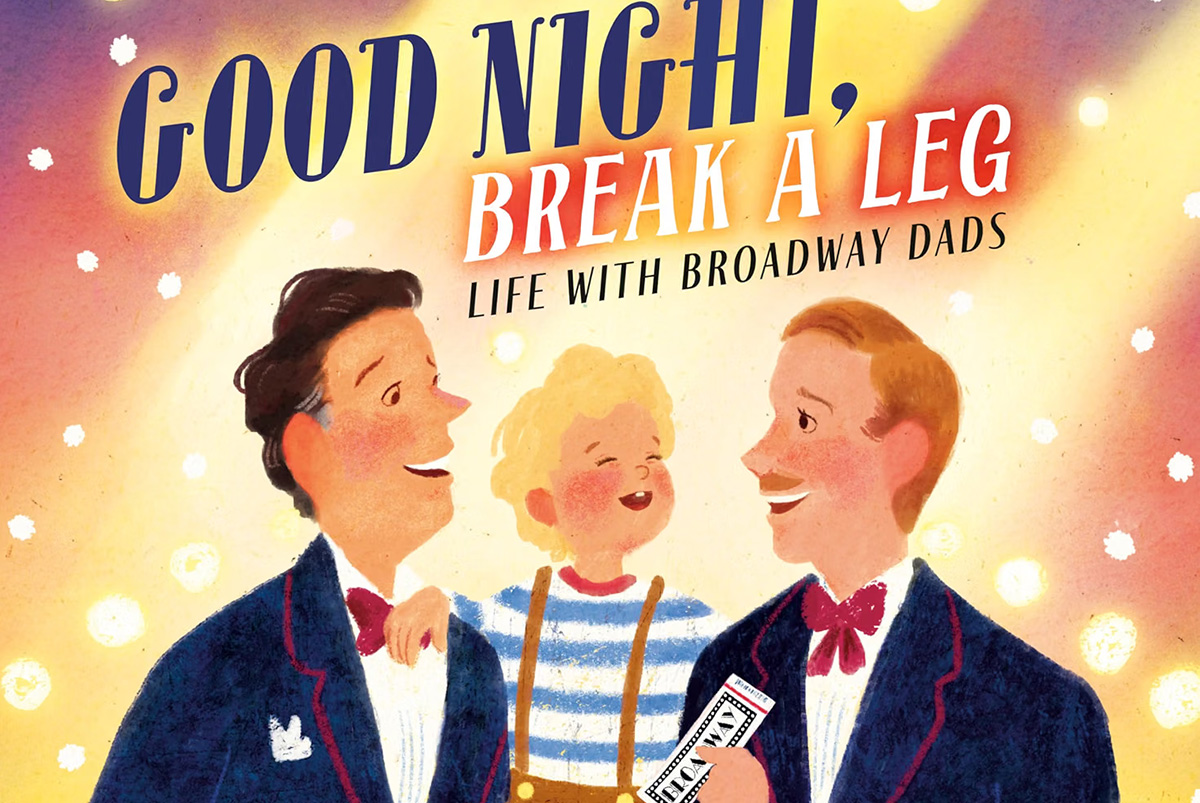
And finally, if you want a fun book for your kids or a child you love, look for “Good Night, Break a Leg: Life with Broadway Dads” by Bret Shuford, illustrated by Elena Hager (Penguin Workshop). What do parents do when they go to work? A little boy learns that his dads have very special jobs by day – and by night! It’s a cute book for kids, but a special tale for lovers of Broadway.
Be aware that publication dates change, titles change, books can be canceled, and your librarian or favorite bookseller can help you find what you need. Season’s readings!
Books
Dolly Parton biography puts her hardships into context
‘Ain’t Nobody’s Fool’ a highly researched tome not to be missed
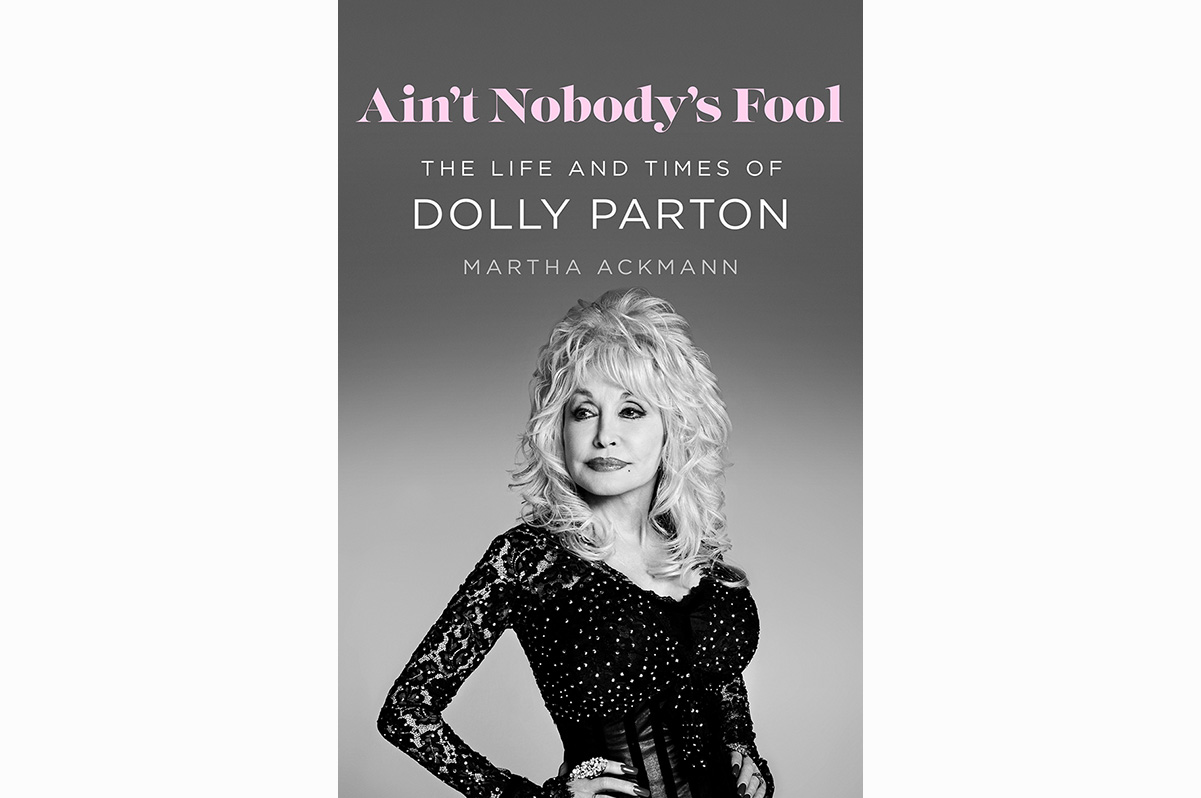
‘Ain’t Nobody’s Fool: The Life and Times of Dolly Parton’
By Martha Ackmann
c.2026, St. Martin’s Press
$30/304 pages
Not too bright.
That’s what people once thought about you. Your language didn’t conform, you had your own sense of style, and you were ignorant about modern things and places and foods. But you were no dummy. You were different, and you had a secret: as in the new biography, “Ain’t Nobody’s Fool: The Life and Times of Dolly Parton” by Martha Ackmann, you knew exactly where you were going.
When Avie Lee Owens and Lee Parton first married, they had the very basics: “two knives, two forks, two spoons, a skillet, a butcher knife, and an old iron kettle.” He was 17; she was 15. Babies came quick. The fourth one was named Dolly, after two great-aunts.
Almost from the time she could walk, Dolly sang. Before she was old enough to attend school, she wrote poetry, and she’d begun to notice rhythms and beats she could make with her fingers. As a schoolchild, she created her own musical instruments out of scraps, and she was eager to perform whenever anyone asked her – and they asked often, because Dolly Parton was a nice girl, and her sense of humor conveyed a warmth that drew people in.
Growing up in the Tennessee mountains, Parton was independent, shunning marriage and child-raising, instead focusing on a dream of being a star. By the time she was in high school, she’d had a regular gig on local television but she recognized that there were few opportunities for fame in the mountains, so she left for Nashville the day after high school graduation, with the snickers of naysayers ringing in her ears.
She stayed with an aunt and uncle there, and she beat the streets, dined on grocery store samples to get by, and missed her family and friends. And they worried about her, but they knew nothing would derail her plans. They knew Dolly would be fine.
As a friend said, “’She had her head on pretty good.’”
Chances are that if you’ve listened to music any time in the last 60 years, you’ve heard Dolly Parton through her words or her music or both. Now you need to learn more about her, and “Ain’t Nobody’s Fool” is where to do it.
Here’s a biography that grabs you on the first page with the tiniest bit of family tree, but not so much that you get bored with it. Author Martha Ackmann writes about Dolly Parton’s early life, putting hardships and experiences in context, both personally and historically. There are name-drops, but not overly so, as Ackmann takes you through Parton’s career, her heartbreaks, her marriage, and her years with Porter Wagoner, in detail but not dramatically embellished or outrageously told. It’s a biography that’s just right, sourced well and written with a fresh take that, like its subject, tells a good story.
Fans, of course, will want this highly researched book but music lovers of any age or type will eat it up. That means you, so use up that Christmas gift certificate. “Ain’t Nobody’s Fool” just shines.
The Blade may receive commissions from qualifying purchases made via this post.
Books
Historiography with heart
Pioneering author John D’Emilio continues to enlighten us in new book ‘Making Gay History’
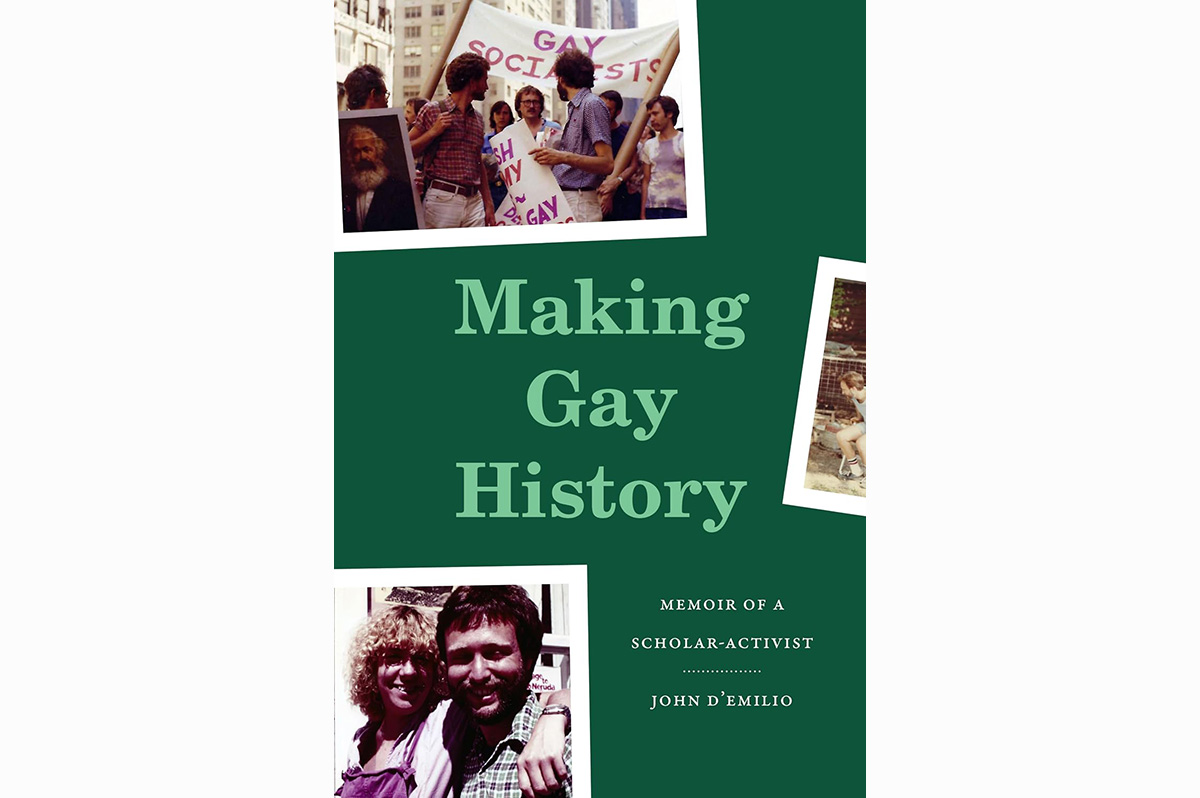
‘Making Gay History, Memoir of a Scholar-Activist’
By John D’Emilio
Dukeupress.edu/making-gay-history
“Dear Dr. Kameny,” wrote the earnest graduate history student almost 50 years ago. “As you know, the academic community only rarely deemed the lives of gay men and women to be worthy of serious scholarly study. To my knowledge, no American history faculty at a major university has yet sponsored a dissertation that deals with gays historically.”
That student was a young man from the Bronx who would change all that. His name is John D’Emilio.
“I must be able to uncover ‘manuscript’ sources, that is unpublished and unique historical materials,” he explained to D.C. gay civil rights pioneer Dr. Franklin E. Kameny who lived in a house stacked to the ceiling with “unique historical materials.” In reality, these were piles of correspondence with government officials and politicians, legal filings, mimeograph copies, gay newspapers, press releases, Mattachine Society brochures and picket signs. Frank Kameny, a self-described “pack rat,” invited D’Emilio into his private world of papers and memorabilia to begin uncovering an erased and forgotten pre-Stonewall history. This was one of many such research forays into “basements, garages and overcrowded living rooms” across America conducted by John D’Emilio. He was a young man on fire to complete a Ph.D. dissertation at the frontier of a distant galaxy — writing a scholarly gay and lesbian history backed by original research where there had been none, only a void.
Reading D’Emilio’s memoir “Making Gay History” (2026, Duke University Press) one has the sense of watching an emerging galaxy spinning around a galactic core of New York scholars and their mentors, young activists, and community historians throbbing with the New York City energy celebrated by Walt Whitman a century before in his epic poem “Mannahatta”. Spinning out of the ‘60s anti-Vietnam War activism; Marxist historical analysis, the Stonewall riots and gay liberation, we can see it coalescing around this one history student’s search for a dissertation topic and himself piecing together a new history that “no one had yet written about … a pioneering work in this newly emerging field.” D’Emilio pitches his idea for a dissertation that “spanned the length of U.S. history, moving from the religious teachings that shaped law and social attitudes … to how the federal government dealt with the increasing visibility of a homosexual world in the twentieth century.” With the blessings of Columbia’s Department of History, he completed his dissertation leading to the publication of his groundbreaking history: “Sexual Politics, Sexual Communities: The Making of a Homosexual Minority in the United States” (1983). When he received his first copy of the bound book in the mail, he “cradled the book in my arm holding it close to my chest….It was as if I had fathered a child.”
More so, D’Emilio fathered a new history. Historiography is the story of how history gets written, conducting original research, uncovering the data and creating the narrative(s) — often a snoozing read of academic process. But not this historiography. “Making Gay History” is a historiography with heart.
“Nothing was going to stop me from giving everything I had to this effort at making change in society and myself,” he declares while connecting with others who share his “boundless excitement for the collection of documents.” There were many others in this spiral with D’Emilio who are mentioned and play important roles. In the spiral were Jonathan Ned Katz (“Gay American History”, 1976); Allan Berube (“Coming Our Under Fire” 1990), Martin Duberman (“Hidden from History”, 1989); Daughters of Bilitis activists Del Martin and Barbara Gittings; Civil War historian Eric Foner and author/activist Larry Kramer. No libertarians among them. Well, maybe the divine Bette Midler who was well known for performing uptown at the Continental Baths who makes an appearance at a Washington Square rally.
He craved his parents’ approval. Among the most riveting scenes in the memoir are a series of family dinners in the Bronx with his old-school parents who go into near shock when he tells them he is gay. How to evade this any longer, especially now that his dissertation is going to be on homosexuality? It is a moving and hilarious sequence. After he says it out loud, “I am gay”: “No. No. No!” his father gasps. “This can’t be true. It can’t be.” D’Emilio thinks, “Oh my God, he’s going to die. I’ve killed my father.”
The D’Emilios — Vincent and Sophie — so resemble the wonderful Castorinis in “Moonstruck,” I am thinking “Oh my God, this is Cher coming out to her parents Cosmo and Rose.” The young graduate student survives the family dramatics even more certain that this was not just his success but “a gay liberation success.” From the family dinner table to the streets, he writes how he marched in the 1973 Pride parade beneath a banner held high: “Gay Socialists.” This man is a born scholar-activist.
D’Emilio does not seem able to pull back. There are passages that veer into autobiographical minutia, detail about the grind to earn a living from the University of North Carolina Greensboro to the University of Illinois Chicago. He writes, ”I would be living on less than half my usual salary for the year, but with the small amount of royalties that I got for my three books, plus some occasional speaking gigs and dipping into savings…”. Much of this is gray matter compared to the galaxy John D’Emilio helped energize that even now brightens our sky.
Charles Francis is president of The Mattachine Society of Washington, D.C. and author of “Archive Activism: Memoir of a ‘Uniquely Nasty’ Journey” (University of North Texas, 2023)

Annapolis Pride arrives this weekend

Calendar: October 2-8

Renee Good’s family files two federal lawsuits

House Democrats urge White House to confront Turkish government over anti-LGBTQ crackdown

988 restores crisis services for LGBTQ youth

Lesbian Bar Project co-founder: purity politics could destroy our remaining spaces

529 openly LGBTQ candidates running in Brazilian election

HRC report: LGBTQ students face ‘far greater challenges’ in non-supportive states

Meet the LGBTQ candidates running for U.S. House, Senate

Ana Brnabić becomes world’s first openly lesbian head of state
-

 Bars & Parties5 days ago
Lesbian Bar Project co-founder: purity politics could destroy our remaining spaces
-
Brazil5 days ago
529 openly LGBTQ candidates running in Brazilian election
-
National5 days ago
HRC report: LGBTQ students face ‘far greater challenges’ in non-supportive states
-
2026 Midterm Elections4 days ago
Meet the LGBTQ candidates running for U.S. House, Senate