National
Remembering Victoria Cruz, Stonewall veteran and beloved trans activist
A witness to history who would spend decades helping to shape it
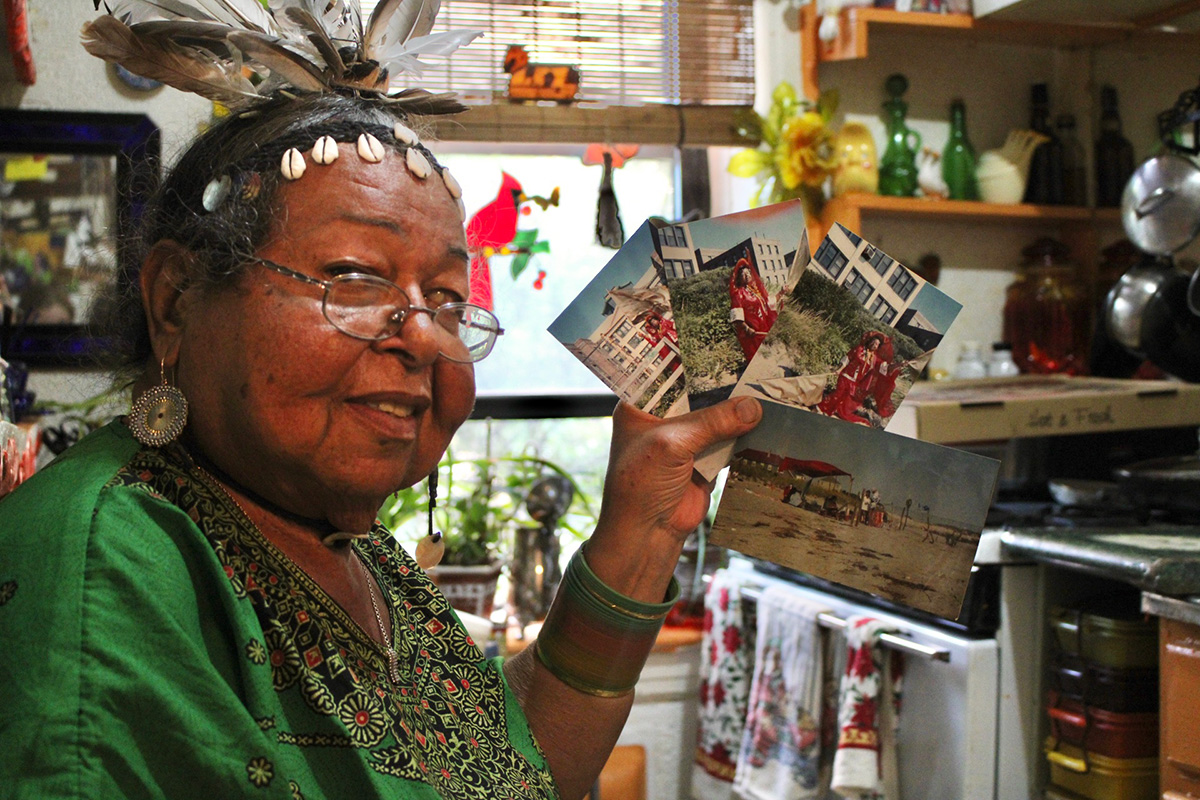
Victoria Cruz, a veteran of the 1969 Stonewall uprising and unwavering advocate for survivors of violence, died on June 25 from liver cancer at age 79. Fierce, generous, and unyielding, Cruz emerged from Stonewall as a witness to history who would spend more than five decades helping to shape it. She became a fixture of New York LGBTQ+ activism and in time, one of the community’s most beloved elders and mentors.
One of 11 children, Cruz arrived with her family in Red Hook, Brooklyn from Guánica, Puerto Rico as a young child. She occasionally quipped that she was “never in the closet” but “in the armoire,” and knew from an early age that she was a girl at a time when there was little language to describe her experience. She studied cosmetology and hairdressing at Metropolitan Vocational High School, before attending Brooklyn College where she earned a theater degree in 1982. She supported herself through beauty work, as a stripper, sex worker, and entertainer in the New York City nightlife scene, giving her first drag performance at the Grapevine in 1973 to a Billie Holiday song.
A regular at the Stonewall Inn, Cruz often arrived in what she described as “full drag and semi-drag.” In a 2025 interview she recounted details of the gay bar on Christopher Street – the lack of plumbing, except for the bathroom, and how she would only drink beer because the ice for mixed drinks was drawn from unsanitary garbage cans where glasses were rinsed.
“[The cops] used to come in and raid the place, and put the lights on. If you were two men together, you’d look for a lesbian to sit with or talk to.” If you had make-up on, she said, they’d make you wash it off with dirty water from the mop bucket. Officers also did what she called “the Robin Hood.”
“They used to take the bra straps in the back and pull them, you know, they were very heavy elastic, and let it go so it’ll hurt their back.”
Harassment was routine. But the night of Friday, June 27, 1969, was different. Maybe the cops weren’t given “the little brown bag pay off” or “enough money,” she speculated.
Cruz hadn’t planned to go that night. She had work the next day at a beauty parlor but her boyfriend, Frankie, was a bouncer at Stonewall — and “a cheat.”
“I went and stalked him.” When he asked her to go home, she said, “‘No, I’m going to wait up here, because tonight you’re going home with me.'”
It was close to midnight, and the air was hot and humid, she recalled. A full moon in the sky. Judy Garland had just been buried, and the atmosphere in the Village was solemn – “like the calm before the storm.” Standing near the steps next to the Stonewall, Cruz spotted Sylvia Rivera—who would also become a prominent trans rights figure—with her friends across the street by Sheridan Square Park.
The paddy wagons came. The bar got raided, yet again. But this time, a rebellion began to simmer.
“And then the crowd started getting a little bit rowdier outside, they started throwing pennies,” Cruz recalled. “They were calling them names, you know, ‘dirty copper.’ ” As cops started loading people into the paddy wagons, she “saw one queen got punched.” She thought it was Miss Major, who later publicly recounted taking a blow to the head and getting knocked unconscious.
Police brought a paddy wagon around and went back inside the bar. “And here comes a brick out of Sheridan Square Park, and it cracked the window, and they closed all the doors as a barricade. We were hearing noise from inside.”
Frankie came out to see whether she was still there. A Canadian in the country illegally, he wanted to leave. Cruz wanted to stay. “That’s serious when they started burning stuff – and then Frankie says, let’s get out of here.” She recalled the violence escalating. “First it was garbage pails. Then they started setting up fire on cars. And I said, no, no, no. That’s too crazy.”
After the raid, Frankie’s boss called him in “to clean out the basement and try to straighten up whatever the cops smashed up over there.” Frankie found one of three drink-price signs, and downstairs, the dog, Rusty, who guarded the liquor (“even though the liquor was watered down”). One of the owners let Frankie take him home. “I was so afraid of dogs, but I gave him food, and then he became my best friend and my protector.”
As for the sign, she kept it in her possession and shared that she hoped to return it to Stonewall along with photos of Frankie and Rusty. “They are part of our original history and they belong there.”
Those nights of chaos and violence are now widely regarded as the birth of the modern gay rights movement. One year later, Cruz joined thousands in what she called “the big first gay pride liberation march.”
“She was definitely one of our mothers in the movement,” says Shelby Chestnut, now executive director of Transgender Law Center, who worked with “Miss Vicky” at the New York City Anti-Violence Project (AVP) from 2010 to 2017. Cruz first came to AVP seeking support after being sexually assaulted by members of the nursing staff while working at Cobble Hill Health Center. She later volunteered at AVP and remained with the organization for 18 years, eventually coordinating the domestic violence project and serving as a senior counselor advocate.
Shay Huffman, a school social worker and former AVP Board Member, credits Cruz with being her lifeline while going through intimate partner violence. “By the time I got to AVP, I was 95 pounds,” says Huffman. “I seriously doubted I would survive. I had lost my appetite, wasn’t eating, and felt like my spirit was being sucked out of me.” Huffman says it was important to her that Cruz was a woman of color. “She heard me. She met me where I was. She validated me. She gave me hope and encouragement. She made me believe, ‘Maybe I can survive this.’ It was the first step from becoming a fighter and survivor to really thriving.”
Cruz’s impact extended beyond those she counseled. For many young trans people, the presence of an elder figure like “Miss Vicky” was not something to be taken lightly, Shelby Chestnut says.
“Especially at the time when she got into advocacy, in an ‘official’ way, there was a real expansion of trans justice organizations in New York City, and she would come to all of the events and be this big voice of reason. Even in the face of so much terribleness in the world right now—even at almost 80 years old—she was so clear and articulate: ‘We can’t back down. We’ve been here before. We can’t give people new ground in this moment to take our power and livelihood away.’ She imparted this to a new generation of organizers and leaders in a way that not many people could.”
“She came up in a post-Stonewall reality but also was clear that so much of our conditions didn’t change just because Stonewall birthed our movement.”
Her commitment to justice came to wider public attention with the release of the 2017 documentary “The Death and Life of Marsha P. Johnson.” The film documents her meticulous investigation into the 1992 death of her contemporary, Marsha P. Johnson, a Black trans woman whose death was ruled a suicide despite suspicious circumstances. Cruz’s probing not only helped expose the very real possibility that Johnson was murdered, but also underscored a broader reality: Many trans women of the era were treated as throwaways, their deaths denied the attention and justice they deserved.
Following Cruz’s death, the documentary’s director, David France, paid tribute to Cruz on Facebook:
“Throughout her life she embodied pure joy, something she learned from Marsha P. Johnson (whom she called “The Rosa Parks of the gay movement”), and fierce resistance, which she dedicated herself to in her last conversation with Sylvia Rivera on her death bed. She promised Sylvia she would ‘keep the community together.’ And she did that and more. She died on Pride Week, her highest of holy days. There never will be another like her.”
“Victoria loved the beach,” recalls Cruz’s sister, Heyde Cruz, 73. “She called it her sanctuary and as my children and my other siblings’ children were growing, she would take them to the beach and show them how beautiful it was, picking up seashells and other beach objects on the sand and they loved it.”
Indeed, Cruz was a popular presence at the People’s Beach at Jacob Riis Park in Queens, where she was often spotted beneath a sun tent in colorful attire and her signature headband with feathers and cowrie shells. She was considered royalty at this haven for queers near the former Neponsit Hospital — a building that fell into ruin over decades before ultimately being demolished, despite protests by a community that had laid claim to a landmark no one else seemed to want.
In a 2023 conversation, the “Queen of Riis” recounted tales of noble mischief dating back to the earliest days when she had first set foot on the sands in 1963. The facility had been running as a “Home for the Aged” and the gay folks delighted in helping elderly residents sneak out to frolic on the beach.
“We would tell them when the guys were coming so they could run back to the premises,” she said. She loved hearing the concerts from the facility’s gazebo, where patients would be taken out for lunch. “I loved to go on Sunday mornings because of the church services,” Cruz said. “They played the most wonderful American gospel I ever heard.”
Cruz had hoped that the building might be preserved and turned into a hospice, where “the sounds of the sea, the sun, the gulls [might] make them enjoy life more, especially in their last days.”
Last December, The Stonewall Inn Gives Back Initiative (SIGBI) honored Cruz with a Brick Award for Community Activism. Latina actor, model and trans activist Angelica Christina introduced Cruz, highlighting the elder’s fight for the LGBTQ+ community as “front and center,” noting she had “done so with courage, conviction and compassion.”
“From being a longtime leader at the Anti-Violence Project, to being a part of the documented history at Stonewall, Victoria has supported survivors of anti-LGBTQIA+ violence when few others would,” said Christina, herself a survivor of sexual assault and homelessness. “She fought for safety and accountability and dignity at a time when our stories – especially that of BIPOC trans women – were too often ignored… “
To a standing ovation, Cruz spoke to those who have long admired her spirit, as well as a new generation reaching for the torch amid a renewed political tempest intent on extinguishing the most marginalized:
“We resisted at Stonewall and we can resist now because they’re not going to erase us,” Cruz assured. “Today, it is better to be yourself. Life is much easier when you are you.”
“And I thank you for this prize, because like Sylvia [Rivera] said – and I promised her – that wherever I would go, I will try to keep the community together because we do have the numbers, and with our allies, we can defeat them anytime…
“We’re here from the beginning and we’re going to be here ’til the end.”



National
Man charged in Mall of America shooting plot inspired by Pulse massacre: report
Suspect exchanged hundreds of messages, pledged loyalty to ISIS
The U.S. Department of Justice charged Sheikhdoon Abdullahi Mohamud, 18, of Richfield, Minn., on Oct. 7 with one count of knowingly receiving a firearm and ammunition in order to commit a federal crime of terrorism. Mohamud allegedly planned to carry out a mass-casualty attack in support of ISIS, inspired in part by the Pulse nightclub massacre that took place on June 12, 2016 when then-29-year-old Omar Mateen murdered 49 people and wounded 58 – one of the deadliest mass shootings in U.S. history, and the deadliest targeting the LGBTQ+ community.
According to a DOJ statement release, Mohamud was arrested on Oct. 6 by the FBI, which had arranged to sell him an AK-47 assault rifle, magazines, and ammunition through an undercover FBI employee. Mohamud was arrested shortly after paying $600 in cash and taking possession of those items; he reaffirmed his intention to shoot people at the Mall of America during the transaction.
“Mohamud allegedly sought to carry out a mass-casualty shooting at the Mall of America, expressing a desire to emulate some of the most horrific ISIS-inspired attacks in the United States, including the atrocities at Pulse Nightclub and 2025 New Year’s Day attack in New Orleans,” said Assistant Attorney General for National Security John A. Eisenberg in the statement by the DOJ. “The National Security Division will continue to work closely with the FBI and Joint Terrorism Task Force to track down and prosecute ISIS-inspired terrorists in the United States.”
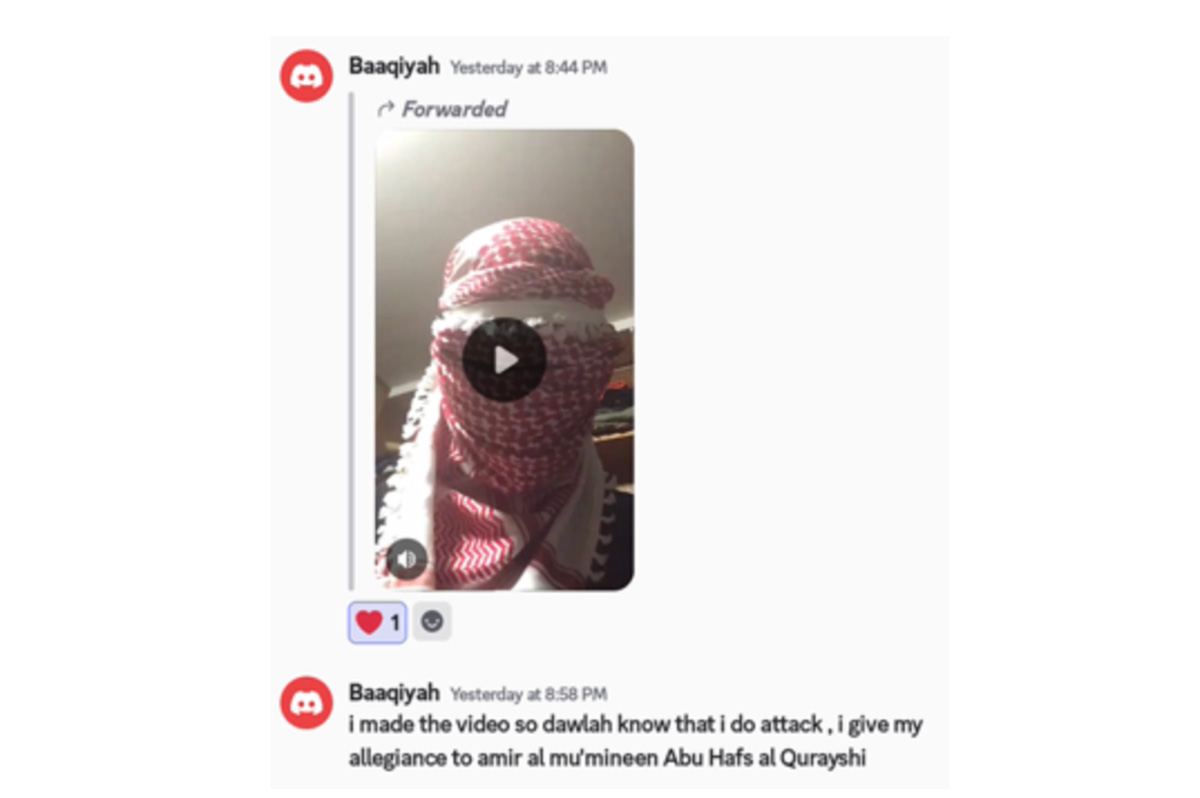
According to the complaint, beginning on or about December 2024, Mohamud had exchanged hundreds of messages through multiple social media and messaging apps with a confidential source, and expressed a desire to travel to Somalia to join a designated foreign terrorist organization to fight on their behalf.
The defendant stated many times that if he was unable to travel overseas because of a lack of funds, he planned to carry out a mass-casualty event in Minnesota in support of ISIS.
According to the DOJ, “In July 2026, Mohamud sent messages discussing his intent to carry out a mass-casualty shooting attack at the Mall of America because he claimed it was owned by Jews. He wrote that [he] wanted to kill 30 to 60 people so no one would go there.”
“During the course of his communications, Mohamud stated that he wanted to commit an attack similar to those of the Pulse Nightclub mass-shooting in Orlando, the Bondi Beach mass-shooting in Australia, and the New Year’s Day vehicle-ramming attack in New Orleans.”
This case is being prosecuted by Trial Attorney Ryan White of the National Security Division’s Counterterrorism Section and Assistant U.S. Attorney Benjamin Bejar for the District of Minnesota.
California
Calif. GOP gubernatorial candidate ad ‘disgusting attempt to exploit lesbian intimacy’
Activists, anti-LGBTQ religious leaders criticized Steve Hilton spot

Two women sit on a bed, a Pride flag hanging behind them. One is nervous; the other tells her to be calm and that she’ll do “all the work.” The music swells. The two hold hands and — fill out a ballot voting for Steve Hilton?
This is the new advertisement from the Hilton gubernatorial campaign that is drawing rebuke from both sides of the aisle, but for very different reasons.
Jorge Reyes Salinas, the communications director at Equality California, said the ad was an insult to the queer community.
“This ad is a disgusting attempt to exploit lesbian intimacy for political attention,” he said. The advertisement plays on media tropes that Salinas says “reduce lesbian and bisexual women … to sexual entertainment,” rather than showing them as well-rounded characters. “Any group of the LGBTQ+ community deserves the same dignity and respect as everyone else,” he said.
The ad is truly hyper-sexualized. It ends with one woman telling the other, “Now lick it.” The two pause and stare before she reveals an envelope to send the ballot, and large text pops up saying, “Just try it!”
Salinas characterized the ad as a desperate attempt to get attention from a candidate who is trailing far behind in the polls in heavily Democratic California. The Democratic candidate Xavier Becerra, who is endorsed by Equality California, holds a 25-point lead over Hilton according to recent polling by the UC Berkeley Institute of Governmental Studies.
Conservatives have also criticized the ad.
Influential evangelical Pastor Jack Hibbs thought the ad was distasteful and said, “lesbianism among college girls and some high school girls that right now is an actual pandemic of social ill.” Republican attorney general candidate Michael Gates said it undermines “the sanctity of the relationship between parents and their children.” This criticism is rather confusing because although the ad features two relatively young women, they both appear to be adults, not minors.
“The comments from Pastor Jack Hibbs should be criticized because there is nothing wrong with two women being attracted to each other,” Salinas said. “We’re calling out the ad’s stereotypes, while also rejecting the homophobia in the response to it … by other Republicans.”
The backlash from Hilton’s own party and supporters shows that an advertisement full of queer innuendo was ill-considered, considering the national GOP’s attacks on LGBTQ people in recent years. Hilton himself has been campaigning against transgender girls and women competing in school sports and using locker rooms that correspond with their gender identity. This context might be why Hilton’s political base responded to the ad just as poorly as the liberal voters he was attempting to court.
Hilton says the ad is part of a new series rolling out before Election Day, showing stereotypical California liberal archetypes voting for Hilton. He claims these ads are authentically filmed with real actors, as opposed to being A.I. generated, like many of his previous ads. One other advertisement has been released so far by the campaign showing a man at a spiritual retreat also being swayed to vote for Hilton, although it is notably absent of sexual innuendo.
Caleb Kaufman is a California Local News Fellow placed with the Los Angeles Blade. The California Local News Fellowship is a state-funded initiative to support and strengthen local news reporting. Learn more about it at fellowships.journalism.berkeley.edu/cafellows.
2026 Midterm Elections
Trump uses anti-trans slur against Democratic Senate candidate
President mocked Annie Andrews

President Donald Trump used an anti-trans slur against Democratic South Carolina Senate candidate Annie Andrews on Monday as he sought to rally support for Republicans in the state’s Senate race.
In a post on Truth Social, Trump attacked Andrews three times, referring to her as “trannie” while promoting U.S. Sen. Darline Graham (R-S.C.)’s campaign.
Andrews is running against Graham for a Senate seat in the solidly Republican state.
Earlier this year, Graham was specially appointed to the seat following the death of her brother, Lindsey Graham, who represented South Carolina in the Senate from 2003 to 2026.
Andrews, the Democratic nominee from the state, is a pediatrician that lives in Charleston with her three children. She told NBC News that she will “work with anyone to put South Carolina first.”
“As a mom and a pediatrician, I’m in this race to fight for my patients, my three kids, and South Carolina,” Andrews said, adding that “lowering costs and making life better for families across our state is going to take all of us working together.”
Andrews used the attention from the president’s attack to emphasize what she described as a focus on policy issues rather than the culture wars that have dominated much of the political debate.
“If you care more about your bills than the politics in Washington, this campaign is for you,” she added.
Trump’s remarks have drawn criticism from leaders on both sides of the aisle.
Senate Minority Leader Chuck Schumer (D-N.Y.) condemned Trump’s words Monday night on social media, calling his attacks on Andrews “despicable.”
“Annie Andrews is a mom and pediatrician who’s always put her community first — and she’s exactly who South Carolina needs representing them in the Senate,” Schumer said on X.
Former South Carolina Gov. David Beasley, a Republican, also criticized the president’s attack on Andrews, urging voters to “reject politics based on division and hate.”
“This is abhorrent. Elections don’t have to be about cruelty and lies. South Carolina deserves better,” Beasley wrote Monday night on X.
South Carolina has not elected a Democratic senator in nearly three decades.
Andrews’s campaign website does not mention her positions on LGBTQ issues.
The Washington Blade reached out to Andrews’s campaign for comment on Trump’s attack and her positions on transgender rights but did not hear back by time of publication.

Center Arts Gallery celebration, auction to take place on Oct. 17

Comings & Goings

‘Hidden in Plain Sight:’ The story of Odessa Madre

‘Governments that attack LGBTQ+ rights learn from each other’

Horror genre has evolved into space to explore queer identity

ICC unseals arrest warrants for Taliban officials accused of persecuting LGBTQ people, women

Physician: addiction doesn’t always look the way you think it does

Calendar: October 9-15

Solidarity beyond the parade: the actual cost of Pride

Essential queer horror classics for Halloween
-

 Afghanistan4 days ago
ICC unseals arrest warrants for Taliban officials accused of persecuting LGBTQ people, women
-
District of Columbia4 days ago
Physician: addiction doesn’t always look the way you think it does
-
Calendar4 days ago
Calendar: October 9-15
-
Opinions3 days ago
Solidarity beyond the parade: the actual cost of Pride