Opinions
No Pride without Disability Pride
Anti-ableism must become part of the foundations of queer activism

On Saturday, June 20, Capital Pride hosted the Pride Parade through the heart of Washington, D.C. I broke my foot just a couple days before and couldn’t attend, but beyond my mobility, Pride celebrations have always been difficult as a multiply disabled, queer person. As someone who is autistic with heat and sensory sensitivities, and autoimmune conditions, I also want to be part of Pride celebrations, to feel part of and be in community with others, but it is rare that Pride celebrations — not just Pride marches — are accessible to me.
Back in 2022, I wrote a piece for The Unwritten issuing a call to action: “it’s time to make all queer spaces accessible” after a woman in a wheelchair was denied entry to my favorite — and one of the few remaining — lesbian bars A League Of Her Own. Back in 2022 when I had just moved to Washington, D.C. for graduate school, the bar became my queer safe space where I watched Willow Pill’s win on season 14 of “RuPaul’s Drag Race.” Pill, who openly discussed having cystinosis, a rare genetic disorder that causes the build-up of the amino acid cystine on the show, was the first person who openly discussed how being disabled affected the way she was able to share and experience her queerness. Because of her disability, she admitted that she would have to quit performing drag much sooner than her fellow queens.
Yet four years after I published the piece, little has changed. Many Pride celebrations remain inaccessible to people who use mobility aids, have sensory or heat sensitivities, or require ASL interpretation or audio description to participate. When queer, disabled people ask for these services, ask for events that include everyone, we are met with excuses about expense and convenience, about serving the majority of community members rather than all — and invitations to future events that never end up planned or taking place.
For many queer, disabled people like me, this sends a very clear message about whose presence is valued and prioritized at Pride celebrations and it is part of larger systems of racism, ableism, and transphobia that are solidified when people participating in Pride forget the event’s roots. While many people pointed out that corporations and cities cancelled their participation and events this year, it’s important to recognize that Pride was never about pinkwashing, was never about getting free rainbow fans in the street or catering events to a socio-political status quo. Pride began as a protest against police brutality.
When we remember that history, it becomes clearer than ever that events focused on our visibility must be accessible. In the United States today, Immigration and Customs Enforcement agents have hurt and even killed disabled people during the arrest and detention of immigrants and people of color. Autistic and individuals with cognitive disabilities, especially neurodivergent people of color, are at much higher risk of being hurt or even killed by the police, and disabled people are increasingly at risk for sexual violence in institutions and when living in their communities. Pride began as a fight against state-sanctioned violence.
If people want Pride to remain true to its roots and honor the people who paved the way like Marsha P. Johnson who herself was disabled, we need Pride to be accessible.
While I can recommend that people who are set to host Pride celebrations next year arrange shaded and cool space for people to sit, rest and recover, provide water and food for people to sip and snack on to keep their energy and blood sugar up, offer sensory support including earplugs and headphones, and access services like ASL interpretation, audio description, and captioning for events, this is not enough.
It can’t just be about tacking on accessible services to an already planned event, it has to involve electing disabled queer people to Pride leadership boards, thinking about accessibility from the very beginning when we envision events for the LGBTQ+ community, and incorporating anti-ableist action into queer protesting. Anti-ableism (and anti-racism and xenophobia) has to become part of the very foundations of our queer activism before we can make changes that push for our collective liberation. And queer people’s and disabled people’s liberations are inextricably linked—both are rooted in bodily autonomy, access to healthcare, and right to love and marry as we chose (today, many disabled people are denied access to marriage without losing lifesaving medical care).
And it’s not just disabled queer folxs who benefit from accessible events. Everyone can benefit from events that focus on preserving and protecting our bodies and energy.
How many people use captions when they watch a show, or could use a shaded, cool, sensory-friendly space at Pride amid all the sounds and smells of the parades and festivals? How many people could use access to food, water, and chairs to sit or mobility aids so that they are not hurting the following day? How many more people would show up, would lend their voices to the fight for gender-affirming care, for trans rights, if the protests we organized and participated in were accessible? And how would the visible inclusion of disabled queer and trans people change our collective perceptions and goals of intersectional activism–knowing that not everyone can access gender affirming care because of their disabilities?
Making events accessible isn’t just about including disabled folxs, it’s about crafting spaces that serve and uplift everybody and all bodies in our fight for liberation. For disabled people who have long been infantalized and desexualized (while at the same time being fetishized and facing increased sexual violence), making Pride accessible is about affirming that disabled people are whole people who also have rich, diverse sexualities and gender expressions.
And let’s be clear, it’s not up to disabled queer folx to do this work for the community. For too long, disabled people are asked to educate their peers and superiors on accommodations and accessibility services, on what anti-ableist action looks like. It’s the responsibility of a community that itself has long been marginalized to recognize the ways in which ableism is interwoven into the very power systems that disenfranchise and deny the rights of queer and trans people and educate themselves. Along with creating pathways to leadership uplifting queer disabled folxs and planning events that are accessible by design, this is about queer and trans people educating themselves in and committing to anti-abelist action.
If Pride is truly about protesting state-sanctioned violence against us, against all marginalized communities, it cannot involve events that are inaccessible, events that routinely exclude a part of the community. There’s a reason that Disability Pride Month is scheduled the month after Pride month in the U.S. — it should be a continuation of protests fighting for the liberation of all bodies, rather than some.
Emma Cieslik is a D.C.-based museum worker and public historian.




Commentary
Anti-science, anti-LGBTQ movements go hand in hand
HHS under RFK Jr. has blocked gender-affirming care for youth

A newborn baby died after contracting measles in Pennsylvania last month, and, as if it wasn’t enough grief for his parents, anti-vax activists are trying to track down and harass his family. Apparently, Gov. Josh Shapiro tangled with Robert F. Kennedy Jr. over his “inaccurate and misleading claims.”
On Aug. 26, RFK Jr., the secretary of the U.S. Department of Health and Human Services, declared that the deaths could be fabricated. We live in peculiar times, when it is government officials, not freaks on the internet, who are spreading conspiracy theories. The new spread of measles in the United States since Donald Trump came to power is one of the most shameful parts of the story of modern American politics, and the tragedy of parents who lost their baby because more and more people refused to vaccinate may seem absolutely unrelated to LGBTQ rights, but actually, there is a pretty solid connection.
Because RFK Jr., the same man who was fighting vaccination, promoted the false idea that vaccines caused autism, and even curated the anti-vaccine organization Children’s Health Defense before going into politics, is also a known opponent of transgender rights. Under his “leadership,” gender-affirming care for trans minors was banned, and there were also created new healthcare guidelines recognizing only two genders.
All around the globe, there is a weird correlation between anti-LGBTQ — particularly anti-trans — ideas and anti-science movements. And it should be clearer to the general public. People who are speaking against LGBTQ rights are not just threatening minorities. They are a danger to everyone.
The Trump-Vance administration is an iconic example of such tendencies.
Trump himself is a known critic of modern scientific studies — for example, believing in the same anti-vax conspiracies that Kennedy promoted, and showing obvious skepticism that global warming exists, despite all the evidence that has been shown by climatologists. And he is also a man who used trans people as boogeymen. Under his command, trans people were kicked out of the military. And even worse, recently he made an extremely chilling statement about the 2026 midterm elections, urging voters to “pretend I’m on the ballot” and vote for Republicans, and while discussing what he says is at stake, he said that if Republicans win, “transgenderism” will “end.” This is an offensive statement at best and genocidal at worst.
And, of course, I think everyone remembers the Department of Government Efficiency (DOGE), which was led by infamous billionaire Elon Musk, who announced to the world that he would destroy the “woke mind virus” that killed his child just because his trans daughter, Vivian Wilson, well, is happy to be a trans person.
DOGE is known not just for cancelling academic research around LGBTQ studies and gender studies. No, this agency abruptly canceled and froze thousands of federal science, research, and health grants, attacking such vital health programs as cancer research, vaccination research, and diabetes research, among others. As you can see, they are not just attacking people who are “affected” by the “mind” virus — they are dangerous to everyone, even if most of the public standing of Musk was around his anti-trans politics and he tried to present himself as a pro-science, pro-progress man by supporting the space industry.
An even more vivid example is the so-called Dark Enlightenment movement.
This extremely reactionary political movement was born in the late 2000s, and originally grew from very democratical classical liberal ideas. Until it became anti-democratic itself. And also often It was created by American software engineer Curtis Yarvin (writing under the pseudonym Mencius Moldbug) and expanded by British philosopher Nick Land. The movement is popular among some Silicon Valley businessmen, and got support from PayPal founder Peter Thiel, and one of their main ideas is that modernity is bad. They are basically obscurantists, who see modern universities as part of “the Cathedral” — a system that, in their opinion, promotes equality and modern science that society doesn’t need. Of course, the movement’s followers are mostly anti-LGBTQ rights, and, as you can see, anti-queerness once again go hand in hand with obscurantism. Unfortunately, the movement got the support of extremely prominent politicians, including U.S. Vice President JD Vance.
In his speech from 2021, Vance proved to be an obscurantist when he claimed that universities are the enemy. He is also a known homophobe and transphobe.
So, why are anti-vaxxers, people who oppose modern scientific studies, and people who hate universities more likely to be queerphobic? Why do the same people who are defending their transphobia by showing that they support common sense actually often show zero such sense when it comes to protecting themselves and their children from measles or decreasing the chances of getting cancer?
We don’t have any statistics or studies that show that all obscurantists are queerphobic, but around the globe, the same dynamic is visible.
In Russian anti-LGBTQ censorship, books about animal biology and zoology have been censored because the censors saw “LGBT propaganda” in them. The famous pro-Putin philosopher Alexander Dugin, who is extremely anti-queer, also speaks up against modernity itself.
In Taliban’s Afghanistan, modern science and LGBTQ rights are attacked at the same time.
Even in the UK, Reform UK is known as the most anti-trans and anti-queer party, and they are facing widespread criticism from scientists and medical experts for promoting climate change denial and anti-vaccine ideas. It doesn’t mean that LGBTQ supporters never believe in conspiracy theories or that progressive politicians always support science.
No, it just means that explicit anti-science and anti-LGBTQ statements often go hand in hand.
I think there are two reasons for this correlation.
First, LGBTQ people are real. You cannot deny that sex is not binary, gender and sex are different, and transition improves the quality of life of actual trans people. Or that same-sex relationships are natural, because even animals have same-sex sexual contacts. To deny it, you need an ideology or a conspiracy theory.
The second reason is that anti-scientific populism and anti-LGBTQ conspiracy theories are popular among the same category of people. It’s a “bundle” of ideas — a trend that conservative voters often adopt together. Studies also show that people who are likely to believe in one conspiracy theory are more likely to believe in another.
But the question is more broad. We don’t speak enough about the harm anti-scientific conspiracy theories and obscurantist politicians around the globe create for mankind in general. Not all people would suffer from a prohibition of hormone therapy, or attacks on same-sex marriage. But anti-global warming ideas, anti-vax advocates, and restrictions on modern research, especially medical research, are potentially dangerous to any human being.
And one of the best things LGBTQ activists could do is just show society that they are being used — that the same people who are stealing LGBTQ rights are also destroying medicine and the environment, and it’s a threat to their own traditional families and future of all kids no less than to queer people.
Opinions
Trans people need a politics of ordinary life
Seeking the freedom to stop explaining ourselves
For much of the modern transgender rights movement, our political vocabulary has understandably been a vocabulary of emergency. We talk about healthcare bans, bathroom restrictions, discrimination, violence, court decisions, and executive orders. We organize because something is being taken away, prohibited or threatened.
Those fights are necessary. But they cannot constitute our entire vision of transgender life.
The Williams Institute at UCLA estimates that approximately 2.8 million Americans ages 13 and older identify as transgender, including roughly 2.1 million adults. Transgender people are only about 0.8 percent of the adult population. Yet transgender Americans occupy an extraordinary amount of the country’s political attention.
Behind those political arguments are millions of people doing profoundly ordinary things.
We commute to work. We complain about rent. We walk our dogs. We sit in traffic. We buy groceries. We fall in love with people who sometimes disappoint them. We worry about our parents getting older. We try to make enough money to retire. We drink coffee before work and wonder what to make for dinner.
This ordinariness should be part of the political project.
For years, LGBTQ advocacy has emphasized visibility. Visibility was necessary because silence allowed discrimination to flourish. Americans needed to understand that gay and transgender people existed in their families, workplaces and communities.
But visibility is a means, not an end.
The endpoint of civil rights is not permanent visibility. It is freedom.
And freedom includes the freedom to stop explaining yourself.
There should be nothing remarkable about a transgender accountant preparing someone’s taxes, a transgender teacher grading papers, a transgender novelist writing a book that has absolutely nothing to do with gender, or a transgender retiree arguing with the homeowners association about somebody’s fence.
That sounds almost comically mundane. That is precisely the point.
For many transgender Americans, mundane life remains harder to obtain than it should be. The 2022 U.S. Transgender Survey, which collected responses from more than 92,000 people, found that 34 percent of respondents were experiencing poverty and 18 percent were unemployed. Eleven percent of respondents who had ever worked reported losing a job because of their gender identity or expression. Nearly 30 percent had experienced homelessness during their lives.
Those numbers tell us something important about what transgender politics should accomplish.
A successful movement cannot measure progress exclusively by representation in television shows, corporate Pride campaigns or the number of transgender politicians elected to office. It must also ask whether transgender people can build stable, boring lives.
Can you find a job?
Can you rent an apartment?
Can you go to the doctor without becoming a political subject?
Can you walk into a restaurant with your spouse without calculating whether everyone is staring at you?
Can you spend an afternoon thinking about something other than being transgender?
Even healthcare illustrates the distance between formal inclusion and ordinary dignity. A 2024 KFF analysis found that 33 percent of LGBT adults who had recently used healthcare reported being treated unfairly or disrespectfully by a healthcare provider, compared with 15 percent of non-LGBT adults. Thirty-nine percent said a negative healthcare experience had made them less likely to seek care.
Equality therefore cannot simply mean keeping a clinic open. It must mean being able to enter that clinic, receive competent treatment and leave without feeling that your identity has swallowed the entire encounter.
There is a broader political lesson here.
Transgender Americans have sometimes been transformed into abstractions by both sides of the culture war. To some conservatives, we are evidence of social decline. To some progressives, we become symbols of resistance. Neither description leaves much room for the complicated, frequently uninteresting reality of being a person.
Most people do not wake up every morning thinking about their demographic categories. They think about deadlines, relationships, bills, ambitions, annoyances and whether there is enough milk in the refrigerator.
Transgender people deserve that luxury too.
A politics of ordinary life would therefore defend transgender healthcare and civil rights vigorously while articulating something beyond defense. Its objective would be integration: transgender Americans participating in civic life without every interaction becoming a referendum on gender.
That means protecting employment and housing. It means making competent healthcare routine rather than exceptional. It means creating communities where transgender children can imagine futures that extend beyond surviving adolescence. And it means allowing transgender adults to become bankers, mechanics, professors, parents, entrepreneurs and retirees without expecting them to become activists simply because they are transgender.
There will always be people who choose activism. We need them. There will always be people who speak publicly about their transitions. Their testimony matters.
But there should also be room for the transgender person who wants none of that.
Civil rights movements succeed not merely when marginalized people become visible, but when their presence stops requiring explanation.
The most radical future I can imagine for transgender Americans is therefore surprisingly conventional: a country in which being transgender can become one fact among hundreds about a person rather than the organizing principle of a life.
Perhaps the ultimate measure of transgender equality will not be how frequently America talks about transgender people. It will be the day when it no longer has to.
Isaac Amend is a transgender man and writer based in D.C. In 2017, Isaac starred in National Geographic’s “Gender Revolution” documentary. He sits on the board of the LGBT Democrats of Virginia. His author’s portfolio is available at isaacamend.com and you can find him on Instagram at: @isaacamend.
Opinions
Enlarging the Supreme Court keeps making more sense
If effort to restrict mail in voting stands, we are in major trouble
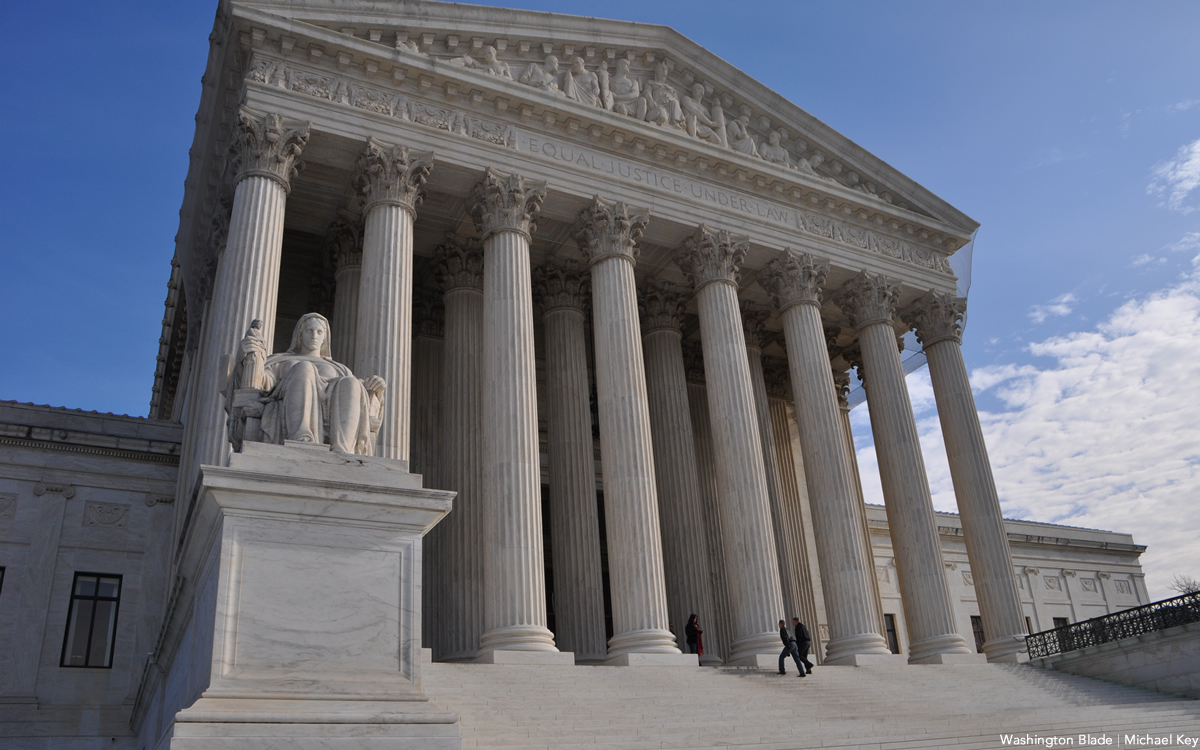
I have been going back and forth on whether I think adding justices to the Supreme Court is the right thing to do. But if the court takes the final step of allowing the felon’s executive order on mail in ballots to move forward, I am definitely for enlarging the court. There are many things this court has done that I find reprehensible, but this would be by far the worst. It would irreparably impact the very cornerstone of our democracy — the right to vote.
The order requires the Department of Homeland Security (DHS) be sent voter lists from each state, and then compile/verify a list of U.S. citizens in each state who are eligible to vote. DHS would undertake the effort to compile the list with the Social Security Administration. We are talking about a list of more than 200 million names. The list would be by state, and then sent to each state. It then directs the U.S. Attorney General to prioritize the investigation and prosecution of “election officials, individuals, and other entities that violate the law by issuing or distributing Federal ballots to ineligible voters.” Then according to the White House fact sheet on the EO, It directs the AG to withhold federal funds from noncompliant states.
In addition, it involves the Postal Service in determining correct ballots, and instructs ballots it transmits to be “placed in secure ballot envelopes marked as Official Election Mail, with unique Intelligent Mail barcodes, that facilitate tracking. So, one has to question does Homeland Security then track every ballot? It is all insane, meant to limit voting, and scaring people into not voting when we already have a safe, proven system in place. All this being done at the whim of the felon in the White House when it is very clear the Constitution vests the administration of elections with the states. It does allow Congress to pass laws pertaining to elections, but is clear the Executive Branch has NO official role in changing election laws, or carrying out elections. The court must be deaf, blind, and dumb, if they don’t know the Congress has refused to pass the President’s SAVE Act, which would have made some changes. Again, they know this, and if they choose to disregard this, and the constitution, and allow the felon to proceed to implement any part of his EO, they should be impeached.
It is clear to anyone with half a brain, that all this, even if it were constitutional, would be totally impossible to do in the eight weeks before the midterm elections. In the 2022 midterm elections, nearly 107.7 million valid votes were cast. Currently, is it difficult to determine the exact number of registered voters, as they are registered by state, but it is generally agreed to be approximately 200 million. The idea the Trump administration could in any way try to validate 200 million names in the next eight weeks is totally insane. Again, this is why it is left to the states to do, and it is an ongoing process. Trump filed 60 lawsuits to try to prove invalid votes in the 2020 election, and he lost all 60. Recently, DHS looked at the Nevada voting rolls, and initially claimed there were about 16,000 illegal voters listed. But when it came down to returning the supposed illegal names to Nevada, election officials there received a list with only about 185 names on it. Over the years where Trump has sued, and there have been recounts, there have never been more than a handful of illegal votes and it was clear they made no difference in the results.
Voting by mail is crucial for so many. Even the felon votes by mail. So, if the court were to side with the felon on this, and approve even part of his executive order, they are clearly doing it to screw up our elections, and be complicit with the felon. Based on such an outcome I would lobby the Senate to add justices to the court. The number of justices on the court has changed five times before. Today we have two justices, Alito and Thomas, whose votes you know in advance on any case before it is even heard. We know there are six conservative justices. So, if Democrats take the Senate they could add four more liberal justices to the court for a liberal majority. Even adding three would provide for an even balance which could make for a serious debate on the issues within the court, and final decisions wouldn’t be forgone conclusions as they so often are today.
Peter Rosenstein is a longtime LGBTQ rights and Democratic Party activist.

Md. groups receive state grants to fight hate crimes

Chris Pappas wins NH Democratic Senate primary

Anti-science, anti-LGBTQ movements go hand in hand

Everton Blair makes history as first openly gay congressman from Ga.

Mujer trans salvadoreña es encontrada sin vida

Pentagon expands testosterone screening as trans troops face hormone therapy restrictions

Swiss government backs nationwide conversion therapy ban

Calendar: September 4-10

‘Here the Whole Time’ delivers queer coming-of-age comedy

Blade Foundation to host fundraiser in Rehoboth on Sept. 12
-

 U.S. Military/Pentagon5 days ago
Pentagon expands testosterone screening as trans troops face hormone therapy restrictions
-
Switzerland5 days ago
Swiss government backs nationwide conversion therapy ban
-
Calendar5 days ago
Calendar: September 4-10
-
Movies3 days ago
‘Here the Whole Time’ delivers queer coming-of-age comedy