Local
Comings & Goings
Marriott exec becomes American citizen


The ‘Comings & Goings’ column chronicles important life changes of Blade readers.
The Comings and Goings column is about sharing the professional successes of our community. We want to recognize those landing new jobs, new clients for their business, joining boards of organizations and other achievements. Please share your successes with us at [email protected].
Congratulations are in order for Michael Hennessy, one of 31 petitioners who became an American citizen last Tuesday morning at a Naturalization Ceremony at the National Archives in Washington, D.C. President Obama delivered the keynote address as Hennessy reflected over the past 16 years on his path to citizenship. The ceremony coincided with the 224th anniversary of the ratification of the Bill of Rights.
Hennessy is a native of Dublin, Ireland. Graduating in 1994 from the College of Commerce in Dublin, Hennessy entered the hospitality industry and worked his way through the ranks at some of Ireland’s preeminent properties, arriving in D.C. in 1999. Since his arrival, Hennessy has worked for several D.C. hotels in senior leadership roles in operations, event planning and sales. Hennessy joined Marriott International in 2005 and soon headed up its catering sales efforts as an area sales director representing all Marriott brands in the metropolitan area. Hennessy’s professional path, ambitions and desires to experience more have allowed him a front row seat to history hosting many high-profile events, conferences and celebrations. It is that same spirit of celebration and ambition that initially motivated Hennessy to make his move to the United States. Today, Hennessy heads up sales and marketing for Marriott International, based at The Mayflower Hotel.
Hennessy’s path to citizenship is a realization of the American dream. The terrorist attacks of Sept. 11, 2001 marked a turning point for him and soon thereafter he applied for permanent residence status. As a long-term resident in D.C., he witnessed many historic local and national events that have shaped the community and country. As a non-citizen he was unable to vote, and decided to apply for citizenship primarily to exercise that right and power to contribute to the future of his adopted country. When asked about the ceremony, he said, “What better way to celebrate receiving my citizenship than on the anniversary of the first 10 amendments to the Constitution, guaranteeing rights such as freedom of speech, assembly, and worship. I want to remind everyone to exercise your right as American citizens and to stay engaged in the political process understanding every vote makes a difference.” Hennessy added he is humbled and thankful for all that the United States of America has allowed him to do.
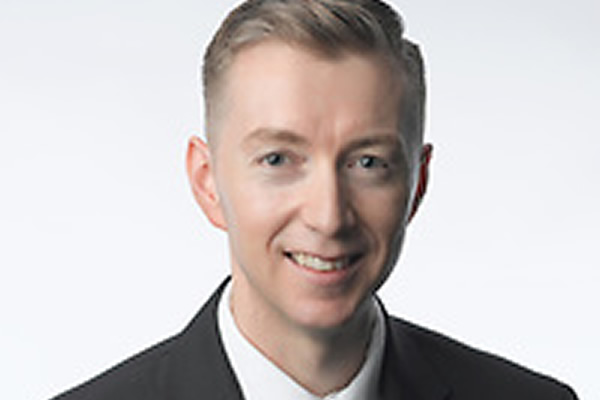
Michael Hennessy
Congratulations also to Lorella Praeli, who was naturalized in the same ceremony. I was fortunate to meet Lorella last year through friends. She was born in Peru and came to the United States as an undocumented immigrant when she was 10. She recently moved from D.C. to Brooklyn, N.Y., to become Hillary Clinton’s Latino Outreach Director. She is an amazing young woman who happens to be an amputee. She has overcome many odds to achieve success and through it all has dedicated her life to helping others.
Congratulations are also in order for Chris McCannell who recently became a partner in the Eris Group, formerly Bartlett and Bendell. The Eris Group is a government relations practice. Chris previously worked as the lead of the D.C. financial services practice at APCO Worldwide.
A press release from the Eris Group stated, “In addition to continuing work on previous clients, Chris brings to the Eris Group the perspective of a senior House Democrat. Chris was previously chief of staff for current Democratic Caucus Vice Chairman Joseph Crowley (D-N.Y.), and also served as chief of staff for Rep. Michael E. McMahon (D-N.Y.).”
Doyle Bartlett, founder and managing partner of the Eris Group added, “The Eris Group is fortunate to have Chris. Chris has a passion for his clients and the clients value his counsel. He is someone who is respected on both sides of the aisle and has a proven track record of getting things done both when he was on Capitol Hill and with his clients.”
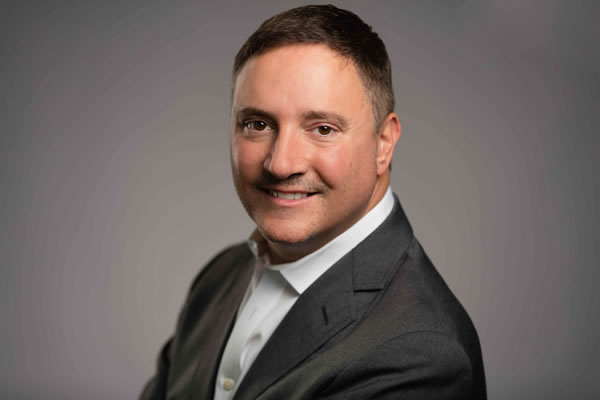
Chris McCannell




The Comings & Goings column is about sharing the professional successes of our community. We want to recognize those landing new jobs, new clients for their business, joining boards of organizations and other achievements. Please share your successes with us at [email protected].
The Comings & Goings column also invites LGBTQ+ college students to share their successes with us. If you have been elected to a student government position, landed an exciting internship, or are graduating and beginning your career with a new job, let us know so we can share your success.
Congratulations to Jaime Christopher Pierce on their appointment to serve as a member of the Virginia Governor’s LGBTQ+ Advisory Board. Pierce was sworn in on Sept. 3 by Greg Parks, clerk of the Alexandria Circuit Court.
Pierce currently serves as vice chair of the Alexandria City LGBTQIA+ Task Force and as a member of the Alexandria Pride planning committee. They previously served on the board of directors of Equality Virginia.
Upon being sworn in, Pierce said, “Public service has been a central part of my life for more than 30 years, and this appointment gives me an opportunity to serve the Commonwealth in a different and very personal way. My career has allowed me to work with people and communities throughout Virginia, and I hope to bring that experience, along with my own lived experience and my involvement in the LGBTQ+ community, to the work of the Board.” They added, “Having Greg administer the oath makes the occasion even more meaningful because of his own historic role as Virginia’s first openly gay elected circuit court clerk.”
Pierce also serves as Circuit Court Services Manager for the Department of Judicial Services, at the Office of the Executive Secretary of the Supreme Court of Virginia. They began their career in Virginia’s judiciary in 1994 as a deputy clerk with the Virginia Beach Circuit Court and have since held several professional and leadership positions within the court system. Pierce is a member of the National Association for Court Management (NACM) and the Mid-Atlantic Association for Court Management. At the national level, Pierce participated in the workgroup that developed the National Association for Court Management’s Diversity, Equity, and Inclusion Guide, a resource designed to help court professionals advance inclusive practices and strengthen access, fairness and belonging within the justice system.
Pierce earned a degree in Criminal Justice from Liberty University, and a certificate in Paralegal Studies from Norfolk State University.
Maryland
Md. groups receive state grants to fight hate crimes
Pride Center of Maryland among recipients
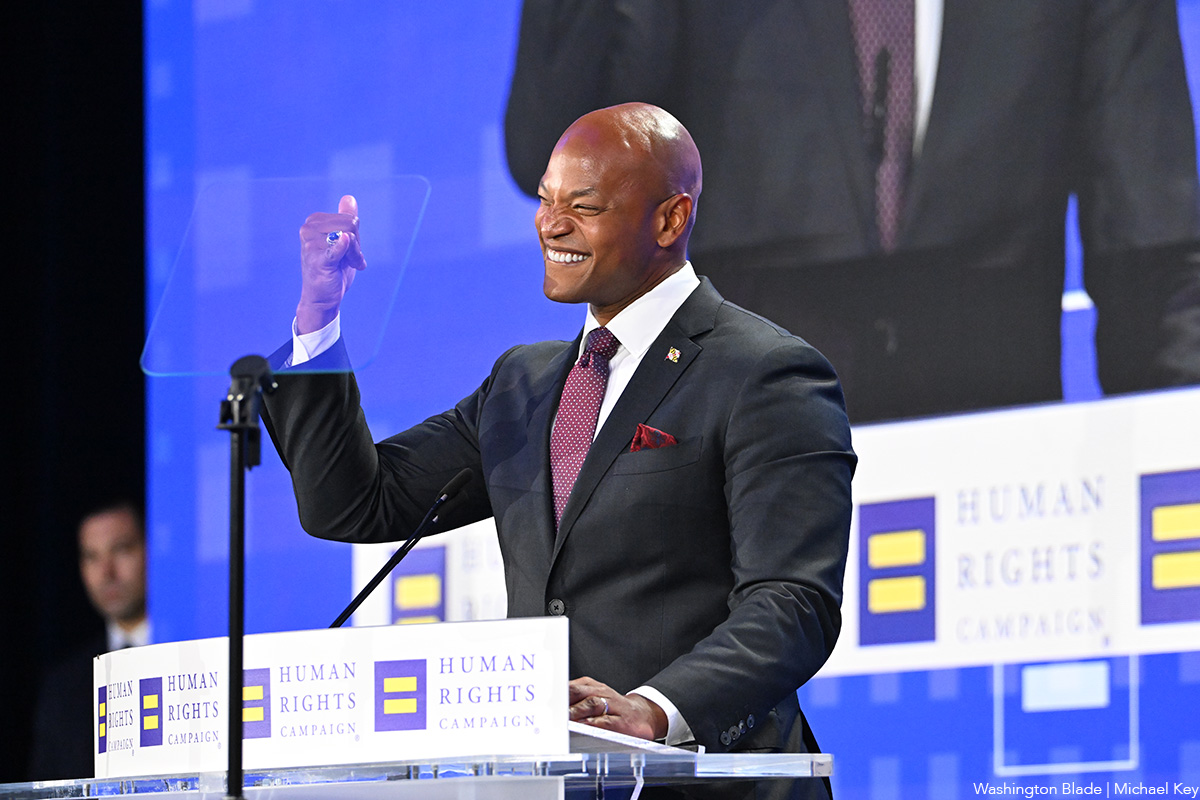
Maryland Gov. Wes Moore and the Governor’s Office of Crime Prevention and Policy are awarding a total of $10 million in grants in the 2027 fiscal year to nonprofit organizations that work to prevent hate crimes in the state.
The funds will be used to support those who feel targeted or discriminated against because of their race, religion, sexual orientation, gender identity, or disability status.
The Pride Center of Maryland is among the recipients. Churches, synagogues, mosques, and LGBTQ organizations are all eligible to receive grants
“The safety and security of all Marylanders is my top priority, so we are drawing a hard line because we have no tolerance for hate,” said Moore, according to media reports. “We are committed to protecting and ensuring safe and sacred spaces stay that way by investing in non-profit organizations, houses of worship, and community centers to protect and honor every community that makes our state so diverse and special.”
“Protection Against Hate Crime funding has strengthened the Pride Center of Maryland’s ability to protect, educate, and support the communities we serve … at a time of heightened concern associated with the Trump administration’s anti-LGBTQ/SGL (same-gender-loving) policies and pressures,” Pride Center of Maryland CEO Cleo Manago said. “PAHC funding helps us do more than improve physical security — it strengthens our community’s knowledge, preparedness, connection to resources, and ability to respond to hate with greater awareness and support.”
Maryland’s hate crimes law includes both sexual orientation and gender identity. The state’s nondiscrimination statute is also LGBTQ-inclusive.
District of Columbia
Blade welcomes fall intern
Alexis McLean is student at University of North Florida
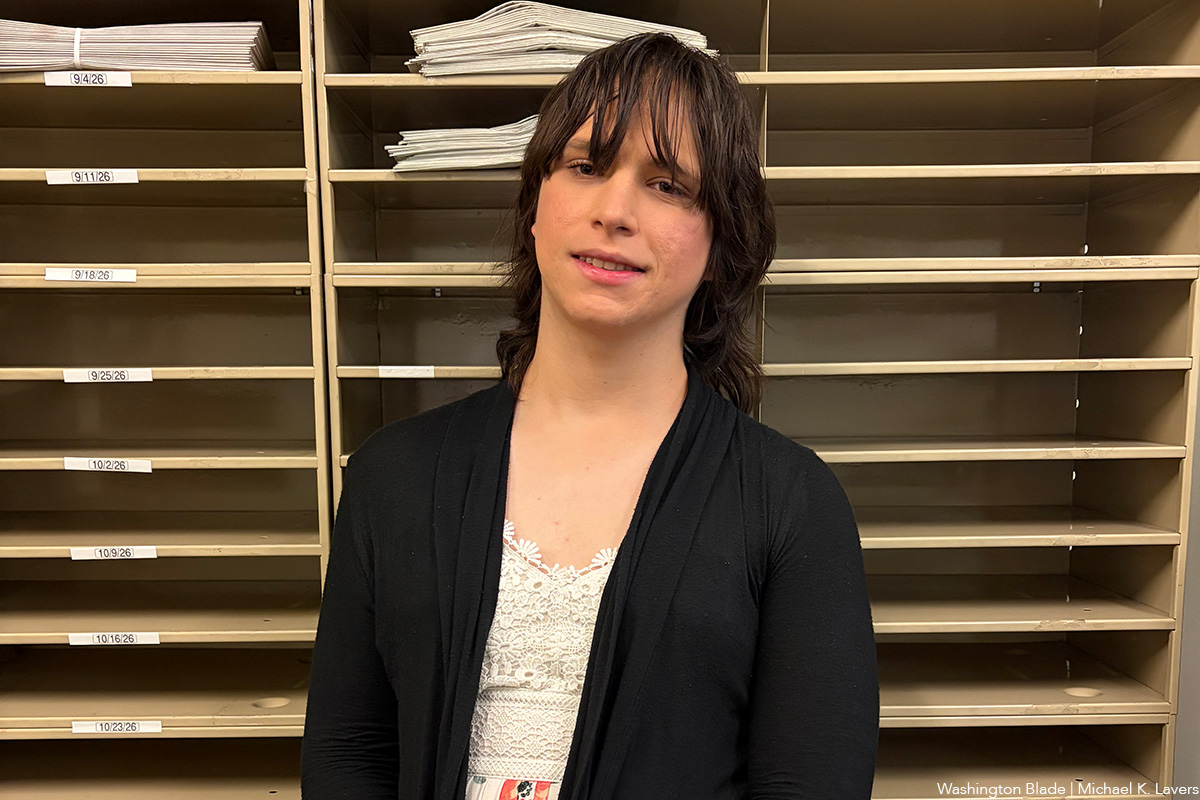
The Washington Blade this week welcomed Alexis McLean as its fall intern.
Alexis is studying political science at the University of North Florida in Jacksonville, Fla. She is interning with the Blade as part of a continued partnership with the Washington Center.
“I am looking forward to spending my time in the fall with the Washington Blade, as this is a new experience for me,” said Alexis. “I have not experienced any journalist jobs in the past so this would be my first time, and I am excited to better my writing and communications skills with this internship.”
Alexis’s internship with the Blade ends in early December.

‘Thelma and Louise’ remains landmark of unspoken queer rebellion

Comings & Goings

LGBTQ Military Happy Hour set for Sept. 15

Calendar: September 11-17

Multi-billion-dollar 9/11 Victim Compensation Fund to continue until 2090

Nominate your favorites for the Blade’s 25th annual Best Of LGBTQ DC Awards

Md. groups receive state grants to fight hate crimes

PHOTOS: SUNFESTIVAL

Gloria Steinem’s life of substance and consequence