News
Fake news story falsely claims Obama is a gay Muslim
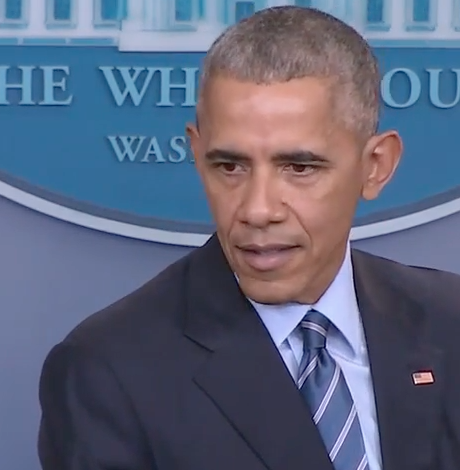
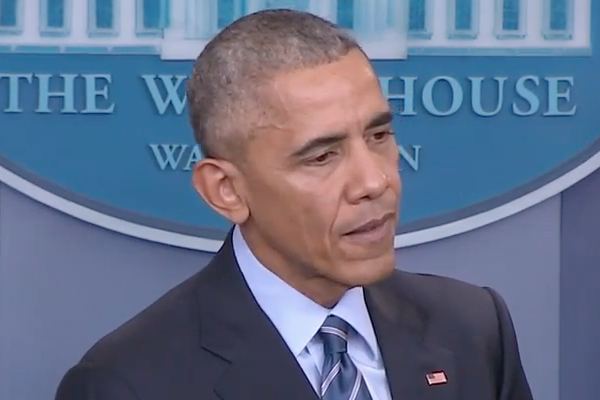
A fake news site falsely claims President Obama is a gay Muslim.(Screenshot courtesy White House)
A story on a fake news site that has received more than 100,000 shares on social media falsely claims President Obama is a gay Muslim, the fact-checking website Politifact reported Tuesday.
Politifact determined the article, posted six months ago on NewsExaminer.net and titled “Secret Service Agent Says Obama Is Muslim & Gay In New Tell-All Book,” is false in every capacity.
“Everything about the story — the book, the author, the interview and certainly the details contained therein — is fake,” Politifact reports.
The fake news story promotes a non-existent book written by a Secret Service agent named Paul Horner that purportedly asserts Obama is seeking to ruin the United States because he’s both Muslim and gay. According to the fake news post, the book is “quickly climbing Amazon’s best-seller charts.”
“Everyone on the inside knows that Obama is gay and a Muslim, it is common knowledge,” Horner is quoted as saying in the fake news report. “I saw many men coming and going from Obama’s room, at all hours. I would say a good portion of the men, over fifty-percent, were Muslim.”
According to Politifact, the same story circulated on fake news site NBC.com.co on Oct. 2, 2015, and was resurrected at ABCNews.com.co on Nov. 16, 2016. Neither site is affiliated with the major media outlets they purport to represent.
Although Obama identifies as a Christian and straight, rumors he’s gay and Muslim have persisted during his eight years in office — and even before — as a means to undermine his legitimacy.
The rumors that Obama is gay can be attributed to the significant advances on LGBT rights he’s achieved during his administration, including “Don’t Ask, Don’t Tell” repeal, coming out in support of same-sex marriage and signing an executive order barring federal contractors from engaging in anti-LGBT workplace discrimination.
Many observers have blamed fake news for the loss during the presidential election of Hillary Clinton, who one month after her defeat called fake news “an epidemic” and said Congress and the private sector should work to contain it.






District of Columbia
Push to elect more LGBTQ ANC members yields results
31 of 43 known LGBTQ ANC members elected in 2024 seeking re-election
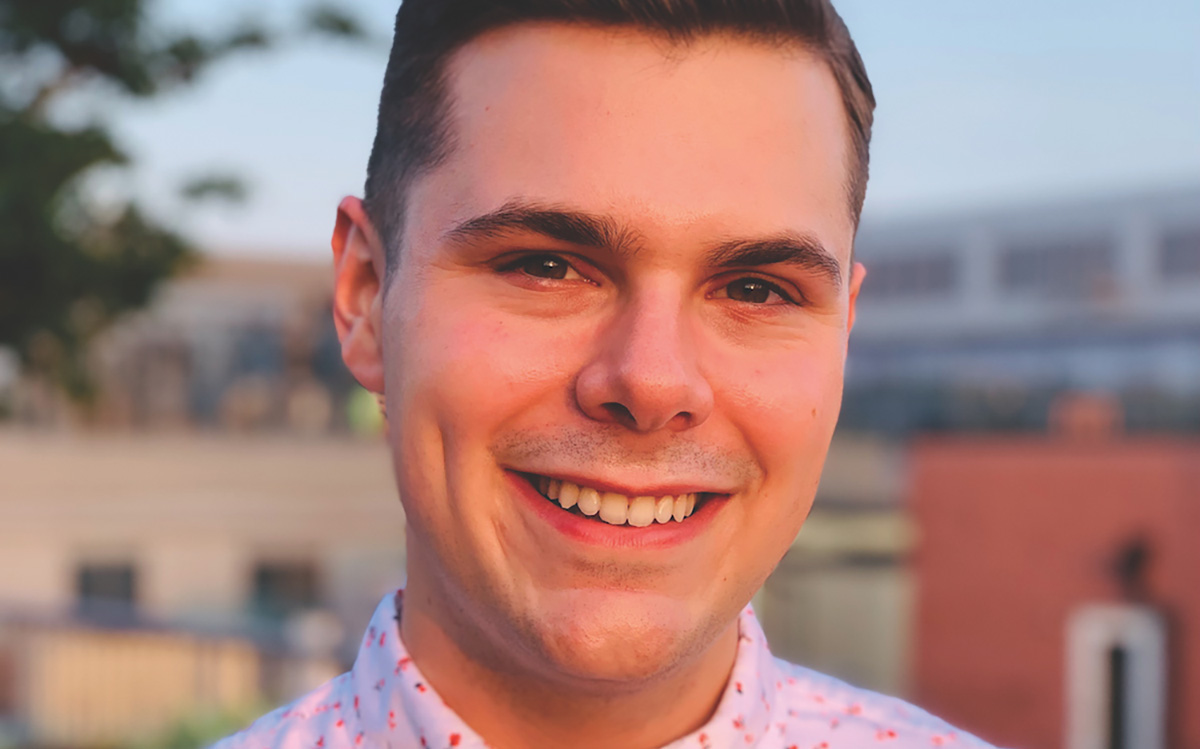
A 2026 list of candidates released by the D.C. Board of Elections shows that 31 of the 43 known LGBTQ candidates who won election in 2024 as Advisory Neighborhood Commissioners have filed the required petition signatures to be placed on the ballot this year to run for re-election.
The Washington Blade reported in 2024 that 43 known LGBTQ candidates won election to ANC seats that year in the November election
In a related development, the president of Capital Stonewall Democrats, D.C.’s largest local LGBTQ political group, said the group this year has recruited at least 39 LGBTQ candidates to run for Advisory Neighborhood Commission seats in the city’s Nov. 3 general election.
The group’s president, Stevie McCarty, an incumbent ANC member in the city’s Shaw neighborhood who is running for re-election, said the 39 candidates and possibly more responded to the group’s Queering ANCs campaign launched on July 7 that includes a website with detailed instructions for how best to run for an ANC seat.
“Since launching in early July, the site has drawn more than 20,000 views, and 39 candidates have used it to actually run,” McCarty said in a statement. He said he wasn’t sure if all the 39 candidates wanted to be identified as LGBTQ, and he was reviewing the list of incumbent LGBTQ ANC members who won election in 2024 to determine if any of the 39 candidates recruited were among those incumbents. He said he was not ready to release the names of the 39 candidates he said his group recruited to run for an ANC seat.
If none of the 39 candidates recruited by Capital Stonewall Democrats are among the 31 known LGBTQ ANC incumbents running for re-election, it would mean at least 70 LGBTQ ANC candidates will be on the city’s November election ballot.
McCarty said Capital Stonewall Democrats will send candidate questionnaires to the known LGBTQ ANC candidates as part of its process for endorsing candidates in the November election. He said he expects the group to help campaign for and provide financial support for the ANC candidates it endorses.
The D.C. local government is believed to be unique among U.S. cities in currently having 46 Advisory Neighborhood Commissions consisting of 345 single member districts in neighborhoods throughout the city in which unpaid Advisory Neighborhood Commissioners are elected for two-year terms.
The commissions are charged with considering a wide range of policies and programs impacting their neighborhoods, including traffic, parking, recreation, street improvements, zoning, liquor licenses, and economic development. Although ANCs do not have authority to set or reject policies or actions by city agencies, the agencies are required to give “great weight” to ANC recommendations, according to the law creating the ANCs.
“As an ANC member, I know firsthand how these seats shape our neighborhoods, from housing and public safety to sanitation,” McCarty said in the Capital Stonewall Democrats statement announcing the launch of the Queering ANCs campaign in July. “I’m proud to lead this effort to ensure more LGBTQ+ Washingtonians see themselves as leaders in their communities,” he said.
Some local LGBTQ activists, who asked not to be identified, said they were not aware of a significant boost in new LGBTQ ANC candidates from the Queering ANCs campaign. However, they praised the effort to recruit more LGBTQ ANC candidates and said the campaign could have yielded more candidates if it had started sooner than less than a month before the deadline for becoming a candidate.
McCarty said Capital Stonewall Democrats will continue to recruit LGBTQ D.C. residents to run as write-in candidates for ANC seats, especially in the 45 single member districts in which no candidate will be on the ballot. The Board of Elections candidate list shows many ANC single member districts that have just one candidate running without an opponent.
Following is a list of 33 known LGBTQ ANC candidates running in D.C.’s November 2026 election and the single member districts and neighborhoods in which they are running. All but two – Vita Rangel and J. Swiderski – are incumbents running for re-election. The Washington Blade will update this list if and when more LGBTQ ANC candidates become known.
1A04 – (Columbia Heights) Jeremy Sherman, he/him
1A10 – (Columbia Heights) Vita Rangel, she/ her [non-incumbent candidate]
1B03 – (Columbia Heights/U Street) J. Swiderski, they/he [non-incumbent candidate]
Jamie S. Sycamore, he/him
1B06 – (Columbia Heights/Meridian Hill) Miguel Trindade Deramo, he/him
1B07 – (U Street) Matthew Holden, he/him
1E01 – (Park View) Brad Howard, he/him
2B02 – (Dupont Circle) Jeffrey Rueckgauer, he/him
2B03 – (Dupont Circle) Vincent Slatt, he/him
2C01 – (Penn Quarter) Michael D. Shankle, he/him
2F05 – (Logan Circle) Christopher Dyer, he/him
2F07 – (Logan Circle) Kevin Cataldo, he/him
2G01 – (Shaw)Parker Griffin, he/him Howard Garrett, he/him
2G02 – (Shaw) Alexander ‘Alex’ Padro, he/him
2G04 – (Shaw) Steven McCarty, he/him
3B06 – (Wesley Heights) S. Robert Rodriquez, he/him
3F05 – (Van Ness/Cleveland Park) Adrian Jesus Iglesias, he/him
4B01 – (Takoma) Doug Payton, he/him
4B10 – (Lamond Riggs) Jinin Berry, she/her
4C06 – (Petworth) Christen Boss Hayes, they/them
4E02 – (16th Street Heights) Vince Micone, he/him
5B04 – (Brookland) Ra Amin, he/him
5B05 – (Brookland) Mónica Martínez López, she/her
5D05 – (Trinidad) Salvador Sauceda-Guzman, he/him
5F06 – (Eckington) Joe Bishop-Henchman, he/him
6B03 – (Capitol Hill) David Sobelsohn, he/him
6B09 – (Capitol Hill/Barney Circle) Karen Hughes, she/her
7C01 – (Deanwood) Brian Glover, he/him
7C03 – (Lincoln Heights) Carlos Richardson, he/him
7C04 (Deanwood) Anthony Lorenzo Green
7C08 – (Capitol View) Brandon M. Scott, he/him
8A01 – (Fairlawn) Tom Donohue, he, him
8B06 – (Garfield Heights) Marcus Thomas Hickman, he/him
Congress
Chris Van Hollen says the Democratic Party needs change. Is he the one to lead it?
Senator is backing anti-establishment Democrats across the country
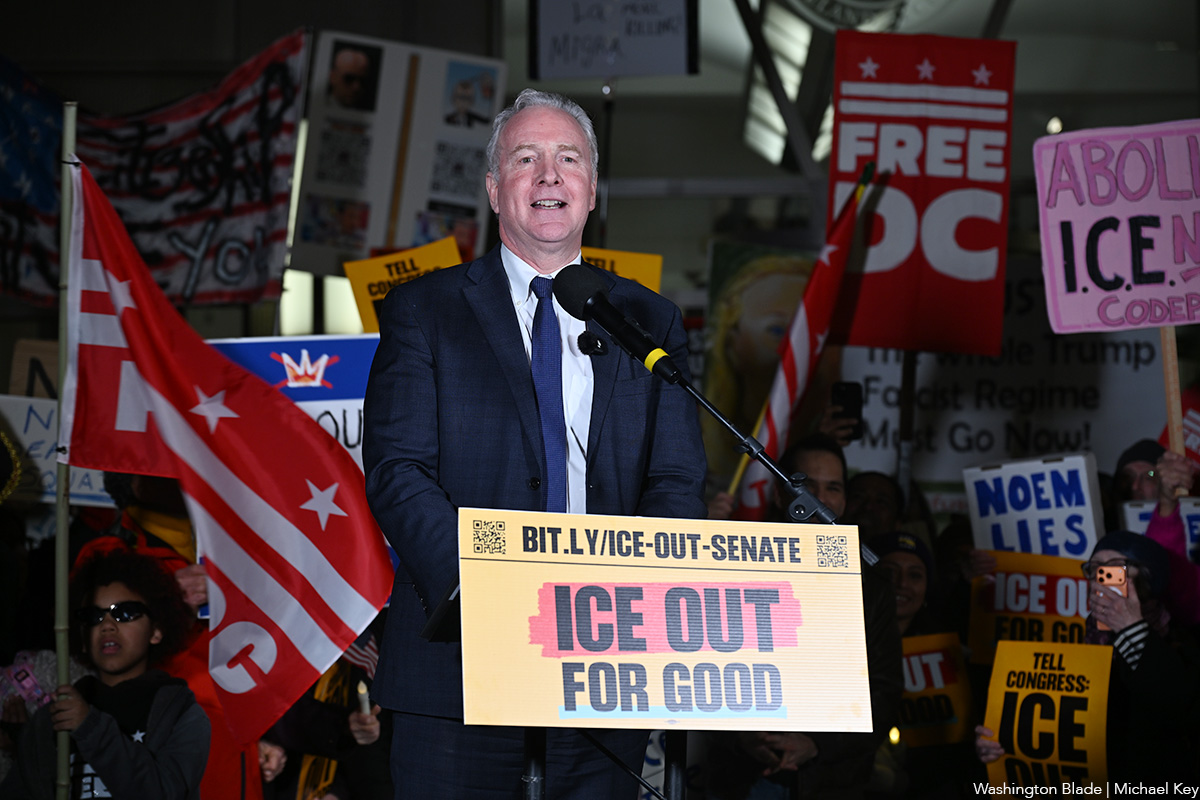
By LEE O. SANDERLIN | The Democratic Party is having something of an identity crisis — losing to President Donald Trump twice in three elections will do that.
Should the party embrace anti-establishment figures who espouse progressive policy ideas like Medicare for all and rhetoric about unrigging the economy for the 1 percent? Or should Democrats try to appeal to moderates who want to return to semi-normalcy in a time of political upheaval?
Although he’s been in Congress since 2002, with key leadership roles throughout his tenure, Maryland Sen. Chris Van Hollen, 67, counts himself firmly in the anti-establishment camp.
The rest of this article can be found on the Baltimore Banner’s website.
National
New data shows record-high LGBTQ population amid Trump attacks
12% of adults — 25.6 million people — identify as part of the community
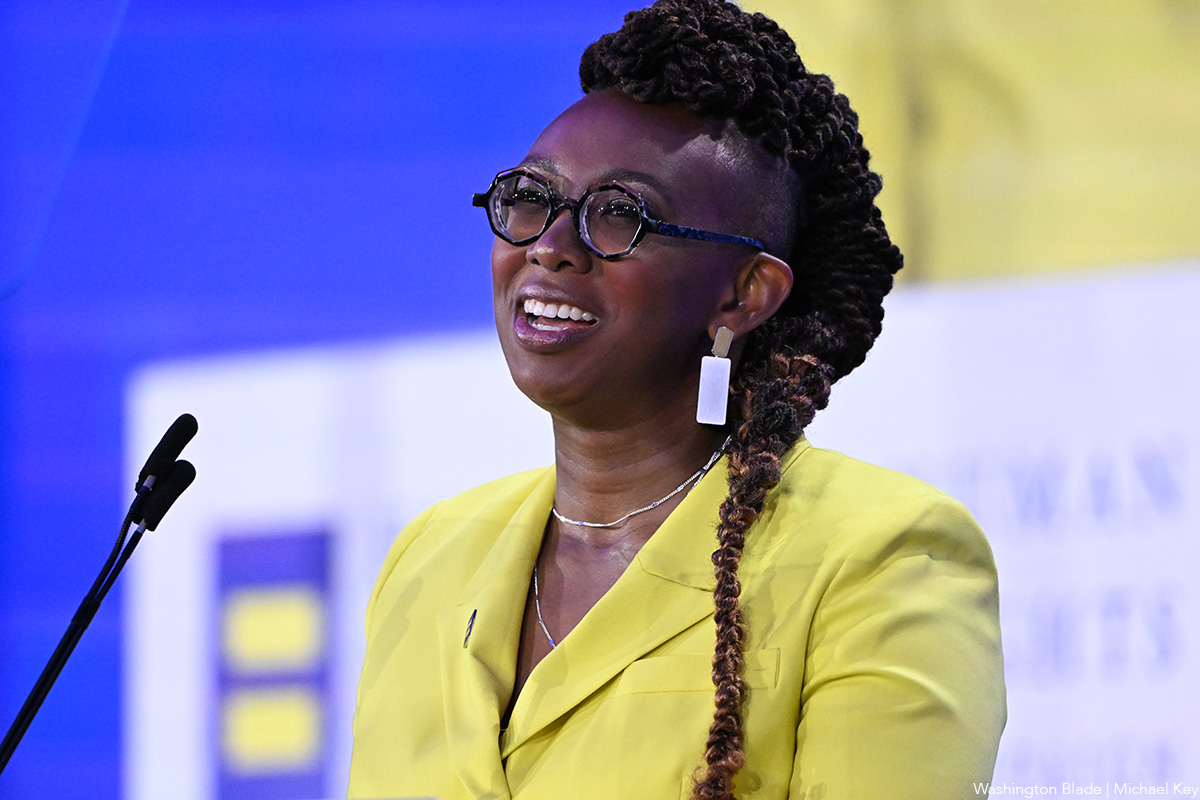
The Human Rights Campaign Foundation (HRC Foundation), the public education, research, and policy arm of the Human Rights Campaign, the largest LGBTQ+ advocacy group in the United States, has released new data showing that there are more LGBTQ+ identifying people than ever before, just as the Trump administration continues efforts to minimize LGBTQ+ rights and visibility.
The data, released late last week, includes a multitude of updated population estimates for LGBTQ+ identifying people in the United States. It shows that a record-high 12% of U.S. adults — roughly 25.6 million people — identify as lesbian, gay, bisexual, transgender, or gender diverse.
The numbers were drawn from more than 2.4 million responses to the U.S. Census Bureau’s Household Pulse Survey collected between 2021 and 2024. The Household Pulse Survey is one of the last major federal data sources to include a gender identity measure before the Trump administration removed sexual orientation and gender identity questions from roughly 360 federal data collections.
HRC President Kelley Robinson spoke about the data, emphasizing that it shows not only that the LGBTQ+ community is bigger than the Trump administration would have Americans believe, but that LGBTQ+ Americans continue to be targeted for no reason other than being different.
“LGBTQ+ Americans are everywhere. There are 25 million of us across the country, and we now have critical mass in almost every state in the nation,” Robinson said in a statement. “We’re not a niche constituency, and no campaign, brand, or employer can afford to treat us like one.”
The survey also collected other important information about LGBTQ+ Americans.
40: The number of states with an LGBTQ+ population greater than 10%, plus the District of Columbia. This includes electoral battleground states such as Arizona (13.34%), Georgia (11.46%), Michigan (10.95%), New Hampshire (11.88%), North Carolina (10.56%), Ohio (11.29%), Pennsylvania (11.14%), and Texas (12.54%).
25.6 million: Number of U.S. adults who identify as LGBTQ+.
12% : Percentage of the adult population who identify as LGBTQ+.
More than half of all LGBTQ+ adults (53.8%) are between 18 and 34 — a signal of sustained, long-term growth in political and economic power as this generation ages into peak spending and voting years.
Other recent studies show that nearly 30% of the adult Gen Z population identifies as LGBTQ+.
The data also shows growing diversity across the community. Hispanic adults make up a larger share of the LGBTQ+ population (18%) than of non-LGBTQ+ adults (13%). Black adults make up a smaller share, about 9%, compared to 12%, reinforcing that LGBTQ+ identity cuts across every racial and ethnic community.
Bisexual+ people are the largest group, at over 7% of all U.S. adults.
Tari Hanneman, HRC Foundation’s senior director of research and education, spoke about how the White House’s recent decision to remove LGBTQ-specific data questions from federal surveys undermines the purpose of federal data collection: to collect data that accurately reflects the U.S. population, regardless of political ideology.
“Reliable data are essential for understanding who lives in this country and what our communities need to thrive,” Hanneman said. “Removing sexual orientation and gender identity questions from surveys like the one used for this analysis introduces significant gaps in this understanding. These findings show that LGBTQ+ people are a substantial and growing segment of the population, underscoring the need for our continued inclusion in data collection efforts.”
The data also included key demographics about the age of LGBTQ+ people, showing that younger Americans are increasingly more likely to identify as LGBTQ+, while overall, all age groups saw an increase in people self-identifying as LGBTQ+ in the data.
More than half of LGBTQ+ adults (approximately 54%) are younger than 35, compared with about 22% of non-LGBTQ+ adults. Adults ages 25–34 constitute roughly one-third of the LGBTQ+ adult population.
The data also shows a similar generational pattern within age groups. Nearly 32% of adults ages 18–24 and 22% of adults ages 25–34 identify as LGBTQ+, compared with approximately 12% of adults ages 35–44 and less than 8% of each older age group.
The data also included statistics on the education levels of LGBTQ+ Americans, indicating that they are more likely to have some college education or an associate degree than their non-LGBTQ+ peers.
LGBTQ+ adults are more likely (34.57%) to have an associate degree or some college experience and less likely to have only a high school education or less, or a graduate degree.
According to a report from the Williams Institute, a research organization dedicated to collecting and explaining data on LGBTQ+ people and related policy, during the first year of the second Trump administration, approximately 360 federal data collections removed at least one sexual orientation or gender identity measure, including 338 that removed gender identity measures and at least 60 that removed sexual orientation measures.
The Williams Institute, along with HRC, asserts that these changes diminish the federal government’s capacity to measure LGBTQ+ populations and understand their experiences and needs — something that should be detrimental to federal data collection and assessment, regardless of what political ideology one subscribes to.
In 2024, the Census Bureau conducted a large-scale test of questions on sexual orientation and gender identity for possible inclusion in the American Community Survey, the nation’s primary source of detailed demographic data. The test involved nearly half a million households, but the Bureau has not released the promised reports and datasets showing how those questions performed. In September 2025 Democracy Forward filed a Freedom of Information Act lawsuit seeking their release, alleging that the Census Bureau had unlawfully withheld the records.
The HRC Foundation also provided information about the methodology used to produce its estimates. The data uses weighted surveys conducted through its Community Insights research program. Community Insights is an opt-in research panel rather than a probability sample of the U.S. population; demographic benchmarks are used to adjust survey data so that respondents more closely reflect the broader LGBTQ+ adult population.
The HRC Foundation selected the Household Pulse Survey due to its large sample size, national probability-based design, detailed demographic data, separate measures for sexual orientation and gender identity, and availability of public-use survey weights.
The analysis includes 37 rounds of the U.S. Census Bureau’s Household Pulse Survey conducted between 2021 and 2024, yielding 2,452,769 responses before exclusions for missing or imputed data.
HRC’s estimate of 12.03% is based on the Census Bureau’s self-administered Household Pulse Survey, while Gallup’s most recent estimate of 9% is based on telephone interviews and a different approach to measuring LGBTQ+ identity.
HRC has suggested that self-administered surveys may offer greater privacy when people answer sensitive questions, which may contribute to differences in disclosure.
The analysis classifies respondents as lesbian or gay, bisexual+, transgender, or gender-expansive. The bisexual+ category includes respondents who selected bisexual as well as those who selected another sexual identity not represented by the available categories. The transgender or gender-expansive classification is determined using respondents’ reported sex assigned at birth and current gender identity.
The move to remove LGBTQ+ people from federal data collection is just one of many things the Trump-Vance administration has taken to minimize — if not hide — LGBTQ+ people in the country.
From the anti-transgender military executive order, which attempted to bar new recruits and remove transgender military members already serving, signed in January 2025, to attempts to prohibit gender-affirming medical care in federal health care programs and all but destroy gender-affirming care for minors, the administration has pursued a series of policies affecting LGBTQ+ Americans.
The administration has also attempted to make biological sex the only definition of gender on federal paperwork, rolled back DEI programs across the federal government, and taken other steps affecting how LGBTQ+ people are represented and recognized in federal policy and data collection.

Push to elect more LGBTQ ANC members yields results

Chris Van Hollen says the Democratic Party needs change. Is he the one to lead it?

New data shows record-high LGBTQ population amid Trump attacks

Dolly Parton dies at 80

Monument to LGBTQ Canadians officially unveiled

Not all trans people are the same

Log Cabin Republicans remove transgender rights from mission

Exploring Renée Richards’s life through lens of a trans author

Why we need to protect ‘sacrilegious’ art