News
Blade video reports from Honduras, El Salvador
Reporter files dispatches while on assignment
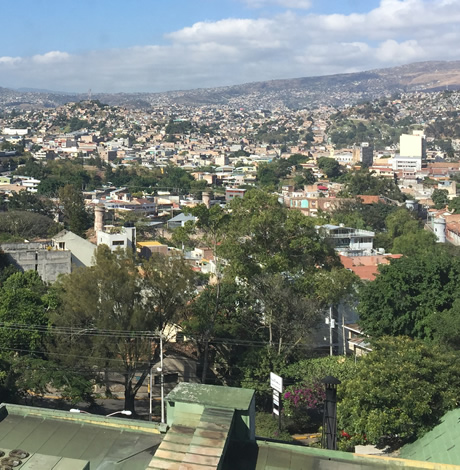
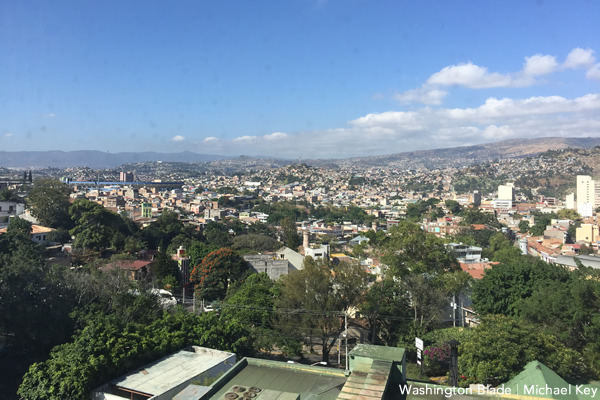
Tegucigalpa, Honduras, on Feb. 9, 2017. (Washington Blade photo by Michael K. Lavers)
Washington Blade International News Editor Michael K. Lavers continues to report from Central America. Here are three video reports that he has filed from Honduras and El Salvador.
Reporting from San Salvador, El Salvador
Feb. 4, 2017
Reporting on gay nightlife in San Salvador
Feb. 5, 2017
Reporting from Honduras
Feb. 8, 2017






National
Remembering Barbara ‘Boo’ Price, a pioneering force in women’s music
Key organizer behind Michigan Womyn’s Music Festival
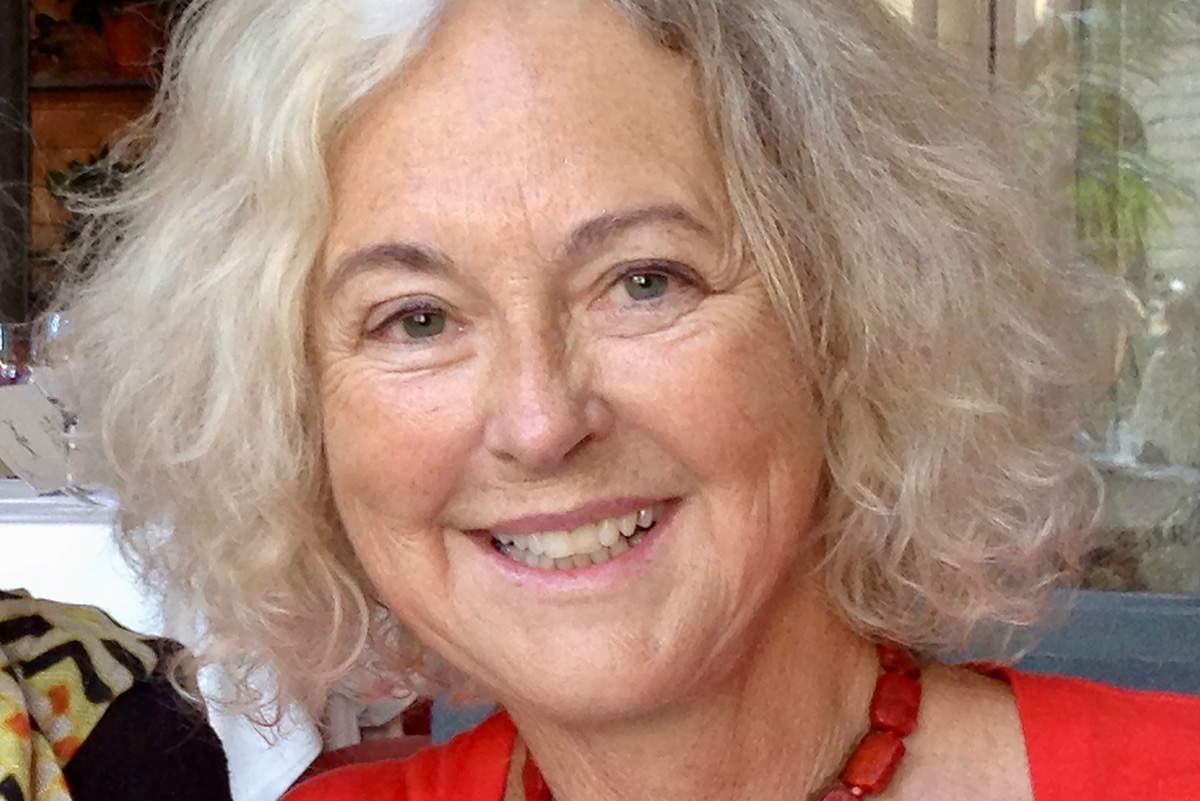
Barbara (“Boo”) Kay Price, a pioneering figure in the women’s music movement, died Tuesday, Aug. 4 in Oakland, Calif. Price produced some of the earliest women’s music concerts as a new lesbian-feminist culture was taking shape, and was a driving force behind the Michigan Womyn’s Music Festival which ran from 1976 to 2015 – a flagship event in the movement, and the largest women’s music festival in North America. Price was 82.
“Her vision from the very beginning was how complex and how wide the whole phenomenon of women’s music could be, and how far we could carry it beyond the multi-purpose rooms and church basements into Town Hall and the Palace of Fine Arts and major media,” says singer-songwriter Margie Adam, for whom Price served as manager, agent, producer and attorney from 1975 to 1984, and, for part of that time, her romantic partner.
“I think when she heard Cris Williamson, Vicki Randle and me sing at the Embassy Theater in 1974, she grasped that this thing we were just beginning to call women’s music could actually be a soundtrack for the women’s liberation movement – that it could be an activator and a healing, empowering tool.”
Arguably, nowhere was that emerging culture of music, feminism and community more fully realized than at the Michigan Womyn’s Music Festival.
At its peak, 8,000 women, predominantly lesbians, came from around the world to gather for a week in August. Camping, music, dance performances, workshops and the requisite tofu and beans were just a few of the innumerable offerings in this rite of passage for a generation of lesbians in a time when there were few safe and free environments available.
Alicia Davis of Michigan remembers the festival foremost for its sense of community. “The feeling of not having to make myself smaller to fit into the world, but rather the feeling that I could be happy, loud and share my opinions and feel valued, even when there were disagreements among people,” she says. “There was a shared respect that I didn’t feel outside of the festival walls. The festival shaped what I thought women could do in the world, the entire camp was made by women: electricians, plumbers, cooks, carpenters, singers, artists of every stripe… “
The sense of shared experience followed women long after they left “the land.”
In the 1980s, drivers across the U.S. would exchange knowing glances when passing a car with the familiar “See you in August!” bumper sticker. It was the original IYKYK.
The Festival was also an important showcase for emerging and established musicians, including Holly Near, Meg Christian, Tracy Chapman, Indigo Girls and Ani DiFranco. The list of alumni is vast and stretches across genres from classical to Afro-centric percussion. To name just a few: Casselberry-DuPree, Phranc, Heather Bishop, Ubaka Hill, big band Deuce, flutist Kay Gardner, Edwina Lee Tyler, Lynn Breedlove-fronted punk band Tribe 8, pianist Mary Watkins, and Cultural Heritage Choir founder Linda Tillery who remembers Boo as the big sister she never had.
“I could go to her with anything, and she would listen and give counsel. She was always supportive of me and usually right,” the singer and arranger says.
And while Michigan wasn’t the only festival in the country, it inspired people like marriage equality activist and comedian Robin Tyler who attended Michigan because of Price, and went on to produce her own West Coast music and comedy festivals, as well as the main stage for three Marches on Washington.
“My last memory of Boo was not about Boo Price, the producer or the magician that could create everything,” says Tyler who was also Price’s lover for a time. “It was how lucky I was to have had her in my life at all, and that we were able to love each other and share. She was one of the most influential people of my life.”
Price’s talents were evident across the festival’s sprawling operation which relocated several times over its 40-year existence. In 1982, together with one of the original founders, Lisa Vogel, Price purchased the land that would become the festival’s permanent 650-acre home near Hart, Michigan; in 1983, she became a co-owner and co-producer, a role she held until the two parted ways in 1994.
From 1976–1994, Price was involved in many aspects of the Michigan Womyn’s Music Festival. But her prowess as producer was perhaps most visible at the Night Stage. Her contemporaries have vivid memories of an opening ceremony with an aerialist swinging on a trapeze from an oak tree, while jazz artist Rhiannon performed on vocals.
“Sometimes it started with a parade or a procession and percussion, and sometimes there were stilt walkers – and so there was always this production about you as you were coming to Night Stage,” remembers Sändra Washington, who performed with her twin sister Sharon as the Washington Sisters. As a performer, Washington recalled the wall of energy rushing at her from the audience.
“It was her desire to create a thing, a space, an event that was really magnificent – and that showed in everything she did, whether or not she was organizing a tour, or she was organizing a party, or events at the [Montclair] club,” says Washington. “Boo really specialized in creating a whole vibe around the event, the space, the production, so that you felt something special when you came into a space that Boo had created.”
“There was never a space that felt as positive, overwhelming, and energetic as the crowd at Michigan.”
Kathryn A. Wilmore, co-founder of feminist journal Sojourner, remembers how Michigan grew into something bigger than anticipated – and how instrumental Price was in elevating the rudimentary systems needed to support it. One year, Wilmore brought copies of Sojourner to the festival, hoping to connect with other people publishing women’s papers. “But there was no system for communicating any of that really. So I just tacked a note on a tree of that location, and there were about 30 of us that came together.”
Price, Wilmore says, helped put systems in place, articulate a vision, and bring in people who could then carry it forward.
“Boo really empowered so many women in so many dimensions. I think that is one of the overarching themes of her life, and certainly in music production… and her confidence was infectious. So people who had never done something grew into becoming experts. I think that she inspired and empowered.”
Wilmore first met Price in 1961 at Mt. Holyoke just after the women arrived for the start of college. “There were all these girls in this half-empty dorm in the middle of a hurricane, and Boo started going around to everyone’s room to introduce herself. Then she got to my room… and that was the beginning of this lifelong friendship.”
The importance of what Price created cannot be overstated, nor the reach and durability of the connections formed in the space she helped build.
Just last month, a French woman found this writer on Instagram 40 years after the Festival and claimed I invited her into my tent. We have been corresponding since this improbable reconnection (though the question of who did the inviting is under dispute):
Emmanuelle Gachet, now a writer and professor at Université de Nantes, reflects on her experience:
“In 1986, I step onto an island populated by six thousand women. I come from France, from a rural area, and I am twenty years old. Never before have I felt such a powerful energy. Here, lesbianism is the norm. I don’t have to justify my place. For the first time, I am not a minority. At the time, I am broke. The community welcomes me with sisterhood. I take part in artistic and political workshops, without always realizing their significance. I discover music without male voices. Women playing, singing, improvising, taking the stage. A stage of their own. Music becomes a common language, a way of recognizing one another, of celebrating who we are and what we can create together… I leave with the feeling that I am leaving a world that may never exist again… “
Price’s influence extended beyond the festival arena. The MSU Libraries document the breadth of her production work, including the Women on Wheels Tour in 1976; a celebration for the opening of Judy Chicago’s The Dinner Party in 1979; concert closing the ERA Campaign at Constitution Hall with Margie Adam and Sweet Honey in the Rock; and, decades later, the 2008 San Francisco City Hall memorial for lesbian rights pioneer Del Martin. She also established Women in Production in 1976, which hired and trained primarily lesbian technicians and production staff.
Price co-founded Pleiades Records with Margie Adam in 1975, producing and promoting Adam’s first four albums. She had an eye for the entire presentation – from press kits and photography to album covers – and for how the emerging women’s music movement projected itself to the world. Price produced a 50-city tour promoting Adam’s first album, culminating at the historic National Women’s Conference in Houston in 1977, where Adam performed “We Shall Go Forth!” as 10,000 women joined in three-part harmony.
“When Boo and I began to work together, both of us were convinced that we should have that phrase, ‘Women’s music by women about women for everyone.’ And that was not a point of view that was agreed upon by everybody in women’s music,” Adam says. “We had wiggle room in there, and we had controversy, and we had continuums.” Ultimately, Price wanted the music “to get out as far as it can go.”
Barbara Kay Price was born on Oct. 8, 1943 in Lafayette, Ind. She received a bachelor’s degree in political science from Mount Holyoke College in 1965, and Juris Doctor from UC Davis in 1976.
She brought her legal background, organizational skills and business acumen to everything she touched – including the justice system, most notably through her work on child custody cases, a focus that grew out of her own experience.
In 1978 she co-authored a law review article on lesbian custody proceedings and how attorneys could best prepare, at a time when lesbians were viewed unfavorably by the courts and “Sexual Orientation Disturbances” remained a psychiatric diagnosis.
“People forget what it was like,” says attorney Diane Gelon, who first met Price in 1977 at the women’s conference in Houston. “The lesbian mother would not have even had what we would look at now as normal access to that child because the fear was that the kids would be gay or lesbian, or there would be some amount of gender confusion, or they would suffer some kind of psychological harm… These are the myths that Boo wrote about and tried to address.”
Earlier in her career, she also worked at the White House for the Food for Peace Program, where she helped organize a Latin American tour for First Lady Lady Bird Johnson. She also worked with the President’s Commission on Civil Disorders. Price later became active in Bay Area Lesbians in Law, the Lesbian Rights Project, Lyon-Martin Clinic, the National Lesbian Feminist Organization, National Organization for Women, the National Women’s Political Caucus, and Women and the Law.
Whether through politics, advocacy or music, much of Price’s work was centered around creating spaces for women.
Following her tenure with the Michigan Womyn’s Music Festival and a brief hiatus, Price couldn’t help but create another gathering place. She had been regularly driving past an old building, originally established as a social and literary club in 1928. It still had its projection room, stage and lightboard. She knew she had to have it.
“She just was always producing, even when she had stopped,” says Sharon J. Washington.
Price purchased the building in 1996 and, after a thorough renovation, opened the Montclair Women’s Cultural Arts Club, which became home to the Montclair Women’s Big Band, which she co-founded with trumpeter Ellen Seeling in 1998. Over the next two decades, the predominantly lesbian space became a vital gathering hub, hosting more than 2,000 events – high-toned parties, workshops, theater, dance, concerts, and more.
“Her Valentine’s Day dances were extraordinary,” says Sändra Washington, who remembers four-course plated meals and, like many of Price’s friends, volunteered at the club.
When the club closed in 2015, luminaries of women’s music came together for farewell performances, and the San Francisco Bay Times chronicled the extraordinary range of what had taken place there: more than 500 birthday celebrations, 150 concerts (“which we can attest were fabulous,” the paper wrote), countless workshops, arts and cultural events.
“Whatever Boo had built, whether it was the club or her home – that was our second home,” says Sändra Washington.
“Buying that club was in some ways a transgressive action, but at the same time, it was saying we belong here,” says Margie Adam. “We belong everywhere. Women’s music belongs everywhere, and that was her vision from the moment that I met her.”
“I think of Boo as someone who inspired and empowered women everywhere,” says Kathryn Wilmore. “She herself was a fearless explorer, and she instilled that spirit into so many other women who would never imagine themselves doing the things that they did. And it wasn’t just in music.”
Wilmore remembers Price’s first foray into scuba diving. “She was a good swimmer, but there she was, completely underwater with this mask on, not being able to see much in front of her. So she just kept her eyes on the fins of the guide in front of her.”
She woke up the next morning and said, “Let’s do that again.”
“And she just fell in love with it, became an expert diver, and then inspired so many other women – including me,” says Wilmore, who would never have imagined venturing into the sea’s depths had it not been for Price.
Price soon convinced others to join her, and organized trips over the years to explore earth’s bounteous ocean offerings – women traveling the world from the Caribbean to the Solomon Islands and sharing in the joy that Price found amid the coral reefs of Indonesia.
Price is survived by her son, Andrés Garcia Price; daughter-in-law, Katie Garcia; granddaughter, Tallulah Katherine Garcia; nieces Melissa Price and her husband, Donal, and Cynthia Price Czabala and her husband, Tom; and an expansive community of chosen family, friends, and beneficiaries of her generous and unstoppable spirit.
“Many of you know that Boo’s health had been in decline for some time,” Kathryn Wilmore, Sharon J. Washington, and Margie Adam wrote in announcing their friend’s passing. “Over this past weekend, she had a serious heart attack and was being cared for in the hospital, with her son Andrés and family with her much of the time. Yesterday afternoon, she noticed a partially open door in her room and asked the nurse if that was the exit, because she was ready to leave. A few hours later, she did just that – moving on to another realm, but never out of our hearts.”
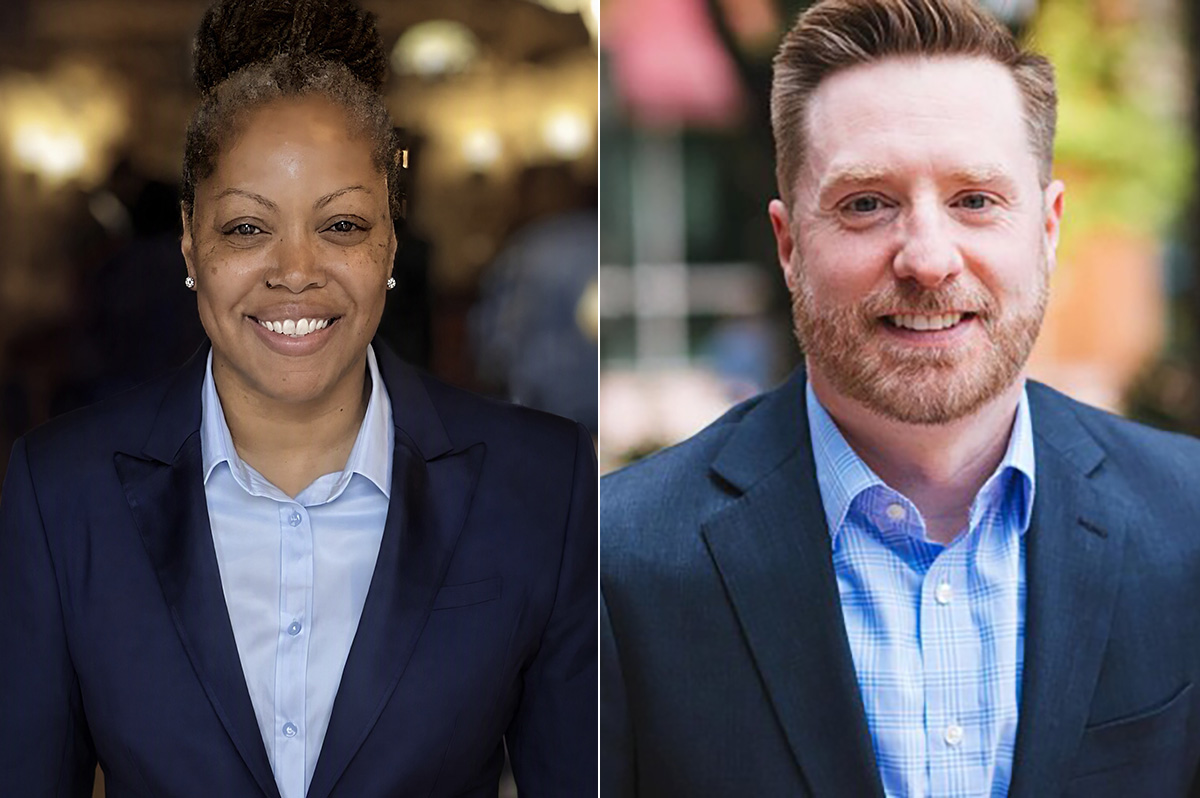
The Comings & Goings column is about sharing the professional successes of our community. We want to recognize those landing new jobs, new clients for their business, joining boards of organizations and other achievements. Please share your successes with us at [email protected].
Congratulations to Carla Lester, LICSW on her new position as Chief Program Officer with SMYAL. Upon accepting the position she said, “SMYAL deeply aligns with my passion for honoring, protecting, and upholding the rights of all individuals, particularly LGBTQ+ youth and others who have been historically underserved, to belong to communities that affirm their identities, treat them with dignity and respect, and support their well-being. At this point in my career, I was ready to transition to an organization whose mission more closely reflected my values and was rooted in the community. SMYAL offered the opportunity to serve both an organization and a population whose mission not only resonates deeply with me but also intersects with my own multiple identities.”
Lester is a healthcare and human services executive with more than 20 years of experience in behavioral health, federal and state health insurance programs, housing, health care, education, and community-based services. She has held senior roles at Carelon Behavioral Health, Pathways to Housing and N Street Village, leading clinical programs, Housing First initiatives, homeless outreach, trauma-informed services, and integrated case management.
She earned master’s degrees in Social Work and Divinity, and maintains active clinical social work licenses in D.C. and Maryland.
Congratulations also to Tad Czyzewski on his new position as Chief Development Officer at SMYAL. On accepting the position, he said, “While I’ve spent much of my nonprofit career in the arts, the current social and political environments made me want to apply my skills and passion more directly toward supporting and strengthening our community. SMYAL and this role felt like the right place to do that.”
Czyzewski brings more than two decades of experience in nonprofit leadership and strategy, fundraising, and business development. Prior to joining SMYAL, he served for eight years as executive director of The Choral Arts Society of Washington, where he led fundraising, financial management, and community engagement. During his tenure, he helped raise more than $15 million in contributed revenue. He guided the organization through a major rebrand and the COVID-19 pandemic.
Prior to that Czyzewski served as Business and Development Director for Washington Revels, and held leadership and advisory roles with Chorus America, the DC Commission on the Arts and Humanities, and the National Endowment for the Arts. He began his career in the corporate sector, including at Capital One, where his work in product development and marketing contributed to new financial products and more than $2 billion in deposits.
Czyzewski is a lifelong musician, has performed professionally as a classical singer, including with the Washington National Opera and the National Symphony Orchestra.
Obituary
Beloved pastor, AIDS activist Rainey Cheeks dies at 74
Lifelong D.C. resident founded Inner Light Ministries, Us Helping Us
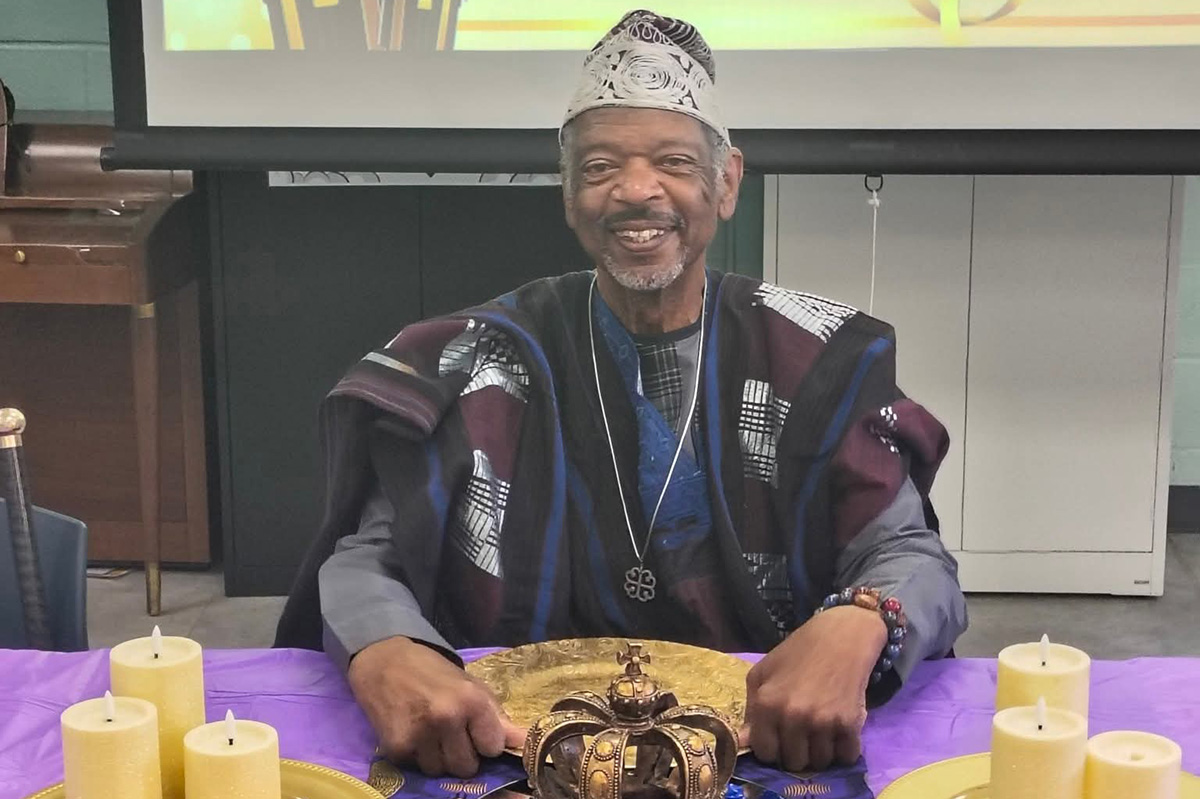
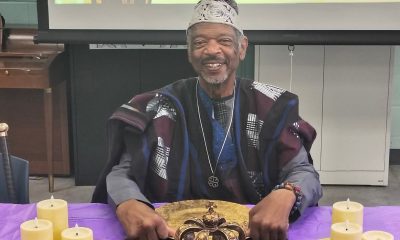
Bishop Kwabena Albert “Rainey” Cheeks, the founder and former senior pastor of D.C.’s LGBTQ supportive Inner Light Ministries church and founder of Us Helping Us, People Into Living, which provides services for D.C.-area residents with HIV with an outreach to the Black LGBTQ community, passed away on Aug. 11 at Georgetown University Hospital. He was 74.
Statements released by Inner Light Ministries and Us Helping Us describe Cheeks as a pivotal leader in the advocacy for supportive and welcoming religious services and support for the LGBTQ community and for helping to establish HIV treatment and prevention services for LGBTQ people most at risk for HIV/AIDS.
“In 1985, Bishop Cheeks founded Us Helping Us with a vision rooted in love, community empowerment, and the belief that our people deserved to live healthy, whole, and dignified lives,” Us Helping Us says in a statement announcing Cheeks’s passing.
“What began as a vision became a movement – one that has touched countless lives and continues to serve communities today,” the statement says. “His leadership, courage, compassion, and commitment to our community helped lay the foundation for the work we carry forward. While we grieve the loss of the man who started it all, we also celebrate the extraordinary legacy he leaves behind.”
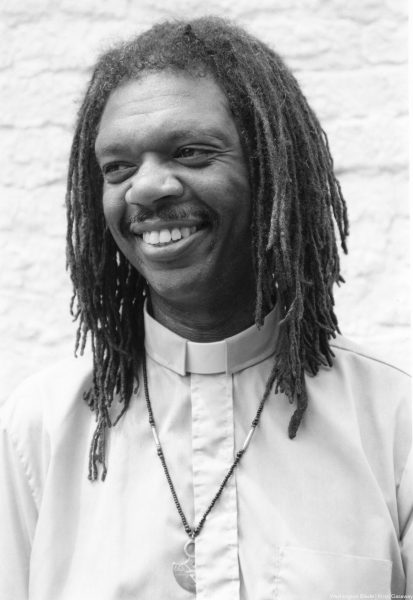
“For over 30 years, Us Helping Us has been providing innovative care and services to improve the health and well-being of Black, gay men,” the organization says on its website. “We work every day to reduce the impact of HIV/AIDS in the entire Black community by providing care to anyone who walks through our door,” the statement says.
In a separate statement on its website, Inner Light Ministries says Cheeks founded the LGBTQ supportive church in 1993 and served as its senior pastor. One of his former assistants, Rev. Darryll Moch, said Cheeks retired as pastor in 2018 but remained active in the church in the role of Pastor Emeritus until the time of his passing.
“His work as an outspoken advocate for the LGBT community and the inclusive nature of spirituality and ministry extends to everyone and the Love of God is not exclusive of anyone,” the church statement says. “This work has fueled ministers and ministries around the country and the world,” it adds.
It says Cheeks graduated and was ordained in 1982 from the National Spiritual Science Center of the Nation’s Capital and received an Honorary Doctorate of Divinity degree from the St. Andrews Theological Seminary in London, England.
The Inner Light Ministries statement and others who knew Cheeks point out that he played a lead role in helping to open in 1975 the Clubhouse nightclub that operated until its closing in 1990 as a mostly Black LGBTQ social club. Although the Clubhouse became known as a Black gay bar, it only served alcoholic beverages during special events, according to a 2021 article about the popular venue by the D.C. History Center.
The article says Cheeks and four others arranged for the Clubhouse to operate at 1296 Upshur St., N.W. in the city’s Petworth neighborhood “as a place where anyone 16 and over could go and have the house party they couldn’t have in their own house.”
The Inner Light Ministries statement says the Clubhouse, under Cheeks’s leadership, became a place where “hundreds in D.C.’s LGBT community flocked in the doors for both community and spiritual refuge, dancing and celebrating with each other weekly.”
The statement says Cheeks was also designated as a Grand Master in the Korean form of martial arts and karate known as Tae Kwon Do. It says he was rated in the top 10 in that martial arts category in the U.S. and won a silver and bronze metal in the first world championship competition in Soul, Korea, where Tae Kwon Do originated.
“In 2002, he was inducted into the Tae Kwon Do International Hall of Fame and received the rank of Grand Master 9th Degree,” the statement says.
As if that were not enough, the statement says Cheeks was certified in grief and bereavement counseling and had served as a teacher in the subjects of meditation and world religion.
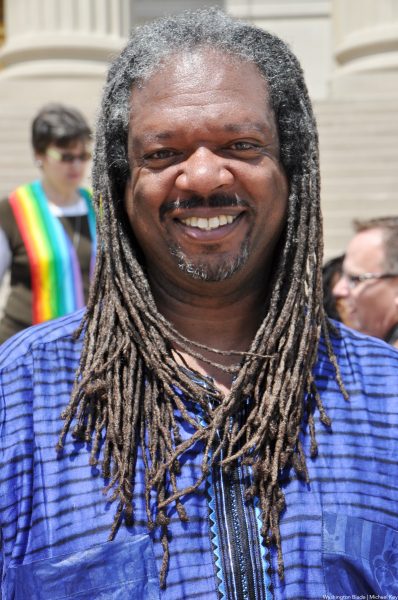
It says he has received numerous awards for his service to the D.C. community, including from the D.C. LGBTQ Rainbow History Project, former D.C. Mayor Anthony Williams’s Community Service Award, the Whitman Walker Health Community Service Award, and the Episcopal Care and Response Community Award.
In an updated statement released on Aug. 13, Inner Light Ministries calls Cheeks a dedicated leader whose work and impact “extended far beyond the pulpit.”
“Bishop Cheeks was more than a religious leader,” it says. “Bishop Cheeks was a builder of bridges, a voice for the voiceless, and a constant reminder that service is one of the highest callings,” it says, adding, “Through both word and deed, Bishop Cheeks inspired others to stand for equity, care for one another, and work tirelessly for a better tomorrow.”
A Celebration of Life for Cheeks is scheduled to take place at 11 a.m. Saturday, Aug. 29, at D.C.’s First Congregational Church at 945 G Street, N.|W.

PHOTOS: Nellie’s Drag Brunch

Remembering Barbara ‘Boo’ Price, a pioneering force in women’s music

‘Maddie’s Secret’ defies campy expectations

Bros + romance + fantasy = ‘Bromantasy.’

National tour of ‘The Notebook’ retains its tearjerking power

Will Michigan save the GOP?

Treat our political opponents as neighbors not enemies

Supreme Court ruled Boy Scouts could exclude James Dale. Now he says that same rule protects LGBTQ scouts from Trump

Beloved pastor, AIDS activist Rainey Cheeks dies at 74

Live music drag cabaret set for Shaw’s Tavern
-

 Opinions5 days ago
Will Michigan save the GOP?
-
Opinions5 days ago
Treat our political opponents as neighbors not enemies
-

 Pentagon4 days ago
Supreme Court ruled Boy Scouts could exclude James Dale. Now he says that same rule protects LGBTQ scouts from Trump
-
Obituary3 days ago
Beloved pastor, AIDS activist Rainey Cheeks dies at 74