National
National news in brief: July 8
A new ‘Supergay’ iPhone app, soldiers attacked in anti-gay beating, California mandates teaching gay history, Chicago mayor Rahm Emanuel pushes for marriage equality and a Michigan anti-bullying bill on life-support.
Gay superhero a hit in iTunes App Store
SAN FRANCISCO — An unlikely hit is rising in popularity among iPhone and iPod Touch users.
Spanish game creators Klicrainbow boast that the $2.99 app, “Supergay & The Attack of His Ex-Girlfriends” is the first video game to star a gay superhero, and users of the Apple mobile devices are accepting this groundbreaking game with open arms.
The animated game features comic book style art and currently offers the first 10 chapters of the storyline, with promises of more chapters to come.
The game tells the story of Dr. Tom Palmer — a young, attractive scientist working on a controversial cloning experiment — on the eve of his wedding to the daughter of his boss.
Throughout the narrative, Tom grapples with the fact that he’s gay as well as with some of the choices he’s made in his life, according to MSNBC.
“Having a gay character in a game is always something positive that gay gamers can relate to,” Steve Muir, editor of GenuineGamers.com told the Blade. “However in this instance I think the character we see is more of a stereotype than something we can relate to. Having a quick look at the developers and their title, I see the fluorescent pink color, mentions of Gay Power and the ‘Rainbow Ray.’ I understand this is a gay superhero but I can’t image anyone taking this seriously.”
“I think gay gamers, like gay comic fans, have a fascination with the dual identities of superheroes,” gay gaming champion, Matthew Michael Brown told the Blade. “We see some of our personal struggles reflected in the lives of these characters and are thrilled when they hit any medium. That said, video games are the future of entertainment and so to see such progressive characters break into this industry is especially exciting.” Brown won the second season of Sony’s Playstation Network reality series, The Tester.
Gay soldiers allegedly attacked in Colo.
DENVER — Two soldiers identifying as gay stationed at Fort Carson in Colorado Springs were allegedly assaulted by attackers shouting homophobic slurs and racial epithets early Saturday morning.
The soldiers had stopped off at Albert Tacos after a night out at a local nightclub where the men also work. The two soldiers — who had to conceal their identities when making statements about the crime because “Don’t Ask, Don’t Tell” is still in enforcement — said that some of the work friends that came with them to the restaurant caught the attention of a group of men because of the way that they were dressed, according to ABC News Denver.
One of the victims was treated for a facial fracture and had to have his jaw wired shut.
“We’re concerned that these soldiers may not get the support they need because of the ongoing impact of ‘Don’t Ask, Don’t Tell,” J.D. Smith, co-director of the active duty service members organization OutServe, said in a statement. “Will they be investigated for reporting the crime? Or for seeking medical help? These soldiers will have to literally lie at work to hide what’s occurred to them.”
Calif. mandates teaching LGBT history in schools
SACRAMENTO — The California Assembly this week passed 49-25 a bill that would “end LGBT history exclusion in education.”
The Fair, Accurate, Inclusive and Respectful Education Act had already passed the Senate 23-14 on April 14, and now heads to Gov. Jerry Brown for signature.
“The struggle of the multicultural and multiethnic LGBT community in California is one of the greatest stories yet to be told,” said Equality California Executive Director Roland Palencia in a statement released minutes after passage. “The FAIR Education Act will ensure that public schools acknowledge the heroism of individuals and communities who in spite of countless barriers continuously overcome adversity.”
The bill was authored by gay state Sen. Mark Leno, and follows another historic California victory 20 months ago, with the passage of official recognition of Harvey Milk Day.
The bill also compels schools to put strict guidelines in place to protect students from bullying based on real or perceived sexual orientation or gender identity.
“This is a victory not only for the LGBT youth in California who have been fighting to be heard in Sacramento and represented in their history classes, but also for all California youth who deserve to learn a fair and accurate account of California and U.S. history,” said Carolyn Laub, executive director of Gay-Straight Alliance Network. “By passing the FAIR Education Act, the Assembly has taken an unprecedented step to reduce bullying, increase safety for all students and teach students to respect each other’s differences.”
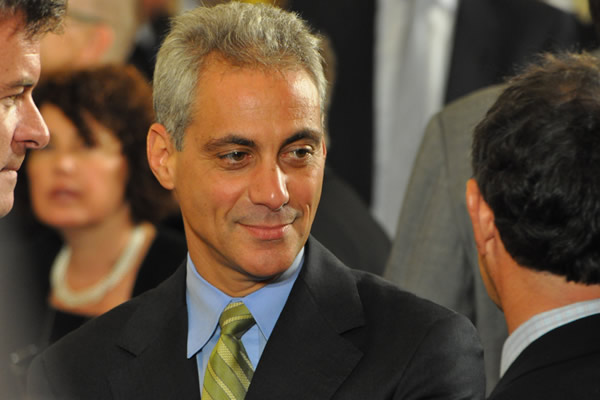
Rahm Emanuel. (Washington Blade photo by Michael Key)
Mayor Emanuel pushes for marriage equality
CHICAGO — In the spirit of Pride month, Chicago Mayor Rahm Emanuel closed June by stating that he hopes Illinois “moves in the direction” of New York after that state passed a bill legalizing same-sex marriage there.
The political heavyweight left his position as White House chief of staff in 2009 to pursue the Chicago mayoral spot being opened with the retirement of Richard M. Daley. Emanuel secured that spot in March 2010 in a race against many local big names, including former U.S. Sen. Carol Moseley Braun, who long backed the idea of marriage equality and voted against both “Don’t Ask, Don’t Tell” in 1993 and the Defense of Marriage Act in 1996.
Emanuel’s statement is his strongest yet on the topic of marriage equality, and advocates hope he will play as pivotal a role in pushing for a bill as Mayor Michael Bloomberg did in New York City.
“Obviously as someone who is working on marriage equality in this state I’m thrilled to see it,” gay state assembly member Greg Harris, author of the state’s civil unions law, told the Blade. “I think it goes to show that mainstream of political thought in Illinois is moving toward full marriage equality for all people, but that doesn’t mean there still isn’t lots of work to do in the state.”
“No matter what the states do, until we get rid of the Federal [Defense of Marriage Act] there will never be full equality for any same-sex relationship.”
Mich. anti-bullying bill put on hold
LANSING, Mich. — The fate of a proposed law that would have specifically protected students from anti-gay and anti-trans harassment and bullying, along with other forms of bullying is now in question as lawmakers go on break.
“Matt’s Safe-School Law,” named for a teen who committed suicide after being bullied, exists in two versions in the state legislature, one where protected classes like gay and lesbian kids are specifically enumerated — a version backed by the state Board of Education, Michigan’s LGBT advocacy group Equality Michigan, and the Republican Rick Snyder — and a general version of the bill that does not specify any protected classes.
The Republican-controlled legislature has only held hearings on the general version of the bill, according to Michigan’s LGBT newspaper, Between the Lines. The June 29 Education Committee hearing saw anti-bullying groups come out against the less powerful version of the bill.
“We are disappointed to have to oppose House Bill 4163 today but feel that changes can be made to strengthen it so it becomes the powerful tool it is intended to be,” Equality Michigan Policy Director Emily Dievendorf said in a statement after the hearing. “Our kids need to be assured that their second home, their school, is conducive to learning and is accepting of who they are.”
Michigan is one of only six states without anti-bullying legislation, which compels schools to create safer environments for students in regard to harassment and bullying.





National
Remembering the LGBTQ heroes of 9/11 terrorist attacks
25 years later, ‘the heartbreak remains strong’

Many in the LGBTQ community in the D.C. area and throughout the country were expected to join friends, co-workers, and family members this week in commemorating the 25th anniversary of the Sept. 11, 2001, terrorist attacks on the New York World Trade Center’s Twin Towers and on the Pentagon just outside D.C. as well as the jetliner hijacking that ended in a fatal crash in an open field in Shanksville, Pa.
A total of 2,996 people died in the 9/11 attacks, including 19 terrorists who hijacked four jetliners whose passengers included Americans and citizens of many other countries.
Activists involved with local and national LGBTQ advocacy organizations recall witnessing a coming together of LGBTQ people and their co-workers, neighbors, and family members to support one another during a time of unimaginable horror and grief.
Among those who lost their lives in the 9/11 terrorist attacks was American Airlines co-pilot David Charlebois, an out gay man and member of the Gay Pilots Association, who was on American Airlines Flight 77, which the terrorists crashed into the Pentagon.

Also among the terrorist victims in the 9/11 attacks was gay public relations executive and rugby enthusiast Mark Bingham of San Francisco, who was among several passengers of the hijacked United Airlines jet who reportedly stormed the cockpit to regain control of the jetliner before one of the hijackers crashed the jet into the countryside in rural Pennsylvania.
The jet had taken off from Newark, N.J. with its destination being San Francisco. Investigators learned the hijackers turned the plane around and were heading to Washington, D.C., with plans to crash it into the White House or the U.S. Capitol.
The passengers, including Bingham, who stormed the cockpit and were among the 44 passengers and crew who lost their lives in the crash are credited by investigators and family members and friends with saving the lives of hundreds of others if the hijackers succeeded in crashing into the White House or Capitol.
Among the other LGBTQ people known to have lost their lives in the 9/11 attacks was Father Mychal Judge, 68, a gay Franciscan priest who served as a Catholic chaplain for the New York City Fire Department. According to the National Catholic Reporter, Judge rushed to the scene of the World Trade Center shortly before the Twin Towers collapsed. He was fatally struck by debris falling from the south tower while giving last rites to a fallen firefighter, the Catholic publication reported.
“He was a decent, wonderful human being,” said New York gay journalist Andy Humm, who had interviewed Judge for LGBTQ-related stories prior to the 9/11 attacks. “I saw him at many demonstrations for gay and AIDS causes, showing up in his Franciscan monk’s cassock,” Humm told the Washington Blade five years ago at the time of the 9/11 20th anniversary. “And he was equally beloved by the fire department, there at every major fire tragedy in the city, lending moral support to firefighters,” Humm said.
Francis DeBernardo, executive director of New Ways Ministries, a Maryland-based LGBTQ Catholic group that advocates for LGBTQ supportive policies within the church, reported five years ago that his group was supporting an effort to call on the Catholic Church to officially recognize Fr. Judge as a saint by canonizing him. But DeBernardo told the Blade this week that those efforts failed to obtain the needed support from various Catholic entities, including the Franciscan Order of Friars Minors, of which Judge was affiliated, ending efforts to canonize Judge as a saint.
DeBernardo has written a book about Judge’s life and legacy published in 2023 called “Mychal Judge:Take Me Where You Want Me to Go.”
Among the other widely reported LGBTQ victims of the 9/11 terrorist attacks were a gay couple from California, Daniel Brandhorst and Ronald Gamboa, and their adopted son, David, who were among those who died aboard the United Airlines flight that crashed in Pennsylvania. The Los Angeles Times reported that Brandhorst, an attorney, and Gamboa, the manager of a Santa Monica Gap store, had adopted three-year-old David when he was an infant.
For many LGBTQ residents of New York and the D.C. area, the suffering over the loss of loved ones, including same-sex partners, was heightened a short time later when they learned they were initially ineligible for local and federal programs aimed at providing financial assistance to survivors of the 9/11 attack victims because same-sex couples were not legally recognized.
At the urging of LGBTQ rights organizations, state and local officials in the New York and the D.C. area took steps to address the initial denial of financial support for surviving same-sex partners In programs under their control. Officials with a massive federal aid program for 9/11 survivors, however, said they did not have legal authority to authorize payments to same-sex partners.
The officials, in the administration of then-President George W. Bush, said the best they could do would be to leave it up to local authorities to determine whether state probate laws would recognize a same-sex partner as a family member for eligibility in the federal aid program for 9/11 survivors, many of whom lived in states outside the New York and D.C. area.
Nicole Nava, a spokesperson for the September 11th Victim Compensation Fund, a federally funded program established to compensate for physical harm or death caused by the 9/11 terrorist attacks, including support for surviving family members, said she would inquire into whether same-sex surviving partners were being supported under that program in subsequent years in response to a request from the Washington Blade.
Jenny Pizer, an attorney for the LGBTQ litigation group Lambda Legal, which supported LGBTQ partner survivors of victims of the 9/11 attacks, said the information she and her organization had showed that many if not most of the LGBTQ partner survivors were unable to obtain the federal Victim Compensation Fund payment benefits that married heterosexual spouses obtained. She said she didn’t have a definitive answer on whether some LGBTQ surviving partners were compensated.
However, at least one case where an LGBTQ partner was compensated was reported by the Washington Post in a Jan. 22, 2003, news story about Peggy Neff, the lesbian partner of 18 years of Sheila Hein, 51, a civilian employee at the Pentagon, who was killed when the terrorist hijacked jetliner crashed into the Pentagon.
The Post reported that the Sept. 11 Victim Compensation Fund, under the leadership of its director, Kenneth Feinberg, approved an award of $557,390 for Neff in compensation for the loss of her partner. The Post story quoted a spokesperson for the Human Rights Campaign as saying, “It is our sincere hope that this signals that other gay families who have suffered the loss of a loved one will be treated similarly.”
The compensation program, which is operated by the U.S. Department of Justice, remains in operation until 2090. The Blade will report on any additional similar awards for LGBTQ surviving partners if Nava provides such information.
Events commemorating the 25th anniversary of the 9/11 attacks were scheduled to take place this week at memorial sites honoring the 9/11 victims located outside the Pentagon in Arlington, Va., at the site of the World Trade Center Twin Towers in New York City, and the site of the jetliner crash in Shanksville, Pa., which is operated by the U.S. National Park Service.
The U.S. Congress in 2017 and 2021 approved separate bills signed by President Donald Trump during his first term in office and President Joe Biden creating the Global War on Terrorism Memorial and its construction, to be built on the National Mall in Washington, D.C. that’s scheduled to be completed in 2028.
The memorial, to be located near the Lincoln Memorial and Vietnam Veterans Memorial close to 23rd Street and Constitution Avenue, N.W., is intended to honor people who served and were lost in the wars and counterterrorism operations that followed the 9/11 attacks, including U.S. military operations in Iraq and Afghanistan.
Longtime LGBTQ rights advocate Jay Fisette, who at the time of the 9/11 attacks held the elected position of chair of the Arlington County Board, which serves as the county’s governing body, was among the Arlington officials that came to the Pentagon’s grounds in Arlington to oversee efforts by firefighters to rescue Pentagon workers on the day of the attack.
At an Oct. 7, 2001, 9/11 Day of Remembrance and Appreciation ceremony held in Arlington, Fisette expressed the views of many in the community in response to the 9/11 attacks.
“Tonight, our community gather as a family,” he told the gathering. “We gather in sorrow and in disbelief, in remembrance and appreciation,” he said. “But we come here, too, with resolve and pride. We come together as Arlingtonians who love our country, as Americans who love our country,” he said.
“Our enemies may hurt our bodies and destroy our buildings, but they will never defeat our determination to make this a world of peace and a community in which our children grow up safe and secure,” Fissette said.
Although some of the same-sex partners of those killed in the 9/11 attacks faced obstacles in obtaining financial support through the federal 9/11 relief program, Tom Hay, the surviving partner of 14 years of American Airlines pilot David Charlebois was treated with respect and honor by American Airlines officials and colleagues at Charlebois’s funeral mass at D.C.’s St. Matthew Cathedral.
More than a dozen uniformed company pilots and flight attendants attended the mass. And a press release issued by American Airlines mentioned Charlebois’s relationship with Hay and told how Hay stood with Charlebois when Charlebois advocated for equal rights for LGBTQ people in the airline industry through his involvement with the National Gay Pilots Association.
“David was an early member of the NGPA,” the American Airlines statement said. “His contribution helped ensure ongoing progress toward fairness and solidarity.”
Activists in New York have said the 9/11 attacks drew attention to the need for legal protections for same-sex couples, including the need for recognition of same-sex marriage, which the U.S. Supreme Court legalized nationwide in its landmark ruling in 2015.
But LGBTQ advocates in New York pointed to the difficulties LGBTQ surviving partners faced when desperately seeking to find out if a partner had survived at the site of the World Trade Center attack where the Red Cross and other emergency relief agencies set up a station near the site of the attack.
“Literally, gay people had to go there, turn around, go back home, and get some paperwork that spouses didn’t have to get to prove a relationship existed,” said Ross Levi, who at the time served as executive director of the New York LGBTQ advocacy group Empire State Pride Agenda.
“You were nervous and scared and sad and then you had to go through that,” Levi told the Blade in 2011 at the time of the 10-year anniversary of the 9/11 attacks. “And worse yet, other people turned them away, even with the paperwork, saying sorry you’re not a family according to our guidelines.”
Activists said New York City and New York State officials quickly recognized the inequities faced by same-sex partner survivors and took steps to change polices and laws to correct the situation. Among other things, New York’s then-Gov. George Pataki (R) issued an executive order in October 2001 that included surviving partners of gay and lesbian victims of the World Trade Center attacks in receiving full spousal benefits from the state’s Crime Victims Board.
In a separate development, the LGBTQ litigation group Lambda Legal, ESPA, the Human Rights Campaign, and other LGBTQ advocacy groups created the September 11 Gay & Lesbian Family Fund to provide some support to surviving same-sex partners who were ineligible for help from the federal relief fund program.
“The terrorist attack on September 11th is a tragedy that touched every American, impacting people and families from all walks of life,” Jonathan Lovitz, the Human Rights Campaign’s Senior Vice President for Campaigns and Communications told the Blade in a statement this week.
“As in all moments in American history, LGBTQ+ Americans were there, and feel the impact of this day,” he said. “As we remember the lives lost 25 years later, the heartbreak remains strong and the work to ensure that every person can live safe from violence in this country continues.”
2026 Midterm Elections
Chris Pappas wins NH Democratic Senate primary
Gay congressman running to succeed retiring U.S. Sen. Jeanne Shaheen

New Hampshire Congressman Chris Pappas on Tuesday won the Democratic primary in the race to succeed retiring U.S. Sen. Jeanne Shaheen (D-N.H.) in the U.S. Senate.
Pappas defeated Karishma Manzur, who was his primary challenger, by a 61.8-36.1 percent margin.
The gay congressman will face off against former U.S. Sen. John E. Sununu, who defeated former U.S. Sen. Scott Brown in the Republican primary.
“Tonight’s victory sends a clear message that voters are looking for leaders who will fight for their rights, their freedoms, and to be treated with dignity and respect,” said Human Rights Campaign President Kelley Robinson in a statement.
She campaigned for Pappas in Manchester, New Hampshire’s largest city, on Aug. 30.
“Chris Pappas has delivered results, stood up for equality, and showed up for the people he serves,” said Robinson in her statement. “HRC was proud to mobilize Equality Voters across New Hampshire to help power this win. We don’t have a second to waste between now and November. We look forward to continuing our work with Rep. Pappas as he drives toward victory in November so he can help return a pro-equality majority to the United States Senate.”
A poll the University of New Hampshire Survey Center released on Aug. 26 showed Sununu ahead of Pappas by a 45-43 percent margin if they were to face off in the general election. The margin of error is +/-2.1 percent.
Pappas would become the first openly gay man elected to the U.S. Senate if he were to win in November.
Georgia
Everton Blair makes history as first openly gay congressman from Ga.
Former Gwinnett County Board of Education member to serve remainder of David Scott’s term
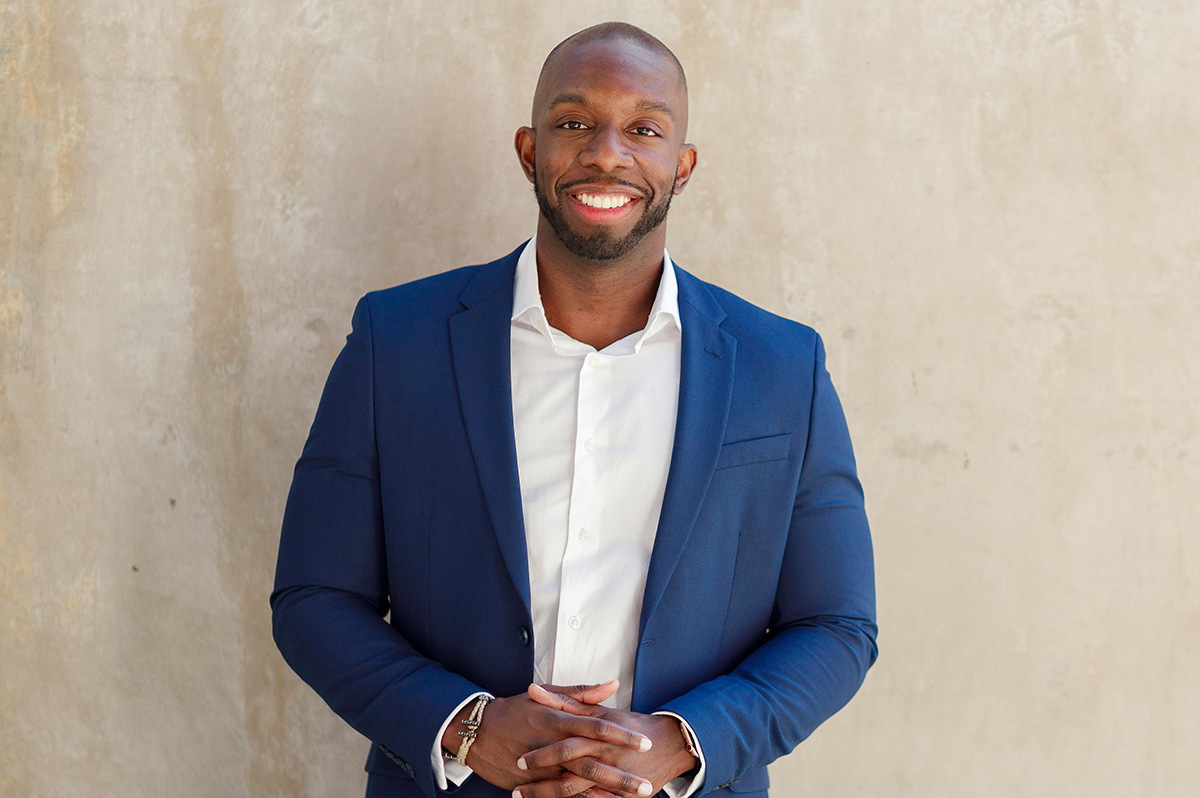
Georgia made history last week when Everton Blair, Jr., was sworn into the U.S. House of Representatives, becoming the state’s first openly LGBTQ member of Congress and the latest LGBTQ addition to the chamber.
Blair, who represents Georgia’s 13th Congressional District, was sworn in on Sept. 1 after winning a special election to fill the vacancy left by the late-Congressman David Scott. Blair defeated Marcye Scott, the late congressman’s daughter, in the Aug. 25 runoff, winning 53.2 percent of the vote to Scott’s 46.8 percent.
He will serve the remainder of Scott’s term through Jan. 3, 2027. Blair is not running in the November general election for a full term.
Blair brings a progressive platform to Congress.
The 34 year-old supports Medicare for All, a Green New Deal, raising the minimum wage, and universal gun background checks. His campaign platform also included positions on LGBTQ rights, reproductive freedom, workers’ rights, climate, and gun violence.
Since joining the House, Blair has joined the Congressional Black Caucus and Congressional Progressive Caucus. He is also a co-chair of the Congressional Equality Caucus.
Before joining the House, Blair served on the Gwinnett County Board of Education, where he became the first Black member and youngest-ever member elected to the board, as well as its first openly gay member. He was later unanimously selected as chair.
Blair also served as a fellow in President Barack Obama’s White House Initiative on Educational Excellence that focused on improving academic outcomes and expanding opportunities for minority students.
The son of Jamaican immigrants, Blair was born and raised in Georgia’s 13th Congressional District. He earned a bachelor’s degree in applied mathematics from Harvard University, a master’s degree in policy, organization, and leadership from Stanford University, and a Doctor of Education Leadership degree from Harvard.
Blair’s campaign received endorsements from a number of organizations, including the LGBTQ+ Victory Fund and progressive Democratic groups such as Future Democrats.
The Equality PAC, a political action committee dedicated to electing openly LGBTQ candidates to office, celebrated Blair’s victory and provided a statement to the Washington Blade about the historic nature of his election.
“This is a historic election for Georgia, the South, and our entire country,” Equality PAC said in an email. “Everton Blair brings a strong record of public service and a deep commitment to making government work for working families.”
The group said Blair would “fight to lower costs, expand access to quality health care, create economic opportunity, and ensure every community has a voice in Washington.”
“At the same time, Everton understands the importance of standing up for equality and defending the rights and freedoms of LGBTQ Americans and every community facing discrimination,” Equality PAC said. “His historic election as Georgia’s first openly LGBTQ Member of Congress and the first openly LGBTQ man elected from the South is a powerful reminder of how far our country has come — and how much work remains.”
Equality PAC said it was “proud to welcome Everton to the House” and looked forward to working with him.

Ind. prosecutor declines to press charges over false Buttigieg child welfare complaint

Historiography with heart

Remembering the LGBTQ heroes of 9/11 terrorist attacks

How Dolly became a folk saint for Appalachian queers

Report: 90 percent of LGBTQ groups around the world have lost funding since 2025

‘Here the Whole Time’ delivers queer coming-of-age comedy

New book examines fashionista Audrey Smaltz’s fabulous life

Blade Foundation to host fundraiser in Rehoboth on Sept. 12

Actress takes on bisexual ‘Ma’ Rainey in new Round House production

Iceland implements gender-neutral blood donor rules
-

 Movies4 days ago
‘Here the Whole Time’ delivers queer coming-of-age comedy
-
Books3 days ago
New book examines fashionista Audrey Smaltz’s fabulous life
-
Out & About3 days ago
Blade Foundation to host fundraiser in Rehoboth on Sept. 12
-
Theater3 days ago
Actress takes on bisexual ‘Ma’ Rainey in new Round House production