Autos
All-weather rides
BMW, Mazda unveil spiffy new models
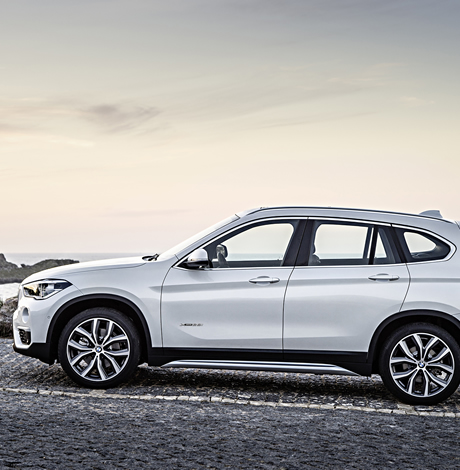
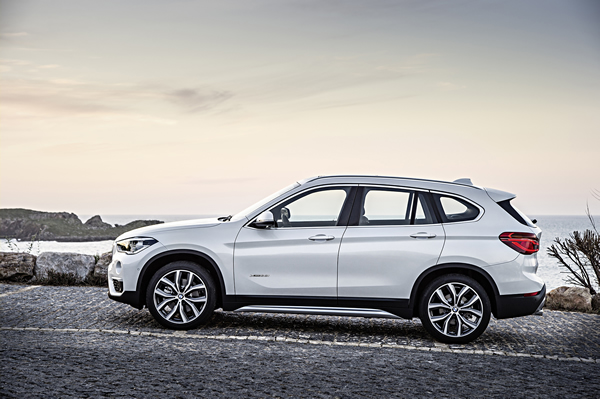
BMW X1 xDrive28i
‘Tis the season to be jolly — and to scope out holiday deals on all-weather haulers. Below are a few top picks that are both naughty and nice.
BMW X1 XDRIVE28i
$36,000
Mpg: 22 city/32 highway
0-to-60 mph: 6.4 seconds
If X marks the spot, then the BMW X1 xDrive28i is in the sweet spot. Redesigned last year, this all-wheel-drive compact crossover is taller, wider and lighter than ever. There’s more legroom, headroom and cargo capacity — the most stowage in its class — with gobs of storage bins, including one under the front seat and a huge space under the cargo floor.
And the list of standard features is long, with push-button start, rain-sensing wipers, hill-descent control, automatic stop/start, regenerative braking and more. Plus, the power liftgate can be opened by swinging your foot under the rear bumper. The quiet cabin is elegant, with choice of aluminum or wood trim. And those finely sculpted seats are a chiropractor’s dream.
A 6.5-inch info display comes standard, but splurge for the optional 8.8-inch monitor. Ditto the double-panel sunroof and M Sport package with its oh-so-taut handling. But other common luxury items are missing, such as cooled seats, power-adjustable steering wheel and rear-seat entertainment. And various safety features; including forward-collision warning, automated emergency braking, lane-departure warning and pedestrian detection; are optional, not standard. Still, it’s hard to resist all the goodies this baby BMW has to offer.
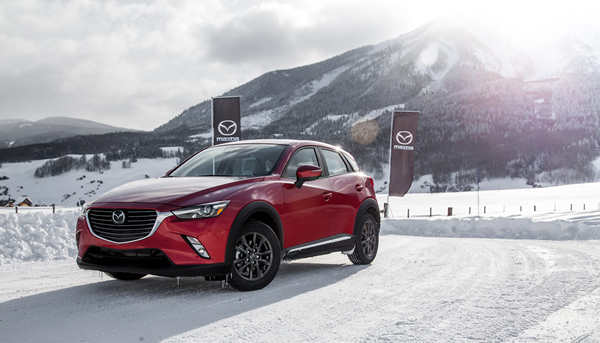
Mazda CX-3
MAZDA CX-3
$20,000
Mpg: 27 city/32 highway
0-to-60 mph: 8.1 seconds
Mazda prides itself on being a niche player, offering sporty yet economical rides. The CX-3 crossover fits the bill with a wide-mouthed grille and sharp-edged styling just like a Lexus NX. The well-bolstered seats and sweeping dash also look like they came from the NX playbook, yet the CX-3 price tag is about half as much.
While it’s a subcompact with limited space for rear-seat passengers and cargo, the size is perfect for urban commuters, helping them nestle the CX-3 into Matchbox-sized parking spaces. The 146-hp four-cylinder engine is tops in fuel economy for tiny haulers, but acceleration isn’t as peppy as the racy exterior would suggest.
For 2018, the cabin gets thicker window glass, better door seals and more sound insulation to help reduce noise. Along with choice of front- or all-wheel drive, there are plenty of standard features in each of the three trim levels, including rearview camera, 7-inch touchscreen and automated emergency braking. The top-of-the-line Grand Touring adds a sunroof, head-up display, steering-wheel paddle shifters and more high-end safety gear.
VW GOLF ALLTRACK
$26,000
Mpg: 22 city/32 highway
0-to-60 mph: 7.4 seconds
Despite all the hoopla over crossovers, VW is making noise with the all-new Golf Alltrack station wagon. Styling and handling are more athletic than the basic Golf SportWagen (and many boxy crossovers, for that matter). The result is a ruggedly chic yet comfortable car, with minimal body roll, standard all-wheel drive and good acceleration from the 170-hp four-cylinder turbo.
Plenty of room for cargo and front-seat passengers, but backseat legroom is tight. The well-built cabin is clean and functional, if not a bit spartan. Three trim levels, which all come with heated side mirrors, dual-exhaust pipes, LED daytime running lights, all-wheel drive, rearview camera and smartphone integration. Yet it’s easy to see the allure of the higher-tiered models, which add keyless entry, push-button start, tire-pressure monitoring system, panoramic sunroof and rain-sensing wipers with heated nozzles.
One quibble with VWs has been the lackluster infotainment system, with a teeny 6.5-inch screen and low placement on the dash. But for 2018 models, a more dynamic 8-inch monitor is now available.
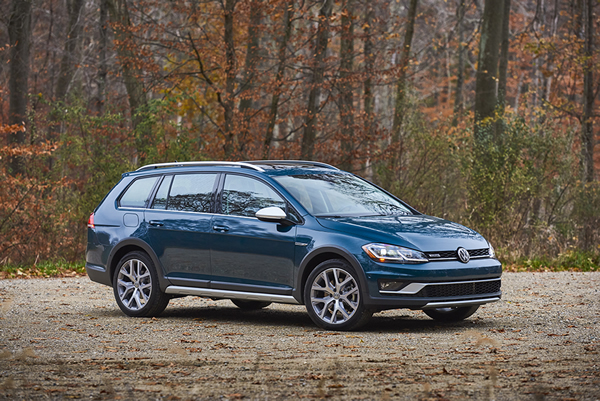
VW Golf Alltrack
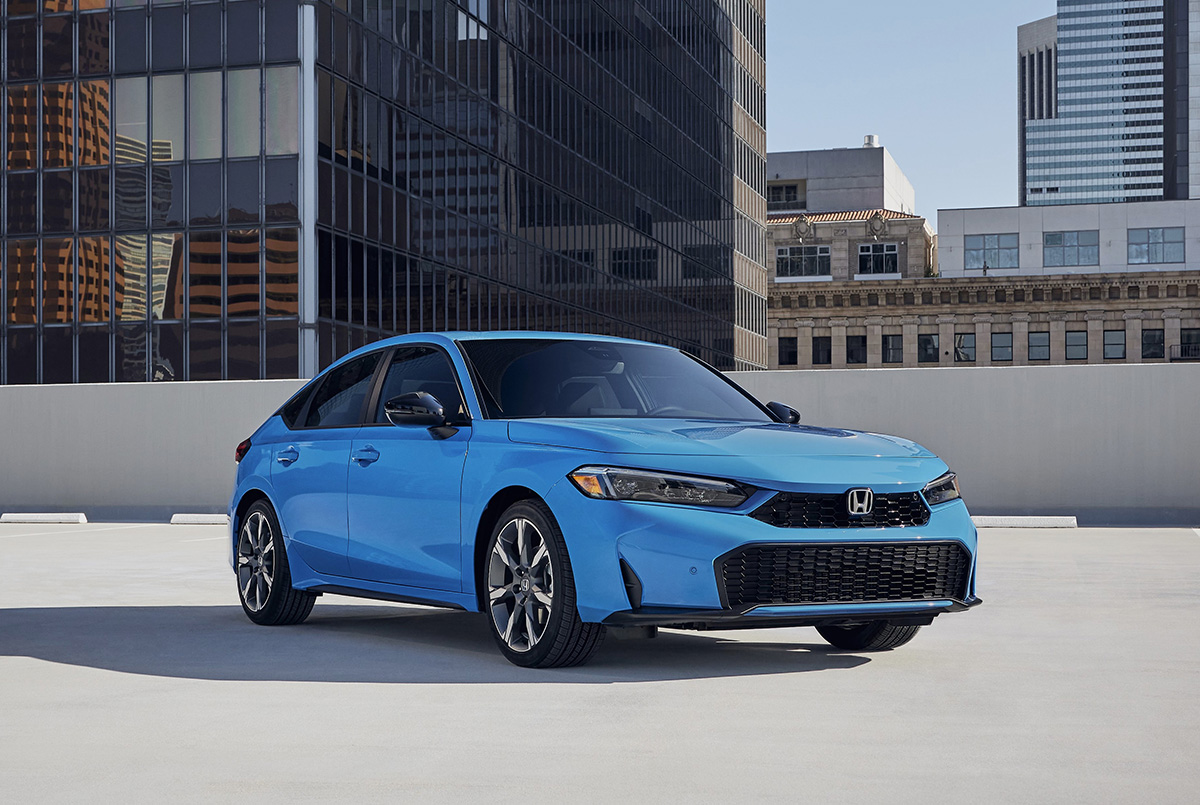
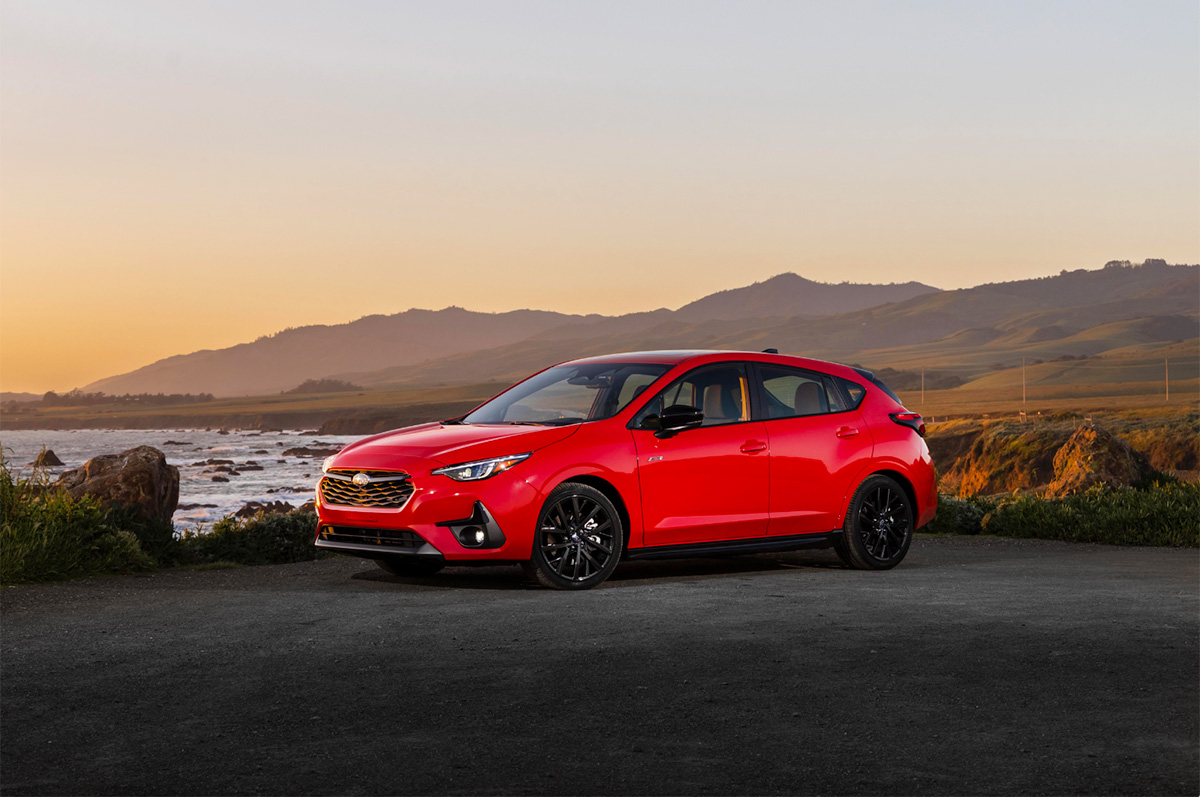
The latest Honda Civic hatchback and Subaru Impreza are two of the segment’s stars. Both offer sensible pricing, excellent utility and enough personality to avoid feeling like appliances.
The Civic is more polished. The Impreza, more rugged. Luckily, neither is trying to be obnoxiously flashy.
HONDA CIVIC
$28,000
MPG: 30 city/38 highway
0 to 60 mph: 8.9 seconds
Cargo space: 24.5 cu. ft.
PROS: Fuel efficient. Spacious cargo area. Good resale value.
CONS: No all-wheel drive. Fussy infotainment. Low rear headroom.
WHAT’S NEW: Only minor updates for 2026. The biggest change carries over from last year’s refresh: the addition of the hybrid, which has become a star performer.
The Honda Civic hatchback won’t scream for attention. It won’t arrive wearing sequins and carrying a smoke machine. It’s more like Nomi Marks from “Sense8”: intelligent, sophisticated and impressively capable.
The styling remains handsome and clean. Long hood. Low roofline. Crisp lines everywhere.Honda resisted the urge to make this vehicle look like a spaceship or an angry robot. That’s refreshing.
Inside, the dashboard is simple and elegant. The honeycomb air-vent treatment remains one of the coolest interior details in the segment. Materials feel expensive. Controls are easy to understand. And visibility is excellent.
I love how the cargo space is generous, with rear seats that fold flat. A bicycle, several suitcases or enough supplies for an ambitious weekend road trip fit without much hassle.
Then there’s the hybrid. The system produces a healthy amount of power while delivering fuel economy that borders on the absurd. Around town, handling feels smooth, quiet and surprisingly quick. You almost glide through traffic. The standard gasoline engine isn’t bad, but the hybrid is stellar.
The Civic also shines on twisty roads. Steering is precise. Body motions stay controlled. The suspension strikes a sweet balance between comfort and sportiness.
Biggest weakness? No all-wheel drive. For drivers in snowy climates, that’s not so good.
Still, the Civic’s stellar combination of efficiency, quality, and driving enjoyment remains incredibly hard to beat.
SUBARU IMPREZA
$27,000
MPG: 27 city/33 highway
0 to 60 mph: 8.5 seconds
Cargo space: 20.4 cubic feet
PROS: All-wheel drive. User-friendly tech. Safety cred.
CONS: No hybrid version. Some road noise. Modest cargo room.
WHAT’S NEW: The Impreza receives relatively minor updates for 2026. Subaru continues refining this hatchback rather than reinventing it.
If the Honda Civic is urbane, the Subaru Impreza is unfussy. There’s a kind of Kristen Stewart energy here. Cool without trying too hard.
The styling isn’t dramatic, but it works. This hauler appears ready to tackle rain, snow, dirt roads or an impromptu weekend escape.
And all-wheel drive comes standard on every Impreza. (Most competitors only offer front-wheel drive or include all-wheel drive as a pricey option.)
The result: Slippery roads simply don’t create much anxiety. The suspension absorbs bumps nicely. Long trips are comfortable. Visibility is great, thanks to relatively thin roof pillars and large windows.
I like how the cabin is functional rather than fancy. Materials don’t quite match the Civic’s upscale vibe, but everything feels sturdy. A large infotainment screen dominates the dashboard and generally works well, though some drivers may prefer more physical buttons.
Cargo space is respectable, and the design makes loading bulky items easy.
Performance depends heavily on trim. The base engine gets the job done, but nobody will confuse it for a sports car. The RS trim’s larger engine provides more power and makes the ride livelier. But even then, acceleration remains merely adequate.
The Impreza’s real appeal lies elsewhere, with a mix that few rivals can match: hatchback practicality, standard all-wheel drive, strong safety scores and reasonable pricing.
Perhaps that’s the key difference between these two hatchbacks. The Honda Civic impresses immediately. The Subaru Impreza grows on you.
Fortunately, choosing between them is less stressful than deciding who gets the last mimosa at brunch.
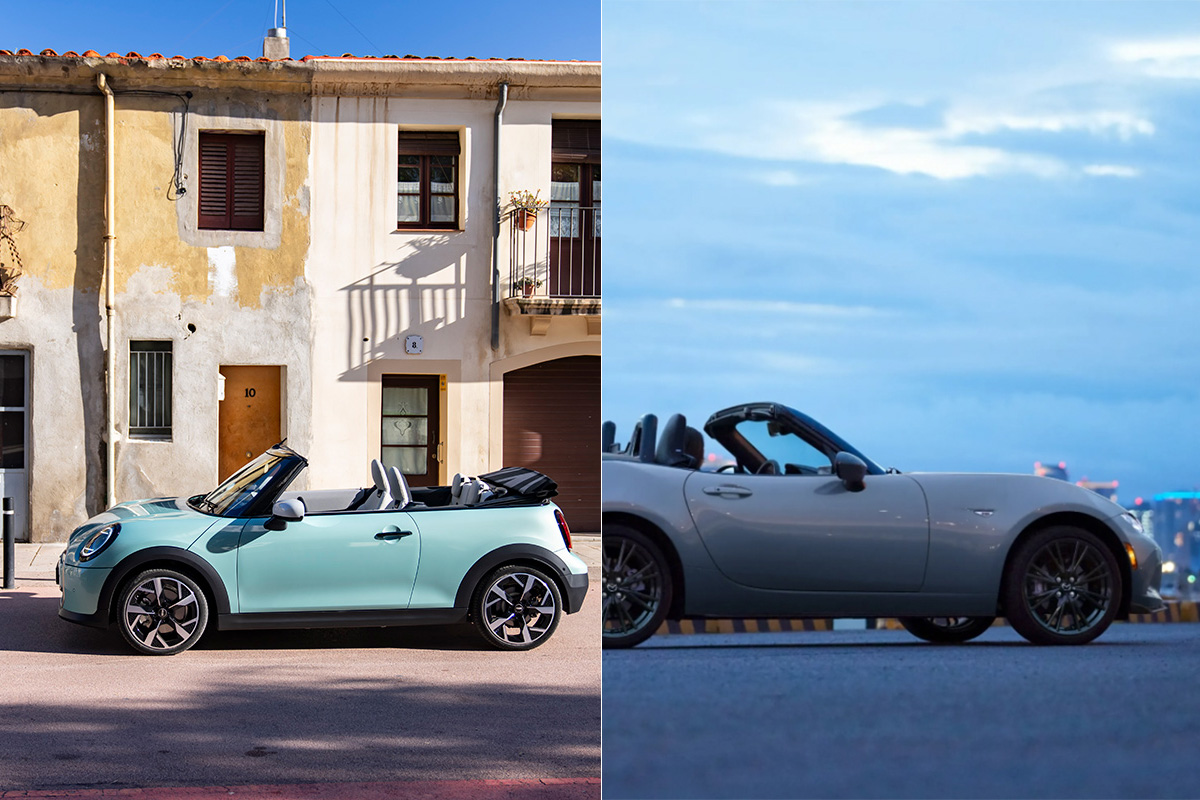
Ragtops rock! For drivers looking to carve their own lane, the world already has enough sensible crossovers, minivans, and pickups. These three convertibles trade practicality for sunshine, wind, and the occasional wild-hair day.
BMW Z4
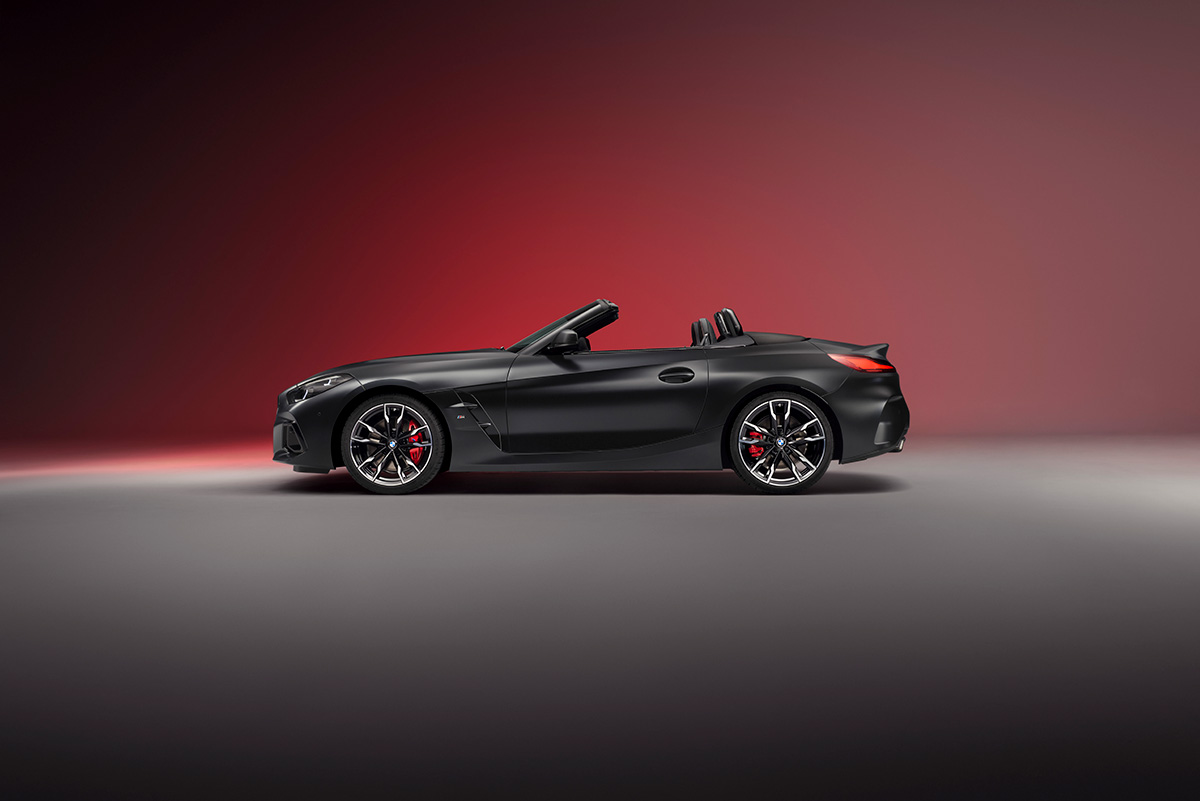
$58,000
MPG: 25 city/33 highway
0 to 60 mph: 5.2 seconds
Trunk space: 10.0 cu. ft.
PROS: Strong engines. Uber comfy. Stylish.
CONS: Expensive. Final year of production.
Act fast, Bimmer fans, this is the last year the BMW Z4 roadster will be produced. Along with the entry-level xDrive30i and high-performing M40i, there is a Final Edition model.
Since 2002, the Z4 has expertly balanced performance, comfort, and style. The long hood and short rear deck still look fantastic. The stance is athletic. And with the top down, this car gains an extra dose of drama.
Under the hood, BMW offers turbo power that feels eager rather than overwhelming. Acceleration is brisk. The steering precise. The chassis composed.
Upgrading to the premium models lets you scoot from 0 to 60 mph in just 3.9 seconds. But—ka-ching!—the MSRP soars to $79,000.
Available in manual or automatic transmissions, this convertible can sprint through mountain roads on Saturday and soothingly devour highway miles on Sunday.
As for the interior, it blends luxury and functionality. Materials feel expensive. Controls are easy to use. And the seats are supportive.
For me, other ragtops may be more party hearty, but the Z4 is low-key, impeccably tailored and still the center of attention. Think suave James Bond versus sparkling RuPaul.
MAZDA MX-5 MIATA
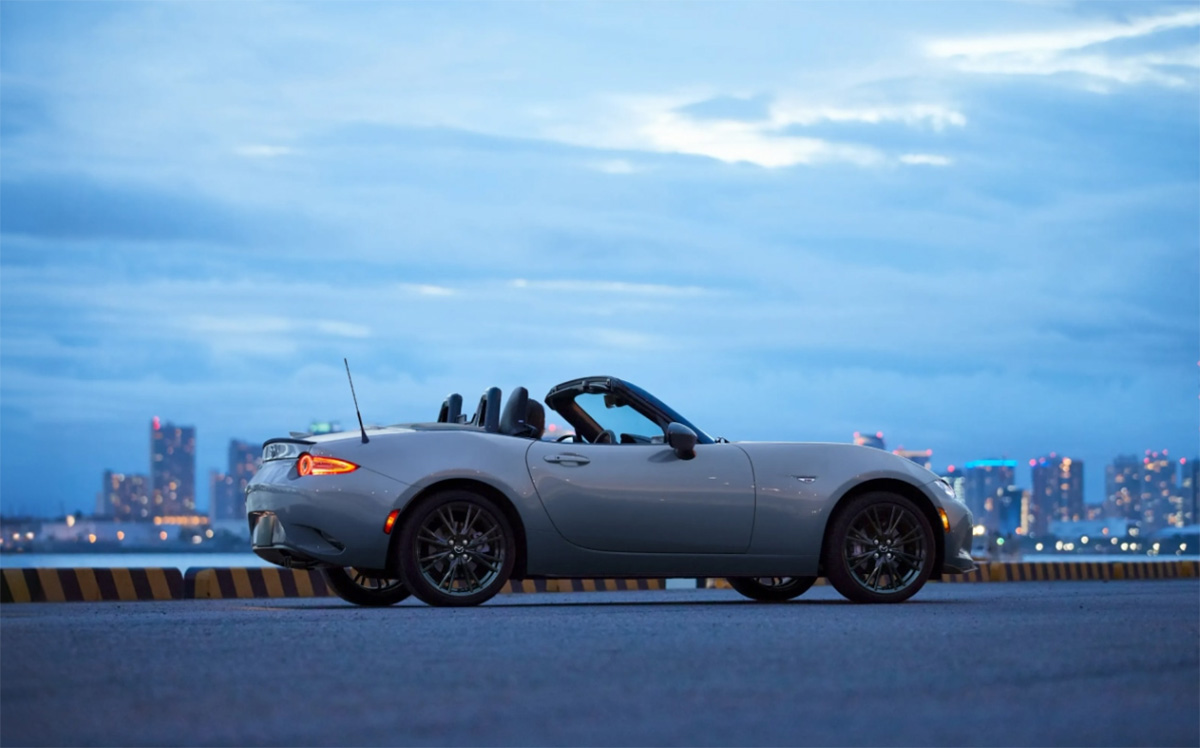
$32,000
MPG: 26 city/35 highway
0 to 60 mph: 5.5 seconds
Trunk space: 5.0 cu. ft.
PROS: Nimble. Lightweight. Affordable.
CONS: So-so power. Wind noise. Limited space
For decades, the Mazda MX-5 Miata has followed a simple formula: Keep it light, keep it balanced and make every drive feel special. The result: Automotive comfort food that never gets old.
Many vehicles grow larger every year, but the Miata has remained Lilliputian in a way that feels rebellious. You sit low. The controls are user-friendly. Visibility is excellent.
No, the engine power won’t blow you away. But this beachcomber isn’t about brute force. It’s about how the Miata makes you feel wonderfully alive, whether tootling along city streets or a winding road.
Inside, the dashboard is sparse but echoes a traditional sports car. Large analog tachometer and analog speedometer. And while the 8.8-inch infotainment display is dinky, it works nicely.
Alas, storage is limited. The cabin is snug. And taller drivers may wish for a bit more room.
Yet somehow even those compromises feel almost charming. This ride knows exactly what it is and refuses to apologize. Sort of like showing up to Pride wearing what makes you happy rather than chasing trends.
MINI COOPER
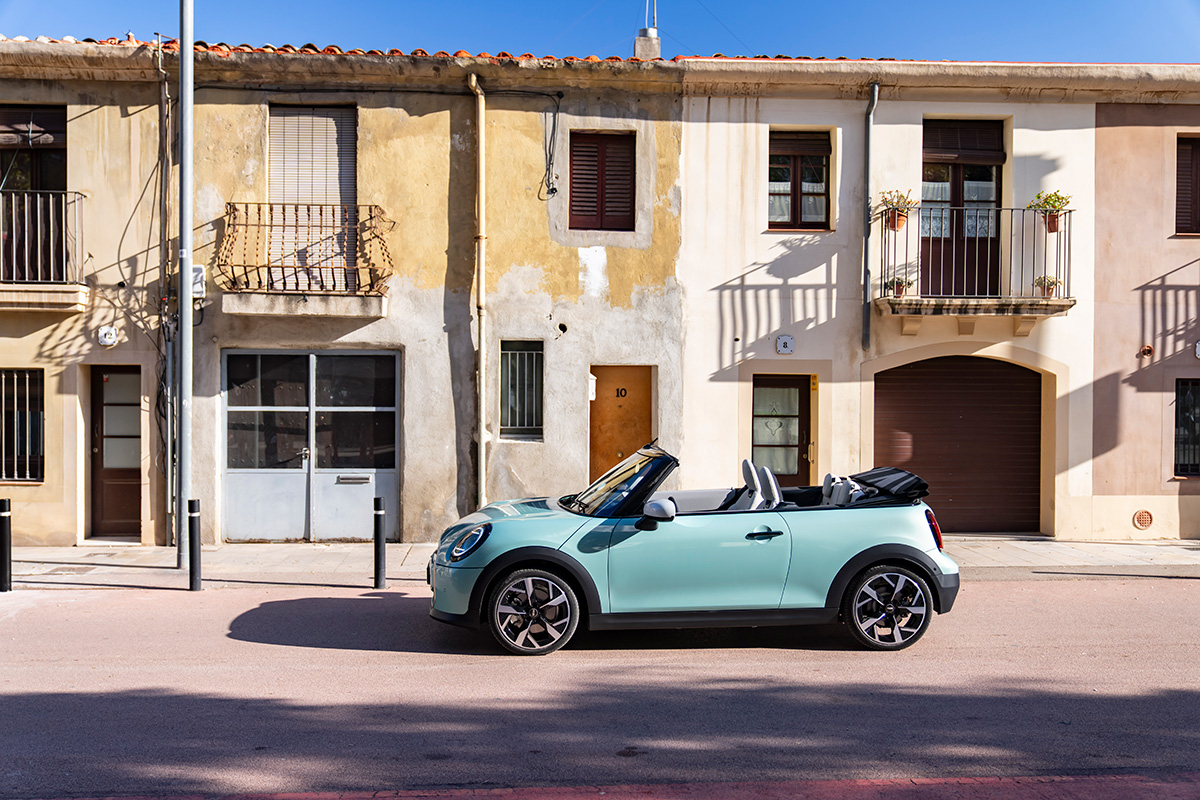
$27,000
MPG: 28 city/39 highway
0 to 60 mph: 7.9 seconds
Trunk space: 5.2 cu. ft.
PROS: Playful styling. Fun handling. Extra stowage.
CONS: Ride can be firm. Not a speed demon.
Mini Coopers approach life with a wink and a grin. Rounded headlights. Compact dimensions. Cheerful styling. It all works to create a vehicle that looks like it’s having fun before you’ve even started the engine.
Driving this ragtop is equally entertaining. The steering is quick, and the chassis feels eager to please. Overall performance is lively rather than blistering.
The cabin leans heavily into Mini’s playful design language. Circular elements appear throughout. Details feel intentionally quirky. Many modern interiors seem created by committees that fear excitement. This cabin feels designed by someone who enjoys color, personality and perhaps spontaneous dance breaks.
Unlike the BMW Z4 and Mazda Miata, the Mini offers a small rear seat. “Small” is doing some heavy lifting there, but the extra space adds flexibility. It may not be enough room to comfortably squeeze in friends, but you can easily stow a few bags here.
To me, driving this convertible feels like attending the world’s friendliest block party. People notice it. People smile. Sometimes people even wave.
At my stage of life — “somewhere between 40 and death,” as the iconic line goes in the musical “Mame” — I want some pampering. A lot of pampering.
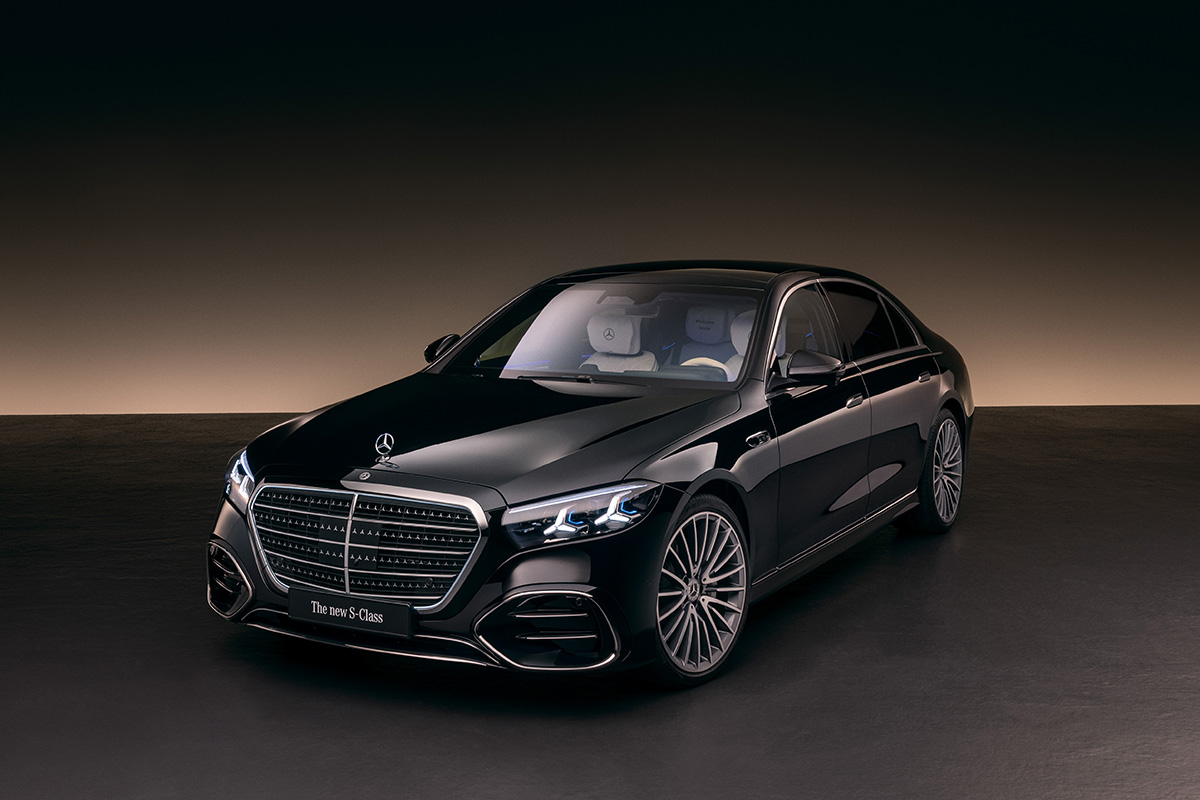
Luckily, for anyone who constantly craves a soothing spa, steam room or sauna, there’s the completely updated Mercedes S-Class. This flagship sedan is now so full of glitz, glamour, and gee-whiz gadgetry, it gives new meaning to the term “auto erotica.”
Does this make the S-Class a “gay” ride? For me, any vehicle that pushes my buttons like this one is a Kinsey 6.
MERCEDES S-CLASS
$122,000 (est.)
MPG: 21 city/31 highway
0 to 60 mph: 4.3 seconds
Trunk space: 19 cu. ft.
PROS: Exceptional comfort. Ultra-quiet cabin. Cutting-edge safety.
CONS: Price climbs fast. Tech learning curve. Sportier competitors.
The S-Class continues to define what luxury really means, with a bolder silhouette, larger grille, and striking, next-gen LED headlights. There’s also an optional illuminated Mercedes star on the hood. Overall, nearly 2,700 parts are new or improved, so more than 50 percent of this vehicle has been updated. An extreme makeover, to be sure.
At the same time, this latest S-Class leans harder into intelligence and electrification than ever before. Under the hood, a range of turbocharged inline-six and V8 engines — paired with mild-hybrid systems — deliver power in a way that seems almost edited for smoothness. Braking is solid and strong, too, but never abrupt. All the engineering is fine-tuned and intentional.
Yes, the top-of-the line S580 version is more expensive, almost $140,000. But it’s also blisteringly fast, zipping from 0 to 60 mph in just 3.9 seconds. That’s as lickety-split swift as a Lamborghini Revuelto supercar, which has a starting MSRP of $610,000 and can easily exceed — yowza! — $800,000.
Colors? There are 150 to choose from for the exterior and 400 for the interior. You can even customize the illuminated door sills, interior stitching and wheel accents.
And the ride quality? Sublime. Adaptive air suspension reads the road constantly, leveling out imperfections before they even register. Rear-axle steering enhances maneuverability, making this full-sized sedan feel surprisingly nimble in tight spaces. On the highway, the S-Class simply glides like a private yacht on the calmest of seas — extremely quiet, composed and completely unbothered.
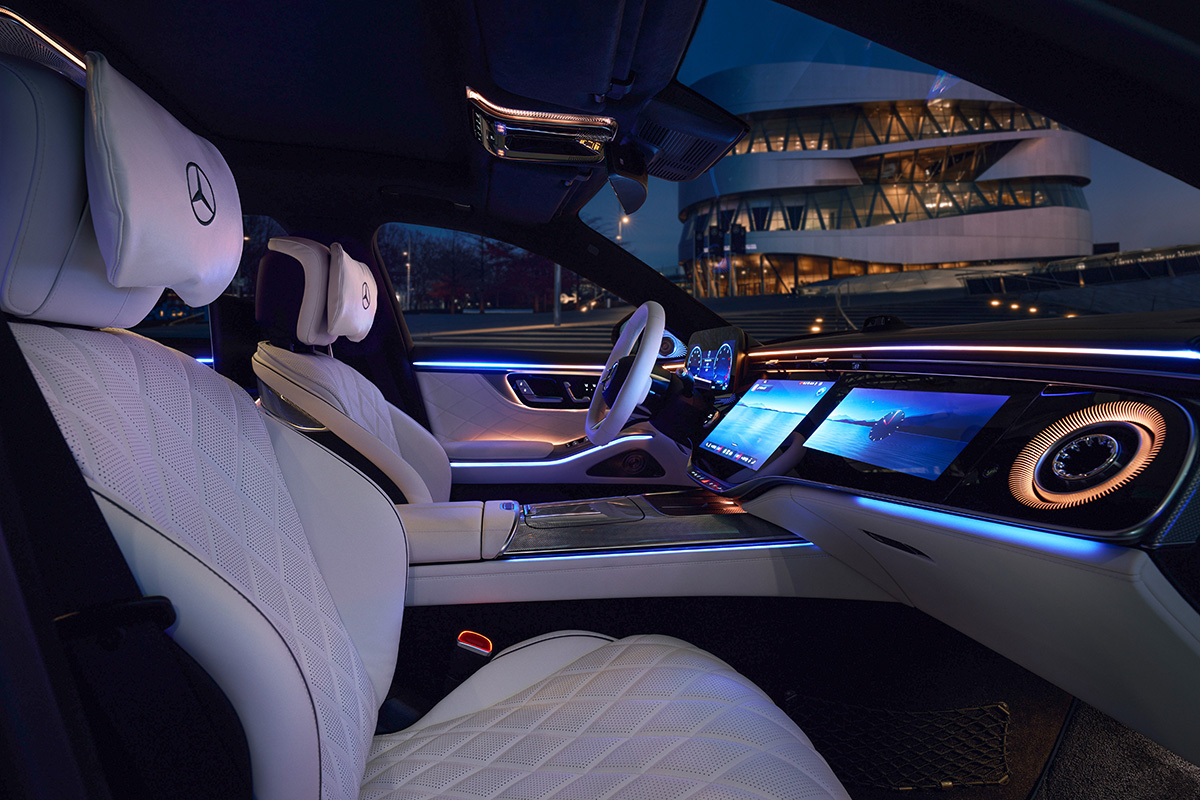
Whenever you slide inside, the cabin immediately sets the tone. A massive OLED digital display — the same high-def technology used for cinematic viewing and gaming monitors — anchors the dashboard, running the latest MBUX infotainment interface. Highly customizable, this software allows for advanced voice commands that feel natural, not forced. And an augmented-reality navigation system takes your route and overlays it onto live camera feeds. It’s intuitive — mostly, as there is a learning curve for all this cutting-edge gear. Overall, though, such amenities make older setups feel like dial-up internet.
A Burmester surround-sound stereo is available in 3D or 4D, with up to 31 speakers, 1,690 watts and tactile transducers in the seats that vibrate and pulse with the music. Those seats are, of course, extremely comfortable. And the seatbelts? These are now heated.
Let’s not forget the latest cabin air-filtration system, which can remove ultra-fine particles to deliver air quality that rivals medical environments. Clean air, yes, but even this seems like a special treat. It’s like being swaddled in couture, not ready-to-wear.
And lastly, there’s the rear-seat area, which — to be honest — is where the S-Class really shines. Executive packages offer multi-contour reclining seats with rapid heating and ventilating, heated armrests and massage functions. You can opt for a footrest, which ups the glam factor to give you a calf massage. Dual 13.1-inch display screens come with their own remote controls. There’s also a video-conferencing feature, to help transform the rear cabin into a fully connected mobile office. For me, it feels less “back seat” and more “private lounge.”
Even in fiction, high-tech luxury carries weight. Tony Stark helped cement the idea that state-of-the art vehicles can be aspirational, not just practical. The magical S-Class fits right into that narrative — minus the flying suit (for now).

Supreme Court ruled Boy Scouts could exclude James Dale. Now he says that same rule protects LGBTQ scouts from Trump

Will Michigan save the GOP?

Treat our political opponents as neighbors not enemies

Flanagan beats Craig in Minn. Senate primary after winning key LGBTQ endorsements

Gay ANC commissioner sues D.C. over police ‘failure’ to pay reward money

PHOTOS: World Pride March

Tens of thousands take part in World Pride March

Don’t miss summer productions at Clear Space in Rehoboth Beach

Todd Blanche’s record on LGBTQ issues comes under scrutiny as he takes over DOJ

HISTORIC: Susan Stewart elected Rehoboth’s first out mayor
-

 Photos5 days ago
PHOTOS: World Pride March
-
Netherlands5 days ago
Tens of thousands take part in World Pride March
-
Theater3 days ago
Don’t miss summer productions at Clear Space in Rehoboth Beach
-
Federal Government3 days ago
Todd Blanche’s record on LGBTQ issues comes under scrutiny as he takes over DOJ