Arts & Entertainment
Message in the music
Gay Men’s Chorus reaching out to region’s queer youth with concert, program

Gay Men’s Chorus of Washington
‘The Kids are All Right’
With guests Candace Gingrich-Jones and Dreams of Hope
Saturday at 8 p.m.
Tickets: $20-$50
G.W. Lisner Auditorium
730 21st Street, N.W.

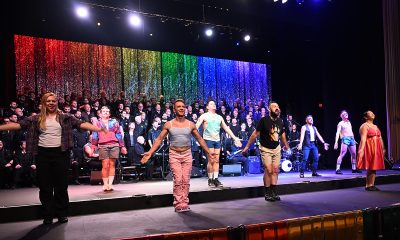
The Gay Men’s Chorus of Washington has a one-off youth-themed performance scheduled for this weekend. (Blade file photo by Michael Key)
As a veteran high school music teacher and counselor, Jeff Buhrman saw first-hand the need for affirmation and support for LGBT youth. When he became artistic director of the Gay Men’s Chorus of Washington, he made it a priority to start a youth outreach program.
Though the Chorus’s GenOUT program has been in existence since 2001 offering free concert tickets to local LGBT youth, the Chorus has ramped up its efforts in the “It Gets Better” era. Saturday’s “The Kids are All Right” concert, the Chorus’s second of the current season, is especially created to dovetail with the program. It’s a busy time for the Chorus — last weekend its Rock Creek Singers ensemble performed with the Camp Rehoboth Chorus. Its all-male production of “The Rocky Horror Show” debuts in mid-March.
“(Saturday’s concert) is designed especially to serve the mission of our GenOUT program,” Buhrman says. “We are specifically reaching out to youth for ‘The Kids Are All Right.’ We’re sharing our stories we think they will relate to … the support of a mother who helps us get through, having a safe place in school like the high school music room or the theater room so we don’t have to go into the scary cafeteria during lunch … we’re using video, songs and narration to share our stories about the times we felt different growing up and exploring how it gets better.”
The Chorus will be joined by Candace Gingrich-Jones (Newt’s lesbian half-sister), who’ll provide narration for a musical dramatization of the story “Oliver Button is a Sissy,” and Dreams of Hope, a Pittsburgh-based teen performance ensemble whose 12 guests will use self-penned material such as poetry, song and dance to, as Buhrman puts it, “share their feelings about being teenagers in today’s world.”
The Chorus will pull with its usual eclectic reaches — everything from Broadway to country — to perform songs that flesh out the queer-affirming theme (the title is merely borrowed from the 2010 film — it’s not a musical telling of that story).
Buhrman knew of the Dreams of Hope chorus through an association of gay choruses of which the Washington Chorus is also a member. Dreams will perform a 25-minute segment then join the GMCW for the finale.
“It’s a joy when we are able to actually share the stage with another group,” Buhrman says. “It’ll be fun working with them.”
Jay Garvey, a 27-year-old GMCW baritone who works as a co-facilitator of the GenOUT program, agrees.
“We’re gonna see some beautiful stories shining through and that’s what the Chorus does best,” he says. “There are these little moments in life that every LGBT person can understand and relate to, so we hope audiences will find themselves in these narratives, especially youth who are going through it now.”
But while the intentions are obviously great, does quality suffer when so much of the material is new, autobiographical and unproven? Buhrman, who has solid classical training, says it’s not an issue.
“If you had been at our rehearsal the other night, you wouldn’t ask that question,” he says. “Music, and good music, is at the heart of everything we do. You’ll hear a range of styles, expansively beautiful melodies, great lyrics — we can always find music that will correspond to our experiences as LGBT people and if we can’t find something ourselves, we either commission it … or find something and have one of our people arrange it. … It’s why it sometimes takes us one-to-two years to plan a show. We want to find exactly the right music to speak at that exact moment.”
The GenOUT program is run by GMCW staff such as Taunee Grant, its director of marketing and communications, and co-facilitators Garvey, Nic Baker and Richard Bennett, Chorus members who volunteer their time to the program. About 94 schools and organizations in the region attend Chorus shows through the program which gives free tickets to about 300 LGBT students each season. “Pink Nutcracker,” the Chorus’s well-received 2011 holiday show, brought 175 free tickets through the GenOUT program. “Red & Greene,” the 2012 holiday show, found 225 guests. Members hope to continue adding tickets each year.
The program also features “hubs” in the Lisner lobby at each GMCW concert where queer youth can meet up before and after the shows. And it’s not just for high school students — the Chorus is in the process of getting a college internship program started as well.





Gloria Steinem, writer, activist, and a leading voice of the feminist movement in the 1970s, died on Wednesday in Manhattan. Her death was announced on Instagram by her official foundation, Gloria’s Foundation, which shared that Steinem “passed away peacefully at her home, surrounded by some of the many who loved her.” She was 92.
A leading figure and spokesperson for the second-wave feminist movement, running from the 1960s through the ’80s — the earlier women’s rights suffrage movement being considered the first — Gloria Steinem campaigned for workplace equality, equality in the home and reproductive freedom, seeing those struggles as inseparable from the wider causes of social and racial equality.
She also championed LGBTQ rights, supporting lesbian visibility within the larger women’s liberation movement, and standing in opposition to the idea that lesbians posed a “lavender menace” to the cause of feminism.
In her vision of the future, marriage equality was a given: “Lesbians or homosexuals will no longer be denied legally binding marriages, complete with mutual-support agreements and inheritance rights.”
GLAAD President Sarah Kate Ellis said in a statement following Steinem’s death: “Gloria Steinem was a trailblazing titan of civil rights whose vision for liberation bridged the movements for gender equality, bodily autonomy, and LGBTQ rights. She recognized that feminist progress is incomplete without full inclusion and stood as an ally to transgender people’s fight for equality. Gloria rejected rigid binaries, choosing instead to build bridges of empathy and coalition across all marginalized identities. Gloria’s life was a masterclass in coalition-building, courage, and unconditional empathy.”
Among her many trailblazing milestones, Steinem was widely known for co-founding the National Women’s Political Caucus in 1971 alongside foundational feminist figures Bella Abzug, Shirley Chisholm, Betty Friedan, Fannie Lou Hamer, LaDonna Harris, Mildred Jeffrey, and Jill Ruckelshaus.
The mandate: get women into political office and positions of power — “women who are committed to the causes of other women — not women who are going to just imitate the male politics as it has been practiced all these years complete with elitism, racism and prejudice against women,” she said, “but women who really care about their sisters and will work for social reform.”
“This is no simple reform. It really is a revolution.”
Liz Abzug, daughter of Bella Abzug, remembers Steinem as “a lifelong activist and a humanist with lots of love to give,” as well as “a very, very close and dear friend of my mother’s,” as the two “worked side by side to change the American landscape for women.”
“It’s hard for me and all of her other supporters and admirers to imagine a world without Gloria leading the charge and fighting for women’s rights and full gender equality,” Abzug shared.
Indeed, there was much about that American landscape in need of change. Steinem came up during a time when discrimination against women was the legal and societal norm.
A married woman, for instance, often required her husband’s signature to obtain a credit card, a form of gender discrimination remedied in 1974 with the Equal Credit Opportunity Act. Women were often unable to get jobs. Life turned Steinem down, saying “We don’t want a pretty girl, we want a writer. Get out of here.” If women did land a job, in 1973, they would have likely made 56.6 cents to every dollar that men earned.
The law’s failure to support women’s autonomy was especially visible on the matter of reproductive rights.
For many women in America, legal abortion remained unavailable until 1973, when Roe v. Wade established a constitutional right to abortion nationwide. Steinem spent years speaking out for women’s safety, and promoted the idea that “decision-making power over our own physical selves” was intertwined with equal regard for women as citizens.
“The vast majority of women support safe and legal abortion. My response is if those legislators were half women, this wouldn’t happen,” she said in a 2022 interview with Katie Couric. “If we actually had a democracy, if those legislators looked like the country from a gender, racial, and class perspective, this probably would not be happening…”
Gloria Marie Steinem was born on March 25, 1934, in Toledo, Ohio, the daughter of Leo and Ruth (Nuneviller) Steinem. Her father was an antiques salesman; her mother had worked for a newspaper before she got married, but suffered what was called at the time a “nervous breakdown” and spent time in an institution. Following a divorce, her mother was left largely in the care of 11-year-old Gloria Steinem in a house that has been described as infested by vermin.
“I didn’t go to school a full year until I was 11 or 12, so I lived in books. I really was an observer of life,” Steinem said in a 2011 interview.
After moving to D.C. to live with her older sister, Susanne, Steinem graduated from Western High School in 1952. She followed Susanne to Smith College where she studied government and wrote for the student newspaper, graduating in 1956.
Upon moving to New York in 1960, she worked for Help! magazine and wrote freelance for publications that included Life, Esquire, and Glamour. According to Smith College Libraries, she co-founded New York magazine in 1968 and served as political columnist until 1972. In the 1960s and ’70s, Steinem was active in causes that included United Farmworkers, Vietnam War Tax Protest, and Committee for the Legal Defense of Angela Davis. She also participated in the political campaigns of Adlai Stevenson, Robert Kennedy, Shirley Chisholm, and others.
Steinem is said to have found her way to the Women’s Movement in 1969, following an abortion “speak-out” meeting of the Redstockings. She was inspired to begin speaking to audiences across the country, alongside activist Dorothy Pitman Hughes, and later Florynce Kennedy and Margaret Sloan.
Among Steinem’s most enduring legacies, and still in publication today, is Ms. magazine, which she co-founded. Widely considered the first national American feminist magazine (and owned, operated, and written by women!), it first appeared as a preview insert in New York Magazine in December 1971 with a tagline, “The New Magazine for Women.” Ms. earned status as a full-on publication in July 1972 with a cover image depicting a modern pregnant Hindu goddess Kali holding a clock, skillet, typewriter, rake, mirror, telephone, steering wheel, and an iron.
Ms. is credited with raising cultural awareness on policy issues, like the Equal Rights Amendment, taking on taboo topics and putting women’s issues front and center.
Steinem’s long list of published work includes the 1983 bestselling book Outrageous Acts and Everyday Rebellions, a collection of her Ms. articles and other pieces. The book includes the feminist’s essay on her undercover exposé of the Playboy Club, for which she donned bunny ears, collar, and bow to covertly report on working conditions for women.
In 1986, she published “Marilyn: Norma Jeane,” which explored the life of Marilyn Monroe and the idea of women as vulnerable and at the disposal of society — men in particular.
Steinem also wrote “Revolution from Within” (1992); “Moving Beyond Words” (1994); and “Doing Sixty & Seventy” (2006). She was awarded the Presidential Medal of Freedom in 2013 by President Barack Obama.
Steinem’s relationships over the years included Ted Sorensen, counselor to President John F. Kennedy; Stanley Pottinger, a Justice Department official; and publisher and real-estate businessman Mort Zuckerman. In 2000, she married South African businessman David Bale, who died in 2003.
Steinem was predeceased by her mother and her sister, Susanne Steinem Patch, who died in 2007. On multiple occasions, she spoke of a community that extended beyond birth family — people whom she chose, and who chose her.
“[Feminism is] about friends and sisters and community,” Steinem said in an interview with bell hooks. “The good part and the great part is that it’s about chosen family. We have each other’s backs and that is so precious.
In announcing Steinem’s passing, her foundation offered this reflection: “Gloria’s greatest gift was her ability to listen to others, to make others feel seen and heard. Her words, actions, and example gave people permission to be their truest selves. Gloria lived true to her independent spirit, always with curiosity and a great sense of humor.
“She spent her recent years doing the two things she loved most: being in community with others and writing … Gloria loved the tradition of lighting signal fires on hills to light the way to the other side of the mountain.”
a&e features
The mastery of love
The world knows Eric Anderson as Billy Porter’s partner, but in Rehoboth Beach, he has a story entirely his own
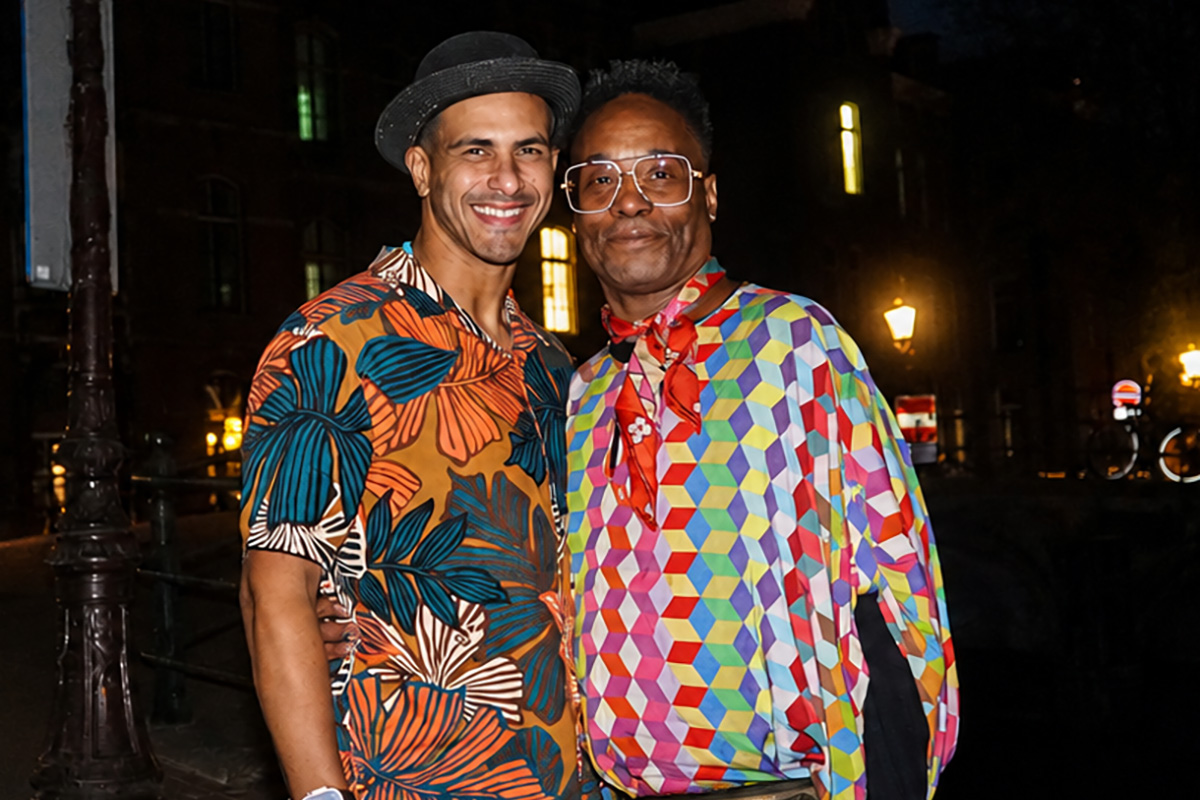
The world knows Eric Anderson as Billy Porter’s partner. In Rehoboth Beach, Del., he has a life — and a story — entirely his own.
My first time with Eric Anderson was hot — very hot. Before he arrived, I sat waiting, overthinking everything. When he finally appeared in a loose-fitting T-shirt and purple shorts, I understood why he attracts attention. Eric is the kind of man who changes the energy of a room simply by entering it.
After a quick hello, we got right to it. Techno pulsed through the room as Eric told me how to move, where to place my hands, when to breathe. My heart pounded. My muscles ached. I bent, twisted, and stretched while sweat ran down my back and burned my eyes. I didn’t bother wiping it away.
To be clear, Eric and I were not alone. Five other people were with us — and the yoga studio at SoulFire Collective in Rehoboth Beach was heated to 87 degrees.
“If you are always racing toward the next moment, what happens to the one you’re in?” Eric asked, opening his power yoga class and inviting us to leave whatever had followed us through the door and surrender to the present. Surrender did not come easily. At 58, I’ve done enough yoga to know the difference between discomfort and imminent death. Halfway through Eric’s relentless flow, the distinction began to blur.
A playlist of techno and remixed pop — including “Live Like You Were Dying” — carried us from one demanding pose to the next. Eric moved among the mats with the energy of a nightclub DJ and the calm of someone who trusted our bodies to go further than our minds believed possible. Nearly an hour later, when the music softened and I collapsed onto my back in savasana, he laid a cool cloth across my forehead. I exhaled — relieved, and maybe a little disappointed, that my first time with Eric was over.
At the end of my mat, a handwritten note congratulated me on my first class and invited me back — a small benediction after the storm. Then Eric closed the class by repeating the question with which he’d opened. For a man whose relationship with actor and singer Billy Porter has drawn him unexpectedly into the public eye, it sounded less like a yoga mantra than a personal creed.
The next time I meet Eric, there is air conditioning and caffeine. We are at Starbucks, where I deliberately order the largest drinks available, as though volume alone might buy me more time. He chooses a matcha, and I order herbal tea. My heart is pounding again, faster than the soft rock drifting from the speakers above us. Although I’ve already spent more than an hour with Eric, I know almost nothing about the man I’m about to interview.
Neither, it seems, does anyone else.
Celebrity outlets offer a handful of biographical details: a Rehoboth Beach teacher and yoga instructor with a master’s degree from Columbia University. Gay publications have been less restrained. One introduced him as Billy Porter’s “total hot stud,” called him “a snacc,” and praised his ability to “rock a Speedo.” Queerty distilled Eric’s identity to five words: “Porter is dating a teacher.”
All of it tells me how the world sees him. None of it tells me who he is.
I know from our text exchanges that Eric is slammed for time. He is scheduled to travel to New York later that day and fly to WorldPride Amsterdam the following afternoon. Billy is among the headliners for the opening-night Unity Concert and is also slated to perform at the Wedding Party XXL alongside KI/KI, Bimini, and the Vengaboys. Eric still has to pack. This, I’m beginning to understand, is part of loving someone famous: there is almost always an itinerary, another city, and a specific time and place Billy needs to be. Even here, with two untouched drinks between us, the clock is ticking.

As soon as we sit down, I open my laptop, ready to get to work. My mind is focused on the list of questions I’ve prepared, and I’ve already anticipated the shape of most of his responses. Then I look up and see Eric sitting perfectly still, smiling, and taking in the moment. He hasn’t even taken a sip of his matcha yet.
I quietly close my laptop and breathe.
Within minutes, the interview softens into a conversation.
Eric earned a bachelor’s degree in history from the University of Delaware and a master’s in public school leadership from Teachers College, Columbia University. He began his career teaching mathematics before moving into school administration, eventually serving as vice president of the Charter School of Wilmington and head of school at Sussex Academy. Today, he teaches mathematics and social studies in the Cape Henlopen School District. He also coaches soccer and leads yoga classes at SoulFire Collective in Rehoboth Beach.
His return to the classroom was deliberate. Eric knows some people assumed there must be a story behind his leaving administration—that he had done something wrong or that teaching represented a demotion.
“I want to make it clear that I went back to teaching by choice,” he says.
As a child, Eric played school. Teaching has always felt natural to him, less like an occupation than an expression of who he is. Administration was different.
“It felt like work,” he says. “It wasn’t where my passion was, and it didn’t bring me joy. Going back into the classroom was simply me choosing joy.”
The more Eric talks, the clearer it becomes that teaching is not merely a job but a vocation. His mother is white and his father is Black, and growing up biracial was not always easy. “I saw the best and the worst of both,” he tells me. Those experiences helped shape his desire to become a teacher — to be the kind of person who could make a meaningful difference in a young person’s life.
Just then, Eric glances over his shoulder and locks eyes with someone across the room. He waves and flashes what is quickly becoming his signature smile. My first thought is that someone has recognized him as Billy Porter’s partner.
I’m wrong. It’s one of his former students.
Inevitably, our conversation turns to love — and to Billy. I’ve made it clear that I’m here to write about Eric, not Billy Porter. But separating the two entirely would be as artificial as defining Eric only by their relationship. Billy is now an essential part of his story.
Eric met Billy at a Christmas party hosted by mutual friends who had been trying to introduce them all night. It wasn’t easy — the party was crowded, and the two men never quite crossed paths. Eric stayed for the afterparty, where a friend nudged him and nodded toward the room: Billy was looking his way. Romance never crossed his mind.
Eventually, they started talking. Eric has never had much patience for small talk, and he wasn’t interested in cataloging which celebrities Billy knew. He skipped it entirely and went straight for the deeper questions — what Billy believed, how he saw the world, what mattered to him. They ended up at the kitchen table, trading life philosophies until 5 a.m.
What struck Eric most wasn’t the conversation’s length. It was its depth. Billy wasn’t who he expected. Neither was the conversation. By the time the sun was coming up, Eric was less surprised that they’d talked all night than by how much, it turned out, they had in common.
They had dinner the following evening, and Billy invited Eric to spend the weekend with him in New York. There, Billy took him to see Nicole Scherzinger in “Sunset Boulevard.” Right before the show started, he casually introduced Eric to a friend named Katy. Back in their seats, Eric asked how Billy knew her.
“BITCH,” Billy replied, “that is Miss K-A-T-Y P-E-R-R-Y!”
For all the glamour surrounding their courtship, Eric describes the foundation of their relationship in decidedly spiritual terms. His favorite book is don Miguel Ruiz’s The Mastery of Love, which explores how fear, expectation, and the need for approval can distort relationships. Its philosophy closely resembles Eric’s own.
On the surface, Eric and Billy inhabit different worlds. Eric is a deeply spiritual teacher rooted in a small coastal Delaware town. Billy is a celebrated actor and performer whose larger-than-life persona commands stages around the world. But when I ask Eric how the relationship works, he doesn’t hesitate.
“I know that I can be my authentic self with him, and he can be his with me,” he says. “We love each other unconditionally.”
The words could sound rehearsed. Coming from Eric, they don’t.
The red carpets, famous faces, and international travel are not what matter most.
“It’s all about the people,” he explains. “I love Billy’s family and friends, and he loves mine.”
Authenticity surfaces repeatedly in our conversation — not as an abstract ideal, but as Eric’s determination to trust what feels right for him, even when other people may not understand it. I tell him about growing up in Pittsburgh and spending much of my life trying to fit the person I was into the person the world expected me to be. Eric listens intently, then pauses before responding.
“Fuck the system.”
It is blunt, funny, and entirely consistent with the man sitting across from me. Dating Billy may have dramatically increased the number of strangers who have opinions about Eric, but it hasn’t increased the number whose opinions matter to him. He is remarkably unconcerned with what people he doesn’t know think — or say — about him. The attention is new. His response to it is not.
For Eric, authenticity isn’t about asking the world for permission to be yourself. It’s about deciding that permission was never the world’s to give.
That instinct—to look inward rather than outward for permission — predates Billy.
Eric initially turned to yoga for a practical reason: he wanted to improve his physical performance on the soccer field. It didn’t take long for him to realize that something else was happening. Yoga was strengthening his body, but it was also grounding him.
Over time, the physical practice became inseparable from the mental one. The poses, the heat, even the strength required to hold his body in place became less important than learning how to quiet the noise around him, stay present, and listen to himself. The man who had pushed me through an hour of sweat and discomfort wasn’t simply teaching people how to move their bodies. He was asking them to practice something he had learned to do himself.
That sense of being grounded has become particularly important in a relationship that often requires two people to live very different lives. Eric is quick to point out that he and Billy have separate careers, separate ambitions, and goals entirely their own. Neither expects the other to abandon an individual life simply because they have chosen to build a relationship together.
When Billy left for London to star in “Cabaret,” distance became part of their routine. They FaceTimed every day, a practice they continue whenever they are apart.
“I tell Billy everything,” Eric says.
Being authentic with Billy doesn’t require the two men to become more alike. If anything, the opposite seems true. They are comfortable following their own career paths, living separate lives when circumstances require it, and giving each other the freedom to pursue what matters individually. Then they come back together — not because either has put his own life on hold, but because they have chosen to share those lives with each other.
When we finally look at the time, nearly 90 minutes have passed. Eric still needs to pack. New York is waiting, Amsterdam after that, and somewhere there is undoubtedly an itinerary telling Billy exactly where he needs to be and when.
But for a while, neither of us was racing toward the next moment.
We were fully inside the one we were in.

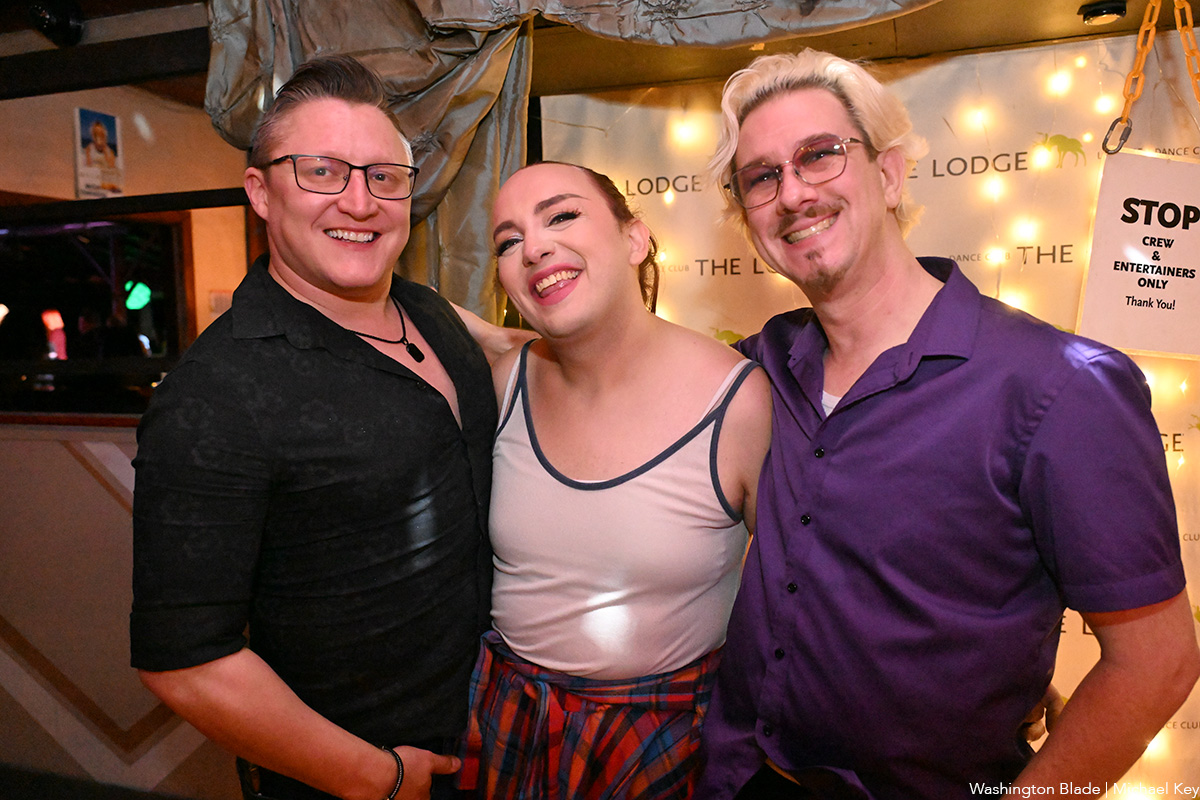
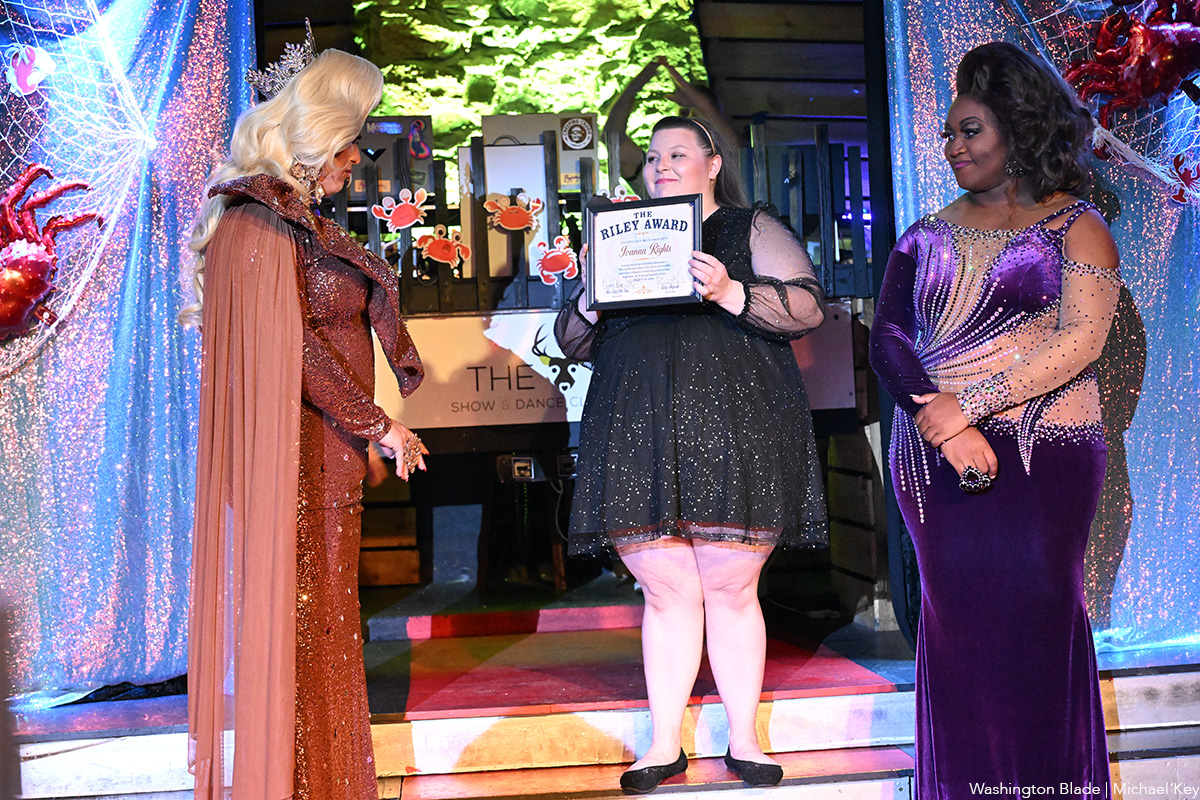
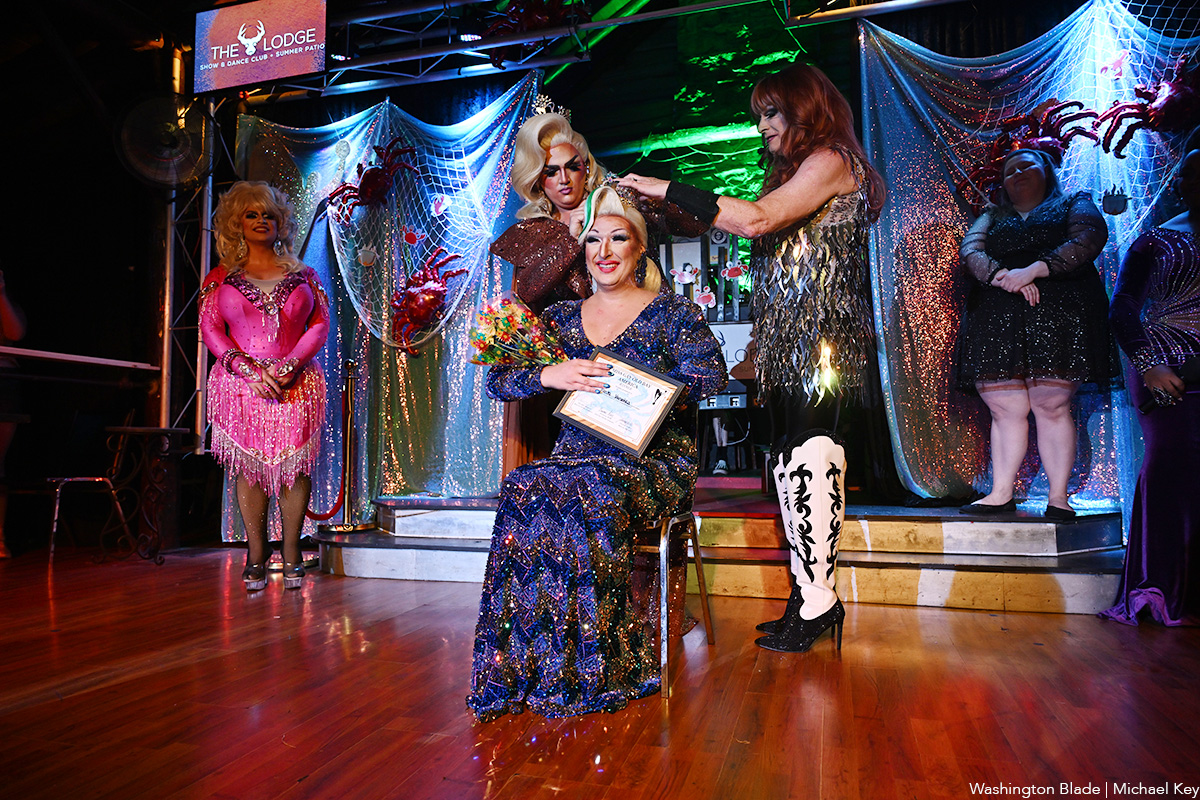
The Miss Gay Old Bay pageant was held at The Lodge in Boonsboro, Md. on Friday, Aug. 29. Vanya Varushka was crowned the winner. Glitter Douglas was named first runner-up. Both Varushka and Douglas qualify to compete in the Miss Gay Maryland pageant in October.
(Washington Blade photos by Michael Key)


















Gloria Steinem dies at 92

The mastery of love

Trans people need a politics of ordinary life

Enlarging the Supreme Court keeps making more sense

Markey’s primary win deemed success for LGBTQ activists

Immersive ‘Nation-State’ imagines a society free of authoritarianism

Poland begins to legally recognize same-sex marriages from other countries

HRC president campaigns for Chris Pappas in NH

We’re getting married but our parents object

Michael Smith could make history as Delaware’s first LGBTQ treasurer
-

 Theater4 days ago
Immersive ‘Nation-State’ imagines a society free of authoritarianism
-
Poland4 days ago
Poland begins to legally recognize same-sex marriages from other countries
-
Congress3 days ago
HRC president campaigns for Chris Pappas in NH
-
Advice4 days ago
We’re getting married but our parents object