Arts & Entertainment
Young, out and proud
Team D.C. scholarship recipients share experiences
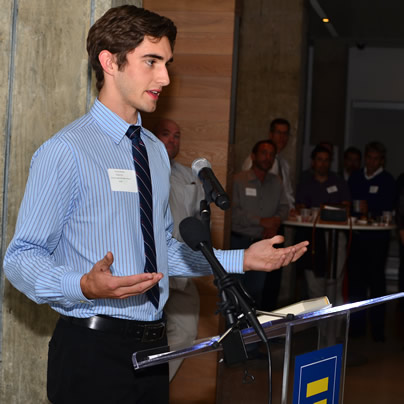
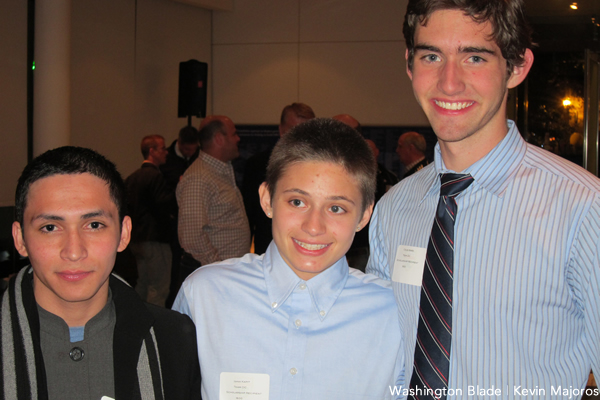
From left, Luis Vasquez, Ilana Kapit and Colin Ward. (Photo by Kevin Majoros)
Team D.C., Washington’s gay sports connection, recently announced six scholarship awards to local openly gay student athletes ranging from $500-$2,000. The Blade caught up with three of the recipients to pose a few questions: Luis Vasquez is attending Montgomery College, Ilana Kapit is attending Barnard College and Colin Ward is attending the University of North Carolina.
Washington Blade: What kind of sports did you play growing up?
Vasquez: I have been in the United States for three years and played varsity soccer at Bowie High School. In my senior year, we won the Maryland state championships. I was also on the modeling team of my school since I love fashion and participated in some dance recitals.
Kapit: I’ve played soccer since I was very young. My parents wanted me to have an athletic outlet and I picked that one. I played on several different classic and rec teams throughout school, as well as on my JV team for two years of high school, one of which I was the captain. It’s an incredible sport and has definitely had a huge positive impact on my life.
Ward: I did not play for any team at my high school. Growing up I played basketball, baseball and tennis. However, I didn’t continue these at the high school level. At college I row for the UNC Men’s Crew team.
Blade: Any positive or negative stories to tell about your teammates finding out that you were gay?
Vasquez: Most of my teammates here in the United States never paid attention to my preferences and they were always super cool to me. When I was living in El Salvador, my teammates made fun of me and I was bullied for being gay. At one point, I stopped playing soccer, which was very frustrating.
Kapit: I was on a rec team with people I had known since kindergarten and on my classic team since it started, so with both teams I had a family and no one really seemed to care when I came out. Most of them had already guessed. With my school soccer team, unfortunately, it was a little bit different. My teammates didn’t have much of a negative reaction, but my coach really didn’t appreciate the way that I dressed or wore my hair. He was only openly rude about it a few times and those times hurt. Once he wouldn’t put me in the goal simply because I had my hair gelled into a Mohawk for a school spirit day. That sucked.
Ward: I originally was anxious about how my teammates would perceive me, but these guys surprised me I think as much as I surprised them. I didn’t fit into preconceived notions of what it means to be gay. By doing workouts with the team, as we push each other to be faster and stronger, the idea of me as a “gay athlete” falls away and I become just another teammate. When I started with crew, I wouldn’t have thought my future teammates would also become my closest friends.
Blade: In what way did playing sports contribute to the person you are today?
Vasquez: Sports helped me to be free to be who I am. I am not afraid of anyone. I know what I want in life and I am motivated to continue playing soccer and pursue a career in fashion. I am currently recovering from a soccer injury, but sometimes I play with the Federal Triangles Soccer Club to keep myself in the sport.
Kapit: Playing soccer definitely shaped my ability to work with other people. Soccer isn’t one of those sports in which a team can be successful while relying on one person; it really does take everyone’s contributions. I learned to really work with my friends in a much different way than I was used to from school. I learned when I needed to step up and take action, and when I needed to step back and let someone else take the ball up the field. The concepts I learned in soccer are way more applicable to real life than I realized when I started playing back when I was four.
Ward: Because of crew, I’m healthier, happier and am able to push myself farther in all aspects of my life.
More information on the Team D.C. Scholarship program is at teamdc.org.





Out & About
Blade Foundation to host fundraiser in Rehoboth on Sept. 12
Mayor-elect Stewart, state Rep. Snyder-Hall to give remarks
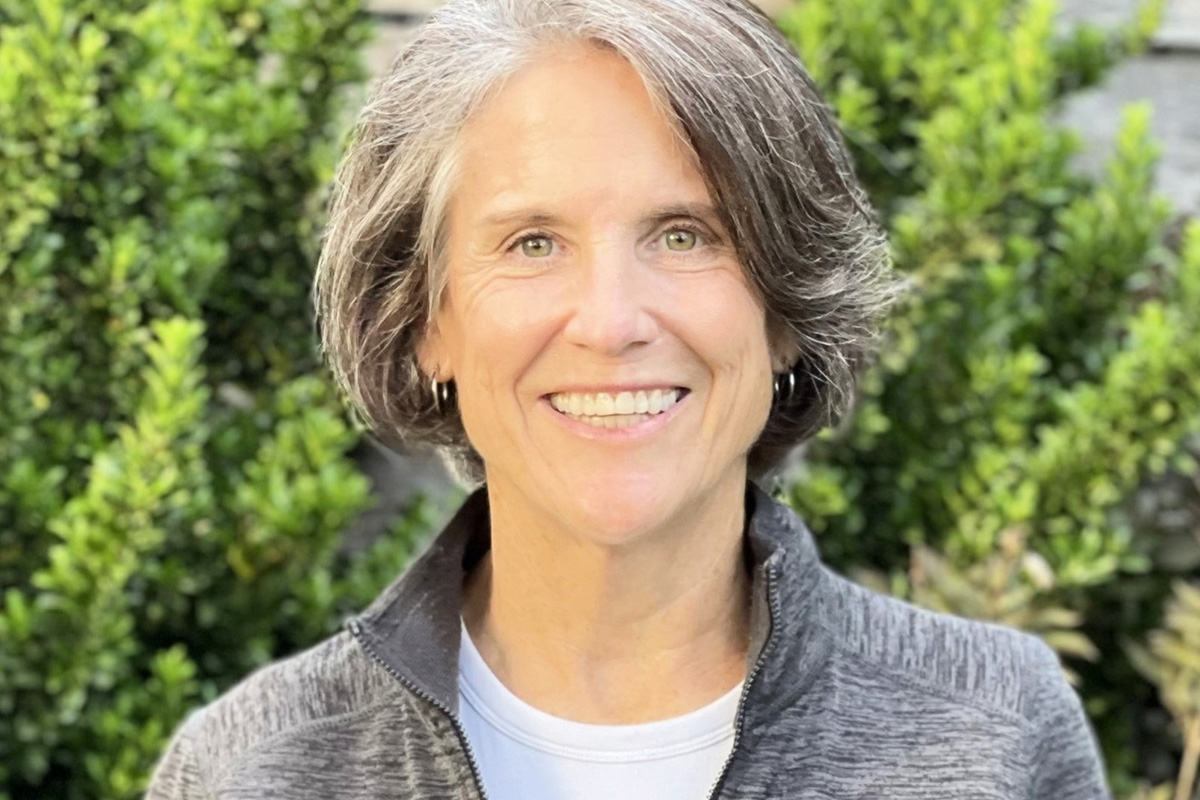
The Washington Blade Foundation will host a fundraiser on Saturday, Sept. 12 in Rehoboth Beach featuring remarks from Rehoboth’s Mayor-elect Susan Stewart and Delaware state Rep. Claire Snyder-Hall.
The Foundation funds fellowships for aspiring queer journalists and enterprise journalism projects.
The event will be held at a private home in Rehoboth. Tickets are $100 and include open bar from Diego’s, catered appetizers from the Blue Moon, entertainment, guest speakers, and an auction. Tickets are available here.
Books
New book examines fashionista Audrey Smaltz’s fabulous life
‘Every Inch a Lady’ reveals finding true love with another woman

‘Every Inch a Lady’
By Audrey Smaltz with Alina Mitchell
c.2026, Amistad
$27.99/256 pages
Snaps, zippers, buttons, ties.
Toss that garment on, pull it up, wrap it around, you know what you like and how to wear it. The color is perfect for your skin tone, the fabric enhances your form. Yep, you always look your best and, as in the new book “Every Inch a Lady” by Audrey Smaltz (with Alina Mitchell), that best is fabulous.

”Born, bred, toasted, buttered, jellied, and honeyed in Harlem” in 1937, Audrey Smaltz was a force to be reckoned with almost from the time she could walk. Her parents imbued confidence in her, they nurtured her creativity and sent her to charm school, but they never allowed her to create a stir.
“That,” says Smaltz, “is not what ladies did.”
By the time she was a teenager, Smaltz was modeling for New York City designers. Shortly thereafter, she started working for a married man with whom she had an affair, and whom she loved very much. She broke up with him, attended college, worked a series of jobs that taught her about fashion and jobs that didn’t seem to fit her. An ill-fated marriage took her to Chicago where she ultimately landed a position that sent her to work in Ebony magazine’s New York office.
Working at Ebony was a career-changer, in a way. Smaltz was able to travel the world and learn more about fashion, but she didn’t exactly get along with her boss.
Finally, seizing an opportunity, Smaltz decided to launch her own company, Audrey Smaltz, Inc., a “fashion production business,” but she couldn’t get any designers to take a chance on her. Undaunted, she reorganized, re-branded, hit the streets, and knocked on doors until she finally found one client, which led to many others.
Through it all, her personal life was a whirlwind. She dated “more men than you can shake a book at,” settling down occasionally, briefly. Fashion had always been her first love, but she accidentally found real love, “the love of a woman,” at a leadership course.
There’s an old saying that writers need to add lots of “color” into their stories. Read a little of “Every Inch a Lady,” and you’ll notice immediately that author Audrey Smaltz (with Alina Mitchell) quite literally takes that to heart by mentioning nearly every color of the spectrum here. Hmm.
That oddity aside, Smaltz is a wonderfully lively storyteller, speaking with the energy of a woman much younger to the heart of anyone who loves fashion. That glee extends to collectors of vintage clothing, who will be delighted to read about the industry long ago and the way things worked then. Smaltz says she experienced racism, which is not unusual for pre-Civil Rights America, but doors were surprisingly closed for other reasons that will astound anyone who’s savvy about the fashion industry, even today.
There’s quite a bit of name-dropping in this book but most of it belongs in the anecdotes, so you likely won’t mind. If you’re a fashionista, too, find “Every Inch a Lady,” and snap it up.
The Blade may receive commissions from qualifying purchases made via this post.
Theater
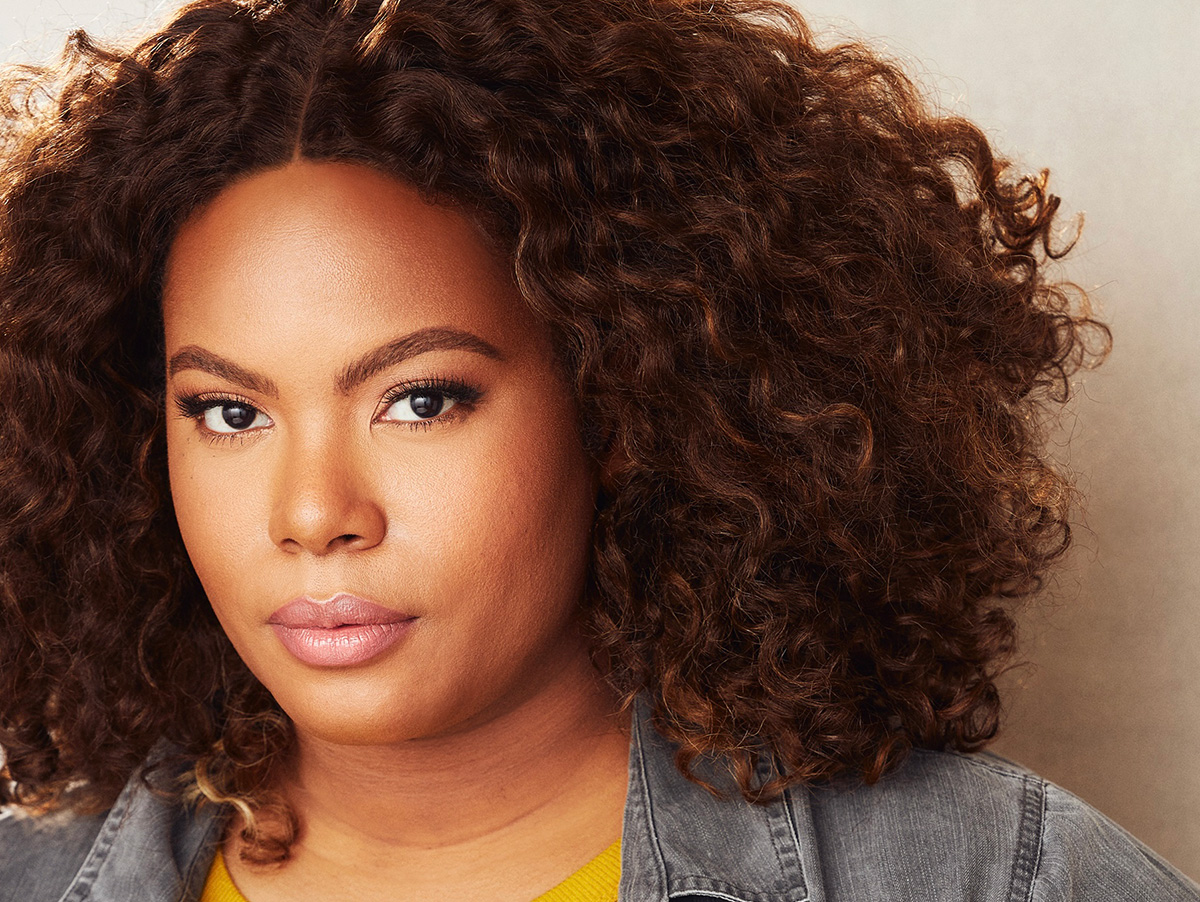
Actress takes on bisexual ‘Ma’ Rainey in new Round House production
Haskins relishes playing ‘impassioned Black woman who sticks to her guns’
‘Ma Rainey’s Black Bottom’
Sept. 9-Oct. 11
Round House Theatre
4545 East-West Highway
Bethesda, MD 20814
$50 and up
Roundhousetheatre.org
Among the Black blues women of the 1920s and 1930s, being “in the life” wasn’t uncommon. Self-supporting and often on the road, they followed the Great Northern Migration to places like Chicago and Harlem, where they lived independent lives, made music, enjoyed same-sex relationships, and partied with like-minded ladies.
Gertrude “Ma” Rainey, best known as the “mother of the blues,” fit the bill. A big star, Ma toured the country and sold hit records nationwide. She lived an openly bisexual life.
In 1925, hosting an “indecent” all-female party at a Chicago apartment, landed Ma in jail, but blues singer Bessie Smith, Ma’s protégée and erstwhile girlfriend, promptly bailed her out. Three years later, Ma released a popular track whose lyrics included “Went out last night with a crowd of my friends / They must’ve been women, ’cause I don’t like no men.”
She was also a woman who knew her value. Ma’s voice was a powerful passport.
Ma Rainey is the ultimate force of strength and resistance in August Wilson’s 1982 play, “Ma Rainey’s Black Bottom,” the first of the late playwright’s brilliant Century Cyle, a collection of mostly Pittsburgh-set plays that chronicle the 20th century African-American experience.
Poised to kick off a month-long run at Round House (Sept. 9-Oct. 11), the production (co-produced with Olney Theatre Center) is directed by Lili-Anne Brown and features out actor and powerhouse vocalist Nicole Michelle Haskins making her Round House debut as Ma Rainey.
Set in a Chicago recording studio in 1927, the drama follows Ma, her Black band members and white producers as they try to record a new album of her sons. Tensions over artistic control, racial exploitation, and personal ambitions come to the fore. Amid the difficulties and a fair bit of humor, arises a serious clash involving hotheaded young trumpet player Levee (Yao Dogbe) who wants to alter musical arrangements on the titular song.
Playing blues icon Ma Rainey wasn’t on Haskins’s radar. Because the bulk of her work is in musical theater, Haskins never foresaw being tapped to do a Wilson play.
“It’s kind of like Shakespeare. Not restrictive but respected; not everyone gets a ticket to the party. So, I figured that I just wouldn’t pursue that,” she says matter-of-factly.
However, fate would dictate differently. Haskins and director Brown are longtime friends and collaborators. They recently worked together on “The Color Purple” at Chicago’s prestigious Goodman Theatre where Haskins played Sofia, another powerful Black woman who, not unlike Ma, is navigating life in a patriarchal white world.
When the opportunity came up to play Ma at Round House, Brown encouraged Haskins to audition. She did and got the part. “I’m so grateful to be working with a wonderful director like Lili-Anne, especially during my introduction to Wilson’s work. He is a theater god, and I’m swept every day.”
And is it special to be queer and playing queer? “For me, it’s special to play any role where there is an impassioned Black woman who sticks to her guns and fights for the things she deserves. Her sexuality is the icing on the cake.”
The production adheres to Wilson’s text and the text describes a woman who is in a relationship with another woman. Though her sexuality is provocative, it’s not the only thing about her that’s compelling. She’s also portrayed as an artist, businesswoman, and a loving aunt.
Haskins, a New York-based actor who made her name on the Chicago theater scene, grew up in Detroit. At 12, she became involved with the Mosaic Youth Theatre of Detroit; after high school she went on to earn a BFA at Detroit’s Wayne State University. Detroit is also where Haskins learned storytelling: “It’s very natural for a Detroit native to greet people on the street. There’s an expectation to be open to someone else’s story and to share your own. I’ve done this many times.”
Queer characters are famously underrepresented in Wilson’s work. “I see that, but do we really know for sure? After the first day’s read through of the play, some of the actors, for different reasons, wondered if in addition to Ma, perhaps one or two of the other characters might be queer too. Now wouldn’t that be interesting? That’s something I’d like to see.”

Everton Blair makes history as first openly gay congressman from Ga.

Mujer trans salvadoreña es encontrada sin vida

Iceland implements gender-neutral blood donor rules

Blade Foundation to host fundraiser in Rehoboth on Sept. 12

New book examines fashionista Audrey Smaltz’s fabulous life

Gloria Steinem dies at 92

Pentagon expands testosterone screening as trans troops face hormone therapy restrictions

Swiss government backs nationwide conversion therapy ban

Calendar: September 4-10