Arts & Entertainment
Baltimore arts briefs: events through Nov. 22
Chef Anthony Bourdain makes appearance, Trans Day of Remembrance and other Baltimore events
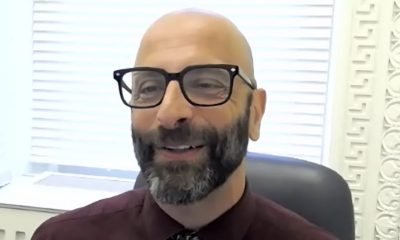
Chef Bourdain at the Hippodrome
Hippodrome Theatre (12 N Eutaw St.) presents an evening with Anthony Bourdain in his tour “Guts & Glory” tour Saturday night at 8.
Bourdain is an internationally renowned chef, author and television host. His most recent culinary-themed graphic novel “Get Jiro!” is on the New York Times bestseller list. The night includes stories about his life’s work and travels, which includes a question-and-answer session with the audience.
Tickets are $55-$150. For more information, visit france-merrickpac.com.
Trans Day of Remembrance on Tuesday
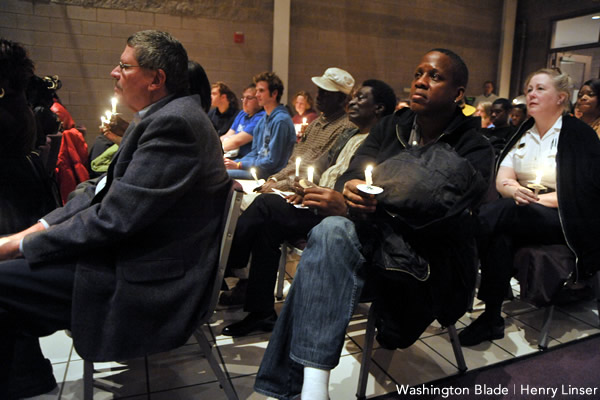
Transgender Day of Remembrance is a national event honoring lives lost to anti-trans violence. (Washington Blade file photo by Henry Linser)
The First Unitarian Church of Baltimore (Charles and Franklin St., Baltimore) holds a service for the Transgender Day of Remembrance on Tuesday at 6:30 p.m.
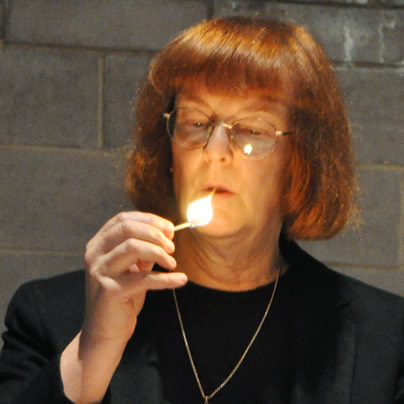
The day was started in 1998 with the kick off of “Remembering Our Dead” to commemorate the murder of Rita Hester who was killed for being transgender. The day has been extended to memorialize everyone who has been killed out of anti-transgender hatred or prejudice.
The day is to help raise awareness to the prejudices transgender people still face. For more information, visit firstunitarian.net.
Frontrunners have Saturday meet planned
Baltimore Frontrunners and Walkers run on Saturday morning at 8:45 starting at Panera (3600 Boston St.).
The organization is a running and walking club for LGBT runners and friends. They welcome runners and walkers of all levels, including any four-legged friends who would like to join the run.
The route for the run will include going to the Inner Harbor World Trade Center or the Maryland Science Center. Afterward, the group reassembles for brunch at 10.
This event is free. Direct inquiries to [email protected] or call 410-662-2887. For more information, visit baltimorefrontrunners.org.
Bump, set, spike with Charm City
Charm City Volleyball is hosting social play for volleyball players of all levels Wednesday evening starting at 6:30 p.m. at the Mount Royal Recreational Center (137 McMechen St.).
The group is an LGBT volleyball organization. The weekly social play is to promote volleyball in the community. Charm City Volleyball hosts competitive events and social clinics.
The sessions are $3 each and $30 for the fall season. There are discounts for students. For more information, visit volleybaltimore.org.







Superstar Dolly Parton died on Tuesday at a Nashville hospital. She was 80.
The Human Rights Campaign and Lambda Legal are among the groups that mourned the long-time LGBTQ ally’s passing.
“We are heartbroken by Dolly’s passing,” said HRC President Kelley Robinson in a statement. “She showed the world what it looks like to lead with love and stood with our community long before others in entertainment, using her voice and platform to create a world where LGBTQ+ people feel seen and celebrated. Her music and her spirit touched millions; and her generosity, especially toward children, will be felt for generations. We will miss her dearly, and we will carry forward the light she shared with all of us.”
The Washington Blade will update this story.
Theater
New GALA show about WWII spy full of conflict, intrigue
‘GARBO: The Actor Who Saved the World’ an inspired true story
‘Garbo: The Actor Who Saved the World’
Sept. 3-27
GALA Hispanic Theatre
3333 14th St., NW
$25-$50
galatheatre.org
Conflict, intrigue, and abundant imagination – all the elements for an extraordinary story. Add real-life Spanish spy Juan Pujol García who worked as a double agent loyal to the United Kingdom against Nazi Germany during World War II to the mix and it’s truly inspired.
Code-named “Garbo” by the British (a nod to his acting prowess), the anti-fascist’s mission took him from Madrid to Lisbon and later a London suburb where he created fictitious reports while unassumingly blending in with middle-class commuters.
By inventing a phony spy network of 27 agents with intricate backstories and tales of espionage worthy of Balzac’s pen, Garbo convinced Hitler’s generals that the D-Day invasion would hit Calais instead of Normandy, saving thousands of lives along the way.
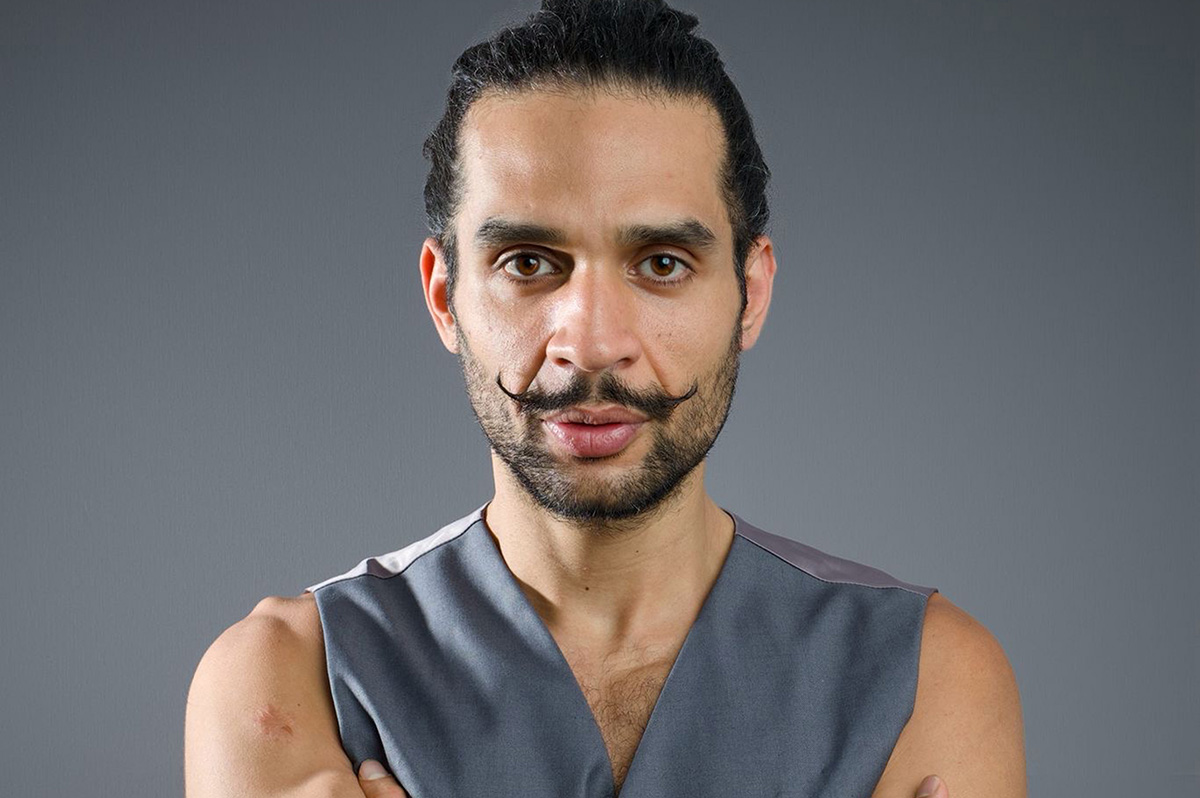
And now the tale unfolds on stage in “GARBO: The Actor Who Saved the World,” a premiere thriller at GALA Hispanic penned by GALA artistic director Gustavo Ott, staged by Cuban director Carlos Celdrán, and starring out actor Kevin Jorges in the title role.
When Jorges was tapped to play Garbo, he (like the rest of the cast) was utterly unfamiliar with the play’s cunning protagonist.
But that changed quickly. Jorges, 37, has immersed himself in the biography and become increasingly interested and somewhat enamored with the character.
Charismatic with an easy smile and rich, warm voice, Jorges says he had to put aside his sensibility as a gay man in order to portray Garbo, who was a straight, patriarchal figure. But he also embraced similarities with the spy, like their shared aversion to physical violence.
And Jorges cites what he finds a pivotal moment: Garbo says to his British MI5 case officer and handler Thomas Harris (played by gay GALA veteran Carlos Castillo) that after what they’ve been through, neither will be what they once wanted to be. They are changed. They’ll never be the same.
Performed at 90 minutes in Spanish with user friendly English surtitles, “Garbo” is about imagination as resistance. “It’s also about a theatrical vocation that went unfulfilled,” says Ott. “That is perhaps the greatest disappointment of modernity: the insurmountable obstacles a vocation faces.
“Through his imagination, Garbo attempts to reclaim his lost calling—that of being an artist—and in his new trade as a spy, he uses it as a lifeline.”
Ott adds, “Walt Whitman viewed imagination as a traveling companion. He could rely on it when he was alone, when he lost hope, and when life slammed every door shut.”
Jorges was was attracted to acting at an early age, but the murder of his father in Caracas in 1999, made it more than an interest, theater became a refuge that saved him from tragedy. Today, he believes that theater is a refuge for many Venezuelan artists, it’s a way for them to contribute to society despite difficult circumstances.
Despite enjoying a successful early career in Caracas with many roles and accolades, Jorges had no choice but to seek new horizons. Political turmoil and economic collapse prompted him to leave Caracas in 2019 for Spain where he worked outside of his profession for a few years.
The actor credits “migrant persistence” for his return to the stage. On New Year’s Eve in 2022, Jorges made a pilgrimage to the famous monument to Cervantes at Plaza de España in Madrid where he made a heartfelt wish to act again.
Soon after, Jorges was collaborating with playwright and director Elio Palencia on “Timón Of(f) Caracas,” a personal one-man adaptation of Shakespeare’s “Timon of Athens, reframing the universal themes of betrayal, excess, and misanthropy to mirror the sociopolitical realities of Venezuela. To much success and acclaim, the production toured important cities throughout Spain.
It was Palencia who suggested to GALA’s Ott that Jorges hop the pond to play Garbo in D.C.
While he once viewed each acting job as an opportunity, Jorges now sees them as gifts. And, he says, the part of Garbo is a gift filled with possibilities: “It’s wonderful performing in Spanish with English translation. I love the interaction of culture. I really enjoy seeing the way things are done at GALA. Maybe sometime I’ll be performing in English too.”
Books
Exploring Renée Richards’s life through lens of a trans author
Surprises await in new book about pioneering tennis star

‘Finding Renée Richards’
By Julie Kliegman
c.2026, HarperOne
$28.99/272 pages
Come on in, the water’s fine.
Wade into it up to your ankles, your calves, your waist, you’ll be OK. You’ll adjust to the waves that swirl around you so come on, dive in, it’s all good. As in the new book “Finding Renée Richards” by Julie Kliegman, that goes for swimming, and for controversy.

Assigned to do a story on books written by trans tennis great Renée Richards, Julie Kleigman read the books and became “transfixed by a woman who had fought so hard to simply live as who she had long known she was….”. Their editor had figured that, as a nonbinary and trans individual, Kleigman would have “something incisive to say…” in an article. Instead, once they met and began interviewing Richards, Kliegman was left frustrated.
Born in the late summer of 1934, Richard Henry Raskind seemed to have arrived with a tennis racket in his hand. His mother was a psychiatrist; his father was an orthopedic surgeon who hoped “Dick” would follow his footsteps but Raskind was drawn instead to ophthalmology and tennis. He was also irresistibly drawn to wearing women’s clothing.
His sister knew of this pull and Raskind eventually came out to both parents, but few others on the tennis circuit were aware. When Raskind visited his hometown of New York City, however, he enjoyed furtively going out in women’s clothing but he also tried to squash the desire; in the meantime, he fell in love, married, fathered a son, and eventually learned that it was possible to become the woman he knew he really was.
To continue playing tennis professionally was a bonus.
And right there were the disagreements Kleigman had with Richards.
Richards, “To this day… [makes] a point of describing herself as a woman, period,” says Kleigman, but she firmly acknowledged Richard, almost as a separate individual, insisting that Kleigman use “him/his” pronouns when describing her earlier life.
And as for tennis and trans women’s participation in the sport, Richards had something even more frustrating to say.
Take that as a fair warning: you might be equally surprised at what author Julie Kliegman uncovered in “Finding Renée Richards,” and you may be truly gobsmacked by reading opinions from other women about the topic of trans women in sports.
That’s the main, huge point of interest in this fascinating book; the other is Richards’s life as seen through the lens of a trans individual. Kleigman’s wrestling with the 90-year-old Richards’ firmly dug-in heels is, in itself, worth your time as a study of highly varying viewpoints. That Kleigman and Richards have both lived at least a part of trans history is somewhat of a key to understanding how this book unfolds, as Kleigman offers up Richards’s tale. Readers who are able to read between the lines will be riveted.
If you’re a sports fan and you have opinions, you must read this book – and that goes double if it’s tennis you love. Also check out “Finding Renée Richards” if you just want a raucously good and very fine read.
The Blade may receive commissions from qualifying purchases made via this post.

Dolly Parton dies at 80

Monument to LGBTQ Canadians officially unveiled

The fight to save one of Baltimore’s last gay bars

When home becomes a journey: migration, memory, and the African diaspora

Gay-owned pizzeria in Dupont Circle burglarized

Trump-Vance administration’s LGBTQ brain drain: what you need to know

Not all trans people are the same

UPDATE: Impulse Group’s ‘PrEP Pool Party’ cancelled

Queer team brings girl power to fully baked ‘The Wrong Girls’