Local
Council race heats up
Gay politicos divided over support for GOP candidate Mara
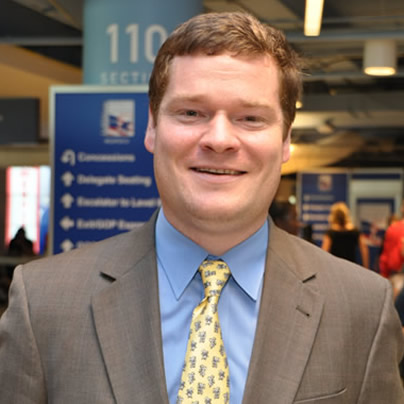
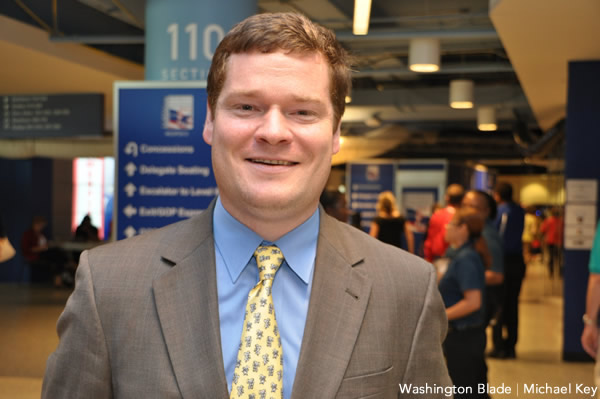
Patrick Mara at the 2012 Republican National Convention (Washington Blade photo by Michael Key)
Gay Democratic activist Peter Rosenstein raised eyebrows last week when he called on the LGBT community not to vote for pro-gay Republican candidate Patrick Mara in the April 23 special election for an at-large seat on the D.C. City Council.
In his political column in the Blade, Rosenstein reminded LGBT voters that Mara, while saying he personally supports LGBT rights, was a delegate at the Republican National Convention last summer for GOP presidential candidate Mitt Romney, who opposed nearly all LGBT rights initiatives.
“Mara tells anyone who will listen that he doesn’t agree with the Republican Party platform and personally favors marriage equality and full civil rights for the LGBT community and that he is pro-choice,” Rosenstein wrote. “In so doing, he asks us to overlook his active support for candidates and a party that don’t believe those things.”
But longtime gay Democratic activist and D.C. civic leader Joel Lawson, who’s supporting Mara, said Mara’s support for Romney doesn’t bother him and shouldn’t be a problem for others in the LGBT community who are considering voting for Mara.
“I’m a lifelong active Democrat,” Lawson told the Blade. “And the only ‘R’ I’m worried about is reform. And those attacks on Pat are just more nasty fighting that’s hurt D.C.”
Lawson added, “This race is between Pat Mara and business as usual, and Pat is the strongest [candidate] for reform.”
Political observers say people like Lawson – both gay and straight – appear to be part of a growing bloc of voters who are angry about the long list of ethical lapses that have surfaced in city politics over the past several years.
Among the concerns of these voters were the arrest and guilty pleas on corruption related charges by former D.C. Council Chair Kwame Brown and former Ward 5 Council member Harry Thomas, both Democrats, who were sentenced to time in jail.
The U.S. Attorney’s office continues to investigate illegal campaign finance practices uncovered in Mayor Vincent Gray’s 2010 election campaign. And the City Council last month voted to reprimand gay Council member Jim Graham (D-Ward 1), who was accused of violating city ethics rules by reportedly interfering with a city contract. Graham disputes allegations that he acted improperly on the contract matter.
Similar to most elections in D.C. over the past 20 years or longer, each of the seven candidates running in the special election – five Democrats, one Republican (Mara), and a Statehood Green Party candidate – are strong supporters of LGBT equality, including same-sex marriage.
The candidates include Democrats Michael Brown, a former Council member who lost his re-election bid last year to David Grosso (D-At-Large); Anita Bonds, chair of the city’s Democratic State Committee, which elected her as interim Council member until the special election is held; former Washington Post and Washington City Paper reporter Elissa Silverman, who most recently has worked as a budget analyst for the progressive think tank D.C. Fiscal Policy Institute; and local attorneys Paul Zuckerberg and Matthew Frumin, who operate D.C. law firms.
Also running is community activist and ex-offender advocate Perry Redd, who was nominated by the Statehood Green Party.
The Gay and Lesbian Activists Alliance is expected to rate each of the candidates on LGBT issues later this month based on their responses to a GLAA questionnaire that the group has been giving to candidates running for local office for more than 30 years. The Blade will report on the candidates’ detailed positions on LGBT issues when the GLAA questionnaire results are released.
The Gertrude Stein Democratic Club, the city’s largest LGBT political group, is scheduled to hold a forum for the Democratic candidates on March 21 at the Metropolitan Community Church of Washington. The club is also scheduled to vote on an endorsement at the forum. But club members say an endorsement is uncertain due to the group’s requirement that a candidate receive a 60 percent majority vote among members to earn the club’s backing.
With each of the candidates supportive on LGBT issues, activists following the campaign say the so-called “gay vote” could be driven by non-gay issues as well as name recognition and the perception of the candidates’ visibility in the LGBT community.
Brown and Mara have run for City Council seats in the past, and each has done well in precincts known to have high concentrations of LGBT residents at various times. Bonds, who has been active in city politics for many years, is less known to non-activists but has support from several key LGBT movers and shakers. Among them is David Meadows, a former Stein Club president, who now works on her Council staff.
Silverman, Redd, Frumin, and Zuckerberg are newcomers to electoral politics and must overcome a lack of widespread name recognition, political observers have said. Silverman, Frumin, and Zuckerberg told the Blade they have been longtime supporters of LGBT equality and, if elected, would push for city policies and laws that strengthen the ongoing quest to achieve full equality for LGBT city residents. Each said they would have voted for the city’s same-sex marriage law had they been on the Council when it came up for a vote in 2009.
Redd couldn’t immediately be reached for comment. Longtime Statehood Green Party leader and LGBT rights supporter David Schwartzman told the Blade that Redd is a strong supporter of LGBT equality, including same-sex marriage.
D.C. political consultant Chuck Thies is among the local political observers who believe Mara and Brown are the two frontrunners in the race. Thies told the Blade that gay Democratic activists may be worried about Mara because he has received a significant number of Democratic votes in two previous runs for a Council seat.
In a 2011 special election for an at-large seat, Mara came in second, just behind Vincent Orange, a Democrat with wide name recognition who won the eight-candidate race. Mara beat Democratic candidate Sekou Biddle, who was backed by most LGBT Democratic leaders.
In a development that surprised some gay Democratic activists, Mara won by large margins in at least seven of the 14 voter precincts with high concentrations of LGBT voters.
In the special election set for April 23, Mara has a solid bloc of the city’s Republican voters and could benefit by his Democratic opponents splitting the vote among each other while capturing a sizable portion of the Democratic vote as a perceived reform candidate, Thies said.
Mara’s appeal to Democrats this year surfaced at the Stein Club’s February meeting, when a resolution was introduced to allow Mara to participate in the club’s candidate forum on March 21, even though the club’s bylaws bar the club from endorsing a non-Democrat in races where Democrats are competing.
“Some of us thought it would be useful to the community to give him a chance to speak,” said Christopher Dyer, the Stein Club member and director of the city’s Office of GLBT Affairs under Mayor Adrian Fenty, who introduced the resolution.
The resolution lost by a wide margin, with many club members saying a Democratic group shouldn’t be giving a platform to a Republican candidate. However, longtime club members said the fact that such a resolution even came up suggests that Mara appeals to LGBT voters.
Thies called Frumin the dark horse candidate, who could be a strong competitor to Mara and Brown based on his ability to raise campaign funds. The most recent campaign finance reports filed with the city show he raised just under $72,000 in contributions and kicked in $10,628 of his own money, making him the best funded candidate in the race so far.
Mara has raised just over $20,000 and Silverman has raised a little over $36,000 as of the last finance reporting period. Brown and Zuckerberg had raised around $9,500 during the same reporting period, with Bonds raising $11,000. Redd came in last in fundraising, with just $900.95 as of the last reporting period ending Jan. 31.
Like most special elections, voter turnout is expected to be low, giving key voting blocs, including the LGBT vote, the ability to play a decisive role in who wins. And so far, the buzz within LGBT political circles has been over whether gay Democrats should remain faithful to their party or break ranks and vote for Mara.
“Mara will not win LGBT votes if the community holds him responsible for his work for, and support of, an ultra-conservative party and Romney/Ryan,” Rosenstein told the Blade.
Veteran gay Democratic activist John Klenert, who’s supporting Mara, said that to him, Mara’s strengths outweigh his support for Romney.
“This race comes down to a personal issue: that Pat will serve honestly, with integrity and strong ethics,” Klenert told the Blade. “This is about new blood for an ethically challenged City Council.”
District of Columbia
Blade welcomes fall intern
Alexis McLean is student at University of North Florida
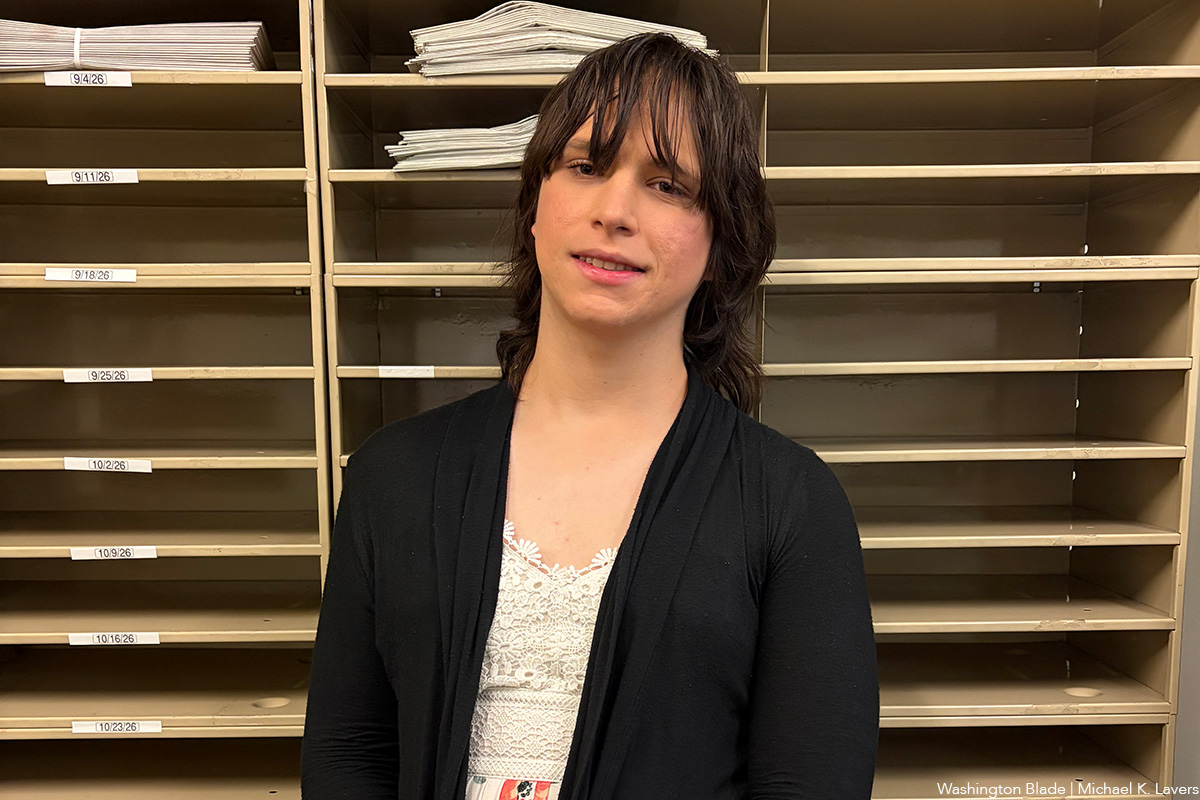
The Washington Blade this week welcomed Alexis McLean as its fall intern.
Alexis is studying political science at the University of North Florida in Jacksonville, Fla. She is interning with the Blade as part of a continued partnership with the Washington Center.
“I am looking forward to spending my time in the fall with the Washington Blade, as this is a new experience for me,” said Alexis. “I have not experienced any journalist jobs in the past so this would be my first time, and I am excited to better my writing and communications skills with this internship.”
Alexis’s internship with the Blade ends in early December.
Rehoboth Beach
SUNFESTIVAL takes center stage as Rehoboth Beach closes out summer
Labor Day Weekend bustling with events, including David Archuleta performance

Labor Day Weekend marks the unofficial end of summer in Rehoboth Beach, but there will be no shortage of LGBTQ events, with CAMP Rehoboth’s annual SUNFESTIVAL taking over town this weekend.
Thursday (9/3)
Get your Labor Day Weekend started early Thursday night with happy hour from 5-7 p.m. at Diego’s Bar & Nightclub, followed by Naughtee Bingo hosted by Magnolia Applebottom at 8:30 p.m.
After bingo, the party continues with Dancing at Diego’s from 9 p.m. to 1:30 a.m.
Aqua Bar & Grill will also kick off its Labor Day Weekend festivities Thursday with a DJ spinning from 9 p.m.-1 a.m.
Friday (9/4)
The weekend ramps up Friday night at Aqua, where DJ Matt Bailer will keep the dance floor moving from 9 p.m.-1 a.m.
Over at Diego’s, DJ Steve Sidewalk will then take over Diego’s for Freedom Friday from 9 p.m.-1:30 a.m.
Saturday (9/5)
The main event of the weekend arrives Saturday with the opening night of CAMP Rehoboth’s SUNFESTIVAL.
Billed as the ultimate party to close out the summer, SUNFESTIVAL has become one of Rehoboth’s signature Labor Day Weekend events. The annual celebration sells out each year, with proceeds benefiting CAMP Rehoboth.
Doors open at 6:30 p.m. with refreshments available at the cash bar while attendees are invited to socialize and find their seats.
Saturday night will feature local singer Ashley Williams as the opening performer, followed by headliner David Archuleta. The event will also feature a live auction.
Back across town Saturday, Aqua will continue its Labor Day Weekend DJ lineup from 9 p.m. to 1 a.m.
Diego’s will also have plenty happening, with ‘Splash Party’ hosted by Magnolia Applebottom at 5 p.m., followed by a Saturday Dance Party with Brett Oosterhaus from 9 p.m.- 1:30 a.m.
The Blue Moon hosts its popular Legends Show at 9 p.m. It’s an all-live singing show by the Blue Moon cast of celebrity impersonators.
Etienne Pilon has taken Rehoboth by storm this summer. Check out the talented singer/pianist at The Pines from 7-10 p.m.
Sunday (9/6)
Sunday’s SUNFESTIVAL event will shift the focus to the dance floor, with globally renowned DJs Robbie Leslie and James Anthony scheduled to perform. Doors open at 7 p.m., with dancing continuing until 1 a.m.
On Sunday, Aqua will throw its annual White Party, with DJs spinning from 9 p.m.-1 a.m. Guests are encouraged to dress in white for the holiday weekend celebration.
Diego’s will host its Sunday High T-Dance with Pamala Stanley at 5 p.m. Later that evening, DJ Tannr will be spinning at 9 p.m.
John Flynn is on the piano from 6-8 p.m. at the Blue Moon.
Monday (9/7)
The final day of Labor Day Weekend brings one last chance to hit the dance floor before summer officially winds down.
Aqua will close out its five-day Labor Day Weekend celebration with DJ Biff from 3-7 p.m.
Maryland
Anne Arundel schools now need parent permission to call trans students by preferred names
Conservative groups challenged system’s policy
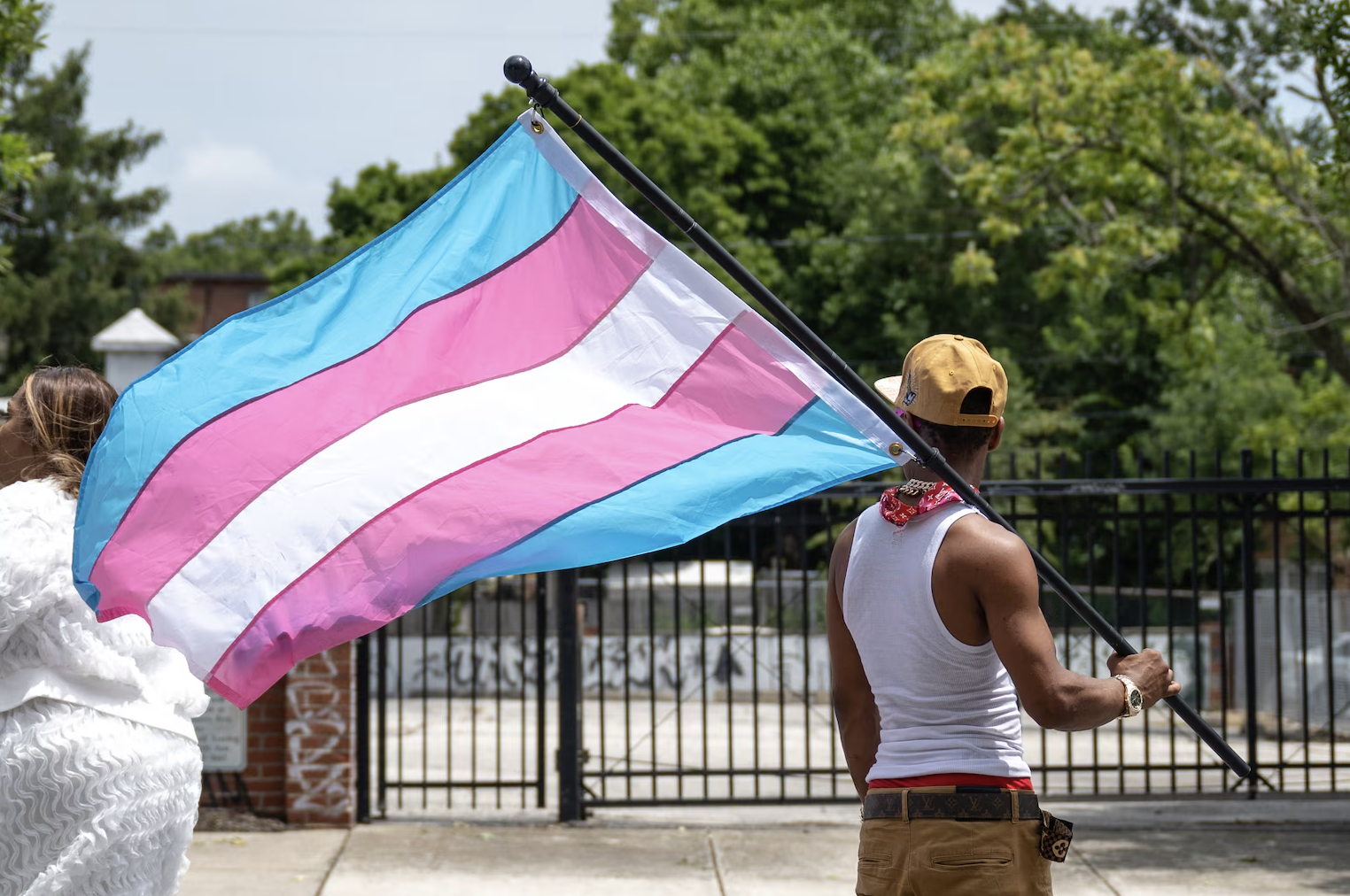
By JESSICA CALEFATI | Anne Arundel County Public Schools staff cannot use transgender students’ preferred names if their parents oppose it, according to an internal document reviewed by the Banner, a change that comes after conservative groups challenged the school system’s approach to gender identity.
Teachers union president Kristina Korona told members in an Aug. 20 email that the new guidance undermines district policy on acceptance and inclusivity and “will begin harming affected students immediately.”
Previously, the district didn’t require parental permission to use a high school student’s chosen name and pronouns corresponding to their gender identity, the internal document says. Now it does. The change comes as parents challenge the suburban school system’s gender identity policy and regulation in court and the Trump-Vance administration threatens the district’s funding.
The rest of this article can be found on the Baltimore Banner’s website.

Markey’s primary win deemed success for LGBTQ activists

Top Bulgarian court rules government must legally recognize trans people

Lou Chibbaro Jr. documentary wins award from NLGJA

Beloved D.C. ‘Old Catholic’ Bishop Charles Braun dies at 86

Blade welcomes fall intern

E-INFOSOL leaders encourage youth to pursue tech careers

New book examines Trump cuts to LGBTQ healthcare

Immersive ‘Nation-State’ imagines a society free of authoritarianism

Poland begins to legally recognize same-sex marriages from other countries

HRC president campaigns for Chris Pappas in NH
-

 Technology5 days ago
E-INFOSOL leaders encourage youth to pursue tech careers
-
Books5 days ago
New book examines Trump cuts to LGBTQ healthcare
-
Theater4 days ago
Immersive ‘Nation-State’ imagines a society free of authoritarianism
-
Poland3 days ago
Poland begins to legally recognize same-sex marriages from other countries