Local
D.C. police chief assailed at hate crimes hearing
Representatives of the LGBT community and the head of the D.C. police union told a City Council hearing on Nov. 20 that District Police Chief Cathy Lanier has failed to take adequate steps to curtail hate crimes targeting gays and transgender people.
Kris Baumann, chair of the Fraternal Order of Police, and officials with five local LGBT organizations said Lanier has turned down their repeated request to assign more officers to the department’s highly acclaimed Gay & Lesbian Liaison Unit, whose ranks have been reduced from seven to two members since Lanier became chief in 2007.
“What the chief has done is decimate that unit,” said gay activist Peter Rosenstein.
Lanier took strong exception to that assessment, telling the Council’s Committee on Public Safety and the Judiciary that she is expanding the GLLU and other special liaison units in the department by assigning officers “affiliated” with the units to each of the department’s seven police districts.
She said her plan calls for assigning a total of 57 officers or supervisors to all four of the special liason units, including the GLLU. She said about 20 of the 57 would be assigned to the GLLU, making it far more responsive to the community than a seven-member centralized unit.
Lanier told the committee she would keep her promise to LGBT activists to retain a small, centralized GLLU office.
But Baumann and Chris Farris, co-chair of Gays and Lesbians Opposing Violence, each said Lanier has “systematically” dismantled the GLLU’s operations under the promise of replacing it with a decentralized unit that she has yet to produce more than two years after she first proposed the reorganization.
“I am unfortunately significantly less optimistic today about this city’s willingness to tackle the difficult issue of hate crimes than I was a year ago,” Farris told the committee.
“I do not see what I think is needed – most importantly, leadership at the top, and a firm commitment to roll up our sleeves and treat the issue as it must be treated – holistically,” he said. “This means the MPD, the U.S. Attorney’s office, the D.C. Public School system, the mayor, and this City Council must all be unequivocally committed to the fight.”
Farris questioned recent police data showing the number of LGBT-related hate crime has decreased since 2006. He said he believes the decrease is due to a lack of reporting that came about as a result of GLLU’s reduction in staff and its inability to push more aggressively for reporting hate crimes.
Lanier and Assistant Chief Diane Grooms testified that a long-awaited training course for prospective GLLU officers would begin shortly. Lanier said she has found from her own conversations with LGBT officers that they prefer to remain in their regular units in the police districts rather than be “pigeonholed” in a special gay related unit.
She angered some of the activists attending the hearing when she said she didn’t believe they represent the views of LGBT people in the neighborhoods across the city.
Council member Phil Mendelson (D-At-Large), who chairs the committee, said he would continue to monitor the department’s response to hate crimes against all city residents. He and the LGBT representatives that testified at the hearing noted that anti-LGBT hate crimes in the city far outnumber hate crimes targeting other groups.
A report released last week by Mayor Adrian Fenty and Lanier, “Bias-Related Crime in the District of Columbia,” shows that “sexual orientation” related hate crimes comprised more than 70 percent of the total number of hate crimes in the city each year from 2005 through 2009.
So far this year, out of a total of 36 reported hate crimes, 30 were classified as “sexual orientation” related hate crimes.
Alison Gill, an official with the D.C. Trans Coalition, and Julius Agers, a transgender activist, told the committee they were pleased that Fenty and Lanier published the bias-related crime report – three years after the report was due under rules set by the City Council.
But the two said they were troubled that the report did not break down the statistics to show the number of hate crimes specifically targeting transgender people in the city. They noted that a number of widely reported anti-trans hate crimes have occurred in the District in recent years.





Maryland
Md. groups receive state grants to fight hate crimes
Pride Center of Maryland among recipients
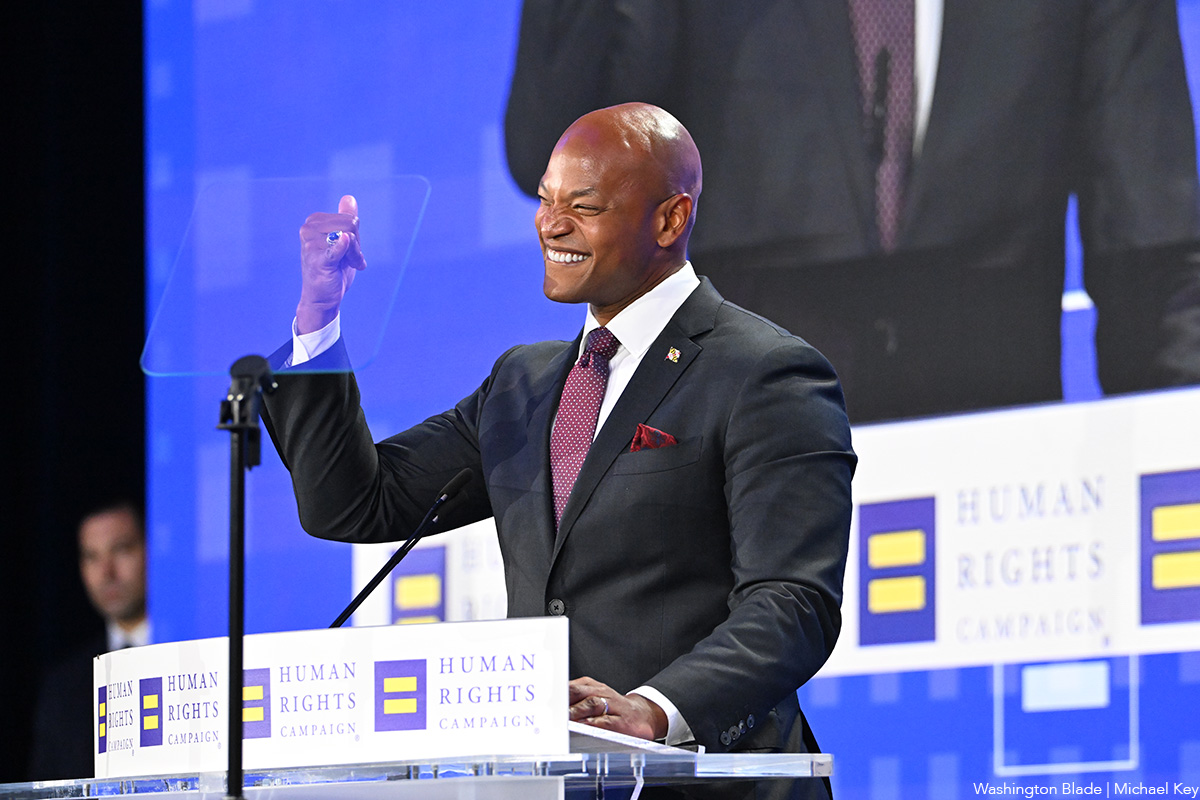
Maryland Gov. Wes Moore and the Governor’s Office of Crime Prevention and Policy are awarding a total of $10 million in grants in the 2027 fiscal year to nonprofit organizations that work to prevent hate crimes in the state.
The funds will be used to support those who feel targeted or discriminated against because of their race, religion, sexual orientation, gender identity, or disability status.
The Pride Center of Maryland is among the recipients. Churches, synagogues, mosques, and LGBTQ organizations are all eligible to receive grants
“The safety and security of all Marylanders is my top priority, so we are drawing a hard line because we have no tolerance for hate,” said Moore, according to media reports. “We are committed to protecting and ensuring safe and sacred spaces stay that way by investing in non-profit organizations, houses of worship, and community centers to protect and honor every community that makes our state so diverse and special.”
“Protection Against Hate Crime funding has strengthened the Pride Center of Maryland’s ability to protect, educate, and support the communities we serve … at a time of heightened concern associated with the Trump administration’s anti-LGBTQ/SGL (same-gender-loving) policies and pressures,” Pride Center of Maryland CEO Cleo Manago said. “PAHC funding helps us do more than improve physical security — it strengthens our community’s knowledge, preparedness, connection to resources, and ability to respond to hate with greater awareness and support.”
Maryland’s hate crimes law includes both sexual orientation and gender identity. The state’s nondiscrimination statute is also LGBTQ-inclusive.
District of Columbia
Blade welcomes fall intern
Alexis McLean is student at University of North Florida
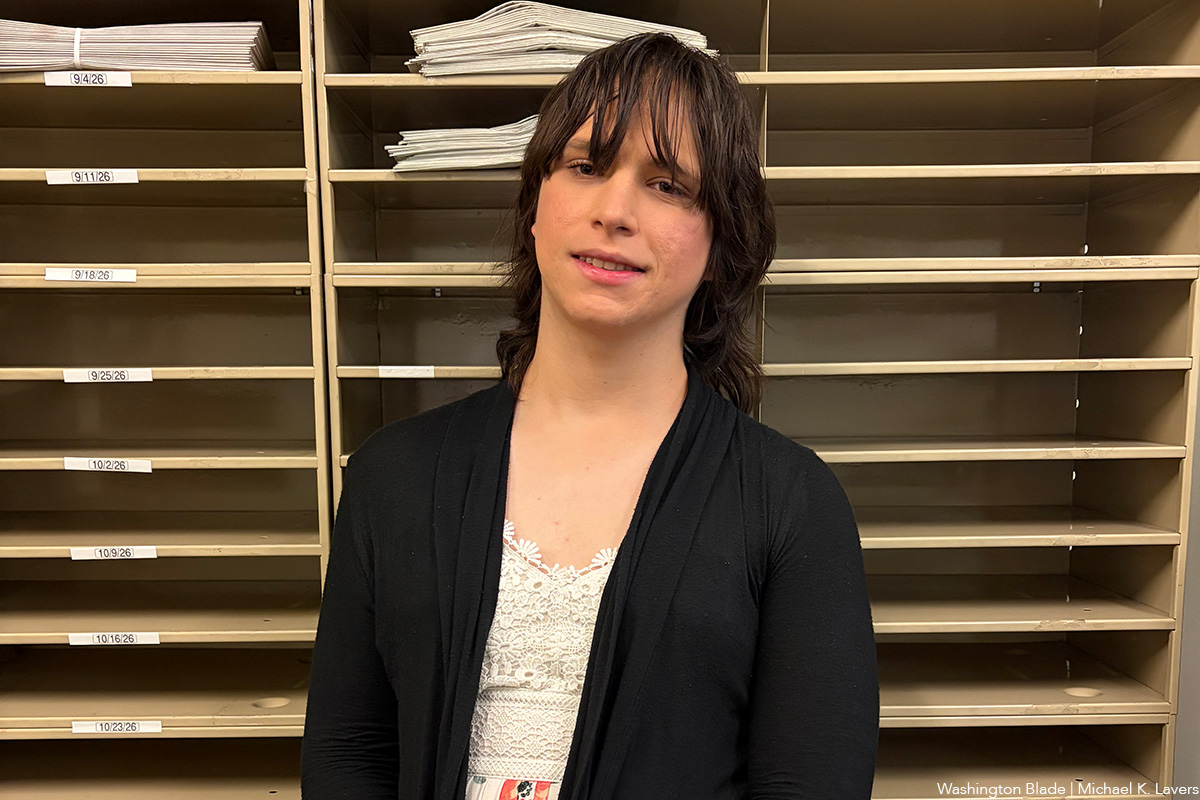
The Washington Blade this week welcomed Alexis McLean as its fall intern.
Alexis is studying political science at the University of North Florida in Jacksonville, Fla. She is interning with the Blade as part of a continued partnership with the Washington Center.
“I am looking forward to spending my time in the fall with the Washington Blade, as this is a new experience for me,” said Alexis. “I have not experienced any journalist jobs in the past so this would be my first time, and I am excited to better my writing and communications skills with this internship.”
Alexis’s internship with the Blade ends in early December.
Rehoboth Beach
SUNFESTIVAL takes center stage as Rehoboth Beach closes out summer
Labor Day Weekend bustling with events, including David Archuleta performance

Labor Day Weekend marks the unofficial end of summer in Rehoboth Beach, but there will be no shortage of LGBTQ events, with CAMP Rehoboth’s annual SUNFESTIVAL taking over town this weekend.
Thursday (9/3)
Get your Labor Day Weekend started early Thursday night with happy hour from 5-7 p.m. at Diego’s Bar & Nightclub, followed by Naughtee Bingo hosted by Magnolia Applebottom at 8:30 p.m.
After bingo, the party continues with Dancing at Diego’s from 9 p.m. to 1:30 a.m.
Aqua Bar & Grill will also kick off its Labor Day Weekend festivities Thursday with a DJ spinning from 9 p.m.-1 a.m.
Friday (9/4)
The weekend ramps up Friday night at Aqua, where DJ Matt Bailer will keep the dance floor moving from 9 p.m.-1 a.m.
Over at Diego’s, DJ Steve Sidewalk will then take over Diego’s for Freedom Friday from 9 p.m.-1:30 a.m.
Saturday (9/5)
The main event of the weekend arrives Saturday with the opening night of CAMP Rehoboth’s SUNFESTIVAL.
Billed as the ultimate party to close out the summer, SUNFESTIVAL has become one of Rehoboth’s signature Labor Day Weekend events. The annual celebration sells out each year, with proceeds benefiting CAMP Rehoboth.
Doors open at 6:30 p.m. with refreshments available at the cash bar while attendees are invited to socialize and find their seats.
Saturday night will feature local singer Ashley Williams as the opening performer, followed by headliner David Archuleta. The event will also feature a live auction.
Back across town Saturday, Aqua will continue its Labor Day Weekend DJ lineup from 9 p.m. to 1 a.m.
Diego’s will also have plenty happening, with ‘Splash Party’ hosted by Magnolia Applebottom at 5 p.m., followed by a Saturday Dance Party with Brett Oosterhaus from 9 p.m.- 1:30 a.m.
The Blue Moon hosts its popular Legends Show at 9 p.m. It’s an all-live singing show by the Blue Moon cast of celebrity impersonators.
Etienne Pilon has taken Rehoboth by storm this summer. Check out the talented singer/pianist at The Pines from 7-10 p.m.
Sunday (9/6)
Sunday’s SUNFESTIVAL event will shift the focus to the dance floor, with globally renowned DJs Robbie Leslie and James Anthony scheduled to perform. Doors open at 7 p.m., with dancing continuing until 1 a.m.
On Sunday, Aqua will throw its annual White Party, with DJs spinning from 9 p.m.-1 a.m. Guests are encouraged to dress in white for the holiday weekend celebration.
Diego’s will host its Sunday High T-Dance with Pamala Stanley at 5 p.m. Later that evening, DJ Tannr will be spinning at 9 p.m.
John Flynn is on the piano from 6-8 p.m. at the Blue Moon.
Monday (9/7)
The final day of Labor Day Weekend brings one last chance to hit the dance floor before summer officially winds down.
Aqua will close out its five-day Labor Day Weekend celebration with DJ Biff from 3-7 p.m.

Gloria Steinem’s life of substance and consequence

Nominate your favorites for the Blade’s 25th annual Best Of LGBTQ DC Awards

Grindr settles UK lawsuit over claims it shared users’ personal information

Md. groups receive state grants to fight hate crimes

Chris Pappas wins NH Democratic Senate primary

‘Here the Whole Time’ delivers queer coming-of-age comedy

Blade Foundation to host fundraiser in Rehoboth on Sept. 12

Actress takes on bisexual ‘Ma’ Rainey in new Round House production

New book examines fashionista Audrey Smaltz’s fabulous life

Everton Blair makes history as first openly gay congressman from Ga.
-

 Movies3 days ago
‘Here the Whole Time’ delivers queer coming-of-age comedy
-
Out & About2 days ago
Blade Foundation to host fundraiser in Rehoboth on Sept. 12
-
Theater2 days ago
Actress takes on bisexual ‘Ma’ Rainey in new Round House production
-
Books2 days ago
New book examines fashionista Audrey Smaltz’s fabulous life