Local
D.C. AIDS Walk raises $600,000
Eleanor Holmes Norton among those who took part.

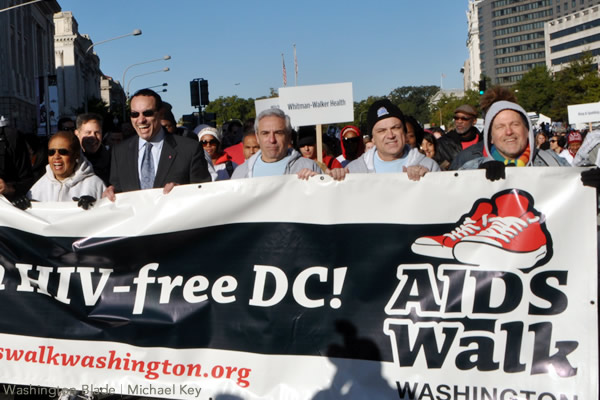
From left, Del. Eleanor Holmes Norton (D-D.C.), D.C. Mayor Vincent Gray, Mitchell Gold, Bob Williams and Joe Izzo. (Washington Blade photo by Michael Key)
D.C. Mayor Vincent Gray and Congressional Del. Eleanor Holmes Norton were among the estimated 5,000 people who attended the event that began on Freedom Plaza in downtown Washington. NBC anchor Eun Yang emceed the AIDS Walk for the second consecutive year, while Mitchell Gold and Bob Williams served as grand marshals.
“This morning we walk to free ourselves completely and absolutely from HIV/AIDS,” Norton said.
Both Norton and Gray discussed the progress D.C. has made in fighting the epidemic.
The latest HIV/AIDS epidemiology report that D.C. officials released last month noted newly diagnosed HIV cases in the nation’s capital decreased 46 percent from 2007.
The report noted the number of HIV/AIDS-related deaths in D.C. dropped from 425 in 2007 to 251 in 2011. It also said 80 percent of those who learned they were living with the virus in 2011 were linked to HIV-specific care within three months of their diagnosis.
“Given the complexity and the severe consequences of a condition like AIDS, for us to say that 30 years later we have made the enormous progress that we have made is absolutely phenomenal,” Gray said, noting the city’s needle exchange program has reduced new HIV cases among intravenous drug users by 80 percent from 2007 to 2011. “It gives absolutely the confidence to those who have this condition or who have family members who have this condition to know that America is working hard to be able to beat this condition.”
In spite of this progress, D.C. continues to have one of the country’s highest HIV/AIDS rates.
Roughly 15,000 Washingtonians — or 2.4 percent of D.C. residents — were living with the virus at the end of 2011. Men who have sex with men and heterosexual sexual contact were the two leading modes of transmission among newly diagnosed HIV cases.
“We know we’ve made tremendous progress, but in recent years D.C. still faces a serious HIV epidemic,” Yang said. “We have to get those numbers down to zero as the mayor said. And we have a lot of work to do.”
Megan Eluhu of Peer Health Exchange, an organization comprised of college students who teach health workshops in D.C. public schools, took part in the AIDS Walk with three of her colleagues.
“This is a really fantastic cause,” Eluhu told the Washington Blade as she walked along Pennsylvania Avenue, N.W. “We just wanted to come out and visibility support it.”
D.C. resident Lakisa Blocker talked about her uncle who has lived with HIV for 21 years as she and 11 other members of her group walked near the U.S. Capitol. Another uncle lost his battle with the virus.
“I’m very passionate about finding a cure,” Blocker said.
Whitman-Walker Health CEO Don Blanchon posthumously honored Sean Sasser, an HIV/AIDS advocate who married Pedro Zamora of MTV’s “The Real World: San Francisco” in 1994.
Sasser passed away in August after a battle with mesothelioma.
“He spent 25 years as Don said living with HIV, but his story is not unique,” Sasser’s husband, Michael Kaplan, said after he accepted the award. “What he gets the courage award for was not unique either, and that is about living his life out and openly as an HIV-positive individual.”

AIDS Walk 2013. (Washington Blade photo by Michael Key)





District of Columbia
Gay-owned pizzeria in Dupont Circle burglarized
Protest Pizza owners say community has expressed support

Gay activist Randy Downs said he and his business and life partner Ricky Bennett are grateful for the support they have received from the Dupont Circle community after they released a video showing a suspect breaking into their recently opened pizza shop and taking money from a cash register shortly before 3 a.m. on Friday, Aug. 21.
The surveillance video shows a man wearing black clothing with his face covered, smashing the glass front door of Protest Pizza, located at 1633 ½ P St., N.W. The video, which Downs and Bennett provided to D.C. police, also shows the suspect climbing over the bar to get to a cash register, which he opened to take out cash.
A D.C. police report obtained by the Washington Blade lists the incident as a Burglary in the Second Degree and says the owners reported “approximately $78 in cash” was taken from the cash register. The report says the incident is not listed as a suspected hate crime.
Downs told the Washington Blade that after he and Bennett reported the break-in and theft on social media, they received an overwhelming showing of support from neighbors and others, including business owners, from across the nation.
“The break-in was upsetting, but it is not what will define Protest Pizza,” Downs said. “What defines us is how quickly people showed up,” he told the Blade. “One person came looking for a cash register; our community saw a gathering place worth protecting. The response reminded us that Protest’s real value was never in the register.”
Downs said he and Bennett, who live around the corner on the section of 17th Street, N.W., near several other bars and restaurants, including the gay bar JRs are located, opened Protest Pizza in November 2025.
“Ricky and I built Protest Pizza as a positive, welcoming, queer owned neighborhood restaurant and bar — a space for protest and joy,” he said.
A D.C. police spokesperson said police offer a reward of up to $1,000 for information leading to an arrest and conviction of a suspect responsible for the type of burglary and theft that occurred at Protest Pizza. Police say anyone with information to help solve this type of crime should call the police tipline at 202-727-9099.
District of Columbia
Advocates honored at Engendered Spirit Awards
Annual ceremony held at conclusion of Trans Pride DC
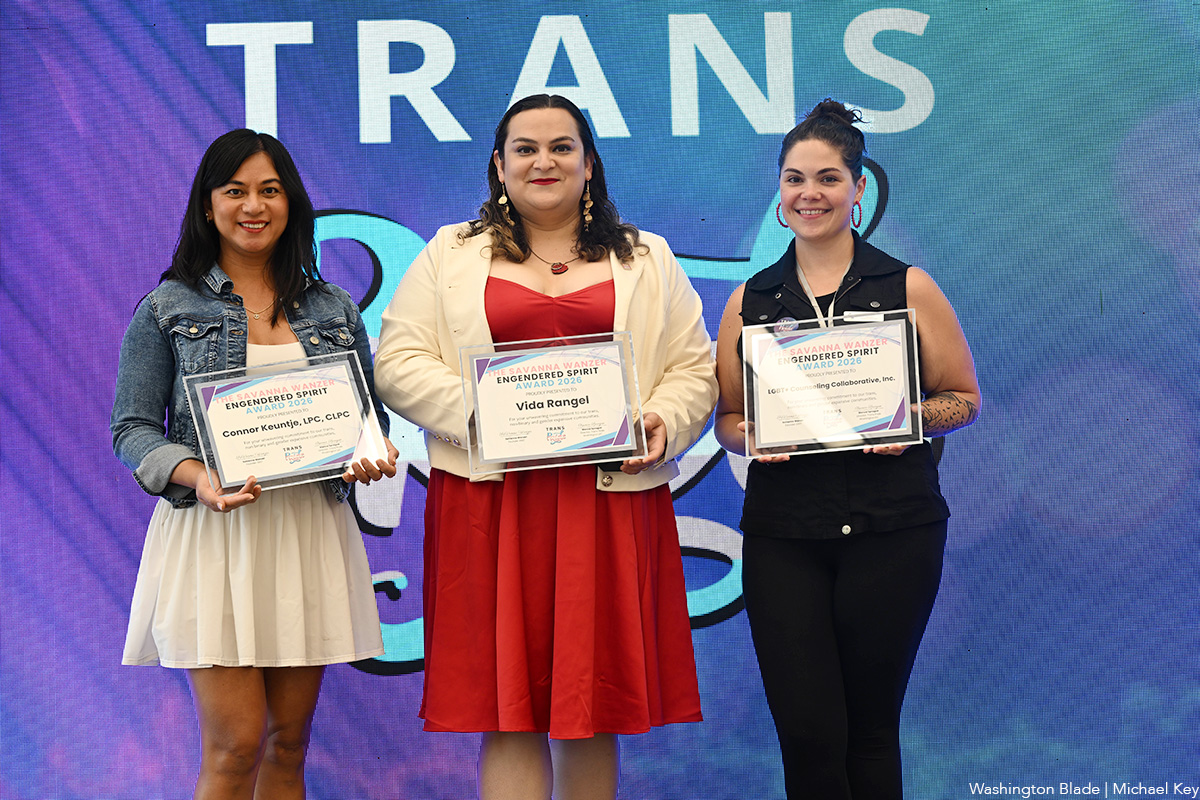
The 2026 SaVanna Wanzer Engendered Spirit Awards ceremony took place at the Martin Luther King, Jr. Memorial Library in D.C. on Saturday. The ceremony was held at the conclusion of the day-long Trans Pride DC: Encore.
Honorees included D.C. Mayor’s Office of Community Affairs Deputy Director Vida Rangel; the LGBT+ Counseling Collaborative, Inc.; and Connor Keuntje, CLP, CLPC.
Trans Pride DC: Encore was held throughout Saturday with several workshop sessions and a virtual conversation with actress and advocate Dominique Jackson.
The annual Engendered Spirit Awards were renamed the “SaVanna Wanzer Engendered Spirit Awards” in honor of SaVanna Wanzer, founder of D.C. Trans Pride. Wanzer died on April 24 of this year.
Speakers at the ceremony included Japer Bowles, director of the D.C. Mayor’s Office of LGBTQ Affairs and Bianca Sprague, executive director of D.C. Trans Pride.
“The intent behind this award and honoring members of our communities, organizations, and allies, is to really elevate all of the work that they’re doing to provide resources, tools, learning opportunities and connections: centering trans folks, gender non-conforming, and gender diverse individuals,” Sprague said.
Delaware
Democrat Maureen ‘Mo’ Madden takes on longtime GOP stronghold in Delaware’s 38th
Out lesbian candidate for state House focused on infrastructure needs, voting rights
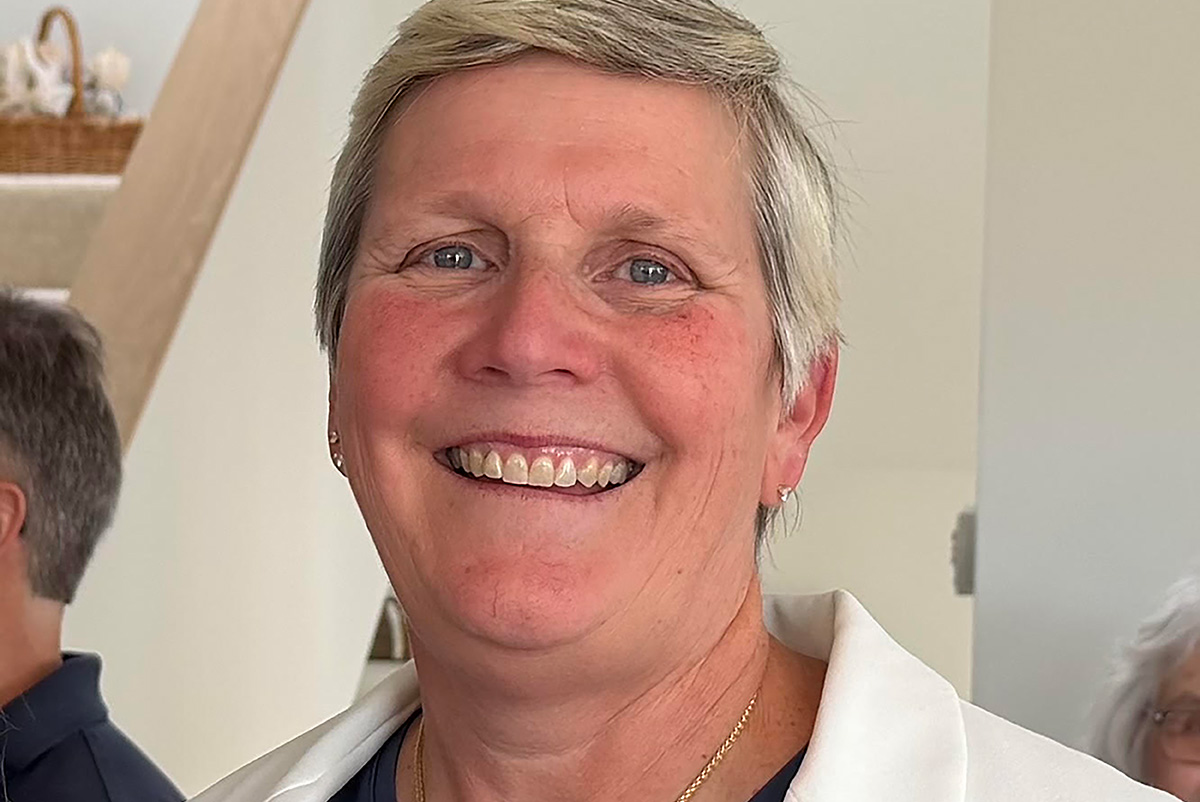
Democrat Maureen “Mo” Madden is running for the Delaware House of Representatives in the 38th District, seeking to win a seat that has been held by Republicans for more than two decades.
The race opened up after Republican state Rep. Ron Gray announced in April that he would not seek reelection after seven terms in the General Assembly.
Gray was first elected in 2012 and represents communities including Bethany Beach, Fenwick Island, Selbyville and Ocean View. Madden, a Dagsboro resident, filed to run for the seat in 2025.
Madden is a retired federal civil servant who spent nearly 23 years at NASA and more than seven years at the National Oceanic and Atmospheric Administration. She holds a master’s degree in physics and previously worked in leadership at NOAA.
She said her professional experience taught her the importance of working collaboratively, something she believes would translate to the legislature.
“Advocating, negotiating, and collaborating are all skills that a legislator needs,” she said. “You learn to collaborate. You learn to negotiate. You learn to advocate for your budget, for your team, and for your projects.”
Madden said her decision to run began after she and her wife moved to the area and she noticed the lack of Democratic candidates on the ballot in her district.
“Somebody’s got to do it, and I’ve got time. I’m retired,” said Madden.
She acknowledged the difficulty of running as a Democrat in the district, which has been represented by Republicans since 2002.
Madden said one of the biggest concerns she hears from residents is the rapid growth of Sussex County.
“We have a massive amount of growth and a massive amount of development,” said Madden.
Madden said the growth has placed additional pressure on roads, schools, emergency services, as well as water and sewer infrastructure.
“We need to find a way to bring more money down here for the school system and for the infrastructure that we need,” she said.
She also raised concerns about the impact of new developments on existing neighborhoods, particularly in regard to flooding and drainage.
“Something needs to be done,” said Madden.
Madden also pointed to climate change as a factor affecting the region.She said the state will need to work on both addressing development and preparing communities for increasingly severe weather.
“We have to work both sides of it,” Madden said.
Madden said improving infrastructure would be a priority if she is elected, particularly roads and other infrastructure that affect residents’ daily lives.
“I want to increase the safety of my neighbors,” she said.
Madden also said she wants to address infrastructure needs related to water and sewer service, as well as the availability of health care in the rapidly growing coastal region.
Madden said protecting voting rights would be another priority in the legislature.
“The right to vote is one of the biggest things that we have here in a democracy,” she said.
She said that she supports early voting, mail-in voting, and same-day registration, as well as restoring voting rights to people who have completed felony sentences.
“You should not lose a constitutional right because you’ve been in jail,” said Madden.
“Protecting the right to vote is how I will defend democracy when I get to the state House,” she said.
Madden said she would also support efforts to enshrine certain rights in the Delaware Constitution, including reproductive rights, voting rights, and the right to marriage.
“Those three protections of our freedoms that are right now under attack need to be more secure in the Delaware State Constitution,” she said.
As an openly lesbian candidate, Madden said LGBTQ+ rights are important to her, particularly the treatment of young transgender people.
She said she is concerned about efforts to restrict transgender students’ participation in sports and other policies affecting transgender people.
“They are picking on the most vulnerable of the most vulnerable,” said Madden.
She said she hopes voters will view LGBTQ+ people as part of their communities rather than as fundamentally different from their neighbors.
“We’re your neighbors. We’re your friends. We’re your family,” she said.
Madden will face Republican Carlie Carey in the general election on Nov. 3.

Gay-owned pizzeria in Dupont Circle burglarized

Advocates honored at Engendered Spirit Awards

Two awesome, affordable rides

Proposed Indian foreign funding law overhaul could further pressure LGBTQ groups

Why we need to protect ‘sacrilegious’ art

Anne Arundel schools updates gender identity regulation following Trump administration threats

Chicago’s LGBTQ+ youth: Why their zip code still matters

I respect AOC, even though I often disagree with her

Black Educated Lesbians: A movement rooted in community

Hegseth uses transphobic slur while campaigning for Iowa congressman
-

 Maryland5 days ago
Anne Arundel schools updates gender identity regulation following Trump administration threats
-
Illinois4 days ago
Chicago’s LGBTQ+ youth: Why their zip code still matters
-
Opinions4 days ago
I respect AOC, even though I often disagree with her
-
Opinions4 days ago
Black Educated Lesbians: A movement rooted in community