Connect with us

Arts & Entertainment

‘If’ out, ‘Then’ what?

Broadway vet lets go of fear at home and on stage
Published

on

Jenn Colella, If/Then, gay news, Washington Blade

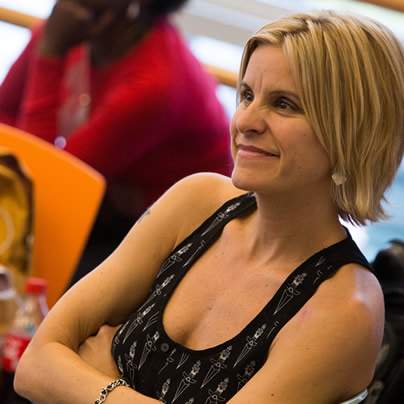
Actress Jenn Colella in rehearsal for ‘If/Then.’ (Photo by Matthew Murphy; courtesy National Theatre)

‘If/Then’
Through Dec. 8
National Theatre
1321 Pennsylvania Avenue, NW
$53-$93
800-514-3849

Early in her acting career, Broadway’s Jenn Colella was counseled that it would be unwise for her to be out professionally. When casting directors see you as lesbian, her advisors reasoned, they become less likely to cast you in straight romantic leads.

There was a time, Colella says, when she would have been reluctant to portray a lesbian on stage much less talk about her sexuality openly. But in recent years her outlook has definitely changed.

Today Colella is out and proud. She’s also playing one half of a lesbian couple in the hotly anticipated Broadway-bound musical “If/Then,” currently premiering at National Theatre. Created by Tom Kitt (music) and Brian Yorkey (book and lyrics), and staged Michael Greif (the creative team behind the Tony Award-winning “Next to Normal”), “If/Then” tells the story of Elizabeth (“Wicked’s” green-faced wonder Idina Menzel), a woman on the precipice of middle age who returns to New York City to reboot her life. The heady cast also stars LaChanze, who won a Tony Award for her portrayal of Celie in “The Color Purple, and out actor Anthony Rapp (“Rent”).

“I’m  thrilled to have the opportunity to play a gay character in ‘If/Then,’ especially someone like Anne,” says Colella, 39. “She’s a sassy fun-loving girl not unlike myself who’s in a relationship with Kate [LaChanze’s character]. Anne is madly in love and very sincere about taking it to the next level and actually tying the knot. It’s a very real look at a contemporary lesbian relationship. You don’t see a lot of that in musical theater.”

She says changing attitudes overall helped her loosen up.

“As I became older and wiser, and began noticing straight comrades realizing it was no longer fair to discriminate against gay and lesbian actors, being out got easier,” Colella says. “Also, I began to feel a responsibility to be out. I used to think it was entirely a personal choice, but now I think being out is also taking responsibility for others who may not have the courage to do so.”

Last year Colella was involved romantically with a male actor, but she doesn’t identify as bisexual because the vast majority of her relationships have been with women. Currently she is in a committed relationship with a woman who is studying for her master’s degree in midwifery.

Growing up in Summerville, S.C., Colella began singing early. She and mother frequently sang Barbra Streisand around the house, and while there weren’t many theatrical training opportunities in town, Colella took advantage of what was available.

“There was a woman who taught out of her garage, but my mom was a teacher and couldn’t afford the fees, so I traded odd jobs for classes. I was scrawny at 15 but I painted that lady’s entire house. And it was worth it. The group did ‘Oklahoma,’ and I got to play to Gertie.”

Before leaving South Carolina for the West Coast, she graduated from college and did some professional acting at the respected Trustus Theater in Columbia. She earned a master of fine arts in acting from the University of California, Irvine, and remained in L.A. determined to go the sitcom route. During this time, she got into standup.

“It was challenging. If you fail in standup you can’t blame anyone but yourself. But it definitely increased my confidence and now there’s really nothing that scares frightens me in terms of performance. Scarier were the fellow comics. They can be a dark bunch.”

Next Colella smartly reconsidered musical theater. In a high profile Broadway debut, she was cast as Sissy opposite Matt Cavenaugh in the musical “Urban Cowboy” in 2003. She went on to star in “High Fidelity,” and as Hedda Hopper in “Chaplin.” Her Off-Broadway credits include, among others, “Closer Than Ever” and “Slut.” She played Daisy in “Sideshow” at the Kennedy Center.

Prior to taking on “If/Then’s” Anne, Colella was cast as a lesbian just once before. In 2008 she starred off-Broadway as the title character in “The Beebo Brinker Chronicles” based on Ann Bannon’s pulp fiction novel about a young lesbian’s adventures in 1950s Greenwich Village.

“Beebo was a real butch,” Colella says. “I wore batteries in my front pockets to alter my center of gravity. My male and feminine energies are pretty equally balanced and in that way I’m more like Anne. But like Beebo, I have been accused of being a bit of a womanizer.”

Typically Colella does new work. Not by design, she says. It just happens that way.

“I’m honored that creators trust me to collaborate on their babies. It touches me deeply. Plus I get to start from a blank slate and play. Of all the characters I’ve ever played, Anne is the closest to who I am in the world. It makes me feel very vulnerable but I love it. I’m wide open to this experience.”

Advertisement
FUND LGBTQ JOURNALISM
SIGN UP FOR E-BLAST

a&e features

Tickets on sale for chef Patrick O’Connell’s book launch event

Sept. 18 kickoff to feature José Andrés, Tom Sietsema

Published

on

Acclaimed chef Patrick O’Connell is preparing to publish his new memoir, “Main, Middle & Gay” in September and he’s launching the book with an event on Sept. 18 at 6 p.m. at Lisner Auditorium featuring Chef José Andrés and former Washington Post food critic Tom Sietsema.

Tickets for the event go on sale Tuesday, July 21 at Ticketmaster; prices start at $55.

 O’Connell, who’s gay, is the pioneering Michelin-starred chef and longtime proprietor of the Inn at Little Washington. He spoke with the Blade about the September event and the launch of his first memoir.

 “I’ve known [Andrés and Sietsema] for more than 25 years and I have great respect for them,” O’Connell said. “I felt that it would allow us to add a different dimension rather than just have an interviewer. The chemistry will be fun and lively and unpredictable and exciting. I think we’re all different personalities and we’ll compliment each other.”

O’Connell has published cookbooks but this is his first memoir. The event will feature a short film that will highlight his work and the Inn.

“What I hope to do with the event is bring the book to life visually,” he said. “So we’re producing a short film that will be part of it. Most of the audience will not have read the book so it’ll give them a visual flavor of the book. It parallels the evolution of American cuisine over 50 years. It’s a rare perspective to be in the trenches for that long.”

The book’s title refers to the location of the garage on the corner of Main, Middle, and Gay streets in Washington, Va., where he launched his restaurant that became an international culinary destination. 

The Blade will publish the rest of its wide-ranging interview with O’Connell in September in conjunction with the book’s release.

Continue Reading

Arts & Entertainment

Sci-fi has long been at vanguard of LGBTQ representation

Story lines now criticized as ‘woke’ is weird

Published

on

Ncuti Gatwa as the Doctor and Jonathan Groff as Rogue lock lips in the long-running sci-fi show, 'Doctor Who.' (Screen capture via Doctor Who/YouTube)

Since I was a teenager, I have liked sci-fi because of the depth with which it explores social issues. At the time, I didn’t know that I was autistic and queer, so I couldn’t see myself in other autistic and queer people. Instead, I saw myself in androids, mutants, telepaths, and sometimes aliens who were portrayed as minorities persecuted by the human majority. It was a universal language for talking about alienation, systemic discrimination, conversion therapy, segregation, and internalized self-hatred.

Now, when so many sci-fi stories are being criticized online as “woke,” it seems weird for me. This is especially true when we are talking about franchises, such as the British TV series “Doctor Who” and American franchise “Star Trek,” both of which have always been remarkably progressive by the standards of their own time. 

Let’s take a closer look at “Doctor Who.”

In June 2026, the BBC cancelled the planned Christmas special, saying that viewers would have to wait longer for the next season after internal studio issues, and now the BBC is looking for new production partners. “Doctor Who” is the longest-running science fiction television series in the world, originally airing from 1963 to 1989 before returning in 2005. The future of the franchise is currently unclear, and many people online immediately began blaming “wokeness” for what had happened to their favorite show.

After all, the Doctor, an alien Time Lord who can regenerate and literally change faces, had traditionally been played by white men. But the last, Fifteenth Doctor was played by Ncuti Gatwa, a Black Scottish-Rwandan actor who has publicly identified as queer (and the doctor himself was first presented as queer character after a queer romantic episode where he kissed a man), while the Thirteenth Doctor was played for three seasons by Jodie Whittaker, the first woman to portray the Doctor. In 2023, the series also introduced Rose Noble, a trans feminine nonbinary teenager and supportive character played by transgender English actress Yasmin Finney.

But despite popular stereotypes online, “Doctor Who” did not suddenly “go woke.” The program has existed in two main eras: the classic series, which aired from 1963 to1989, and the modern revival, which has been broadcast on BBC One since 2005.

Even in the 1960s, one of the program’s earliest stories, “The Daleks” (1963–64), presented an obvious allegory for fascism, racial purity, bigotry and the horrors of war. Throughout the classic era, the Doctor frequently opposed militarism, authoritarian governments, and dictatorships. Many fans have also pointed to moments of queer coding and subtext throughout the classic series.

However, openly queer characters appeared as soon as the modern revival began. 

The 2005 revival introduced Captain Jack Harkness, played by John Barrowman, one of the first openly queer recurring characters in the “Doctor Who” universe. He openly flirted with people regardless of their gender and later became the lead character of the spin-off series “Torchwood.” “Torchwood” went even further with LGBTQ representation, featuring multiple queer characters, including trans and nonbinary characters whose identities were treated as a normal part of the story.

“Doctor Who” has always been remarkably progressive for its time. The franchise doesn’t suddenly change its values, it’s always been “woke.”

The same happened with the American franchise “Star Trek.” 

It is widely known as one of the most openly left-wing and progressive television franchises ever broadcast. The original series, which aired from 1966-1969, was created during the Cold War and featured the utopian United Federation of Planets, a society without poverty or money that can be characterised as socialist or even communist. It also featured Lt. Uhura, played by Nichelle Nichols, a Black woman serving as a highly respected bridge officer at a time when Black women weren’t portrayed in positions of authority on American television. The series also included one of the first interracial kisses in modern American television, between Capt. James T. Kirk (William Shatner) and Uhura in the 1968 episode “Plato’s Stepchildren,” a moment that had a significant cultural impact.

Gene Roddenberry, the creator of the franchise, said that he had wanted to include openly queer characters as well, but believed it would have been impossible to keep the show on the air because it had already pushed social boundaries in so many other ways.

Today, many viewers — including Elon Musk — claim that “Star Trek” has only recently become “woke.” In reality, I think it actually became less radical than the original series. Even queer characters are not a recent addition to the franchise. One of the earliest major queer characters appeared in “Star Trek: Deep Space Nine” (1993–1999): the Trill officer Jadzia Dax, played by Terry Farrell. In the 1995 episode “Rejoined,” she shared one of the first same-sex kisses in the history of the franchise.

However, for some reason, it was the openly gay couple Paul Stamets (Anthony Rapp) and Hugh Culber (Wilson Cruz) inStar Trek: Discovery” (2017–2024), together with the trans Trill character Gray Tal, played by trans actor Ian Alexander, that triggered a major backlash among conservative parts of the fandom. That backlash reached another peak with “Star Trek: Starfleet Academy,” which features the canonically gay Klingon cadet Jay-Den Kraag. The actor has spoken about receiving abuse and threats because of the role, despite the fact that there was nothing especially ideological about his character. He was simply a gay character whose sexuality was only one aspect of who he was. In fact, considering the ideals of the original “Star Trek,” I was more surprised that the franchise still includes relatively few trans or polyamorous characters, and that they are not part of the lead cast. After all, the franchise was created to imagine a future that was ahead of its time.

So why do conservatives and anti-LGBTQ people continue to watch franchises that have always been deliberately progressive? And why do they keep claiming that these shows have only recently “gone woke”?

A more logical explanation is that parts of the audience have become less willing to accept the same kinds of progressive ideas that these franchises have embraced for decades. In other words, it is not the shows that fundamentally changed. Some long-time viewers have become more conservative than they were in their youth, while newer conservative audiences have joined them and begun criticizing franchises without knowing their real history. 

In many ways, geeks have changed more than these shows have. Sci-fi hasn’t “gone woke.” Some of its fans have simply become less comfortable with the same progressive values these franchises have promoted for decades.

Continue Reading

Photos

PHOTOS: Vitamin C at JR.’s

Live drag show follows ‘Drag Race All Stars’ viewing party

Published

on

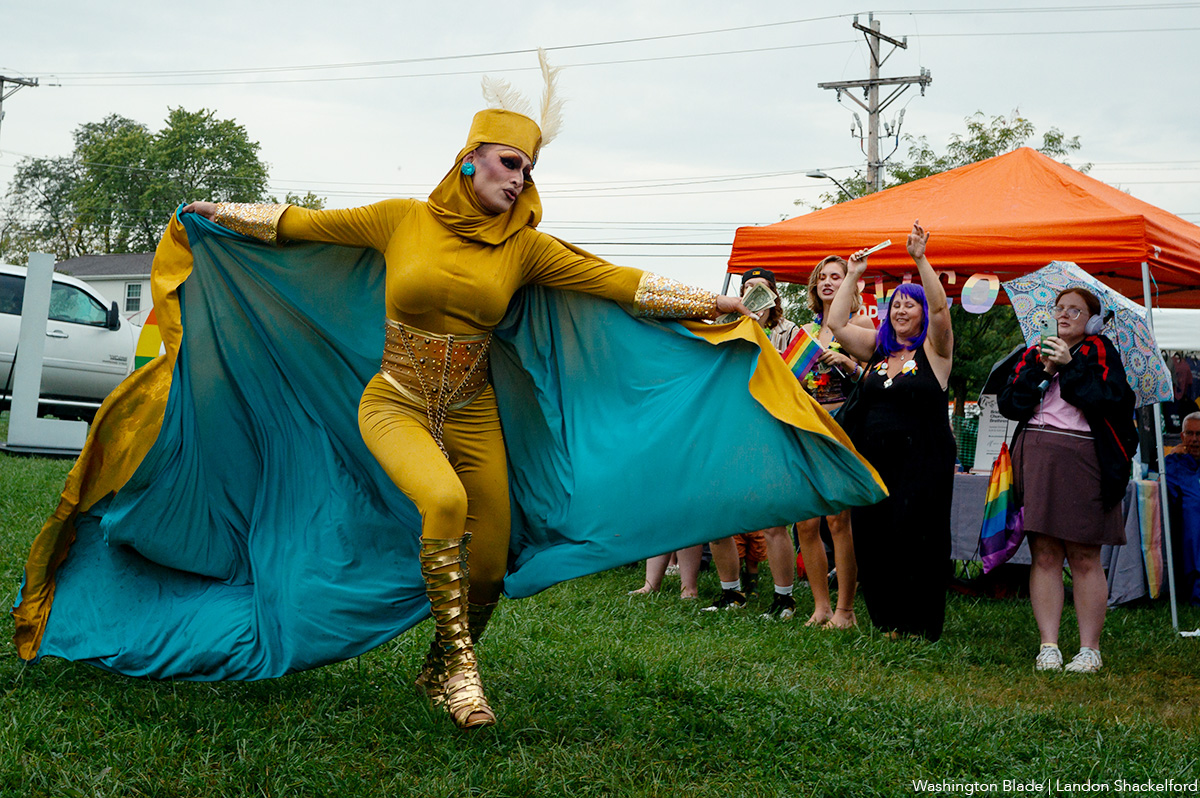
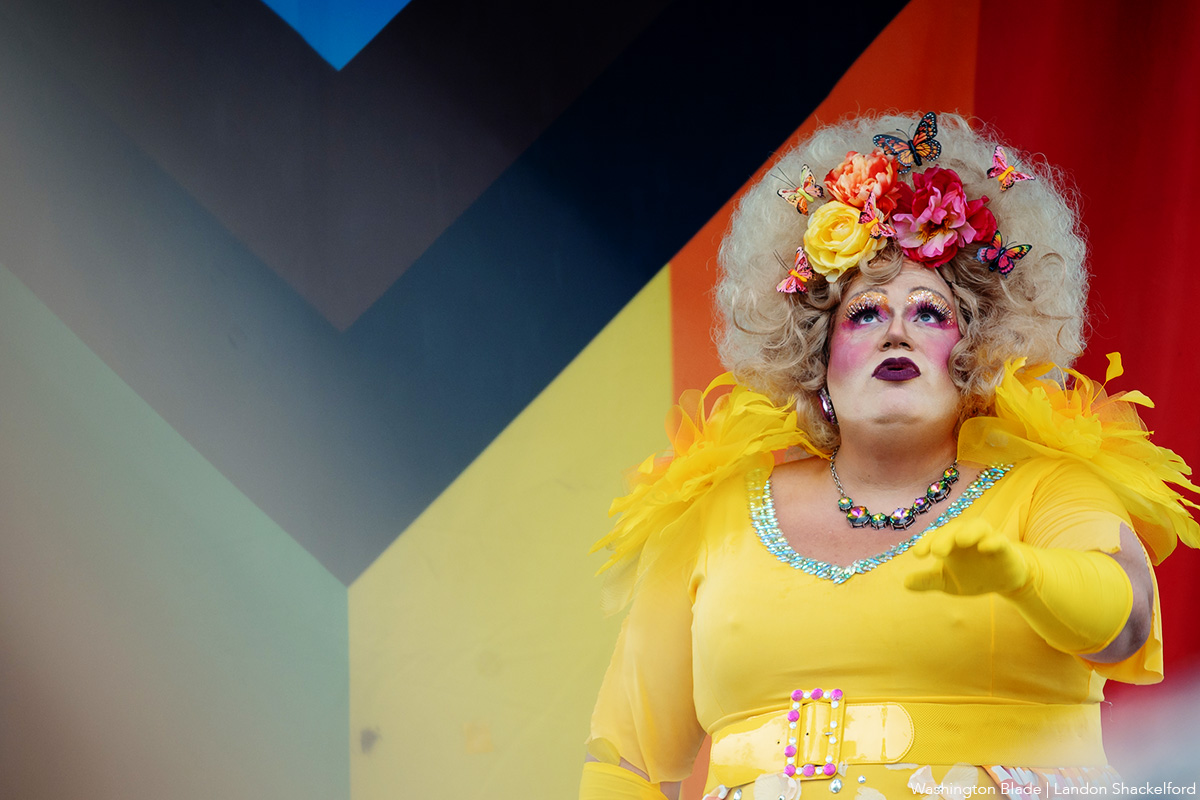
Brooke N Hymen performs at JR.'s at the Vitamin C drag show on Friday. (Washington Blade photo by Landon Shackelford)

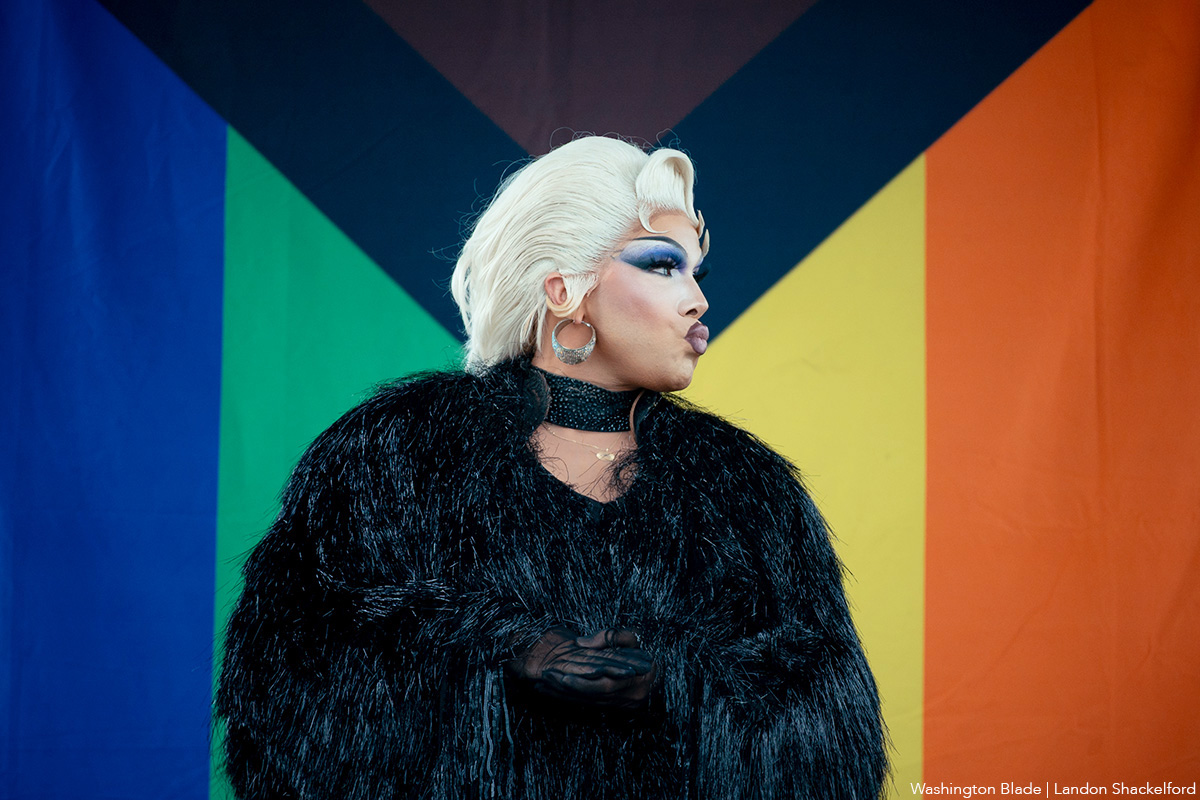
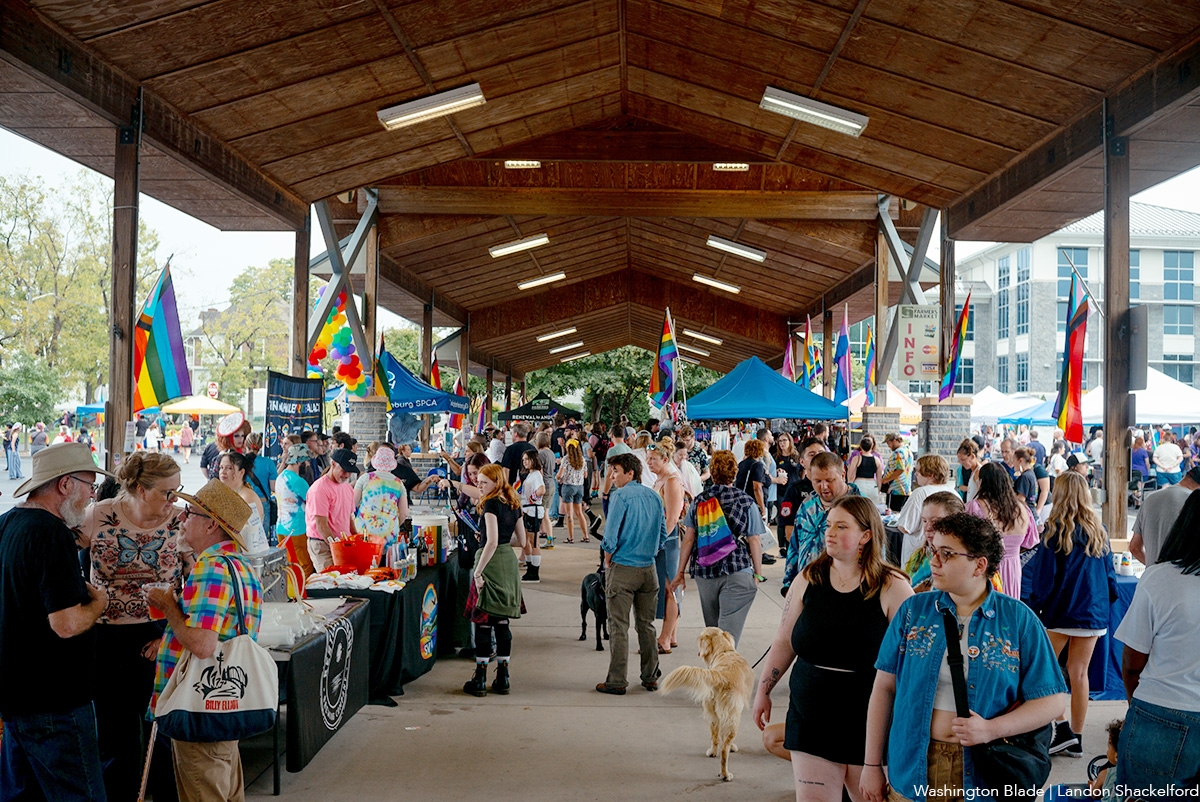
JR.’s Bar held a “RuPaul’s Drag Race: All Stars” watch party followed by a live drag show on Friday, July 17. The Vitamin C weekly drag show was hosted by Citrine with performers Brooke N Hyman and Rosie Beret.

(Washington Blade photos by Landon Shackelford)
Continue Reading

Popular