News
Lawmakers seek fed’l recognition for Michigan same-sex marriages
Delegation calls on DOJ to clarify whether administration will recognize unions
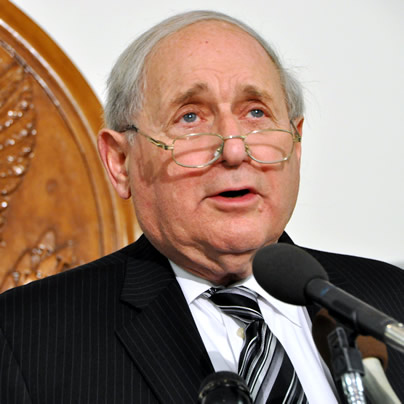
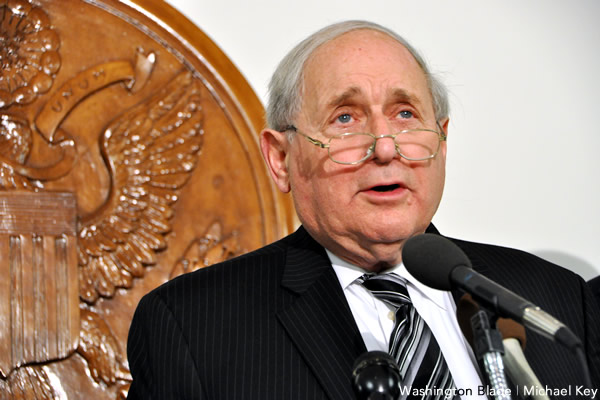
Sen. Carl Levin (D-Mich.) is among the lawmakers calling for federal recognition of Michigan same-sex marriages (Washington Blade photo by Michael Key).
In a letter dated March 27, six lawmakers — led by Rep. Dan Kildee (D-Mich.) — called on U.S. Attorney General Eric Holder to recognize the marriages in the wake of a federal district court decision striking down the state’s ban on same-sex marriage.
“The Court’s decision was a historic step toward equal protection for all American families, regardless of sexual orientation,” the lawmakers write. “By clarifying the federal status of these now married same-sex couples in Michigan—as you did in January for similarly situated same-sex couples in Utah—you can take another step toward full equality.”
Lawmakers seek federal recognition of the same-sex marriages performed on Saturday in Michigan prior to an indefinite stay placed on the weddings by the U.S. Sixth Circuit of Appeals. Gov. Rick Snyder, a Republican who’s seeking re-election, said Wednesday the state recognizes the marriages as legal, but won’t afford the couples state benefits unless the stay is lifted.
But the Justice Department hasn’t yet announced a decision on whether federal benefits would flow to the couples. The department didn’t immediately respond to a request to comment on the letter from Michigan’s federal delegation. Allison Price, a Justice Department spokesperson, had said earlier this week the administration is “closely monitoring the situation.”
Six Democratic members of Michigan’s federal delegation to Congress signed the letter. In addition to Kildee, Reps. John Dingell (D-Mich.), Sander Levin (D-Mich.) and Gary Peters (D-Mich.) signed the letter as well as both U.S. senators from Michigan: Carl Levin (D-Mich.) and Debbie Stabenow (D-Mich.).
The only Democratic member of Michigan federal delegation not to sign the letter is Rep. John Conyers (D-Mich.). His absence is noteworthy because he supports marriage equality and was chief sponsor of the Matthew Shepard & James Byrd Jr. Hate Crimes Prevention Act, which extended federal hate crimes protections to LGBT people. Conyers’ office didn’t immediately respond to a request to comment on why his name was absent from the letter.
None of the nine Republicans making up the 16 members of Michigan’s federal delegation to Congress signed the letter.
Mitchell Rivard, a Kildee spokesperson, deferred to the Republicans as to why their names are absent from the missive.
“The Democratic delegation, as demonstrated by today’s letter calling for federal recognition of the legal marriages performed last week, are certainly unified in standing for equality for all Michiganders,” Rivard said.
Among the couples who wed in Michigan on Saturday were Anne Callison, 37, and Kelly Callison, 34. The couple, who has a two-year-old named Corbin, married in Ann Arbor, Mich., after being been together five years.
During a conference call with reporters, Anne said recognition of her marriage is important so that Kelly has second-parent adoption rights for their son. Kelly is the egg donor for Corbin, but Anne is the birth mother.
“I would say the thing that’s the most scary is that in order for Kelly to do things like pick him up from child care…access his medical records, all of that means that I have to give permission ahead of time,” Anne said. “Kelly is a stay-at-home mom, and I am working full-time. She should be able to do those things.”
Taking issue with Snyder’s decision not to allow benefits to flow to her and her spouse, Anne said she doesn’t understand why a stay being in place halting additional same-sex marriages led to that decision.
“I’m married, I have a Michigan marriage certificate, it has a seal and witnesses,” Anne said. “I don’t know how much more legal it can get than that.”
For her part, Kelly said the lack of recognition of her marriage continues to build “stress and anxiety” for her entire family.
“We have a two-year-old son that is the center of our lives and because of Gov. Snyder not recognizing a marriage that he himself said is a legal marriage, but the state won’t recognize [it], just adds to the stress that what goes on with our daily lives,” Kelly said.
Under the current situation, Kelly said the couple carries around a notebook of documents to ensure she can make medical and other important decisions for Corbin.
In a statement, Kildee said Anne and Kelly’s union should be recognized by both the state and federal government, criticizing Snyder and Michigan Attorney General Bill Schuette for not allowing benefits to flow to the couple.
“Legally-performed marriages like Anne and Kelly’s should be fully recognized under the law, both at the state and federal level,” Kildee said. “It’s a shame to me that Gov. Snyder and Bill Schuette continue to work around the clock to deny these committed couples the same opportunity for love and happiness that they enjoy themselves.”
The situation in Michigan is along the lines of what happened in Utah after a district court ruling enabled an estimated 1,300 same-sex couples to wed in the state until the U.S. Supreme Court halted the weddings by issuing a stay pending appeal. Gov. Gary Herbert announced his state won’t recognize the weddings pending appeal, but U.S. Attorney General Eric Holder said the state would recognize for the purposes of federal benefits.
Prior to Holder’s announcement, Human Rights Campaign President Chad Griffin wrote a letter to the attorney general, saying there’s no need to think the Utah marriages are invalid.
The Human Rights Campaign issued an organizational statement late Thursday calling for the federal recognition of same-sex marriages performed in Michigan.
“The Department of Justice under Attorney General Eric Holder has been a remarkable leader in the fight for equal recognition of marriage for lesbian and gay couples,” the statement says. “Their decision to recognize marriages performed in Utah during the period when gay couples were granted licenses was legally sound and morally right. The Human Rights Campaign has encouraged the Department to apply the same principles to the Michigan marriages that happened recently and we have every reason to believe that they will continue being champions of the LGBT community.”


2026 Midterm Elections
Annie Andrews denounces trans athletes after Trump targets her
President used anti-trans slur to describe SC Senate candidate

Days after President Donald Trump called Annie Andrews, the cisgender Democratic nominee for South Carolina’s U.S. Senate seat, an anti-transgender slur on social media, Andrews came out against transgender girls and women participating in sports.
Trump called Andrews a “trannie” on Truth Social while attempting to garner support for her opponent, U.S. Sen. Darline Graham (R-S.C.), the incumbent seeking reelection in South Carolina.
After the president’s use of the slur was widely reported, the incident provided an opportunity for Andrews to explain her position on the ongoing trans debate that has shaped political discourse in the 2020s, despite trans people making up only 1 percent of the U.S. population, according to the Williams Institute.
She used the opportunity to denounce trans rights and pointed out that, as a physician, she had never performed gender-affirming surgery on minors.
“I want you to hear me loud and clear: I don’t support biological men playing women’s sports, and I don’t support and haven’t ever performed gender surgery for minors,” Andrews said in a political ad.
Despite these recent developments, Andrews has previously voiced support for trans South Carolinians. In 2022, she posted on her X account, criticizing the Save Women’s Sports Act, which was signed into law by Republican Gov. Henry McMaster and restricts trans girls from participating on girls’ sports teams.
“This is shameful legislation that does nothing to protect or support women or children in SC. In fact, it is actively harmful. I will always support trans youth,” Andrews wrote in after the legislation passed.
The Washington Blade reached out to Andrew’s campaign about the comments, and asked if she supports trans rights but did not receive a response.
2026 Midterm Elections
On Republican Long Island, gay Democrat Chris Gallant bets on public service over politics
Chris Gallant sat down with the Blade ahead of his race for NY’s 1st congressional district.
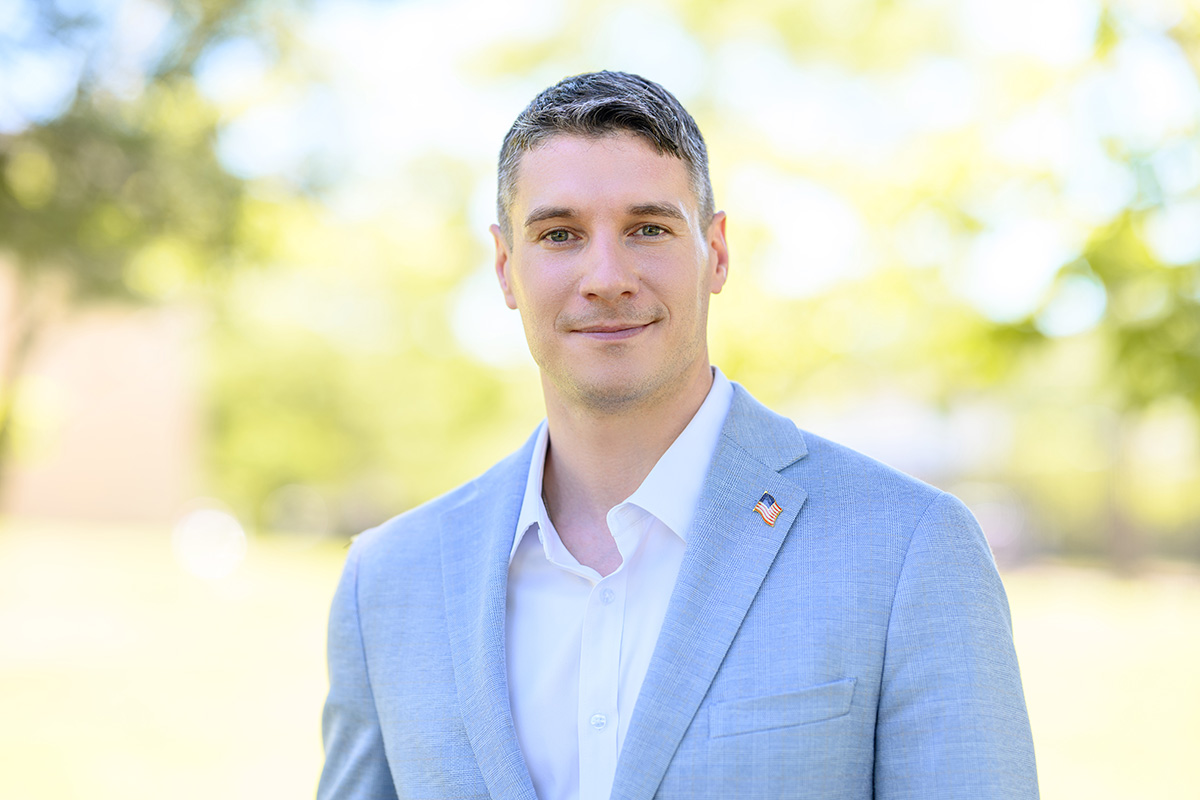
New York’s Long Island, which is just 50 miles from the Stonewall Inn, is a reliably red enclave where President Trump won easily in 2024.
Chris Gallant, an openly gay Democrat running for New York’s 1st Congressional District, which includes the eastern side of Long Island, is trying to capitalize on what he sees as growing frustration with the Republican Party and its ability to deliver for everyday Americans.
The Blade sat down with Gallant to discuss his move from civil servant to the fight for public office, how he has been personally impacted by the changes from the Trump administration, and the recent release of photos from his past that have brought the national spotlight his way.
Gallant has a long record of public service that, on paper, would make him an unconventional but compelling candidate for a heavily Republican district. His résumé includes New York Army National Guard service that began when he was 17, multiple overseas deployments, including multiple tours in Kuwait, work as an FAA air traffic controller, union leadership and service as a volunteer firefighter.
That record of service is central to how Gallant describes himself — particularly as he navigates the unusual combination of being an openly gay candidate, a military veteran, and a Democrat running in a district where Republicans have historically held the advantage.
“My fiancé and I both serve in the military and we built our relationship through trust, timing, and a lot of miles between us,” his campaign website says, highlighting the idea of family values that has become a central part of winning the area. “I’ve been openly gay in the military since just after ‘Don’t Ask, Don’t Tell’ ended, and I’ve learned to speak plainly, hold the line, and back up what I say. I’ve also learned how to listen — and how to bring people with very different views to the table and actually make progress.”
Gallant said that record, rather than his sexual orientation, is what should define his candidacy.
“I think who I am as a person is an asset,” he told the Blade when asked if his sexuality has played any role in his decision to run. “I’m not running because I’m gay. I’m running, and,’Oh, I’m gay.’ It’s part of my identity. It’s just a part of who I am. But it’s not necessarily on the table because that shouldn’t make a difference on how I’m going to respond in Congress or how I’m going to run into a burning building. I don’t think those things necessarily matter so much.”
For Gallant, the campaign is ultimately about something broader than identity politics. He said he is running because he wants to restore Americans’ confidence in a government that he says has become less about its people and more about the wealthy leaders in charge.
“I’ve always said that part of the reason why I am running for Congress is because I want to restore faith in our government,” he said. “We’re all drastically exhausted with what’s going on in this world, and particularly with Donald Trump being in office, [his] type of politics, and the way he works, essentially. When Biden got into office after Trump won, it was like the release of a pressure cooker… the pressure cooker is just even worse now this second time around.”
He also explained that his experience working inside the federal government has shaped how he believes Washington should approach its problems. Gallant pointed specifically to the Trump administration’s efforts to reduce the size of government and the role of the Department of Government Efficiency (DOGE), arguing that cutting government spending should not mean indiscriminate cuts.
“I understand that we as a nation need to save money, or at least fix the budget or balance it. We are getting further and further in debt … The budget is always a huge issue and something that we definitely 100% need to fix. But we need to do it with experts and, you know, attack these issues with a scalpel, not a chainsaw.”
The chainsaw Gallant mentioned is a clear reference to controversial Trump supporter Elon Musk, who announced he would be heading the highly politicized DOGE agency, where he, the first-ever trillionaire, brandished a shiny chainsaw symbolic of them cutting government spending with no regard for the impact on everyday Americans.
That philosophy, of scalpel over chainsaw, is also part of Gallant’s argument to voters who may be more accustomed to voting Republican. He does not present himself as a traditional politician, but rather as someone whose career outside politics could be an asset in Congress.
“I’m not a politician. This is my first foray into politics, and I think that’s what our politics need. We need fresh new faces, not career politicians. Someone who has brand new ideas, not tainted by politics. So I would say, give me the opportunity to prove myself, because, you know, until I actually get there and I can actually do a job, we won’t know.”
Gallant also shared signs that the political landscape on Long Island may be shifting. He pointed to gains Democrats made across the district last November and said economic concerns could further erode Republican support.
“Last November, in this district we [Democrats] gained 13 and 14 points across the district..And this district lost by 10 points last year. So even just in one year, you can tell that there’s a difference.”
The swapping of support from the Republican side to Democratic reflects the real concern voters have about the economy — impacted by the war in Iran, tariffs, and growing inflation.
“People are feeling it here in their pockets. The cost of living here on Long Island is already high, and things are just getting worse. There’s a lot of promises that were made with this administration that weren’t kept.”
Gallant said that frustration has directly translated into support from some voters who previously backed President Donald Trump.
“I know a lot of people who have voted for Donald Trump that have my lawn sign on their front lawn today. If that’s the change that they’re looking for, I’m going to provide it.”
But Gallant’s campaign has been complicated by a very different kind of political issue: the publication of photos from his past that have become a national story.
The photos, which include pictures of Gallant wearing various fetish gear for Mr. S Leather — including a harness and a collar — were shared with the New York Post.
Gallant has consistently rejected the idea that he should be ashamed of the images or that they undermine his qualifications for public office since their Sept. 13 publication. Instead, he has argued that his record of service should be considered alongside a private chapter of his life from 15 years ago.
“I mean, look, I’m totally not ashamed of who I am as a person. Those pictures were taken in my private life. I can still run into a burning building faster than most people. I can still fly a helicopter. And those are from 15 years ago, right? I built an entire life based around my commitment to the military and the Army National Guard.”
Rather than allowing the controversy to define him, Gallant said he hopes it can become part of a broader conversation about privacy and the consequences of living in a digital age — and indicated that this sort of scenario would become something semi-regular for those who grew up with technology.
“The reality is that we live in a digital age.This is what our generation is going to be stuck with. I laugh all the time because this is the reason why Congress and the Senate are about to die in their chairs. They didn’t have cameras and pictures and photos like that.”
“If I have to be the person to wave the banner now to fight and advocate for not only our community but anybody that could be put in this situation, that realizes now that we’re living in a digital age and this is what the future is going to be. It’s, you know, everything’s left online now.”
That argument extends beyond his own campaign. Gallant said he worries that the prospect of having a digital footprint scrutinized could discourage highly qualified and passionate potential public servants from seeking office.
“I understand that getting into public life means that the rest of your life becomes public. I get it, I do. But I also feel bad because there’s a lot of good people out there wanting to do a job in the public world, and they’re just afraid of what their digital footprint might have on them or might—what might exist because we’ve done things when we’re 12 or 15, or 20, or 30, or whatever.”
“I think living in this digital world, I would love to advocate for people to say, ‘How do we prevent some of these things from coming out into the public view so people can still maintain some kind of a private life?’”
For an openly gay candidate, the issue also carries a particular significance. Gallant said his experience has made him more interested in advocating for other LGBTQ people who may hesitate to enter public life because of what could eventually surface online.
His own LGBTQ policy priorities are relatively focused. He said adding further protections for same-sex marriage in federal law would be one of the issues he would want to pursue if elected, particularly as questions about the Supreme Court’s future approach to marriage equality continue to loom.
“My partner, who’s my fiancé, is currently deployed. We got engaged before he left in December because if the question came up to the Supreme Court– whether gay marriage was going to be a thing– we had to question whether, when he got back from deployment after Christmas this year, whether we were actually going to be able to legally get married.”
“I mean, these are questions that shouldn’t even be questions anymore. So if we can put something like [codifying same-sex marriage] into law, where it’s just not a Supreme Court decision and it can get overturned, like Roe v. Wade, then let’s do it.”
Gallant’s opponent, Rep. Nick LaLota (R-N.Y.), is the two-term incumbent and has a mixed record on LGBTQ rights. LaLota has been vocal in his opposition to overturning Obergefell v. Hodges, the Supreme Court case that established the constitutional right to same-sex marriage, but he has also been outspoken in his opposition to transgender rights. He co-sponsored and voted for H.R. 28, the Protection of Women and Girls in Sports Act, which would restrict participation in women’s sports based on sex assigned at birth rather than gender identity.
Gallant, on the other hand, has few official positions on LGBTQ issues but assured the Blade that, if elected, he would become “an advocate, particularly for the LGBTQ community.”
He also said he believes same-sex marriage should be codified into law and that nondiscrimination protections should be expanded. “I would definitely be pushing no discrimination against anyone for any reason — and that should not have any place in any workplace — especially on the federal government level.”
For Gallant, however, LGBTQ rights are only one part of a broader platform centered on public service, affordability and restoring trust in government.
He repeatedly returned to the idea that a member of Congress should be accessible to the people they represent — something he believes his experience holding town halls and working directly with members of his community demonstrates.
“I always find that a record of service and showing up every day at work and in our communities is what’s going to be key and important. And I think that’s what a representative needs to do. As a representative you’re supposed to represent and work with the people that elect you to office. And so that’s what I’m going to make sure I start today.”
Current prediction markets give LaLota a significant advantage over his challenger, with the incumbent holding an 81 percent chance of winning compared with Gallant’s 19 percent.
Japan
Report: LGBTQ exclusion costs Japanese economy billions a year
Open for Business findings coincide with marriage equality fight

LGBTQ exclusion may be costing Japan as much as ¥16.42 trillion ($10.35 billion) annually, according to a new report by Open for Business, which argues that greater inclusion could help address the economic pressures facing a country with a shrinking population and workforce.
Japan’s population is projected to decline from 126.15 million in 2020 to about 87 million by 2070, according to the National Institute of Population and Social Security Research. As the country confronts a shrinking workforce; the economic stakes of retaining talent, improving productivity, and ensuring that LGBTQ people can participate fully in the economy are becoming increasingly significant.
Open for Business estimates that the costs extend beyond lost earnings.
The organization attributes between $25.1 billion to $75.1 billion annually to the excess economic burden associated with depression, suicide and self-harm, cardiovascular disease and HIV/AIDS, and another $12.2 billion to $26.2 billion to lost earnings linked to the LGBTQ wage gap.
A 2026 survey by Dentsu Japan, the Japanese arm of global advertising and public relations company Dentsu Group, found that 10.6 percent of respondents aged 20-59 identified as LGBTQ, up from 9.7 percent in 2023. The survey polled 46,658 people living in Japan.
The report argues that Japan already has the foundations for greater LGBTQ inclusion; pointing to public support, corporate leadership, and growing legal momentum. Progress on these fronts, it says, could reduce the economic costs of exclusion, strengthen workforce participation and help Japan remain competitive.
“For Japan, LGBTQ inclusion is not simply a question of fairness. It is part of the country’s economic resilience,” the report states.
Japan does not legally recognize same-sex marriages at the national level, but partnership systems have spread across local governments. As of 2024, municipalities operating such systems covered nearly 93 percent of Japan’s population. The certificates can help couples access certain services, but they do not carry the same legal status as marriage, including in areas such as inheritance and medical decision-making.
The absence of marriage recognition can leave same-sex couples facing uncertainty over hospital access, medical decisions, and survivor benefits. It can also complicate employers’ decisions about spousal health coverage, relocation assistance and family leave, particularly when policies depend on a marriage recognized under Japanese law.
Japan’s PRIDE Index, administered by the nonprofit Work with Pride since 2016, evaluates corporate initiatives related to LGBTQ employees across five categories, awarding Bronze, Silver or Gold ratings. In 2025, 931 companies headquartered in Japan were assessed, with 80 percent receiving the highest, Gold rating.
Despite progress in corporate inclusion, workplace practices remain uneven.
A 2026 workplace white paper by Nijiiro Diversity found that 55 percent of surveyed employees reported no concrete LGBTQ measures at their workplaces. A separate 2025 survey found that 30 percent of professionals had experienced workplace discrimination or bias based on sexual orientation, while 27 percent reported bias based on gender identity. Only about one-third said they felt comfortable disclosing their sexual orientation or gender identity at work.
The report also points to disparities in HIV and STI outcomes.
Men who have sex with men accounted for an estimated 82 percent of newly diagnosed HIV cases in Japan, according to the report. In a separate study at a Japanese gender-affirming clinic, researchers screened 275 transgender and gender-diverse patients and found that 6.2 percent tested positive for HIV or another sexually transmitted infection. All were asymptomatic when tested.
The report also estimates substantial losses from the LGBTQ wage gap.
It puts Japan’s total earned income at about $1.81 trillion, of which LGBTQ workers account for an estimated $175 billion, or 9.7 percent. Applying a wage gap of 7 to 15 percent, a range the report says is supported by OECD analysis, yields an estimated $12.3 billion to $26.3 billion in lost wages annually. Japanese research cited in the report also points to economic disparities among transgender workers, who are disproportionately represented in non-regular employment and lower-income groups.
“Public attitudes and many leading companies have moved considerably, but national frameworks and everyday workplace experience have not yet caught up. That creates both a challenge and an opportunity,” said Open for Business CEO Ken Janssens. “Japan’s population is projected to fall from roughly 125 million in 2020 to fewer than 87 million by 2070, while its working-age population is already contracting. The country ranks 14th globally for talent appeal but 55th for talent readiness, according to the report. In that context, Japan simply does not have talent to waste. Every worker who is less healthy, less productive, pushed into lower-paid work or unable to participate fully because of discrimination represents a cost that becomes harder to absorb as the labour force shrinks.”
Janssens further told the Washington Blade that the report’s ultimate message is that LGBTQ inclusion is a question of fairness, but in Japan, it is increasingly a question of economic resilience as well. The foundations for further progress are already there. The challenge now is to convert visible corporate leadership and social momentum into consistent practice and clearer protections.
Akira Nishiyama, a spokesperson for the Japan Alliance for LGBT Legislation, told the Blade that Japan’s business sector has pushed for stronger legal protections for sexual and gender minorities.
In 2017, the Japan Business Federation, known as Keidanren, announced a policy calling for nondiscrimination based on sexual orientation and gender identity. Its chairperson also stressed the importance of legislation explicitly prohibiting such discrimination in 2023.
Nishiyama added Japan’s laws addressing workplace power harassment cover harassment based on sexual orientation and gender identity, outing someone without their consent, and forcing or pressuring someone to disclose or conceal their identity. Employers and local governments are required to take measures to prevent such harassment.
“While such legal frameworks and social momentum continue to advance, a law prohibiting discrimination based on SOGI has still not been enacted,” said Nishiyama. “In other words, legal measures to address discriminatory treatment, such as discriminatory hiring refusals, unreasonable transfers, and coerced resignations, are still insufficient. When legislations are needed to bridge this gap, I believe that initiatives promoted by the business sectors as well as the issuance of clear policies aimed at prohibiting discrimination, will serve as one of the major driving forces in this effort.”
Makiko Terahara, co-representative and leader of the business collaboration team at Marriage for All Japan, told the Blade that the figures are estimates and that the report does not claim legal reform alone would eliminate the economic losses.
“But the connection is real. Without marriage, same-sex couples have no spousal status for inheritance, tax, social security or medical decision-making. Without anti-discrimination legislation, employees have no clear legal remedy. This insecurity drives the concealment, stress and wage gaps that the report quantifies. So yes, I believe stronger legal protections would have a measurable impact on health, retention and Japan’s ability to attract talent,” she said.
Terahara also noted to the Blade the report cites a study finding that living in a municipality with a partnership system was not associated with better mental health. She said symbolic recognition without legal rights is not enough.
“The report confirms that Japanese society and business are already ahead of national law,” said Terahara. “Public opinion and leading companies have moved, and the remaining gap is in legislation. The report shows that marriage equality is not only a human rights issue but also an economic one, and that the cost of inaction is being paid now.”
The Open for Business report can be read here.

Horror genre has evolved into space to explore queer identity

Annie Andrews denounces trans athletes after Trump targets her

On Republican Long Island, gay Democrat Chris Gallant bets on public service over politics

Report: LGBTQ exclusion costs Japanese economy billions a year

Center for Black Equity honors leaders, activists at BE. Gala

Bar Betsie, inviting and intimate, marks one-year anniversary

Bet Mishpachah participates in D.C. Oct. 7 commemoration ceremony

Man charged in Mall of America shooting plot inspired by Pulse massacre: report

ICC unseals arrest warrants for Taliban officials accused of persecuting LGBTQ people, women

Physician: addiction doesn’t always look the way you think it does
-

 a&e features5 days ago
Bar Betsie, inviting and intimate, marks one-year anniversary
-
District of Columbia5 days ago
Bet Mishpachah participates in D.C. Oct. 7 commemoration ceremony
-
National5 days ago
Man charged in Mall of America shooting plot inspired by Pulse massacre: report
-
Afghanistan4 days ago
ICC unseals arrest warrants for Taliban officials accused of persecuting LGBTQ people, women