Local
Attack ad blames Mendelson for rise in hate crimes
Council chair, activists dispute accuracy of campaign ad
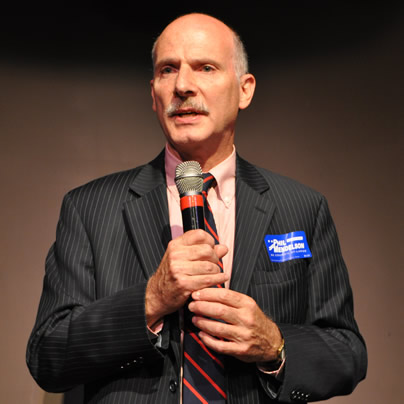
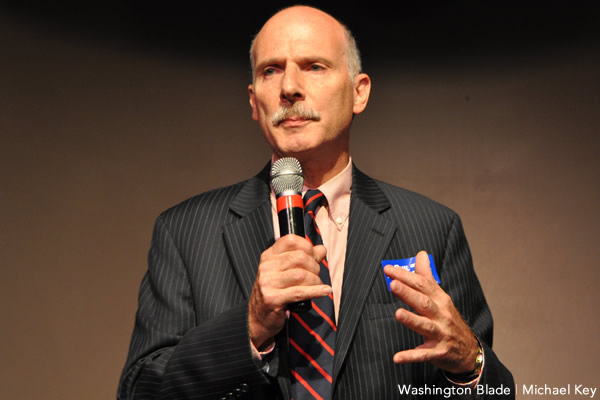
‘Rather than doing nothing, I publicly disagreed with the MPD’s decision to reorganize the GLLU,’ said Council Chair Phil Mendelson. (Washington Blade file photo by Michael Key)
LGBT activists are defending D.C. Council Chair Phil Mendelson (D-At-Large) against an election campaign ad by the D.C. police union that accuses him of failing to take steps to prevent the number of anti-LGBT hate crimes from nearly doubling between 2009 and 2011.
The Fraternal Order of Police, Metropolitan Police Department Labor Committee (FOP), which serves as a police union, is calling on city residents to “vote no on Phil Mendelson” in the April 1 primary in which he is running for re-election.
Rick Rosendall, president of the Gay and Lesbian Activists Alliance; transgender activist Jeri Hughes; and gay activist and Advisory Neighborhood Commissioner Bob Summersgill called Mendelson a champion of LGBT rights and disputed the FOP’s claim that he didn’t adequately respond to hate crimes targeting the LGBT community.
In what appears to be a first-of-its-kind attack ad accusing a politician of failing to protect the safety of the LGBT community, the FOP ad says that when Mendelson was chair of the Council’s Judiciary and Public safety Committee in 2009, he “sat by and did nothing as the Metropolitan Police Department’s Gay and Lesbian Liaison Unit (GLLU) was dismantled.”
The ad, which the FOP posted on its website and placed in the Washington Blade, goes on to say, “The result of Mendelson’s failure to act? The police department’s effectiveness in responding to hate crimes was weakened and it led to an almost 50 percent jump in hate crimes based on sexual orientation.”
Kristopher Baumann, chair of the FOP, told the Blade that LGBT organizations and activists joined the FOP in 2009 in criticizing a decision by the police department to reorganize and restructure the GLLU in a way that most activists said would decrease its effectiveness.
Baumann noted that concerns about the GLLU reorganization were found to be correct by a report assessing the police handling of anti-LGBT hate crimes released earlier this year. The report was prepared by an independent task force created and led by the Anti-Defamation League of the national capital area at the request of D.C. Police Chief Cathy Lanier.
Most LGBT activists don’t dispute the findings of the task force report that the reorganization of the GLLU by Lanier led to its becoming less effective in addressing hate crimes and led to strains in relations between the LGBT community and the police department. But Mendelson and some of his LGBT supporters, including Rosendall and Hughes, dispute the claim that Mendelson was responsible for these developments.
“The charge is inaccurate and false,” Mendelson told the Blade in a statement on Monday. “Rather than doing nothing, I publicly disagreed with the MPD’s decision to reorganize the GLLU, and this was the subject of a number of public hearings that I held — including several specifically focused on hate crime and MPD’s handling of hate crime,” he said.
Mendelson said he held separate hearings on hate crimes and determined that the increase in hate crimes targeting the LGBT community was likely due, in part, to improved reporting of hate crimes on the part of LGBT victims rather than an actual increase in the number of such crimes.
“It’s easy for negative campaigns to level false charges days before an election, but the charges neither comport with the facts, nor are echoed by any of the LGBT groups that have actually worked on this problem,” Mendelson said.
“This campaign to hold Phil Mendelson accountable is nothing more than an egregious campaign to smear and malign,” said Hughes. “I know several rank and file officers,” she said. “None of them feel that Phil Mendelson deserves this abuse – none.”
Baumann, who has been a longtime critic of Chief Lanier, said Mendelson held “hearing after hearing” but chose not to take legislative action to correct longstanding problems associated with hate crimes reporting and the police Gay and Lesbian Liaison Unit.
Mendelson said the hearings were productive and that none of the LGBT advocacy groups or Baumann proposed legislative changes at that time.
“They forced MPD to address the issue — prior thereto they were downplaying it,” Mendelson said of the hearings. “Police handling of [hate crimes] reports improved.”
According to Mendelson, the hearings also prompted the independent Office of Police Complaints, which investigates citizen complaints against police officers, to weigh in on the issue and led to the revival of the then inactive group Gays and Lesbians Against Violence (GLOV).
Baumann said the FOP has not endorsed Mendelson’s Democratic opponent in the primary, Calvin Gurley. Baumann said the police union’s ad campaign was aimed at urging voters to “take another look” at Mendelson and decide how best to vote both in the primary and, if Mendelson wins on Tuesday, as expected, whether to vote for an opponent that surfaces in the November general election.
GLAA gave Mendelson a +10 rating on LGBT issues on a rating scale of -10 to +10, the highest possible score. The group gave Gurley a +1 rating.
Although most political observers believe Mendelson is the odds-on favorite to win Tuesday’s primary, Gurley received close to 69,342 votes when he ran against Mendelson in a special election in 2012. According to Board of Elections returns, Mendelson won that election with 174,742 votes, with 3,017 voters writing in someone else’s name on the ballot.
Hassan Naveed, co-chair of Gays and Lesbians Opposing Violence, and Jason Terry, an official with the D.C. Trans Coalition, didn’t immediately respond to a request for comment on the FOP’s attack ad targeting Mendelson.





Rehoboth Beach
Rehoboth mayor calls for commissioner’s resignation after investigation into improper behavior
Suzanne Goode ‘has violated her oath of office, disgraced position of commissioner’

Rehoboth Mayor Stan Mills called for the resignation of Commissioner Suzanne Goode, following release of an independent investigation into Goode’s behavior that led Mills to conclude she has violated her oath of office.
Over the past few months, city staff have complained about Commissioner Goode’s extensive and inappropriate communications with them.
In June, Goode went to the house of a fellow commissioner in an attempt to settle a dispute she was having with his neighbor on the online platform NextDoor. Goode also has a history of using anti-LGBTQ language in various emails.
“I believe we’ve come to the point where we can take the most severe action we can take at this time to end Commissioner Goode’s intentional lies and harassment,” said Mills. “This has never been about differences of opinions on issues, but rather about uncivil behavior.”
“Commissioner Goode has violated her oath of office and has disgraced the position of commissioner, and she should resign,” said Mills.
In late June, the city of Rehoboth hired Margaret DiBianca, an attorney who specializes in business and employment conflict resolution, to investigate allegations of harassment and inappropriate behavior by Goode toward city employees and fellow commissioners.
DiBianca submitted the 17-page report on Aug. 12. On Aug. 21, a majority of the commissioners voted to release a redacted version of the report to the public.
Before the vote, Commissioner Susan Stewart, who is set to be sworn in as mayor next month, said that releasing the report is necessary.
“In most workplaces, the documented conduct would warrant her termination,” said Stewart.
“Our laws provide no such path for an elected official. To simply move on would mean keeping this conduct secret, leaving the victims to shoulder the burden themselves without institutional support,” said Stewart.
The investigation reported that Goode had sent nearly 2,000 emails to city employees since 2024 with more emails being sent almost daily. Only 90 emails from June and July were used in the scope of the investigation.
The report found that the emails contained “intentionally degrading and derogatory language, references to individuals’ family members, religion, and disabilities, as well as language hostile to the LGBTQIA+ community.”
The following emails were noted in the report as examples of ‘hostile’ language toward the LGBTQIA+ community:
“On November 7, 2025, Cmr. Goode wrote to a constituent, “PS just curious – how does this alienate the ‘Queens’ in [the City] more than the non-queens in the sense how is it a LGBTQ issue? (Not everything in [the City] revolves around gays, right?).”
“On November 15, 2025, Cmr. Goode said to the Targeted Employees “conservatives now have to remain in the closet (conservatives now have to do what gays had to do in the 20th century – ah, the irony) who object to the woke, drag queen bent of [Clear Space Theatre] at times.”
“On December 29, 2025, Cmr. Goode wrote to a constituent, “straight white males like yourself and my husband might as well just shoot themselves. Pale, stale and male doesn’t cut it in this town, eh?”
The report stated: “The volume of emails and the short intervals between communications sent by Goode reveal a pattern of conduct designed to intimidate, demean and harass rather than to advance legitimate city business.”
The report demonstrated multiple instances of Goode circumventing directives from Mayor Mills requiring her to cease inappropriate communications with city staff.
The conclusion of the report found that Goode’s behavior “falls substantially and demonstrably outside the bounds of acceptable professional behavior expected of an elected official and public servant in violation of the City’s Civility Code and, in turn, constitutes a violation of the Ethics Code.”
“Cmr. Goode’s communications do not foster a “respectful, courteous, and professional work environment” and do not reflect the “dignity and respect” required by the Civility Code.”
The report outlined six recommendations for the city to follow to address Goode’s behavior.
The recommendations included prohibiting Goode from contacting city employees and accessing administrative offices, and requiring Goode to undergo city-approved training on subjects such as respectful workplace behavior.
At the Aug. 21 meeting, the Commissioners voted to adopt all six recommendations.
During the meeting, Goode was given time to respond before the official release of the report.
“When an investigation is an attorney up in Wilmington looking at emails, who never contacts me, obviously it is a one-sided investigation,” said Goode. “The investigative reporter never got my side of anything. I was never given the opportunity to defend myself.”
“In June, Commissioner Goode’s communication became even worse,” City Manager Taylour Tedder told the Blade this week.
Tedder said that the volume of messages jumped to nearly 100 emails just in the month of June.
Tedder identified himself and City Solicitor Lisa Borin Ogden. He said that each of them filed multiple complaints, with one of them being to the Human Resources director.
“With an elected official, there is no way to reprimand or punish them because they’re not an employee,” said Tedder.
Brooke Thaler, communications director for the city of Rehoboth, expressed her frustration with the city’s inability to take serious action against Goode.
“That’s just a bit mind-boggling that something like this can go on, and there’s nothing that can be done about it,” said Thaler.
“The public put their trust in her when they elected her, and I don’t think that their intention was for her to so badly mistreat city staff,” Thaler told the Blade.
“It’s highly doubtful that she will stop, but I think the fact that these protections are in place to at least insulate the employees from receiving it when she’s not in person is a good step,” said Tedder.
Goode responded to the Blade’s request for comment by saying:
“Friday’s session was a kangaroo court and a blatant weaponization of FOIA. The entire report relies on systematic misrepresentation. Time and again, comments I shared from social media or resident outreach were falsely attributed directly to me.
“Without context, these claims are meaningless. As just one example, the city manager accuses me of using a vulgar word on a phone call—a word I do not use (p. 6, line 22). The investigating attorney never even contacted me, proving this process was never meant to be fair,” said Goode.
“I will not validate or accept an investigation built on inaccurate claims.”
Goode has not announced plans to resign.
Maryland
Girlfriends charged with Silver Spring murder to go on trial in 2027
Prosecutors charged both women with killing mother of one of them

Two women identified as a couple who are charged with the May 22, 2026, murder of the mother one of them in her Silver Spring home and who were arrested three weeks later in Ohio are scheduled to go on trial for murder April 19, 2027.
According to online records filed with Montgomery County Circuit Court in Rockville, Vanessa Tjongarero-Henderson, 29, of Clarksburg, Md., and Samantha Raebel, 36, of Phoenix are being held without bond in the Montgomery County Correctional Facility until the time of their trial.
Statements from Montgomery County police show the two women were arrested June 10 in Genoa, Ohio, after fleeing from the scene of the murder in Silver Spring. Police statements and court records show they were extradited back to Maryland in July, where prosecutors with the Montgomery County State’s Attorney’s Office obtained indictments against them for murder.
Earlier statements from Montgomery County police say their investigation into the murder led to their decision to initially charge the two women with first-degree murder for the death of Hilde Henderson, 67, who was Tjongarero-Henderson’s mother.
“Through the course of the investigation, detectives identified Henderson’s daughter, Vanessa Tjongarero-Henderson, and Vanessa’s girlfriend, Raebel, as the suspects,” one of the police statements says. It says police obtained arrest warrants for both women and launched a nationwide search seeking help from the public in in locating them.
One of the police statements says an autopsy determined the cause of Hilde Henderson’s death was blunt-force trauma injuries brought about by a murder. Police and the State’s Attorney’s Office, which is prosecuting the case, have yet to disclose whether they have determined a motive for the murder.
Court records show that prior to the start of the April 19, 2027, trial a “motion” hearing was scheduled for Oct. 30, 2026, a pre-trail conference was scheduled for Feb. 12, 2027, and another motion hearing and a status hearing were scheduled for March 12, 2027.
Court records also show that Tjongarero-Henderson is being represented by attorneys with the Montgomery County court system’s public defender service. The records show that Raebel initially had been represented by a public defender service attorney, but updated records show Aug. 14 is listed as the “removal date” for that attorney.
The docket shows that on Aug. 20, two new attorneys with the prominent D.C. law firm of Covington & Burling made their official appearance as her attorneys in the murder case. One of them, Daniel Solomon, told the Washington Blade in response to an inquiry that the defense has no comment at this time on the case.
He confirmed that Covington & Burling is representing Raebel on a no-cost, pro bono bass.
The office of the Montgomery County public defender service didn’t immediately respond to a phone message from the Blade asking for a comment on the Tjongarero-Henderson case.
Delaware
Delaware fines Rehoboth bar $15,000 for discriminating against trans woman
Hideout told patron she had to use men’s room due to gender marker on driver’s license
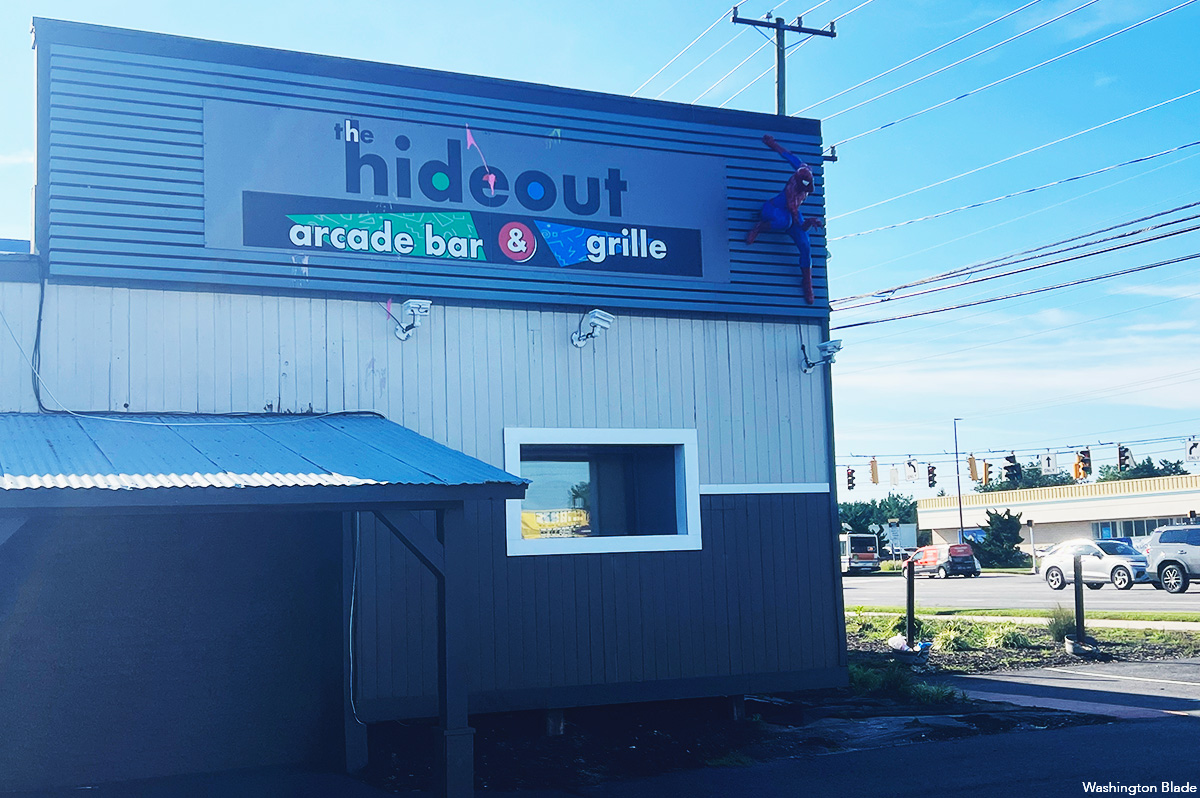
The Delaware Human and Civil Rights Commission voted to fine Hideout Arcade Bar & Grille $15,000 last month due to a discrimination complaint filed by a trans woman over her use of the bathroom.
Katie Sorber, a transgender woman, said that on April 5, 2023, she was stopped by employees and told she could only use the men’s bathroom due to the “male” gender marker on her driver’s license. This occurred after Sorber presented her ID upon entering the bar and ordering a drink.
Sorber took to Facebook to complain about her experience at the bar after she was told to use the men’s bathroom.
On April 12, 2023, Sorber returned to the Hideout but was barred from entering due to her post on social media.
Following Sorber’s post, Bryan Derrickson, the owner of Hideout Arcade Bar & Grille, allegedly began enforcing a policy in which patrons had to use the bathroom that corresponded to the gender marker on their ID.
Derrickson was ordered to pay $10,000 to Sorber, $5,000 to the Special Administration Fund, as well as conduct anti-discrimination training with employees, remove the ban on Sorber from the establishment, and revise the bar’s bathroom policy.
The commission ruled that the bar and Derrickson had wrongfully discriminated against Sorber on the basis of her gender.
Derrickson’s explanations for the denial included safety concerns, a third-party patron complaint, and a reference to the health code. The panel found this to be inconsistent and lacking factual support upon cross-examination.
The case was evaluated under the Delaware Equal Accommodations Law, which explicitly prohibits discrimination and retaliation in places of public accommodation based on gender identity.
This was the second time that the bar has been fined for discriminating against a transgender woman. The bar received a $2,000 penalty in September of last year for denying a transgender woman entry in 2023.
Half of the fine went to Kathy Carpenter Brown, the trans woman who experienced the discrimination. Brown is the founder of TransLiance, an LGBTQ+ advocacy group in Delaware.

Immersive ‘Nation-State’ imagines a society free of authoritarianism

New book examines Trump cuts to LGBTQ healthcare

E-INFOSOL leaders encourage youth to pursue tech careers

Milo Yiannopoulos deported to UK

San Francisco, long a queer safe haven, remains competitive for homebuyers

Dolly Parton dies at 80

Music icon and dear LGBTQ friend Dolly Parton remembered

New data shows record-high LGBTQ population amid Trump attacks

Push to elect more LGBTQ ANC members yields results