World
Fighting for LGBTQ rights in the Global South
Activists in Thailand and Lebanon forge ahead
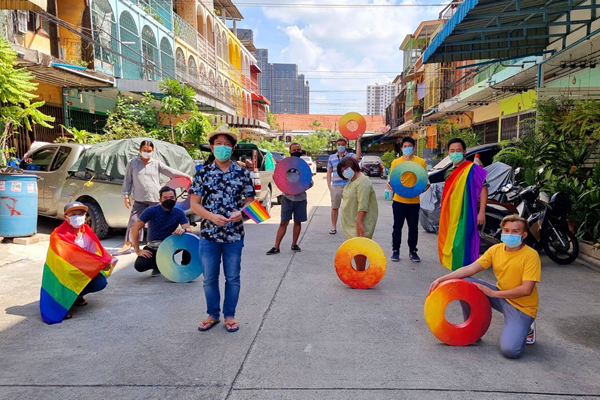
The Global South presents unique challenges for LGBTQ activists and advocacy groups.
The Human Rights Campaign notes 29 countries have extended marriage rights to same-sex couples, and the majority of them are located in the Global North that comprises more developed countries in the Americas and Europe. Less than a handful of these countries — such as South Africa and Brazil — are in the Global South. Countries in the Global North, as a result, are more likely to harbor LGBTQ-friendly public sentiments compared to the Global South, which is rife with restrictive anti-LGBTQ laws.
This reality not only makes life tumultuous for both openly and closeted queer individuals in the Global South, the chances of encountering LGBTQ-friendly sentiments in these regions are also close to non-existent. Ensuring the fundamental human rights of the queer people who live in these regions are guaranteed is imperative for activists.
The Washington Blade recently spoke with activists from Thailand and Lebanon about their advocacy work and also how they celebrated Pride in countries where LGBTQ identity is not widely acknowledged.
Thailand
Midnight Poonkasetwattana is the executive director of the Asian Pacific Coalition on Male Sexual Health (APCOM), a non-profit organization located in Bangkok. The organization’s work centers on addressing sexual health-related issues by collecting data on gay men and men who have sex with men in 35 countries across Asia and the Pacific.
“What we do in general is empowering communities on the ground to be able to speak their truth, and also participate meaningfully in country, regional, and global fora so they can have their voices and actually articulate what is it the needs of communities on the ground are,” says Poonkasetwattana.
APCOM, by giving these communities the ability to articulate their concerns, creates and facilitates an environment where LGBTQ people’s sexual and mental health needs are met, even though discrimination remains a barrier to accessing these services.
APCOM’s work does not come without its challenges because of the prevalence of anti-LGBTQ laws in many Asian countries. Their work, however, usually continues undeterred because of their ability to work with local community organizations in the public health sector.
“There are some opportunities to work under public health, and we’ve been able to do that in certain places [like Afghanistan] where it’s still difficult to talk about equality,” says Poonkasetwattana. “When we talk about ensuring that those who are marginalized and most at risk to [contract] HIV are able to get prevention and treatment, [we focus on working] with community-based organizations.”
APCOM, as a result, has been able to facilitate important conversations around HIV/AIDS, with the specific information about the use of necessary and appropriate language in web programming that recognizes people’s different sexual identities and encourages direct conversations around drug use and sex work.
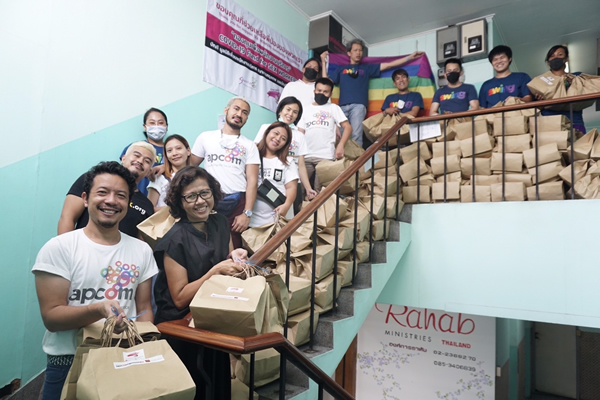
APCOM, in order to commemorate Asia’s LGBTQ community’s tenacity, began Pride month with a virtual discussion that the Australian Embassy in Thailand sponsored. The event, titled “Celebrating Pride Month 2021: LGBTQI Inclusion and the Effect of COVID-19,” had two sessions.
The first session, “Voices from Thai LGBTQI: Launch of Khormoon Report,” discussed COVID-19’s impact in Thailand. The second, “COVID-19 Recovery and LGBTQI Inclusion: A Perspective from the Business Sector,” focused on how Thailand’s business sector practiced inclusion and how it will further propel LGBTQ advocacy.
As APCOM prepares to ease back into normalcy as the pandemic wanes, Poonkasetwattana will begin to prepare for the organization’s HERO Awards (HIV, Equality and Rights), a fundraising gala that honors outstanding LGBTQ activists, HIV/AIDS service providers and allies from across Asia and the Pacific and also raises money for the HIV prevention and human rights work of APCOM.
Lebanon
Helem, whose executive director is Tarek Zeidan, is an LGBTQ advocacy organization in Beirut, Lebanon. Founded in 2001, this non-governmental entity works to improve the legal and social status of LGTBQ people in the Middle East and North Africa.
Lebanon is what Zeidan describes as a slightly safer place for queer people. Lebanon, compared to Egypt and Saudi Arabia and other countries in the Middle East, has emerged as a more inclusive and liberal place despite it being anything but a safe haven for queer people.
“When it comes to LGBTQ rights, Lebanon packs a punch way above its weight,” says Zeidan. “Because, in a region which is notorious for LGBTQ rights violations, Lebanon has enjoyed, and here I use the word enjoy very loosely, a relatively safer and more inclusive sort of experience.”
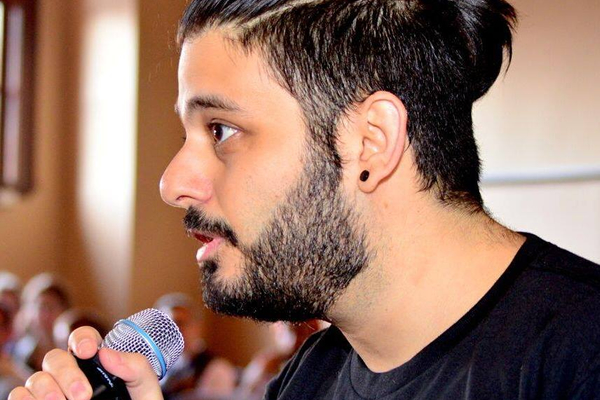
Helem in its many incarnations throughout its 21-year history has always had one main goal: React to whatever priorities and needs that queer people in the Middle East have.
Helem is structurally divided into three parts.
The first is the services department which does a lot of work to protect and assist LGBTQ people in crisis.
“We [offer] emergency intervention, case management, emergency cash, free mental health support, free medical aid, everything,” says Zeidan. “Food security [also] acts primarily as the hub in which we gather a lot of data, particularly data on the locale, density, and type of human rights violations, as well as demographic information.”
The second part of the organization is its community department.
Helem runs the largest non-commercial queer space in the Arab world that serves as a community center. This space is where the Zeidan guides localization work, community building, power building work, capacity building and vocational training.
“That’s where we do our family support, youth outreach, and all of that sort of community building and integration time work,” says Zeidan.
The final leg is the advocacy part or “bureau” that anchors on policy work, procedure, cultural change, public awareness, and legislation. Helem’s advocacy work also focuses on criminalization that Zeidan describes as “getting more attention,” even though it is not a central focus.
“In addition, criminalization, which is something we always do gets a lot of attention, but it’s really not the central thing that we engage with,” says Zeidan. “There are multiple ways in which you can guarantee LGBTQ rights and inclusion that don’t necessarily pass through Parliament, or the Supreme Court, especially when those two are blocked. So in a nutshell, the central question that we ask is, what can we do in order to improve institutions to become LGBTQ inclusive? How do we improve the lives of LGBTQ people?”
Zeidan further mentions that this strategy makes way for avenues that are not necessarily within the traditional human rights view by extracting opportunities from both development and human rights frameworks.
When tackling the lack of employment within Arab LGBTQ communities, for example, Helem doesn’t approach corporations that are more likely to be LGBTQ-inclusive. It instead identifies the industries that target LGBTQ people.
“We are more interested in targeting small and medium enterprises as locales for employment rather than big banks, because that’s where most of the working class and low income queer people are, and that’s where they get most of their livelihoods,” says Zeidan.
Zeidan says he anticipates even more engagement with LGBTQ activism in the Middle East in the future.
“We’re really excited about deciphering the question: What does regional activism really look like in the Middle East,” says Zeidan. “This is a very complicated question.”

He further mentions this goal is complicated because the Middle East does not have a regional organization to which they can turn for advocacy. Africa, for example, has the African Commission on Human and People’s Rights, but the Middle East does not have such a body.
Helem’s modus operandi will therefore be engorged in trying to make sense of how to best liberate queer Arabs.





Switzerland
Swiss government backs nationwide conversion therapy ban
Several cantons have already prohibited widely discredited practice
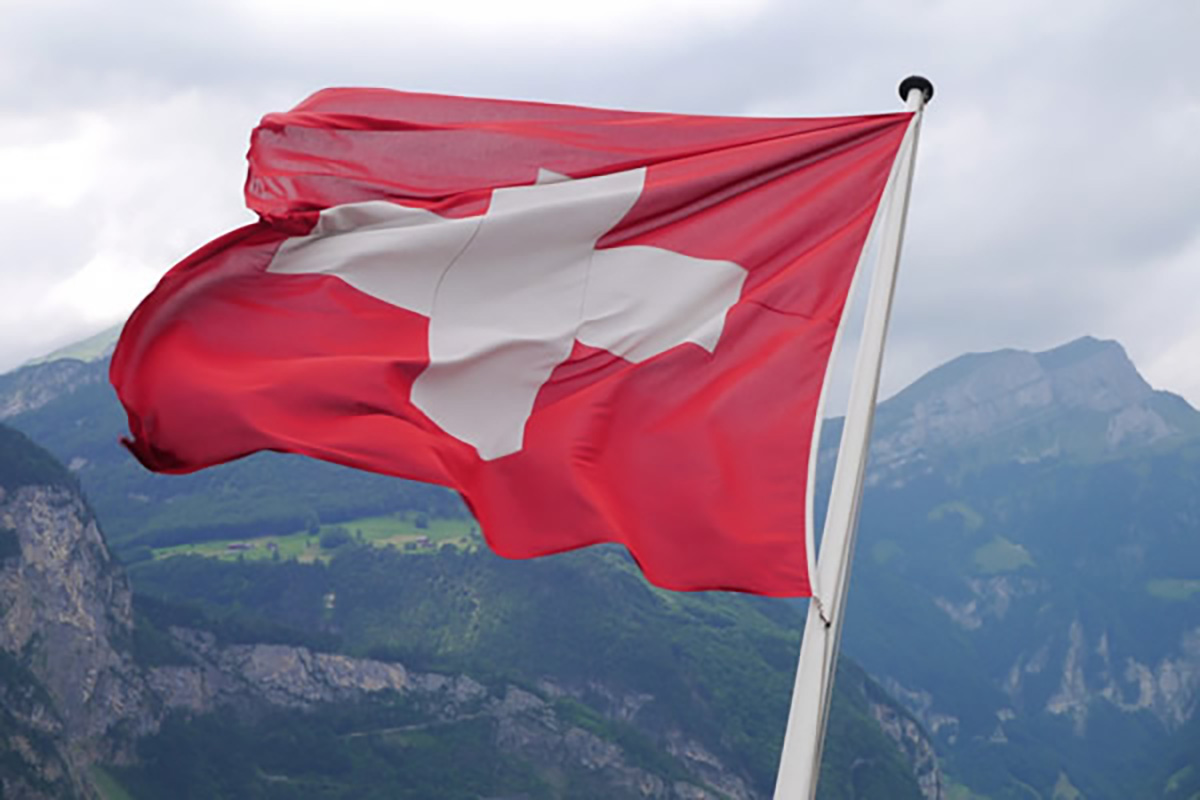
The Swiss government has said it supports a nationwide ban on so-called conversion therapy.
The Swiss Broadcasting Corporation on its website notes the government officially announced its position in a report it published on Wednesday.
Neuchâtel in 2023 became the first Swiss canton to ban conversion therapy.
Lawmakers in Valais and Vaud have also prohibited the widely discredited practice in their respective cantons. Bern and Geneva are among the other cantons in which lawmakers have considered similar prohibitions.
The European Commission earlier this year said all European Union countries should ban conversion therapy.
Switzerland is not a member of the EU, but lawmakers in neighboring Germany in 2020 passed a law that prohibits conversion therapy for minors and for adults who have not consented to undergoing the widely discredited practice.
Several EU countries — Belgium, Cyprus, France, Malta, Norway, Portugal, and Spain — have banned conversion therapy outright.
The Dutch Senate in June approved a bill that would ban conversion therapy in the Netherlands. The lower house of the country’s parliament approved the measure in September 2025.
Greece in 2022 banned conversion therapy for minors.
Bulgaria
Top Bulgarian court rules government must legally recognize trans people
Decision caps off decade-long legal fight
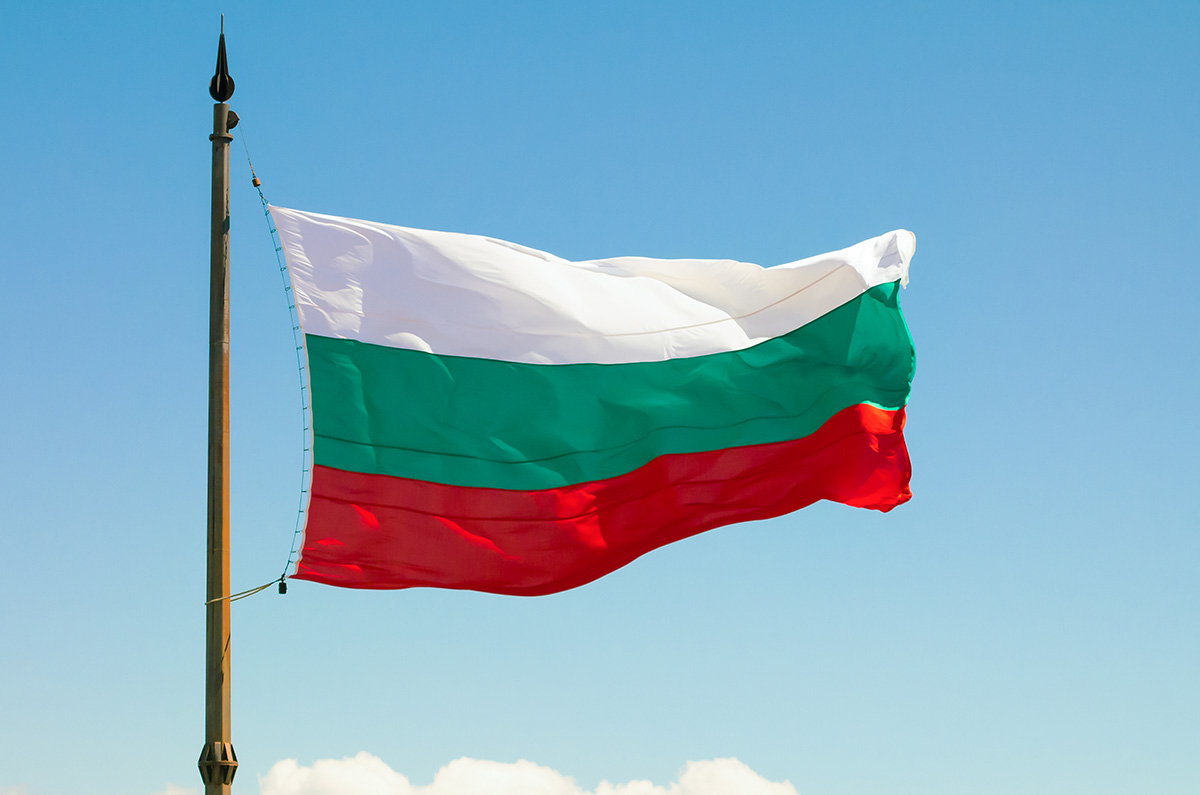
Bulgaria’s top court has ruled the country’s government must allow transgender people to legally change their name and gender on ID documents.
A trans woman from Bulgaria who moved to Italy, had tried to change her gender and name on her Bulgarian ID documents, but courts in the country denied her requests for nearly a decade.
The Bulgarian Supreme Court of Cassation in a 2023 ruling essentially banned trans people from legally changing their name and gender on ID documents.
The EU Court of Justice in Luxembourg, which is the European Union’s highest court, in March ruled in the “Shipova” case that member states must allow trans people to legally change their name and gender on ID documents. The lead plaintiff in the “Shipova” case is among the four litigants in the Bulgarian Supreme Court of Cassation case.
Two Bulgarian advocacy groups — Bilitis and Deystvie — along with TGEU – Trans Europe and Central Asia and ILGA-Europe in a joint statement they issued on Tuesday noted the Bulgarian Supreme Court of Cassation’s July 22 decision “aligns Bulgarian practice with the Court of Justice of the EU, enabling changes to gender markers, names, and personal identification numbers.”
“The judges also concluded that EU law requires Bulgaria to establish a legal procedure for legal gender recognition, which is necessary so that Bulgarian trans citizens can travel and reside freely inside the EU,” they added.
Bulgaria has been a member of the EU since 2007.
The country borders Romania, Serbia, North Macedonia, Greece, and Turkey.
“We are very glad to see that the judges of the Supreme Court clearly stated that it is actually a matter of rule of law for Bulgaria to respect the universal equality and the dignity of all human beings, including trans people for whom human rights-based legal gender recognition procedures are an indispensable element,” said Denitsa Lyubenova, co-chair of Deystvie who represented the four plaintiffs in the Bulgarian courts and the lead litigant in the “Shipova” case at the EU Court of Justice. “The government needs to act swiftly now to put in place an LGR procedure that is fully in line with European human rights case law, which means without any conditions requiring proof of medical, surgical or hormonal treatment.”
The groups also urged the Bulgarian government to codify the ruling into law.
“While lower courts are expected to follow this ruling directly, a court decision is not a substitute for law,” they said. “Bulgaria still needs a fast, transparent, and accessible legal gender recognition procedure written into legislation, not left to case-by-case court precedent. TGEU – Trans Europe and Central Asia, Bilitis, Deystvie, and ILGA-Europe call on the Bulgarian government to start that legislative process now, with meaningful involvement from civil society.”
France
Prominent French activist attacked outside Paris bar
Pierre Picavet hospitalized with internal bleeding, head injury

French prosecutors say a man shouted anti-gay slurs at a prominent activist before he attacked him in Paris on Saturday.
Media reports indicate Pierre Picavet, a police officer who is the president of FLAG!, a group within the French Justice and Interior Ministries that defends LGBTQ rights, was attacked as he left a bar in Paris’s Marais neighborhood.
The Marais since the 1980s has been center of the French capital’s LGBTQ community.
France 24 reported Picavet’s assailant struck him with a bottle. The attack left Picavet hospitalized with internal bleeding, a head wound, and other injuries.
“When I get better, when my wounds have healed, I will continue the fight,” Picavet told Radio France on Monday. “I am particularly shocked, but it tells me that there is still work to do.”
Paris Mayor Emmanuel Grégoire is among those who condemned the attack.
STOP Homophobia (STOP homophobie), a French group that fights against anti-LGBTQ violence, on its social media pages published a picture of Picavet in the hospital.
“As a long-standing partner of FLAG!, STOP Homophobia wishes to express its solidarity with Pierre Picavet, his loved ones, and the entire association,” said the group. “STOP Homophobia condemns this assault in the strongest possible terms and reiterates that anti-LGBT violence remains a reality — even in spaces where everyone should be able to move freely and live out their sexual orientation or gender identity without fear of attack.”
STOP Homophobia also praised a bystander who came to Picavet’s aid after the attack, and the first responders and law enforcement personnel who responded.
“STOP Homophobia extends its full support to Pierre, his family, his loved ones, and the entire FLAG! team, and wishes him a full recovery,” said the group.
Reports indicate the assailant, who was born in 2006, was scheduled to appear in a Paris court on Monday at 1:30 p.m. local time.

‘Here the Whole Time’ delivers queer coming-of-age comedy

Pentagon expands testosterone screening as trans troops face hormone therapy restrictions

Calendar: September 4-10

Swiss government backs nationwide conversion therapy ban

Gloria Steinem dies at 92

Beloved D.C. ‘Old Catholic’ Bishop Charles Braun dies at 86

Blade welcomes fall intern

Top Bulgarian court rules government must legally recognize trans people

Markey’s primary win deemed success for LGBTQ activists

Lou Chibbaro Jr. documentary wins award from NLGJA
-

 Obituary5 days ago
Beloved D.C. ‘Old Catholic’ Bishop Charles Braun dies at 86
-
District of Columbia5 days ago
Blade welcomes fall intern
-
Bulgaria4 days ago
Top Bulgarian court rules government must legally recognize trans people
-
2026 Midterm Elections4 days ago
Markey’s primary win deemed success for LGBTQ activists