Politics
Orrin Hatch dies at 88
Former Utah senator’s LGBTQ rights record was mixed
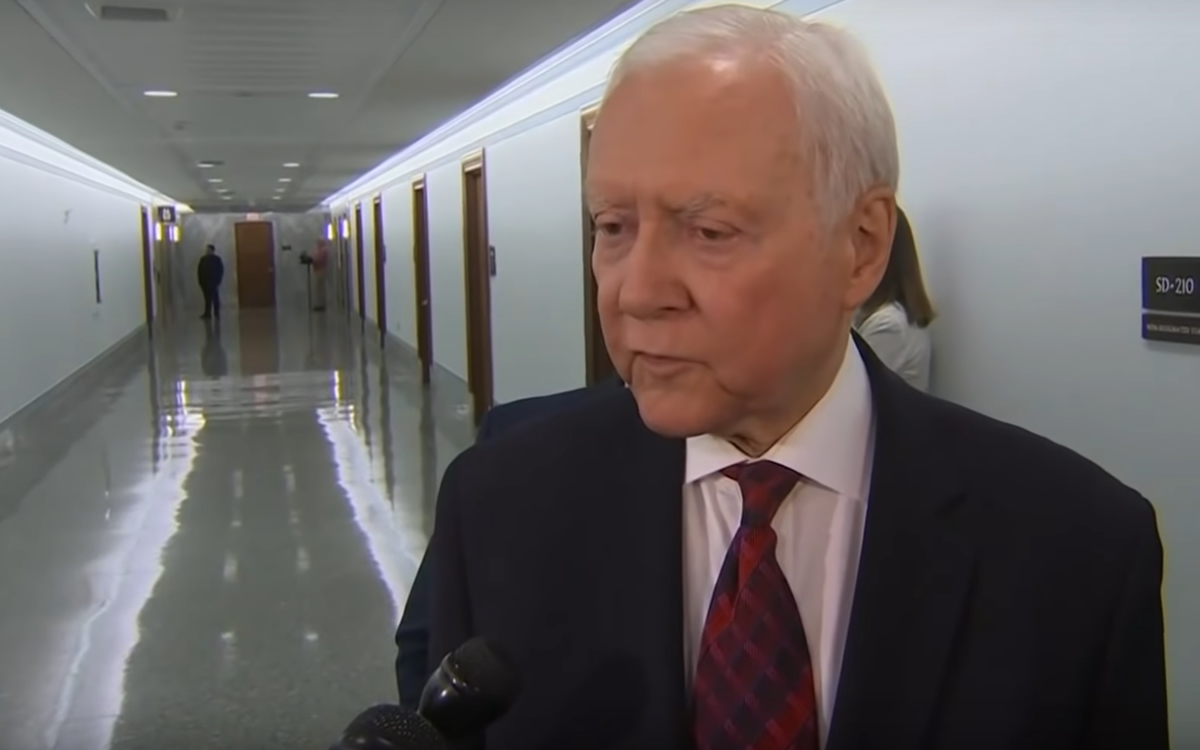
Former Republican U.S. Sen. Orrin Hatch, who spent over 40 years representing the state of Utah, died on Saturday at the age of 88.
The Orrin G. Hatch Foundation announced that he passed away at 5:30 p.m. MT surrounded by his family. No specific cause of death was given.
Hatch’s Senate career spanned from 1977-2019, longer than any other Republican in the nation’s history.
The senator was best known for his efforts to get the Americans with Disabilities Act and the Children’s Health Insurance Program passed in the Senate and signed into law. He was also known for his committed political philosophy as a fiscal moderate on Capitol Hill within the Republican Party.
The Salt Lake City Tribune noted Sunday reporting on his career:
“In his early years in the Senate, Hatch was seen as a right-wing brawler, fighting for a balanced-budget amendment and laws undermining labor unions. He didn’t earn his deal-making reputation until he struck up a friendship with a liberal lion, late Massachusetts Democratic Sen. Ted Kennedy. Known as the ‘Odd Couple’ in Washington, they teamed to pass the Children’s Health Insurance Program, the first research bill on AIDS and the Americans with Disability Act.”
During a speech on June 17, 1987, then-President Ronald Reagan wryly noted in reference to Hatch and the federal budget; “Let me just say that if every member of the Senate were like Orrin Hatch, we’d be arguing over how to deal with a federal surplus. And that’s why I like to think of Orrin as `Mr. Balanced Budget’.”
His stance on hot button political/cultural issues was extremely conservative. Hatch was strongly opposed to abortion and was the author of the Hatch Amendment to the Constitution that failed to get Senate approval, which stated that there is no constitutional right to abortion and empowered the states to restrict abortion as they saw fit.
On immigration, the senator embraced tougher enforcement immigration policy including expanding the number of Border Patrol officers at the Southern border with Mexico. But he partnered with U.S. Sen. Dick Durbin (D-lll.) introducing the DREAM Act, which would provide a pathway to citizenship for the children of undocumented immigrants, who were children when their parents came to the U.S.
Thus far the legislation has languished even after being reintroduced several times, but has not been approved by majorities in either house of Congress.
On LGBTQ rights Hatch initially took the Republican Party and conservative stance on the issues of equality. At the start of his political rise in Republican politics as a newly elected U.S. senator in 1977, he told students from the University of Utah; “I wouldn’t want to see homosexuals teaching school anymore than I’d want to see members of the American Nazi Party teaching school.
Nine years later in 1996 he supported the Defense of Marriage Act.
Hatch also voted against the Matthew Shepard and James Byrd Jr. Hate Crimes Prevention Act in 2009, which expanded federal hate crime laws to include crimes committed against people based on their gender identity and sexual orientation. During Senate debate over the legislation, he questioned whether it was necessary, suggesting that anti-gay violence was not “a major problem.”
As the country moved towards wider acceptance of same-sex marriage, in 2012, the senator voted to confirm U.S. District Court Judge Robert Shelby to the federal bench in Utah, who then-President Barack Obama had nominated.
Shelby on Dec. 20, 2013, struck down Amendment 3 of Utah’s State Constitution, which defined marriage as a union solely between a man and a woman, opening the way for same-sex marriage in the state.
Shelby ruled that Amendment 3 was in violation of the U.S. Constitution’s 14th Amendment, which guarantees due process and equal protection. As a result Shelby’s ruling set off a series of other district court decisions that overturned bans in several other states.
His ruling was affirmed by the 10th Circuit Court of Appeals on June 25, 2014. On Oct. 6, 2014, the U.S. Supreme Court declined the review the 10th Circuit’s ruling, legalizing same-sex marriage in Utah.
The ruling by Shelby and the effect on the effort to legalize same-sex marriage was noted by Hatch on a Salt Lake City radio show in 2014 saying that, even though he may not like it, legal gay marriage is inevitable:
“Lets face it. Anybody that does not believe that gay marriage is going to be the law of the land just hasn’t been observing what’s going on,” he said on KSL NewsRadio’s “Doug Wright Show.”
“The trend right now in the courts is to permit gay marriage and anybody who doesn’t admit that just isn’t living in the real world.”
Prior to his statements to KSL, in April 2013, Hatch stated publicly that he viewed same-sex marriage as “undermining the very basis of marital law,” but declined to support a federal marriage amendment and endorsed same-sex couples’ right to form a civil union, stating that the law should “give gay people the same rights as married people”
Between January 2012 and February 2014, plaintiffs in Michigan, Ohio, Kentucky and Tennessee filed federal district court cases that culminated in Obergefell v. Hodges.
After all district courts ruled for the plaintiffs, the rulings were appealed to the Sixth Circuit. In November 2014, following a series of appeals court rulings that year from the Fourth, Seventh, Ninth and 10th Circuits that state-level bans on same-sex marriage were unconstitutional, the Sixth Circuit ruled that it was bound by Baker v. Nelson and found such bans to be constitutional. This created a split between circuits and led to a Supreme Court review.
On June 26, 2015, Obergefell overturned Baker and required all states to issue marriage licenses to same-sex couples and to recognize same-sex marriages validly performed in other jurisdictions.
Also in 2013 he was one of only 10 Republican senators who voted in favor of the Employment Non-Discrimination Act, legislation that would have prohibited discrimination in hiring and employment on the basis of sexual orientation and gender identity for those identifying as gay, lesbian, bisexual or transgender. On Nov. 7, 2013, the bill passed the Senate with bipartisan support by a vote of 64–32. Obama supported the bill’s passage, but the House Rules Committee voted against it.
It appeared to political observers and others that as time moved on, the senator was becoming more progressive in his viewpoints regarding LGBTQ people.
In July 2017, after then-President Trump announcement that he ordered a ban on military service for transgender Americans the senator said; “I don’t think we should be discriminating against anyone, transgender people are people, and deserve the best we can do for them.”
In June 2018, the year he retired from the Senate, Hatch gave a speech on the Senate floor expressing his support for the LGBTQ community and drawing attention to the high suicide rates among LGBTQ youth.
“No one should ever feel less because of their gender identity or sexual orientation,” Hatch said. “LGBT youth deserve our unwavering love and support. They deserve our validation and the assurance that not only is there a place for them in this society, but that it is far better off because of them. These young people need us—and we desperately need them.”
********************
Statement by President Joe Biden on the Passing of Former Senator Orrin Hatch
Jill and I and the entire Biden family are saddened to learn of the passing of Orrin Hatch, the longest-serving Senator in Utah’s history, and the longest-serving Republican senator in our nation’s history.
Orrin Hatch once shared in an interview that he had a soft side, and he had a tough side. To serve with Orrin, as I did for over three decades, was to see—and appreciate—both.
He was the fighter who carried with him the memory of his humble upbringing near Pittsburgh, who never humored a bully, or shied from a challenge. The young man who, upon receiving his degree from Brigham Young University, was the first in his family to graduate college; the young lawyer who built a successful law practice; and the senator who sprinted from meeting to meeting because there was so much to do—indeed, when Sen. Hatch retired, he had sponsored or co-sponsored more legislation than any senator at the time.
I saw that energetic, sharp-elbowed Orrin in the many battles we had over tax policy, the right of workers to join a union, and many others.
At the same time, Sen. Hatch was also a man of deep faith; a gentle soul who wrote songs and poems, and shared them with friends, colleagues and the world. This was the Orrin who looked out for the people who often didn’t have a voice in our laws and our country. I saw this in his efforts to pass the Americans with Disabilities Act and the Children’s Health Insurance Program.
When I first launched the Cancer Moonshot as vice president, one of the first visits I made was to the Huntsman Cancer Institute in Salt Lake City, at Orrin’s request. We both saw speeding the pace of cancer research as an issue that transcended political divisions.
When I cast my 10,000th vote in the Senate, Orrin came to the Senate floor and we had a chance to speak. I said that the greatest perk one has as a senator was access to people with serious minds, a serious sense of purpose, and who cared about something. That was Orrin.
He was, quite simply, an American original.
Jill and I send our deepest sympathies to Elaine, and all of the Hatch children, grandchildren, and great-grandchildren.
Former senator Orrin Hatch passes away at 88:




Politics
Ind. prosecutor declines to press charges over false Buttigieg child welfare complaint
Former Biden-Harris Cabinet member declined to comment on decision

An Indiana prosecutor has declined to file criminal charges against a woman who made a false child welfare complaint against Pete Buttigieg.
Buttigieg, the former transportation secretary in the Biden-Harris administration, was accused in June of posing a threat to his children via an anonymous call to police that resulted in him being temporarily separated from his four-year-old twins.
Marshall County Prosecuting Attorney E. Nelson Chipman Jr. opted not to pursue charges against the Alabama woman who filed the false child welfare claim against the Democratic political figure while she was in Marshall County.
According to ABC 57, the television station in South Bend that published a letter from Michigan State Police to Indiana State Police, the 50-year-old woman, identified only as TJ of Alabama, was responsible for the “brief and intrusive investigation” into Buttigieg and his family.
In the letter to Indiana State Police, Michigan State Police described TJ’s documented alcoholism and other chemical dependencies, as well as hallucinations and delusional thinking. The prosecutor also noted that TJ has self-identified as God and claims to hear voices only she can hear.
The letter from Michigan State Police to Indiana State Police states:
“Your investigation reveals that TJ, 50 years old, has a documented history of alcohol abuse and has experienced numerous treatment facilities and programs for alcoholism and other chemical dependency over the years. Further, TJ has a long history of mental illness, manifested by hallucinations and delusional thinking which includes frequently responding to voices only she hears and grandiose ideation including self-identifying as God. She frequently reports she has enjoyed an evening meal with Barack and Michele Obama.
TJ is from Alabama. During her relatively short stay here, TJ was able to generate three separate police encounters that resulted in reports, one of which resulted in TJ’s arrest for domestic battery. I note her BAC in that case was reported at .323. I also note one of the three early reports was based upon TJ’s claim of herself being a victim of sexual abuse at the age of 3 by her mother some 47 years prior. Her explanation for such a delayed report was incoherent.
As you found out, TJ returned to Alabama and took up residence in a treatment facility only to be soon evicted for a rule violation. She currently resides in a half-way house near Alabama, with very limited mental health treatment options available. I note TJ’s abusive and harassing attitude has resulted in restricting only somewhat her access to a telephone, and that she continues to have access to computers at the facility. Obviously she may still have the ability to file additional complaints. No doubt a regrettable situation.
In light of the totality of circumstances, I am unable to conclude that TJ is capable of forming the requisite intent to support a criminal conviction for this offense. Accordingly, this office will not be filing a criminal case in this matter.
Thank you, as always, for a thorough investigation and cogent report.
Stay safe.
Best regards,
E. Nelson Chipman, Jr.
Marshall County Prosecuting Attorney”
When the situation first arose in June, Buttigieg opened up about the experience via his Substack, where he described the situation as one of the worst things that has ever happened to his family — one that resulted in him being separated from his twins, Joseph August “Gus” and Penelope Rose, for their safety.
“The caller said that he had spoken to a woman who claimed to have met me at a conference several years ago in Alabama, where she said I told her that I had committed unspeakable violent crimes, and the caller believed my children were still at risk,” Buttigieg wrote in a post he titled “A Terrible Thing Happened to My Family.” “I am a reasonable man. I try to keep as calm and low-key as possible. But I cannot describe the mix of rage and sadness that I feel at the idea that someone brought our children into this.”
A Buttigieg spokesman declined to comment on the prosecutor’s decision not to pursue charges, but did tell the Washington Post in a statement: “This has been a painful and infuriating situation for the family. They are in touch with Michigan authorities, seeking answers and accountability for what happened.”
In response to the story Buttigieg shared on his Substack, Kelley Robinson, president of the Human Rights Campaign, released the following statement:
“I know how I would feel if someone tried to come between me and my kids. This is truly bottom-of-the-barrel stuff. It takes an awful, hateful person to question someone’s fitness as a parent just because of who they are, who they love, or in Sec. Buttigieg’s case, perhaps even who he speaks out against politically. We’re thinking of Pete, Chasten, and their whole family in this moment — and we aren’t resting until all LGBTQ+ families have the kind of safety and justice every one of us deserves.”
The Washington Blade reached out to Michigan State Police after the story initially broke to ask if any disciplinary action would be imposed on the woman who made the false report, but was told to file a FOIA request to view the full report. After filing a FOIA request, the Blade was denied access to any additional information.
2026 Midterm Elections
Chris Pappas wins NH Democratic Senate primary
Gay congressman running to succeed retiring U.S. Sen. Jeanne Shaheen

New Hampshire Congressman Chris Pappas on Tuesday won the Democratic primary in the race to succeed retiring U.S. Sen. Jeanne Shaheen (D-N.H.) in the U.S. Senate.
Pappas defeated Karishma Manzur, who was his primary challenger, by a 61.8-36.1 percent margin.
The gay congressman will face off against former U.S. Sen. John E. Sununu, who defeated former U.S. Sen. Scott Brown in the Republican primary.
“Tonight’s victory sends a clear message that voters are looking for leaders who will fight for their rights, their freedoms, and to be treated with dignity and respect,” said Human Rights Campaign President Kelley Robinson in a statement.
She campaigned for Pappas in Manchester, New Hampshire’s largest city, on Aug. 30.
“Chris Pappas has delivered results, stood up for equality, and showed up for the people he serves,” said Robinson in her statement. “HRC was proud to mobilize Equality Voters across New Hampshire to help power this win. We don’t have a second to waste between now and November. We look forward to continuing our work with Rep. Pappas as he drives toward victory in November so he can help return a pro-equality majority to the United States Senate.”
A poll the University of New Hampshire Survey Center released on Aug. 26 showed Sununu ahead of Pappas by a 45-43 percent margin if they were to face off in the general election. The margin of error is +/-2.1 percent.
Pappas would become the first openly gay man elected to the U.S. Senate if he were to win in November.
2026 Midterm Elections
Markey’s primary win deemed success for LGBTQ activists
Mass. lawmaker champions transgender rights
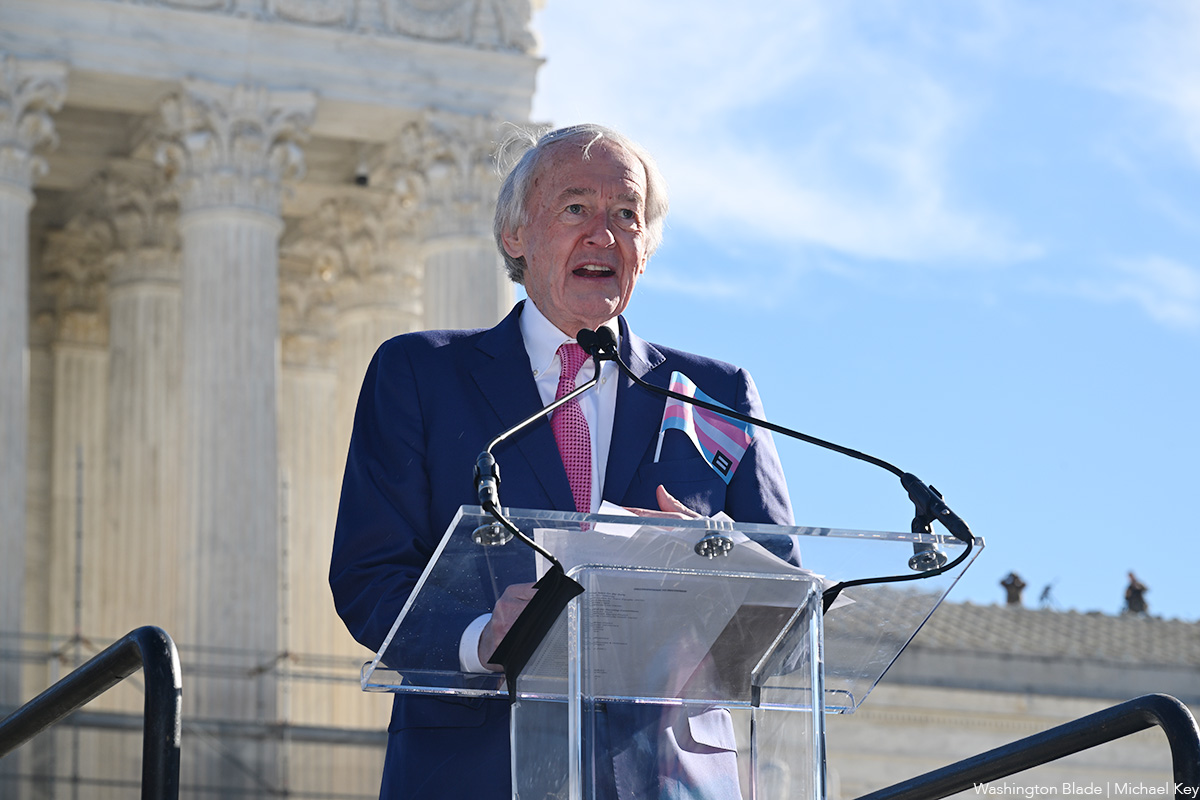
U.S. Sen. Ed Markey (D-Mass.) clinched the Democratic seat for his reelection campaign in Massachusetts’s primary election on Tuesday.
Markey won the deep-blue state with 64.8 percent of the vote, according to NBC News, triumphing over Marine Corps combat veteran and Congressman Seth Moulton, who received 35.2 percent of the vote.
Massachusetts’s primary election, which determined which Democratic candidate will head to the polls to face off against the Republican challenger in November, is being considered a victory for LGBTQ-inclusive policy, as well as for a divisive pro-transgender rights candidate — both things Markey has become an outspoken champion of.
Markey has experience at multiple levels of government, from the state level, where he served three terms in the state House of Representatives, to his federal tenure, including 20 terms in the U.S. House of Representatives and is now serving his second term as a senator. He has become a fixture of a changing Democratic Party in one of the most consistently blue places in the U.S.
This primary — and much of the national discussion surrounding the Senate seat — focused a lot of campaigning power on fighting the growing sentiment, led mostly by Republicans, that the frustration many Americans feel lends itself to an anti-establishment and anti-incumbent attitude.
Markey ran his campaign using his past as a reflection of his commitment to constantly putting his best foot forward for Bay Staters — particularly with apprehension for issues younger and more progressive democrats have been righting for — including Green New Deal and “Medicare for All” while Moulton — who was also elected to federal office prior to this run — campaigned on being younger than Markey, arguing that he was not the same type of established politician.
Moulton also faced backlash for negative comments about trans athletes, sparking criticism for those who did want younger candidate but want for trans rights to be protected.
Markey’s track record of supporting the LGBTQ community is one of the most clear in federal politics, one that has garnered a “100 percent lifetime voting record” on the Human Rights Campaign’s PAC politician review scorecard.
That list of Markey’s actions includes being a cosponsor of the Equality Act, driving landmark legislation to ensure federal protections for LGBTQ Americans, and being one of the most vocal proponents for trans rights in the federal government — specifically in multiple appropriations bills and in the National Defense Authorization Act. He was also the lead sponsor of the Transgender Health Care Access Act and the Transgender Bill of Rights resolution.
Markey first introduced the Transgender Bill of Rights in the Senate in 2023, where it ultimately failed to be brought to law. He reintroduced the legislation this year once again. This was a direct response to the attitude pushed by many conservatives after 2021, when the push to minimize trans rights started to become a key part of their cause and has been constantly propped up by the Trump-Vance administration.
“Massachusetts needs a senator who stands up and fights back, a senator who never forgets who they are fighting for,” Markey said during his victory speech. “That has been the mission of my life, and it always will be.”
Following the calling of the primary, a slew of LGBTQ organizations rallied behind Markey, many pushing his past as an asset that puts his money where his mouth is through advocating for legislation specifically protecting the LGBTQ community.
Tyler Hack, the executive director of the Christopher Street Project, an organization dedicated to pushing for legal protections for trans americans, released a statement following Markey’s win. Hack argued that putting forward such a staunchly pro-trans candidate is a win for the community, especially after endorsing him earlier this year.
“Tonight, anti-trans politics lost. Massachusetts rejected the idea that attacking transgender people is a shortcut to political power. Voters chose a different path: one where equality is not negotiable, cruelty is not courage, and transgender people do not have to disappear for Democrats to succeed.”
The Human Rights Campaign also endorsed him as a candidate earlier this year and issued a statement via its president, Kelley Robinson.
“Ed Markey has spent decades fighting for LGBTQ+ equality, for working people, and for a more livable world,” Robinson said. “He knows why equality matters. He’s stood with us no matter what. We were proud to endorse him this year, and when a pro-equality majority takes back the Senate this fall, we will continue to count on him as a champion for our community.”
Markey is running for reelection against Republican John Deaton in November, where he is expected to win.

Dozens detained after Turkish authorities raid LGBTQ groups, businesses

PHOTOS: SMYAL Fall Brunch

Dolly Parton biography puts her hardships into context

‘Thelma and Louise’ remains landmark of unspoken queer rebellion

Comings & Goings

Nominate your favorites for the Blade’s 25th annual Best Of LGBTQ DC Awards

PHOTOS: SUNFESTIVAL

Gloria Steinem’s life of substance and consequence

How Dolly became a folk saint for Appalachian queers