District of Columbia
Judge postpones ruling on whether Casa Ruby should be dissolved
Request by Corado for gag order to stop ‘one sided’ information denied
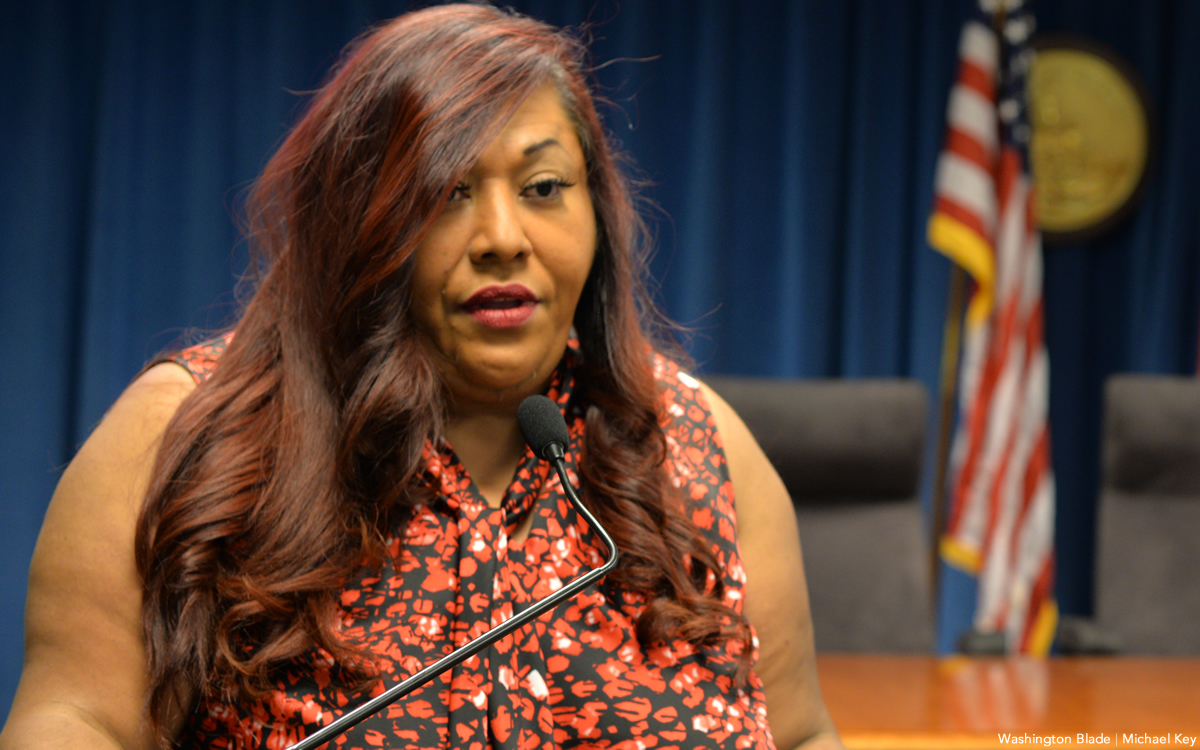
A D.C. Superior Court judge on Thursday said she was not ready to issue a ruling on whether the LGBTQ community services center Casa Ruby should be dissolved as recommended two and a half weeks earlier by a court-appointed receiver that took control of Casa Ruby’s operations.
Judge Danya A. Dayson stated at a Sept. 29 court status hearing that the Office of the D.C. Attorney General, which filed civil charges against Casa Ruby and its founder and former executive director Ruby Corado in July, needed more time to complete its investigation into Casa Ruby’s operations.
“We think it may be premature to immediately commence proceedings for dissolution while our investigation is still pending,” Cara Spencer, an official with the Office of the Attorney General, told the judge. “We’re still gathering information. We still intend to shortly serve discovery so we can bring it to a resolution promptly,” she said.
The AG’s office filed a civil complaint against Casa Ruby and Corado on July 29 alleging that the LGBTQ group had violated the city’s Nonprofit Corporations Act for the past several years. The complaint says improper actions by Corado, including the unaccounted-for expenditure of funds and a failure by the Casa Ruby Board of Directors to provide oversight led to a financial crisis.
The complaint notes that Casa Ruby employees were not getting paid and over $1 million was owed to landlords in back rent for at least three buildings Casa Ruby used for its offices and to provide emergency housing for homeless LGBTQ youth.
With Corado spending most of the past year in El Salvador, according to Casa Ruby employees, the employees and managers struggling to keep its operations going said they were forced to shut down all operations in late July.
Corado, who attended the Sept. 29 status hearing through a phone hookup, said she had yet to retain a lawyer due to a “shortage of funds.” She told Dayson she expects to finally retain an attorney but said she had not received a copy of the receiver’s report that recommended Casa Ruby be dissolved. One of the attorneys with the AG’s office told Dayson the office sent a copy of the report to four email addresses it had for Corado and Casa Ruby.
At the judge’s request, one of the AG office officials sent another copy of the report to Corado during the hearing to an email address that the judge asked Corado to provide.
Dayson on Aug. 12, at the recommendation of the AG’s office, appointed the Wanda Alston Foundation, a D.C. organization that provides housing for homeless LGBTQ youth, as the Casa Ruby receiver. One day earlier, Dayson approved the AG office’s request that Casa Ruby be placed under receivership.
On Aug. 3, also at the request of the AG’s office, the judge issued an order that all of Casa Ruby’s bank accounts and financial assets, which had been under the sole control of Corado, be frozen. Dayson lifted that freeze after the Alston Foundation assumed control of Casa Ruby under the receivership.
As she had at the Aug. 11 court hearing, Corado stated in the Sept. 29 hearing that Casa Ruby’s financial problems were caused by the D.C. government withholding as much as $600,000 in grant funds for services Casa Ruby had provided.
Officials with the D.C. Department of Human Services, which initially approved the grants, have said some of the grant funds were withdrawn or cancelled because Casa Ruby failed to comply with the terms of the grants. In some cases, the officials said, required financial reports were not filed to substantiate how the funds were spent.
Corado also asked Dayson at the Sept. 29 hearing to order the receiver and officials with the AG’s office stop releasing “one-sided” information that she said was falsely placing her and Casa Ruby in a negative light through reports in the press.
“The story that has been painted is that Casa Ruby left the clients in the cold,” Corado said. “That is not accurate.”
When asked by Dayson what she wanted the court to do, Corado said, among other things, she did not want the receiver to be allowed to disclose information about what happened in the court proceedings that Corado said was being reported by the press inaccurately.
She said highly negative publicity resulting from the release of information from the previous court hearing resulted in her receiving death threats and damage to the engine of her vehicle in an act of vandalism that cost $1,700 to repair.
Dayson said Corado appeared to be seeking a gag order to prohibit the receiver or the AG’s office from discussing or releasing information that was part of the public record. Saying there were insufficient grounds for such an order, Dayson announced she was denying a request to seal court records or issue a gag order against the receiver.
The judge ruled in favor of a request by the AG office attorney to file an amended complaint for the case, directing them to file the amended complaint by Nov. 28. Court records show that Dayson directed the parties to return to court for scheduling hearings on Oct. 28 and Jan. 6.



District of Columbia
Gay ANC commissioner sues D.C. over police ‘failure’ to pay reward money
Lawsuit says information led to conviction in murder, armed robbery cases

Gay D.C. Advisory Neighborhood Commissioner Tom Donohue on Aug. 11 filed a lawsuit in D.C. Superior Court charging that D.C. police acted improperly and violated a local law by not paying him $30,000 in reward money for his role in helping police identify and arrest — and obtain the subsequent conviction — of one man charged with murder and another man charged with armed robbery in separate cases.
Although the lawsuit alleges improper action by D.C. police in carrying out the city’s Crime Solvers reward program, it names as defendants the District of Columbia and the Office of the Attorney General for D.C., which, among other things, defends the city against lawsuits.
Donohue, who is a member of the city’s ANC Rainbow Caucus consisting of LGBTQ elected ANC members, held a news conference outside the D.C. Superior Court building on Aug. 11 to talk about the lawsuit before entering the courthouse to officially file it.
The lawsuit states that Donohue “provided key video evidence that led to the arrest and conviction” of a man initially charged with first degree murder for allegedly running over a bicyclist with his car after the two got into an argument.
The lawsuit states that police had offered a $25,000 reward for information leading to the arrest and conviction of the defendant in that case, but police “arbitrarily slashed the payment to $5,000 without prior notice or policy justification.”
Court records show that D.C. resident Eric Beasley was charged with first degree murder for killing David Farewell, 45, by hitting him with his car on Sept. 4, 2020, on the 2100 block of Young Street, S.E. The records show the evidence for the case was based in large part on video camera footage of the incident obtained by police. Donohoe has said he provided that video camera evidence.
The records show that during Beasley’s October 2023 trial a jury was unable to reach the required unanimous verdict, and the judge declared a mistrial.
According to the records, Beasley later agreed to an offer by prosecutors to plead guilty to a lesser charge of involuntary manslaughter and was sentenced in September 2024 to eight years in prison, a development that angered the victim’s family members who called it a “slap on the wrist,” according to a Fox 5 News report.
Donohue’s lawsuit says the second case in which he provided police with pivotal information involved a series of armed robberies known as the Fairlawn Serial Armed Robbery Spree that occurred in the Fairlawn neighborhood in Southeast D.C. in 2023 near where Donohue lives.
The lawsuit says evidence consisting of video surveillance footage provided by Donohue to police enabled police to determine they initially wrongfully arrested an 18-year-old male for the robberies. “Using Plaintiff’s security video, MPD identified, arrested, and convicted the actual robber, David Crocker, who was sentenced to 18 years in federal prison,” the lawsuit states.
It says one of the detectives investigating the case recommended a $10,000 reward for Donohue’s help in the case based on the police Crime Solvers reward program. The detective’s recommendation was approved by then-Assistant D.C. Police Chief Kyle Ramey on Aug. 4, 2025, according to the lawsuit.
But it adds, “Nevertheless, MPD improperly withheld payment.”
When contacted by the Washington Blade for comment on Donohue’s lawsuit allegations, a D.C. police spokesperson said “MPD does not comment on pending or ongoing litigation.”
Gabriel Shoglow-Rubenstein, who serves as press secretary for the D.C. Office of the Attorney General, which will be defending the city against the Donohue lawsuit, said he would look into obtaining a possible comment but said the office has a similar longstanding policy of not commenting on pending litigation.
“This action arises from the District of Columbia Metropolitan Police Department’s arbitrary, bad-faith, and legally unsupportable failure to honor its public reward promises and administrative obligations to Plaintiff,” the lawsuit states.
It says the MPD violated the city’s Freedom of Information Act or FOIA law by not responding to Donohue’s request for information and documents related to the decision not to pay him the full reward money.
“MPD’s reduction of Plaintiff’s homicide reward from $25,000 to $5,000, and its withholding of his approved $10,00 robbery reward, were undertaken completely devoid of written standards, making such decisions inherently arbitrary, capricious, and an abuse of administrative discretion,” it says.
It calls for Donohue to be awarded $30,000 in compensatory damages consisting of the $20,000 “unpaid balance” for the homicide case reward and $10,000 for the robbery case reward. It also calls for reimbursement for “reasonable” litigation costs and attorney’s fees. Donohue told the Washington Blade that at this time he is representing himself without an attorney.
Donohue told the Blade that the refusal by D.C. police to pay him the full reward money also limited his plans to donate some of that money to the family of murder victim David Farewell to help pay for a burial stone. He said that due to the family’s limited resources Farewell is buried in an unmarked grave
District of Columbia
D.C.’s Mary’s House For Older Adults names new executive director
Charlene Leach to succeed Imani Woody as leader of LGBTQ-supportive seniors home
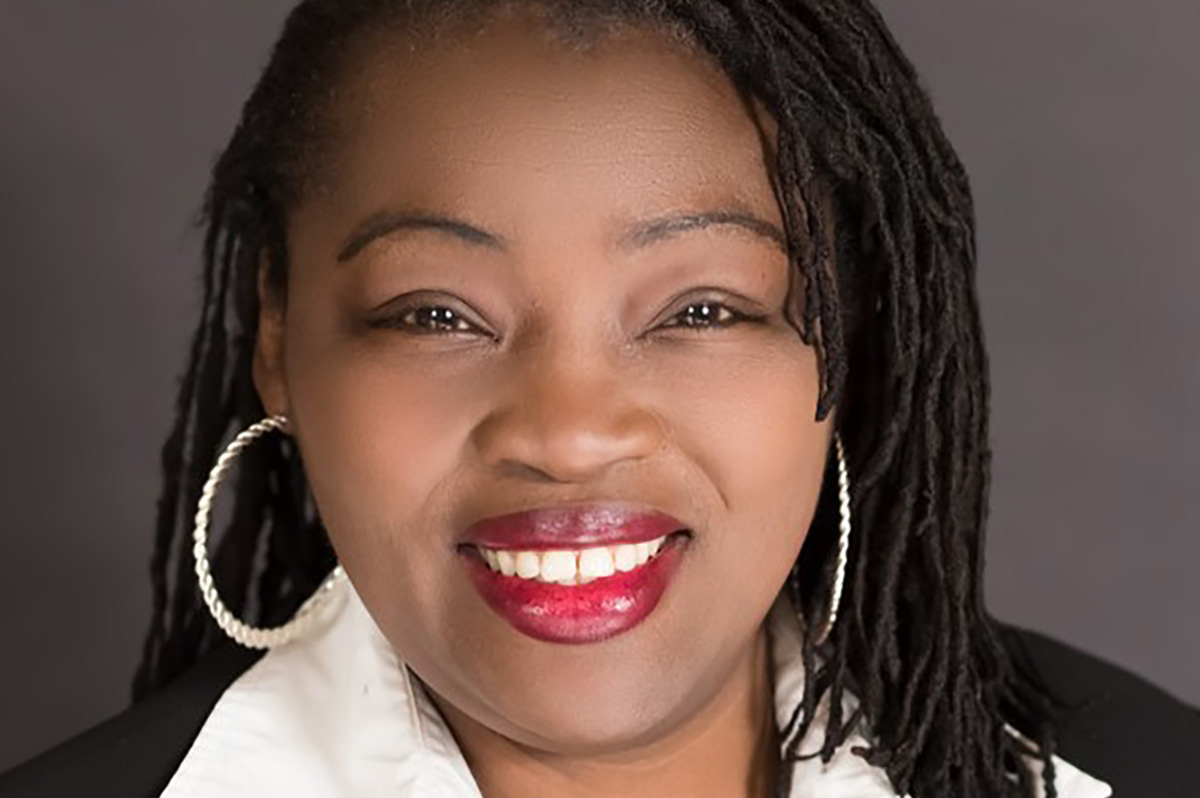
The board of directors of Mary’s House for Older Adults, the D.C.-based home dedicated to providing affordable housing for LGBTQ seniors, has announced it has named longtime nonprofit organization leader A. Charlene Leach as its new executive director.
Leach, who is now serving in the executive director’s position, is succeeding Dr. Imani Woody, the Mary’s House founding president and CEO, who announced her retirement from her official leadership role at Mary’s House on July 7.
Woody, who holds a PhD in Human Services, is credited with playing the lead role over many years in arranging both city and private funding needed to construct and operate the Mary’s House three-story building located at 401 Anacostia Road, S.E., in the city’s Fort DuPont neighborhood.
“With over three decades of nonprofit experience and 15 years serving as an executive director, Charlene brings a wealth of knowledge in organizational leadership, program development, and community engagement,” the Mary’s House board says in a statement.
“Her proven track record of building impactful programs and leading mission-driven organizations makes her uniquely suited to guide Mary’s House into its next phase of growth,” the statement continues. “Charlene is deeply aligned with the mission of Mary’s House and is committed to advancing its work to provide safe, inclusive housing and supportive services for LGBTQ+ older adults,” it says. “Under her leadership, the organization will continue to expand its impact while remaining grounded in the values that define our community.”
Leach’s LinkedIn page shows she has most recently served since 2022 as executive director of the African American AIDS Task Force in Minneapolis. Prior to that, it shows she served as executive director of the Fredericksburg Area Health and Support Services organization in Fredericksburg, Va., and before that as director of development for the D.C.-Baltimore area Women’s Collective.
Her LinkedIn page says she has been involved with Mary’s House as a volunteer and grant writer since 2016.
The newly built and enlarged Mary’s House, which opened in March 2025, with a grand opening ceremony held in May 2025 attended by D.C. Mayor Muriel Bowser, includes 15 single-occupancy residential apartments and more than 5,000 square feet of shared communal living space.
An earlier statement released by the Mary’s House board announcing Woody’s retirement said Woody would continue to be involved with the organization as a member of the board. The earlier statement and board’s more recent statement on July 29 announcing Leach’s appointment as executive director did not say whether the board plans to name someone else as president and CEO, the title that Woody held before her retirement. But the latest statement says Leach will be running Mary’s House’s day-to-day operations as Woody did.
District of Columbia
LGBTQ advocates optimistic about D.C.’s expected new mayor
Janeese Lewis George cites strong record of support as Council member
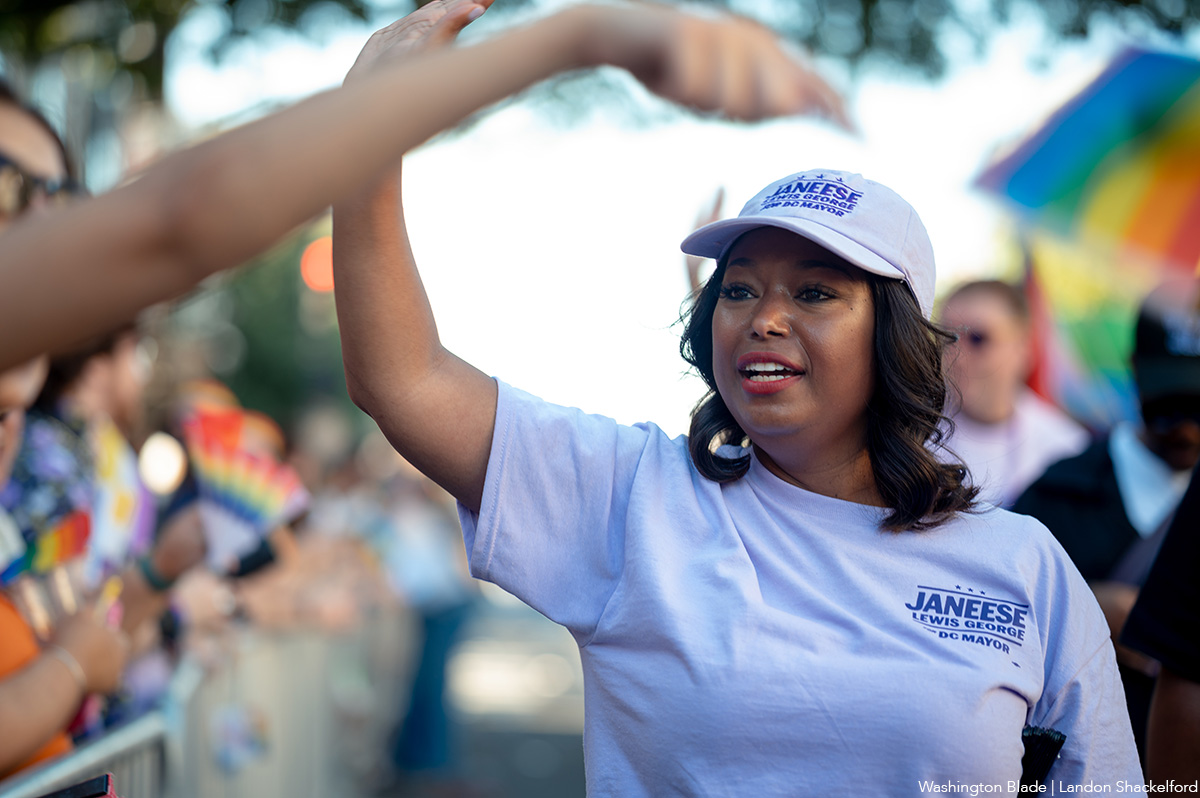
Several prominent D.C. LGBTQ community advocates said they are optimistic that Democratic mayoral nominee Janeese Lewis George, who is expected to easily win election as mayor in the city’s Nov. 3 general election, will continue her strong record of support on LGBTQ issues from her current role as a Ward 4 D.C. Council member.
But most of the seven LGBTQ advocates who responded to an informal Washington Blade survey of community leaders and activists said they would be observing Lewis George’s transition plans for her expected mayoral administration to determine if she will follow through with her campaign promises to put in place policies and funding to strongly support the LGBTQ community.
Lewis George emerged as the decisive winner in the city’s June 16 Democratic primary with 54 percent of the vote in a six-candidate race, with her lead opponent, former D.C. Council member Kenyan McDuffie (D-At-Large) receiving around 37 percent and four lesser-known candidates receiving 4 percent or less.
In a city with an overwhelmingly Democratic electorate, virtually all political observers believe Lewis George will win the November general election to become the city’s next mayor.
In the primary, she received the endorsement of the Capital Stonewall Democrats, the city’s largest local LGBTQ political organization, and received the highest possible candidate rating of +10 from GLAA DC, formerly known as the Gay and Lesbian Activists Alliance of Washington.
With Lewis George, McDuffie, and the four lesser-known candidates in the Democratic primary, including one who identified as bisexual, expressing strong support on LGBTQ issues, LGBTQ advocates acknowledged that most queer voters chose a candidate to support based on non-LGBTQ issues.
And Lewis George’s LGBTQ supporters have said they believe Lewis George received the largest share of the LGBTQ vote based on her outspoken support for social justice related issues, including policies to address the need for affordable housing, which she said impacts LGBTQ people in need, especially queer people of color and transgender residents.
“I think she understands a theory of community and economic development that is both inclusive of LGBTQ people but not exclusive about us,” said Benjamin Brooks, president of GLAA D.C. Brooks also currently serves as interim director of policy for one of the divisions of Whitman-Walker Health, D.C.’s LGBTQ supportive medical clinic and health services organization.
“I think that she represents a change in administration that will see more dollars to public programs that are more pro social,” Brooks said. “We’re going to be looking at who she appoints to the different agencies that we’re interested in and making sure that LGBTQ people are centered in that conversation,” he said.
Brooks added, “We know LGBTQ people were featured heavily in her campaign as organizers and as her staff members. So, I think we should expect to see us included, and she has put out a platform that lifts up all Washingtonians.”
Longtime D.C. gay Democratic activist John Klenert said he, too, will be watching to see if and how Lewis George follows up her campaign promises on LGBTQ issues.
“My number one concern will be with the budgets being what they are in the city, will she continue to fiscally support the Mayor’s Office of LGBTQ Affairs?” he told the Blade. “Number two, will she continue to support the HIV type places like Whitman-Walker,” he said.
Acknowledging that Lewis George has expressed support for these types of programs during the election campaign, Klenert added, “Words are cheap. Let’s see on paper her proposals.”
D.C. gay Democratic activist Peter Rosenstein is among the few LGBTQ activists who publicly raised concern over Lewis George’s status as a Democratic Socialist and member of the controversial Democratic Socialists of America (DSA) national organization.
“I congratulate Ms. George on winning the primary and hope she will do a great job as our next mayor,” Rosenstein told the Blade in a statement. “But the issues I promulgated in the primary still go unanswered,” he said, noting that he is unaware of Lewis George saying whether she disagrees with the DSA’s platform opposing the existence of the state of Israel, not talking to any pro-Israel Zionist organizations, and, among other things, defunding U.S. police departments.
Rosenstein also noted that Lewis Geroge, as far as he knows, has not publicly rebuked one of her supporters who endorsed her for mayor, Ward 8 community activist Jauhar Abraham, who has publicly referred to gay people as “sissies” and “fags” who should not be allowed to teach in the city’s public schools.
“Will she really stand up for the LGBTQ community, or does she agree with those like Jauhar Abraham,” Rosenstein said in his statement. “These are issues she owes the voters answers to.”
Ward 8 gay longtime Democratic and community activist Phillip Pannell, who just won election in the Democratic primary as the city’s Democratic National Committeeman, is among the LGBTQ activists who supports Lewis George’s candidacy for mayor. He told the Blade that Lewis George, while not saying so directly, has made it clear she does not support what he describes as Jauhar Abraham’s anti-gay slurs.
When asked if the Abraham issue as raised by Rosenstein was a concern for him, Pannell said, “No, because I know that Jauhar Abraham’s homophobic statements are in no way in alignment with Janeese Lewis George’s support for our community.”
He added, “You can’t always judge a candidate or basically indict a candidate because of the support of some individuals. There is no way Janeese supports the type of stuff Jauhar spews.”
Like some of the other LGBTQ advocates who spoke to the Blade about Lewis George’s potential impact on the LGBTQ community, Pannell said he is optimistic about her actions as mayor.
“I expect that she will at least maintain the type of support that we are getting under Mayor Bowser if not more so,” he said. “And a good indication of her level of support would be the votes that she has cast in support of our community while she has been a member of the Council,” Pannell said.
Also, like other LGBTQ supporters of Lewis George, Pannell said he is not troubled over her role as a Democratic Socialist. “There are many people who are associated with the Democratic Party who would be very much aligned with Democratic Socialist organizations,” he said. “So that doesn’t bother me at all.”
Ashley Gibbs, who serves as board co-chair of the D.C. LGBTQ+ Community Center, is among the activists who said they are uncertain about Lewis George’s expected impact on the community.
“Certainly, I expect her to win in November given the demographics of D.C.,” she said. “I have to admit I live in Maryland now, so I am less clued into D.C. politics than I used to be,” she added. “So, I think it’s a big unknown. I think we’re just going to have to wait and see what happens and how well Janeese can make things given the federal government.”
David Perruzza, owner of the D.C. LGBTQ bars Pitchers and A League of Her Own, located in the Adams Morgan neighborhood, like other LGBTQ bar owners, said he preferred not to comment on the ins and outs of the race for mayor
But similar to other nightlife related small businesses in the city, including bars and restaurants, Perruzza said he was deeply troubled over what he believed to be Lewis George’s support for ending the so-called tip wage system for bars and restaurants. He said most LGBTQ bar owners believe doing that could force them to go out of business due to excessive labor costs.
Under the tip wage system, which has been in place in D.C. and other cities and states for many years, businesses that employ servers who receive tips can pay them a significantly lower minimum wage called the tip wage compared to the regular minimum wage, which is now $18.40 per hour in D.C. At the initiative of local labor groups, D.C. voters in 2022 approved for the second time Initiative 82, which called for raising the minimum wage for tipped workers to the full minimum wage over a phase-in period of 10 years or more.
Organizations representing local restaurants and bars said most tipped workers make close to if not more than the full minimum wage in tips, and that under the current D.C. law, businesses are required to pay tipped workers the difference if they don’t make the equivalent of the full minimum wage in tips.
They argued that the initial raising of the tip wage from just over $5 per hour to several dollars more an hour created a financial hardship that was forcing many of them to go out of business. The mayor and D.C. Council responded by repealing Initiative 82 and later putting in place in 2025 a compromise law supported by the business owners that brought the tip minimum wage to $10.30 per hour as of July 1, 2026.
The new law calls for the tip minimum wage to increase to 60 percent of the full minimum wage by 2028 and increase incrementally by 5 percent until it reaches 75 percent of the full minimum wage in 2034.
D.C. Council records show that Lewis George voted against the compromise bill when the Council approved it in July of 2025 as an amendment to the city’s Fiscal Year 2026 budget.
Local nightlife advocate and small business owner Salah Czapary, who served as Mayor Bowser’s director of the D.C. Office of Nightlife and Culture from 2022 to 2024, said Lewis George told a group of nightlife business operators and owners during a meeting in May that she opposes yet another ballot measure proposed by the labor advocacy group One Fair Wage that calls for raising the city’s minimum wage for all workers to $25 per hour and for eliminating the subminimum wage for tipped workers.
“I was in the room when she explained to a room full of nightlife small business, arts, and cultural operators that she has spoken with experts in the field,” Czapary told the Blade. He said Lewis George told the gathering that she did not support the latest wage initiative that was attempting to get on the ballot, which was a concern to business owners at the time.
“And I think that’s actually quite impressive for a lawmaker to do when everyone assumes you would support a certain initiative,” he said in referring to Lewis George. “To have one view and then assess the reality that might have changed. And then say that while I agree with the idea of raising the wages — I think most people do — we also don’t live in a vacuum. We have to deal with the realities of the economy,” Czapary said.
“I think D.C., as we know, has been a safe haven for LGBTQ individuals from across the country and has been very progressive on its treatment of LGBTQ people,” he said. “I think we will not expect that to change under our new mayor,” he added. “She was endorsed by many LGBTQ individuals and organizations, and she will continue to build on that progress we’ve made as a city, and we will continue to be that safe haven for people.”
Edmund Morris, president of the D.C. Equality Chamber of Commerce, which he said represents more than 100 LGBTQ+ and allied businesses serving the D.C. Metro area, released a short statement in response to the Blade’s request for comment on the impact his group expects Lewis George to have on the LGBTQ community.
“Janeese Lewis George has emphasized inclusive policies and support for local small businesses, priorities that align with our mission,” the statement says. “We look forward to productively engaging a future administration on how best to support aspiring and active entrepreneurs to flourish in the city that they serve,” it says.
Nick Tsusaki, founder and owner of the D.C. LGBTQ bar Spark Social, said he preferred not to comment on the impact Lewis George will have on policy related to LGBTQ issues. But he said he was impressed by Lewis George’s visits to several LGBTQ bars during the primary campaign.
“I’m really excited for her” he said, “I think she made a point in her last week of campaigning to do like an LGBTQ bar crawl. She came to Spark, to Trade and Bunker,” he said referring to two other D.C. LGBTQ bars. “And really showing dedication to the community in a way that went above and beyond what I had expected –really meeting the community where we’re at.”
He added, “And so, for her to drop in on a Friday night and just talk to – get on the microphone and talk about why she’s excited to fight for our community was really cool to see in an authentic way.”
In response to requests by the Blade and Capital Stonewall Democrats seeking statements from each of the mayoral candidates during the primary campaign, Lewis George submitted these comments, which are excerpted from a longer statement.
“As mayor, I will protect our LGBTQ+ neighbors against federal attacks on their identity, including their health care. … On the Council I have been a strong supporter of pro-LGBTQ+ bills, including making D.C. a sanctuary for people seeking gender-affirming health care as well as addressing discrimination and harassment in nightlife and hospitality…And as mayor, I am prepared to move up and win those fights – a fight for D.C. statehood, a fight for our true economy, and a real opportunity to uplift our Black queer and trans youth.”

Flanagan beats Craig in Minn. Senate primary after winning key LGBTQ endorsements

Gay ANC commissioner sues D.C. over police ‘failure’ to pay reward money

New LGBTQ visitor center slated for Wilmington, Del.

Jason DePuy on coping with homophobia in ‘Big Brother’ house

2 former NBA players launch cheap anti-trans stunt to exploit WNBA rules

PHOTOS: Daddy Issues at Kiki

Something’s off about Dad. When is it time to step in?

PHOTOS: World Pride March

Tens of thousands take part in World Pride March