Autos
Lightning strikes twice with all-electric Ford F-150 pickup
This dazzling eco-ride will take your breath away
Years ago as I was walking to work, a driver wielded his ginormous Ford F-150 pickup truck into a parking space barely big enough for a Mazda Miata. He then strode into my office building with the swagger of a total yahoo: seemingly clueless about parking etiquette, let alone climate change.
A short time later, this urban cowboy was introduced as our new supervisor. My internal eye-rolling kicked in after learning he had three toddlers. I mean, how practical is a monster hauler—with its sky-high ground clearance and limited interior cargo room—when ferrying around a trio of rugrats?
But my haughty ’tude soon started to wane after learning he also had a minivan. This dude just couldn’t quit his F-150 because it was tough and “free spirited.” While I appreciated his passion, I didn’t fully understand it. Pickups to me are workaday trucks: basic, utilitarian and, well, no big whoop.
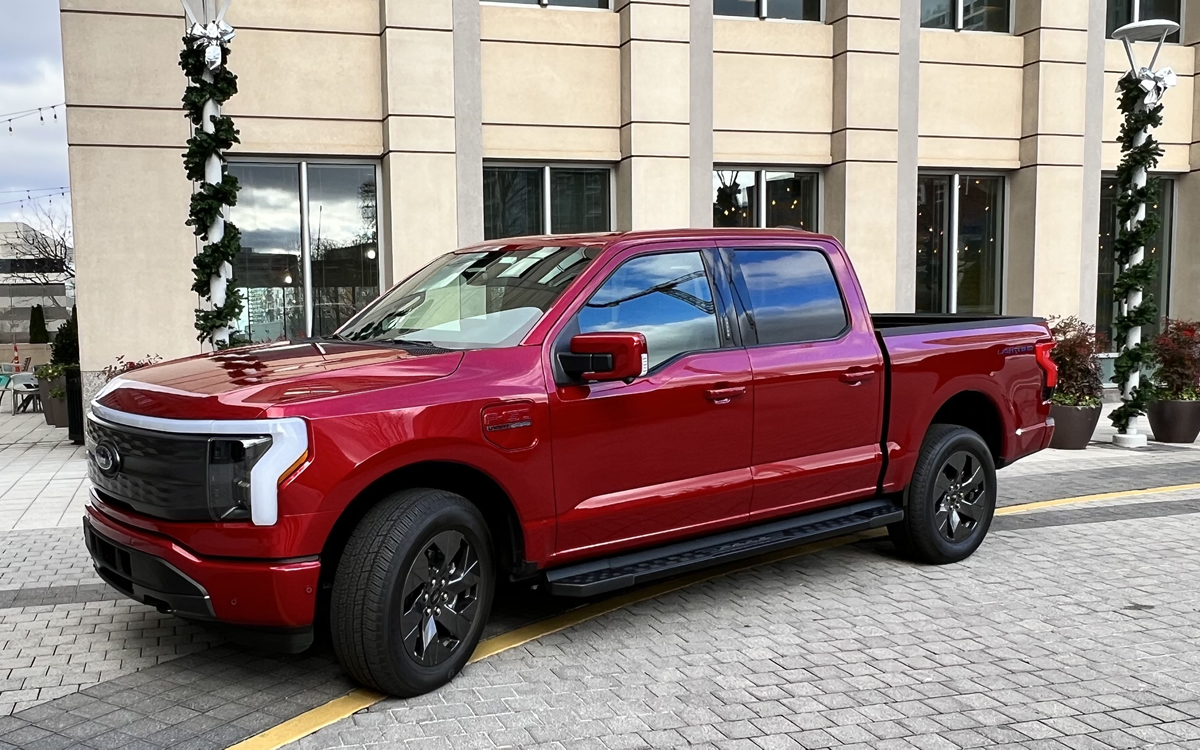
That is, until last week when I tested the all-new, all-electric Ford F-150 Lightning. This dazzling eco-ride took my breath away, blasting off from a standstill to 60 mph in four seconds and dodging through traffic like Lionel Messi.
Call it a jolt (or lightning bolt) to the senses, but now it’s my turn to be the total yahoo when it comes to a pickup.
FORD F-150 LIGHTNING
$52,000-$97,000
MPGe: 76 city/61 highway
Range: up to 320 miles on a full charge
0 to 60 mph: as quick as 4.0 seconds
During the past year, various all-electric pickups have gone from concept to reality. There’s the cartoonish-looking Rivian, with a smiley front end that looks like something out of a “Cars” movie, and the GMC Hummer EV, which could easily be mistaken for a modish lunar rover.
Enter the Ford F-150 Lightning, with its sprinkles of futuristic styling cues, including distinctive light bars atop both the grille and tailgate. While the overall design may not be as outre as a Rivian or Hummer, the Lightning still turns plenty of heads.
Most notable, the Lightning is very practical. A Rivian, for example, is 14.6 inches shorter so has less passenger and cargo room. A Hummer is seven inches wider, making it harder to navigate city streets. And both the Rivian and Hummer are taller than a Lightning, which—yikes!—can barely scooch under the clearance bar in a parking garage itself.
There’s lots of leg room in both the front and back seats. And those rear seats flip up, allowing you to conveniently stow gobs of gear underneath. There also are a few dividers to help keep cargo organized and prevent items from jostling around.
But perhaps the coolest feature is the “frunk,” or front trunk. This storage space—where the engine used to be—is an impressive 14.1 cubic feet. That’s enough room for two golf bags or three medium-sized suitcases. The funky frunk is also water-resistant, drainable, lockable and has four 120-volt outlets and two USB chargers. There’s even an emergency release latch, just like in a standard trunk. Best of all, the lid opens and closes electronically, with just two taps to the keyfob. When I did this the first time, it looked as if the Lightning was actually yawning—or getting ready to eat someone.
And here’s a first: If your household ever loses power, a fully charged Lightning can serve as a backup generator for up to three days.
The real excitement, though, is behind the wheel. Power comes from two electric motors configured to provide standard all-wheel drive. Add in the extended-range battery for more horsepower and torque, and this pickup handles just like a sports car. The instant acceleration—especially when stomping on the gas, er, throttle pedal—must be what it’s like when a spaceship rockets off the launch pad. Except in the Lightning, there’s no back-and-forth shuddering, and no noise. Everything’s perfectly, eerily quiet in the well-insulated cabin.
Many interior features in the Lightning are also in the snazzy Ford Mustang Mach-e crossover, including the optional 15-inch infotainment screen that looks and behaves like an iPad. Other pleasing add-ons include max-recline seats, hands-free driving system, Bang & Olufsen premium stereo and twin-panel moonroof.
For more than 40 years, the traditional gas-engine F-150 has reigned as the best-selling vehicle in America, so the Lightning is a big risk for Ford. Yet with stellar performance and boffo functionality, it’s hard to see this electrifying pickup losing the crown.



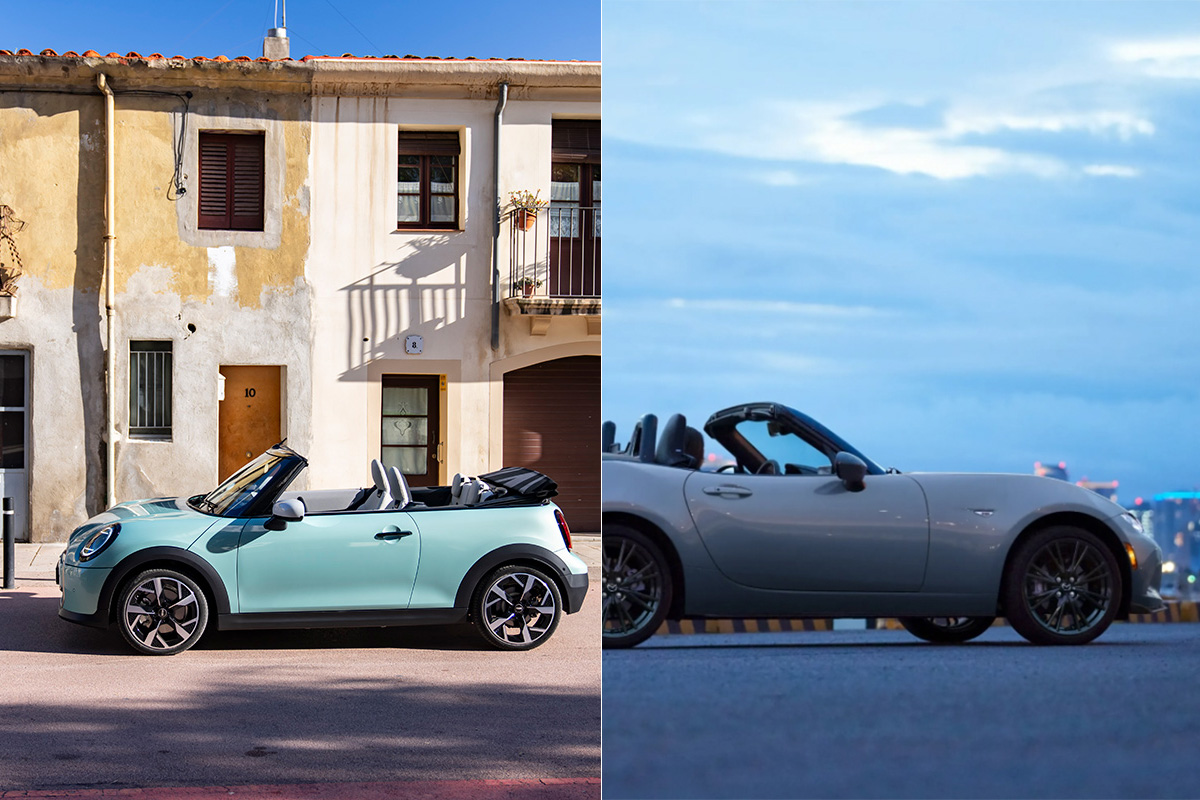
Ragtops rock! For drivers looking to carve their own lane, the world already has enough sensible crossovers, minivans, and pickups. These three convertibles trade practicality for sunshine, wind, and the occasional wild-hair day.
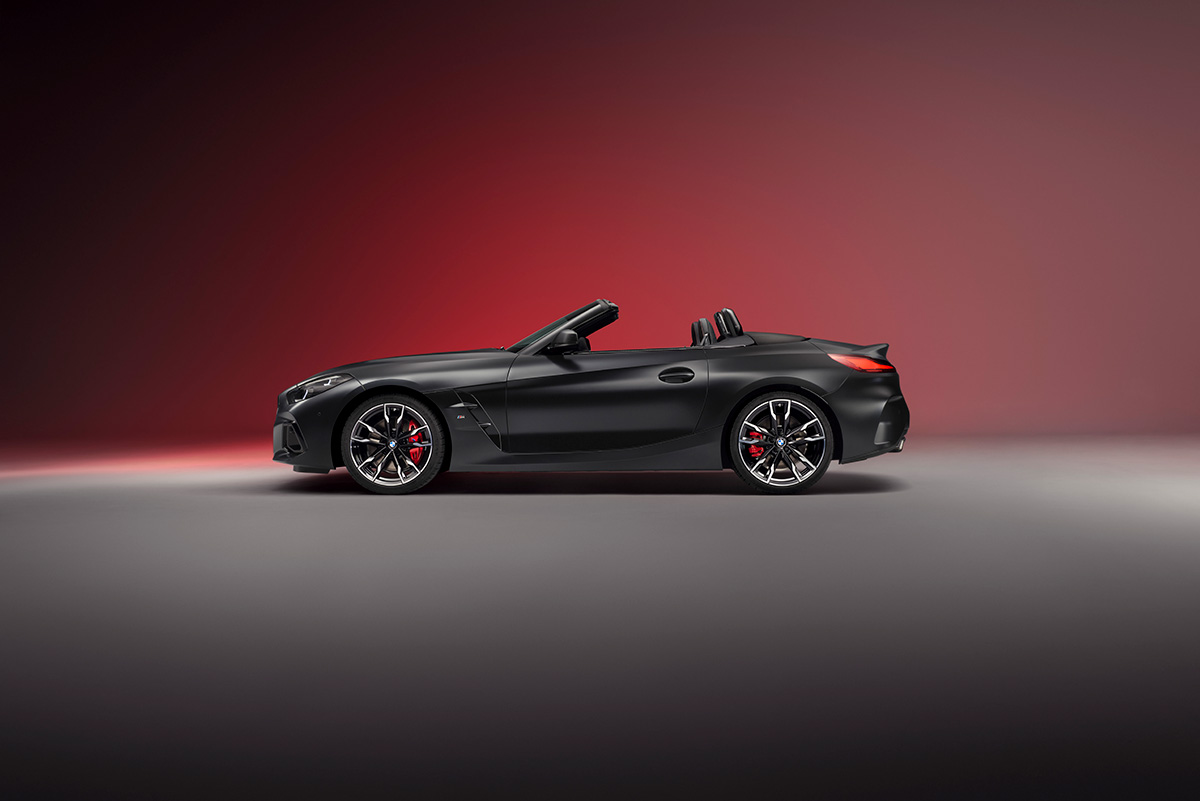
BMW Z4
$58,000
MPG: 25 city/33 highway
0 to 60 mph: 5.2 seconds
Trunk space: 10.0 cu. ft.
PROS: Strong engines. Uber comfy. Stylish.
CONS: Expensive. Final year of production.
Act fast, Bimmer fans, this is the last year the BMW Z4 roadster will be produced. Along with the entry-level xDrive30i and high-performing M40i, there is a Final Edition model.
Since 2002, the Z4 has expertly balanced performance, comfort, and style. The long hood and short rear deck still look fantastic. The stance is athletic. And with the top down, this car gains an extra dose of drama.
Under the hood, BMW offers turbo power that feels eager rather than overwhelming. Acceleration is brisk. The steering precise. The chassis composed.
Upgrading to the premium models lets you scoot from 0 to 60 mph in just 3.9 seconds. But—ka-ching!—the MSRP soars to $79,000.
Available in manual or automatic transmissions, this convertible can sprint through mountain roads on Saturday and soothingly devour highway miles on Sunday.
As for the interior, it blends luxury and functionality. Materials feel expensive. Controls are easy to use. And the seats are supportive.
For me, other ragtops may be more party hearty, but the Z4 is low-key, impeccably tailored and still the center of attention. Think suave James Bond versus sparkling RuPaul.
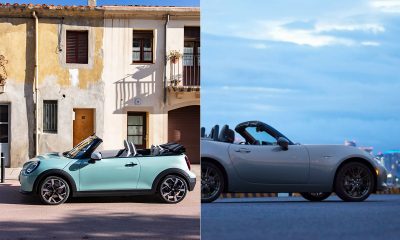
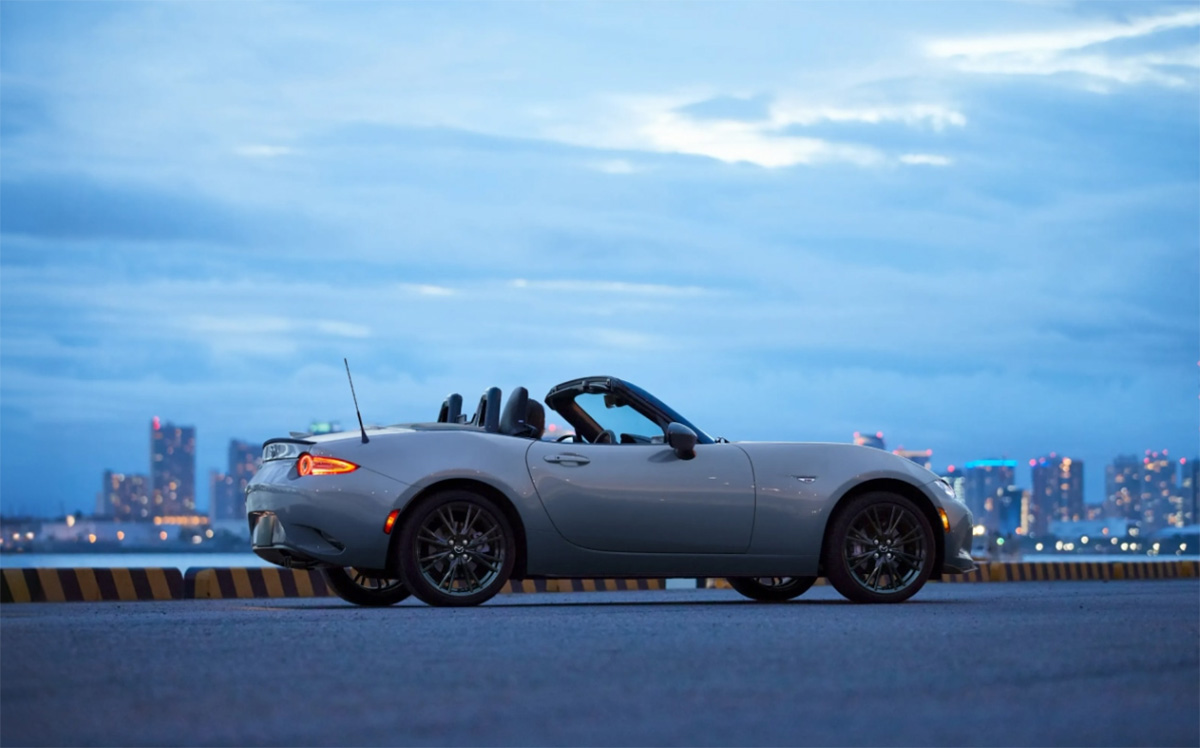
MAZDA MX-5 MIATA
$32,000
MPG: 26 city/35 highway
0 to 60 mph: 5.5 seconds
Trunk space: 5.0 cu. ft.
PROS: Nimble. Lightweight. Affordable.
CONS: So-so power. Wind noise. Limited space
For decades, the Mazda MX-5 Miata has followed a simple formula: Keep it light, keep it balanced and make every drive feel special. The result: Automotive comfort food that never gets old.
Many vehicles grow larger every year, but the Miata has remained Lilliputian in a way that feels rebellious. You sit low. The controls are user-friendly. Visibility is excellent.
No, the engine power won’t blow you away. But this beachcomber isn’t about brute force. It’s about how the Miata makes you feel wonderfully alive, whether tootling along city streets or a winding road.
Inside, the dashboard is sparse but echoes a traditional sports car. Large analog tachometer and analog speedometer. And while the 8.8-inch infotainment display is dinky, it works nicely.
Alas, storage is limited. The cabin is snug. And taller drivers may wish for a bit more room.
Yet somehow even those compromises feel almost charming. This ride knows exactly what it is and refuses to apologize. Sort of like showing up to Pride wearing what makes you happy rather than chasing trends.
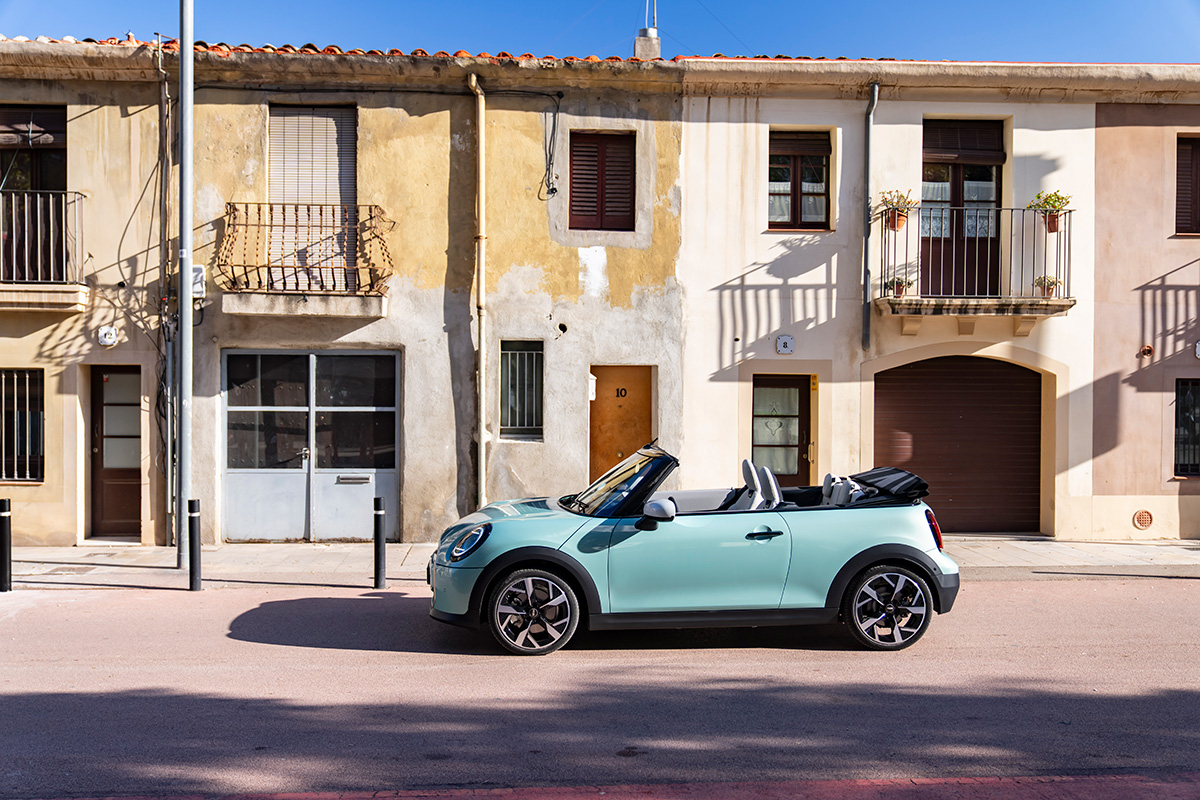
MINI COOPER
$27,000
MPG: 28 city/39 highway
0 to 60 mph: 7.9 seconds
Trunk space: 5.2 cu. ft.
PROS: Playful styling. Fun handling. Extra stowage.
CONS: Ride can be firm. Not a speed demon.
Mini Coopers approach life with a wink and a grin. Rounded headlights. Compact dimensions. Cheerful styling. It all works to create a vehicle that looks like it’s having fun before you’ve even started the engine.
Driving this ragtop is equally entertaining. The steering is quick, and the chassis feels eager to please. Overall performance is lively rather than blistering.
The cabin leans heavily into Mini’s playful design language. Circular elements appear throughout. Details feel intentionally quirky. Many modern interiors seem created by committees that fear excitement. This cabin feels designed by someone who enjoys color, personality and perhaps spontaneous dance breaks.
Unlike the BMW Z4 and Mazda Miata, the Mini offers a small rear seat. “Small” is doing some heavy lifting there, but the extra space adds flexibility. It may not be enough room to comfortably squeeze in friends, but you can easily stow a few bags here.
To me, driving this convertible feels like attending the world’s friendliest block party. People notice it. People smile. Sometimes people even wave.
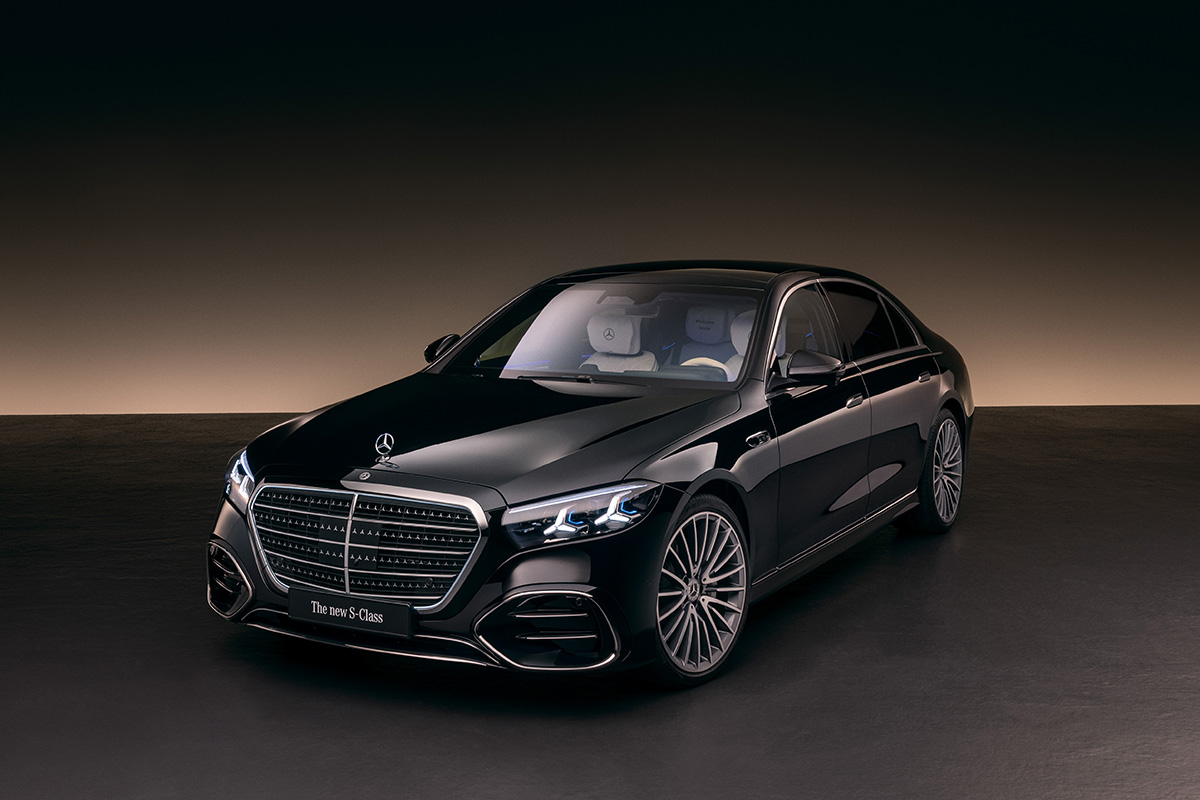
At my stage of life — “somewhere between 40 and death,” as the iconic line goes in the musical “Mame” — I want some pampering. A lot of pampering.
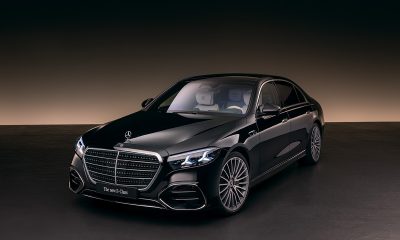
Luckily, for anyone who constantly craves a soothing spa, steam room or sauna, there’s the completely updated Mercedes S-Class. This flagship sedan is now so full of glitz, glamour, and gee-whiz gadgetry, it gives new meaning to the term “auto erotica.”
Does this make the S-Class a “gay” ride? For me, any vehicle that pushes my buttons like this one is a Kinsey 6.
MERCEDES S-CLASS
$122,000 (est.)
MPG: 21 city/31 highway
0 to 60 mph: 4.3 seconds
Trunk space: 19 cu. ft.
PROS: Exceptional comfort. Ultra-quiet cabin. Cutting-edge safety.
CONS: Price climbs fast. Tech learning curve. Sportier competitors.
The S-Class continues to define what luxury really means, with a bolder silhouette, larger grille, and striking, next-gen LED headlights. There’s also an optional illuminated Mercedes star on the hood. Overall, nearly 2,700 parts are new or improved, so more than 50 percent of this vehicle has been updated. An extreme makeover, to be sure.
At the same time, this latest S-Class leans harder into intelligence and electrification than ever before. Under the hood, a range of turbocharged inline-six and V8 engines — paired with mild-hybrid systems — deliver power in a way that seems almost edited for smoothness. Braking is solid and strong, too, but never abrupt. All the engineering is fine-tuned and intentional.
Yes, the top-of-the line S580 version is more expensive, almost $140,000. But it’s also blisteringly fast, zipping from 0 to 60 mph in just 3.9 seconds. That’s as lickety-split swift as a Lamborghini Revuelto supercar, which has a starting MSRP of $610,000 and can easily exceed — yowza! — $800,000.
Colors? There are 150 to choose from for the exterior and 400 for the interior. You can even customize the illuminated door sills, interior stitching and wheel accents.
And the ride quality? Sublime. Adaptive air suspension reads the road constantly, leveling out imperfections before they even register. Rear-axle steering enhances maneuverability, making this full-sized sedan feel surprisingly nimble in tight spaces. On the highway, the S-Class simply glides like a private yacht on the calmest of seas — extremely quiet, composed and completely unbothered.
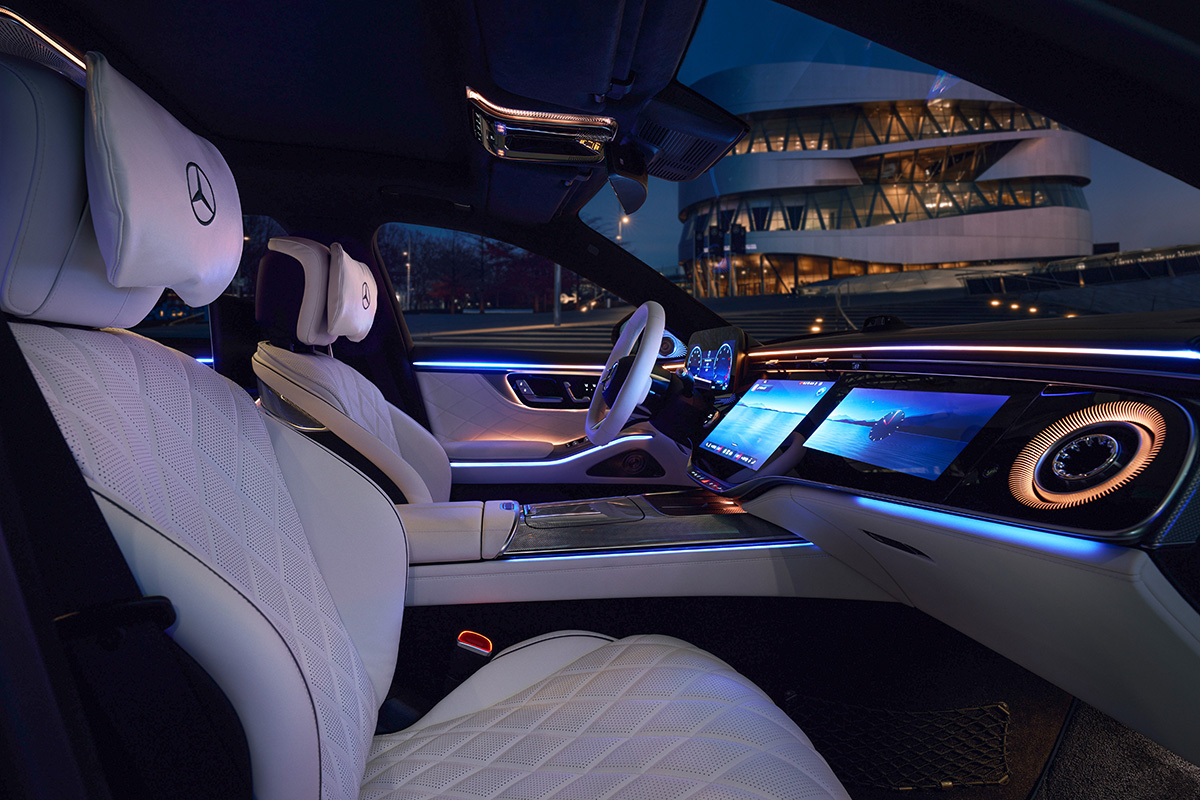
Whenever you slide inside, the cabin immediately sets the tone. A massive OLED digital display — the same high-def technology used for cinematic viewing and gaming monitors — anchors the dashboard, running the latest MBUX infotainment interface. Highly customizable, this software allows for advanced voice commands that feel natural, not forced. And an augmented-reality navigation system takes your route and overlays it onto live camera feeds. It’s intuitive — mostly, as there is a learning curve for all this cutting-edge gear. Overall, though, such amenities make older setups feel like dial-up internet.
A Burmester surround-sound stereo is available in 3D or 4D, with up to 31 speakers, 1,690 watts and tactile transducers in the seats that vibrate and pulse with the music. Those seats are, of course, extremely comfortable. And the seatbelts? These are now heated.
Let’s not forget the latest cabin air-filtration system, which can remove ultra-fine particles to deliver air quality that rivals medical environments. Clean air, yes, but even this seems like a special treat. It’s like being swaddled in couture, not ready-to-wear.
And lastly, there’s the rear-seat area, which — to be honest — is where the S-Class really shines. Executive packages offer multi-contour reclining seats with rapid heating and ventilating, heated armrests and massage functions. You can opt for a footrest, which ups the glam factor to give you a calf massage. Dual 13.1-inch display screens come with their own remote controls. There’s also a video-conferencing feature, to help transform the rear cabin into a fully connected mobile office. For me, it feels less “back seat” and more “private lounge.”
Even in fiction, high-tech luxury carries weight. Tony Stark helped cement the idea that state-of-the art vehicles can be aspirational, not just practical. The magical S-Class fits right into that narrative — minus the flying suit (for now).
Autos
Wagons ho! High-class, head-turning haulers
Automakers still offer a few good traditional station wagons
As a teenager, one of the first cars I drove — and fell in love with — was our family’s hulking full-size wagon. It stretched over 19 feet in length and weighed a whopping 5,300 pounds. That’s three feet longer and 1,000 heavier than, say, a Ford Explorer today.
But this Leviathan felt safe and practical, especially when tootling around town with my crew or traveling solo cross-country. Of course, this hauler was also an eco-disaster.
Luckily, that’s not the case today. And even though the number of traditional station wagons keeps shrinking, automakers are still offering a few gems.
VOLVO V60 CROSS COUNTRY
$54,000
MPG: 23 city/31 highway
0 to 60 mph: 6.6 seconds
Cargo space: 51 cu. ft. (rear seats folded)
PROS: Elegant design. Composed handling. Top safety features.
CONS: So-so power. Modest rear legroom. Only two trim levels.
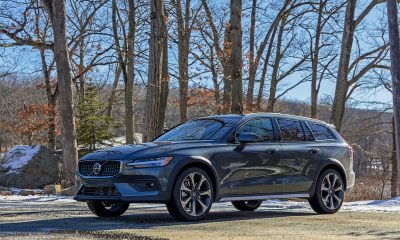
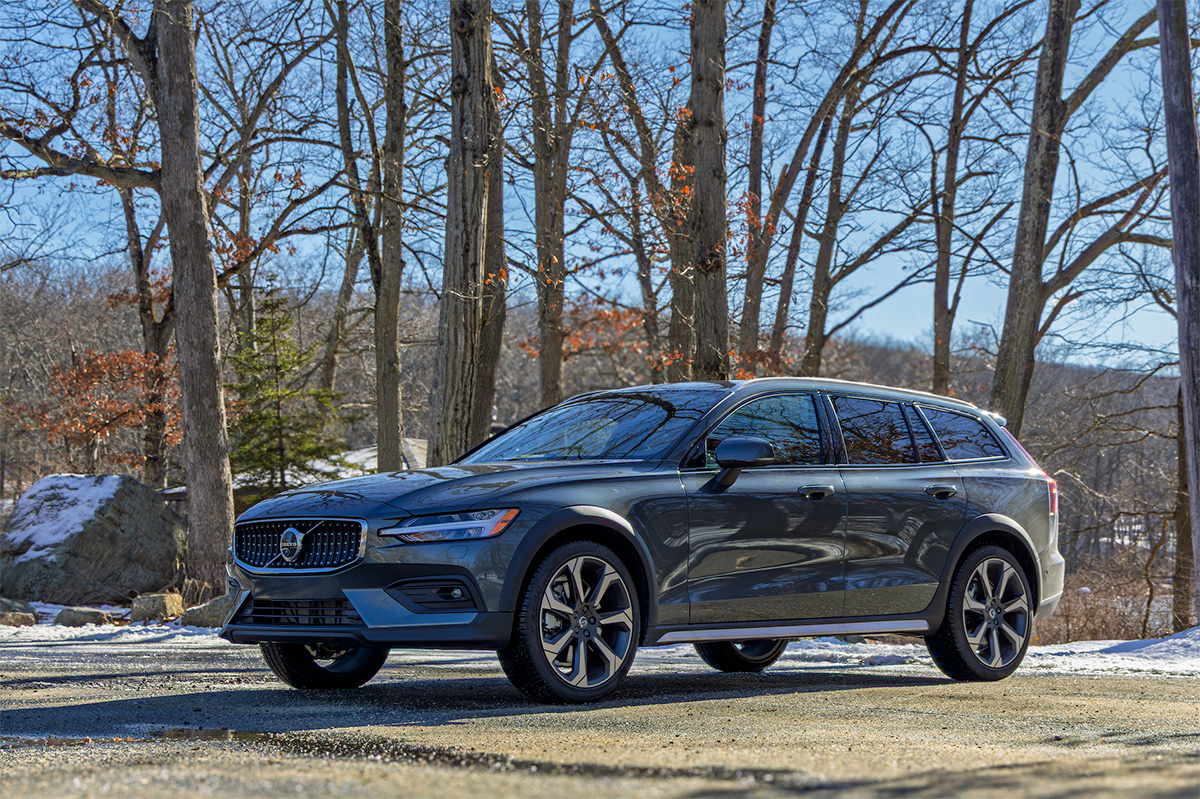
The 2026 Volvo V60 Cross Country doesn’t cry for attention — and that’s the point. This is the automotive equivalent of Kristen Stewart, a celebrity who’s confident in her own skin and sees no need to post about it.
Under the hood, there’s a four-cylinder turbo engine paired with a mild-hybrid system, producing 247 horsepower. You won’t outrun other drivers, but there is a sense of calm authority when accelerating. The standard all-wheel drive and 8.1 inches of ground clearance mean this wagon is ready for dirt roads, bad weather or a spontaneous weekend jaunt.
And inside? Scandinavian minimalism at its finest. Clean lines. Gorgeous materials. Google-based infotainment that mostly works — though occasionally the system could be a bit faster, at least for my taste. The ride is smooth, composed and quiet, even if acceleration feels more “measured sip” than “espresso shot.”
But here’s the twist: After more than a decade, this is the final Volvo wagon in the U.S. Its farewell tour ends in 2026. That alone gives it collector-car status.
MERCEDES-AMG E53 WAGON
$95,000
MPG: 21 city/25 highway
0 to 60 mph: 3.4 seconds
Cargo space: 64.6 cu. ft. (rear seats folded)
PROS: Supercar vibe. Hybrid versatility. Stunning interior.
CONS: Some fussy controls. Can feel heavy when cornering.
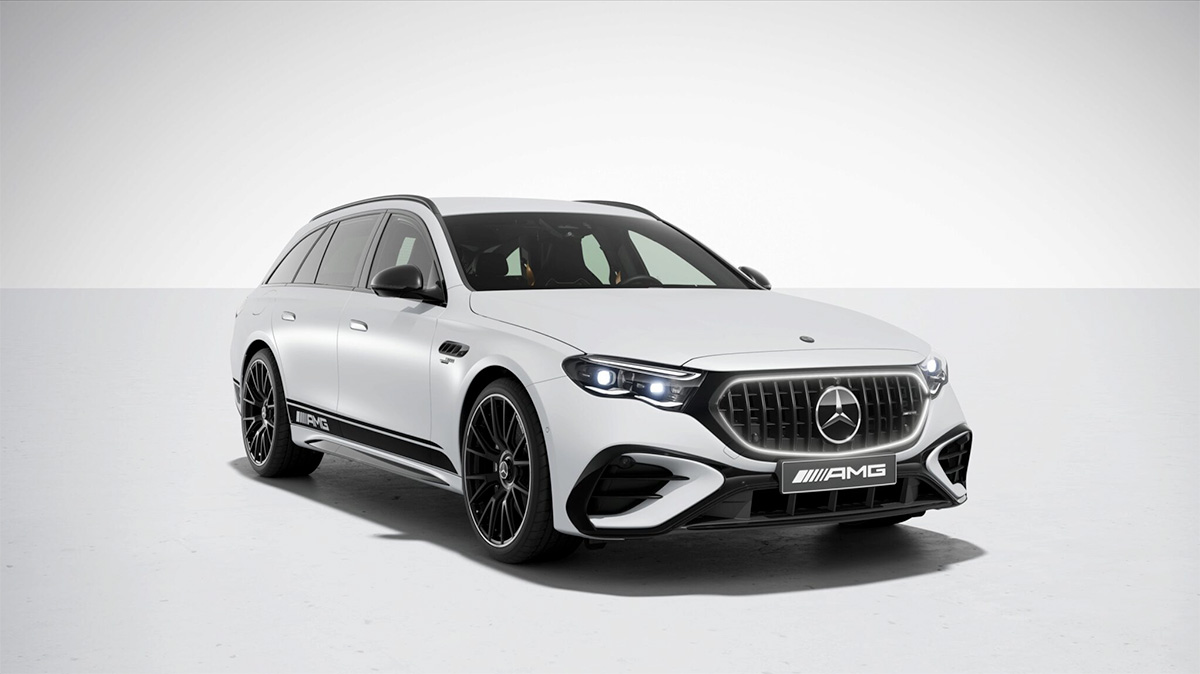
If the Volvo V60 Cross Country is subtle, the 2026 Mercedes-AMG E53 Wagon is a screamer. It’s like being at a Lil Nas X concert: flashy, high energy, and full of shock and awe.
This performance wagon — a plug-in hybrid, no less — pushes well over 500 horsepower (and in some configurations over 600 horsepower), launching from 0 to 60 mph as fast as a $300,000 Aston Martin supercar.
Yes, deep down, this is still a wagon. But you also can do a Costco run in something that could embarrass sports cars at a stoplight. That duality is delicious.
Inside, Mercedes leans all the way in. The high-tech Superscreen setup stretches across the dash. Ambient lighting glows like a curated art installation. The 4D surround-sound audio literally pulses through the seats. It’s immersive. Borderline excessive. And entirely the point.
Rear-axle steering helps mask the size of this car, but there’s no hiding the weight — it’s a big, powerful machine. Still, this hauler handles far better than physics suggests it should.
PORSCHE TAYCAN CROSS TURISMO
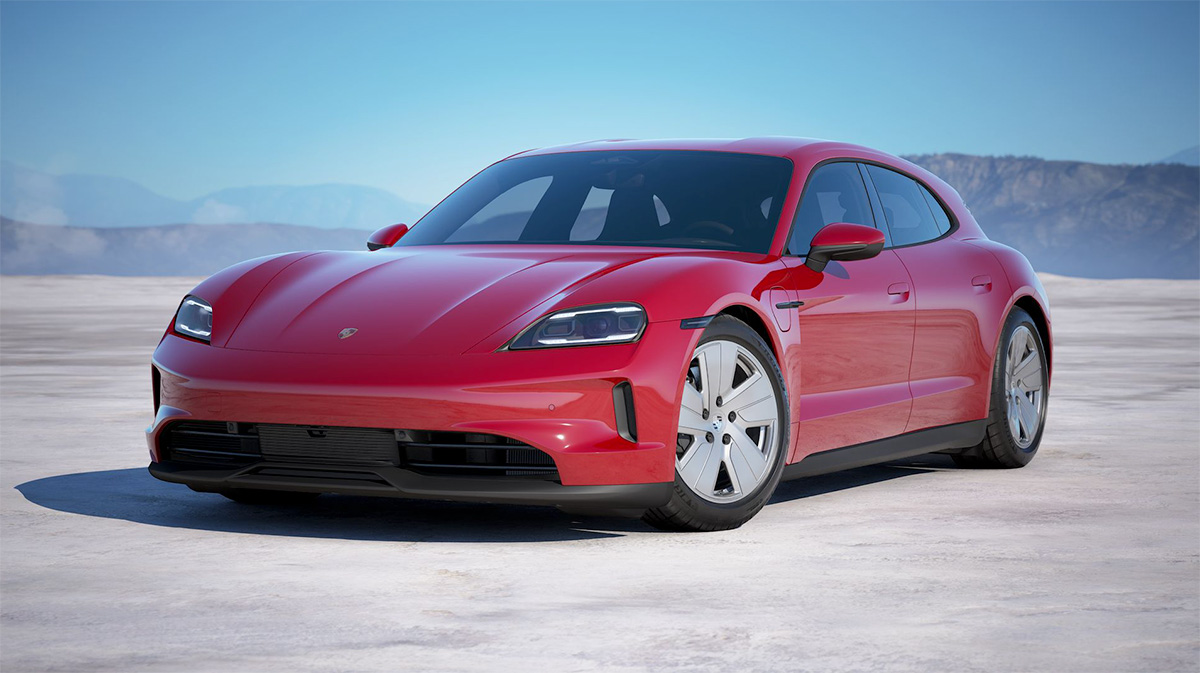
$121,000
Range: 265 miles
0 to 60 mph: 2.8 seconds
Cargo space: 41 cu. ft. (rear seats folded)
PROS: Lightning fast. Space-age design. EV smoothness.
CONS: Very pricey. Options add up quickly. Limited rear visibility.
The Porsche Taycan Cross Turismo completely rewrites the wagon formula. Fully electric. Shockingly fast. Designed like it belongs in the Louvre.
Performance is instant. Depending on trim level, you’re looking at 0-to-60 mph in less than 3 seconds. No exuberant engine noise — just that smooth, purring EV surge.
Handling? Pure Porsche. Low center of gravity thanks to the battery-pack placement. Precision that makes winding roads feel like choreography. And then — hello — there’s also a Gravel Mode for light off-road use.
Inside, the style is restrained but high-tech. Digital displays dominate, including a 10.3-inch passenger side touchscreen. Yet the layout feels intentional rather than overwhelming. Build quality is exceptional. Options, including leather-free materials and an active-leveling system for hard cornering, are endless — and expensive.
Range varies by model. But as with any EV, your lifestyle (and charging access) matters.
Overall, this is a wagon that looks and behaves like one helluva class act.

Campaign launched to elect more LGBTQ candidates to ANC seats

Gay librarian to discuss new novel at Green Lantern

Calendar: July 10-16

Gay Fla. Democrat Elijah Manley sees opportunity in Trump’s second term

Ron Singer, owner of popular Mount Vernon gay bar Leon’s, dies

In Trump’s divided America, Michael Weinstein’s AHF responds

Turkish authorities refuse to allow gay cruise to dock in country

When a church fears the rainbow

PHOTOS: Crush Dance Bar