United Kingdom
UK government to block Scotland transgender rights bill
Nicola Sturgeon ‘will never apologize for trying to spread equality’
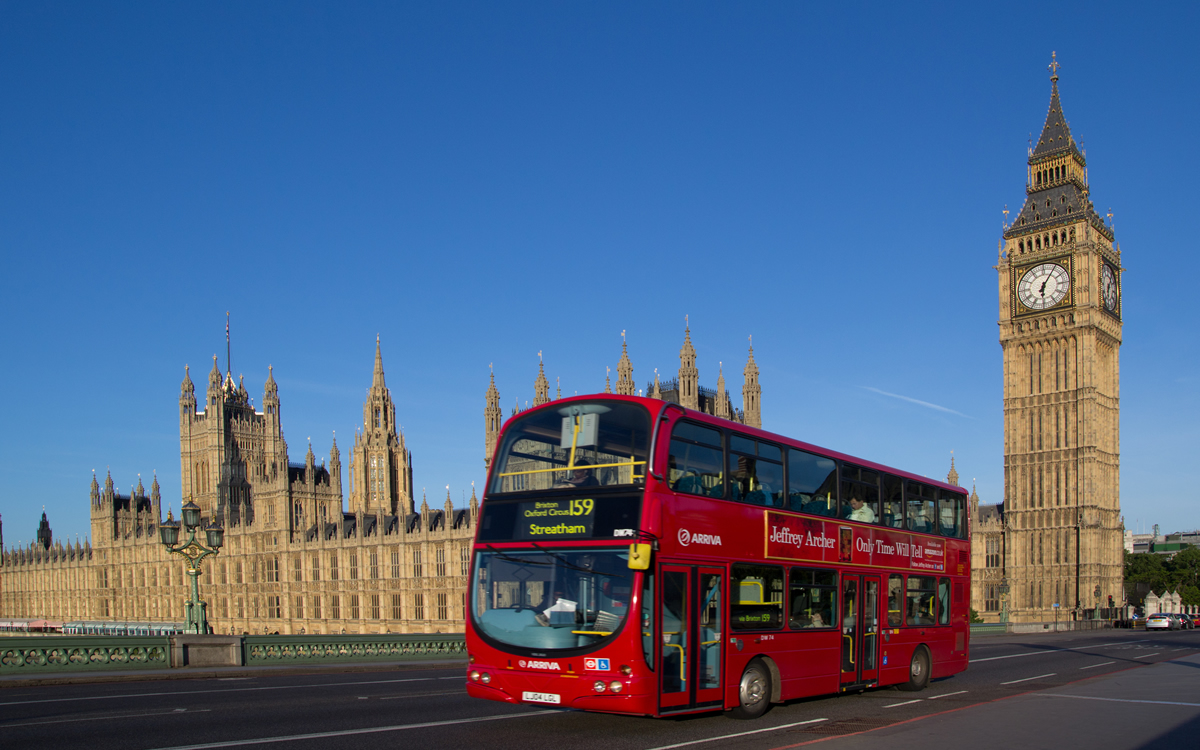
In tersely worded public statements to the media and on Twitter, Scottish First Minster Nicola Sturgeon castigated the conservative government of U.K. Prime Minister Rishi Sunak for announcing Monday that Westminster would block Scotland’s Gender Recognition Reform Bill from being signed into law by King Charles III.
The Gender Recognition Reform Bill introduced by the Scottish government to Holyrood (Parliament) last spring was passed in a final 86-39 vote days before this past Christmas. The sweeping reform bill modifies the Gender Recognition Act, signed into law in 2004, by allowing transgender Scots to gain legal recognition without the need for a medical diagnosis.
The measure further stipulates that age limit for legal recognition is lowered to 16.
The U.K. Secretary of State for Scotland, Alister Jack, released a statement indicating that with the backing of 10 Downing Street, he will use a Section 35 order under the Scotland Act to block the king’s signature which is referred to as royal assent.
Under Section 35 of the Scotland Act, U.K. ministers can stop a bill getting royal assent. Jack can do so if he is of the opinion that a Holyrood bill would modify laws reserved to Westminster and have an “adverse effect” on how those laws apply.
“I have decided to make an order under Section 35 of the Scotland Act 1998, preventing the Scottish Parliament’s Gender Recognition Reform (Scotland) Bill from proceeding to royal assent,” Jack said in a statement released Monday afternoon.
“After thorough and careful consideration of all the relevant advice and the policy implications, I am concerned that this legislation would have an adverse impact on the operation of Great Britain-wide equalities legislation.
“Transgender people who are going through the process to change their legal sex deserve our respect, support and understanding. My decision today is about the legislation’s consequences for the operation of GB-wide equalities protections and other reserved matters.
“I have not taken this decision lightly. The bill would have a significant impact on, amongst other things, GB-wide equalities matters in Scotland, England and Wales. I have concluded, therefore, that this is the necessary and correct course of action.
“If the Scottish government chooses to bring an amended bill back for reconsideration in the Scottish Parliament, I hope we can work together to find a constructive way forward that both respects devolution and the operation of U.K. Parliament legislation.
“I have written today to the first minister and the Scottish Parliament’s presiding officer informing them of my decision,” he said.

The first minister has defended her government’s action on the GRA Reform legislation and speaking before the vote said that [she] “will never apologize for trying to spread equality.”
“Removing the need for medical diagnosis for a trans person who wants to legally change their gender is one of the purposes of this legislation because that is one of the most traumatic and dehumanising parts of the current system,” Sturgeon said.
Addressing the opposition and Tory arguments that the GRA reform bill harms women and girls the first minister said:
“As a woman, I know what it’s like to live with the fear at times of potential violence from men.
“I’m a feminist and I will do everything that I can to protect women’s rights for as long as live, but I also think it’s an important part of my responsibility to make life a little bit easier for stigmatised minorities in our country, to make their lives a bit better and remove some of the trauma they live with on a day-to-day basis and I think it is important to do that for the tiny minority of trans people in our society and I will never apologize for trying to spread equality, not reduce it, in our country.”
In London, U.K. equalities minister Kemi Badenoch has made it clear she is against reforms. Badenoch suggested the Scottish bill could have a detrimental impact on the rest of the U.K. because it would not be possible for the legislation to be “fully contained” within Scotland.
She addressed those concerns in a letter she sent to Sturgeon that was leaked to the Times last month.
Sturgeon said that she thinks it would be an “outrage” if the Tory-led government blocks the Scottish gender recognition bill, and will “embolden them” to block more bills, creating a “very slippery slope.”
“The Scottish government will defend the legislation and stand up for Scotland’s parliament,” she said adding, “If this Westminster veto succeeds, it will be the first of many.”
Summary of my views on UK gov attempt to veto @ScotParl decisions – covers both the attempt to block this particular piece of legislation (passed by a substantial majority, inc MSPs from all parties) and the very significant wider issue of principle . https://t.co/1V5w55D5Sd
— Nicola Sturgeon (@NicolaSturgeon) January 16, 2023
Sturgeon’s reference to the “slippery slope” details the rancor between Downing Street and Edinburgh over a proposed second referendum for Scottish independence. The referendum held in 2014 had failed by 55 percent to 45 percent, but things have changed since then, mostly because of Brexit. The Tory led U.K. government has repeatedly said it will not allow second referendum and this past November ruled the Scottish government cannot unilaterally hold a second independence referendum.
MSP Maggie Chapman, equalities spokesperson for the Scottish Greens, told PinkNews that the Tory government could “destroy devolution” if it tried to stop Scotland’s gender reform bill. She also warned that intervention could trigger a bitter legal battle.
“If they actually go through with their threat to either block the bill from receiving royal assent or block the implementation of it … I think that signals that this becomes about something much more than the issue of self-declaration — this becomes a constitutional crisis, I think,” Chapman told PinkNews.
Chapman also said she is “100 percent certain” that the Scottish government would challenge the decision in court, resulting in a legal war that could set precedent for other cases.
Pink News also reported that Jayne Ozanne, a former equalities advisor to the Tory government, said she “couldn’t believe” the prime minister had signed off on Section 35 being invoked “to undermine trans people’s rights.”
“This is a very dark day,” she said.
“The international community will be appalled. The LGBTQ+ community, alongside our friends and allies, will be furious and the British people will look on amazed.
“All will rightly wonder why [Sunak] has chosen to focus on one of the most marginalized and misunderstood groups in our society at a time of crisis in both our NHS (National Health Service) and public services.
“I believe it is the beginning of the end for the United Kingdom, and few will forgive him for it.”





United Kingdom
Grindr settles UK lawsuit over claims it shared users’ personal information
Plaintiffs allege gay hookup company disclosed HIV status to third parties

Grindr has agreed to pay £26 million ($35.24 million) to settle a lawsuit in the UK over allegations it shared users’ HIV status and other personal information with third parties.
The BBC on Monday reported a lawsuit was filed in the High Court of England and Wales in 2024. A class action lawsuit with more than 11,000 plaintiffs was later filed in the U.S.
Grindr in a U.S. Security and Exchange Commission filing notes the California-headquartered company as part of the settlement it reached on Sept. 2 will pay £13.0 million ($17.62 million) “to the counterparties” by Dec. 31, 2026, and another £13.0 million ($17.62 million) by March 31, 2027.
“As previously disclosed, in April 2025, Grindr Inc. and Grindr LLC, its indirect and wholly-owned operating subsidiary (collectively, ‘Grindr’), were served with proceedings in the High Court of England and Wales, which proceedings were originally issued in April 2024, brought on behalf of UK Grindr users from a period up to early 2020 alleging violations of UK privacy laws,” reads the U.S. Security and Exchange Commission filing.
“On Sept. 2, 2026, Grindr resolved the above-described UK group action related to historical data practices before 2020, when Grindr was owned and controlled by the Chinese conglomerate Kunlun,” it continues. “The settlement includes no findings or admission of liability. While Grindr disputes the allegations, it recognizes and acknowledges the distress and loss of trust expressed by some of its UK users regarding that pre-2020 period.”
The filing further notes Grindr in 2020 “was sold to new owners and appointed new management” and in 2022 became a publicly listed company on the New York Stock Exchange.
“Since 2020 Grindr has overhauled its privacy program with a keen focus on the unique needs of its community,” reads the filing. “Grindr is and remains a safe space for users, committed to transparency, user control, and responsible data practices.”
A Grindr spokesperson in the UK on Tuesday referred the Washington Blade to the filing for comment on the settlement.
United Kingdom
Queen Camilla meets with JK Rowling
Edinburgh meeting took place on last day of Pride month

Queen Camilla on Tuesday met with JK Rowling.
The Royal Family on X said the meeting took place at Palace of Holyroodhouse in Edinburgh. The post included a picture of Camilla and Rowling together.
“With a shared passion for books and a deep commitment to children reading for pleasure, The queen and author JK Rowling have met at the Palace of Holyroodhouse in Edinburgh,” it reads. “Her Majesty and Ms. Rowling discussed the importance of ensuring that young people have access to books and the vital part reading plays in opening doors for future generations.”
📕 With a shared passion for books and a deep commitment to children reading for pleasure, The Queen and author J.K. Rowling have met at the Palace of Holyroodhouse in Edinburgh.
Her Majesty and Ms Rowling discussed the importance of ensuring that young people have access to… pic.twitter.com/Yx1Xy6olqC
— The Royal Family (@RoyalFamily) June 30, 2026
Rowling over the last decade has emerged as a vocal opponent of transgender rights. Her meeting with Camilla took place on the last day of Pride month.
United Kingdom
British Prime Minister Keir Starmer to resign
Announcement comes after Labour Party election loses, ambassador scandal
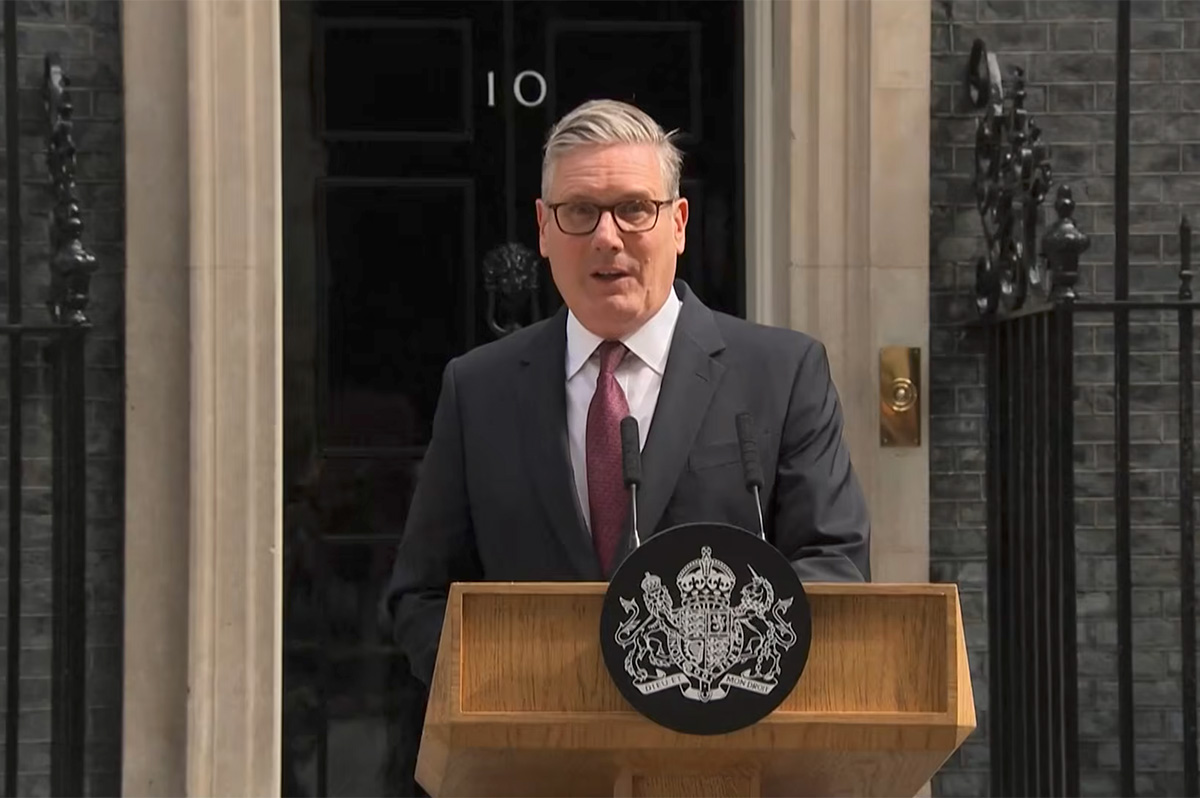
British Prime Minister Keir Starmer on Monday announced he will step down once his party chooses his successor.
Starmer succeeded Rishi Sunak of the Conservative Party in No. 10 Downing St. in 2024.
The Labour Party included a ban on so-called conversion therapy in England and Wales in its elections manifesto. King Charles III in last month’s King Speech that he delivered in the British House of Lords said a transgender-inclusive ban is among the British government’s legislative priorities.
Charles delivered his King’s Speech days after the Labour lost more than 1,000 council seats in local and regional elections. The May 7 vote took place against the backdrop of widespread criticism over Starmer’s decision to appoint Peter Mandelson as ambassador to the U.S., despite his ties to Jeffrey Epstein.
Former Greater Manchester Mayor Andy Burnham is seen as the frontrunner to become Labour’s new leader — and the UK’s next prime minister. Burnham was sworn in as an MP in the House of Commons hours after Starmer announced his resignation.
Starmer in his resignation announcement said he expects his successor will be in place before MPs return from their summer recess on Sept. 1.

New Hungarian government to scrap anti-LGBTQ adoption law

Fashion icon Bob Mackie dead at 87

Transgender woman killed in Barclay community mourned by friends, advocates

Dozens detained after Turkish authorities raid LGBTQ groups, businesses

PHOTOS: SMYAL Fall Brunch

How Dolly became a folk saint for Appalachian queers

Remembering the LGBTQ heroes of 9/11 terrorist attacks

Report: 90 percent of LGBTQ groups around the world have lost funding since 2025

Historiography with heart